Random is Not That Random.
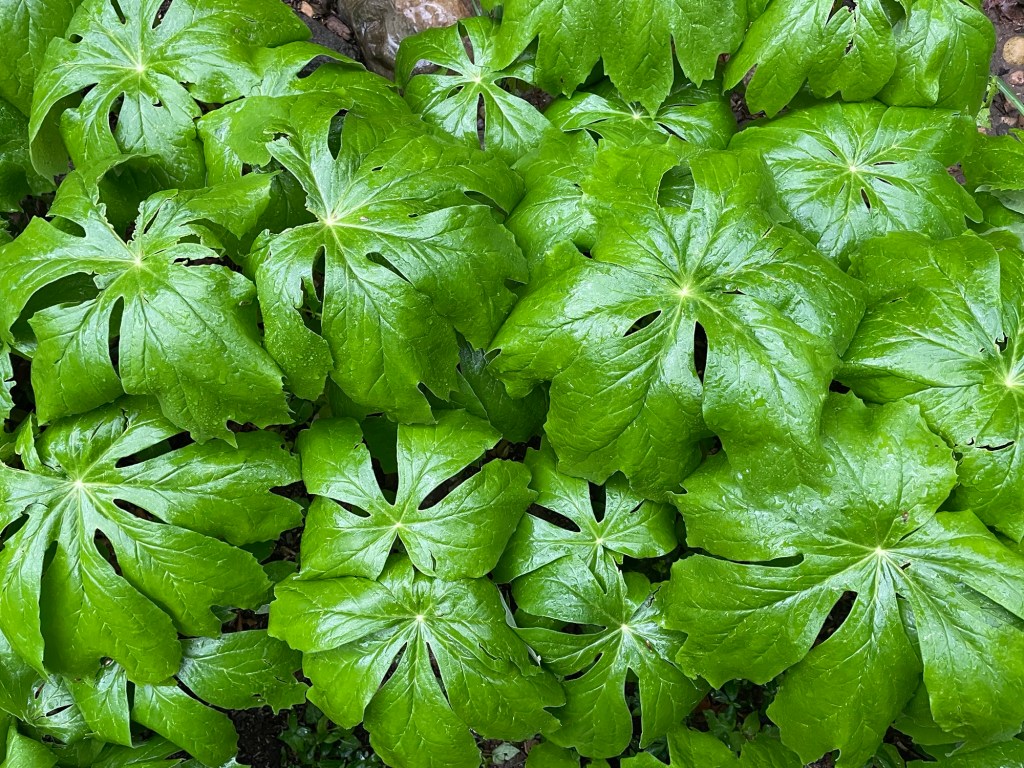
We tend to think of forests as random sets of plants in a structured organized way. Things are not in rows. It is a mixed forest. We might think, “oh this is much more desirable and destined for perfection” if forests were laid out like corn fields. Like the image of Mayapple foliage above you wish for even distribution of each plant. Maybe you do not desire commercial forestry with long rows of the same species. When trees are in rows in an orchard, we maximize the production of something spectacular like apples or hazelnuts. What if you could combine the best of both worlds yet still have a productive planting that is also commercially viable? My idea of doing exactly that stemmed from an ecology class I took in college where I counted and measured seedling trees and shrubs in a beech-maple forest. I had to identify seedlings as they came up in the shade of the forest and then kind of guess how that might influence the future of the forest. I had to take a lot of measurements, count and identify many seedling plants. The teacher told me to go back and do it again several times. When I got more involved with my plantings at my farm and began adding and subtracting vegetation, I began to once again look at those tiny seedlings in the understory of my trees. I began thinking about the future of my planted forest. It took a while to realize that all of the plants in these locations were beneficial including those plants people think are not desirable like multiflora rose. I began to see the benefits of the rows while at the same time began ‘saving’ those ‘errant and random’ apples, pear, hickory, chestnut, basswood and everything else growing in-between the rows and under the trees. My future forest was becoming more diversified while providing a broader range of seeds. Each generation improved in terms of disease resistance, fast growth rate or other values found in a natural forest. There is no difference. It is a forest after all. It has a canopy. It has an understory and it provides seeds for replicating itself for generations.

By judicious pruning and the slow conversion of field to forest, my plantings are a joy to be in today. It is both diversified without the use of cultivars and it has a trajectory which combines the global combination of species used in agriculture today. It has the Himalayan and Eastern white pine blister rust resistant trees, and it has the pawpaw plantings near the wild peach along with the hybrid American-Chinese chestnuts. This is the real world of seeds, seed sources and a means to replicate it easily and inexpensively. Although not a commercial orchard, it can provide seeds for commercial agriculture, agroforestry and other woody plant ideals currently being employed slowly in North America.

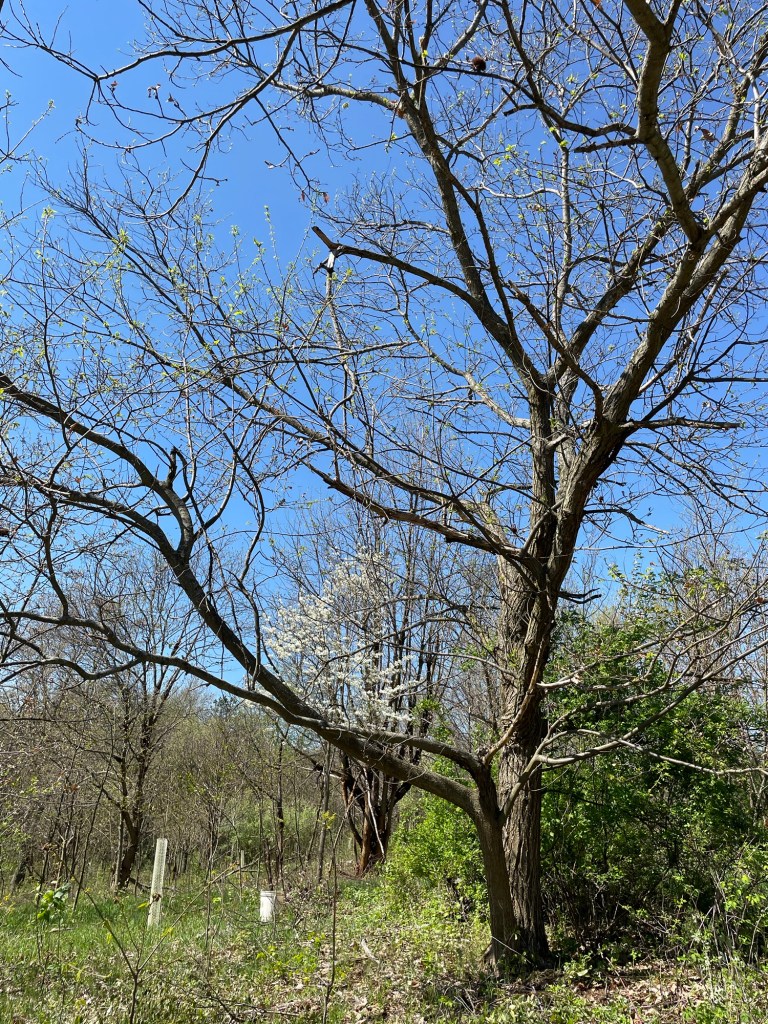
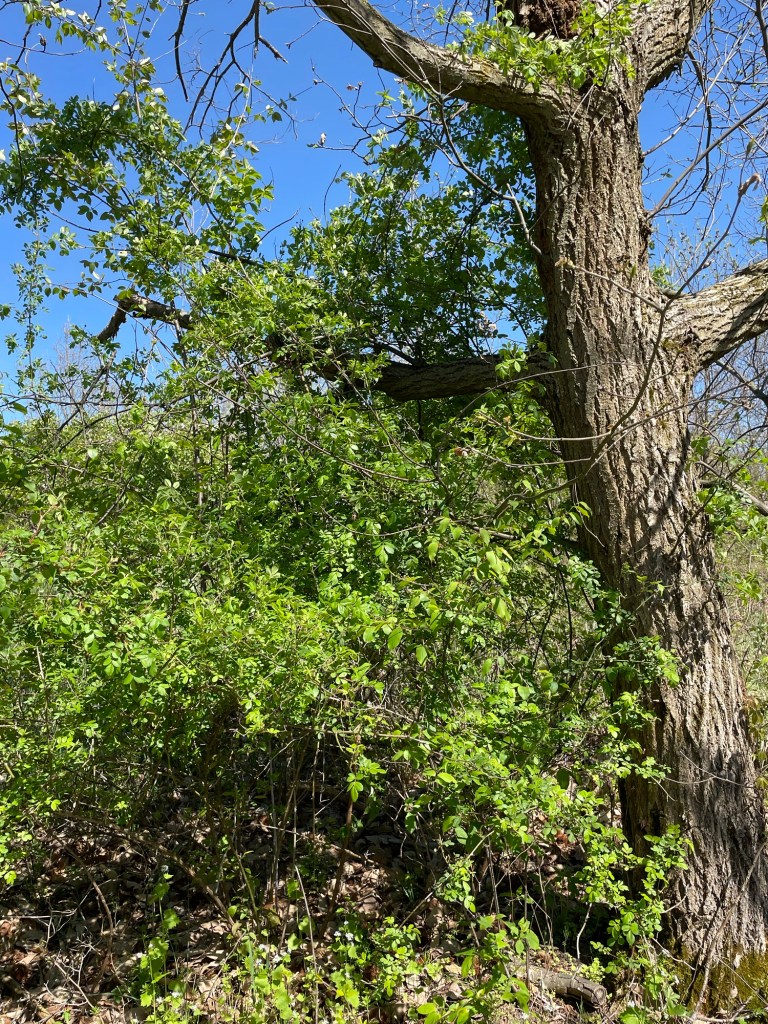
The prunings of multiflora rose degrade quickly while creating mulch and fertilizer. This particular chestnut tree is super productive and relatively healthy. Some seedlings are kept at the edge of its canopy too because of its immunity to chestnut blight. There are four seedlings in its understory ready to take its place when the time comes. The multiflora rose aids in regneration of the field to forest. This particular version of chestnut has more of the Chinese characteristics in it making it ideal as an orchard tree with broad spreading limbs. The flowers of multiflora rose are very beneficial to polliantors and having the arching branches way up in the tree is ideal despite the drawback of trying to harvest nuts underneath which is impossible without blood shed. Eventually you have to prune it flat to the ground to gain access to the orchard floor.
Random could be considered maximum entropy in nature. I’m setting the example of self-selection by a human over time and a means to measure and guide the plants I chose towards a healthy diverse forest that was once a hay field. It is one option of many to choose. What do you choose?
Random has structure. Random is not chaos. The design is implemented automatically as order is already there as an unseen design like a architect drafts a building. The design is just another expression in the infinite tree crop forest using global food forest genetics and its expression from seed. From seed to forest is the secret.
Enjoy.
Kenneth Asmus


You must be logged in to post a comment.