
When you grow an apple from seed (which I highly recommend) you will see the extremities of what is possible in terms of what the apple will look and taste like. If a crabapple tree is nearby, then there is a huge outpouring of it’s opposite values of the culinary apple that you may have started with. It could be anything. This is only natural. It is good for the apple genome as now it is gaining a certain stability in terms of its expressions over time in a real-world scenario of diseases and insects. It is a back up plan to the back up plan. By grafting and selecting cultivars you put an end to this evolutionary trajectory. But it is a trade off in terms of consuming a fruit that is sweet and delicious versus a highly astringent pea sized fruit plus everything in between. That variation is scorned on by scientists and fruit growers yet it is our salvation as well. It turned out that in my growing apples from seed I also found the opposite; uniformity of successive generations. This is an apple tree that more or less stays roughly the same from one generation to the next. Two species that are naturally like this is the North American apple, Sweet Crab, Malus coronaria and the Russian apple called Paradise apple, Malus pumila variety niedwetzkyana. Part of the reason for this is the period of pollination; no overlap so bees cannot do their magic. It may be too late to get cross pollination as is the case of Sweet Crab or too early to do the same for the Paradise apple. Both exhibit flowering with a two week difference no matter what the weather is like. That means it doesn’t exist; it just is not that common. When I was growing seedling apples by the thousands for my nursery, you would not see the hybrids like other apples which showed a wide range of integration of different apple values. Never say never because the apple is one flexible little plant able to leap tall boundaries to find an avenue of greater stability and flexibility. This is the nature of plants.
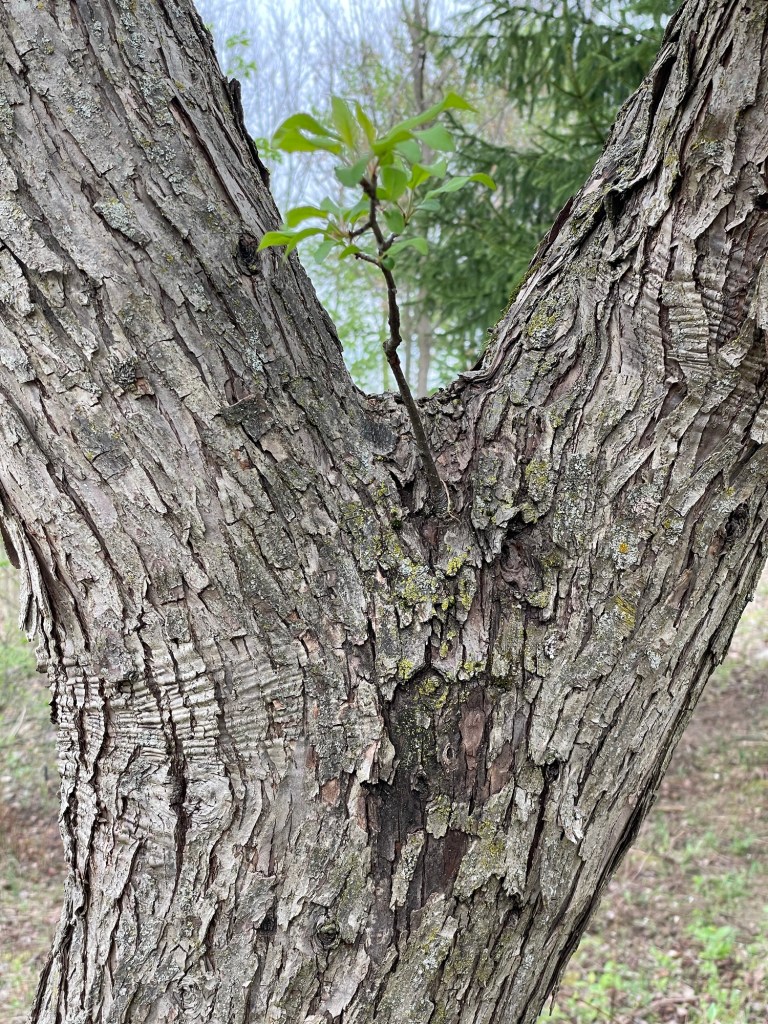
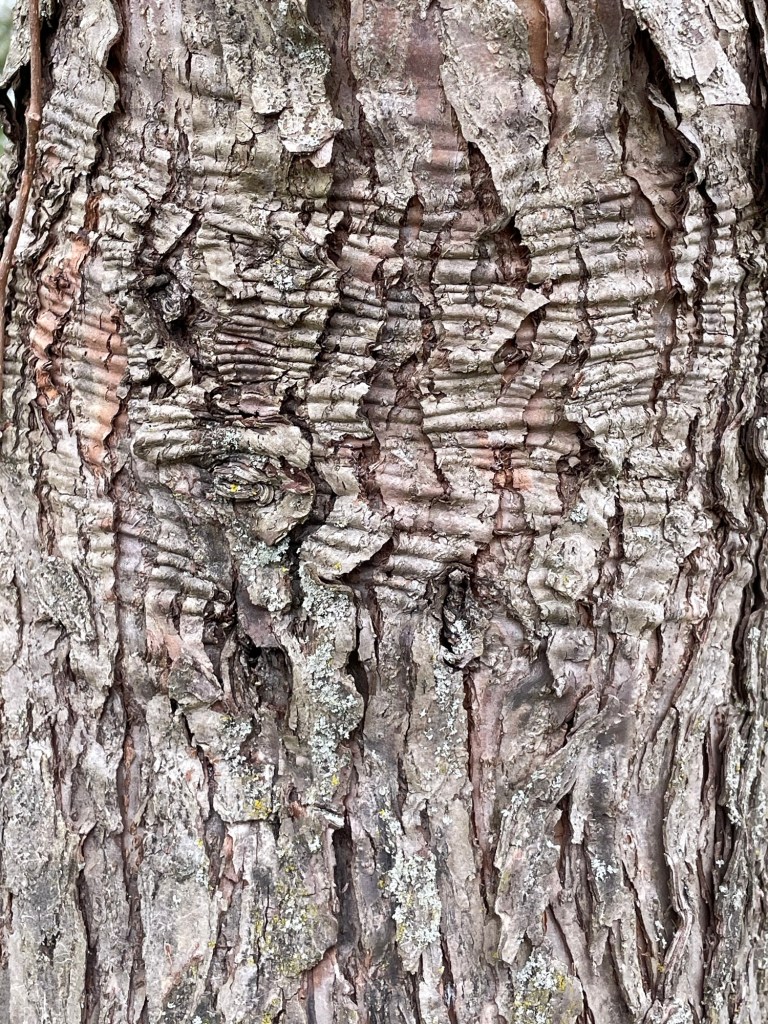
Malus pumila var. niedwetzkyana………. The Paradise Apple
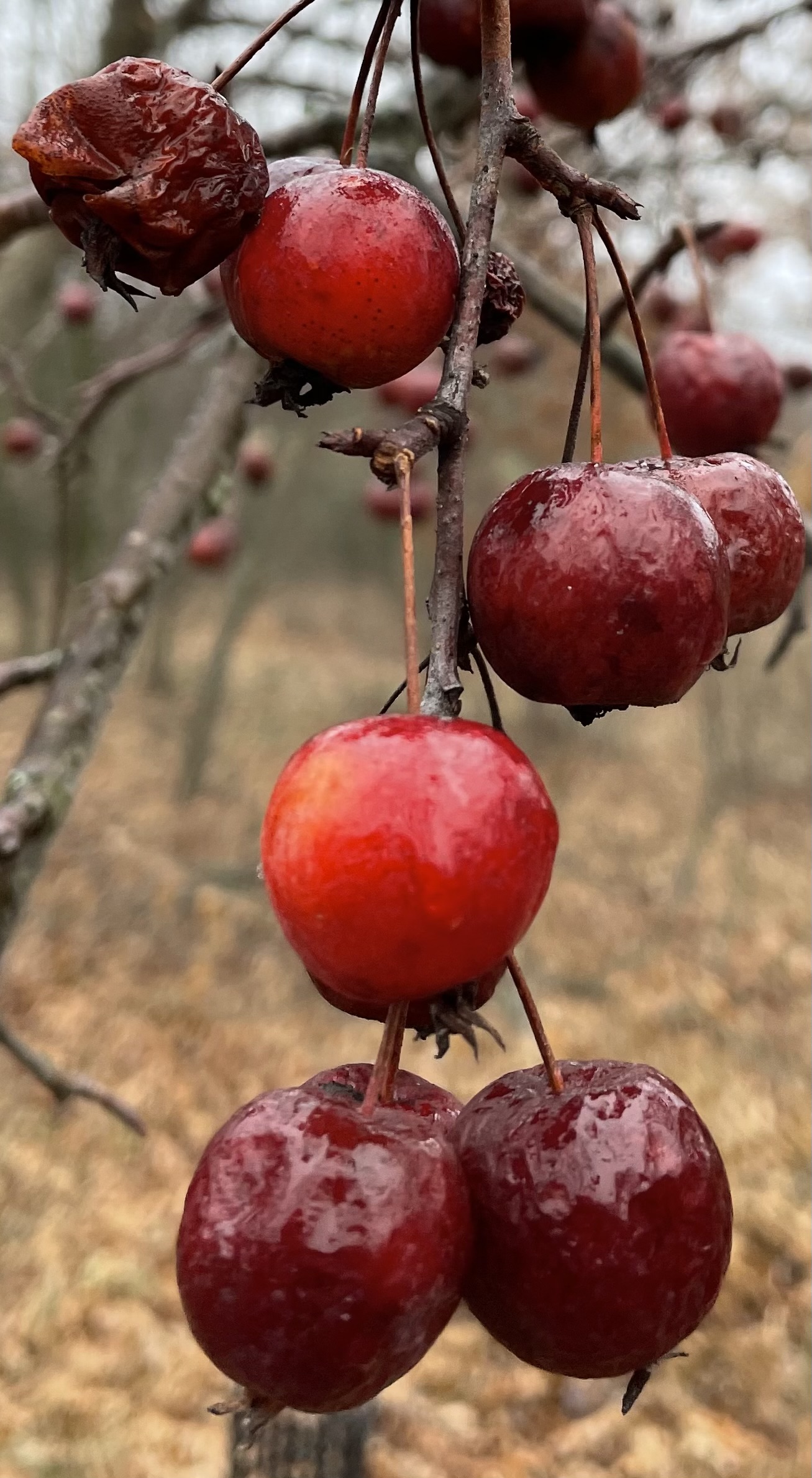
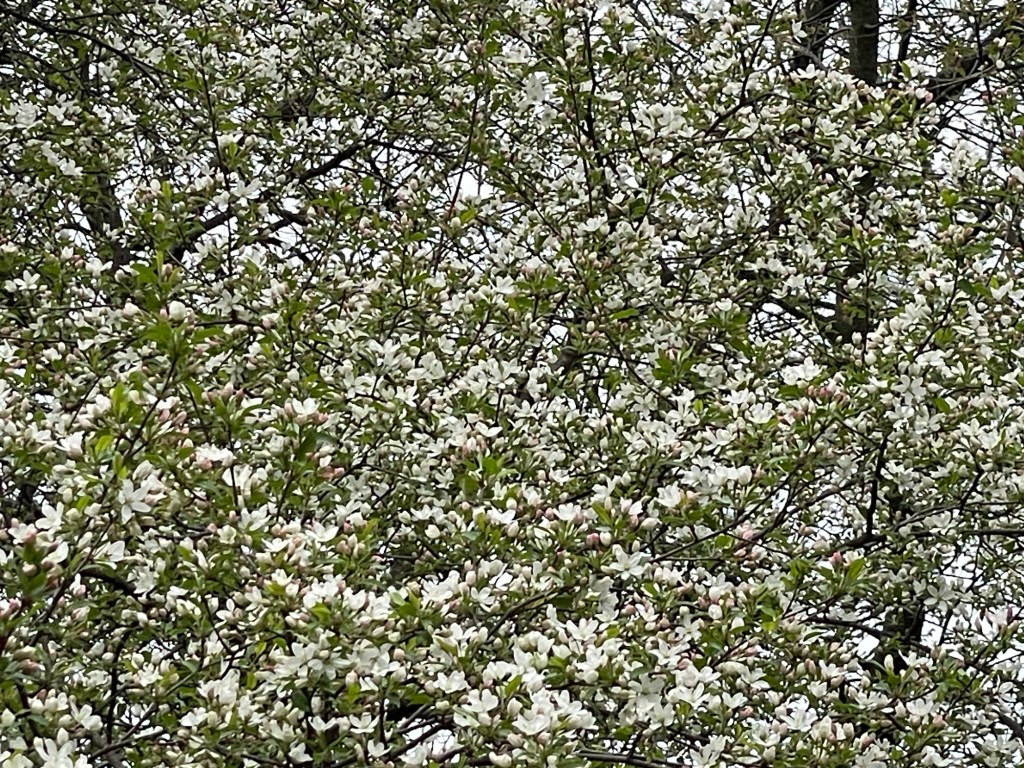
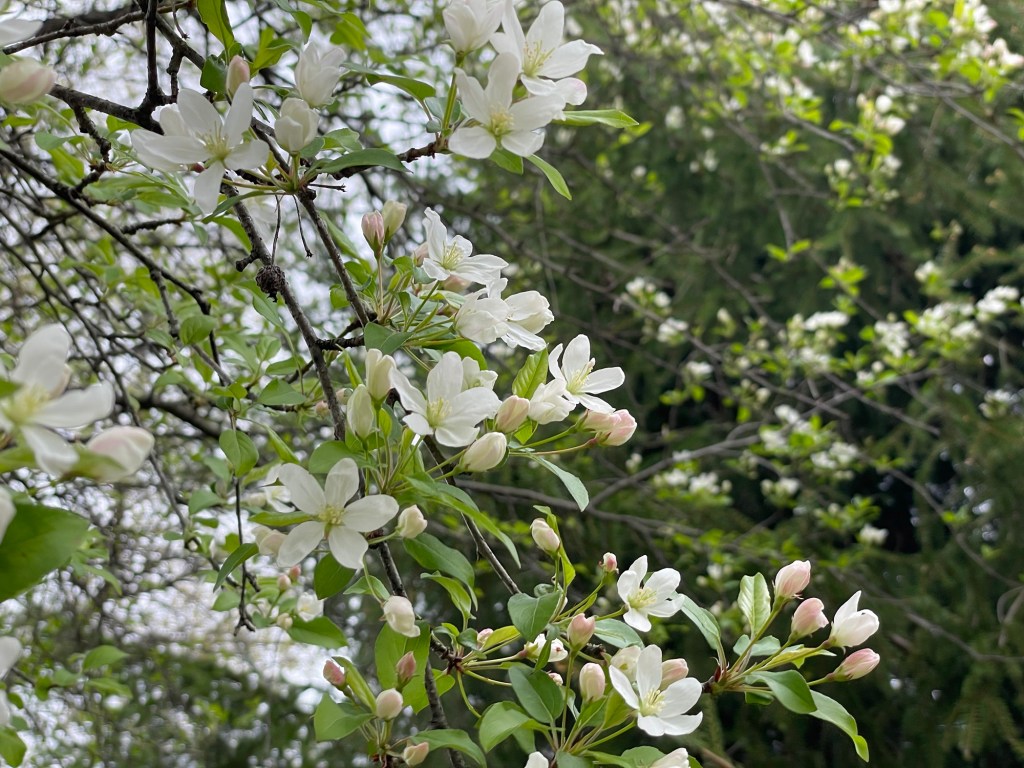
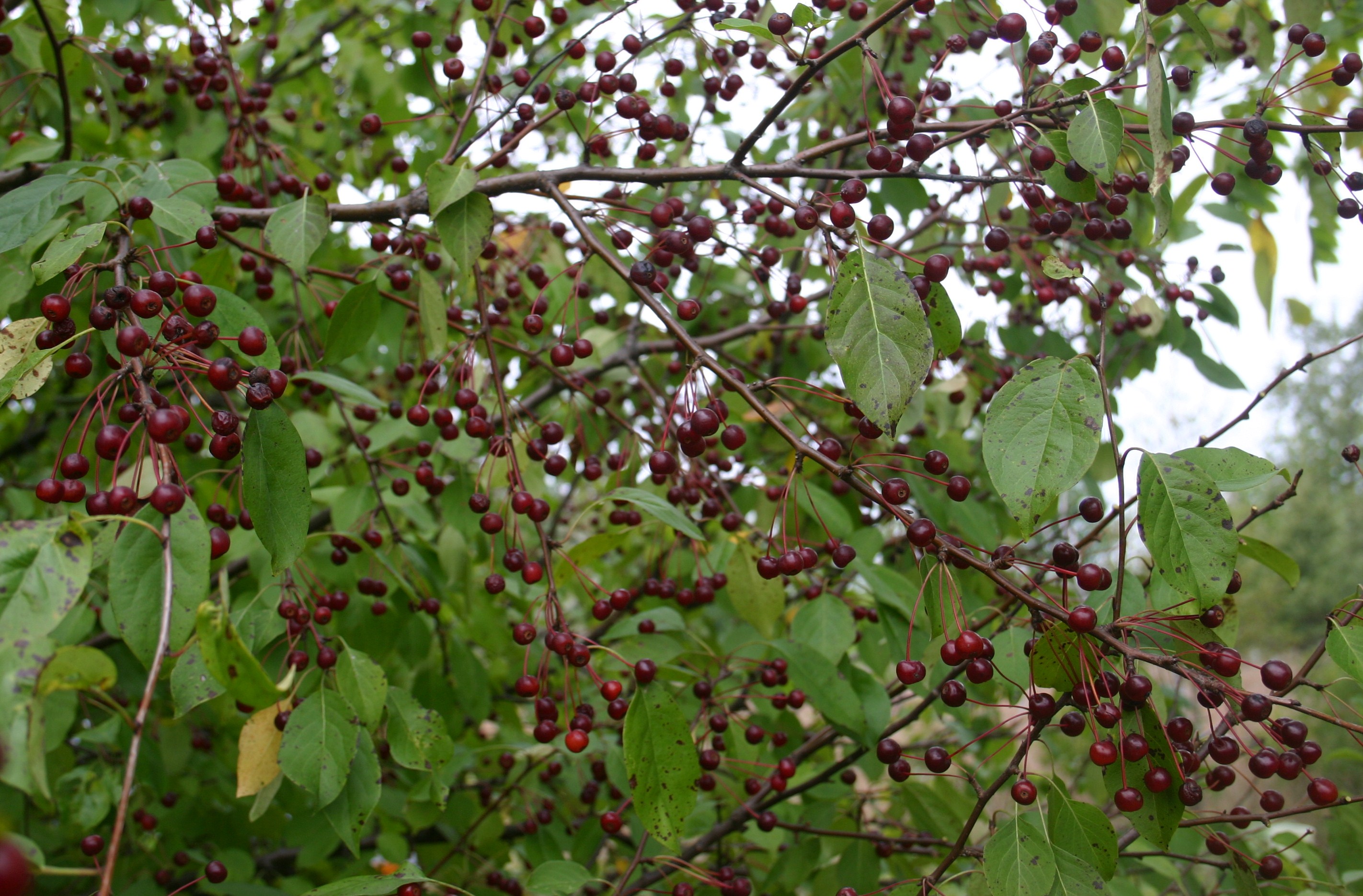
I received this seed from an overseas arboretum collection many years ago through the International Dendrological Society. It is a white flowering form of crab apple with red flesh. I only had one tree of it at the time and planted it near a group of Finland subarctic Norway spruce as a nice backdrop. I grew many seedlings and eventually I added to the lone tree by selecting four of it’s most vigorous seedlings. What I did was select seedlings that had clean foliage. This type of selection process also tends to improve the fruit quality and size too. The seedlings had larger fruit than the parent and were also very fruitful at a young age. When fully bletted, the fruit has a powerful almost medicinal flavor. For that to dissipate you must let the fruit sit in the tree late and wait. Astringency is very high until it breaks down fully. After that it is like apple concentrate but paste like in texture. This is ideal if you are using it for adding anthocyanins to an apple jam, jelly or spread. The Paradise apple has possibilities as a species outside the world of grafted cultivars. It can harness its frost resistance, fruit free of disease and insects and its high powered anthocyanin rich fruit in a way no other apple tree can make happen. What is needed is a larger grow out to further refine the population of apples from it. It might lead to cloning it via grafting but looking at today after 40 years the species is suitable for use as it exists.
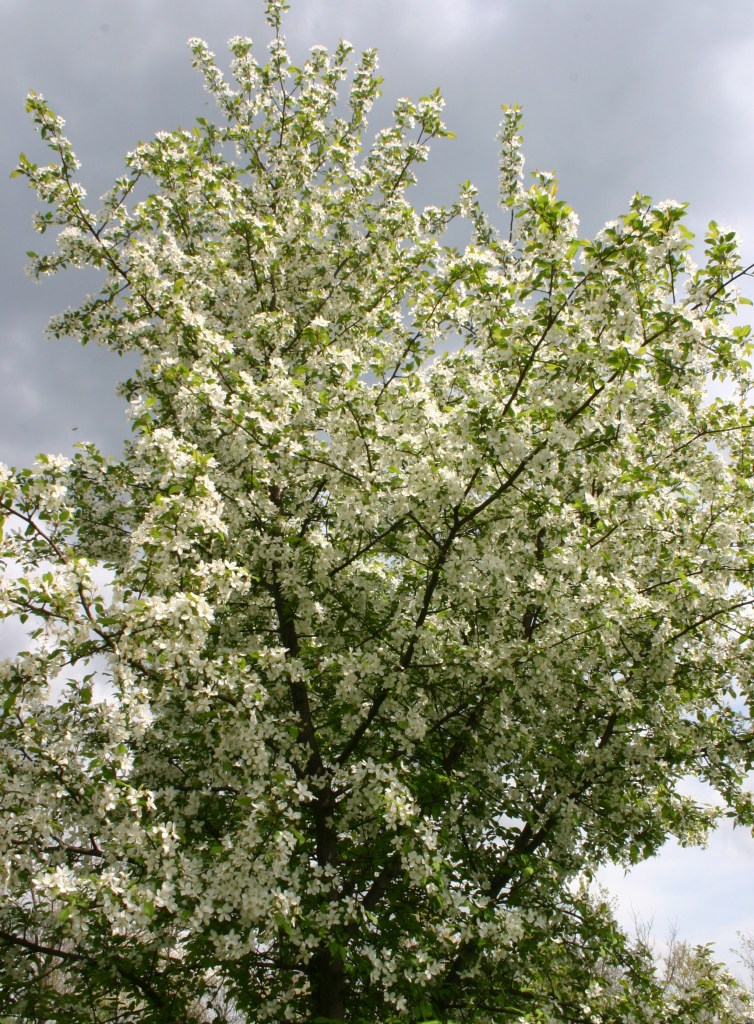
The tree can support huge weight on its limbs. It often bends to the ground with its yield. It fruits every year. It combines high yields with dense fruiting clusters throughout the tree.
I can see that Niedzwetzky’s Apple could be used for syrup, cider and flavoring in its native lands of Russia, Germany and other middle European countries. I climb and shake the limbs or use a pole pruner to drop the fruit. It is always clean. It inherits many of the wonderful features of the subspecies and species of the domestic apple. It is a free apple-not cultivated that moves with evolutionary time and can help us in the quest for a delicious apple rich in health giving properties.
Enjoy. Kenneth Asmus



You must be logged in to post a comment.