The whole is more than the sum of its parts. Such is the case of using cultivated plants as a means for overcoming disease and other environmental calamities. To overcome obstacles, it takes a population not a lone individual to make that happen. This type of cultivation and selection is a short cut to move the population along in a smooth trajectory while it generates new expressions far outside of what you thought was possible. Plants are very good at surprising you. You don’t have to hybridize species, but you may choose to because of the dynamics of a hybrid population. That will add to your soup of knowledge about the plant, but it may not be what you want. It was what I wanted only because it was all I had available. I used the hybrid population to my benefit as well as the environment surrounding my farm. It is not possible to live in a world of isolation. The disease is a motivator of sorts and helps plants in terms of adaptation. When you see genetically engineered trees, what you are looking at besides the quiet desperations of research scientists are the failures of both modern sciences to capture the populations as well as the limited knowledge of understanding the value of the whole. It is one of the best examples of destructive technologies applied to plants. Many years ago, I would attend the lectures of the late Dr. Dennis Fulbright from Michigan State University. He was a leader in understanding chestnut blight. He frequently discussed breeding wild American chestnuts only because of the rather ironic twist of breeding selections to create wild. He said you can breed a wild chicken but in the end no matter what the outcome; it becomes domesticated. You bred it. You domesticated it by breeding. That is domestication in its essence.
The generations of plants that I have at my farm are not just random configurations of two or more species. I have seen it in the populations while generating new trees from those populations. My subjective anecdotal experiences could easily be explained as random. It is the interpretation of random that changes within me as it becomes well defined and selected in an effortless way. It is one of the reasons I am currently measuring those plants which best highlight this effortless way that made it through the cloud of disease and other environmental conditions found at my farm. It turned out it was not just one and done. As painful as it was to watch my plantings disappear at first, it was a great joy to see the new generation built on top of the mulch of the old.
Here is some of the good, not so good and fading hybrid American chestnut trees which helped make that happen.
Fusion
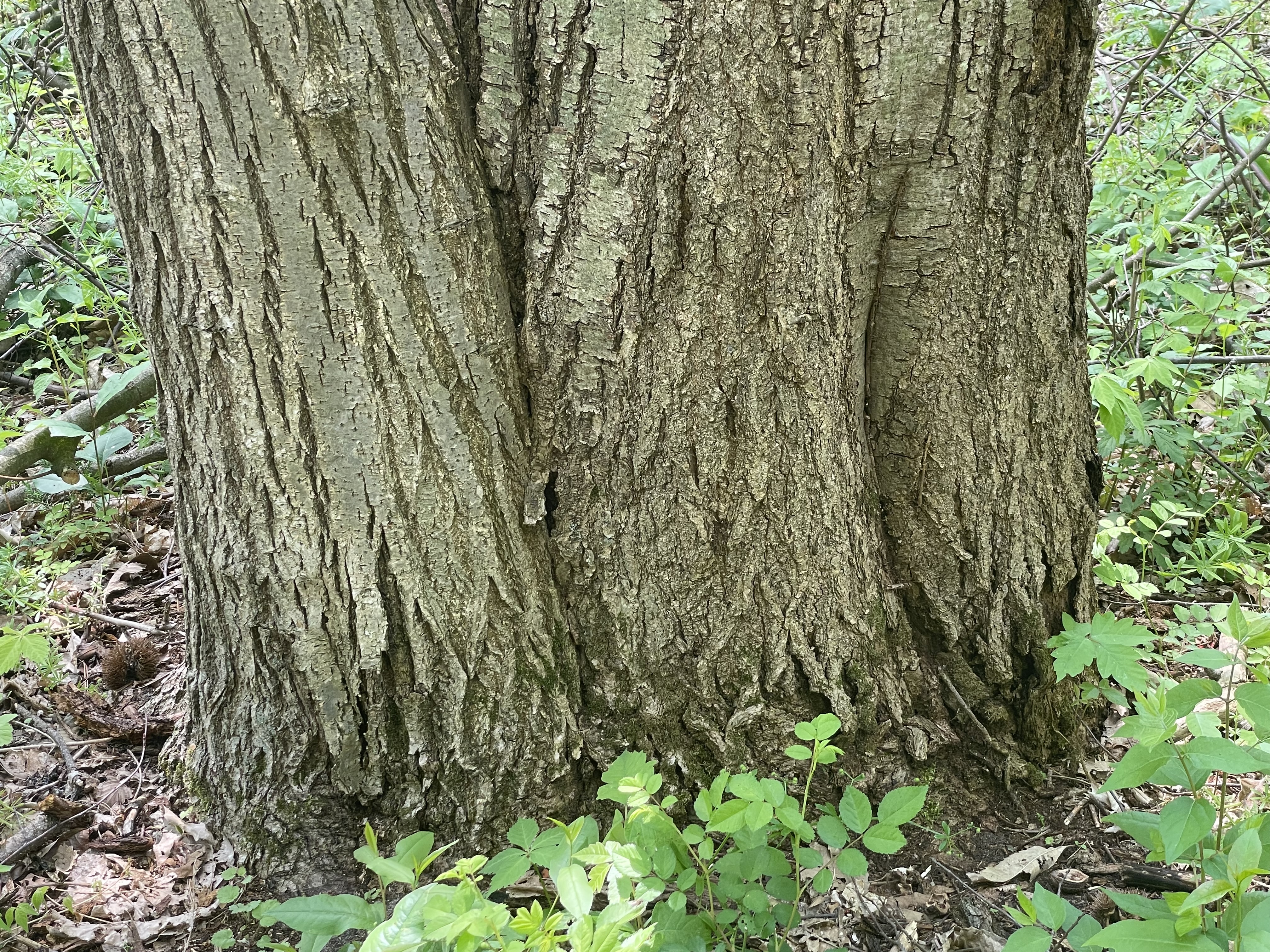
You see it with oaks. Why not chestnuts? The tree on the left is a Chinese and European hybrid. The tree on the right is Viva, an American hybrid that had over the top hybrid vigor. Viva is no longer with us these days, however the seedlings surrounding Viva are showing more vigor than the parent with strong apical dominance. The blight is still there but its effects are greatly muted. This dampening of the disease may not look pretty but it demonstrates the effects and power of tree callus the same way a tree is injured and the bark is lost in the process. Callus equals vigor, health and power in the world of chestnuts. To make that happen, I let the seedlings grow up and around these two trees while over compensating for the lost due to disease in the process. That worked. As far as the fusion equation of planting trees like this. It is not recommended but I am glad I did this because it added to my soup of chestnut trees and helped in the process. The planting is flourishing again. I dodged a disease bullet.
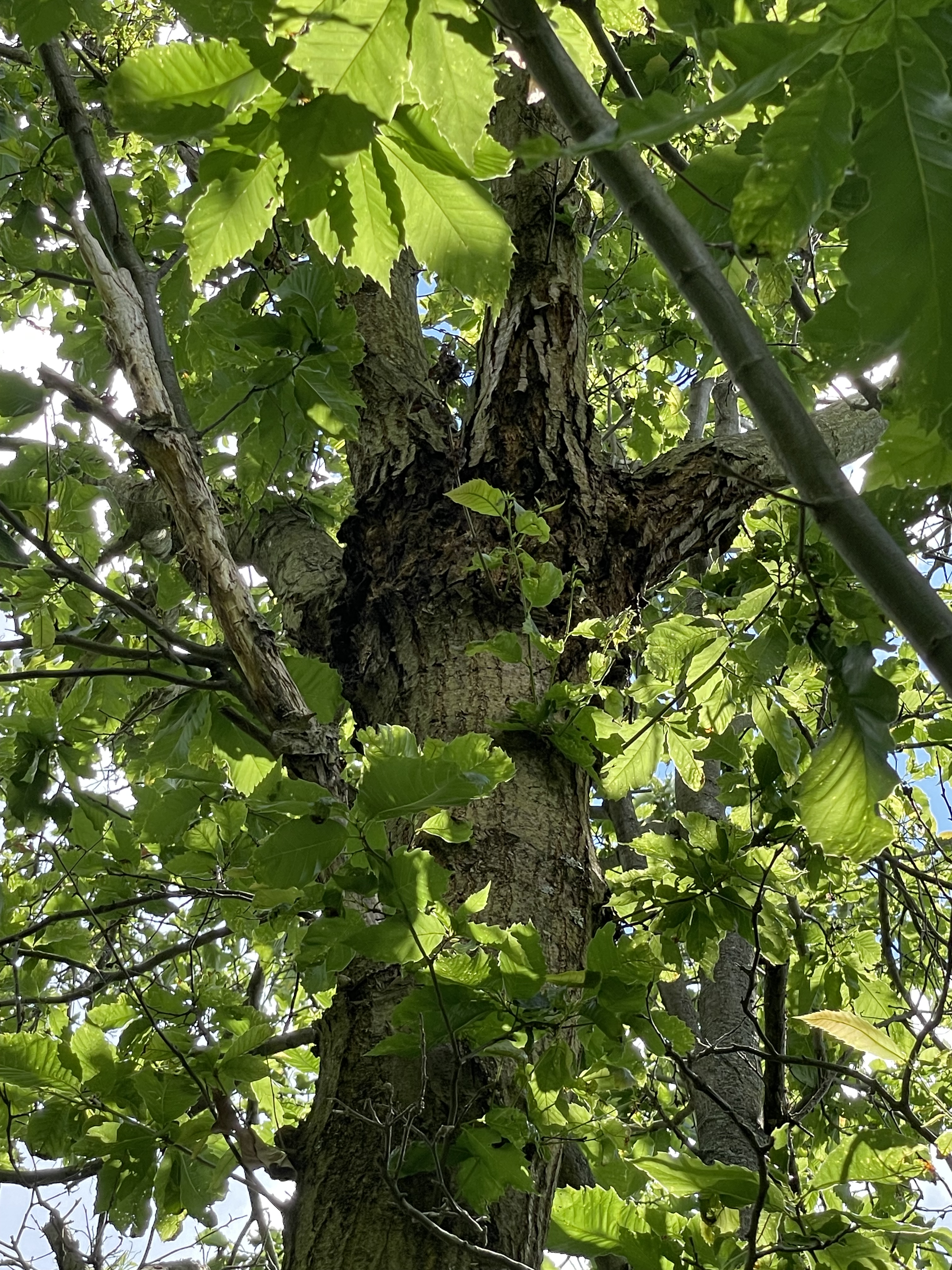
When you first look at a disease that is on the surface of a trees bark, you only see the outside. This creates a certain uneasiness because you wonder will this continue to get worse or does the blight also have blight and is now in a weakened state. Maybe the tree will make it. I will cut it down and leave a sprout to test it further. This is one of my gritty tests. Recently I dumped 10 pounds of chicken manure on a particurally good tree to see if vigor and disease resistance can be influenced by fertilizer. For a brief moment in time I thought I was a passenger pigeon helping the tree reach high into the canopy.
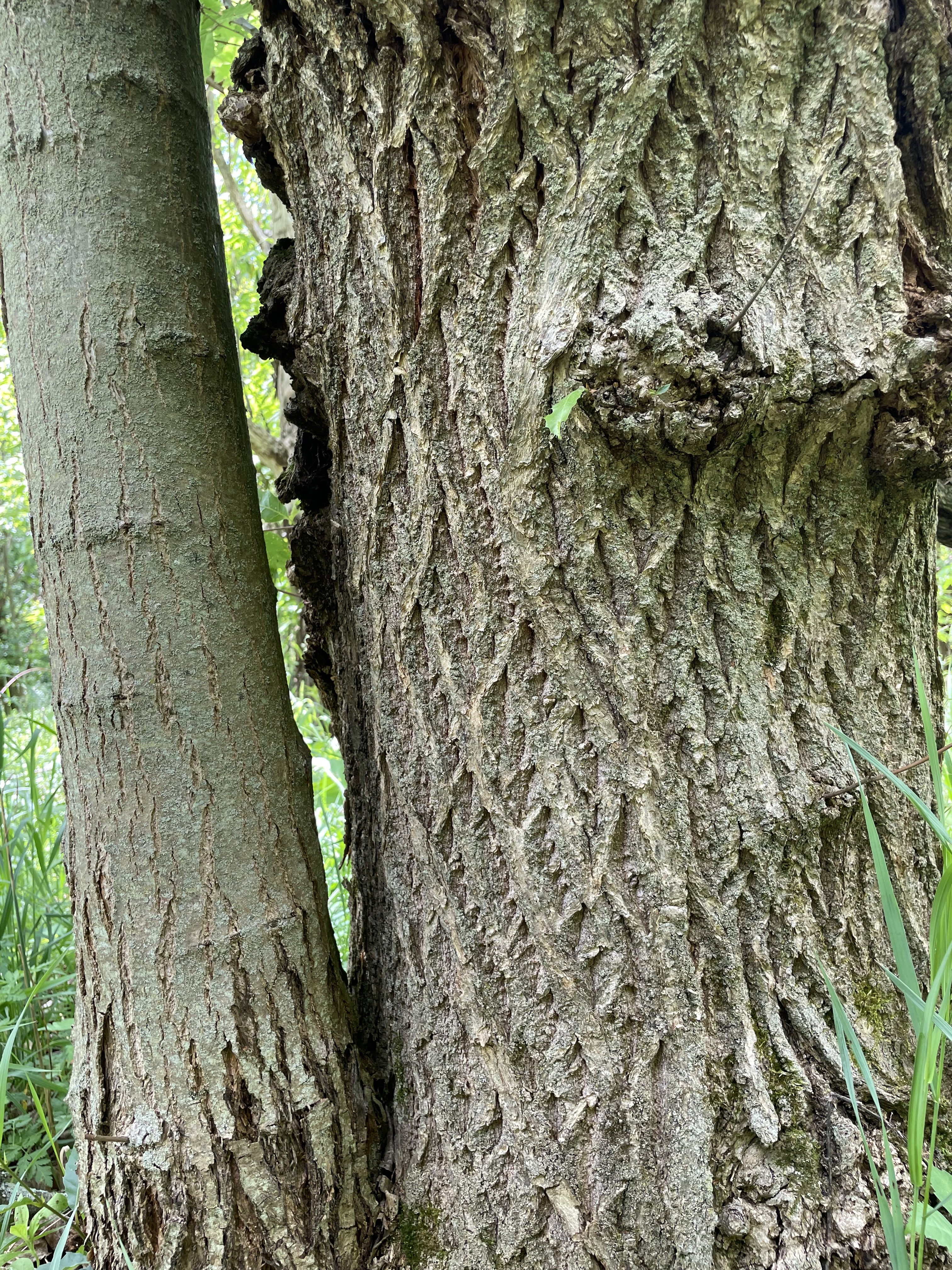
I use to be quite fastidious in my chestnut plantings removing suckers, understory seedlings and other plants which slowed harvest. Since we were on our hands and knees harvesting I liked the parking lot view. Over time I began to notice some trees had what is called water sprouts. These were very fast growing whips which can put on 8 feet of growth in a single season. Why was this happening? I wasn’t sure so I let several go. This is one of them. Apparently it signals to the tree that the main trunk is under pressure and time for a new top. Part of this is due to the chestnut blight in the top shrinking the crown and stressing the tree. This tree is very productive and has done well generating new plants which are immune to blight. The generations under this tree along with its natural resistance add to the self regeneration of a hybrid population showing good form and resistance to disease.
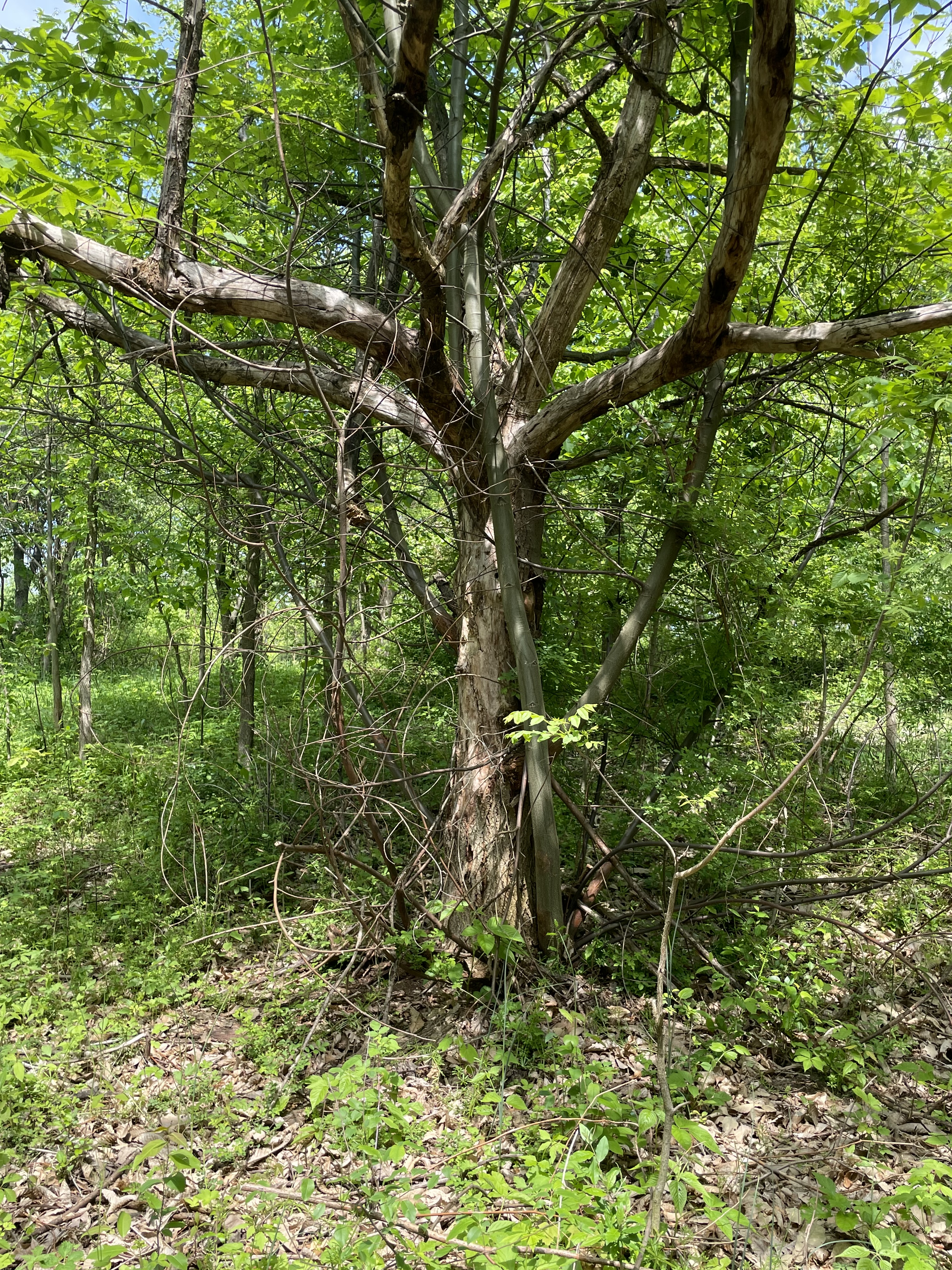
I wish I could tell you all is right with the world. It is not. In this plant world, loss means salvation. It also means a hole in your heart for something you lost. There is a way around. You just have to compensate for your beliefs and understand it is not what you wanted anyways. These two images of the same tree show both the death and mayhem of destruction along with the regeneration of new sprouts from the rootstock. This type of regeneration depending on the composition of the individual tree moves quickly past the death of the old which can bring it back to fruiting. In my plantings, this was a common experience and shows the overall weakness of the plants in the beginning without the life support of a new generation. I’m keeping the walnut and seedling apples under its canopy while I harvest the wood and coppice. This tree did produce some seedlings for a while and a few are kept along with the walnut and seedling apples. This is one way to benefit my farm as a biodiverse tree crop farm. The seedlings of other trees are also more than the sum of the parts.
T0 PRUNE OR NOT TO PRUNE

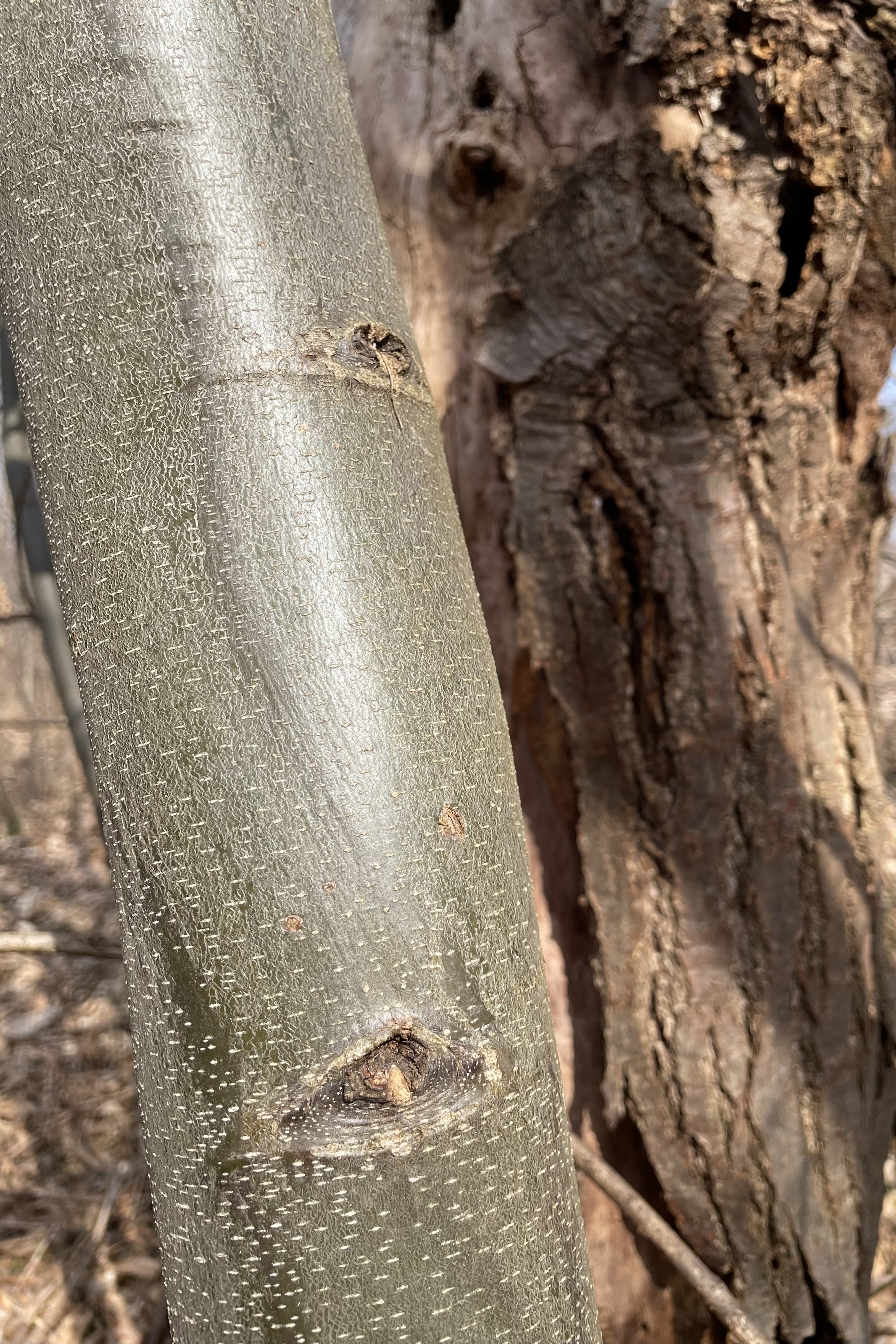
I wish I knew what I know now is a common sentiment amoung gardeners. With chestnut trees, you soon find out that just a simple cut can cause problems. This is a case of doing the trimming and leaving a small stub which then trapped the disease. The smooth bark of young chestnut trees are often immune to blight because it has to adhere to something to grow into the tree. As trees mature, the smooth bark becomes less and less on the main trunk. If you prune a tree you are inadvertently creating a nice habitat for the disease to settle in. Yet it is surprising I don’t see more of it because I do love to prune. It is just today I have to think about it more and its repercussions of the trees health than I did in the past.
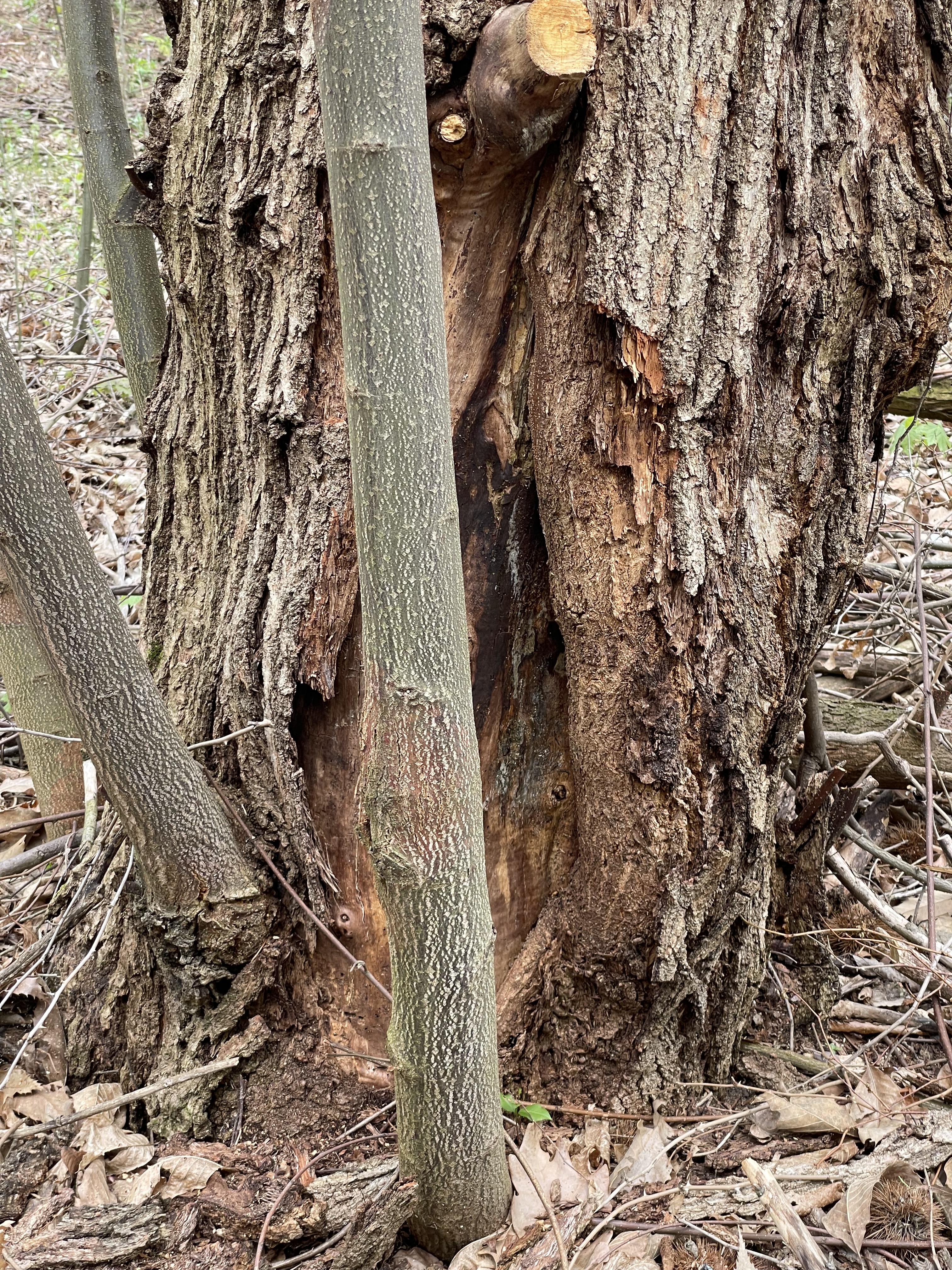
Sprouting signals both the end and beginning. In cases like the above, it helps the tree wall off the damage, feed the root system and improve the trees health. It might not be enough. A windstorm swept through this area and took out a portion of the top. I will wait.
Scorched Bark
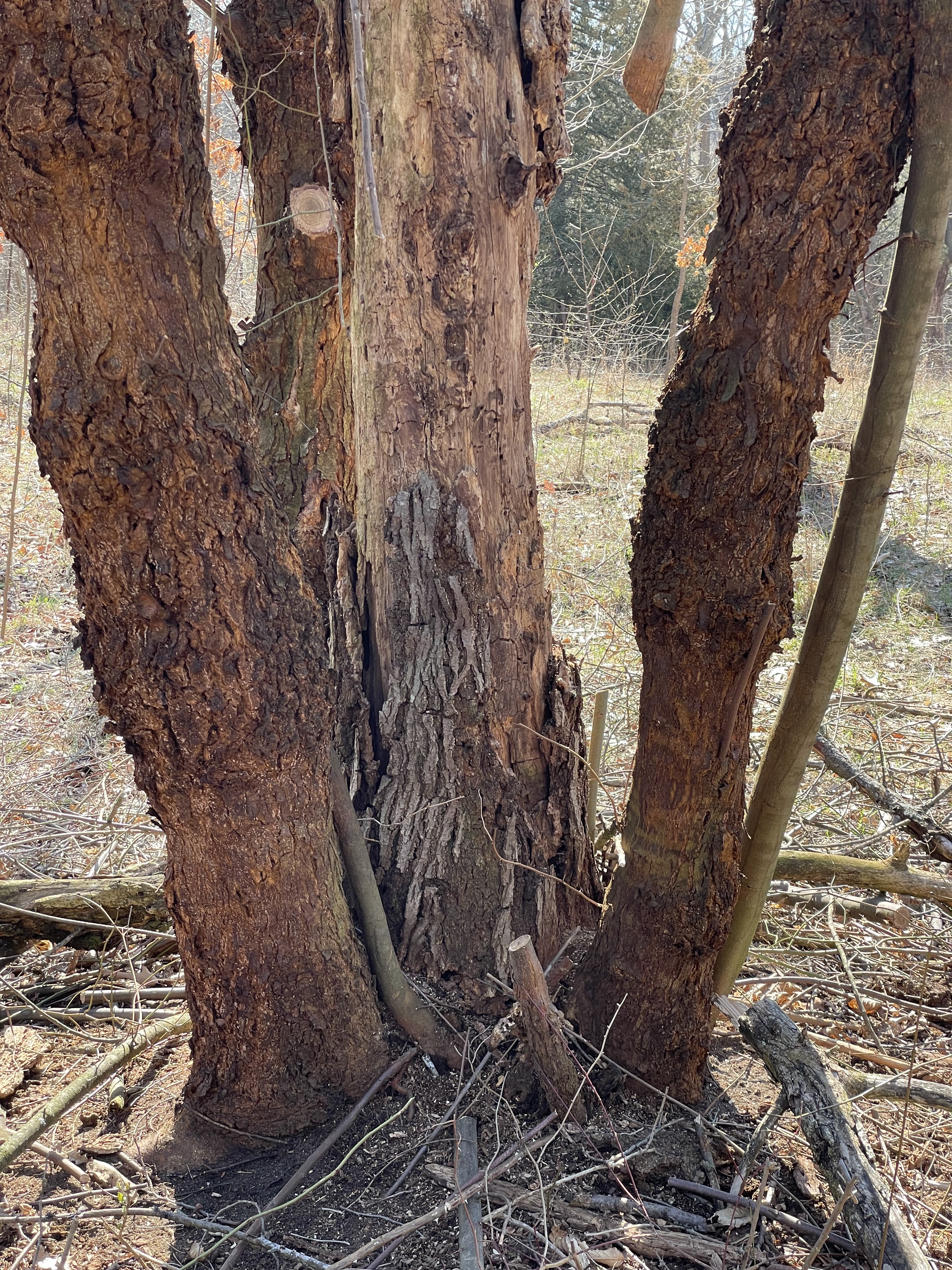
How bad can it get? Disease is part of life right. I wish it wasn’t sometimes. It’s brutal to plants.This highlights the power of the chestnut tree and the over the top response to stop and wall off the damage. The bark has fallen off. The tree barely can leaf out yet it has for the last 20 years. The original tree in the background shows the first go round. The two sprouts on the side show the second go round. Here we see the final showdown of the weakened blight state and a tree that essentially refuses to give up. I had cut this tree down a few times only to let a couple of sprouts grow to see what would happen. I found out. Weakened blight. Power of an elephant encapsulated in a tree.
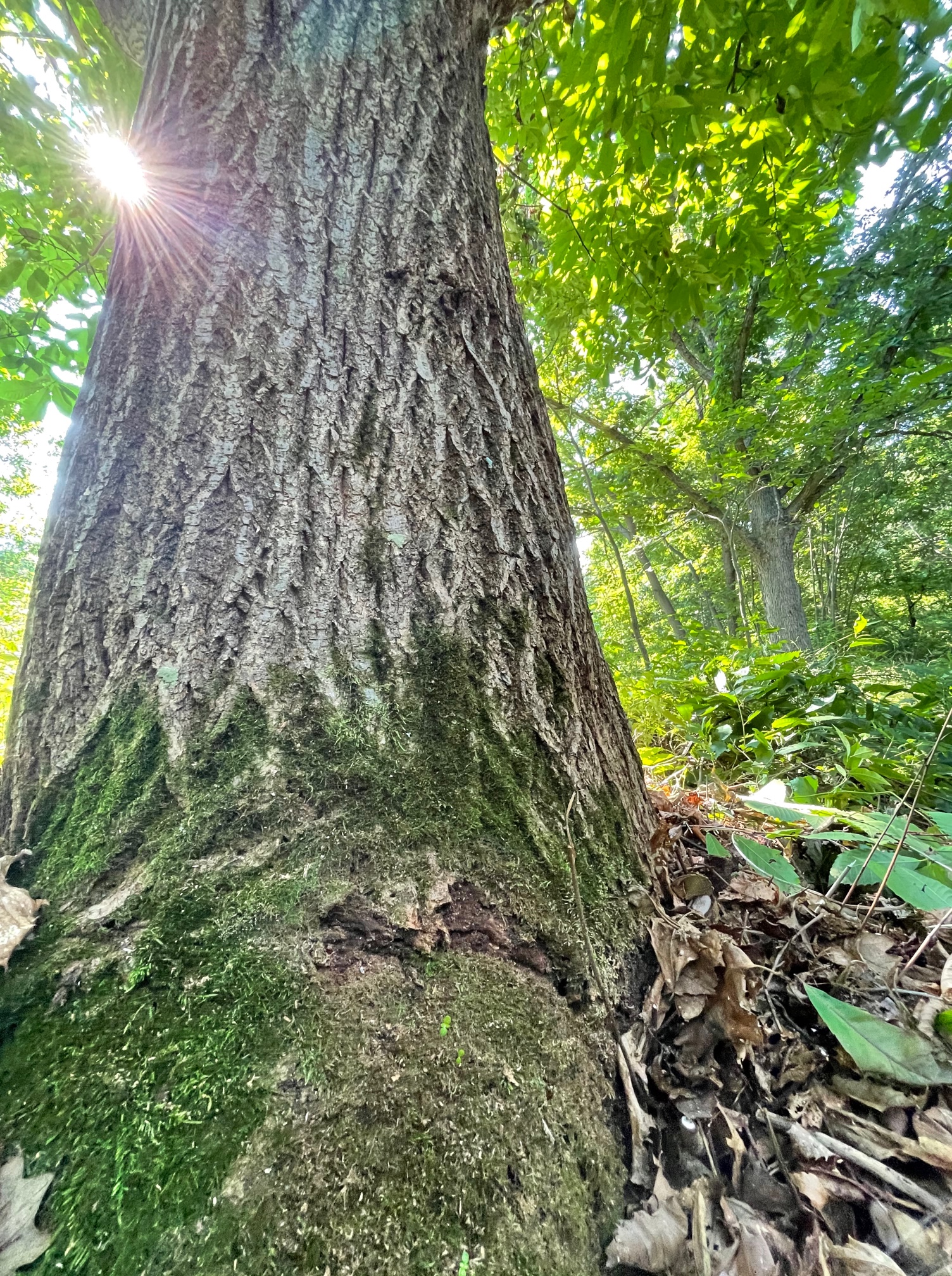
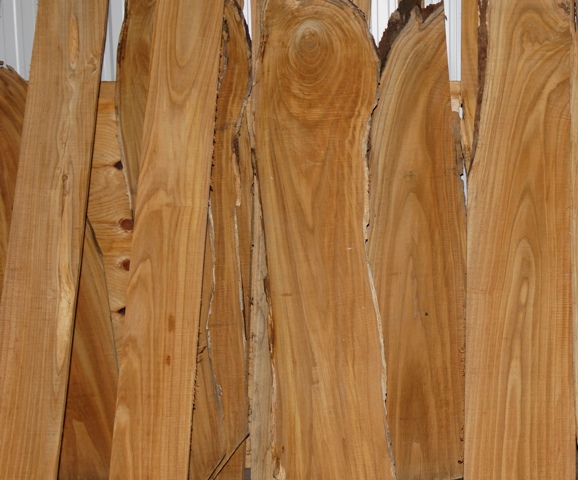
The Grant chestnut combines the best of the European hybrids with crossing from the American chestnut. Today it has few limbs up in the canopy as the blight took its toll. The trunk is clean. This was one of most vigorous chestnut trees I have. The Grant chestnut tree was grown from a seed of a very weak European tree with minmal nut production from northern Michigan. It happened to have been crossed with a nearby and very healthy American chestnut tree. The original tree is gone. New ones from sprouts as well as seed nuts provide an avenue for a future population to take the place of the lone plant on a bluff overlooking Lake Michigan. For my farm it was a loss. For me it was a gain. Now it can survive in the real world. I will make a few tables from the wood. Two gains plus One loss equals net happiness with the results.
Enjoy. Kenneth Asmus


You must be logged in to post a comment.