
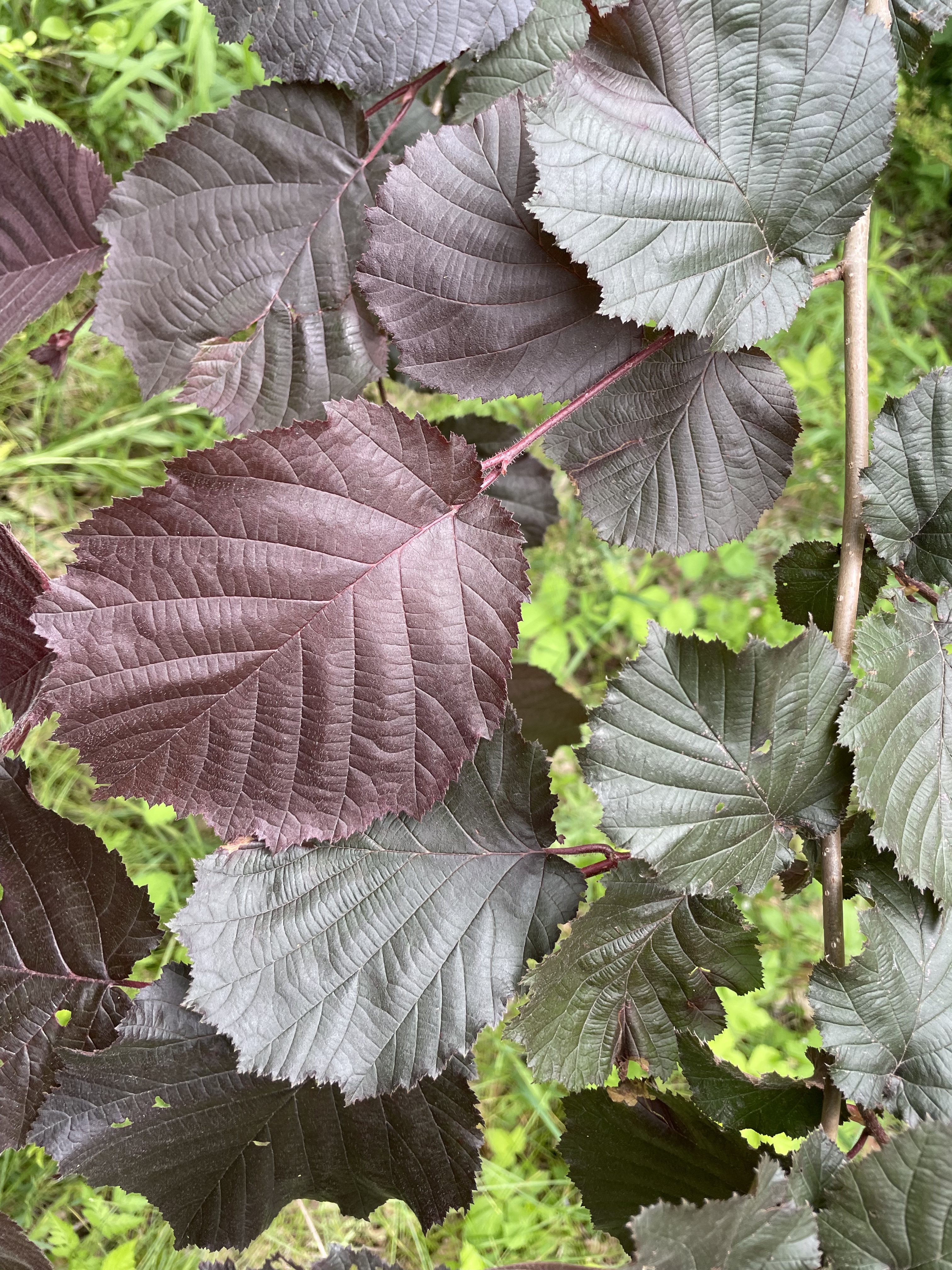
Purple pigments in plants attract attention. Probably the most well known purple plant is the purple leaf Norway maple. It is produced from seed as well as varietal selections with intense purple coloration. You still see it in the nursery industry a little but like everything purple including purple leaf crabapples, the ebb of flow of cultivars changes as selections increase and peoples preferrences change. This purple leaf hazelnut is one of many I grew from seeds. It had one giant problem called filbert blight which whittled them down to sticks within a few years. This one is the last one standing and it too has some blight but is looking very good right now. However, I am suspicious because the disease is so powerful. I grew many thousands of hazelnuts for the mail order companies. In this process, you would see certain plants with purple or variegated foliage. I use to tag those and plant them in my plantings. In the world of Corylus, these hybrid plants could not survive long. Variegation itself is a kind of weakness in that there could be sections of the leaves totally devoid of chlorophyll. Purple on the other hand does not suffer from the change of pigment. Why is that? I have no idea but having the purple pigment could actually be of benefit in terms of having the purple pigment within the nuts. I did get one nut last year from this plant, but it was a blank. The whole nut was purple though. People have experimented with purple almonds too and it is possible to select nuts with a higher anthocyanin compounds within the nuts themselves. How much of a benefit that would be is unknown but it would depend on the concentration and of course flavor. The flavor would likely change too.
There are patented purple leaf filberts already but I am unaware of their resistance to filbert blight. There is resistance and then there is immunity. You need immunity. This particular disease is wind distributed and is everywhere there is American hazelnuts. American hazelnuts are immune to it. The hybrids and other species are usually very susceptible unless specifically bred intentionally or using luck like I did and produce massive populations and letting ‘nature’ have at it. It is interesting that the purple color attracts so much attention. The Purple beech is a good example and used extensively at the turn of the century. It is still with us today along with new cultivars being planted. Whatever Purpurea is, its not leaving the eyesight of people who love plants and all its infinite variations. Not everyone is happy with variations but variations provide a means to change over time and adapt to changing conditions. Some just happen to be ornamental plants.
Once I had a visitor to my farm that produced wildflower seed. He had this one type of sunflower that he spent a lot of time on and was one of the first to offer seed of it in bulk to the ever growing meadow and prairie plant market. Every now and then he found double flowers in his field. This upset him and he quickly destroyed them. I don’t think he realized that this natural form of mutation is common in flowers. Instead he blamed it on a woman a few miles away who had a flower garden who had a double form of sunflowers of which he thought they were tainting the purity of his sunflowers. I found that funny. I was thinking of the song. “Everyone Wants to Rule the World” by Tears for Fears. I had heard he stopped at these plantings and told people to remove these double flowering evil sunflowers. I am pretty sure that is a mental illness but I am not sure it is treatable. He wants to rule the world. The flowers already rule the world and diversity is inevitable. That you can’t stop.


 biologicalenrichment
You must be logged in to post a comment.