
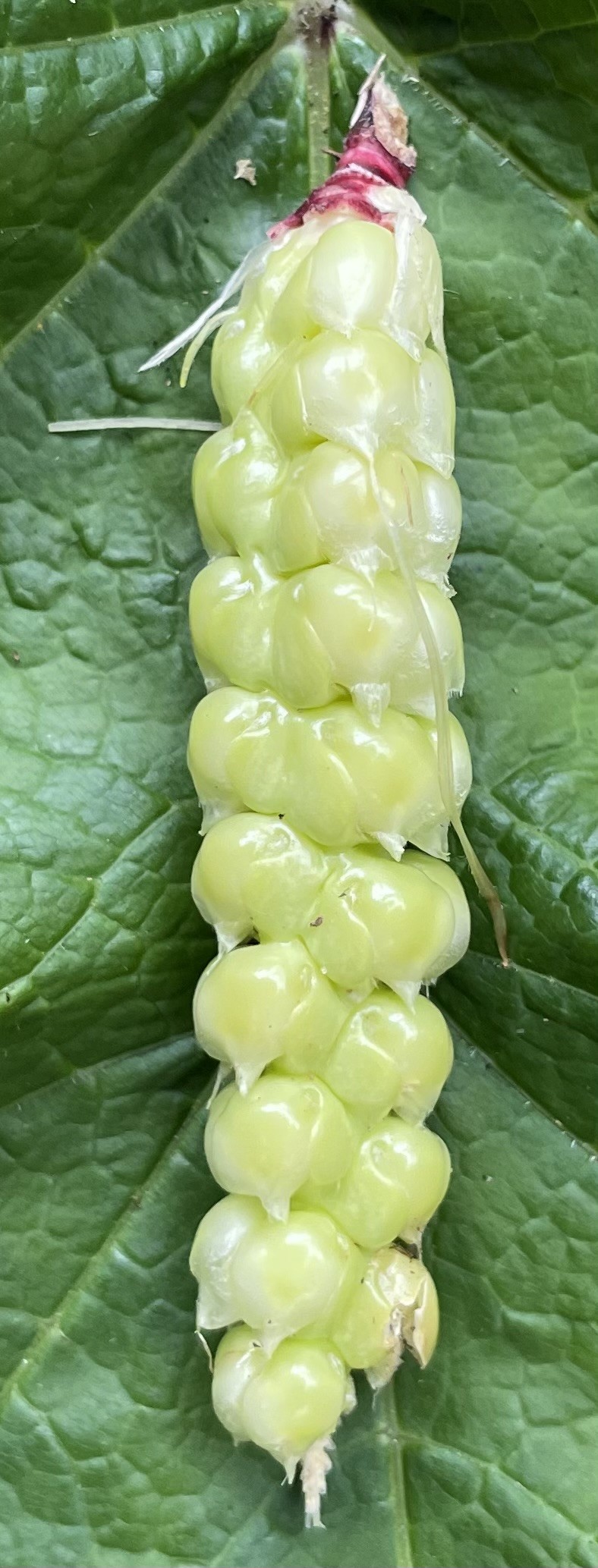
If someone came back from a 9000 year journey and saw corn today this might be their first question. What did happen to corn? It is funny to me as this question came to me last year from a colleague who was visiting my teeny plantings containing teosinte. “Ken, what is this?” I thought he was going to say, “Bro. This blows.” There was some vague recognition that this was corn, but essentially I had changed it to the point of no return. I had reduced its yields to less than one percent of its current glory and created something unrecognizable and frankly useless by today’s ‘corn’ standards. To me it was perfect and exactly what I was hoping for. I cannot take credit for it but I did set the stage hoping for an outcome of any magnitude. I was thinking of teosinte as a new crop filled with possibilities as a new type of grain. It was not corn anymore. I wanted to see what our ancestors left behind and why. I don’t care about breeding. That is a waste of time. What I wanted was a population of plants that you could no longer control. Over time it would continue to expand in terms of its diversity and ultimately become infinitely diverse. This would be the engine of creation for the corn plant. If you plant it, it will manifest or express itself in novel ways never before seen in each new generation. I like that idea. Full creative genius corn plant in control of its own destiny.
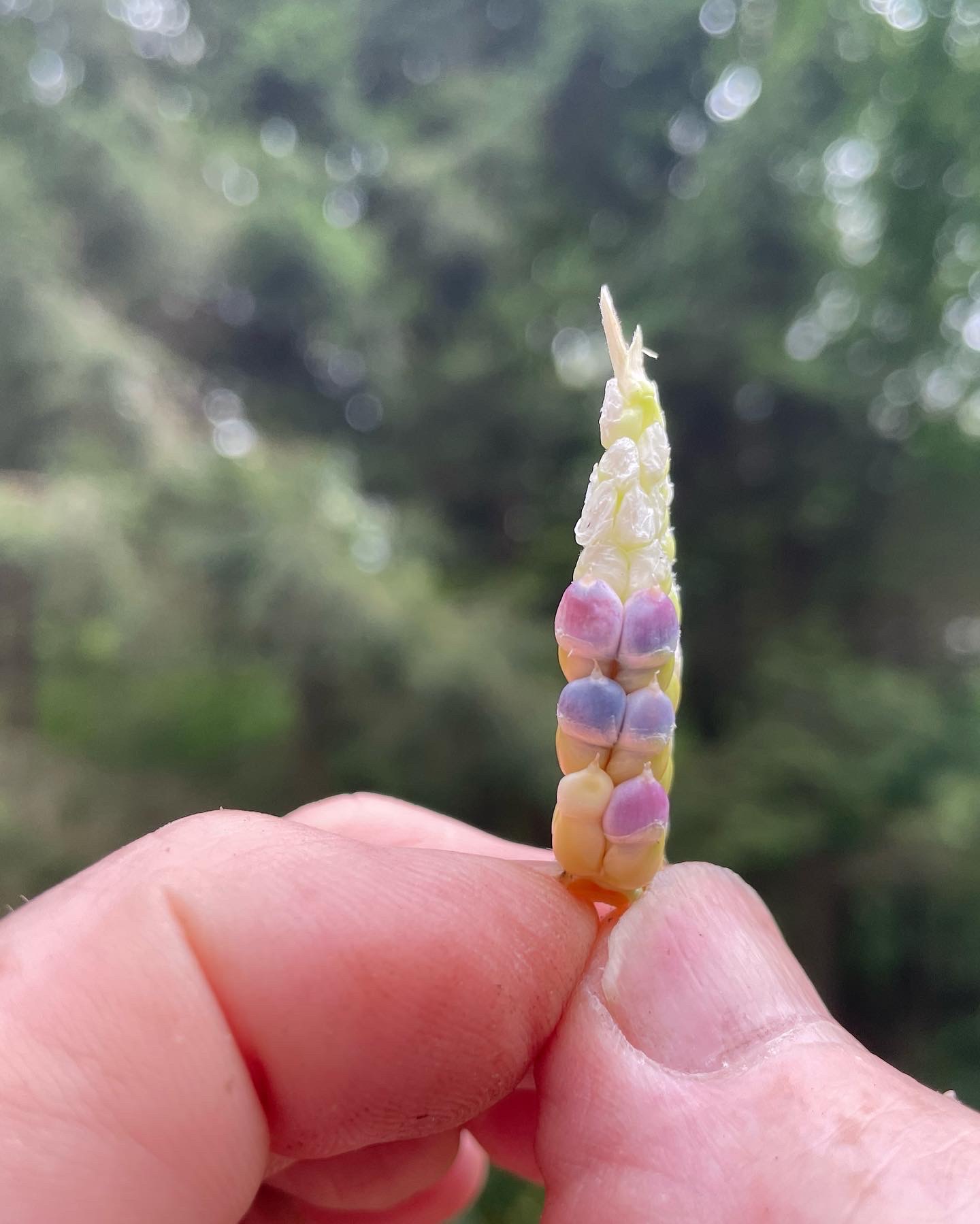
Over the course of a decade of growing out this wonderful species called northern teosinte and using its natural crosses, I found that the corn we know is a distinct species separated by a huge expanse of time from its original line up of species corns. It is such a distant relative that the chances of naturally crossing are incredibly small to non-existent. People have tried and in laboratory experiments you can clearly see the non-results. The columns were filled with zeros out of thousands of attempts. It is super rare hoovering around the one in a thousand chance. I was fortunate that it did happen to me because it opened a door and gave me a wonderful treasure of diversity to explore.

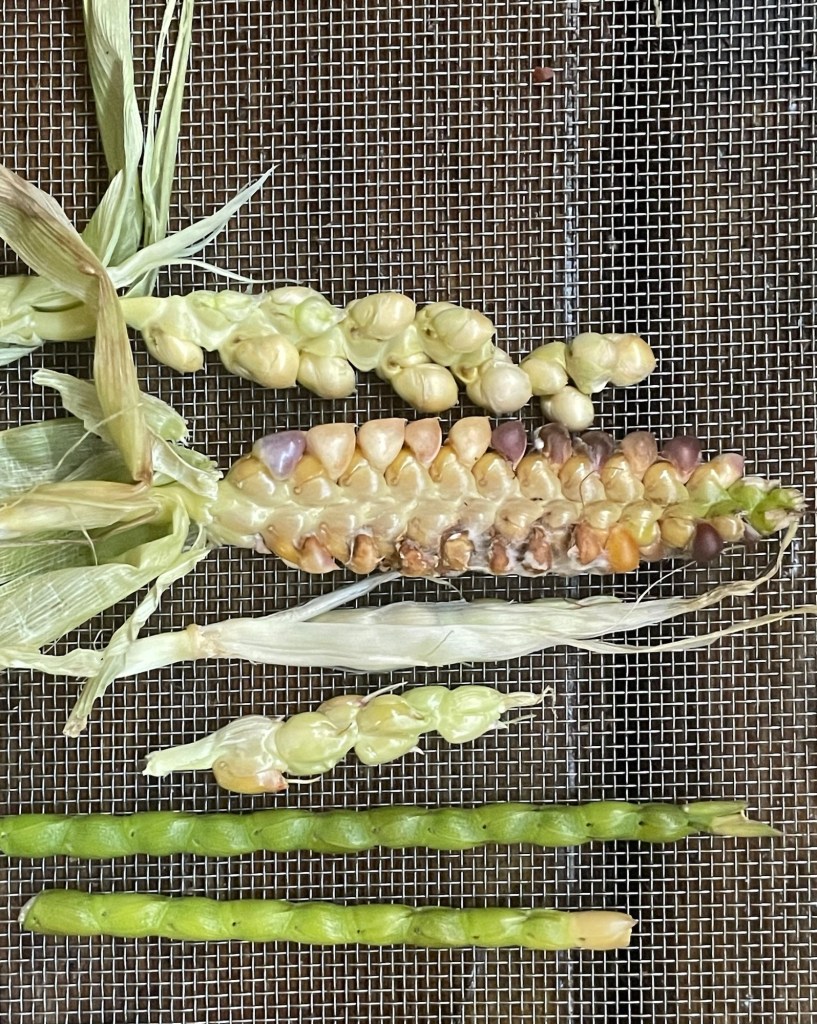
As I continue to grow it at my farm I soon realize its value as well as understand why we left teosinte. The whole structure of the ear and seeds make it difficult to use. Some of the plants have kernels that are spot welded to the cob. The cob has a husk and sheaves that clasps the seeds tight so even in my seed processor it is hard to dislodge them all. The cobs contain all three types of corn including sweet, pop and dent. There is huge color variation. As a grain crop for human food, teosinte will add new flavor, texture and a greatly enhanced nutritional profile than our current corns. I am focused on the five percent of all corn grown that is used for human food. This is the area I think that will make the greatest progress in terms of health benefits to humans and a much lower environmental impact. No fertilizer should be used. No GMO is needed. No breeding is required. No irrigation is necessary. It is a plant that is more grass than corn and likely could be grown in drought conditions with poor soil. I can imagine the density of the plants will increase the yields. Geographical selections can be done over time including shorter season selections for more northern areas. You are combining sweet, pop and dent corn all in one giant collosal soup of diversity so this will add to its flavor and use as a grain for cereal and flour. Is it corn? No. It’s not corn. It’s a grass called teosinte. Is it really teosinte? No. It’s inbetween the two worlds of wild and cultivated both of which revolve around the same sun.
What did happen to corn? It took a hike, saved humanity and then went back home to take a small break. It needs to rest.




 biologicalenrichment
You must be logged in to post a comment.