I always felt the pawpaw was the Sasquatch of fruit. I read about it in college. Later several people told me they had seen it. My botany teacher told me of a huge colony. I think someone showed me a fuzzy image of one at the Michigan Nut Growers Association meetings. The images are always fuzzy. They were taken in shade with low shutter speeds and high ISO if there was a choice on the camera. I was not sure where to look for the tree. I knew it lived in my area. I used to jog by a huge long grove but it was a single individual with never any fruit. You need two genetically different trees to have fruit set. There was no commercial seed sources of it and few growers of the tree. The plants that were sold were often dug out of the wild with no roots to speak of. They always failed. No one seemed to care about the pawpaw. The seeds were always over dried in the commercial seed houses. If you were to produce them from seeds, the plants require 50 percent shade the first year or two to get established. No one was willing to spend time with the tree and get it into production. I wanted to see the tree in the wild and how it grew untended. Every now and then I would spot them in the fall with their bright yellow foliage. There was one park that had several nice colonies of them. They grew like shumac with underground runners spreading in the nearby open fields and the maple forest. It was a robust tree but it was not in commerce.
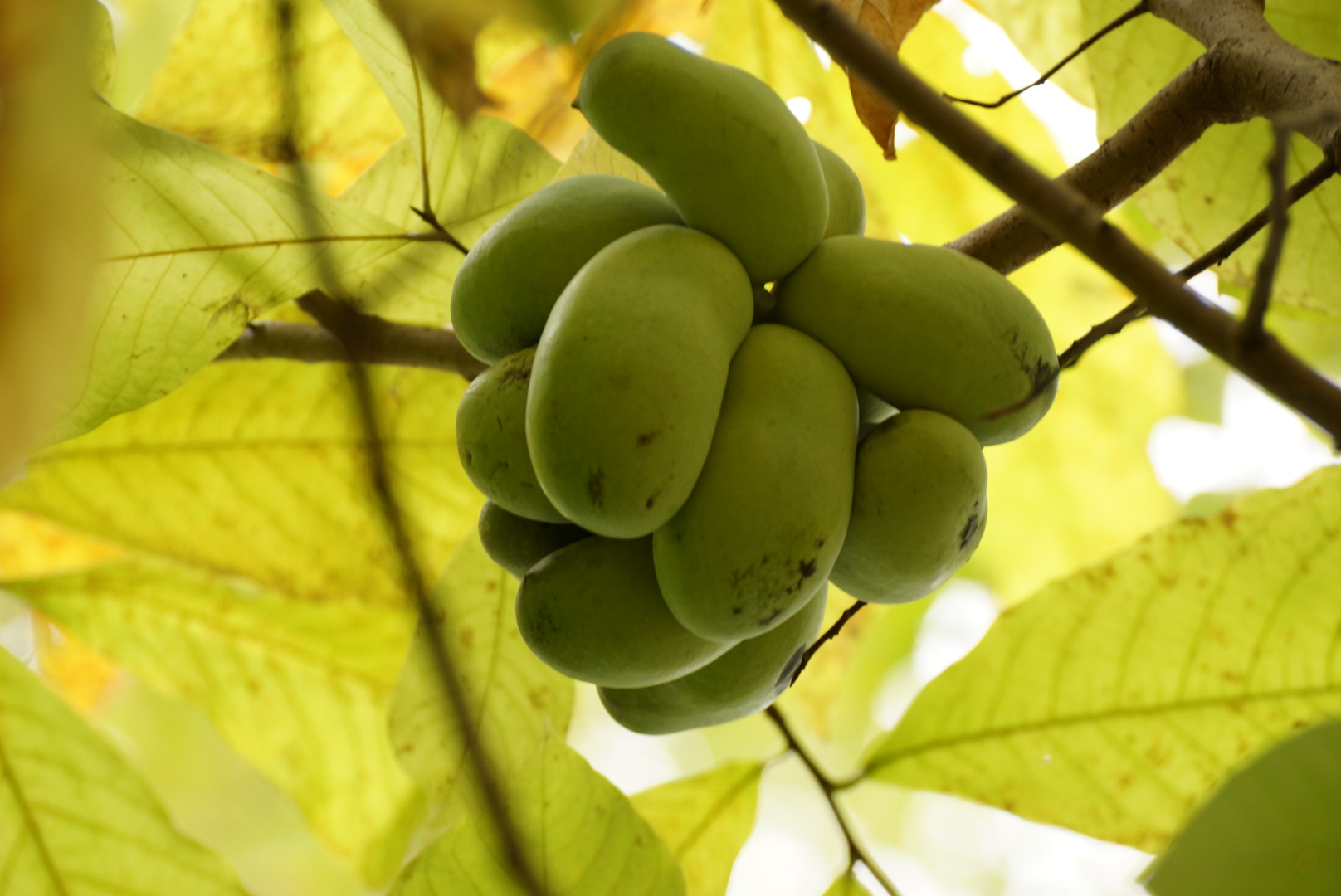
With this knowledge in hand, I began collecting seed and connecting to people who knew the pawpaw tree more than me. The seed collection started by using the park and roadside trees just north of Kalamazoo, Michigan. Several people let me collect in front of their homes where they had no idea what the tree was either. I tried to enlighten them of the values of the pawpaw. To me folks looked confused. If you use the words “Michigan banana” then this paints a picture of tropical wonderment and combines it with a Sasquatch type cult following. I don’t think I was helping and few people wanted to eat them. It looked gross to them. I liked them but not on daily basis. The fruit has to be perfectly ripe and soft to eat but not over ripe. It has to ripen on the tree. Green fruit will make you sick. The skin is not good either and should never be eaten. The jet black seeds are lima bean in size and run along the length of the fruit. The whole thing throws people off. Yet if you eat one of the fruits when perfectly ripe, it is a wonderful treat and has a certain power to it just like an energy boost but with a calming effect. It is hard to explain. You have to experience it. So it was from here I thought having an orchard would help share this fruit when I invited people to my farm. I wanted to use it for seed and plant production too. That part had some obstacles but in the end it did work.
Eventually in 1988, I began a pawpaw planting on my farm. At that time it was still a wide open field in many spots. I really wanted a source of fruit for myself but also wanted to produce seeds of the plants. The roadside trees were gettting nailed by herbicides and the yard trees were sometimes cut down by the owners. One of the parks run by the county built a tall chain link fence to prevent people from going into the park near an abandoned parking lot. In the process, they destroyed the trees completely. That was a bad day when I went to visit that fall.
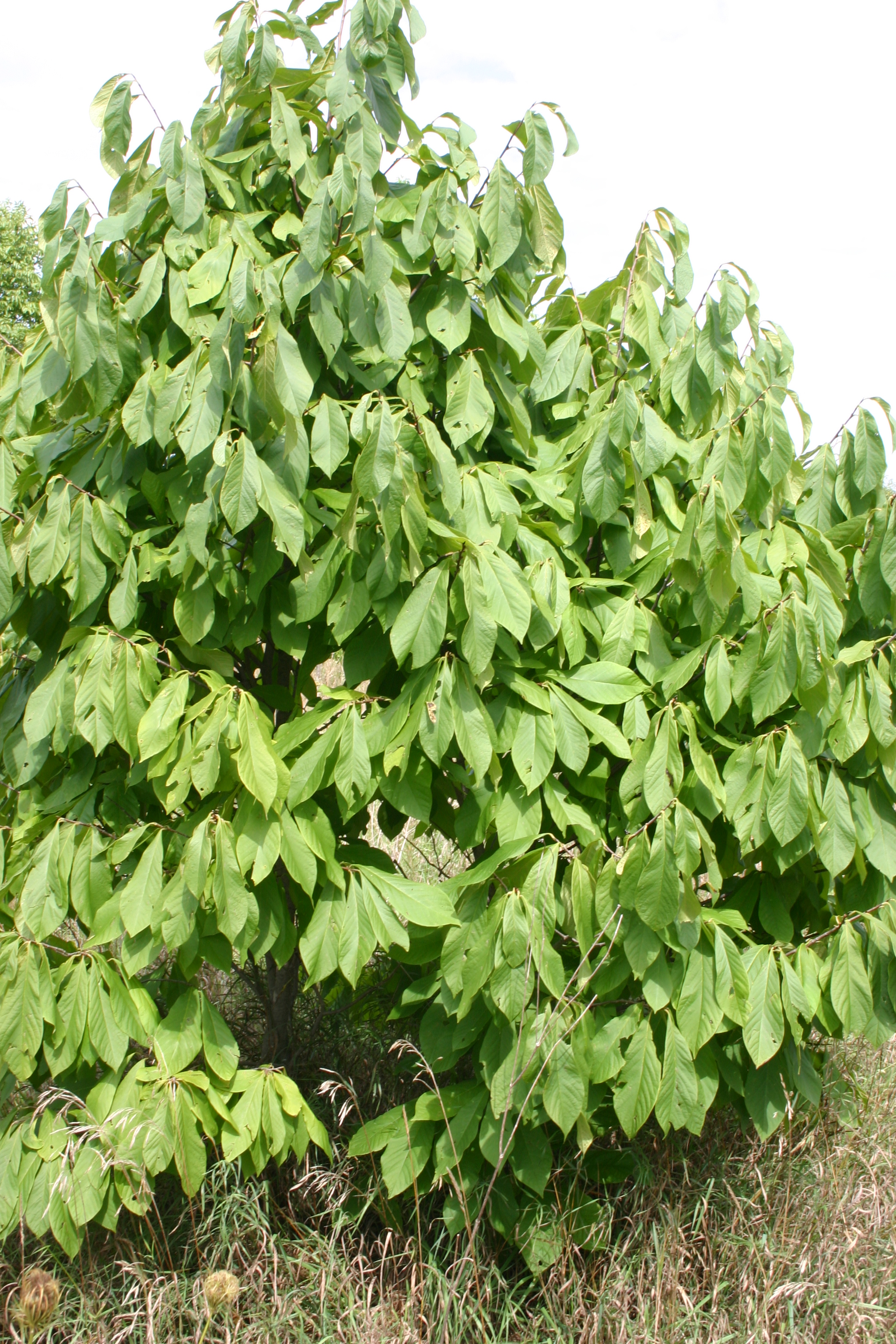
The image above is one of the seventy trees I put out in my field of pasture grass on a windy hillside on that spring day of 1988. They started as little sticks of two foot tall trees grown from seed from the original plantings of Corwin Davis from central Michigan. I found another nursery who produced the trees and he used a back hoe to dig out the small two foot tall trees. They had long skinny tap roots. 1988 was the mega drought year and the trees immediately lost their tops in this location. Over time they resprouted from the root collars and grew luxuriantly past the two foot tall Tubex tree shelters I was using. Today this colony is roughly five times its size and has spread out into my walnut and pear orchards. Many of the original trunks are now long gone but the roots continued in great robust fashion. This is the part of the tree I love. It is a colony producer and will grow as an understory tree fruiting under oaks and walnuts constantly replenishing itself. You could probably age a wild planting to some degree just by the ground it takes up. The tops of the trees last roughly 20-30 years before the root suckers take on the new job of fruit production. That is a wonderful system of plant replacement when you have a seed that is filled with toxic alkaloids that no animal will eat it or even move to any degree. It just falls to the ground.
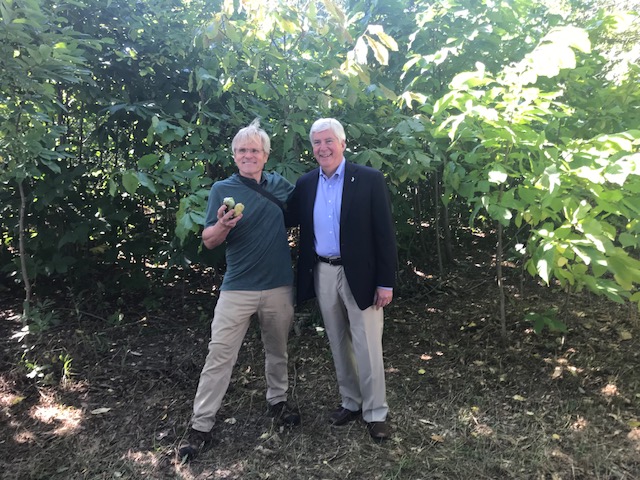
Here we are all those years later and so many wonderful things happened in the pawpaw grove. And continue to happen. An escaped pet pig visited once and left his calling card. He loved the pawpaws. The governor of the state of Michigan came along with his secret service. He laughed hysterically as I shook the trees while the fruit missed his nice blue suit falling all around him in a uniform pattern. The sound of the fruit hitting the ground caused joy for us all that day. My family, employee Tracy and the secret service all laughed. This is what happens when you visit the pawpaws. All the shackles drop off: the heavy weights are gone and there are no barriers. It reminds me of a story from India where a certain plant is in great abundance to the point that even the tigers are calm and unthreatening in this valley. Some say it is the purity and silence of the saints that live in the caves. Others say, no it is the herb. And others say it is both. Once in a while you will see on the wildlife cameras the possums and unknown people taking fruit not knowing what they were doing and throwing it on the ground after a bite or two. People told me amazing stories of their lives here in the shade of the pawpaws. All the situations seem to get resolved in this dense calming pawpaw environment. I’ve noticed people seem hesitant to leave and go to other parts of the farm. This is the effect I notice. It happens all the time. Most laugh. Some cry. Some go in silence and are moved in ways I cannot gauge.
I created several plantings throughout my farm and as they grow by their stolons, I train them by limbing them upwards and thin the density which creates greater fruit production. It is solid shade in most of these plantings with no understory of any type. The pawpaw may have a bit of an alleopathic propensity leaving the ground free of plants. The leaves are thick at first in the fall but are completely broken down by early summer the next year. The ground is smooth and easy to walk on like a super highway accessible from any direction. Even the multiflora rose and brambles disappear entirely.
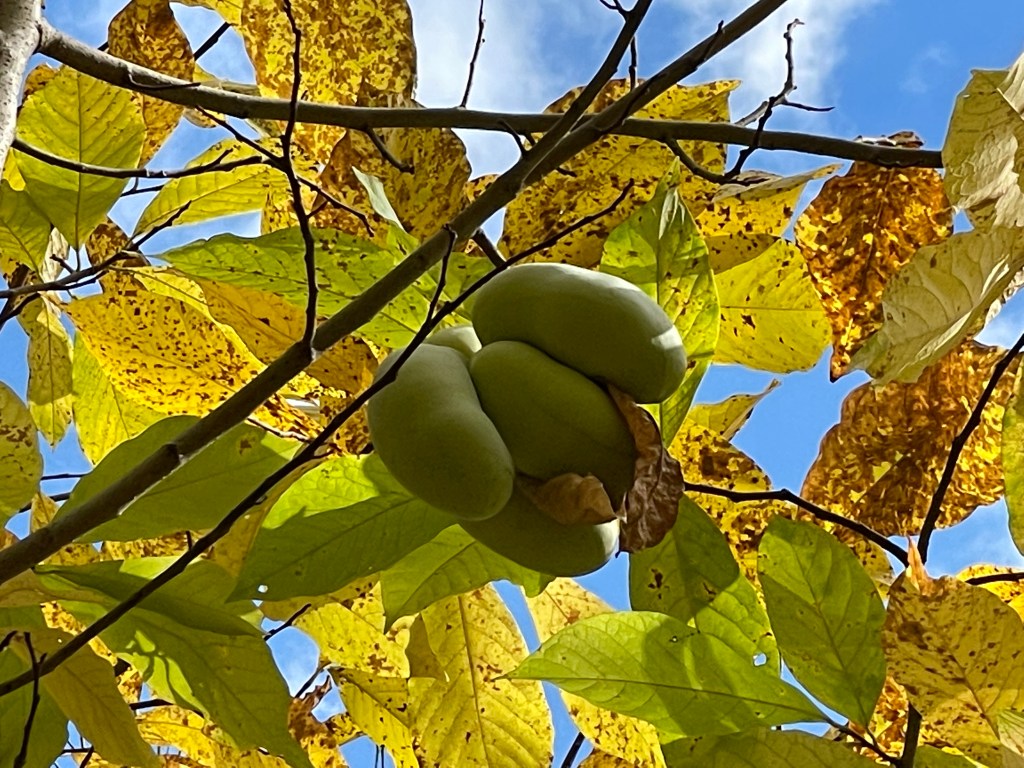
What can be learned from the pawpaw grove? We need more of them spread out though the southern part of Michigan where the wind, water and sun are just right for this tree in giant colonies free of toxicity of modern society and rich in flavor, nutrition and health. Even if it is only eaten once, it is enough. The experience is there and people will remember it forever especially if it is connected to the land and the farmer or person who created the grove. Then there is an association to the fruit and the dynamics of the environment of the Michigan banana.
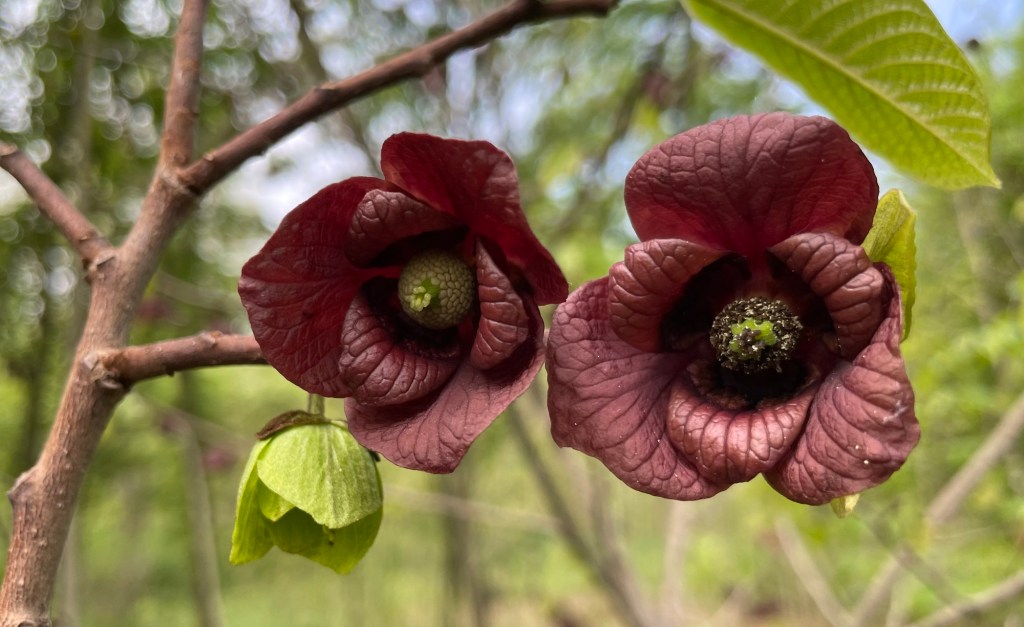
Farmerless fields can be long country roads where the pawpaw would flourish but only if we discontinued all herbicides. Shade loving pawpaw thrives in these often neglected roadside ecosystems where all organic matter accumulates in great abundance. It’s a win-win.


You must be logged in to post a comment.