

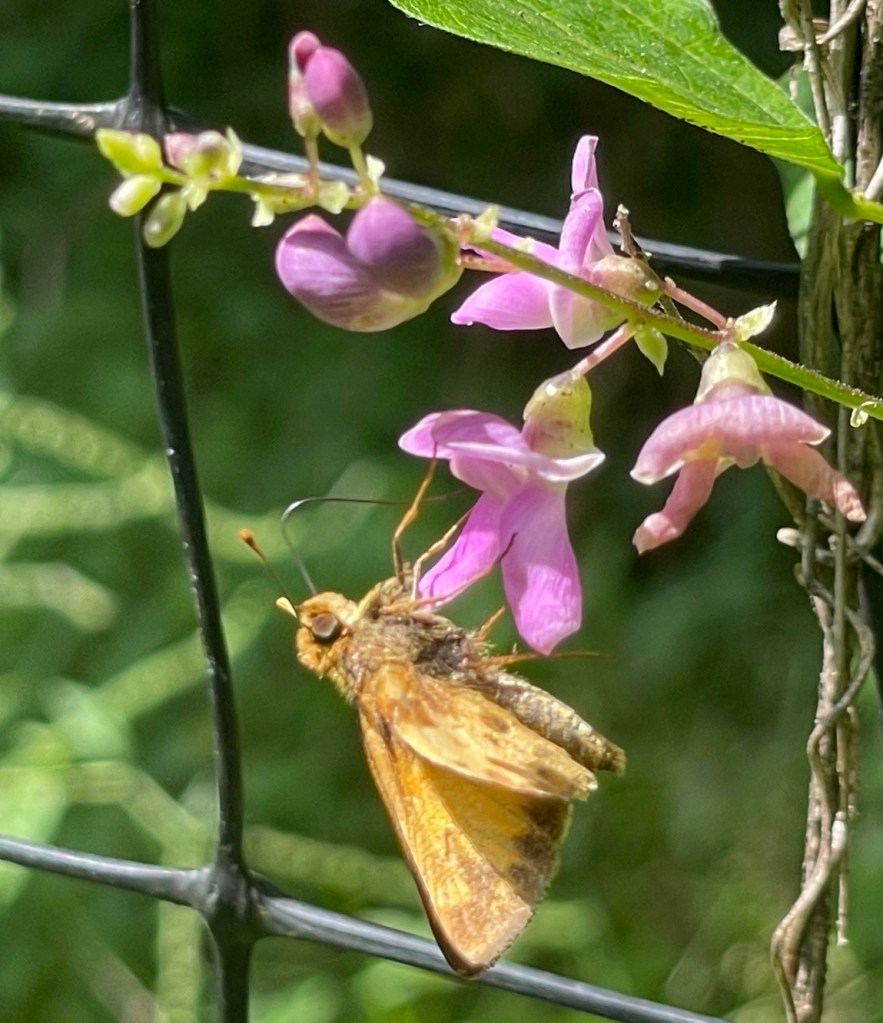
Yesterday while trying to capture insects working my bean flowers via photography , I remembered the college professor that I took an Entomology class from Western Michigan University in 1975. The whole class went out one night to a nearby state forest. We whizzed up a peanut buttter and beer concoction and lathered it on oak tree bark with paint brushes. It was a secret formula according to the intern who was totally into it. We lit up a bed sheet with a black light of some type for attracting moths. We hiked up and down the forest road to check our splotches of beer whizzed butter using flash lights. At some point, someone said, “You know if the police come, we are going to have a hard time explaining this.” There it was a giant blue white square orb in the middle of the woods. Some of the students had mining hats on. “Want some peanut butter beer officer? If you drink it, you will attract moths.” We stayed out quite late in the night. We found spiders and a few other night insects but no moths. This experience has stayed with me and highlights my thinking with pollinators today. It is constantly changing with a wide range of butterflies, bees and flies. You never know what will come if anything on any particular day.
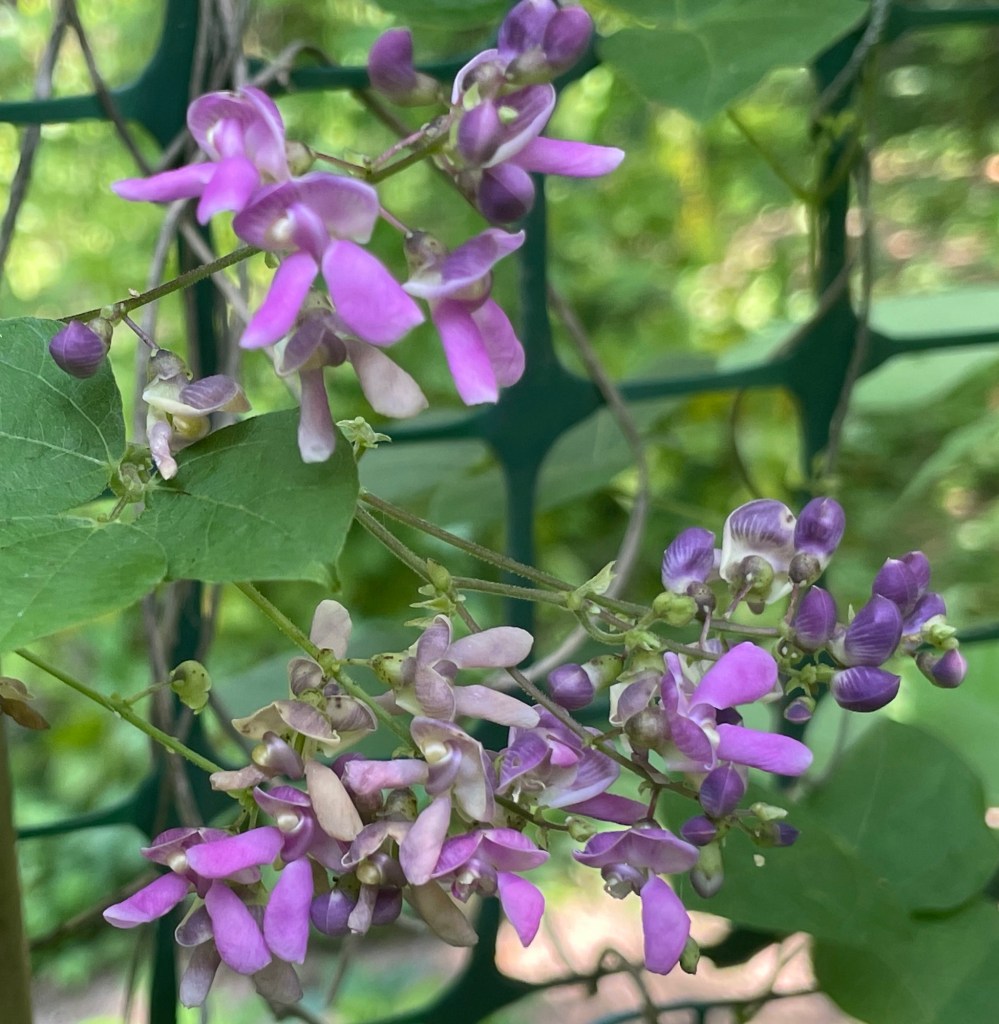
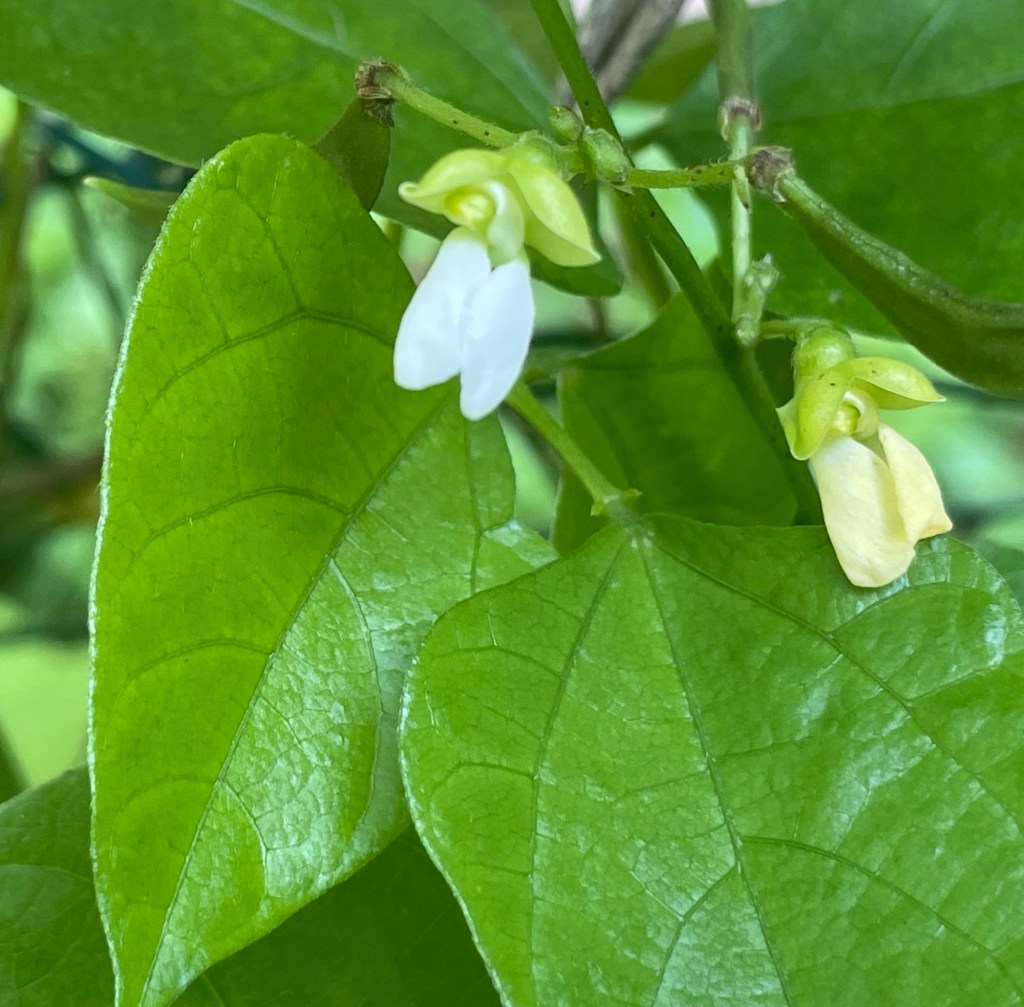
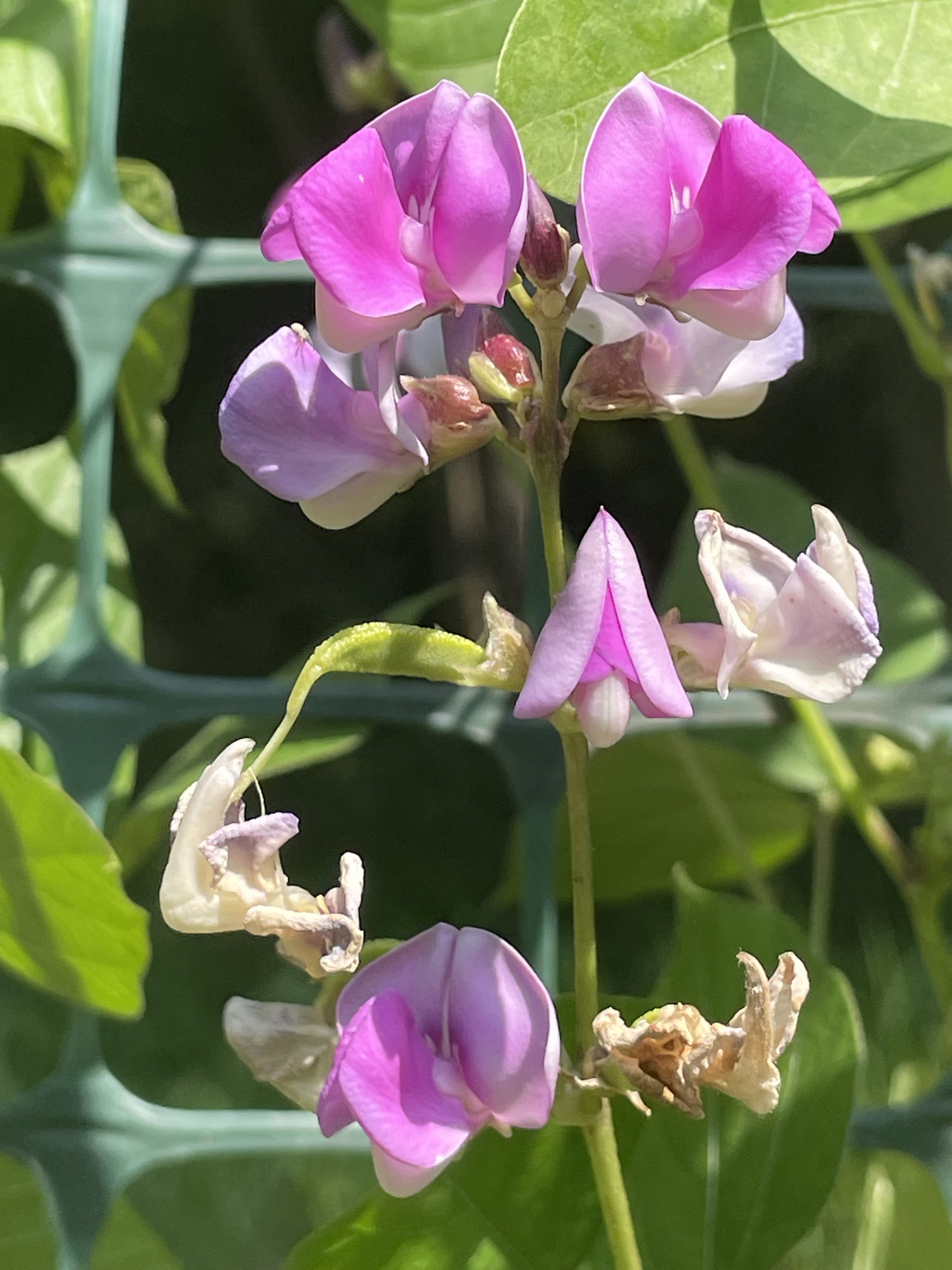
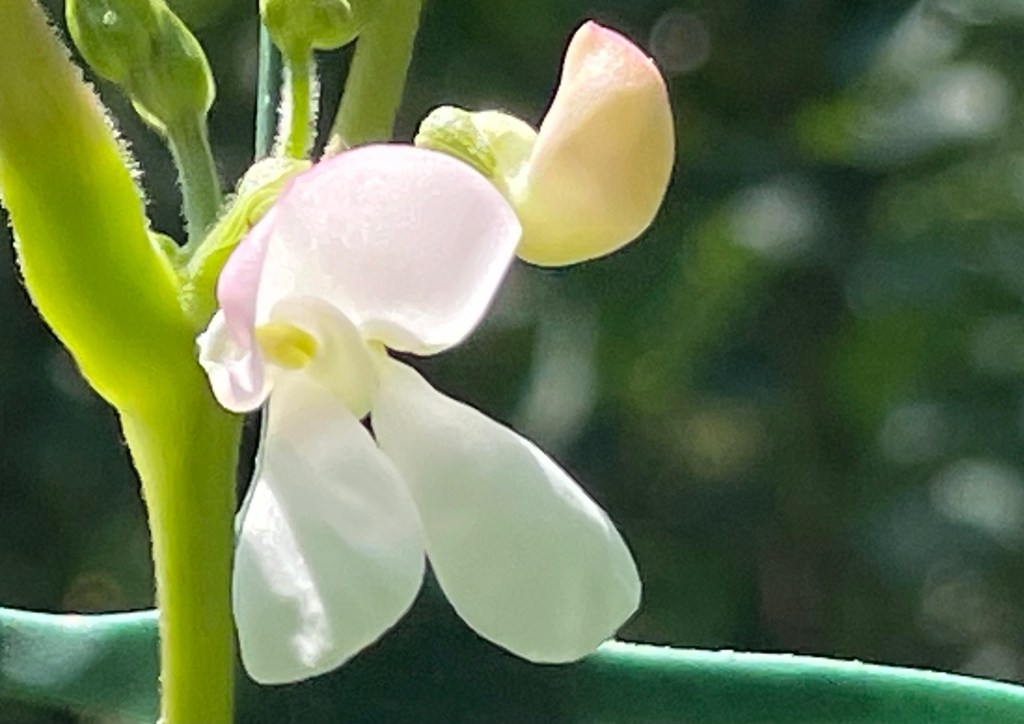
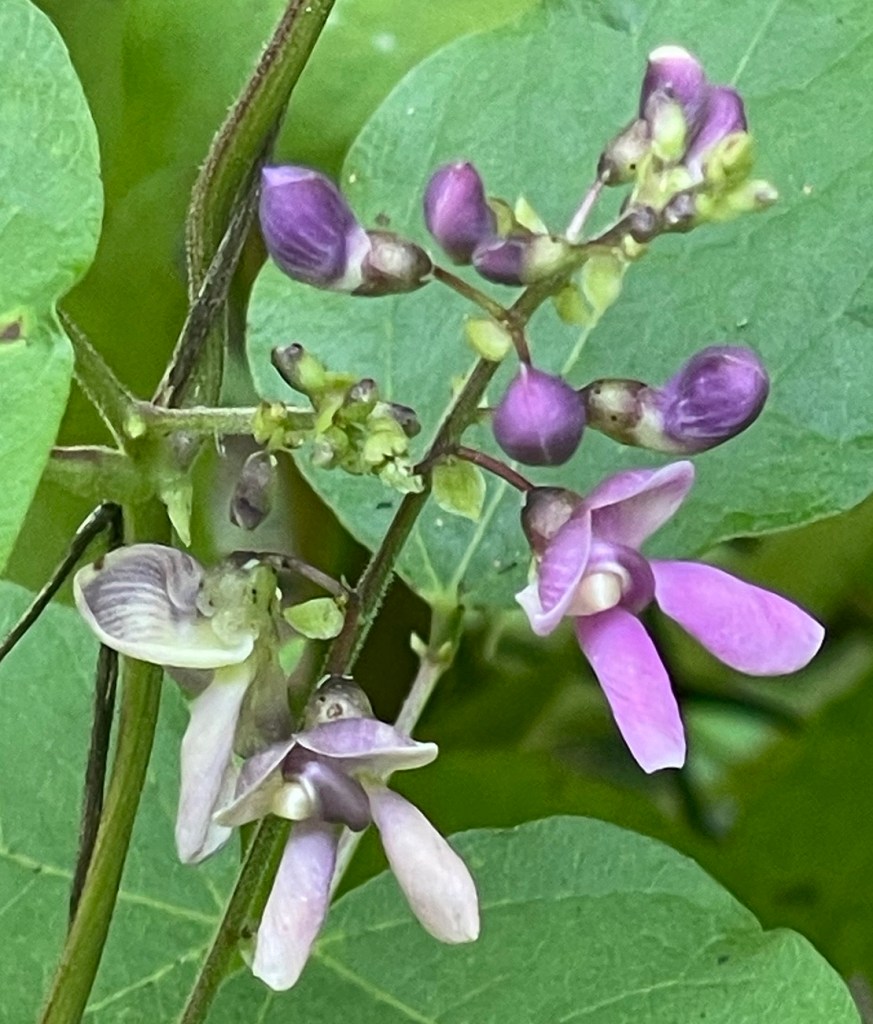
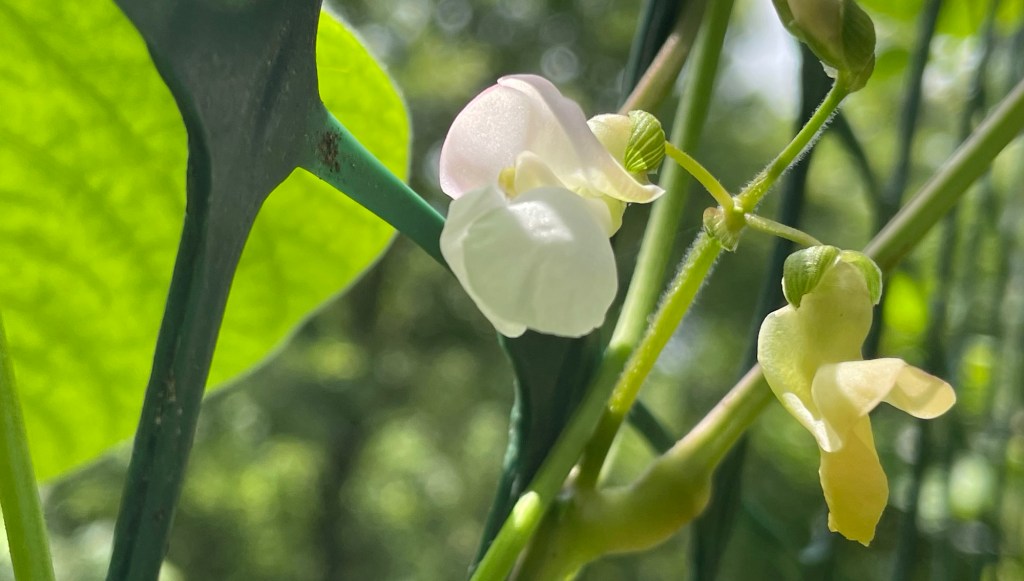
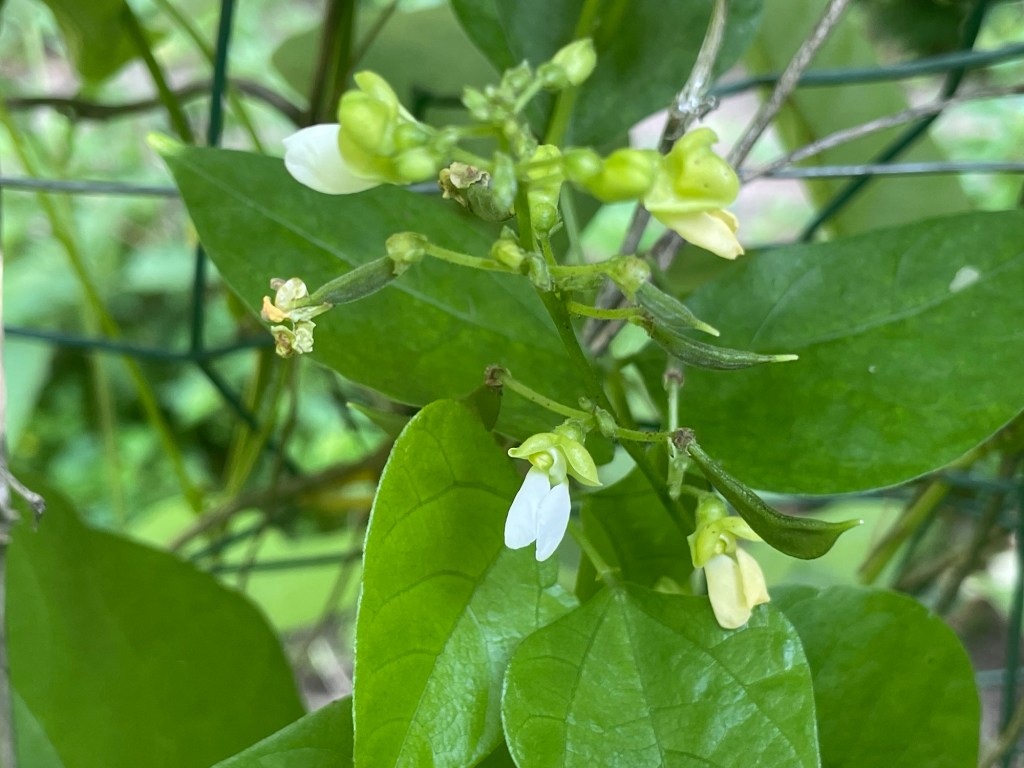
In terms of my bean flowers, I see new insects every year and wonder where they came from. Others vanish entirely only to show up years later. I rarely spend more than an hour every week looking at my bean flowers when in blossom. I do not go at night either. I need a larger sample size to grasp this complex system of pollination. Some appear to vanish for a while or have greater reduced numbers in some years. Since my neighbor took down an out buidling made of wood, the carpenter bees are not there like they use to be. But again, I am guessing. Saying one insect is dominant is completely impossible but for a brief moment the carpenter bees were king of the bean flowers. Today a small bumblebee is seen hovering above my lima beans. There is one constant in all of this related to my love of beans. It is the consistency of my planting and the populations I am inadvertantly supporting during pollination time that brings them back year after year along with a diverse cast of new species coming and going. There is a huge number of very small bees that look like sweat bees and flies that appear to be really going after the small lima bean flowers. They are very selective on the flowers preferring the creme colored lima flowers with the broad petals and a curved ‘landing field’. As a result, the flowers, plants and beans have responded by creating plants with greater flowers with more open faced flowers and a greater potential for seed set. The pollinators are changing my populations to be more successful for them while helping me discover heavy fruiting selections. This was my aha moment of bean consciousness. You would have to be completed blinded to say only certain plants attract certain pollinators. That is just not possible. The insect is wrapped in this new source of food and it is not going away easily as it chooses wisely the flowers that suit it the best. This is also the type of plant I want. I want it easily reproduceable from seed and highly successful in a wide range of environments with extremely delicious nectar and pollen. This in turn produces more beans. The hybridization process is worthless unless you consider the value of the pollinators that do the work. From honeybees to the teeniest fly its not a competition. Its a collaboration far outside anything you could construct or direct in any way. For that I am thankful. I propose a toast of peanut butter whizzed beer to all. Here, here.
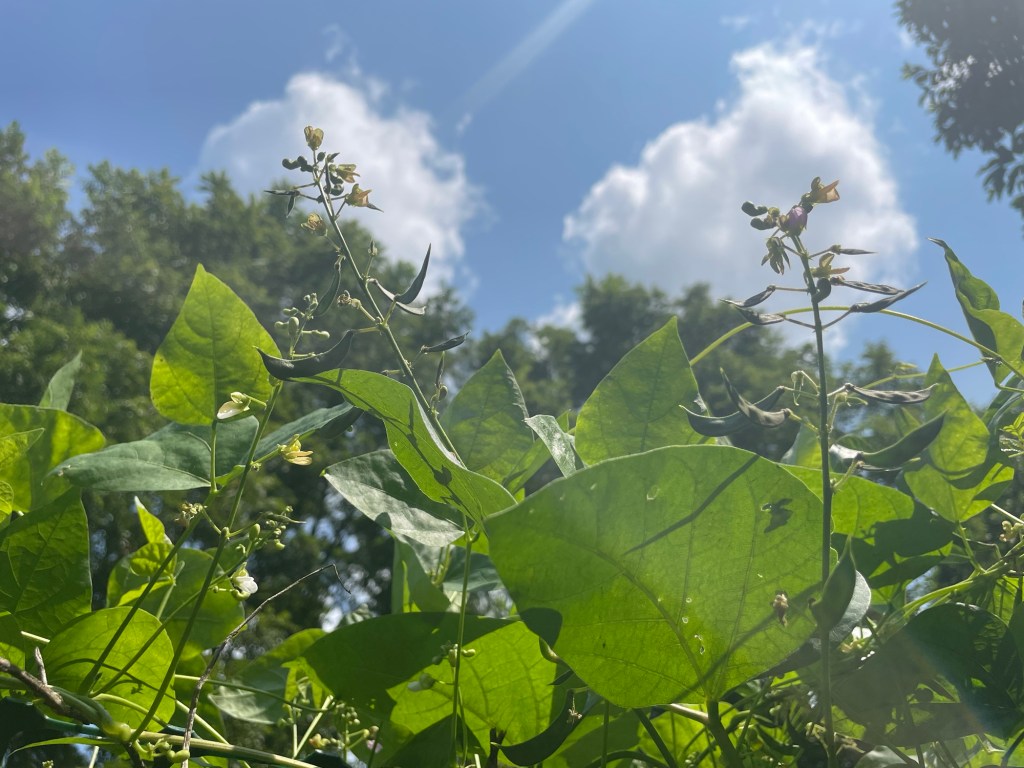


Farmerless fields can sustain all life even if it is a minor compotent of a farm encompassing less than one percent of the land area. One percent is enough to improve the other 99 percent whether it is intentional of not.


 biologicalenrichment
You must be logged in to post a comment.