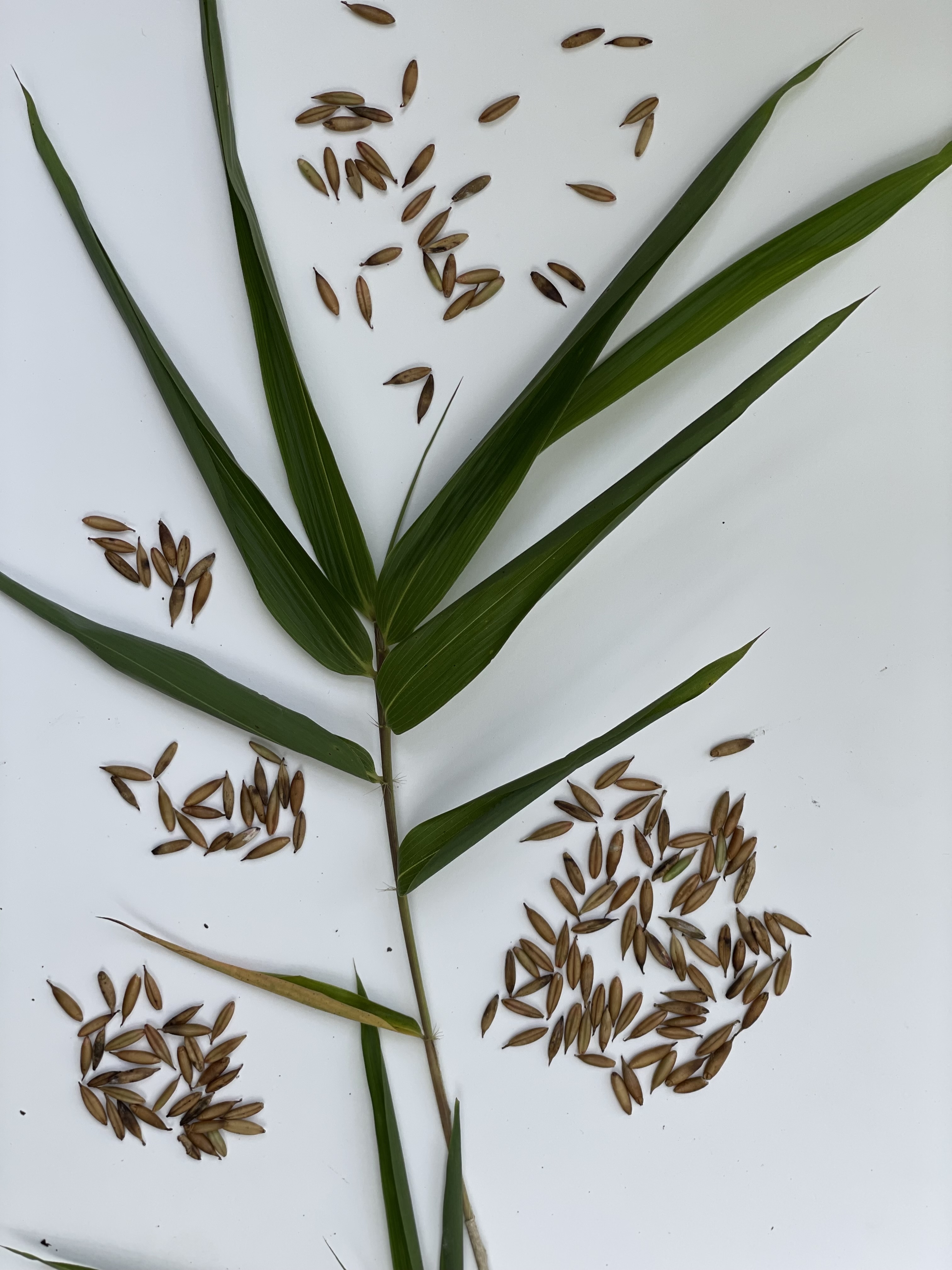
When I lived in town with my family, I would go for a run and take the same route almost every day. I would pass by this house on an old brick road that contained a beautiful well cared for landscape. It contained a sizeable clump of bamboo in the front yard. It’s not a plant you normally see in southwestern Michigan. The yard was filled with wonderful fruits many of which I could not identify. The house was on a corner and the bamboo provided privacy and sound buffering capabilities to the front and side yards of the house. It easily grew up to the second story window. Just by luck, I met the owner when he visited my farm and agreed to give me a tour of his yard. The bamboo was contained within a small area yet provided a huge benefit to the house and occupants. He invited me over for meditation which was scheduled for four hours on a Sunday. This was a bit long for my family life but I thanked him profusely. Later I hired someone for my farm who rented a portion of the house and lived there. He said it was a wonderful cosmic shade from the plant all throughout the house especially when the wind blew. It was accompanied by the music of many birds using it to rest in. He said there were lovely design patterns on the walls and floors with the filtered light coming through the windows. Many years had passed and I found out the owner was moving to Hawaii. In another cosmic twist of fate, just before he left, the bamboo flowered. This is a very rare occurrence happening once in a lifetime. As if it wanted to say goodbye and good luck, the bamboo said farewell to him. He sold the house. Not long aferward, I happened to be at a nearby garden center when I overheard one of the employees talk about ‘killing the bamboo’ for a customer. I knew it was the bamboo I was familiar with. I asked and soon found out the new owners were not fans of the bamboo. The employee told me bamboo was a dangerous plant and very hard to get rid of which required multiple applications of a specific herbicide to kill. This highlights the love-hate relationship people have with bamboo. One year the plant is loved and cherished as a glorious landscape plant filled with cosmic possibilities. On Sundays incense and four hour meditations are within its vicinity. Songs of birds flood the streets. The next year its dangerous, destructive and a destroyer of all things good. The bamboo is gone now. A little planting of coneflowers sits near the curb with a sprinkling of coreopsis marking the end of an era. No one knows what greatness was there before.
Hello, my name is Bob and I love bamboo.
Early on in my nursery I thought of the bamboo as impossible to grow in my climate. They were never seed produced and involved large equipment to dig and transplant due to the massive root systems. I kept trying to purchase bulk roots but they were always low quality and died during the first winter. Finally I purchased the indigenous North American River cane and a Black stemmed bamboo. Only the River Cane survived. I noticed even mentioning I was going to plant bamboo created quite a stir of emotions. I love personal experience, good, bad or indifferent and the bamboo didn’t disappoint. I kept my love of it secret and told few. I really didn’t want to argue plus I had nothing to go on. There were no Facebook groups at this time. My main question to folks dishing out advice is “have you ever tried to grow the bamboo?” And if yes, “what kind was it?” Here was the issue. Most people had only heard of its effects in odd sorts of ways and had no direct experience. They saw the pictures in National Geographic was one. When I said river cane, people heard sugar cane. It was frustrating. I gave up. Eventually I began the process of producing River cane in my nursery from roots. It was slow to harvest and I had to extract soil with the roots to make it work as well as root prune the plants the year before digging. I had two forms of it and one was very nice in spreading producing linear roots with evenly spaced canes. I grew it on a sandy hillside which is the opposite of its native haunt of river bottomland. I limited the sales to ten to twenty plants per year to keep my planting from disappearing entirely. It was popular. I think because it was native and not found like it once was in its native habitat, there were no complaints. Bamboo was becoming popular again with new varieties entering the marketplace too. There was less guilt.

As time went on in my nursery life, I soon found several opportunities to develop cold hardy selections of a couple of species using seed produced plants. The way to do this is quite simple. It is similar to taking any zone 6 or 7 woody plant seedling and finding hardier selections in zone 5. I would grow a few hundred seedlings in an open polyhouse and let winter take its toll. The remainder of the seedlings would then be planted outside as a source of genetically different bamboo. The way bamboo is produced today is the opposite of this. They are all rooted from clones whether it is the clumping forms or runner types. Bamboo also has its own 6 mil weed barrier to prevent the runners from running and moving into unwanted real estate. Its a whole production system and installation in a landscape and is not your average get a shovel and dig a hole type of thing. You need a trencher to go three foot deep. There are several companies on the east coast that specialize in bamboo removal. One runner species is banned from several states. Like poison ivy, it is not wanted at all by some. It cannot be part of a modern landscape where plant selections today are short, squatty, sterile and tidy with a sprinkling of nativity. Bamboo is exotic, free, fat, prolific and overflowing. Its moving out brothers and sisters. Bamboo usually is a clumpers only game now as far as retail production goes. It is becoming popular again. It is considered a safe to use as directed sort of plant.
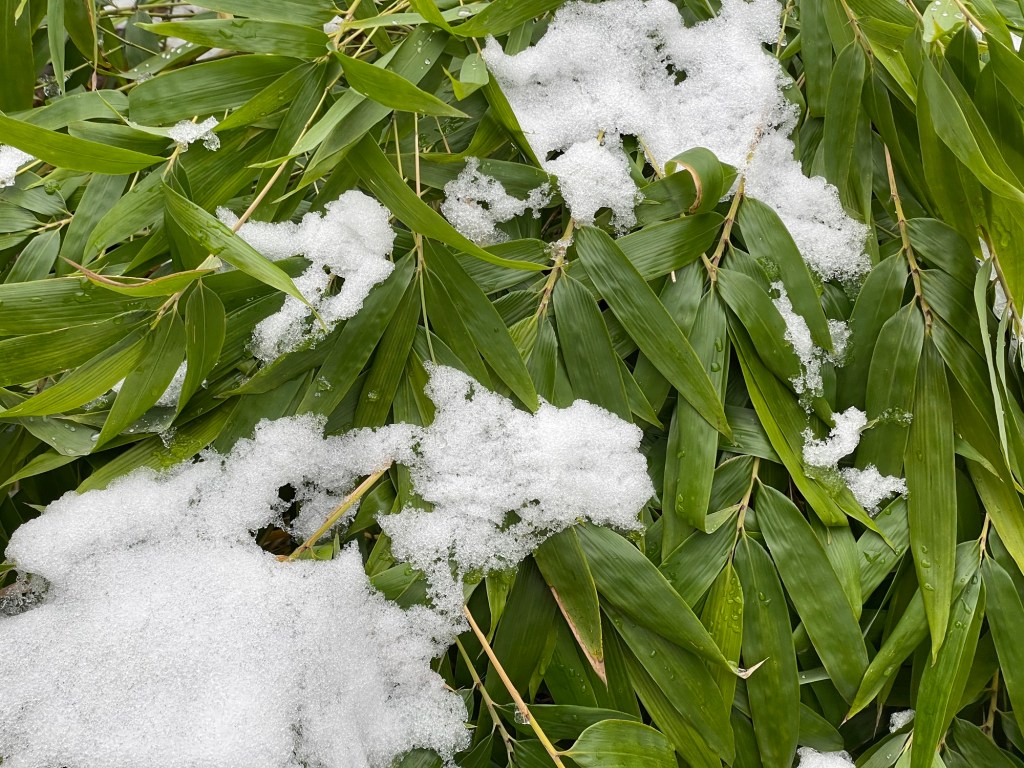
The seed of bamboo became available commercially and it was possible to obtain it here in the U.S. However, a law was put into place banning its import eventually reducing the available seed on the market. It was a tricky little grass to germinate but once started a white clean root pops out from the embryo. The plants take two years to really fill the pot and look like bamboo. I focused on two species, timber canes——Vivax bamboo and Edible Sprouts—- Edulis bamboo. I sold them for a couple of years only. There was quite a bit of loss during one winter at minus 17F. This in itself was a deterrant to trying to create winter hardy selections because I knew minus 20F was probably around the corner. However, I did manage to squeak out a small population of both species. Today those plants grace my farm. After ten years they did not take over the universe as many had predicted but they are not the same plant that is found in the southern states or in China. Most folks who know bamboo way more intimately than me say I will likely only experience the yearly top growth of the plant and winter will bring it back to ground level. So my bamboo forest will be more of a bamboo grassland than anything.
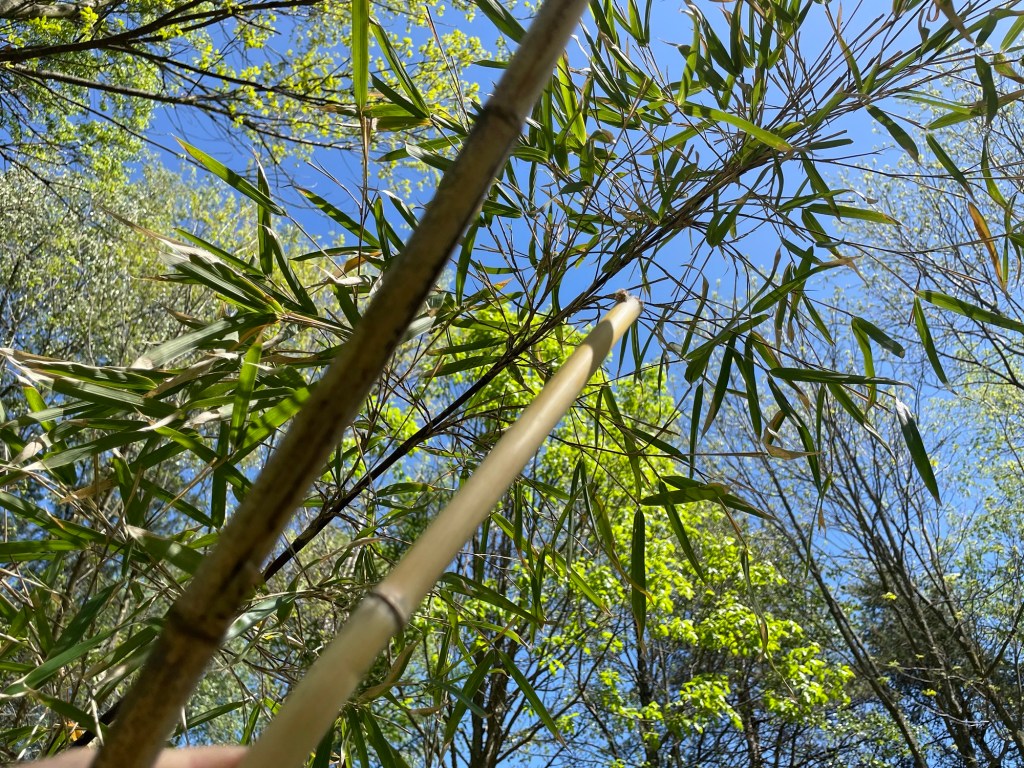
My goal was to develop construction grade varieties and edible shoot selections. I wanted the forest type trees to 70 feet or more like I saw when I took my family years ago to Disneyland. I think that still might be possible but to do it in Michigan would require to kick out at least 100,000 seedling plants to find hardier and even more robust selections. I liken it to a specific application and a means to harness the power of bamboo. It might not make a great landscape plant and like mint might ruin your flower garden state of mind. But as a source of commercial fiber, timber, lumber, plastic substitute, cotton substitute, flooring, scaffolding, chairs, tables, damn near everything and edible shoots we are on to something unbelievably powerful and life saving. These selections could be employed and used to a greater degree in areas where scale, control and use would dominate the plantings in commercial settings. For vigor and health we need the runners of the world. Dense, solid roots holding the soil as a precious resource and slowly bringing back those soils currently filled with GMO corn and soybean. Those soils are ruined and may take a generation to cleanse themselves of the poisons we have put in them. Even if we treat it as a bamboo monoculture or develop it as a bamboo polyculture, it does not matter. Bamboo could easily purify those soils while making our life on planet earth easier and more productive. The power of bamboo is the power of grass. One sheath at a time, creating a forest of perennial possibilities while it forges us ahead in permanent tree crop agriculture.
Think it all started on a corner house on an old brick road.


 biologicalenrichment
You must be logged in to post a comment.