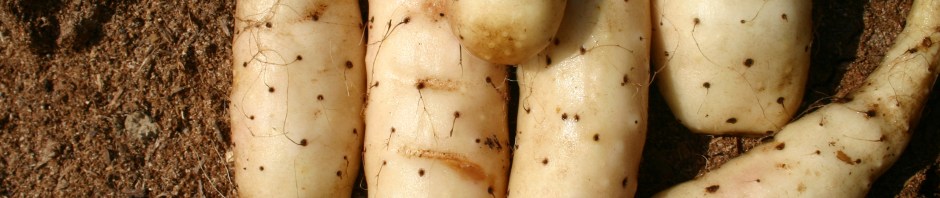
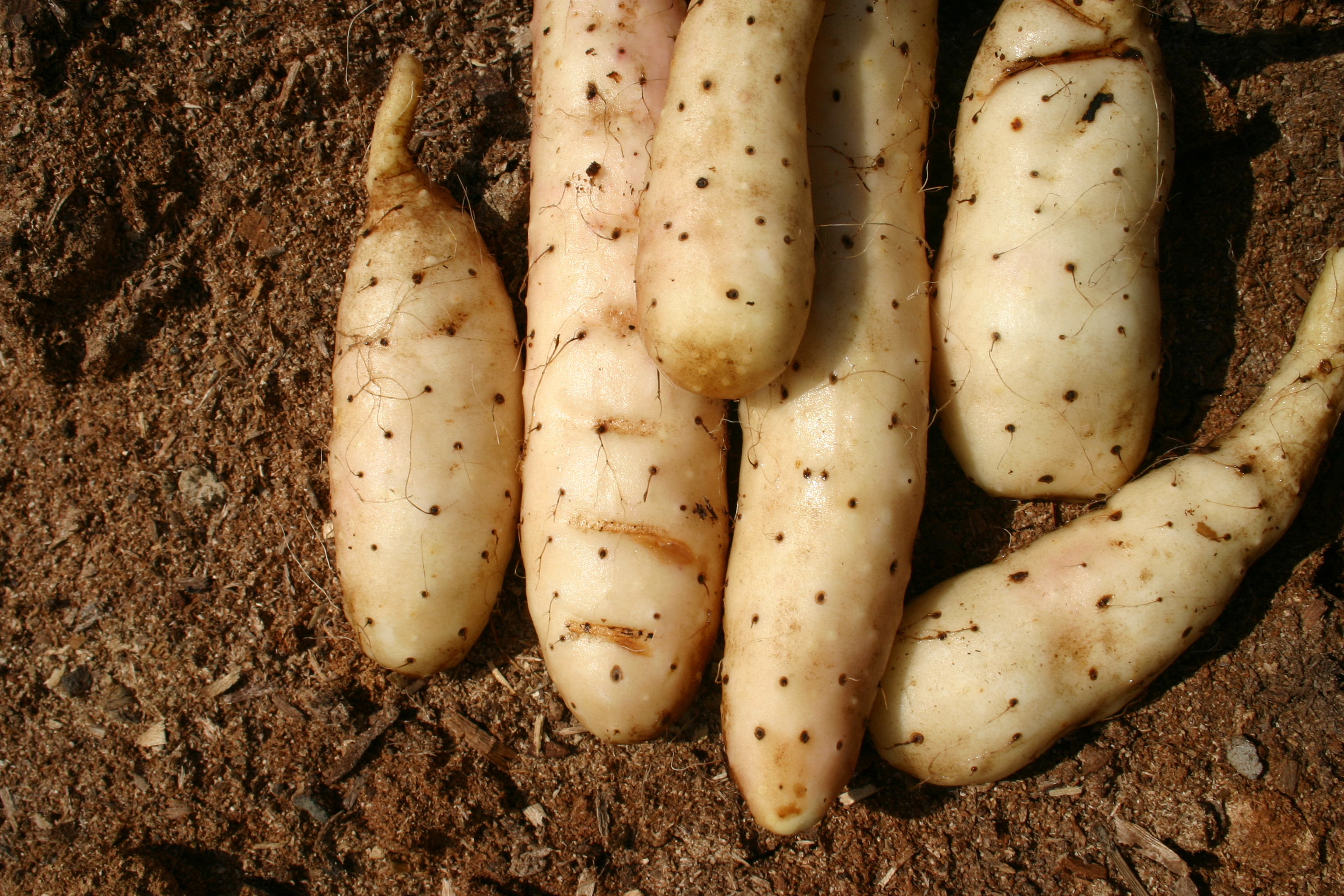
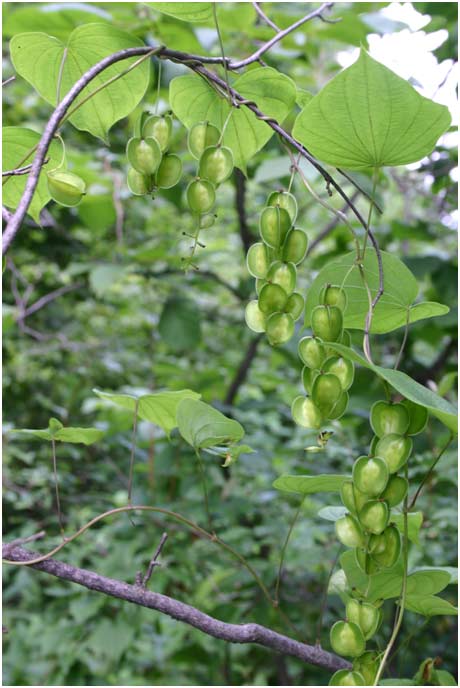
This particular crop plant is one of the best tubers I have grown at my farm. The mild flavor and smooth texture along with its easily digestible carbohydrates make it an ideal candidate for a new tuber crop not available in the United States. All of them are imported from China as far as I know. It’s easy to use and has no pest problems of any kind. It requires a series of digging gymnastics to harvest it properly using long trenching spades to extract it from the soil. It is a perennial tuber in Michigan but also suffers in cold winters with freeze damage some years. This has happened only twice in the forty years I have been growing it. It sets no seeds of any kind. It produces aerial bulbils on the vines which are equally delicious and useful. The two crops from the same plant are radically different. One you pick in the fall and the other you dig in the spring. The aerial tubers require a trellis system that will need to hold large amounts of foliage which is quite heavy. Ideally this elongated ground tuber needs a long underground pot system so you can eliminate the deep digging required and an adjustible trellis system to hand harvest the aerial bulbils without a ladder. These methods and use have long been worked out by the Chinese. As far as I know, it is not cultivated in the United States for its tubers but was used for a brief moment in the ornamental landscape market as the Cinnamon vine because of the aromatic flowers.
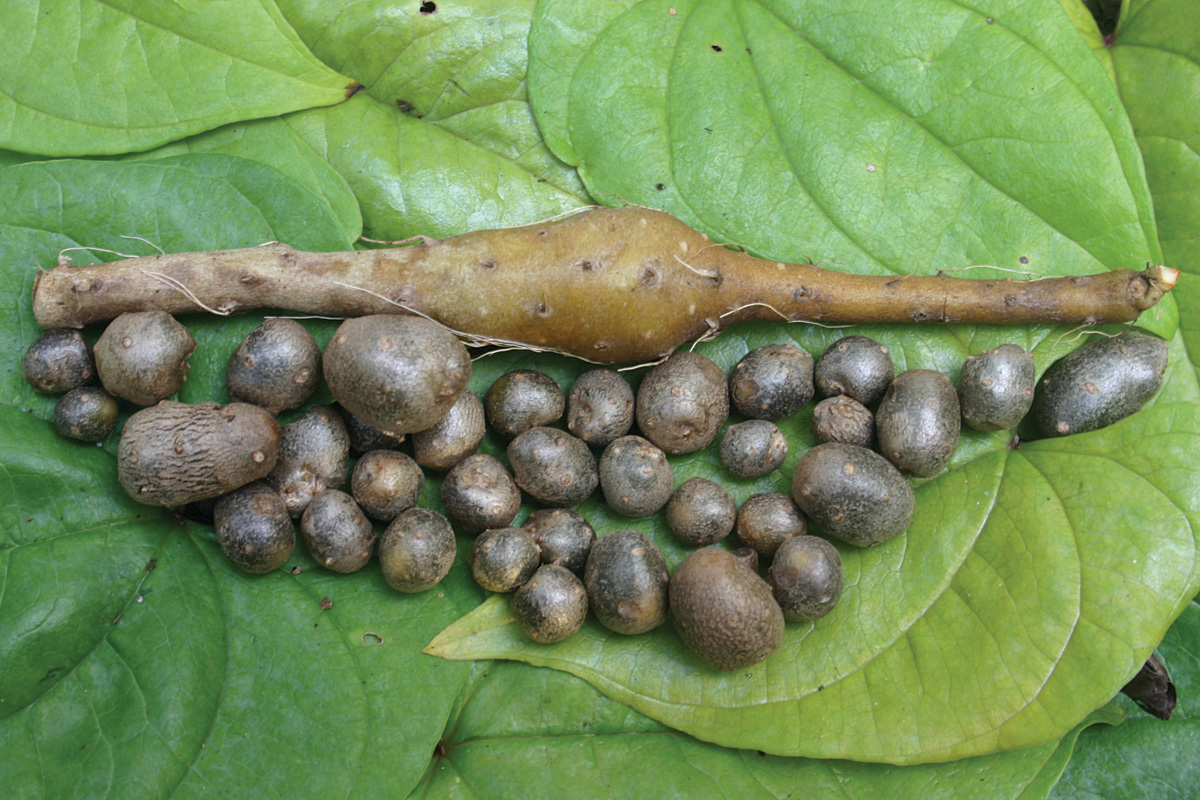
Like all the crops I have grown, I tried to find as much diversity as I could to test the different selections already in the market. There was only two for the first decade I looked. Eventually people sent me other selections known for bigger aerial tubers or larger in ground tubers. It wasn’t some sort of aha moment. The variations were small and not etched in a cultivar stone to any degree. I purchased a completely different tropical species called ‘Hawaii’. This one had aerial tubers golf ball sized and larger. We put it on a trellis near the back of my nursery the farthest point from my barn. The location was perfect for this species being on the bottom slope of a hill. To my surprise someone came in and stole it after I posted a story about it in a Facebook group. I am not sure the two are related. I found the identification pot tag four years later in my gravel driveway. That particular variety looked very promising in warm climates with a greater possibility of commercial success. Today you do see many other tropical species and selections used in the bedding plant industry.
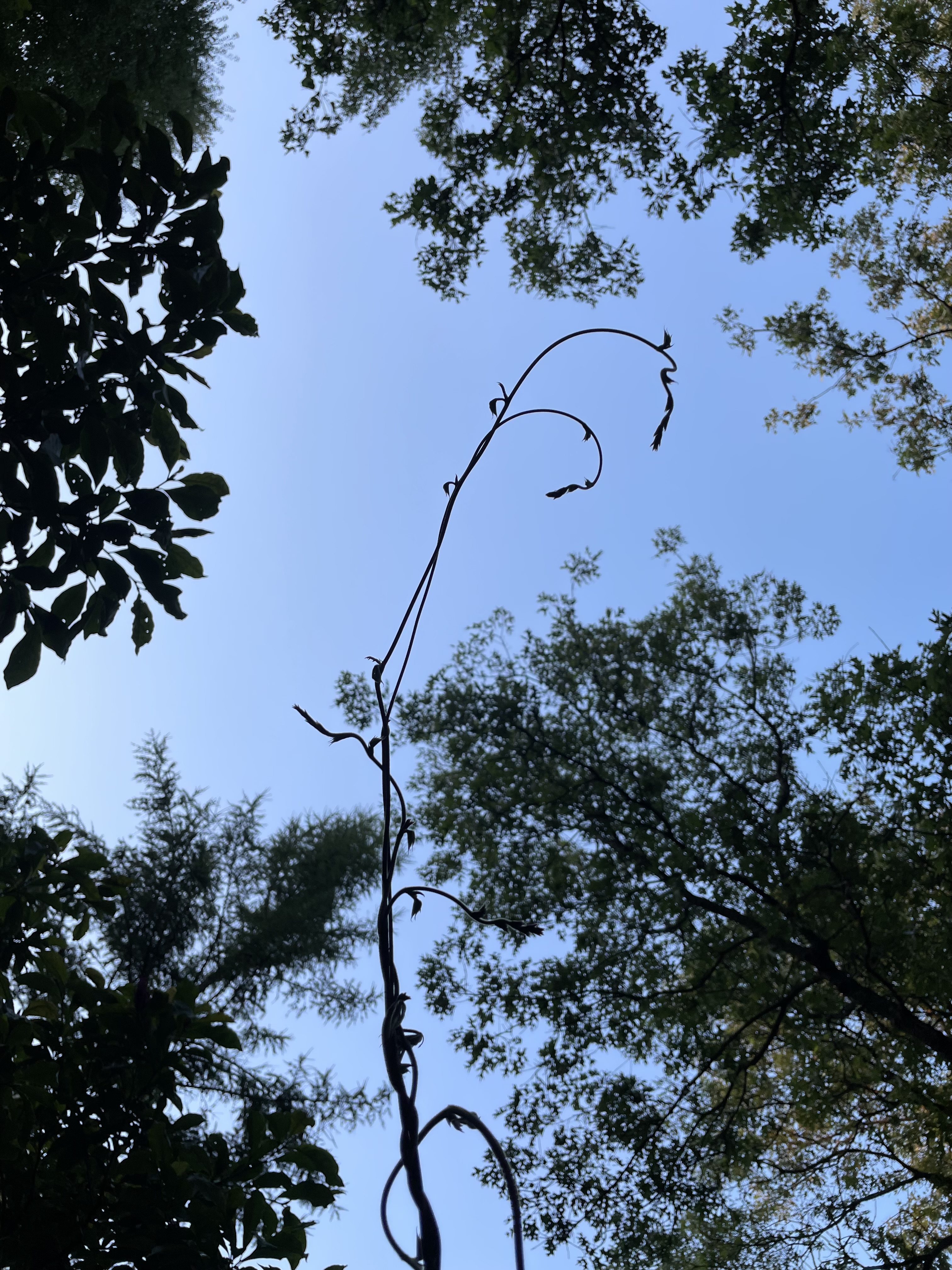
Here is a brief run down on my experiences. This species is dioecious so all the ‘selections’ are female plants. There are no male plants or true seeds available commercially as far as I know.
California: Selections with nice long smooth carrot like roots.
Pennsylvania: Selections with larger aerial tubers than normal.
Dr. Yao: A patented variety said to produce massive in ground tubers.
Toensmeier: Selection with consistently large aerial tubers. From author, researcher Eric Toensmeier.
Unknown: From cultivated selections that were said to be ‘pretty good’ or from a few seed companies that offered them.
On a small scale: I would grow this plant again and would encourage others to grow it at home. It is easily contained and rarely spreads in undisturbed areas with sod or grass surrounding. Instead of using an eight foot tall trellis and raised bed, I would use the spun polypropelene bags in ground with the handles just above the ground so you could just pop it out when you wanted a tuber. I would then create a circular chicken wire cone around the vine. This keeps the vine contained and bulbils from drifting to other areas of your plantings should it be a flower garden or other landscape situation where you do not want spreading. If some do, they are easy to plucked out the first year. No tile spades are needed for the ground tubers along with Herculean efforts to extract them. I also used 5 gallons buckets with holes in them. That worked well with groundclothe underneath them in the polyhouses.The tubers did not freeze and turn to mush in this process. The aerial tubers can be hand picked and harvested over a month as they develop. They do not all ripen at once which is a bonus as far as using them a little at at time. The aerial tubers grow in size over a long period of time so you need to wait until they are the largest possible to pick.
On a larger scale: I would spend some time developing an in ground method that makes it easy to harvest full tubers without bruises or cuts. There are patented technologies for this crop too. I was wondering if you could use plastic or metal evestroughs. That might be expensive to set up but could last many years once established. One farmer in Germany uses a greenhouse system and an above ground narrow diameter pots made of wood that looked roughly 4 ft. tall. The tubers would then grow unimpeded and develop up to 3 ft. long. Then you just unscrew the plywood and your tuber is right there to pick. The roots develop unimpeded and are long and cyndrical perfect for chipping looking incredibly uniform like a Pringle. The tubers are easy to store and do not degrade easily compared to Jerusalem artichoke. The aerial tuber crop is possible commercially but only by using mechanical shaking having them fall on a tarp and then going from there to a screening system. If you were to hand pick them, it would require a lot of labor. The bulbils ripen over a month period so they all do not ripen at once but they do hang on for a long time making it possible to harvest the whole crop all at once. To me the most delicious part of the Chinese mountian yam is the aerial tubers which I believe has the most commercial potential in terms of fresh mini-tubers.
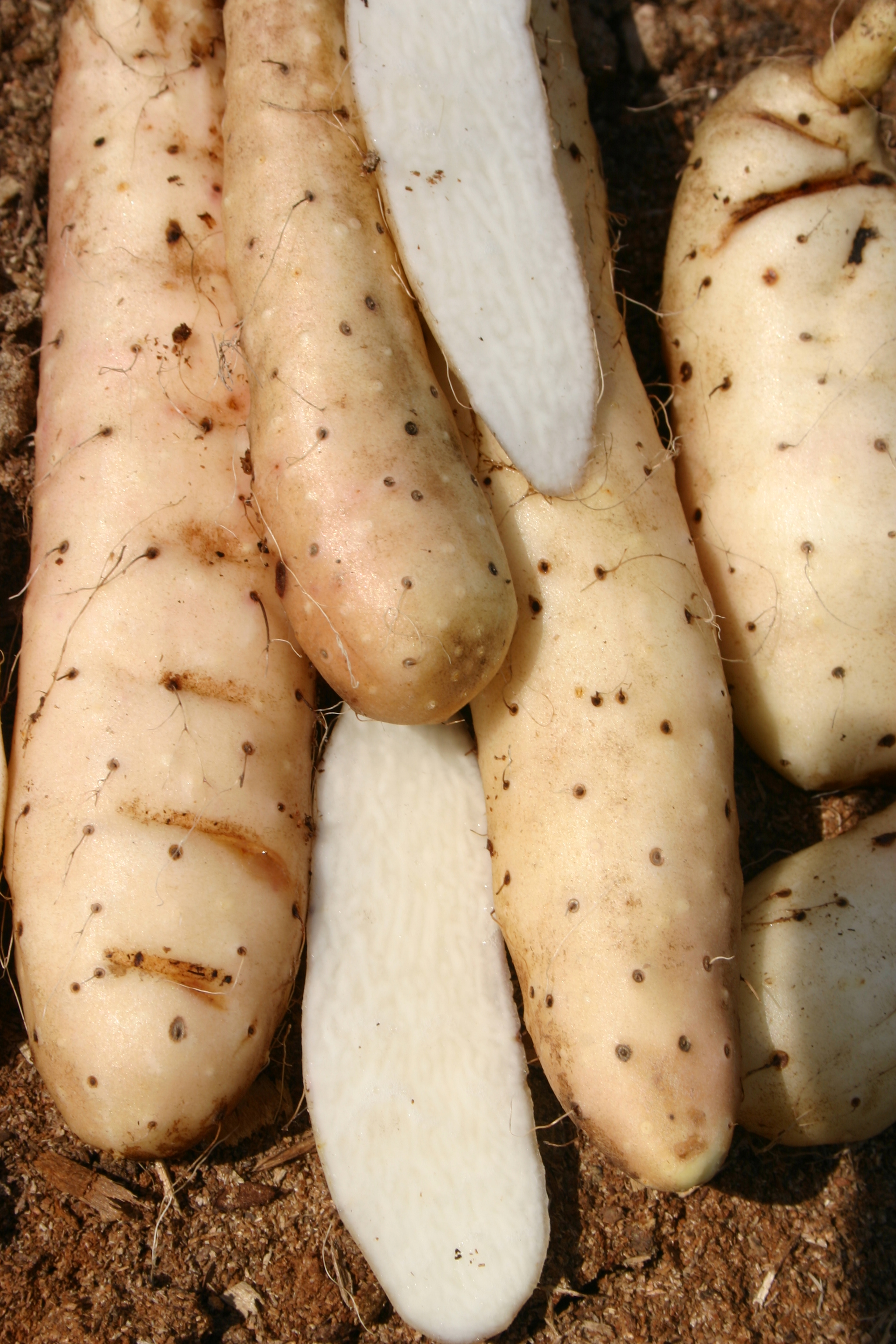
Because this crop plant has landed in the weedy, invasive runaway ornamental plant section of the USDA along with many state governments, you would guess the world has gone to yams. It hasn’t but the destruction continues of potential valuable germplasm in the name of nativeness. The last time I checked it was discovered in two places in Michigan both of them yards. One in Detroit and the other in Traverse City. So now it is on the watch list here. People are watching. Such a waste of resources. On a personal note, this spreading habit or ‘ecosystem damage’ did not happen at my farm. It did not move and the bulbils did not take over my plant universe even when the plantings were left untended for over a decade. I grew the plants for several decades. How long should I watch? Yet it is persistent and like all perennials, it comes back year after year. That is a good trait to have because the roots size increases dramatically over the years where some can become gigantic. No one knows how this would work in North America. In other countries modified pallets are used to grow above ground giant tubers. Is this practical? I’m not sure. The tubers might turn to mush in Michigan. Should you wait several years before the 50 pound stage or harvest two year roots? I found the two year roots the most practical to grow and use. I also grew the native yams at my farm and a form from Wild Type Nursery. They are poisonous and should not be eaten. They have a very stringy tough woody roots and are high in steroids.
On a practical level I would look more closely at large plantings both in terms of growing, harvest and marketing. There is a lot to be worked out far more than just growing. One of my customers from California told me she was concerned about the naturally occurring heavy metals in the imported yams. I sent her a package to eat instead of grow. She said they were much better flavored than the commercial selections sold in her international food stores. Like a lot of tubers the soil makes a difference in flavor and nutrition.

On a side note:
I did discover there are attorneys and lawmakers that will help you and your mountain yam ideas in the regulatory arena. But it is not an easy row to hoe. Who wants to do that? It’s anti-farming. What is the cost in money and time? Can’t I just grow the crop and be done with it like I have for the last forty years? Farmers should always be the first to ask, not the last. Here they are specifically edited out.
To feel the rich soil around my fingers, the fresh cool spring air and rain covering my raincoat in the spring was a great joy while harvesting. Where is my rich black organic coffee? Where is my tile spade? I’m out the door. Time for yams. I need a yam.
Enjoy. Kenneth Asmus
I think this. I desire to raise yams to help me feed the world while bringing perfect health to the world and wealth to the farmer. I’ve got a world to improve. Would you like to help or get in the way?


 biologicalenrichment
You must be logged in to post a comment.