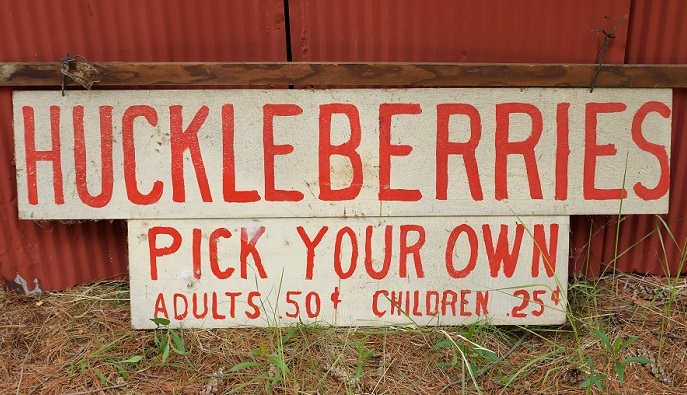
This sign from my families farm in the mid 1960’s highlights an activity at our farm enjoyed by many in our part of Michigan. You would get a bucket and go out in our 140 acre swamp and find wild blueberries. For some reason we called them huckleberries. Keep in mind the cost listed above was for a full day of picking. It was not measured in quarts. This is the same wild fruit that is now part of a giant commercial industry and has spread throughout the world. It turns out that there are many other fruits in the world that people collect in a similar fashion and are known only in a certain region or country. Such is the case for the Mirabelle plum. This story relates to a wild crop that could be grown world wide like the blueberry.
Mirabelle Plum
Since I was growing a lot of wild plums at my farm, it was only natural to try to get as many species plums that I could find to test the limits of yields and flavor. It is interesting there are essentially only two species cultivated in the whole plum industry. There are thousands of varieties of plums but only a couple of species. The goal was not to create varities but find populations I could replicate and use for jam or syrup. I was not looking for good eating plums. Sweetness did not matter. I had to find species free of bugs including the devestating plum curculio. They had to be free of black knot. Black knot is a great leveling agent in the field of plum growing.

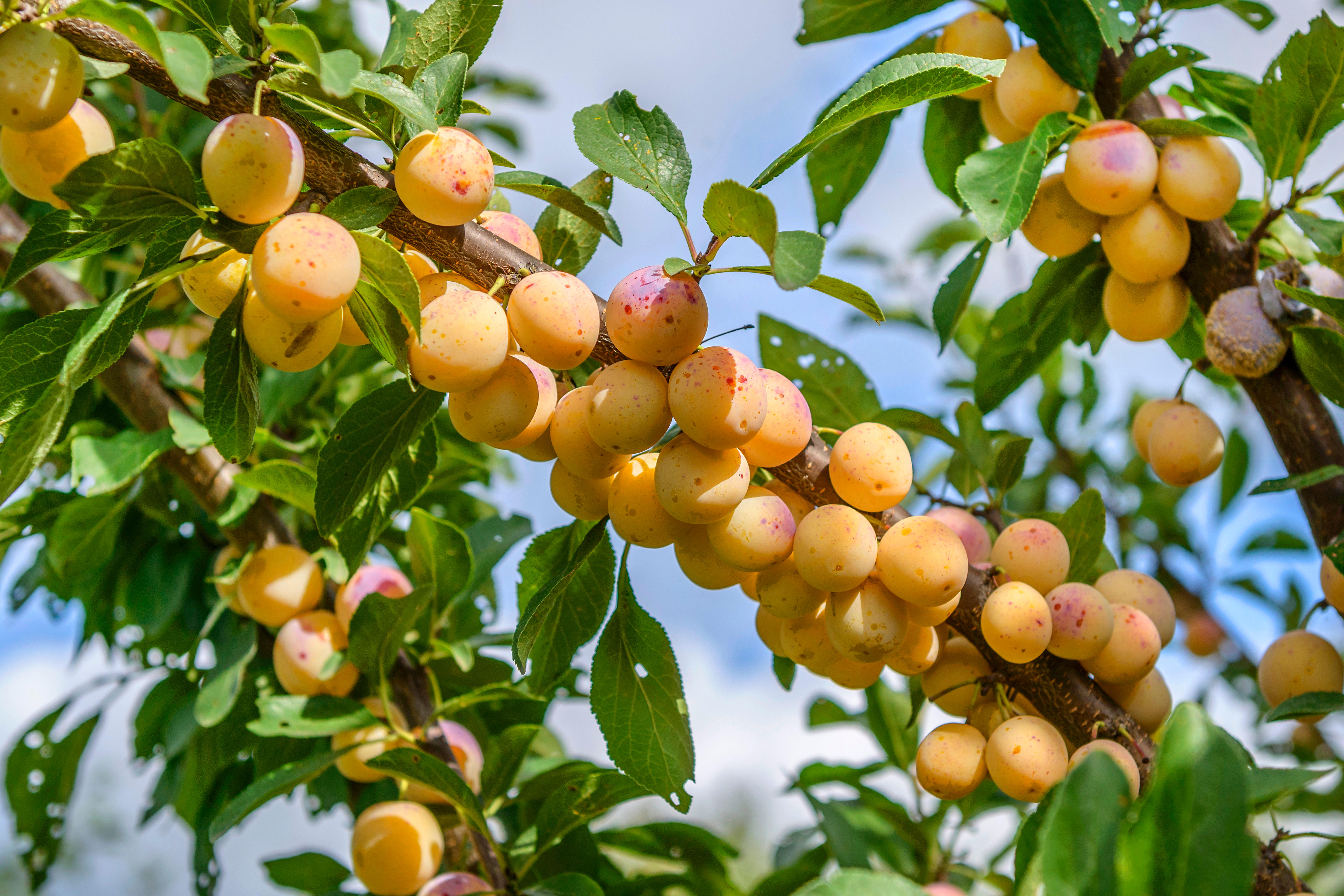
I started with only a few seeds. I received them from a forester colleague of mine who was very keen on finding wild fruits in their native habitats. I ended up with 10 plants. From seed it took 15 years to fruit. The plants flower very early and are subject to frost. They flower around or slightly after peaches. The red squirrels were brutal on the seeds at first but eventually the plants became profuse bearing and I began producing the seedling trees. They were very uniform with few hybrids. There was no curculio or black knot but some trees were lower yielding than others. The trees are slow growing but soon create this twiggy top heavy tree filled with small fruit spurs on the branches. In my population all were yellow except one plant which was red. The flavor is tart but not overly astringent. I can see why the fuss over the flavor of the fruit in processed products. It is different than any wild plum I have grown. There is no substitute. Overall it was an easy tree to grow and certainly it could be grown commercially without grafting. I would use a spacing of 10-15 ft. in the row to create a more hedgerow effect. The tree grows shrubby but can be limbed upwards to allow shaking for harvest. The tree regenerates from the collar which is an advantage for cutting down the top after it fades and using a younger sucker as your new tree. Now you have an older root system which really kick starts the tree into even greater production than the previous trunk as it matures much more quickly with greater vigor and health.
The fruits are used for a wide variety of processed products including jams, syrups, pies, pastries and wine. The whole industry is in one region of France and nowhere else. Like the legal name of Parmesan cheese, you cannot sell the fruit under the Mirabelle name. That is forbidden. Hence the ‘illegal plum’ status that is listed on articles about it. Of course you can’t import fresh fruit or seeds of it but you also cannot sell the fruit and call it the Mirabelle plum. Keep in mind this species plum is widely distributed in Europe. It was recently found in the U.K. in a very isolated location along a fence row. It is not a common tree there and no one grows it. It was thought that people pitched the seeds hundreds of years ago as they traveled the landscape the same way peaches are found in Germany. Who knew the Romans played a great role in plant dispersal.. Not too long ago, genetic studies suggested that the Mirabelle origin is actually in Turkey not France. Very nice to know but this does not matter. The origin of Mirabelle is France not Turkey in terms of its cultivation. This is the tough row to hoe part.
Crop diversity often is masked in varietal selections not spccies selections. It is the species that can enliven our food system far greater than just another variety. To do that it has to leave the country of its origin to really see the potential of its health giving properties to all cultures. It’s time for a test drive to take it out on the road. There is agri- and there is culture. These two are tied together and have been for at least 5000 years. The local becomes the global. Move the plants. Create the forest. Create the orchard. Create the food. Now is the time to move. This is the Mirabelle we all love and want to share. Well, maybe not everyone.
Enjoy. Kenneth Asmus



 biologicalenrichment
You must be logged in to post a comment.