Furry, Cute and Venomous Meets Crispy, Snackable and Delicious

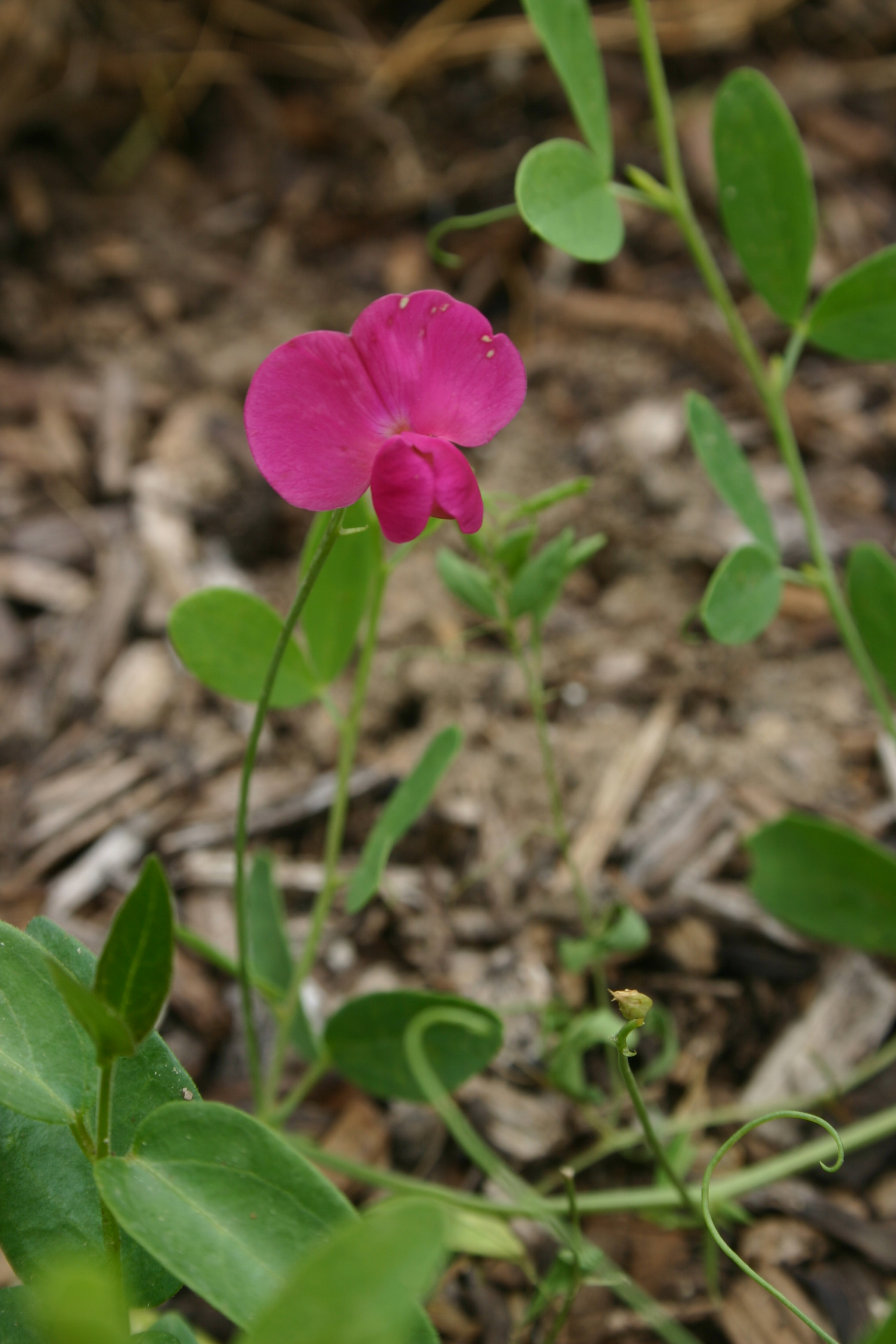
Some of the most secretive plants are the most common. We pass by. We see it.  Yet, our consciousness does not reflect it as a discovery of anything significant.  I saw this trifoliate vine twining around an American hazelnut bush under the powerline and decided to investigate. I had just purchased my farm and this area had several nice hazelnut bushes. I dug down and saw some nice clusters of tubers along its root system. I was not aware of the hog peanut, but I had heard about it in one of my wild edible books. These books often paint a picture of a rich, diverse world filled with food opportunity galore. The hog peanut was one of those. I put them back in the soil not knowing what I was looking at.

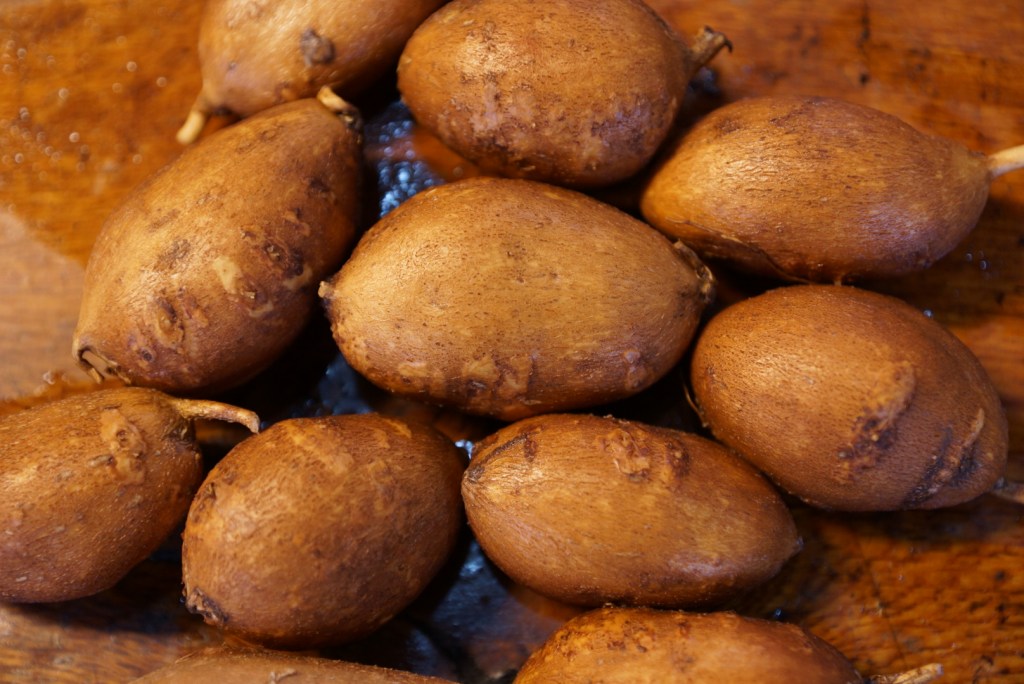
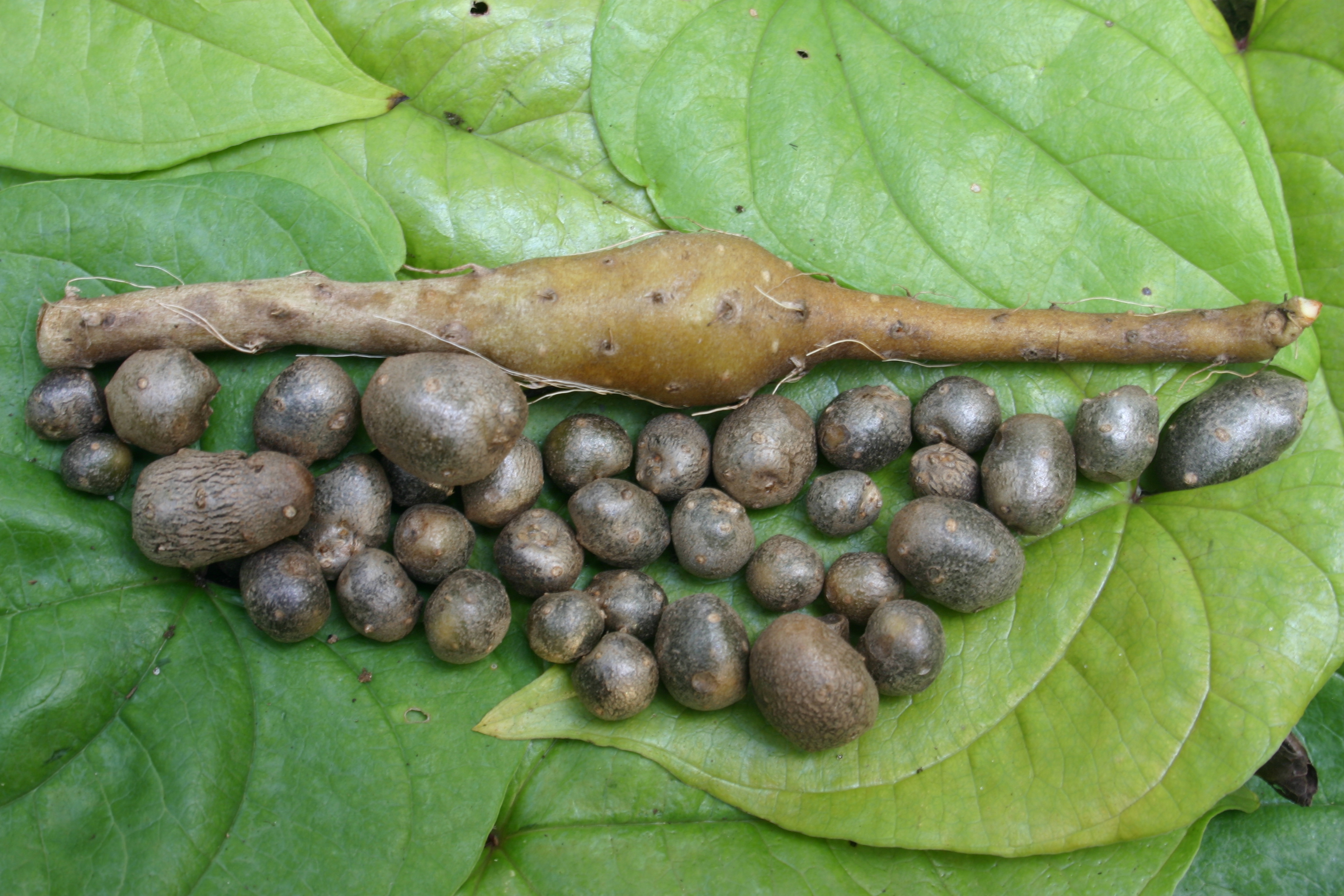
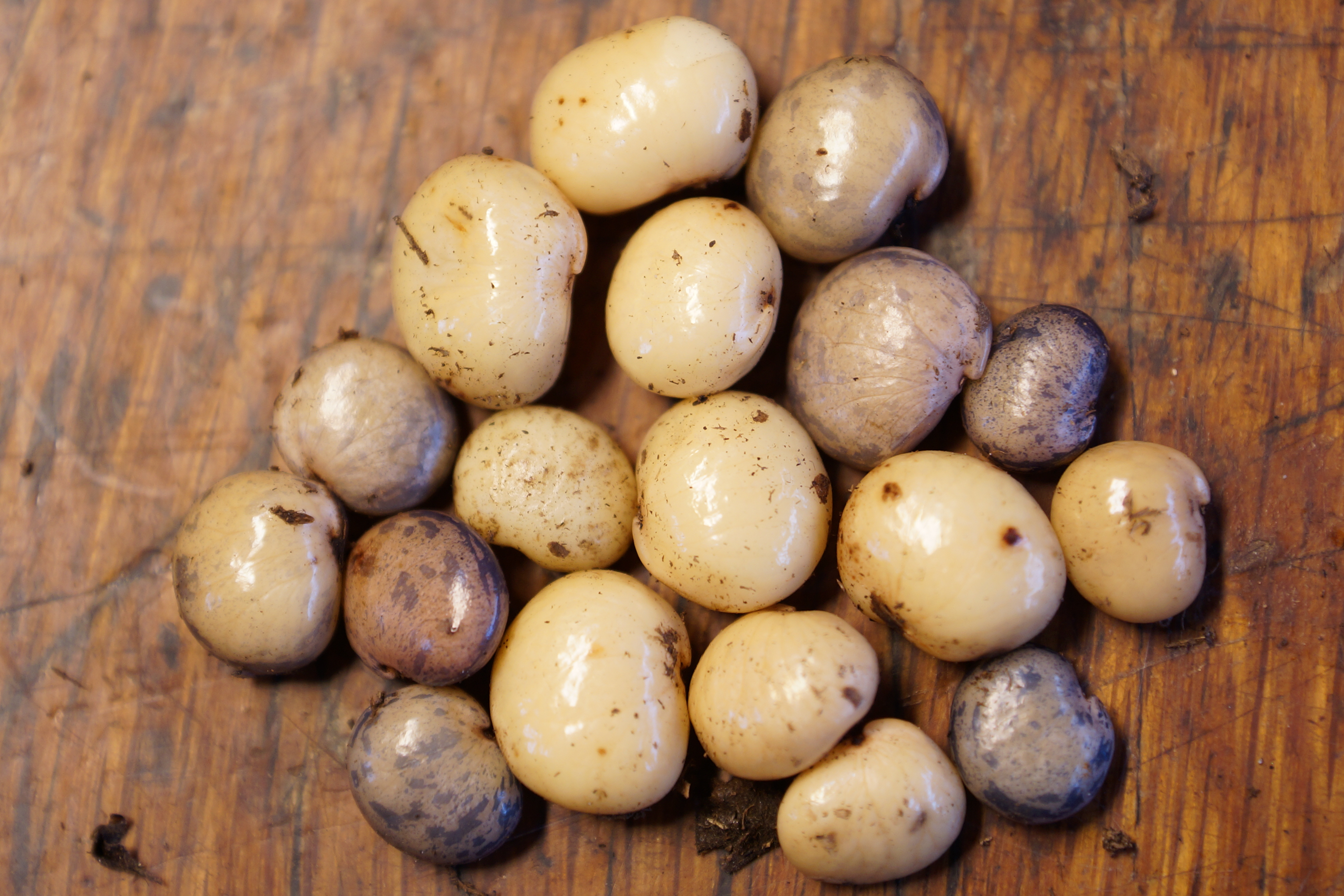
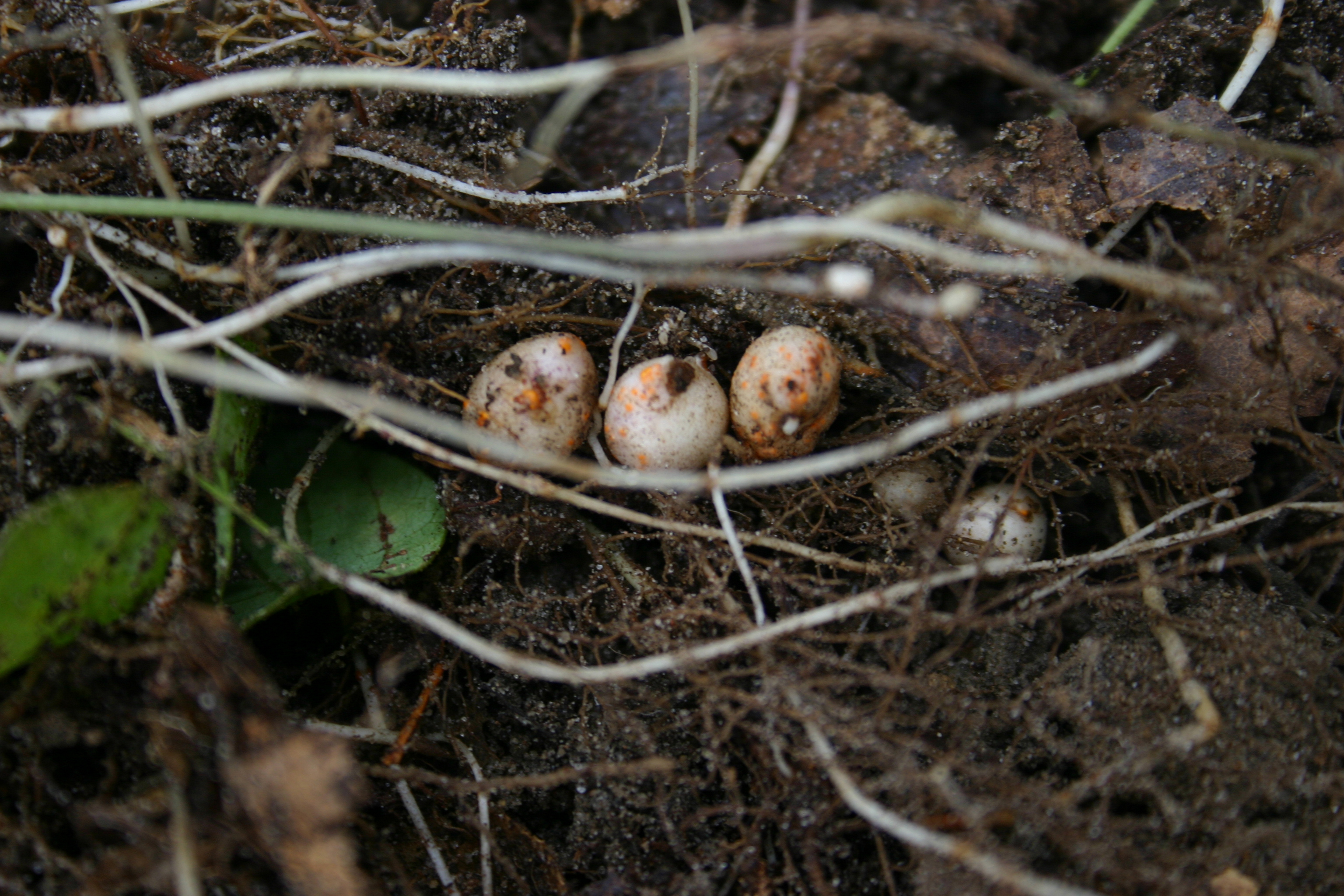
A couple of decades pass and I decided to create an edible forest planting in a hybrid bur-white oak forest I had grown using Quercus x bebbiana selections I planted from acorns. The trees in this forest were roughly 30 feet tall. They were pruned and thinned to accomodate their crowns. There on the forest floor we would plant ginseng, gingers, fiddle-head ferns, gooseberry, violets and magnolia vine. One of my interns at the time told me of the hog peanut at his property in northern Michigan and he would get me samples of it to plant in the understory. He mentioned they were all over and especially prevalent in forest road cuts in the area. I thought this was a good idea because of both its nitrogen fixing capabilities as well as it edible beans that form underground. At this point in time, I had yet to taste them. We did the planting and for the next few years, I really didn’t see much of it. Finally, you began to see it was spreading quickly across the forest floor and creating large patches. Once again when I dug down, I found the tiny tubers encased with a thin layer of soil and very difficult to spot. I rubbed off the soil and tasted this delectable little bean like tuber. I remember thinking I wish there was more of them. The camouflage alone made them very slow to find and harvest. This was my eureka moment as now I had a face with a name. I saw this plant before at my farm in my forgotten planting beds where it self seeded. I discovered there were many types of hog peanuts all a little different. Some were black, mottled, white with purple specks and some were dark purple. After photographing and increasing the magnification, I realized how beautiful and magnificent these peanuts were. It was from here I began to both harvest and sell them. I began to experiment with actually growing them in a more cultivated setting.

I made a selection with larger tubers and named it Crispy Snack. I put it in a raised bed in one of the polyhouses where it was easy to get a handle on harvest for sales in the spring. Even in the bed, they are very hard to discover with their sticky soil coverings.  Cultivating a wild plant is a mix of ups and downs in emotions. One of the highs occurred by accident by growing the plant that had seeded into our cactus plants in our main greenhouse. It was popping out of the pots fixing nitrogen right next to the cactus. When I moved the trays from the ground cloth, I discovered a whole layer of tubers on the mat. It had turned out that the low nitrogen environment coupled with a lattice of roots on top of the weaved poly mat created the perfect growing conditions. I took this method and did similar plantings, but none worked so good to as the cactus. Look out for the spikes! Time to get the hog peanuts!

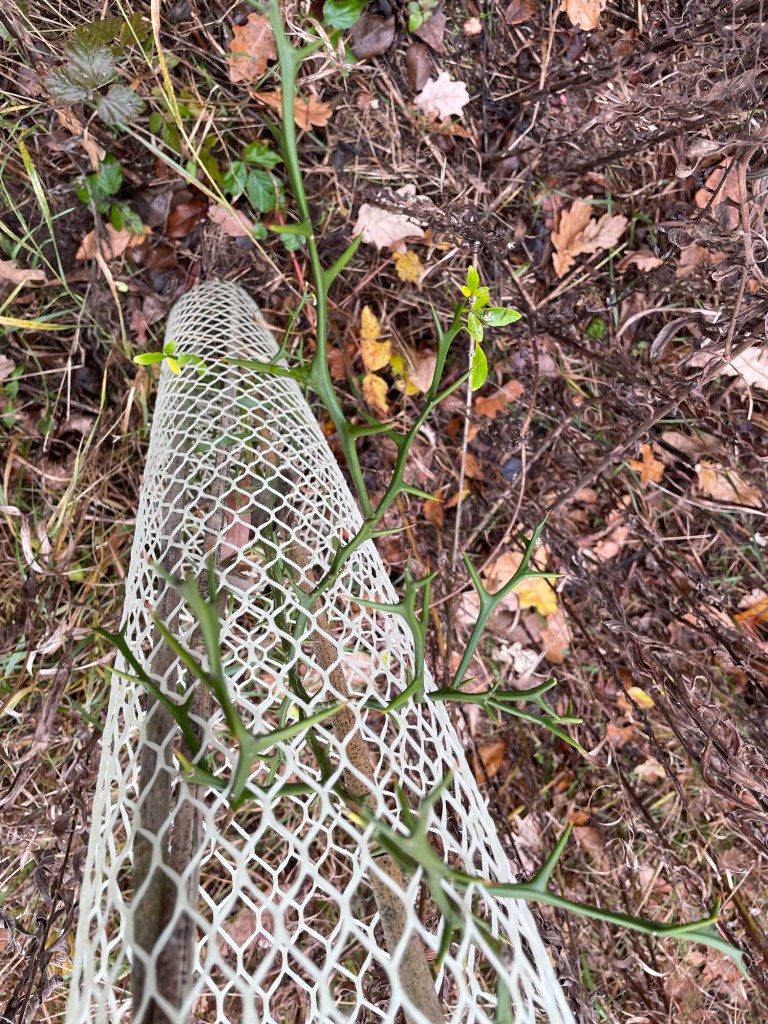
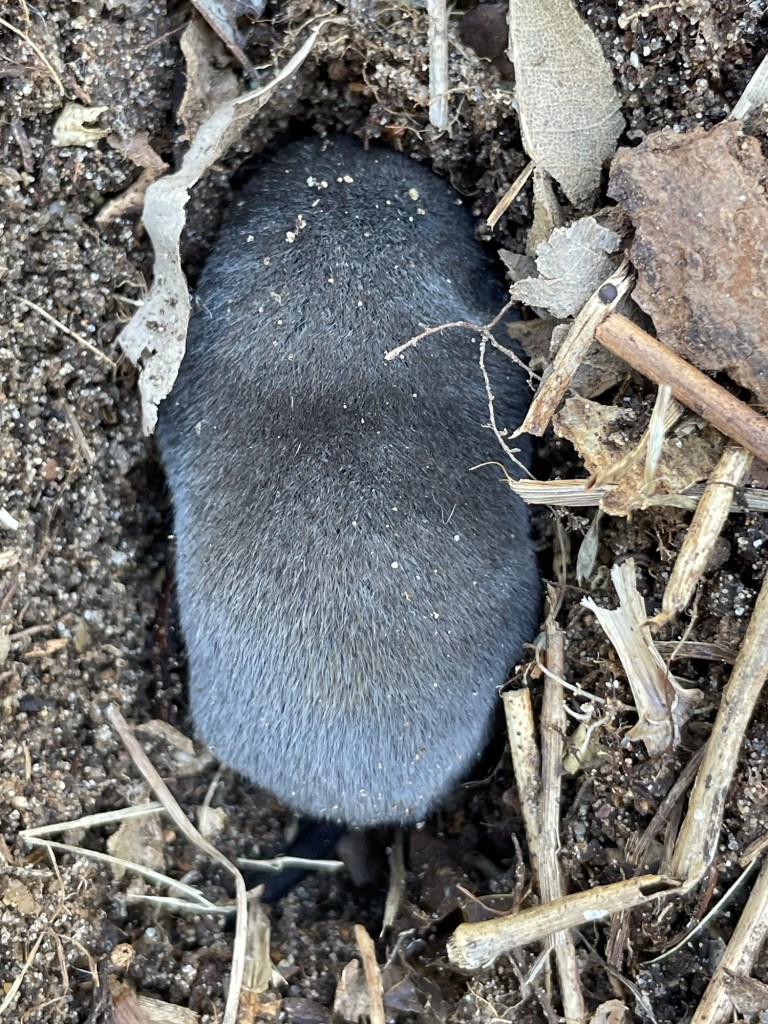
Today I still grow a few hog peanuts in 30 gallon woven poly bags. I harvest the tubers in the fall and then refrigerate until March. I plant them 2 inches deep. The bags are overkill in the propagation world of hog peanut but it elevates them off the ground as they swirl around in a cirlce in the bag devising an escape plan. Their plan worked as a few voles last winter scooped up a couple and moved them to another set of bags ten feet away. This was my foraging animal safety zone encased with a trellis of one inch cone four foot tall chicken wire. When the ever-expanding universe of hog peanut grew quite large (some would say overwhelming) in the Bebbs sweet oak acorn forest, the voles stepped in and soon that universe almost entirely imploded. They too love them and have a keen sense of smell far greater than any human plus they have radar for tubers. It turned out they are visually limited but have a keen sense of space and smell using a radar like bats. My visual acuity for the tubers improved dramatically as I began to spot even the tiniest purple or white color surrounded by that ever present soil cloak they had developed using its slimy outer covering.   In the meantime, the voles totally cleared the patch making a lot of short inventory for this product I was selling.

Resting under a pile of discarded weed mats.

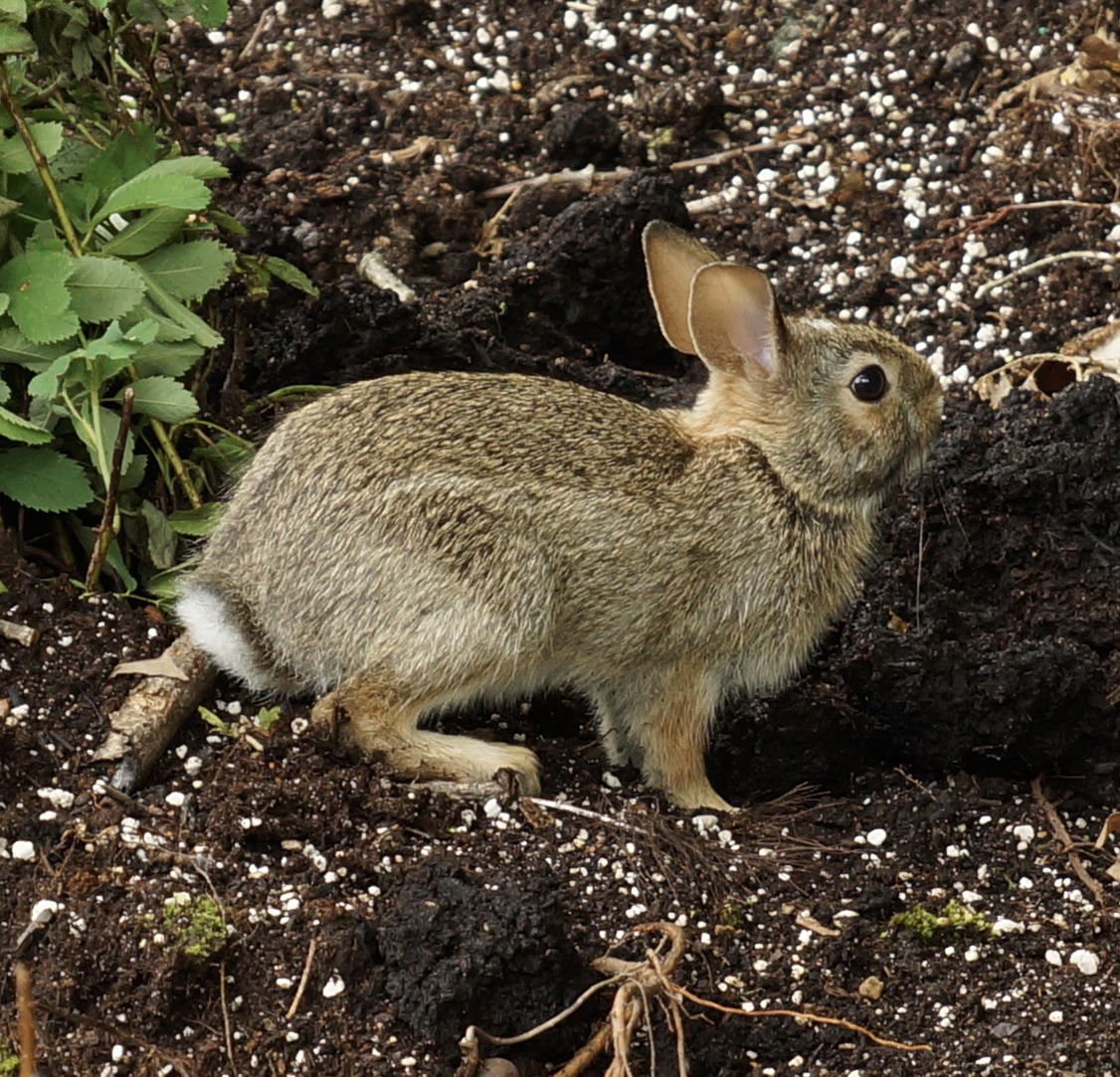
There was an upside to this behavior. In the spring as the plants began to grow and produce a top, I began to notice their caches of hog peanuts and I realized they do not always eat all of those out in the winter possibly due to mortality  It is from here the new planting begins and the universe of hog peanut sets the stage for the outward expansion again. In one planting, there was not a single tuber left in 50 by 20 area. They totally disappeared yet nearby was a cluster of dozens of tubers all rammed together. This is the power of one cute little furry creature with superpowers totally connected to the hog peanut and its growth habit. You have to respect that. It’s from these satellite populations that create the patch again omnidirectionally spreading to fill the space of the forest floor.

Few know the hog peanut. Maybe feral or pastured hogs know of them but not humans. I heard from a few individuals of what I call the disgruntled with nature folks who thought I was poisoning the world with an invasive species of immense magnitude.  Apparently, compost makers as well as commercial landscapes find it hard to get rid of. It is difficult for me to explain the benefits and complexities of a plant that is so highly valued for its nitrogen fixation, food for humans, food for voles and other mammals and not mention browse potential for white tailed deer. I like to illuminate the value. There were several people who are focused on breeding the plant in some way. Increasing the size, using other species and finding ways to harvest and eat them in some culinary way is their focus. One of the real-life university researchers was surprised when I told him about the variation. I told him, few are looking. It you were to ramp this up to a semi-commercial level, I think a shallow sand base with the peanuts growing out of the sand on a weed mat covered with a screen would be ideal. You would then feed with liquid fish emulsion to improve the vigor and tuber yield. The harvest would then include using screens to winnow out the tubers and sand. The hog peanut has a very different life cycle and produces larger tubers in the second year. So this might be more of a bienniel crop or a crop where you only use one year tubers to seed in your planting. It is hard to imagine in many ways because of this unique complexity and variation of these tubers and its sex life for pod formation. I still don’t understand all of it and frankly either do the botanical researchers.

Back at the forest floor, the hog peanut universe is expanding and contracting. All it takes is radar and a venomous cute little furry creature to tell us the full story. We need to listen.

Farmerless fields do not need fertilizer from outside sources. They can be generated within using plants like the hog peanut to improve crop plant yields as well finding ways to grow and use a plant that is not on our radar of possible food solutions.

Enjoy, Kenneth Asmus

Posted in Diversity Found, Ecology-Biodiversity-Integration, Miracles of Nature | Tagged , , , , , , | Comments Off on Furry, Cute and Venomous Meets Crispy, Snackable and Delicious

A Raspberry Takes Many Forms

You got to respect them.They are a tad thorny and hard to walk through. They are a bit overwhelming at times yet bring you closer to wild fruit nirvana more than any fruit. They can fourish where few fruits can grow. As a pioneer species their ecological enrichment should never be under estimated. They are quick and decisive as they form dense colonies. This is the wild raspberry. My goal was to discover these wild flavors and see how that would work in my mixed plantings. Slightly cultivated, I began small plantings of wild collected seeds in Michigan along with other wild collected species that are known for their use in the making of preserves, syrups and drinks.

A little known side note on cultivated raspberries: I no longer sell raspberry plants as they require by the state of Michigan two inspections and sometimes lab tests for virus and other problems. You can bypass the virus barrier by growing them from seed which I highly recommend.

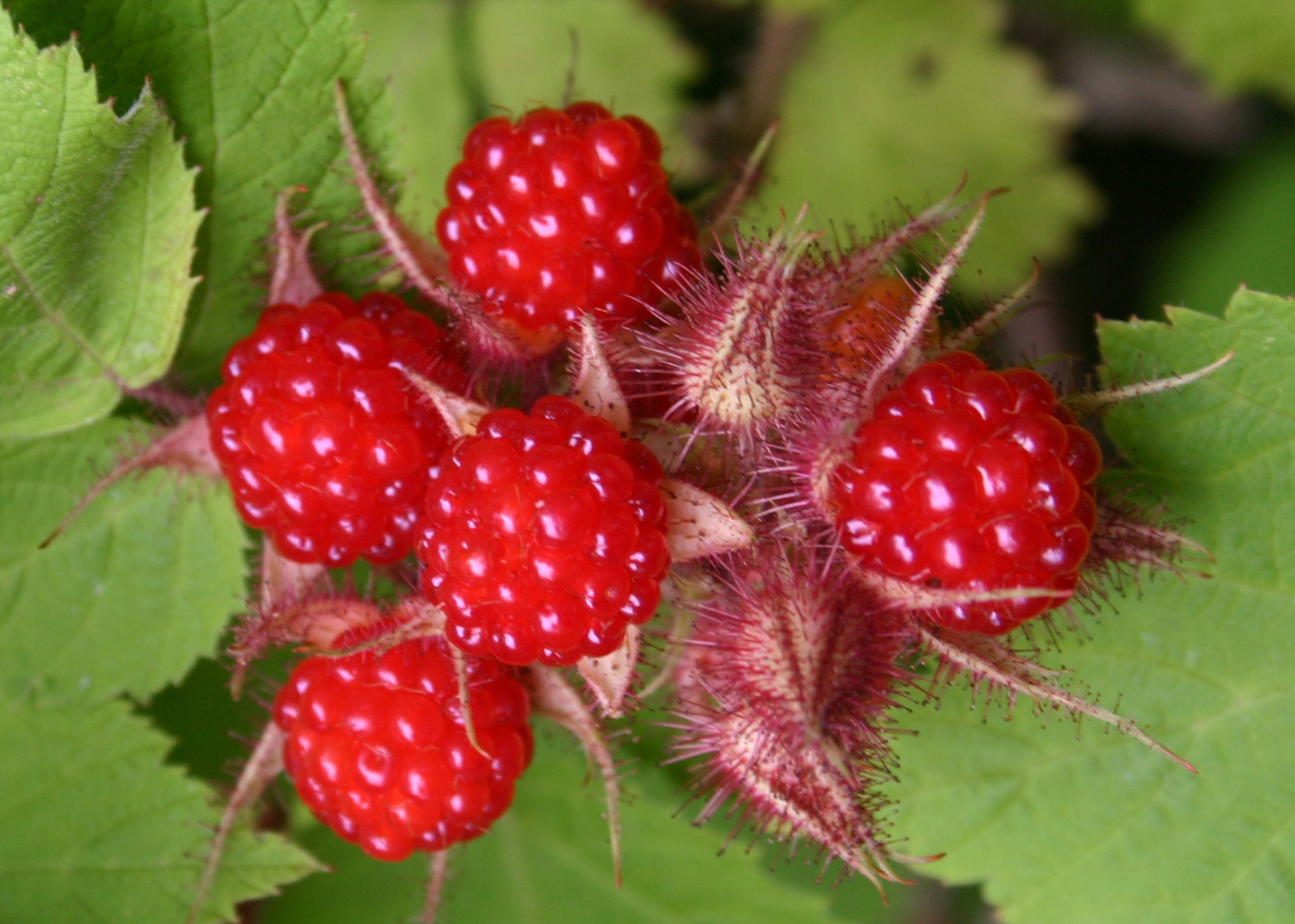
Japanese wineberry is the sweetest of the wild raspberries. It is very easy to collect and harvest large volumes of fruits because they sit on the top of the canes. It spreads by both tip layering and runners. Its use for for jelly, jam, syrup and wne. It is easy to process and the fruit is always clean. In Michigan, the species is not reliably winter hardy. I lost the tops of the plants if it hit in the minus 15 to 20 range. There are several forms of it and I found a group from a collector who thought it was higher yielding and slightly hardier. It has not self seeded at my farm. Its a thorny one and delicate movements like a ballet are needed as you weave through the canes. This species is collected here in the United States too for wine and jelly. Once while traveling from Washington, D.C. I saw many people harvesting at a rest stop along the highway. That is the perfect place for wineberry.

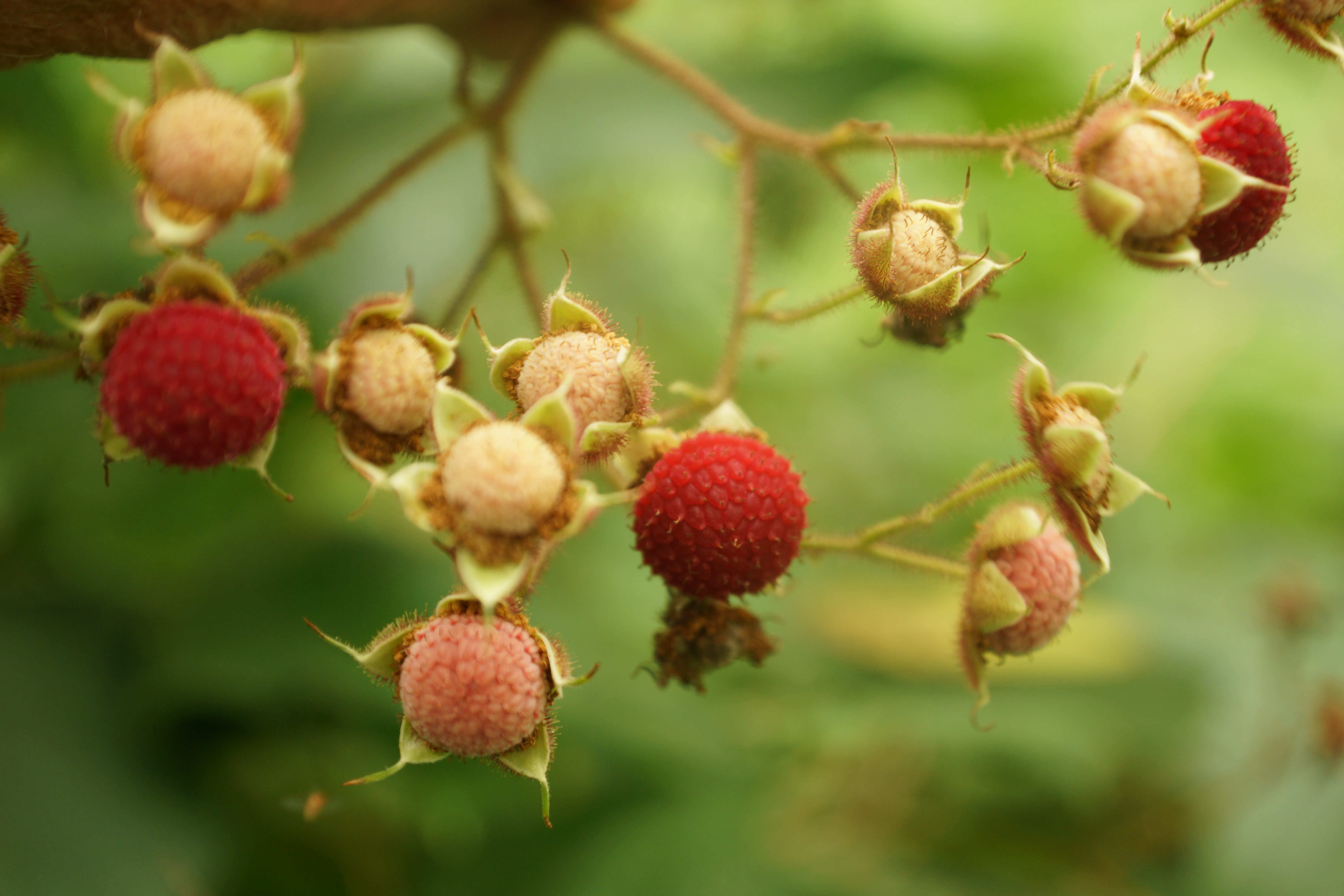
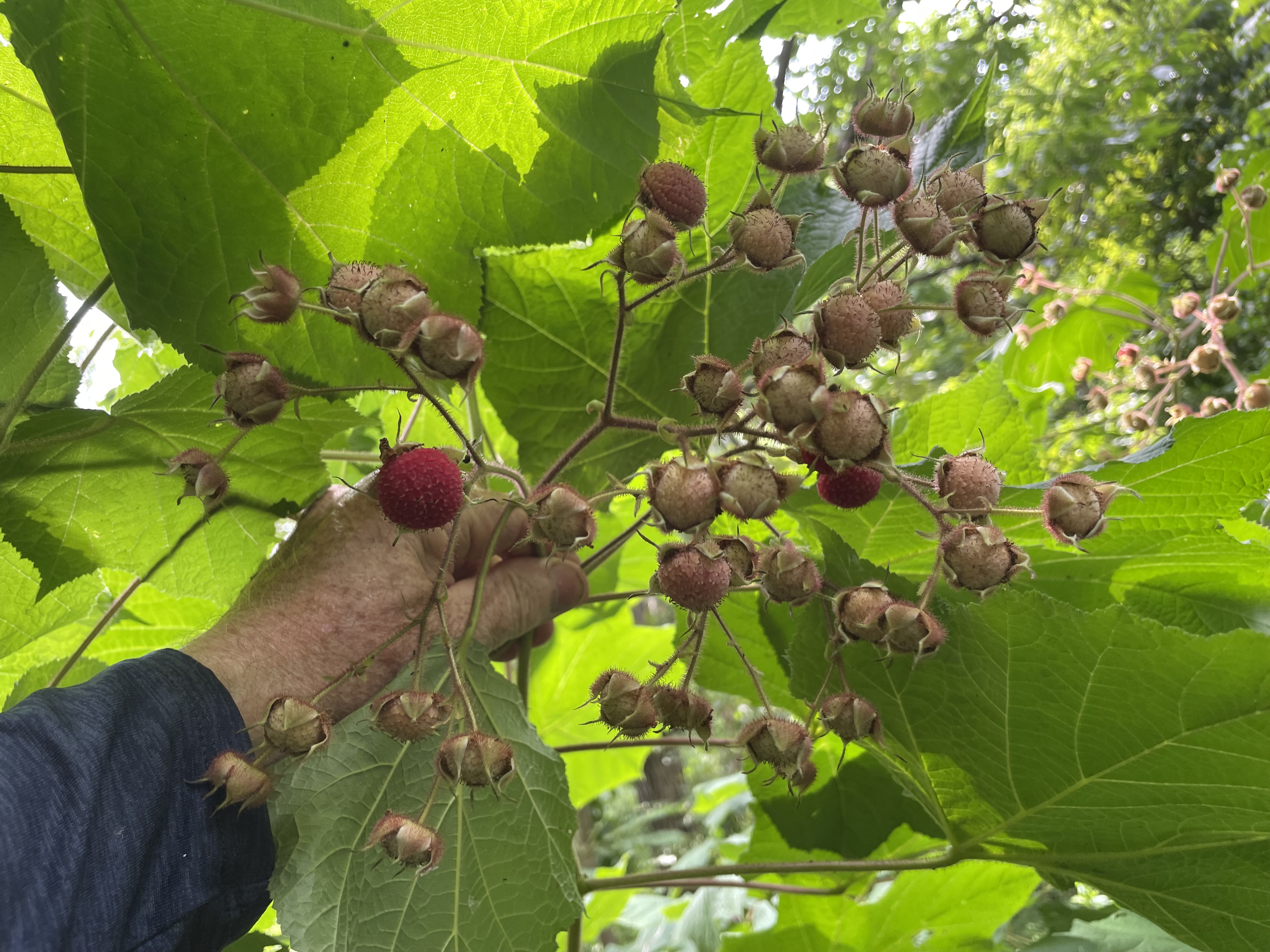
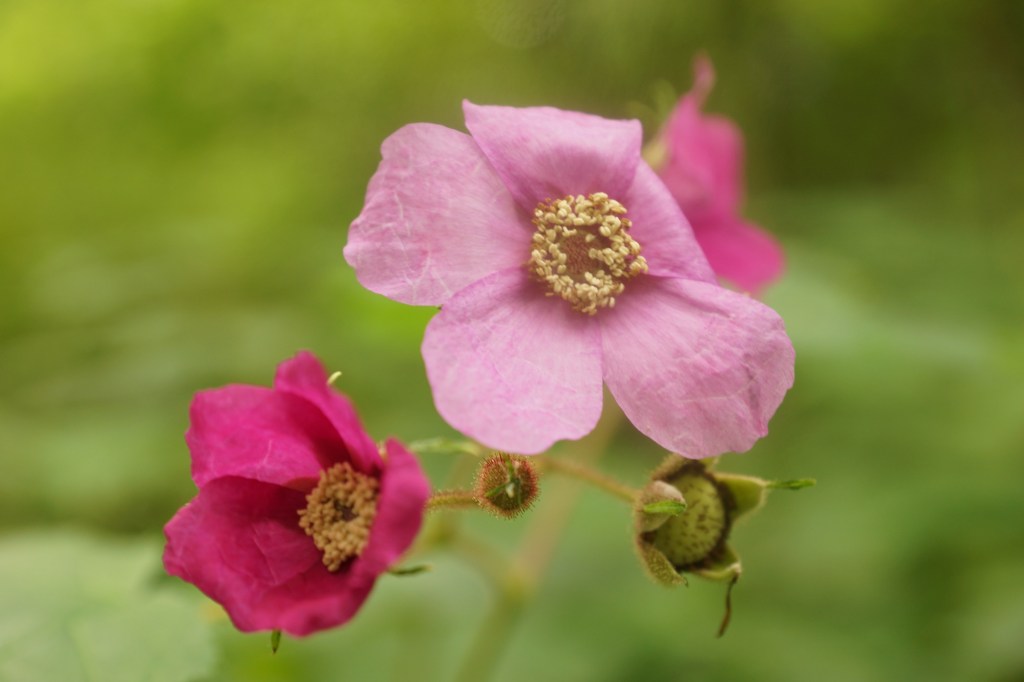
The thimbleberry represents one of the most northern forms of wild raspberry having a concentrated flavor with very tiny small crunchy seeds. This makes them ideal to eat as is or to make delicious jam and jelly. The colonies are thick and can form a monoculture of delicious wonderment. There are no thorns. The plants runner by underground stems. They produce fruit on 2-4 year old canes. It is not a cane that you remove after fruiting. You wait for it to finally die on its own. The clusters ripen over a very long period up to a month or more. This is common with a lot wild raspberries. They make you come back for more. I still believe I have cracked the code on cultivation by using my Pink Thimbleberries in southern Michigan. Thimbleberries are latitude sensitive and hard to fruit in extreme heat and dryness. The California based ecotypes I produced solved most if not all of that problem. Meanwhile thimbleberry jelly is still $17.00 dollars a jar. It can be grown from seed or cuttings. When I had the nursery, thimbleberry and wild black raspberry where the most popular of raspberries.

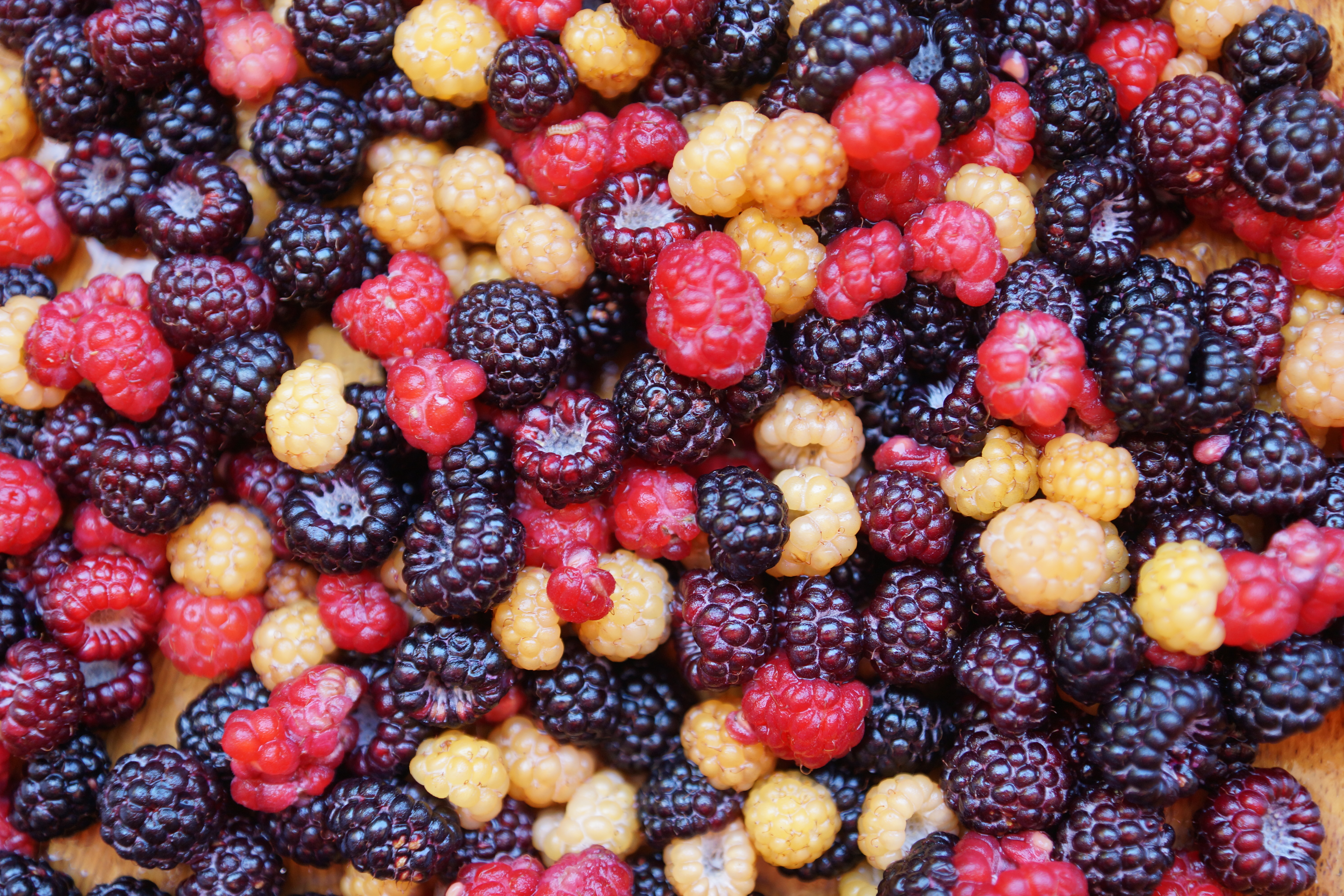
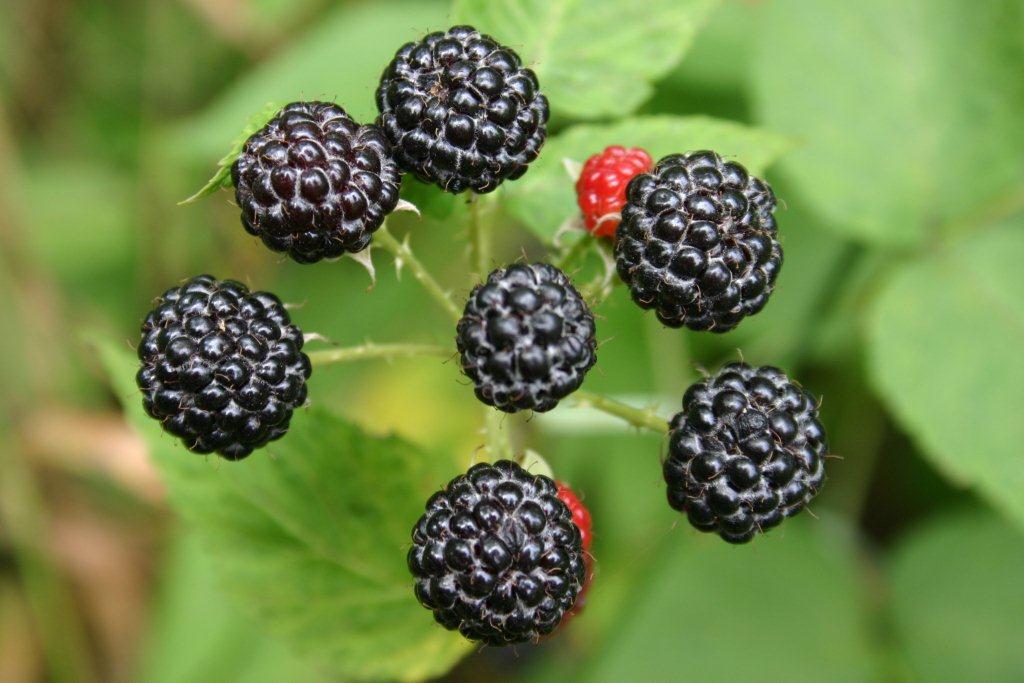
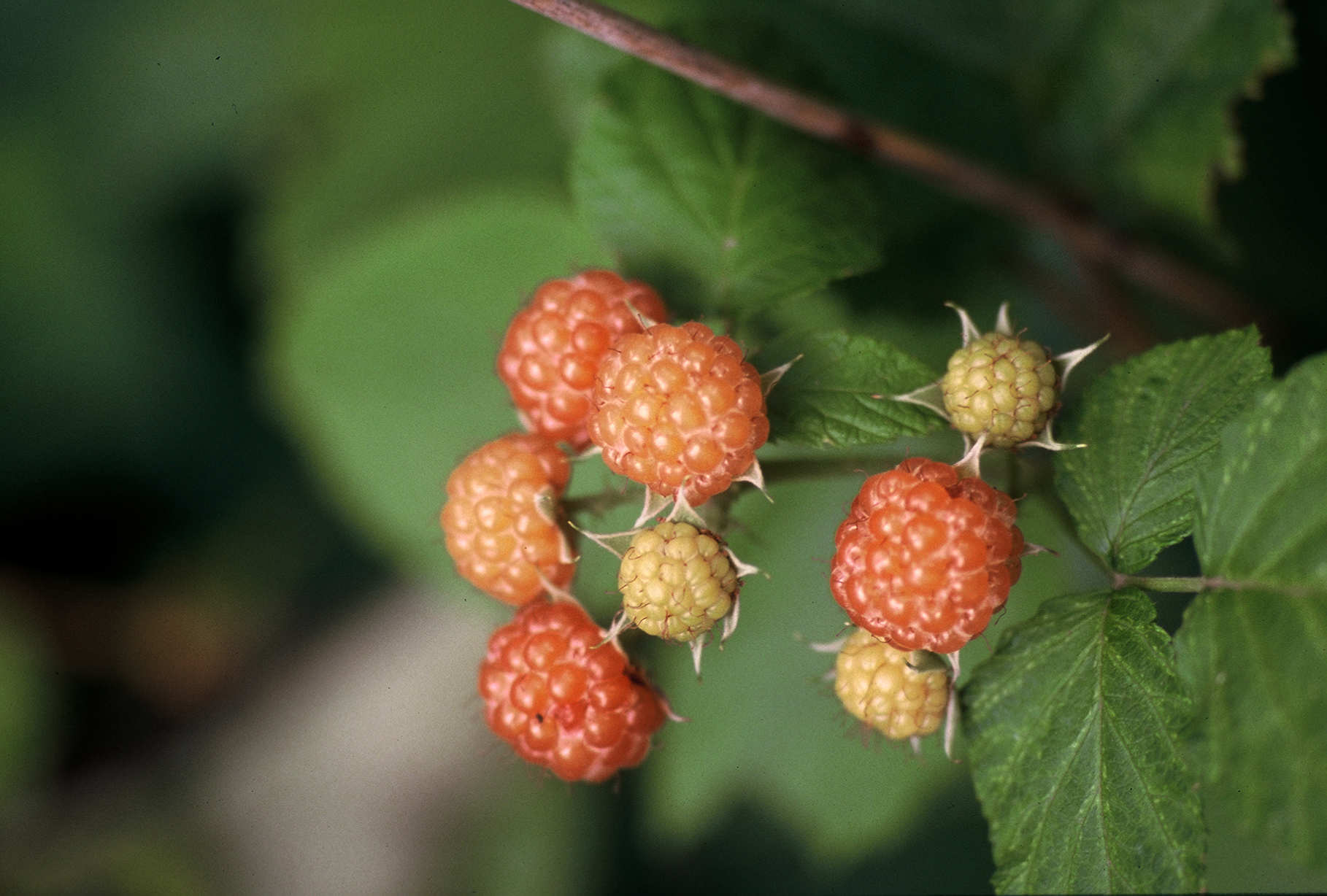
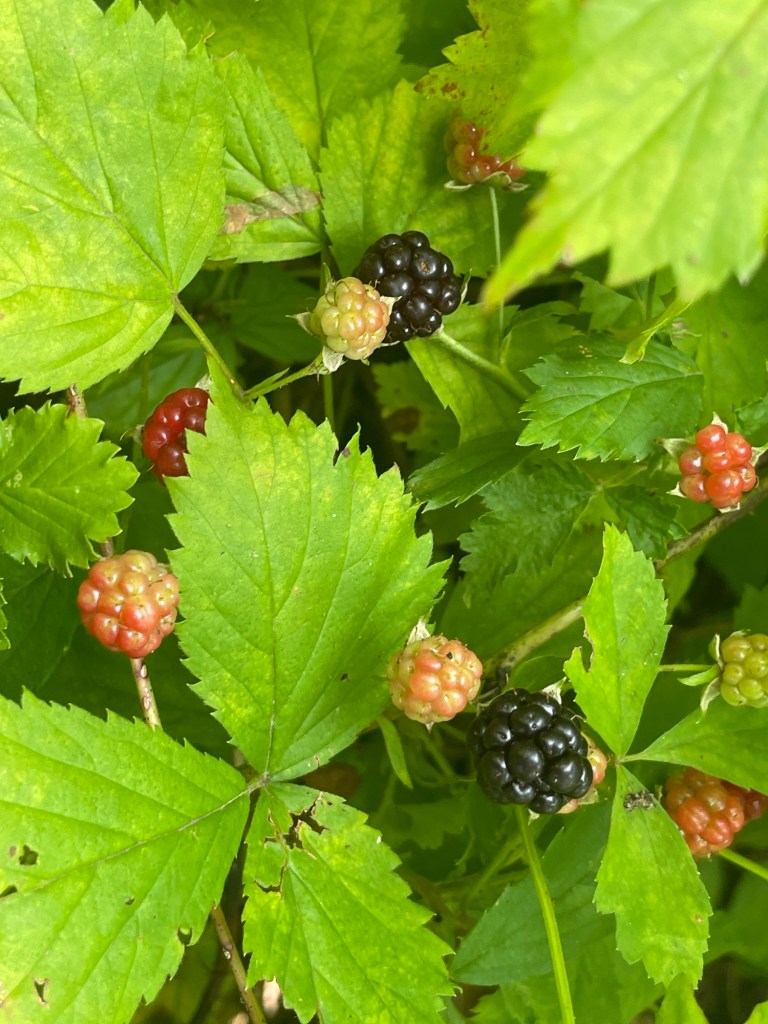
Wild black raspberries in my location are the most common of species. There is actually quite a bit of variation of them both in yields, size of fruit and color. The most two common types are yellow and black. The image above contains some Nortthern red raspberries as well. Wild blackberry canes tip layer their way along. The canes themselves are born from a crown and die after fruiting. New canes replace them quickly. They are the raspberries that are most known for their flavorable fruits. The seeds are medium-large and usually are taken out if making jam. Some people like to leave the seeds in which adds to the texture of the spread. This species is sensitive to drought which will cause the fruit to drop prematurely and never develp further. The roots of the species are shallow. I was surprised at how many people purchased this plant for their landscapes. The yellow form never was as high yielding for me until I found one plant with a massive crop. I started using that for a seed source. These produce best in full sun and wide open areas compared to the other species.

This image of a northern red raspberry on a wide open coastline of Lake Superior represents one of the most widespread species raspberries. It too is thornless and grows from runners. The seeds are tiny and it is like eating raspberry concentrate. The fruit size is small and variable depending on the colony you are harvesting from. Of any plant I have grown, it is the most powerful colony producer and has completely improved a part of my planting by creating a dense composite of raspberry mixed with Desmodium. Its thick in there. It is where the turkeys nest. It has become a groundcover only 3 foot high. You can imagine trying to get a toe hold in the ever shifting rock and sand along a windy coastline. You are going to develop a means to expand your presence by sneaking into the cracks and crevices and making do with what is around you. If you change that to an all you an eat buffet like my farm, then freedom has arrived for this Rubus family. This species despite its size and low yields is just amazing in flavor. Ironically it is found today in many cultivated raspberries too as it was a breeding connection maintained when raspberries went cultivated early on in American history.

Wild Black Raspberry
Wild Yellow Black Raspberry
Wild Dewberry selection grown from seed at my farm with the highest yields.
Pink thimbleberry in flower.

Farmerless fields can accomodate the pioneer species as a means to reforest and replenish the landscape using species across a broad spectrum of inherent capabilities.

It will be from this repository that will help us to tap into these wild flavors and nutritional profiles of a well known fruit plant. It’s not a test. It already works. Employ the raspberries!

Pink thimbleberry cluster.- Keweenaw variety

Posted in Diversity Found, Ecology-Biodiversity-Integration, Miracles of Nature | Tagged , , , , , , , , , | Comments Off on A Raspberry Takes Many Forms

Heading North on the American Persimmon Highway

One of the easiest ways to create a strain of plant is to find similar individuals in a climate or zone similar to yours. The reason you might attempt this is that you desire to grow a plant that is traditionally known not to be adapted to your location and likely has few varieties that would be useful under cultivation. You then raise many seedlings of this species and plant them in a location where the plants can flourish on their own. This is not the one in a hundred breeding while trying to create a highly selected individual plant from a massive population.  For the northern strain of the American persimmon, it is the 99 population that you desire. You will be able to use and enjoy reflecting on the most northern of its species in or outside of its range. The definition of northern in this case is central Indiana or Illinois. This is where the tree’s geographic range tops out on its own without the help of humans. There is a southern subspecies of American persimmon which is also said to have a different genetic make up. The American persimmon is not native to Michigan. The geographic maps always show a nice smooth line where something is found and is considered native. In reality, it is a dotted bumpy line with many satellite populations here and there in all directions, north, south, east and west. I view human dispersal as natural and treat it the same as any other vector. It is desireable and shows the level of integration found within all plants. Other people want the smooth line of understanding the movement of plants. It makes it simple. For me, I want the ever expanding universe of American persimmon. Others want a wide thick sharpie line on a map were everything is frozen in a 1491 timeline.

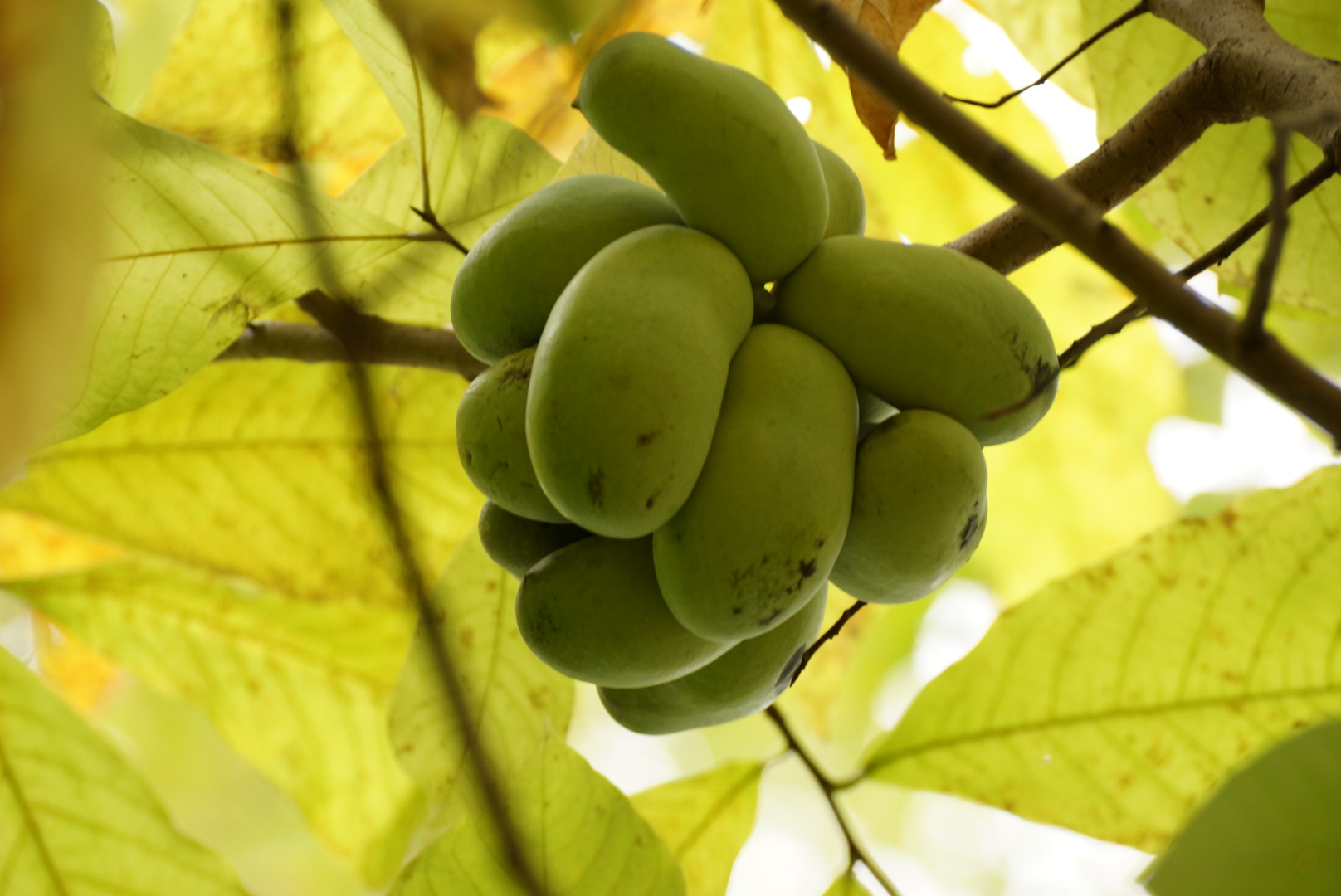
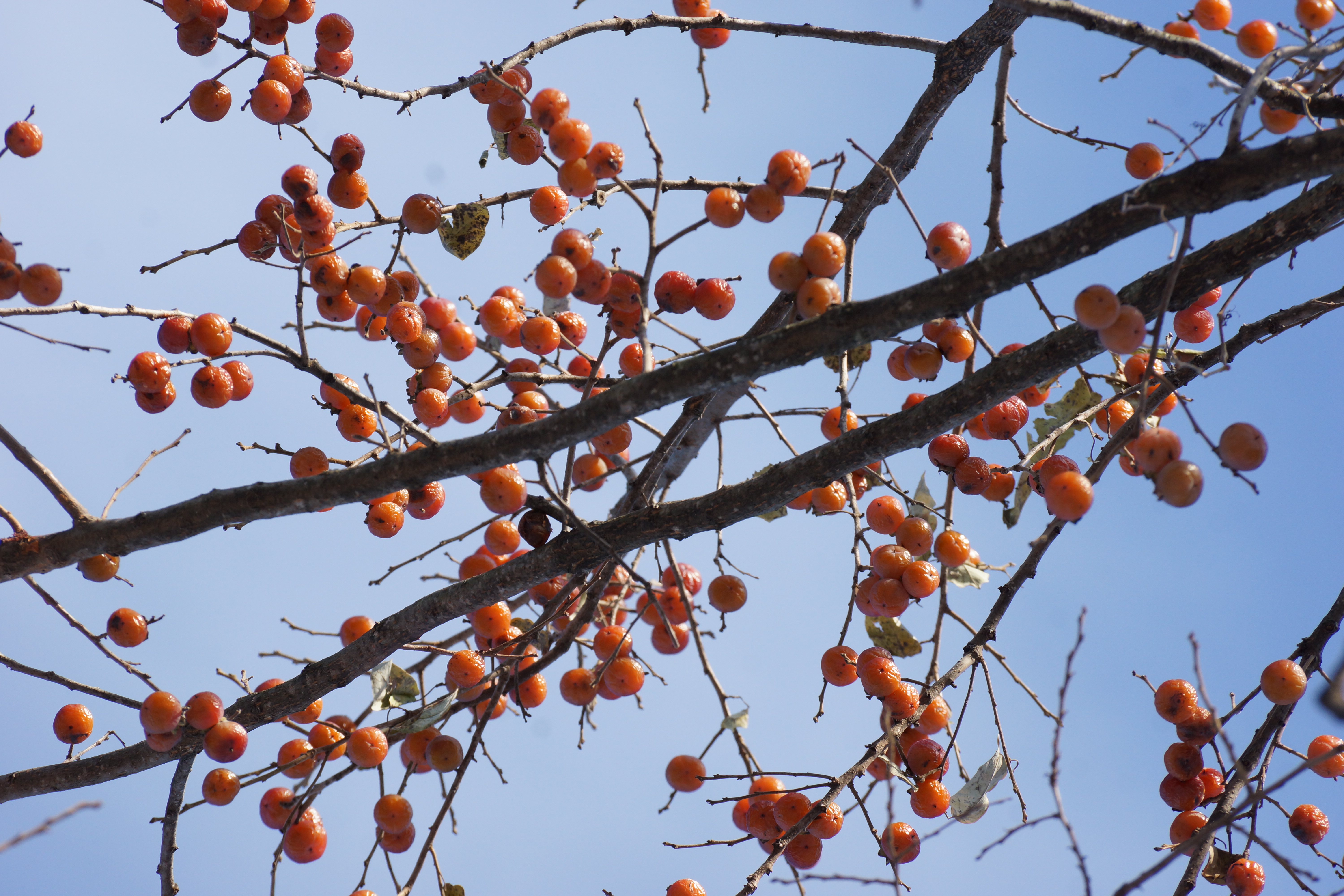
Since the American persimmon has been cultivated for over hundred years there are also varieties from this region known for their delicious fruit, low seed count and early ripening. When I found the American persimmon in southern Michigan, I found lone trees with no fruit used in cultivated landscapes but nothing else. So I began to find several individuals in the North American Fruit Explorers that I could purchase seed from and used this in my nursery for the production of seedlings. It was fortunate in that it was this clonal reproduction of female trees that allowed me to use these most northern forms with good fruit quality in my plantings. A few growers in Michigan had grafted selections of the many of the same northern varieties from the early to mid 1900’s. These did not ripen fully always. The flavor was very poor and the texture was grainy. There just was not enough heat units during the seasons to ripen them fully.

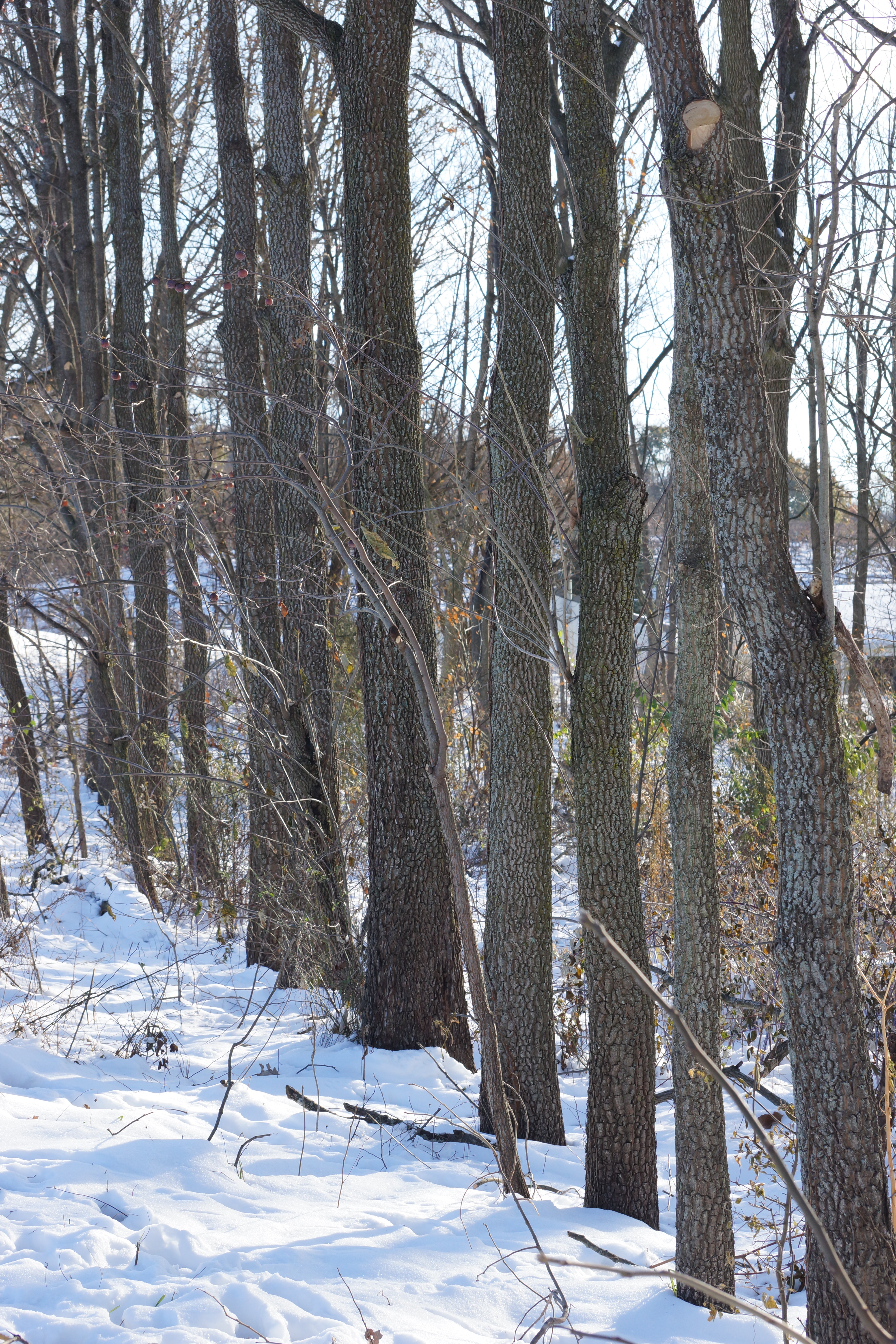
There use to be a farm I would drive by in Saginaw, Michigan that had a fantastic line of Norway spruce on its property line surrounding the land. The owner years earlier decided to make it his home in the middle of a treeless field and create this boundary marker out of trees. I always found that inspiring. I did the same thing only with persimmons. I planted lots of seedlings roughly 7-10 feet apart 5 feet within the property line. There was little or no competition for light at this time from nearby trees or anything that would interfere from my neighbors property. I remember cutting off a limb of a nearby mulberry tree but that was it. That tree still exists today encased by persimmons despite a set back created by groundhogs in that area. The power company removed one 300 ft. line I had which was 15 feet away from the poles. Other than that the total run is roughly 2000 feet with a few blanks in between.

This was my starting point for the American persimmon in the real world weather conditions of southwestern Michigan. I live in an area that is one of the cloudiest areas in the United States.  One of my maximum-minimum thermometers hit minus 29 once. Recently there was minus 27F but normally the coldest it hits is in the minus 15 F area. I am on the border of the fruit growing district surrounded by grapes mostly. The brix content of Concord grapes coincides with the ripening of persimmons at my farm. If they do not harvest the grapes, then likely much of the crop of persimmons will not ripen fully either. This is a rare event but it does it happen once every 10-20 years or so where Welch’s will not accept fruit. There have been both total success and  no success along with everything in between.  The trees always flourished but it was the ripening period of the fruit that was the ‘iffy’ part of growing the American persimmon in southern Michigan.

Since you have a nice population now which is fully fruitful you can make selections too. It is the population that you can draw from, like taking out a book from the library of persimmons and seeing what sort of knowledge you can gain from that one individual. The larger the population and the longer the time you taste test your way through the persimmon forest, the more you will discover. It is a joy and worth doing. You can make your seeds available and take cuttings for grafting on a new variety you have named yourself. It is not that hard despite half the trees will be male.

Either way you have created a crop where none existed before in a land where it was not thought possible to do. You have expanded the range of the plant, created a food opportunity for others to witness and share while you found a very easy way to tap into a plant that has been on the sidelines of agriculture for hundreds of years. This is rewarding on all levels which allows it to be moved even farther into ranges not acclimated to persimmon culture. But more important it allows people to actually taste a tree ripened American persimmon filled with sweet delicious goodness. That in itself is of great value despite its lack of use by the majority of the public and low interest in the fields of academia and institutions. The persimmon will hang its sweetness to catch you off guard until finally you too will be converted.

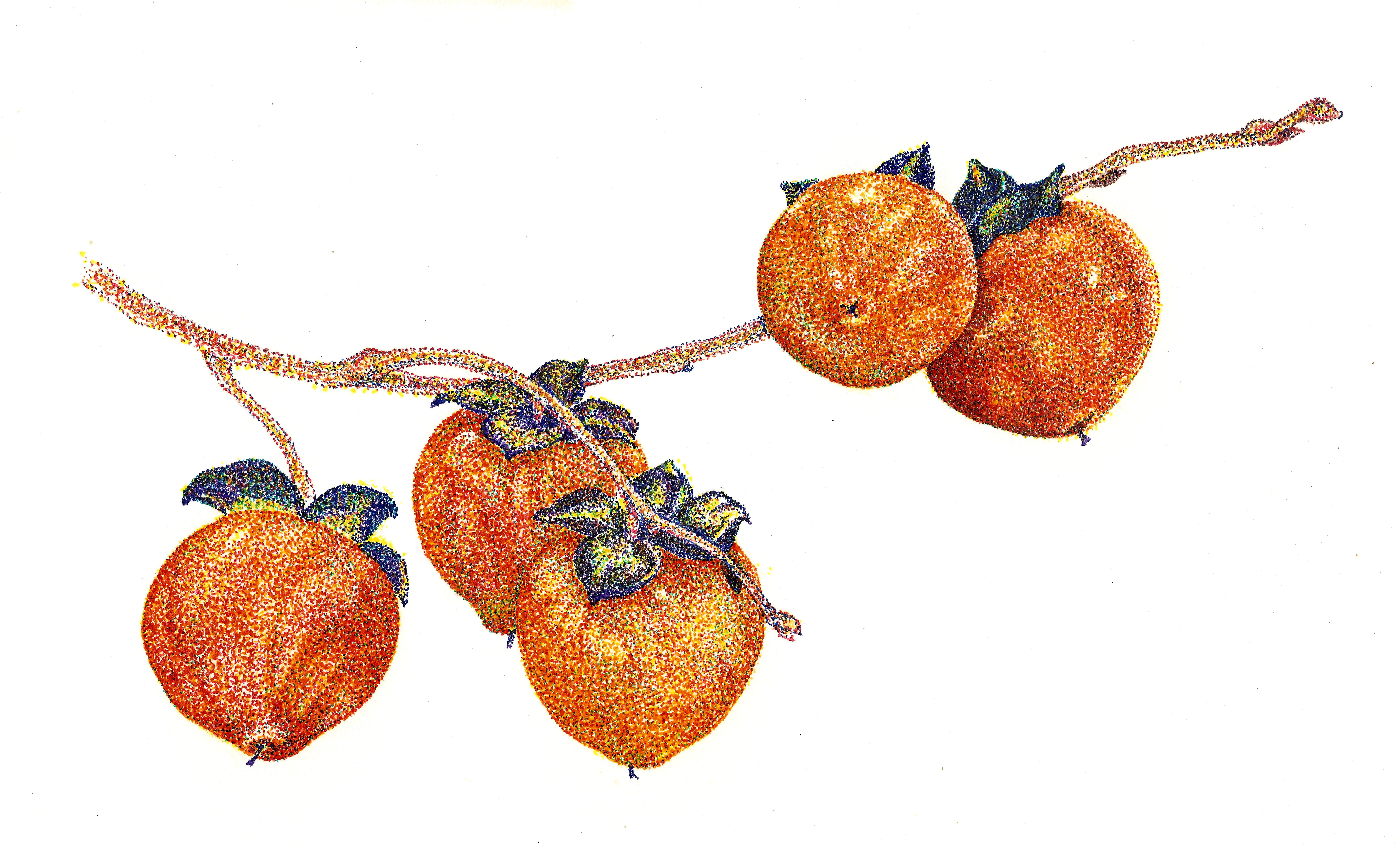
David Adams image Copyright American persimmon from my farm in Michigan.

In the farmerless fields, the American persimmon represents both wood and fruit potential and a simple means to begin our journey towards a more fruitful future.

Posted in Diversity Found, Ecology-Biodiversity-Integration, Miracles of Nature | Tagged , , , , , , , , , | 2 Comments

From Fruits to Roots: Tranquility Potato

Have you ever looked at the roots of plants closely? The part of the plant you don’t see is incredibly complex. Since I used a shovel to dig all the plants for my nursery I soon had a birds eye view of roots of many species of trees and shrubs. They were all different. You can look at the roots and see immediately what species it was. It is distinct as its foliage. I grew hundreds of species of trees and shrubs in beds that were tilled and planted with seeds. Because the medium I was using was very uniform created with lots of tilling, fertilizer, raking and mulch the roots of each species grew unobstructed creating patterns that you normally don’t see in uncultivated situations. Each species was different and followed certain structural designs. Within the species you would find unique variations the same way that you might find a variety or selection that has a different growth habit or foliage color. It is this variation found with the potato I found extremely interesting. It was not the tuber but the roots surrounding the tuber that caught my attention.

No one really thinks about roots. In the potato, the tubers are the focus. Recently I was reading a story of a selection process used for potatoes developed specifically for Texas done by actual real life plant breeders working for a university. It was a fantastic success story like winning the lottery of potato growing. There was no mention of the root structure of the plant growing in this hot arid climate. Instead they discussed the foliage and the yields. I was wondering if irrigation is required or how that works in a land that was not particularly potato friendly. I was thinking more about the roots again.

At my farm I began using seedlings of heirloom potatoes. It was by accident I noticed a couple of potato seedlings that had what could be described as a form of ‘compacta’ roots. Compacta usually describes yew varieties that are extremely dense in branching. They have a growth pattern where you have dense clusters of branching to the point there is often no leader like a normal tree or shrub. Often these are dwarf varieties never require pruning and are the opposite of all yews used in the landscape trade in the last one hundred years. Compacta is found in roots too but it is not common. You could easily say all roots are compacta because of the nature of branching in roots. For me it is a matter of density and structure. It reminds me of something I read in college about the emerging field of particle physics. My split ends are getting split ends. Ad infinitum.

Tranquility

Due to this clustering root habit compacta roots extract more resources from the soil much faster being able to attach itself to the soil particles in a way that the water is more effectively absorbed. It doesn’t just whiz by in the soil profile. It is caught working its way through the root maze. This creates a condition where the potato grows and ripens faster and finishes much earlier than other selections. That is exactly one of the characteristics of ‘Tranquility’ potato. It is a miracle to me but not so much to a crop scientist. The potato industry is laser focused on the varieties it already has. You can buy organic potatoes easily but it is rare you will see organic potato chips. Why is that? The whole industry requires certain criteria for certain varieties and sometimes it does not happen. Compacta roots is not one of those criteria needed for potatoes as far as the industry goes. It would take too much explaining. It definitely will be important in the future and any crop plant that can do more with less will eventually overtake standard older varieties because there will be no choice but to change. This will be the nature of all crops where the custodians hang on to old text books long outdated by extreme weather events and other related diseases and insects using conventional thinking. “I have one problem. I need to fix this one problem. I will find one solution.”

Tranquility

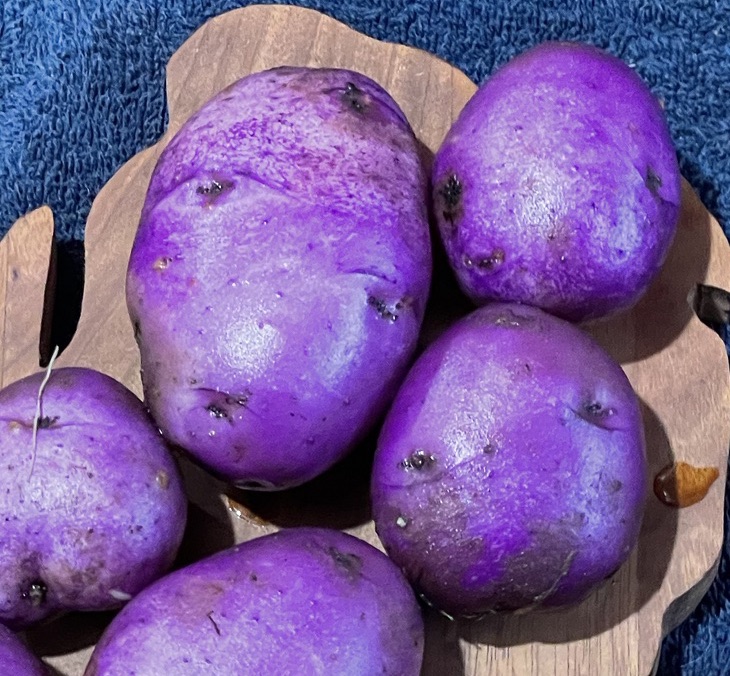
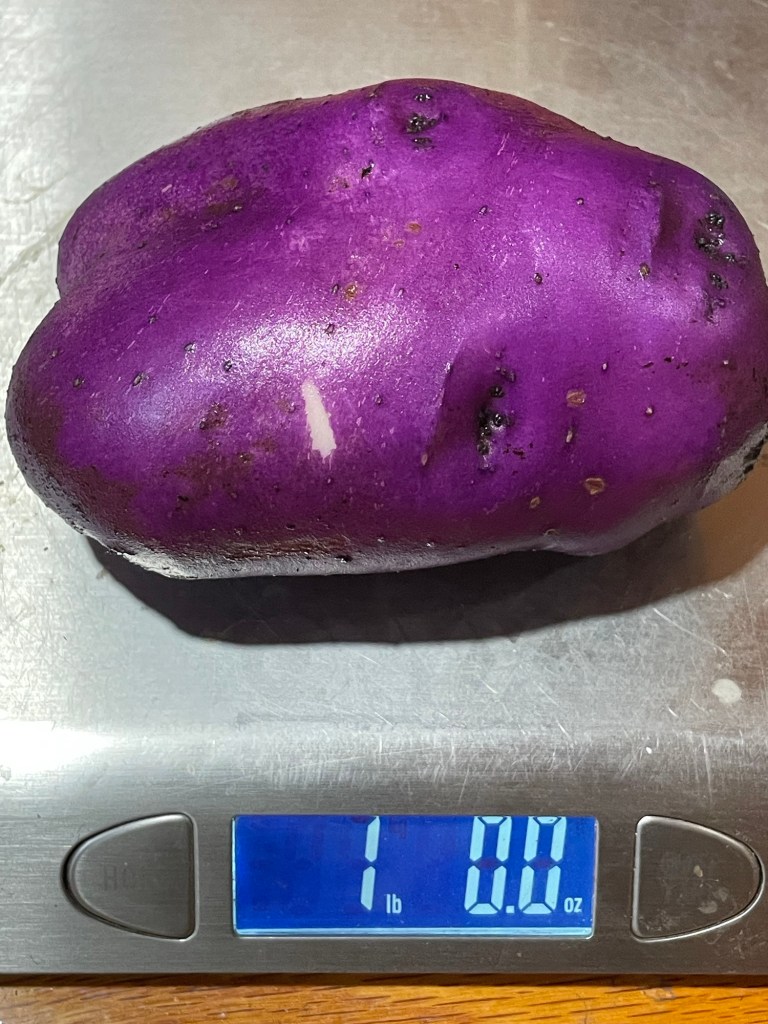
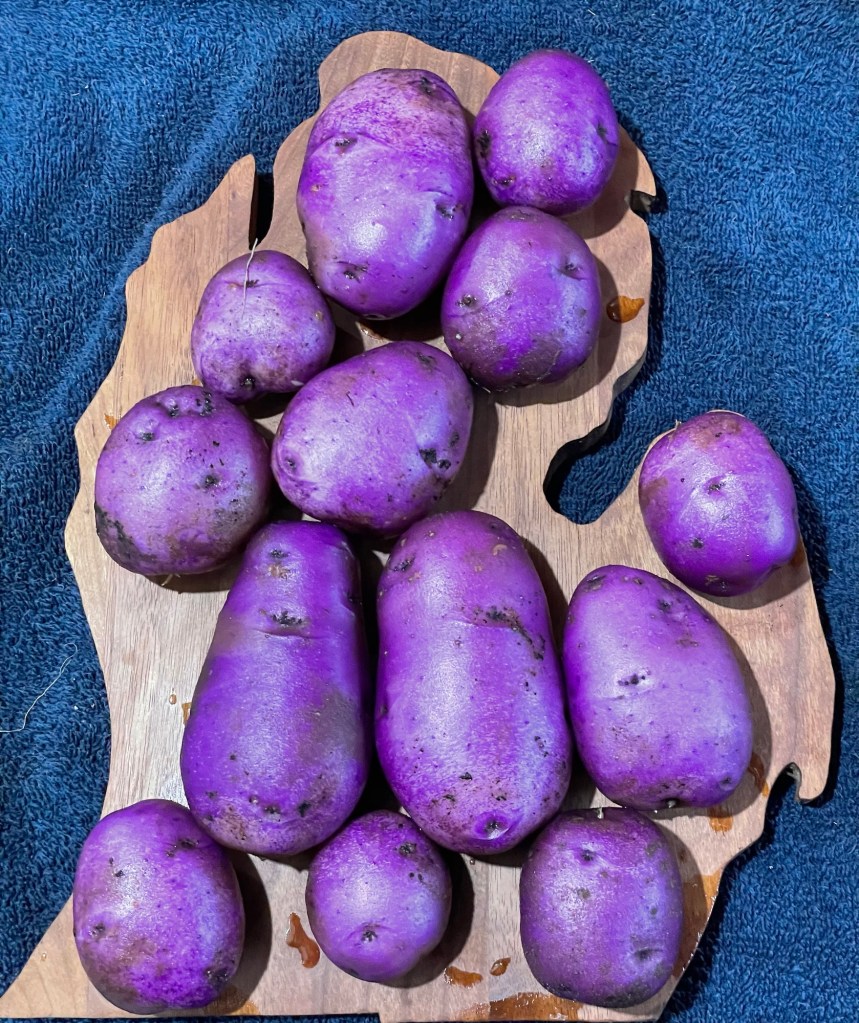
‘Tranquility’ makes the case for a short season high yielding potato. Planted in early May, the crop is  ready to harvest by August 1st. I would put it in the 70 day range for ripening fully from emergence of the foliage to finish. The foliage has been free of early blight with no signs of heat stress. The top begins to go dormant in late July and decays quickly making harvesting very easy. The foliage remains clean throughout its growth cycle and appears totally insect resistant. The main stalk is square in shape with a pyramidal struture to it from soil level to the top of the plant. The tubers are clustered tightly around the roots near the main stem. I hope to measure yields more precisely this year. Sizes run up to one pound each. The bright purple and violet color is distinct and desirable from a retail sales level. The potato has a pure white interior with a very smooth and creamy texture.  “Tranquility’ was grown from seed of a blue heirloom potato of which may have crossed with ‘Zolushka’. It was found in a seed bed that overwintered several years before I started noticing the yields which greatly exceeded all other seedlings I had grown up to that point.  It is uncertain if it is entirely winter hardy. It does have very good cold tolerance. Although grown from a diploid, it does not produce berries. I am not sure of the storage qualities but at my farm it could stay at room temperature for three months prior to sprouting without refrigeration. At this time, I cannot detect solanine but will have a test done with this along with yield data.

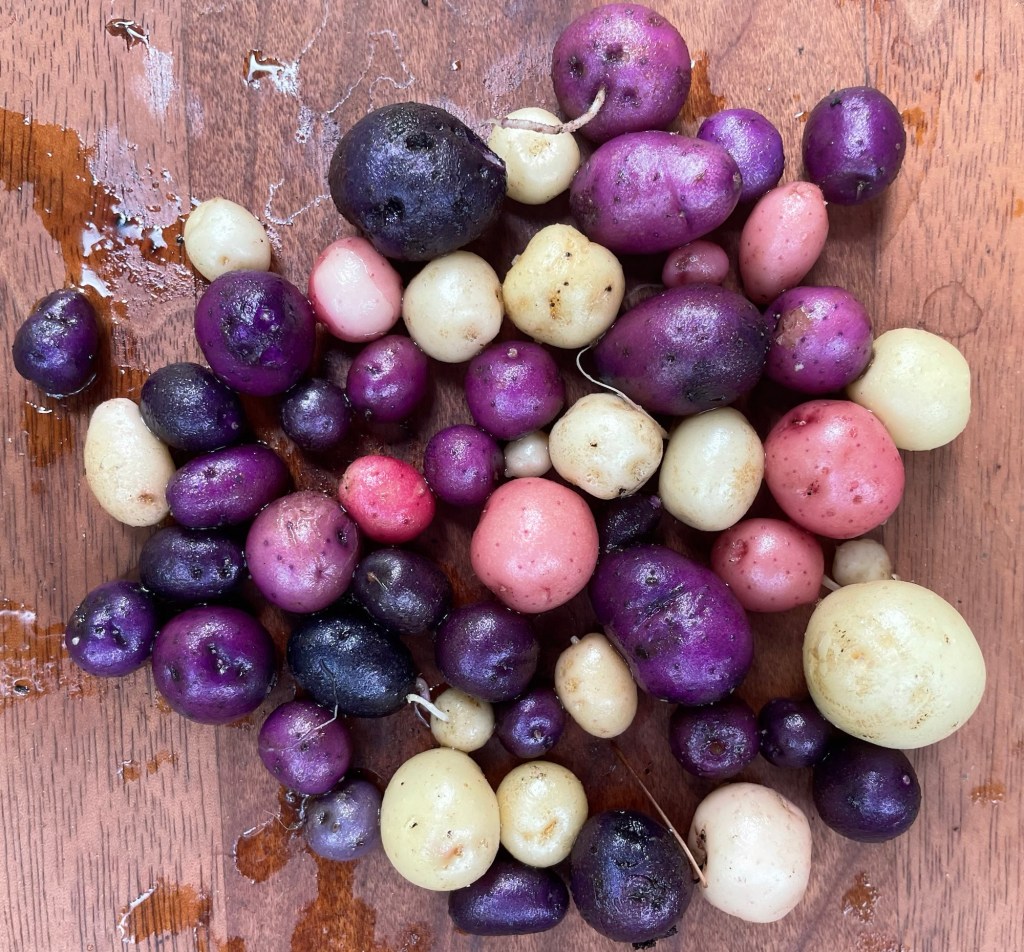
Potatoes wth no name: Each one is unique. A seedling potato could catch the attention of a human who may produce it clonally using only tubers.

There are many characteristics of plants often overlooked because we view them as quirks of nature with little value in terms of use by humans. It is these quirks that provide an insight into a life of a plant as we pursue its growth from fruits to roots and back again.

Farmerless fields can be a bright spot on all farms where out of nowhere new varieties are born done by the almighty power of nature.

Posted in Diversity Found, Ecology-Biodiversity-Integration, Miracles of Nature | Tagged , , , , , , | Comments Off on From Fruits to Roots: Tranquility Potato

Scientific Thoughts

I took a class in college taught by a history of science teacher called “Scientific Thoughts and Thinkers.” One of my business major friends from Detroit who was super skeptical on many topics took it at the same time. He added a bit of comedy to the class. The teacher was super serious and objective with an in depth knowledge of science. The whole idea of this class was to cover the often taboo subjects at the time like the origin of life, quantum physics, ufo’s, spirituality, psychic powers, as well as the leading individual scientific theories and their formation over time. This included the failures which you often do not hear about. I remember doing a report on ball lightening. It was fascinating. At some point, it was suggested that a medium be brought in to gain first hand experience in tapping into an altered state of consciousness. I don’t think it was his idea but the thought was we could objectively verify this in some way and have a conversation around this confusing topic. He found a medium but the department was not happy to pay the fee she required which if I remember was 60 dollars at the time. (mid 1970’s) It was standing room only when she came. Evidently we rented a popular medium. It was intense and nerve wracking. The class quickly dispersed after a few questions. In the following class the teacher apologized for allowing this to take place. It was kind of an embarrasment for him. It seemed like over acting combined with theatrics. At first the real crime was we did not learn anything from this other than don’t rent a medium for under $60 dollars. As time went on I think we all learned a great deal from this experience. Subjective experience may lead you astray in many ways, but it is a starting point to find answers.

This is all of agriculture. It starts with subjective experience that anyone can do. It doesn’t require much in terms of technology, special skills or even climate. Then you share your experience with others. One of my horticultural student friends moved to the Artic circle in far northern Alaska. He discovered that only radishes grew in this location. But it was a crop and it attracted quite a bit of attention from the community he was living in. It might of been the first crop ever at that location. Over the years I met people who talked to snails. I met people who used radio waves to harmonize the environment. I met people who worked in agricultural applications of using algae and microbiomes of the forest. I met people who worked in secret on crop plants before 10,000 BC only. I met people who found new species of plants never seen by anyone before or since. No one believed them. I believe them all. I have to. Why would that be any different than my N-P_K fertilizer training in my agricultural classes? It does not require belief to work. It could be an emerging technology that we are witnessing much like the early scientific thinkers tapping into the unknown world of the invisible forces at the time.

Once at a horticultural show in northern Michigan, I met a woman who described to me a form of dispersal of true seed of potatoes in her planting that she had been doing for many years. She would harvest her potatoes as normal, dig the soil to extract the tubers but then rake out the soil and leave the berries that were consistently produced by the vines over the years. The berries would then overwinter outside and break down allowing it to self seed. Each potato berry carries with it genes from the past which can often appear to ‘manifest’ from many generations long before its arrival in North America. The plants physiology adjusts to its new home and continues to adapt over time using both its former life and new life as a means for adjustment to its climate and ecological conditions surrounding it. At first, I did not understand her experience and was a bit confused because like everyone else I thought….well this lady probably left chunks of potato in the soil and that is probably what is sprouting and making her patch. But as I continued to listen, I finally connected the dots of her cultivation and experience. Finally she said, “You are the first person to believe me.” No one believed her only because that experience is not what people believe to be true. Gardening circles on social media suggest removing and throwing out the berries because God knows what problems that could cause!!! She did the opposite over a period of time to create a self seeding potato. That may not seem like much but it does hint at the deep connection of her and the land she cultivates as a form of biological enrichment. As a side note to scientific breeding, this is exactly how the russet potato started and was created by Luther Burbank.

I noticed that many researchers I meet in my farming life are hard core scientists. Many do have a deeply personal and spiritual connection to nature in some way. On the phone in private they would share with me some stories if we got off topic. Some were more open and others had a veneer of frozen titanium created from their training they recieved in school. And at some point, all of us who work in farming, horticulture and related sciences find these connections in often random ways. It is just normal because we work in this medium called ‘nature’ within a soup of natural laws. Sooner or later we are going to experience things we can’t explain. We just may not talk about it. My thought is how can this made less random and a common experience to all on a daily basis? It does not have to be a type of over sharing and theatrics. It would be a genuine intuitive experience that would lead us to deeper connections and discoveries of nature far greater than the previous five thousand years. We can be the new scientific thinkers where no subject is taboo.

Enjoy. Kenneth Asmus

David Adams Pear copyright

At the basis of all farmerless fields is natural law. At the basis of all life is natural law. At the basis of all human beings is natural law.

Posted in Ecology-Biodiversity-Integration, Miracles of Nature | Tagged , , , , , , , , , | Comments Off on Scientific Thoughts

Germination Of New Ideas

In your search for unique flavors, you may discover crops that were abandoned or never adopted to any degree. You may ask yourself where is that beautiful food? You can find it on websites, non-profits and seed companies that promote their use again. It is what I call “the amazing things I had no idea were possible and why would you grow that” list. From grain production with crabgrass seed to oil from okra seeds, all of them seem fantastic and full of promise and hope. There is quite a wonderful list on the Experimental Farm Network website where you can buy seeds of these little known plants. There is one story of a crop plant for paper production I find very interesting.

This creative endeavor of developing food plants is identical to music and the arts. You find your medium which is a plant, you create a possibilty and then you express it through refinement and practice. The end ‘product’ or expression is your crop idea. You have germinated your seed which is your idea and now it has made it possible for others to enjoy and benefit from your expression and knowledge. From here it can fall into commerce or some application to be used by the rest of society. Your song is complete. The road to financial gain from your crop is bumpy and filled with detours and potholes. Money can both solve or make the problem worst. It may need investment or it might go away forever. Many will ignore you. Others will praise you. Either way there is a lot of art out there and frankly I don’t think most of us know what to do with it.

Several years ago I was at a horticultural conference of the Northern Nut Growers Association. I had met several scientists at these conventions who were involved with pecans and hickories. They always had some cool stories and ideas. We got on the subject on the hybrid swarms of hickory. I started to leave when one of the scientists pulled me aside and told me that there was a very odd thing he had experienced while visiting an abandoned planting of some sort in Oklahoma in what he described as the middle of nowhere. This person who owned the land had passed away many years earlier and there was this mystery he created by saying he could cross any plant of any type using methods he designed at his home in rural Oklahoma. In other words, there were no barriers not only between species but between genus and families and even beyond. Of course, no one believed that. He was just an eccentric old guy from Oklahoma. I am not sure if anything was published. I have forgotten his name too. I do remember hearing the ‘ he was crazy and thought you could cross wheat with grapes’ comment. Remember, this is way before genetic engineering. This person was using some easy method for accomplishing the impossible apparently overcoming and leap frogging over millions of years of evolution in the process. So while the scientists were out in that neck of the woods, they decided to visit and take a look around to see what was left of his hard work. I asked him what he saw. His eyes got big and said,”I have no idea. We saw things that we could not identify.” Remember this is from two research horticultural and agricultural scientists that have a strong command of taxonomy and plant identification as well as cultivated plants. One had visited China several times. They did see some of his selections of hickory and pecan. Those were very nice and useful for their projects. But they saw so much more of which it was impossible to decipher. “We had no idea what we were looking at” one of the scientists told me. “It was a complete mystery.” He left confused. He actually seemed upset to me. Because his analytical thinking, he could not wrap his mind around what he experienced. It was like he went to a different planet to study the flora. Of course some might think that is the beautiful state of Oklahoma. I would say after a steady diet of REO Speedwagon he heard John Coltrane.

Today it is possible to enjoy these interesting crosses of what is called ‘wide’ crosses or selections of certain types of horticultural and agricultural crops. Usually they are species level crosses like between apricot and plum. However there is some genus level crosses too like between pear and mountain ash. But it can go farther up the tree within families all within the confines of what would be considered natural hybrids of distinctly different plants that would probably never cross by accident. Some involve embryo rescue techniques to put the embryo in an nutrient rich solution to get it to pop. But some are just plain open pollinated crosses and the seeds were planted. For instance, baldcypress will cross with Sequoia and produce viable seedlings from the crosses. The Russians did that. With the advent of modern genetic identification you can find out exactly what you have for roughly seventy bucks. Often it is believed that nature is static and hybrids are not pure and therefore should be destroyed. This is how we see the natural world unfortunately. For instance, the death of 500,000 barred owls is being used as a means to keep species purity. Of course that will never work but it does show a type of emotional desperation that change in nature is threatening to our view. For plants in cultivation it translates to using wide crosses as a means to discover new flavors and health benefits of plants that were previously uncultivated before. This is more common than you might know. This is not genetic engineering or a genetically modified crop. In the time of running my nursery, people did confide to me other experiences they have with plants. You find yourself at the juncture of belief and direct experience of the world’s flora which leads to a deeper understanding of the natural world. Many of them have since been scientifically demonstrated. They were more than just imaginary thoughts used by highly creative people who were great artists. Today I believe them all.

I am not sure where this stands now but I received several emails about using the Aronia hybrids of German descent because they were ‘tainted’ with Mountain Ash. It is a natural hybrid of mountain ash and black chokeberry raised using black chokeberry seeds. That was the theory. I asked someone to provide evidence. They had none. What was spectacular about these German varieties was their immense berry size nearly 2-3 times the native ones on my families farms. When I grew out these selections, it was one of the best plants for reselecting as there was even some non-astringent types as well as super productive dwarf plants in the progeny. I did the same with the wild ones too finding super productive types within a population. In the wild case, the berry size remained the same. This genetic diversity is highly sought after in wild crops because the value of it creates the situation where your idea and your expression is possible to bring to the world of edible food plants. This is often forgotten. It is not some sort of taxonomic nightmare. No one cares if your red mulberry is pure or not. How does it taste? What are the yields? Can it be grown commercially to make raisins? Is it useful for people to gain greater health and to enjoy life more?

It is the Ancestry of the edible world. “Aaah look at my relatives and my shared genetic compotents across the generations within the worlds flora. I am related to many families with ever expanding trees of which the branches start and stop during my evolutionary history throughout time,” the plant will say. And you thought you were just germinating a few good seeds.

Enjoy. Kenneth Asmus

Prunus maritima Artwork by David Adams Above image is Carpathian English Walnut David Adams copyright . For use see the website directions for purchase.
Farmerless fields can produce the genetic diversity we need in an effortless manner which in turn will help us feed all of humanity with a healthy crop diverse diet.

Posted in Diversity Found, Ecology-Biodiversity-Integration, Miracles of Nature | Tagged , , , | Comments Off on Germination Of New Ideas

Perennial Protein of Apios americana: Tubers on a String

In high school I owned several books of edible wild plants. This was in my phase of finding a cave in the wilderness and bailing on society. I still have a lot of those Bradford Angier survival and camping books. I was curious what sort of protein would sustain you other than fishing. I would occaisionally take camping trips by myself and test my knowledge. I could never find the groundnut. It was in the books but not in my world. I finally forgot about it and gave up. Years past and I was in my just got married and rent a house phase. For the record, this phase was more comfortable and enjoyable than the cave. Unknown to me, I had moved to the Apios range in southwestern Michigan. I checked out a stream near our house which was next to a large wetland. As I walked down to the stream I noticed there were many vines totally encasing the vegetation of the area. I could walk underneath it as the vines grew up and over the blue beech, Carpinus caroliniana. Each vine was loaded with pea pods. I thought that was very odd and had no idea what I was looking at. Time moved on as it does and while spotting the plant in flower on a hike near another wetland a decade later, I realized these crazy vines are Apios americana. Jackpot! I finally realized it. Now the knowledge was not in a book on a shelf anymore.

Groundnut, apios or hopniss are the common names used for this species of high protein tuber found in North America. Its use was well known by many of the Native American tribes. It was distributed throughout the world to some extent as well. It is found cultivated a little bit in North America but by and large it has become known in permaculture and edible landscapes only. My goal for my nursery was simple. Create a small collection. Raise some seedlings as well find selections people made and make a planting where you could harvest the tubers easily for the retail garden trade. I started slowly and finally ramped it up to the point I had one of the largest working collections available to the public. One of the first plantings came from J.L. Hudson Seedsman. I created some new selections in the process and made available seedlings from different northern locations. I sent out hundreds of packets of groundnuts-many thousands of nuts-every year for over a decade. I learned a lot in the process including never underestimate the power of misinformation. In the meantime, I disassembled my collection to make way for a new greenhouse and see if I can produce the seeds this time. That I never did. It could be a sort of perennial seed crop too. What potential this beautiful plant has. I see nothing but possibilities now on something I could never find.

But like all new crops, a large population of people are not consuming them to any degree to know what sort of physiological effects could happen. At my farm, we use to do a fried tuber cook off in the fall. I used organic ghee and made a medley of perennial tubers of Chinese yam, groundnuts, sunchokes and diploid potatoes of various sorts. You can imagine my employees consuming vast quantities of these tubers in bowls with a sprinkling of salt and pepper while drinking rich, dark, organic-black coffee, green tea and Virginia mountain mint tea. We were on fire back then! On the next day everyone would usually comment that they were fine and the tubers did not cause any digestive upset of any type. It was just a random sample of 7-8 people. However, one year a lady who worked for me in the office told me she was the life of the party as she got up from a warm couch to leave. The explosion could be heard throughout the living room where all the guests were seated. She had the thought that the red wine on top of the tuber medley had created a plunger of sorts within her digestive track. This is how crops are born or destroyed ladies and gentlemen. They have to be totally digestible across a wide range of human physiology. Of course, in this particular case the Jerusalem artichokes are highly suspect not the groundnuts. Recently a teacher of foraging told me that upwards of ten percent of his students have ill effects eating groundnut tubers. These subjective experiences are not something that would be overcome by eating more of them over a longer period of time. You don’t build up a tolerance. Like the lady at the party, you probably don’t want a Blazing Saddles campfire moment surrounded by friends and relatives.

One of things I noticed about this particular crop was that the best selections were from fifty years ago from extremely southern U.S. locations. I found a restuarant that used them and several other breeding populations that were being developed. I had a lot of help from outside sources to the point, I did not even look into the Michigan genotypes. One of them was from a kayaker and explorer of rivers. Another was from a retired doctor who had an interest. It was from this springboard of diversity that led me to highly vigorous selections that could tolerate drier soils than the species as well as have super clustering tuber yields of small tubers to the point where the protein yield would equal soybeans per acre. I had an intern do several measurements using tubers in our planting beds to check yields. The crop was changing before my eyes. I could see where this might be a case of harvesting and processing to make the crop profitable on a commercial level. This was quite a miracle tuber crop for me and without help I could never have released these selections to the public. Some were purchased but many were seed and tuber exchanges done over a decade or more.

It is interesting this crop is a problem weed in cranberry fields and is hard to get rid of. This might lead us to the areas where most likely it could be grown commercially or areas where we could replicate those conditions on a broader scale. A farmer told me one of his corn fields near a wetland had a lot of these tubers in the soil so when he disced the soil it only further propagated the plant. He said they were thick in the soil and impregnated within the soil structure.The corn grew well there anyway. Probably the nitrogen fixing groundnut was helping the corn in some way reach maturity as a type of organic green manure. Another benefit of a great plant. People in general fear vines but here we see the beginnng of using multiple crops in the same field one perennial and another annual. To me that seems like a break through.

On a edible landscaping level the groundnut is also successful. Once an employee of mine used the Louisiana selections in his mulch near his shrubs and thick green highly manicured lawn. He said in two years he filled a five gallon pail full of tubers from just one tuber. The southern tubers usually take two years to mature in Michigan to get up to size. The strings are long and the tubers are produced slowly on these long rhizome type roots. His thick high nitrogen fed lawn and deep bark mulch under and near a landscape fabric created the perfect environment. His regular automatically timed lawn watering along with the bright sun bouncing off the green grass made the growing conditions perfect for Apios americana. This is home to this tuber where it could spread out and cover his tightly pruned yews and river rock mulch. Welcome hopniss. Welcome groundnut. Welcome Apios. We might invite you in our home at some point. Maybe it will work for us. Maybe not. Time will tell.

Posted in Diversity Found, Ecology-Biodiversity-Integration, Miracles of Nature | Tagged , , , , , , , , , , | Comments Off on Perennial Protein of Apios americana: Tubers on a String

The Thicket Bean Explodes

Before the advent of annual beans, the thicket bean was well known. It was the protein that did not run away. It is a species of perennial bean found throughout the midwest and northeastern U.S. Unlike the thousands of selections of annual beans there are only two selections of it, exploding and non-exploding pods. Pods that do not explode were non-twisty types and selected some 9000 years ago. These would be much easier to harvest and stop the seeds from ejecting from the pods some 10 to 20 feet away as the pods dried. Some older heirloom lima beans also contain this trait. Its a good one in terms of dispersal and shows the deep connection this plant has created over time with its environment.

When I started growing thicket bean over twenty years ago, I had little knowledge about this plant and how it would grow at my farm in southwestern Michigan. I received seeds of it from Eric Toensmeier who had just written a book on Perennial Vegetables. The seeds sat in the fridge until one day out of the blue we produced ten plants of it and put them on a small trellis in an area that was used for hazelnut seedlings. They grew very luxuriantly and quickly grew over several wild raspberries in the process. We eventually started making larger plantings using thicket as well as tepary beans as a cover crop on the same trellis. This created a jungle of foliage all intertwined together. Thicket bean truly highlights the ideas of biological and ecological enrichment because it obviously integrates both native and non-native plants and animals no matter where it grows. Over the nursery years, I grew thousands of roots of it. A few people would ask me, “Can you control it?”. I would always answer it is not possible and thank goodness for that. The tap root goes down ten feet or more. You can’t stop it. The top blows by the highest trellis reaching twenty feet easily. It creates an impenetrable bean jungle. You cannot do anything about it. It is deeply woven in its nature to be this way. You can enjoy it as it is. That you can do. I will do a shout out to future thicket bean growers and say you need to let go and let live brothers and sisters. The beans are good. You are a good human bean. Frankly, everything is good about this bean. I wouldn’t change a thing. Within its population is brewing some amazing diversity and possibilities for a perennial protein. This is worthwhile to explore.

Discovery involves both subjective experience and objective verification. It was from here I began greater plantings as well as attempting hybridization using its close relative the lima bean. What is really needed is greater plantings which would further improve the yields as well as knowledge of this uncultivated rarely grown species bean. Its different than most beans in that way. At 500 dollars a pound, you cannot expect to grow them at that price as a commercial crop other than for the retail seed industry. The yields tend to be low. On a forty foot long trellis using mature roots you might end up with a pound of lentil sized beans of which took you over a month to harvest and dry. Obscure, rare, cool and hip is the thicket bean. But at the end of the day it is still a bean and is in a class of inexpensive sources of protein. No wonder annual beans filled this need for humans. The thicket bean was no longer needed. I know. Kind of sad.

Because of my love of cooking those delicious little morsels and putting myself at odds with my own seed inventory, I had this thought I am becoming a thicket bean miser. For that reason, I gave an online presentation for the Seed Savers Exchange and heard from other bean growers too. Last year I sent out free thicket bean packets to everyone that ordered seeds from me. Look out a wild bean is coming at you. This summer I find myself out in my bean patch checking for pollinators of all sorts to see what will visit my bean flowers to help me create a new type of perennial bean. There is no direction I have to take. That already has been decided by the thicket. Now I wait and see what happens and how I can best harness this towering plant in the world of beans. Bean there, doing that.

A mixture of potential lima bean hybrids and thicket bean, Phaseolus polystachios and Phaseolus lunatus

Farmerless fields can accomodate and naturally select the plants we need to create perfect health.

Posted in Diversity Found, Ecology-Biodiversity-Integration, Miracles of Nature | Tagged , , , , , , , , , , | Comments Off on The Thicket Bean Explodes

Response To The Chemical Warriors

I always had this idea that the roadsides could provide food in terms of nuts and fruits along with a few perennial vegetables like sunchokes. It seemed like unused space with huge potential. All you would have to do is drive around and find trees laden with nuts and knock on a few doors. I used to do that. It was fun. I met a guy in the North America Fruit Explorers once who was trying to legislate the land along the interstates be made into a fruitopia park. There is a certain element of safety in all of this. Today the road environment is not ecologically friendly. There is a huge variety of chemicals being used regularly for vegetation control even in state parks. Mowing is critical to keep the shrubs down and anything that would be planted would likely get nailed by herbicide or mowed into a fluffy pile of cellulose chips. I see them busy on the interstate and the county roads. Herbicides are casually used everywhere so eating the wild in these locations is not good.

Once while running on a road in northeastern Kalamazoo county in southwestern Michigan I discovered a shellbark hickory. I had read about this plant in my botany classes but never saw a real one. I was excited and stopped at the door of the house to talk to the owner. He smiled and laughed as he too loved the nuts and would pick them up and crack them with a hammer. It was funny to him because people would stop a lot to get those giant hickory nuts. His house was close to the tree less than thirty feet away so he could hear people on his lawn. He would politely ask them to leave usually but not always. Once someone came at night to steal the nuts. It was one of those ‘you damn kids, stay off my lawn’ moments only it was mature adults as they scrambled back into their car. I was fortunate he owned that house for a long time and I collected once or twice there. It turned out that this tree was not common. Today if it was a seedling and just starting it would never survive the torture of herbicides.

Shellbark Hickory Carya laciniosa My farm seedling tree

As someone who understands herbicide use and its futility outside of modern agriculture, you have to wonder what type of vegetation we are creating in the future near our roads. You have to ask, “what is left standing?” It is kind of a nomads land of county and state owned roadsides that few people really look at. We all just drive by. Many of the plants people don’t want are even in greater abundance after spraying. It’s nature’s response to the damage we are doing. It starts by creating this excellent seed bed of crushed wood and leaf litter. I always felt like we are getting screwed. Just the physical appearance of it looks horrible. The idea of edible plants is long gone but larger trees are still there but fading over time. Even some power companies are herbicide nuts now and feel they too must nuke the landscape to create a non-woody environment. It doesn’t work for long but this is what they are told and then follow through.

So this year with a mental pad in hand, I began to take note of those plants which not only tolerate the damage to herbicide but seem to be thriving despite it. I got this idea from last years go round with my county road commission which basically destroyed a couple thousand dollars worth of groundcover, shrubs and small trees in my front yard. I take walks down the road and botanize along the way. I use to run and bicycle down the road but I found the distracted driver syndrome too high for my blood and now limit my pedestrian time. My knees are thanking me too. By the way, what is it with all the small Fireball Cinnamon Whiskey bottles? Maybe that is a bigger human problem than the vegetation.

I was a bit surprised that the leading environmental organizations promoted their use too. Some of my past employees worked for them in some capacity and they filled me in a little on the details. Here is what happens. This is a bit like the county road policies. People spray. They are on a mission. After the spray, they see things dying. Mission accomplished. They high five each other and leave. No one evaluates the non-target plants or potential damage to animals. No one cares about your lilacs or white cedar trees you just planted. Its brutal out there brothers and sisters.

As these policies continue on the roadsides large volumes of dead wood and standing dead shrubs blanket the forest floor. This slowly drops over time creating this beautiful seed bed. Unfortunately, all deciduous tree and shrub species seedlings cannot tolerate the herbicides so they die immediately. There is no up and coming trees to replace the older trees. In the meantime, annual plants and a few deep rooted perennial species survive. Again its a combo of cinnamon whiskey type of garbage, herbicide and salt in that soil. I think it is a miracle anything survives. You may not like it but it does not matter. More herbicide will not change the composition. If I can be a little dramatic, you are on a treadmill of death. We paid for it and now are proud owners of this new flora along our roads due to our ignorance of herbicides and their effects. Here is the line up. Imagine intentially creating a landscape out these plants. Oh wait….we have.

Pokeweed- Probably the most universal plant distributed by birds. Because of its cycle it skips the herbicides in the second year if they don’t apply. Otherwise it gets nailed. This explains the generally smaller sized plants. Once early on I dug up roots of this plant at my farm because I discovered herbicide did nothing to kill it. No one ate the massive tuberous roots when I laid them out in the field. I hear the juice is carcinogenic so best not to get it on your skin. Its a survivor for sure.

Japanese Knotweed-It only appears to die. A few canes go toast then it resprouts. It takes 2-4 years to fully come back. The root mass is immense and goes very deep. It is one plant that thrives in gravel and stone laden soils moved by heavy equipment where few things grow. I have seen it used for dune stabilization too which it is extremely effective. I know of no removal project that has totally eliminated it. Maybe there is one somewhere. Remember, high five—congratulate each other–go home. The applications do not work even if applied a second and third time. Its embarassing that the state of Michigan paid for this failed program of this highly beneficial plant. This plant will help the applicators of the herbicides as it contains high amounts of revesitrol which reduces inflammation which is something they should take to prevent damage to their bodies from the toxic chemicals. Its available at most health food stores as a supplement in capsules.

Solomons Seal and False Solomons Seal- It seems to skip through the sprayings often. You will seem mature plants the following year survive. It has a very bulbous root which is probably why. It is also possible the plant doesn’t get a full dose of herbicide being protected by other shrubs.

Smilax-The greenbriar vines are quite impervious to herbicide. These plants are very durable and long lived even if mowed.

White Pine Trees-They appear totally immune or the herbicide they are using does not work at all on pines. I replanted with these in the shade of the black oaks to help block noise and pollution from the road.

Miscanthus- It is quite immune and seems totally fine with whatever they are using. Even the cultivated varieties with bicolor foliage grow vigorously along a guard rail. The herbicide they are using may not work on grass plants.

Poison Ivy- Very immune to it but may be saved by the shrubs above it protecting the spray from reaching its leaves. This is the new groundcover. Along with sweet woodruff that I planted it is spreading fast.

Horse Nettle- This is one tough little plant and super deep rooted. You can’t herbicide it. Nothing works as far as I am aware. The leaves have dense hairs which likely protect it.

Burdock- Not common but once established produces a lot of seeds which generally keeps the planting going for a few years.

Baltic Ivy- Nothing happens. It appears totally immune to everything. It does look spectacular when all the other deciduous shrubs are dead around.

Daylily–The orange sterile daylilies so well known along the road appear immune to it but I have noticed if in full leaf the herbicides do set them back a bit. Again the roots are bulbous and the applications are usually not enough to kill them entirely.

Bittersweet Vine-The seed bed that is created is perfect for this plant. The herbicide kills the seedlings but the mature vines continue to feed birds and drop seeds into the mulch below. There is quite a bank of seedlings that continue. This plant will be with us forever now and the herbicide use that has made this possible by removing all competing vegetation as well as damaging the soil. This plant has made its way to other non-damaged areas too and is quite prolific. You can’t blame the birds or the plant. Its doing exactly what it is suppose to do. And we helped! Shake and bake.

Annual Plants-This is quite a soup to nuts composition depending on the seed bank and what is nearby. There is a huge explosion of broad leaf ragweed when they first start or it gets to new areas. Then it goes from chicory to Queen annes lace to garlic mustard. Each of these species is spread by herbicide first. You have to destroy all other vegetation to get it to stick and reproduce.

This is the nature of soil and is not an environmental problem. What we are experiencing is the response to the chemical warriors. ‘Here take this’ nature is saying. I will fix it with these plants and help you anyway despite your anger and pent up vegetation frustration.

We just drive by drinking our cinnamon whiskey.

Posted in Ecology-Biodiversity-Integration | Tagged , , , , , , , | Comments Off on Response To The Chemical Warriors

I Can Plant Trees

My father took this picture. It was a cloudy day and I wanted to show him what I was up to on my new farm. There was no barn, water or phone. I was planting trees in a little box I made from recycled railroad ties that came from a landscape job I was hired to do. The farm use to be a pasture where a few cows were kept. At one point someone tried some row crops but eventually it became a mixed pasture where hay was harvested. The previous owners wanted a subdivision there but this idea died when the owners split up their partnership and refused to do business with each other. It was from here I began digging holes and planting trees in the early 1980’s. I tried to make a plan on what to plant and where each time. That failed. It was too limiting in many ways. As I began to explore different possibilities, it dawned on me that it would be best just to test out certain methods and species on my own a little at a time. It allowed me to discover the different soils at my farm in the process. That is how my tree farm got started. It was from here I learned how to grow trees from seed and use a combination of letter writing, phone calls while joining several organizations to help me in my tree quest. I found large repositories of seeds in my area and those helped in creating my diverse planting. Wherever I went, I found new seeds. collected samples and eventually tried to grow them out in my planting beds and polyhouses. Some eventually found their way into my pasture. I did these “outplantings in the off seasons of late fall and early spring. I hauled water in 5 gallon buckets from my home 25 miles away. The most valuable part of this experience was finding food plants that could be used as a species themselves or transformed into something delicious and healthy.

To share this experience became the mission of the nursery of Oikos Tree Crops. It grew but slowly. It survived but rarely flourished. I remember taking business classes mid way through and discovering that as a business it would never be truly sustainable and likely my personal income would be enough to get by on but not enough to expand. The goals I had held earlier would never come to fruition. That was very clear. I was wasting my time thinking otherwise. I gave up. That worked.

From here as nursery sales continued to drop, (with the exception of the Covid year) I began to use the time I had available to improve and develop my seed sources, work on new dynamic plants and use and improve my out plantings. That worked. I can plant trees.

Magnolia macrophylla

This cross of red oak was selected from a bed of several thousand seedlings showing increased vigor compared to other seedlings in the same bed. All were collected from a nearby farm field and roadside ditch. This particular seedling was 4-5 feet tall where other seedlings rarely reached 18 inches tall after two years. I moved it to my outback which at that time was only 50 feet away at the base of a hill. I tried to extract the tree leaving as much root as possible. Called “Rocket” this selection has a very open crown with wide branching and fast growth.

Posted in Ecology-Biodiversity-Integration | Comments Off on I Can Plant Trees