Making Your Way Through the Storm

When I first purchased my land in the early 1980’s, there was plenty of information in the books on conservation and ecology. I kept some of my texts from college like Fundamentals of Ecology by Eugene Odum and Shrubs and Vines of Northeastern United States along with all the botany books. What was missing for me was actual living collections by farmers in agriculture applying the ecology without the phytoxenophobic goals we see today. It would only be natural in that what comes out of these living food collections can be applied on a broader ecological and agricultural scale. The tree crop farm provides its valuable resources using plants from a global perspective keeping up with the demands of the modern world climate by producing progeny adapted to the new norm. On the level of ecology if you build it, they will come. The native plants arrive in greater abundance without a human planting it in a controlled time release way. I like that some of my favorite plants are seeding in from great distances and in an effortless manner. You don’t need burning or herbicidal applications. You need patience and that by itself is of short supply. I have some very delicious mulberries and sweet cherries that have seeded into but my favorite are the woodland flowers and many unknown plants which I cannot fully identify. I remember discussing this with a customer of mine who had a collection of 4000 plants in Florida. His name was Ken too. “Ken, this is Ken” is how he would say hello on the phone. His messages on cassette tape and later voicemail where quite long winded but never boring. He told me that new insects never before seen by modern science were being discovered in his plantings along with new plants he found he could use as a source of medicine for his personal health. He said diversity breeds diversity and there is no way to stop it because the plants are ‘calling out’ to everything around them to bring all life in to this type of ecological novelty. Like a beacon, plants stir the pot of diversity. I wasn’t entirely on board at first but now I get it. Ecology takes time on a quiet human mental level as well. You plant seeds and wait to see what sprouts.

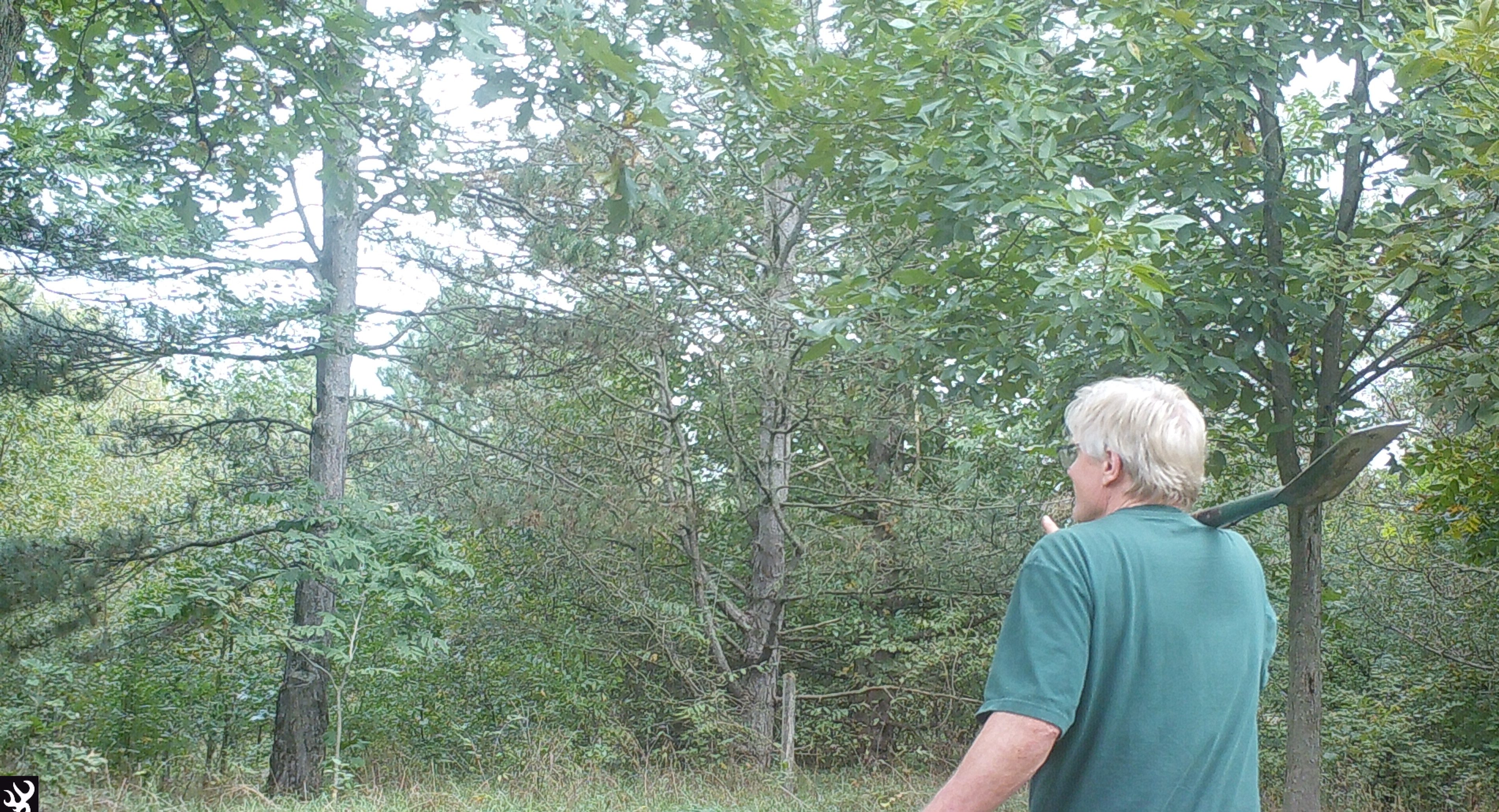
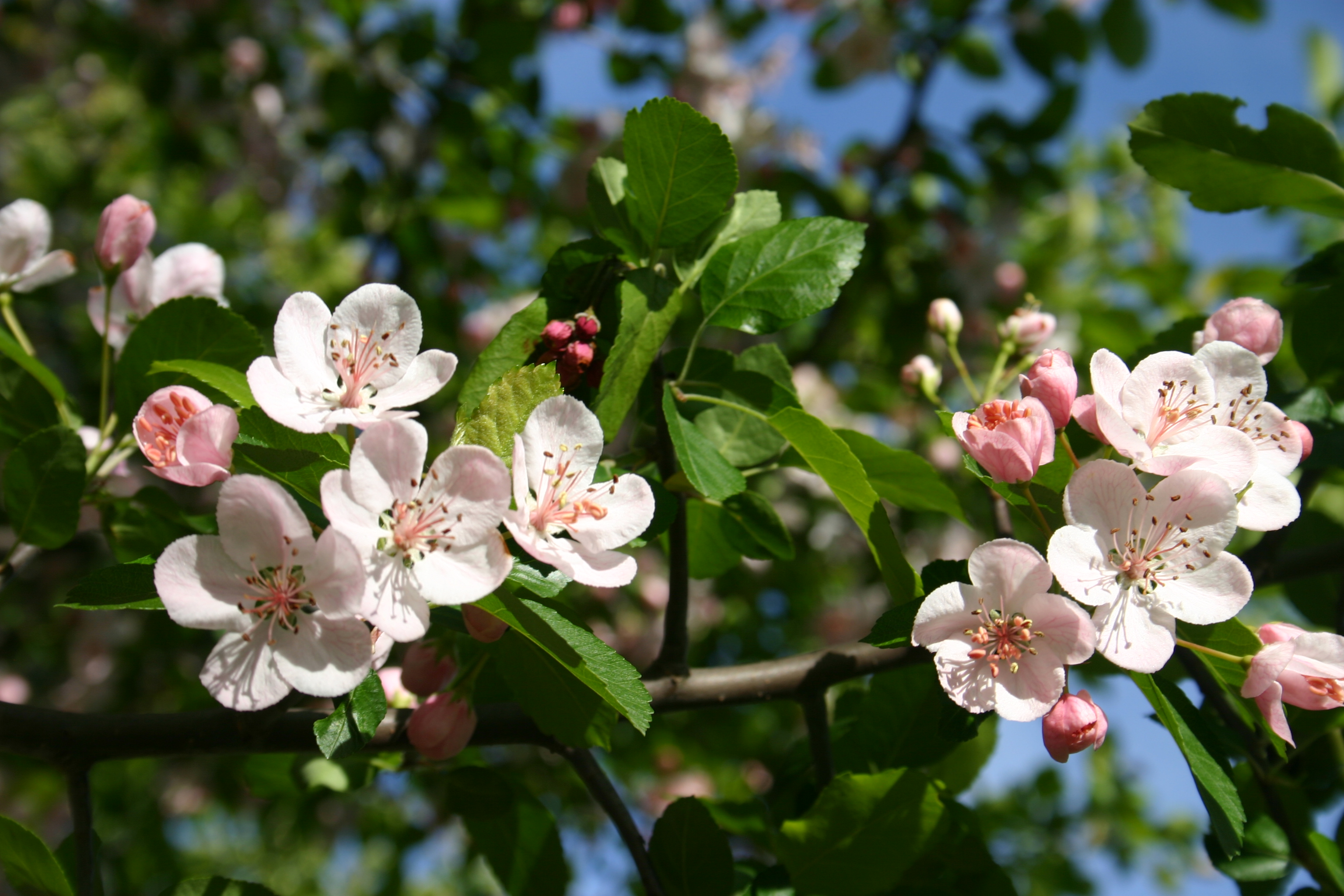
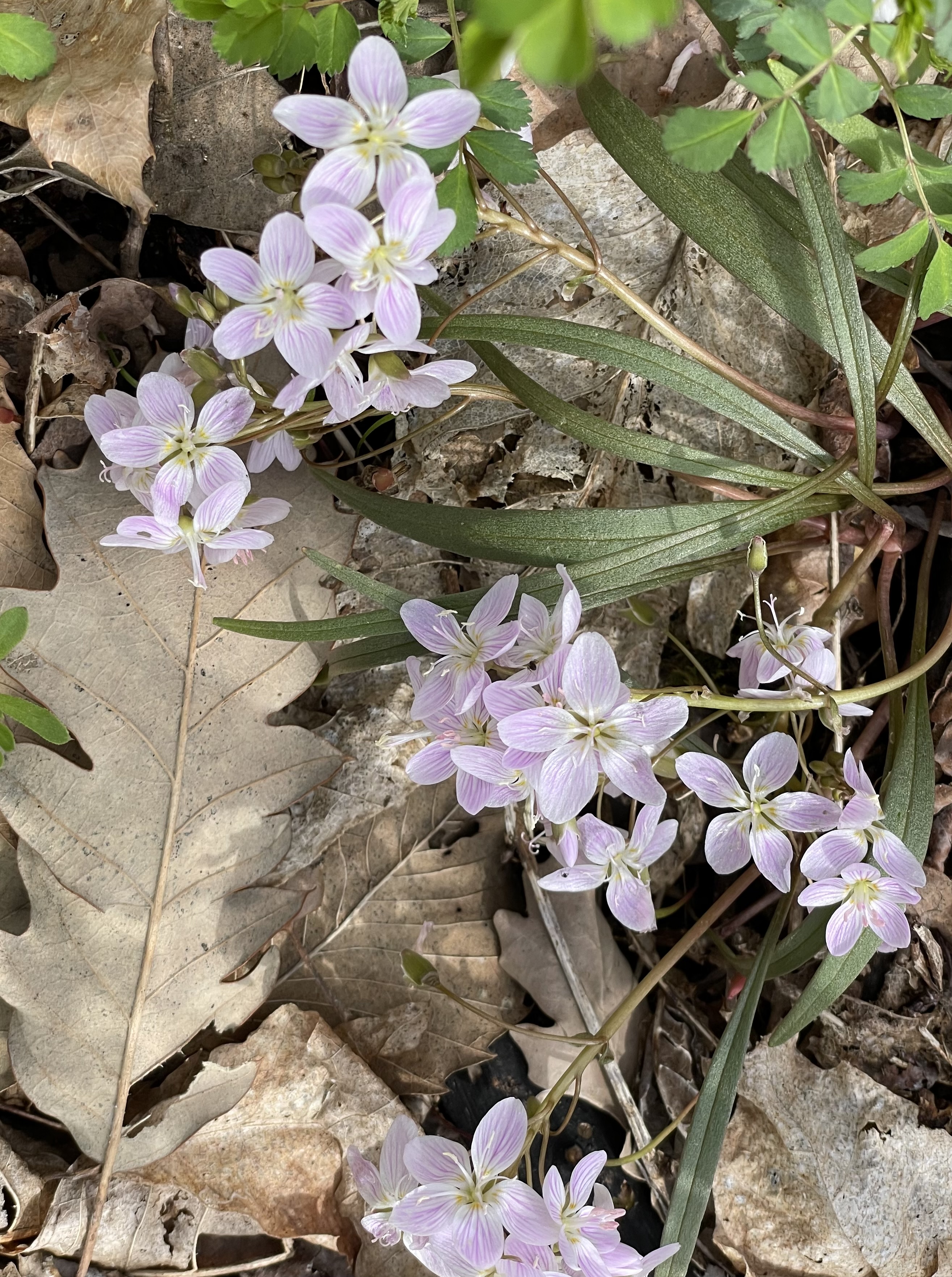
Spring Beauty-Claytonia virginica Seeded in under a multiflora rose which seeded in under a hybrid American chestnut tree. That tree was cut for lumber. Near the Turkey Oak, Quercus cerris and Paulownia fargesii trees. This was all a pasture cut for hay.
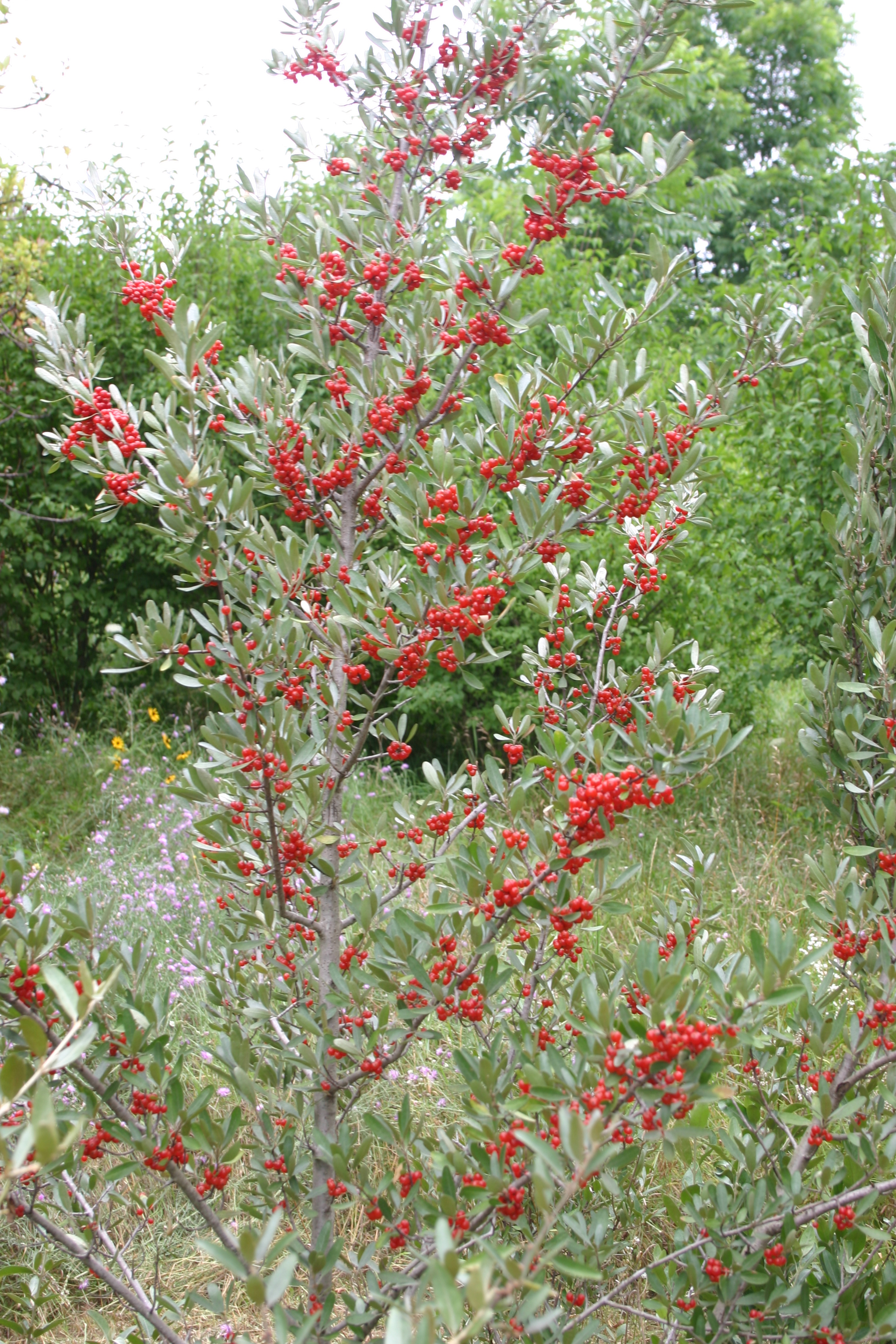
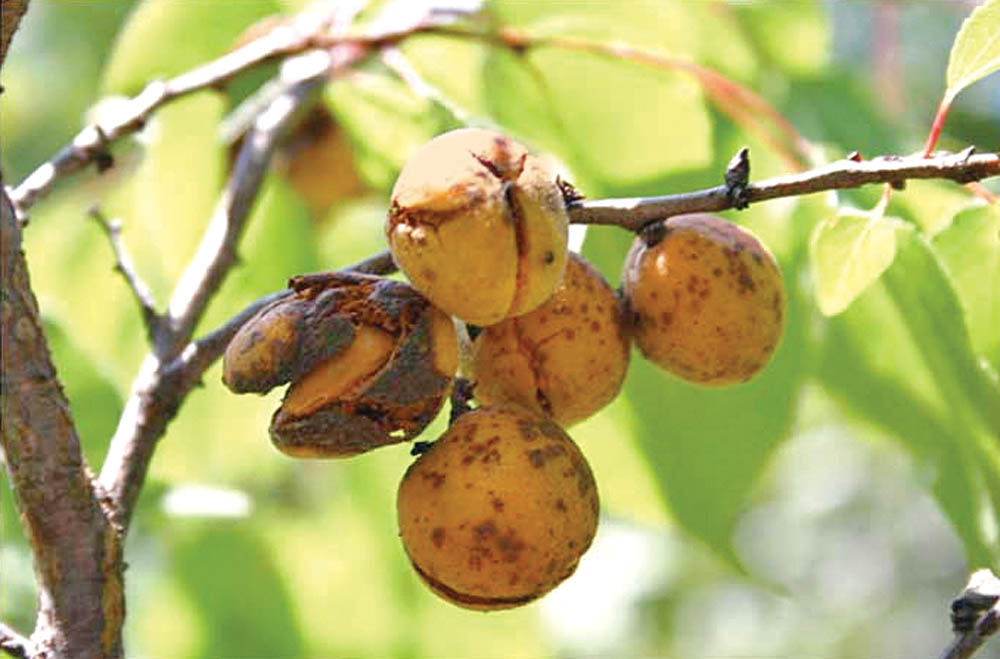
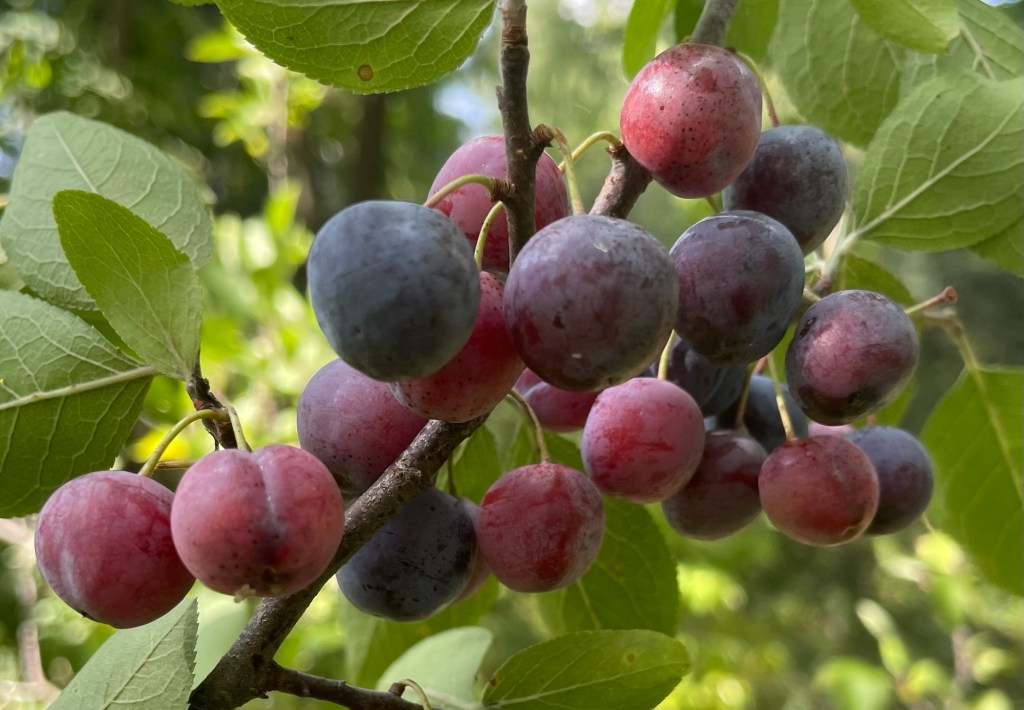
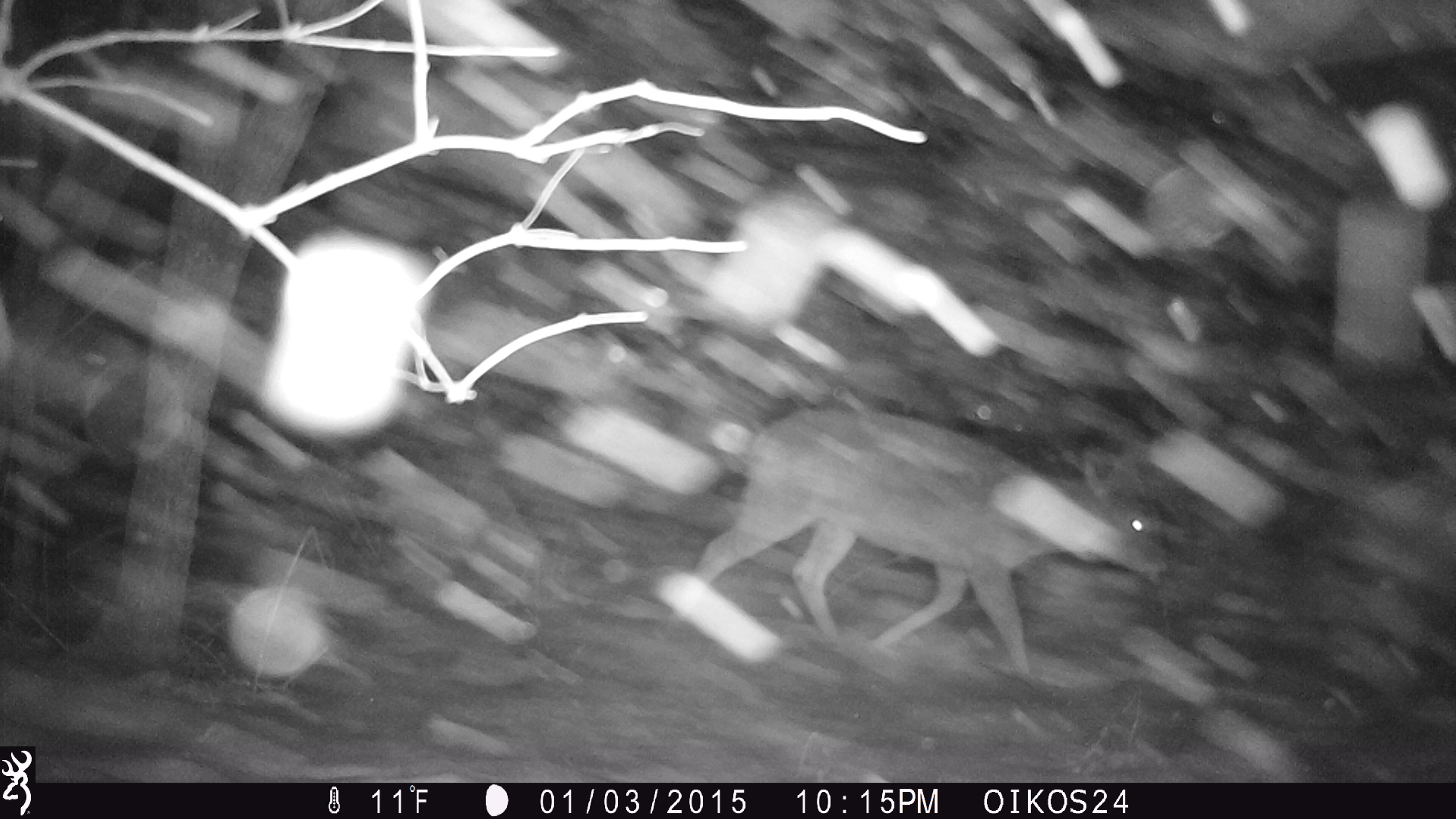
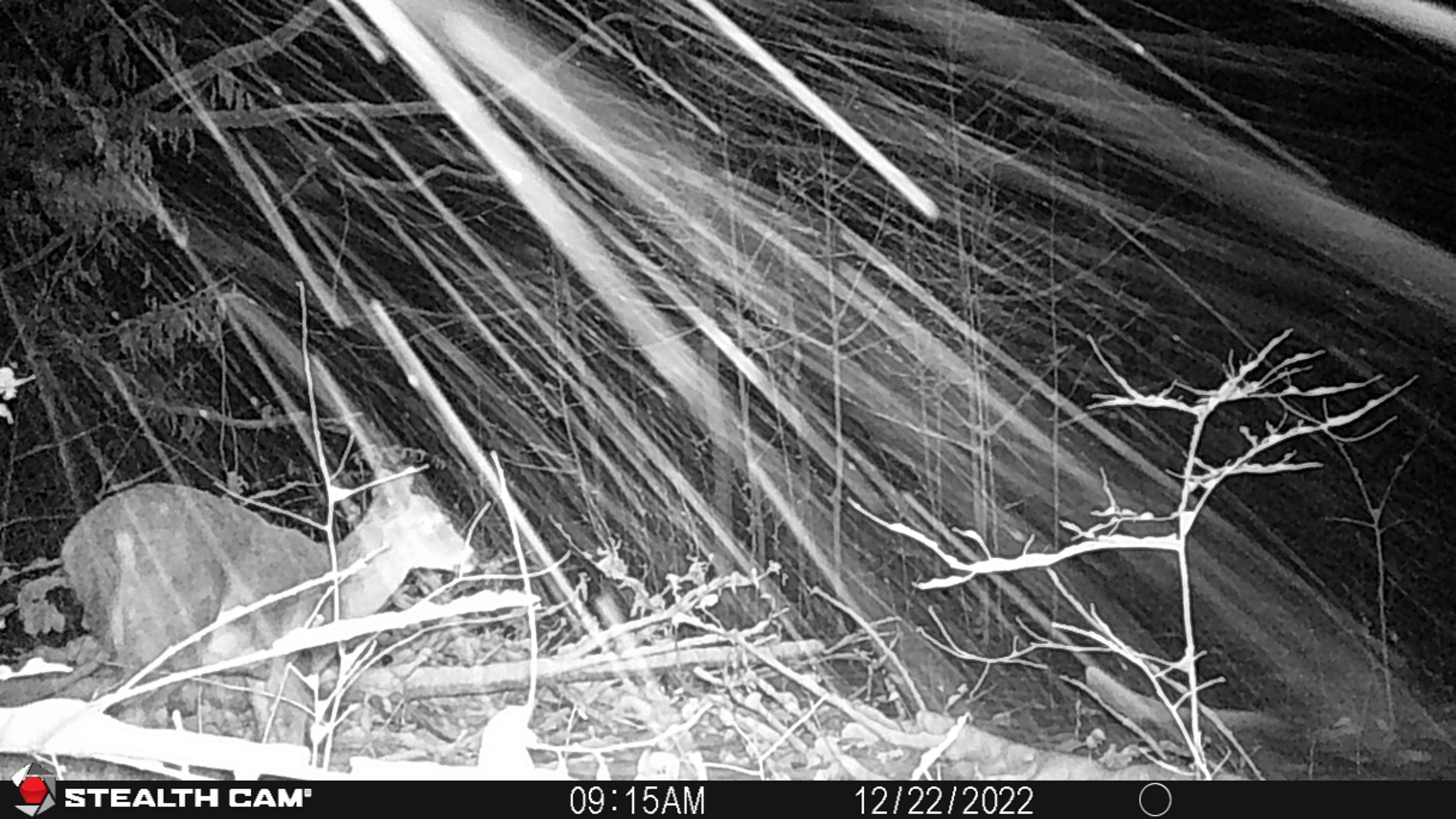
Having a tree farm doesn’t mean you do nothing. Many times the simplest solution is the best. Here it is harvest time for these wild plums and apricots where I will go to ground level with a weed whacker to make harvesting faster and easier. In this process, I get a chance to scout for box turtles ( I found one here before) and new plants seeding in as well as the runners of the plums which I save and limb upwards. A few are removed to allow light in. Without new runners, the plums would perish and disappear entirely. The box turtles are found here frequently now and between this and the Callery-Asian-European hybrid pears has the greatest density of male and female turtles.

The prunings stay on the ground as fertilizer along with the whacked into green protoplasmic grass. Wild oregano of prairie origin is established here but it is not thick as other areas of my farm. That seeded in from 400 ft. away from a planting I did around 20 years ago. The existing Timothy and orchard grass are mixed in with some quack grass which is now fading over time to the point it is a minor concern as far as lowering the yields of the plum or apricot. Shade is a great equalizer in this arena. Patience is also needed for that to arrive to create that effect on the ever expanding plant community level. In this particular planting, there is one very large multiflora rose and amur honeysuckle that seeded in the shade of the plums brought in by birds who require the fruits to survive. When you prune the plants to the ground, the high protein sprouts become a favorite of white tailed deer and rabbits. Their manure is evident in this area which in turn feeds my plums with fertilizers. This in turn lowers the vigor of those plants and eventually they fade entirely. Both of these species also have viral infections which show up periodically and reduce and sometimes eliminate the plants entirely. Just another normal day at the tree crop farm.

You know what I feel guilty about? I wish I could produce my own fuel for my weed whacker. Maybe I wouldn’t feel like I’m in the Judge Judy courtroom of nature. Look at me when you say that! I had a friend who tried creating fuels for his truck during the seventies with a still. He loved using Jerusalem artichokes the best. It exploded at night when no one was around. The explosion brought in a lot of police cars and fire trucks to an abandoned barn. Luckily he did not live there, but he heard later the neighbors who gave him access were not happy with his biofuel project running amuck. It may have caught the barn on fire. I’m not sure. As a social worker who was used to calming people down; he went back to the gas stations after that trying to keep a low profile. Just getting some non-alcoholic gas here. Move along now.

Enjoy. Kenneth Asmus

Posted in Diversity Found, Ecology-Biodiversity-Integration | Tagged , , , , | Comments Off on Making Your Way Through the Storm

The Young and Evolving Oak Tree

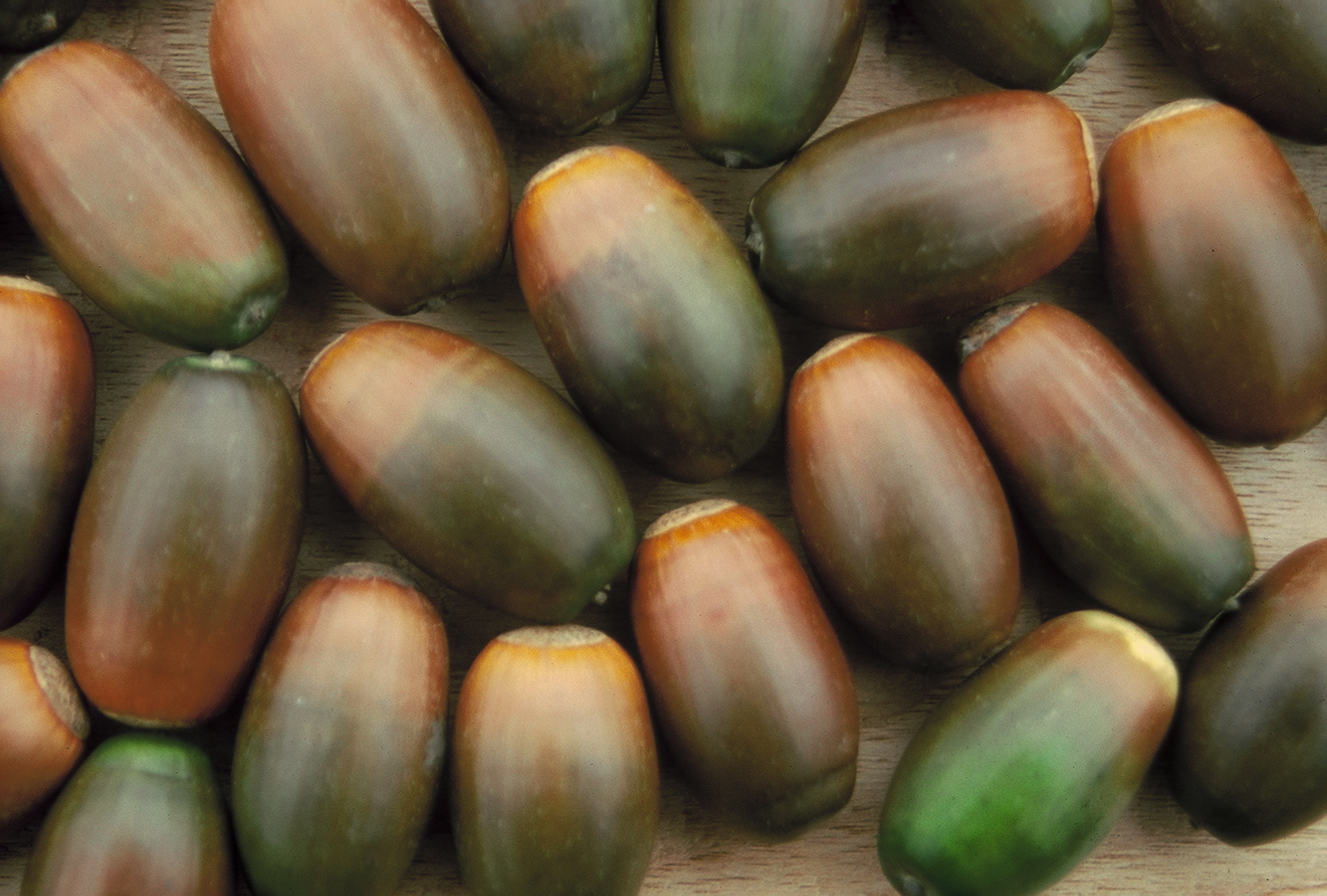
I was surprised to read this descriptive terminology of the oak genus and related families by a taxonomist many years ago. It really stuck and I have used it many times in writing about oaks in my catalogs. Usually cold and without life, plant descriptions are written only to fill the pages of the journals of botany. The “Young and Evolving” is not a soap opera on oak trees. Although it could be, it really tells the story of the great diversity of the oak genus AND its ability to change overtime very quickly. Here you have a sort of fluid plasticity to the species concept. Of course, there is sex involved including outside the norms of plant society but it is not in the human world. It is the wide crossing of the oak genus and species defying what is thought of as impossible or normal in the process of creating progeny unique in attributes carried through in succeeding generations. This was exactly what I found with all the thousands of oak seedlings I grew. They WERE young and evolving. We think of oak trees as slow growing and unable to change. We view oaks as stubborn, slow and unchanging over time. Thanks to the poets, they are the oh-so-slow immortal oak trees after all. Yet at my farm the changes could be seen within the first generation and continued unabated with zero boundaries of cross pollination. It was like a dam of diversity broke and huge rivers of infinite progeny opened into vast deep pools of genetic resources. Dramatic! This is at the end of the season show with the big reveal where the whole cast cries. Cue the woodwinds!

The big question becomes what is the value of this type of diversity and how can this be harnessed both as a population and to create cultivars from. More than ever we need the oak tree. It can do so much. The diversity was so large in my grow outs, it was  ridiculous to think there was one plant better than another so common in the nursery trade. To top it off, I had supporters who helped me immensely with my acorn habit which was growing exponentially as I grew thousands of seedlings at my farm. I created a backlog of trees and soon I had to jump the hybrid oak ship. That’s right. Few people were buying them to keep up with my production and I had to get out the saws. Yet, I kept meeting people with a similar mind that the oak tree had huge potential for food from acorns as well as selections for lumber with unique colored sapwood and heartwood. Even today people show an interest in hybrid oaks. Unfortunately, it is mostly within the wildlife food-habitat hunting circles that have stuck. There is little about acorn bread for the most part other than the foraging movement and zero about increasing the timber production of oak trees. This could be a direct route for the young and evolving oak tree. Now you have an opportunity to harness the oak tree on a bigger scale which is needed to make it practical. Oak trees inspire us to go big anyway.

Here are two examples of me trying to go big in all things Quercus while discovering the small and subtle aspects of the oak and acorn agriculture.

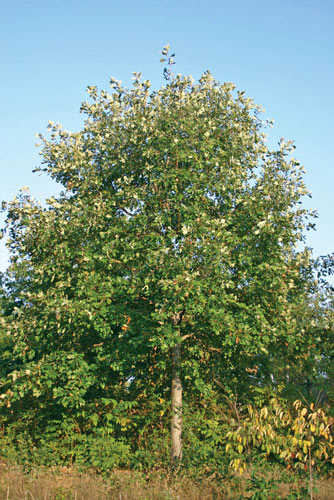
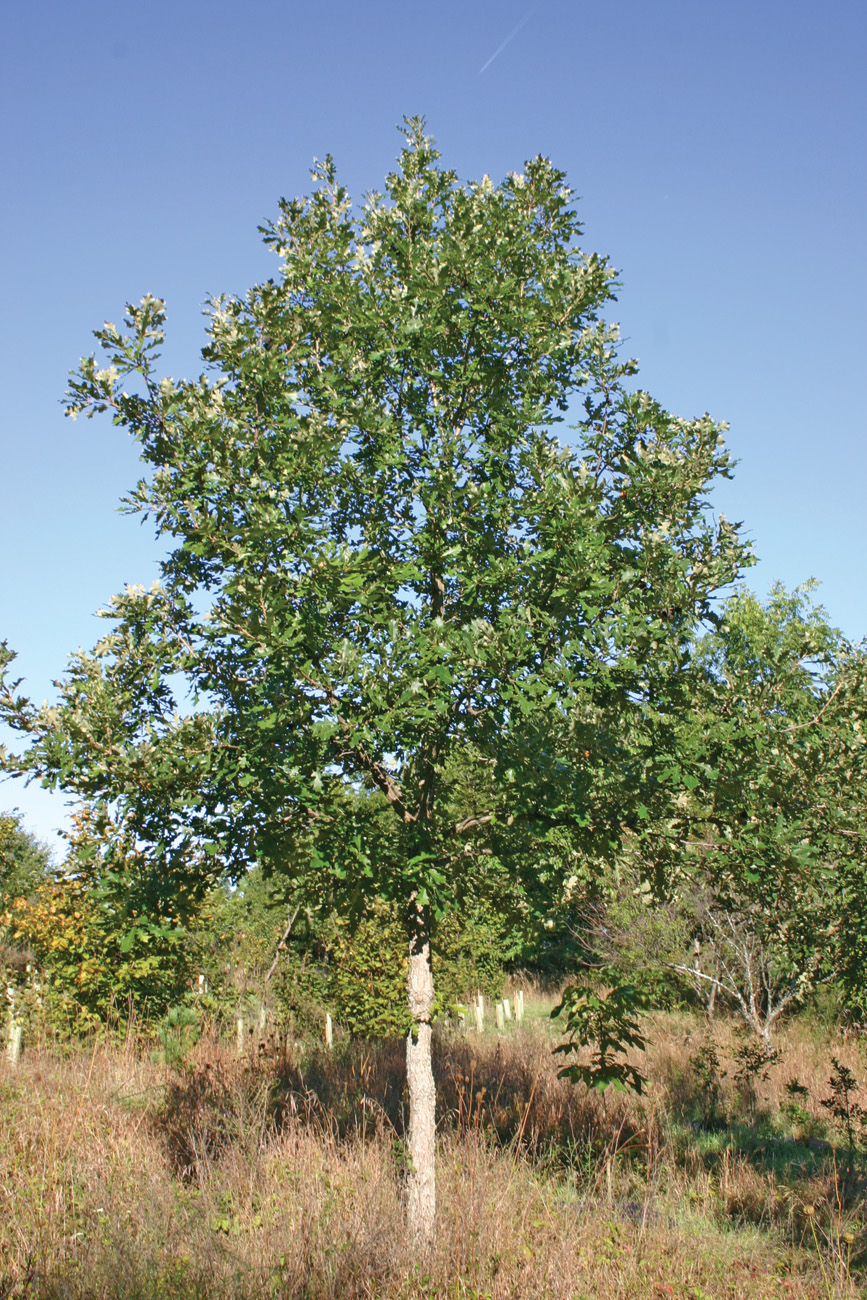
Quercus macrocarpa x robur Burenglish oak

Burenglish Oak

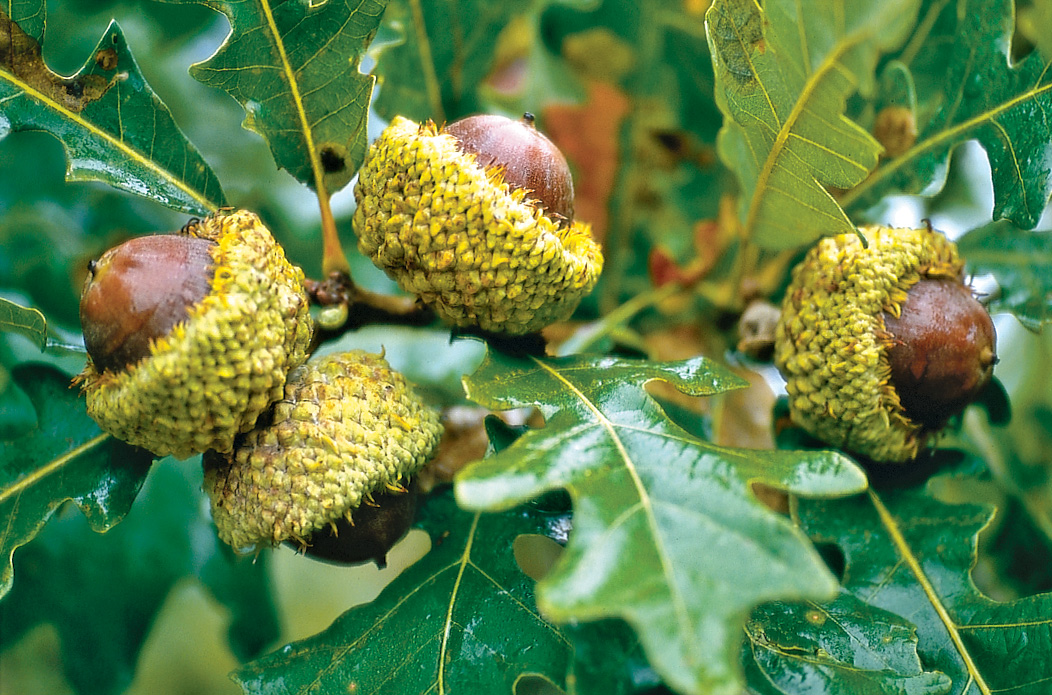
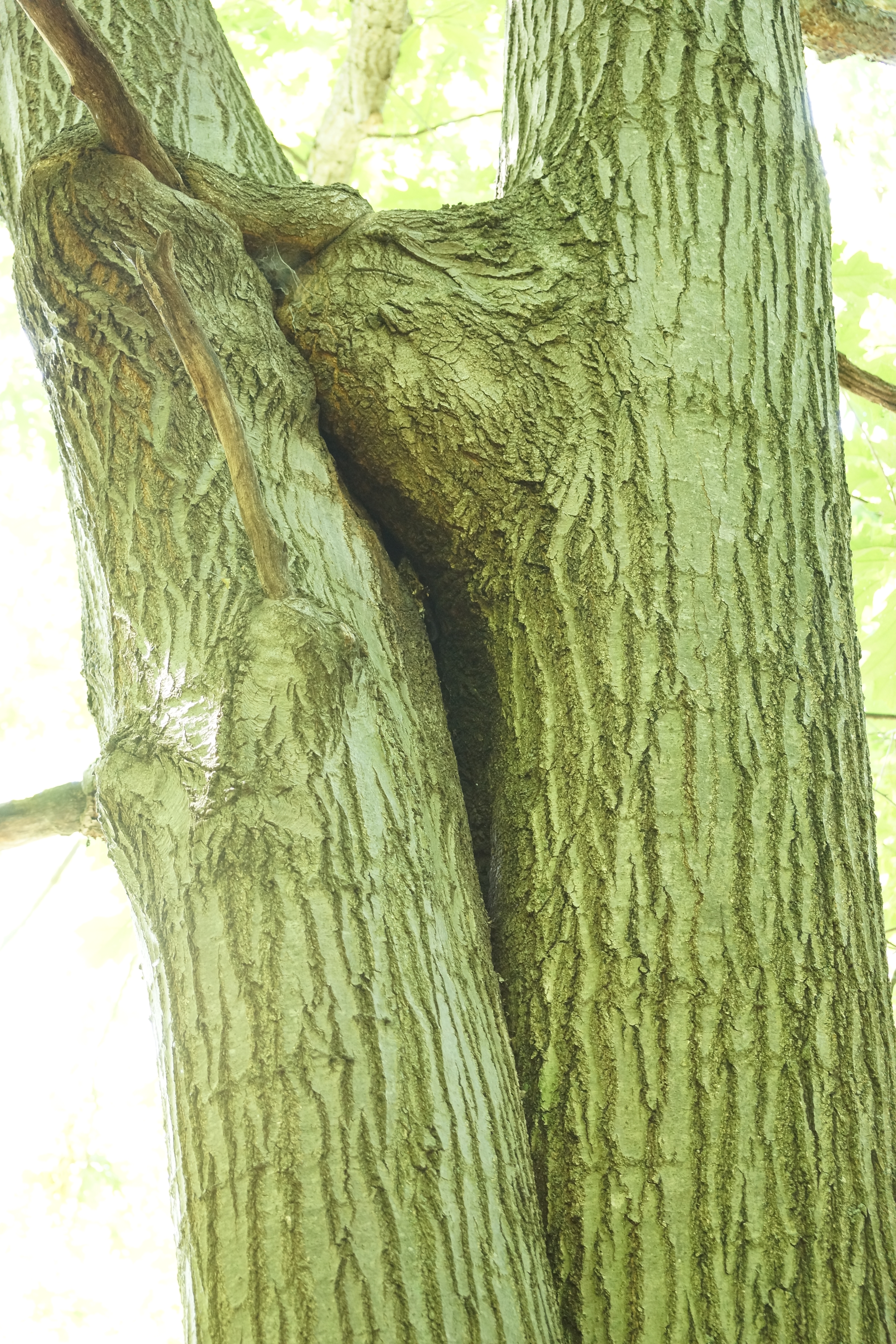
This particular hybrid was discovered in a cemetery in Illinois. It was not something you would find normally as a chance seedling let alone in a cemetery. It is rare as a natural hybrid. There were two very large trees cranking out huge volumes of acorns. Before the trees were cut down for unknown reasons, I purchased a few hundred pounds of them from a friend who discovered these trees by accident. One of the trees with the largest acorns I grafted at my farm. “Invincible” came from this place of rest for the weary.  This particular hybrid produces very uniform vigorous seedlings. I planted some of the fastest growing trees in my outback selected from roughly four thousand trees. Selecting from this group was not simple because all the seedlings were fast growing with minimal differences. These same seedlings today are now have trunk diameters over 18 inches. They proved to be incredibly healthy with large leaves and moderate acorn production. Burenglish oak would be a good timber hybrid. The pieces I have cut from the trees have very distinct growth rings with dark brown heartwood. It combines the best of bur oak and English oak in terms of its wood quality.  Its growth rate is twice that of white oak and could be further improved from my populations. Forty acres would be enough to create a seed repository of this cross while using all seedlings selected for speed of growth.  Other hybrids from this same cross from Utah did equally as well but are much higher in acorn production. That particular group appears to have more of the English oak within it.

Heavy acorn production can lower growth rates. In the off years, vigor is increased to make up for the production of nuts. It is in the off years that applying fertilizer will bring it back into production much faster than doing nothing. I’m a big fan of layering fertilizer like manures as this slowly breaks down and little is lost in the process.  My dad’s cure all was triple 12. “You need triple 12 Ken,”he would say. I would respond.  I need poop dad. Pelletized chicken manure. These types of fertilizers are perfect for the oak only because they take time to release their nutrients and come with calcium which aids in nitrogen absorption.

The burenglish oak has a potential to be used along corn and soybean fields as a lumber tree while doing double duty as a shelter tree and acorn producer for animals. The acorns could be processed as well for flour. This type of area where it is free of shade and heavy in wind into zone 3 would be ideal to establish repositories of this particular hybrid. Because of the fast grow in a wide range of soils, it would not be disappointing to the farmer. The shade produced would be minimal into the field of crop plants which would not diminish the yields. It should not exceed 1 percent of the acreage to do this either because the greatest biomass is in the air not the ground like a prairie planting. It is much more efficient.

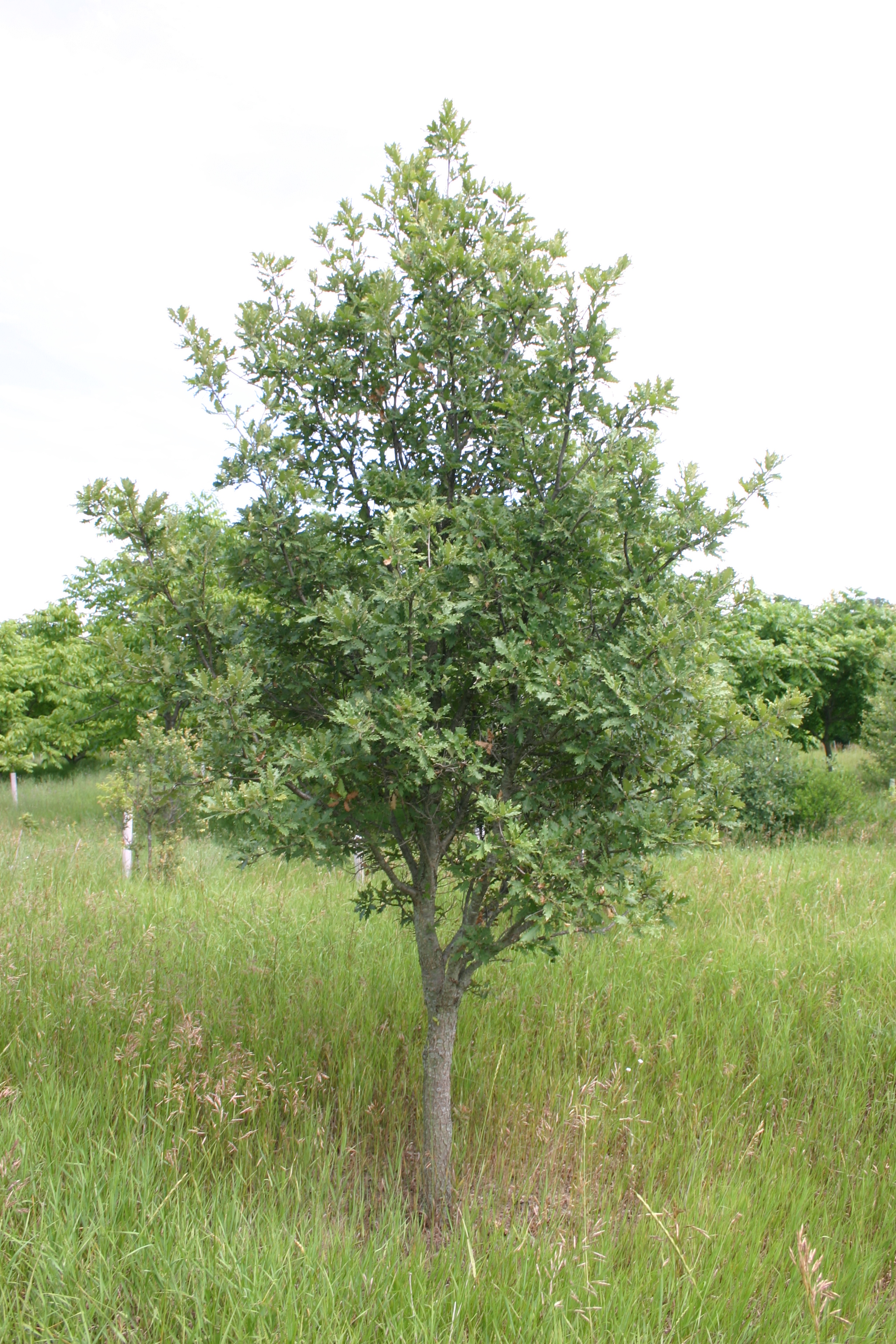
Quercus macrocarpa x turbinella Burlive Oak

Burlive Oak

When I see the extremely dry and hot climate affecting the hills of southern California in the form of fire, I do wonder if an oak forest would help in some way. Could an oak tree slow or suppress fire in some way?  Is there too much leaf litter? And would oak trees help retain soil moisture compared to other types of vegetation?  What could you add to the existing ecology to mitigate the problem in a fast, economical and efficient way? Here is where this oak could step in. You take a few acorns like the fictional “Man Who Planted Trees” and begin reforesting the hillsides with oaks. You plant 20 acorns per acre and slowly but surely make oak trees within the rocky soils. It could easily be done with a stick and a small canvas bag attached to your belt. Harvest acorns from the University of California. Check. Hire a work force to reclothe the hills of California. Check. Give California life again and help those who need it most. Check. When these plants fruited, you would let the birds and small mammals distribute them to fill the valleys with oaks. You need vigor, thick waxy leaves and extremely deep roots to create a rock hard wood able to hold the soil and air humidity around the trees themselves. The desert oak hybrid bur and shrub live has these genetics which are perfect. The burlive oak would fit into an agroforestry scenario for hot dry climates yet retains a tree form which increases shade. Shade equals cooling. The great shrub live and bur oak cross with thick dark green leaves makes it happen. Most of my crosses came from Utah and California as the Cottam hybrids. A second batch came from selections from the late oak breeder Miguel Marquez in Texas. To this day, the heavy acorn production along with its durability over time could easily fit into these hot and dry times ahead.

Seed selections from the amazing Shrub Live oak Quercus turbinella include: Asmus Oak Quercus garryana x turbinella, Englishlive Oak Quercus robur x turbinella. These particular crosses thrive in heat and drought and work in areas with higher soil and air humidity compared to pure Shrub live oak which perished here in Michigan within 4 years. The reason for a hybrid oak is not because it is better in some magical way. It just has a vigor greater than the species alone has. This was not a cross done in a controlled laboratory setting. In fact, intentionally crossing species of oaks is difficult to do. Yet in nature, it happens effortlessly. It is an effect of two young and evolving species of oaks exploring and creating diversity in novel ways outside of what ‘normal’ biologists think of as the immutable species. That is dramatic.

Cue the strings.

Oh-its-Natural grafting. Red oak at my families farm.

Asmus Oak Quercus turbinella x garryana

Enjoy. Kenneth Asmus

Posted in Diversity Found, Ecology-Biodiversity-Integration, Miracles of Nature | Tagged , , , , , , | 4 Comments

A-Salading We Shall Go with Viola

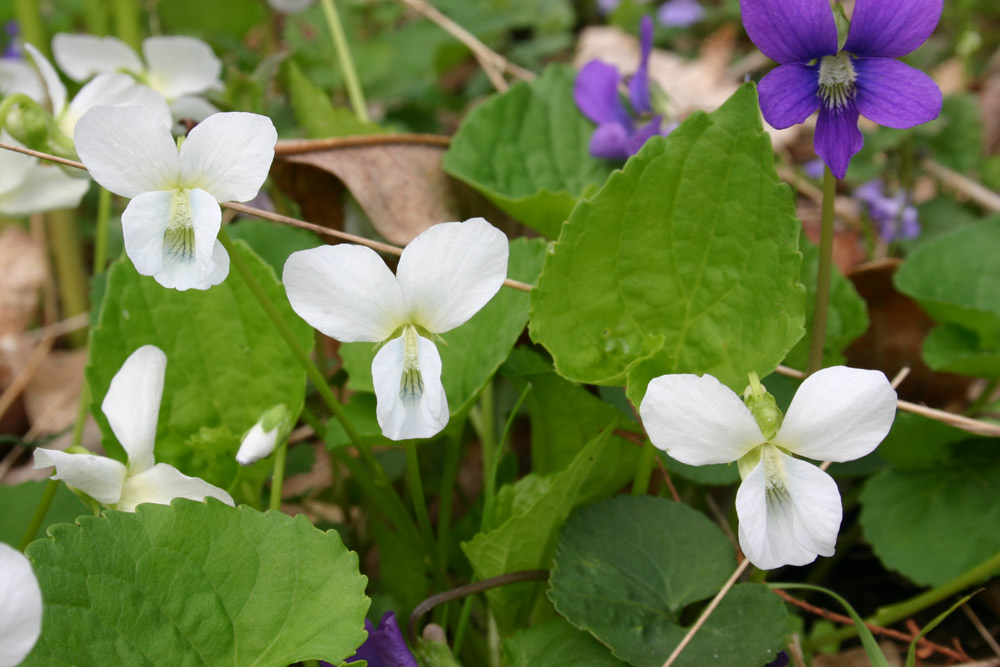
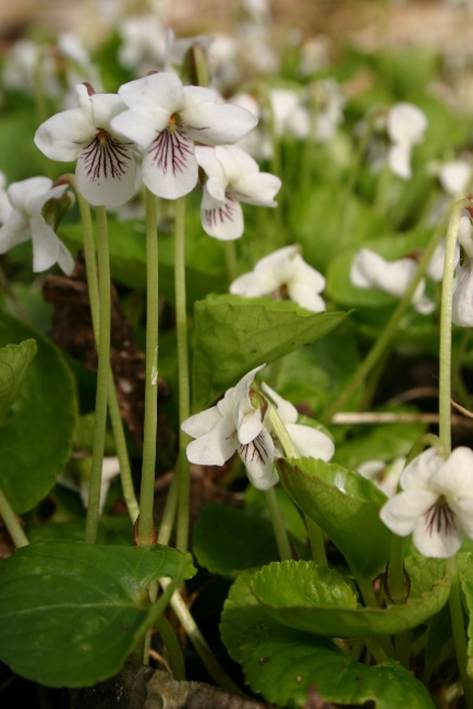
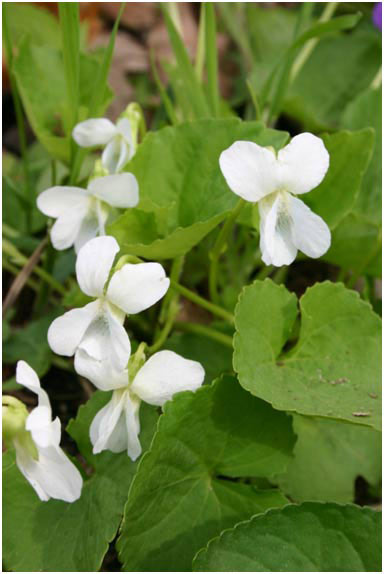
Ecos White Violet-One of the best flavored and productive of the Viola Genus

Crop Diversity: Perennial Greens-Violets

Growing edible perennial greens is part of the edible landscape movement. It was born with the idea that an ornamental plant can provide food. The edible greens created by a violet can be harvested as a source for salads while doing double duty as a groundcover. The violet can be planted in part shade under and around other plants and its perennial producing greens year after year. To further refine this Viola ideal, I began a search for wild species of violets in Michigan as well as the named selections from flower seed companies. I was most interested in the flavor and amount of foliage that could be harvested. This meant taste testing a lot of violets. Flavor is never mentioned in the plant descriptions, and it was not in the radar of the floral industry where Violets are produced by the millions in the bedding plant industry. That was a strictly look-but-do-not eat universe.

After the final chomping, it was the Manchurian violet, Viola mandshurica with its long leaves that had the best flavor and most succulent texture of the dozens I tested in the raw state. This species is more biennial than perennial and faded quickly in the woodland garden we planted it within surrounded by hybrid oaks, ginseng and ginger. The potential exists for all violets to be used on a larger scale yet no one is rushing to grow it as an edible green adding it to salad mixes or dried down for the powdered green drinks. Many violets are high in mucilaginous compounds. The texture of a violet leaf makes it easy to consume moderate amounts compared to aloe vera, chia, psyllium or flax seeds. This polysaccharide is well known for its treatment for burns, inflammation and a digestive aid. People use a form of these seeds or the pure thing for improving digestion. I had a friend in college who was into this purification diet of which flax and psyllium seed was on top of the list. The drink was like a clear viscous gel rich in mucilaginous compounds. I used to tell him it was suitable for fixing the cracks in the sidewalk out in front of our rented house. On Fridays, he would treat himself to one beer as a reward to the torture he experienced the days before. He thought it paid off for him in spiritual dollars. He even found a book about this diet which I started to read. It was filled with all sorts of majestic cosmic experiences once your body was aligned properly. I had my doubts until one evening late at night I saw ethereal lights above our septic system. As I lit some incense, the explosion could be seen …… Okay, just kidding on that. Luckily violet leaves are not as brutal. The violet creates this same path to enlightenment with the added benefit of it being a delicious salad green rich in vitamin C. In this whole process of discovery of violets to produce at my nursery, I became hyper-aware of violets wherever I went. This is a common experience where you begin to see a familiar sight as you focus on one thing. This was how my collection began and continued over a decade while growing them at my farm.

Violets are a common lawn weed pitching seeds and doing its underground reproductive strategies. It survives where grass cannot prevent its introduction. One lawn in particular I spotted was in Shields, Michigan. It had a dense carpet of violets where grass was missing entirely. No one was a-salading there but nothing else could grow in this location and the owner just let it go under the Norway spruce trees. To me that was the perfect lawn: one that didn’t require mowing.

Few know about edible violets. They are a small but powerful plant with a sense of urgency to colonize if the conditions are right. When I dumped them into a crevice created by a plow from the previous owner of my farm, they slowly but surely filled in as the grass died due to shade of my hybrid oak and chestnut trees. The violets had a plan. I did nothing. Today that violet planting measures over 100 ft. across and is pretty much all violets. The deer show up in summer and will eat the foliage prior to the plants going semi-dormant during the summer months. All of that was solved in one Viola swoop. The plants originated from a lawn I was working on in my early landscape business which was filled with moss and violets.

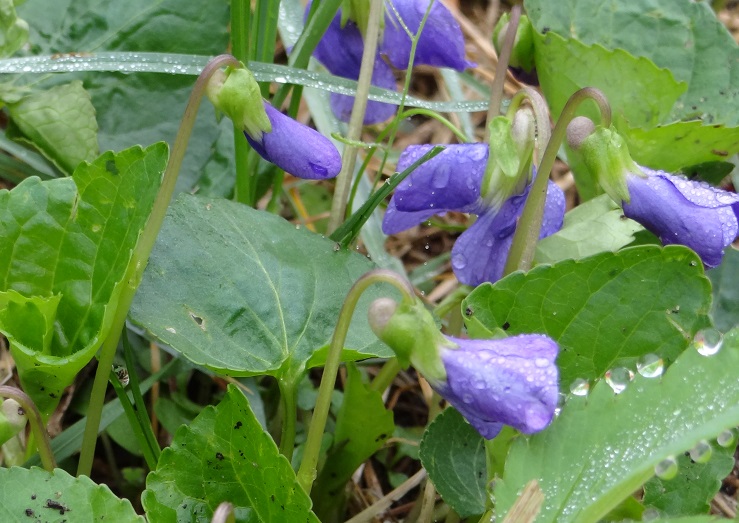
Here are a few of the species I discovered in the process of going a-salading both in the wild and under cultivation as species and selections. All of these provide an edible green worth cultivating as an edible landscape plant.

Kidney Leaf Violet

Although the leaf production was low, this little plant was a good rhizome producer and created clumps of dense foliage. This species was found on my families farm growing on an abandoned farm road in an oak woodland. The population was extremely small to the point it almost disappeared entirely. This was one of my favorite groundcover types.

Edible White Violet

This was a form of the common blue violet discovered as a chance seedling under an oak tree at my farm. It has very mild flavor in the foliage department and a good yielder. It is easily digestible and not fibrous. It self seeds and comes out true from seed.

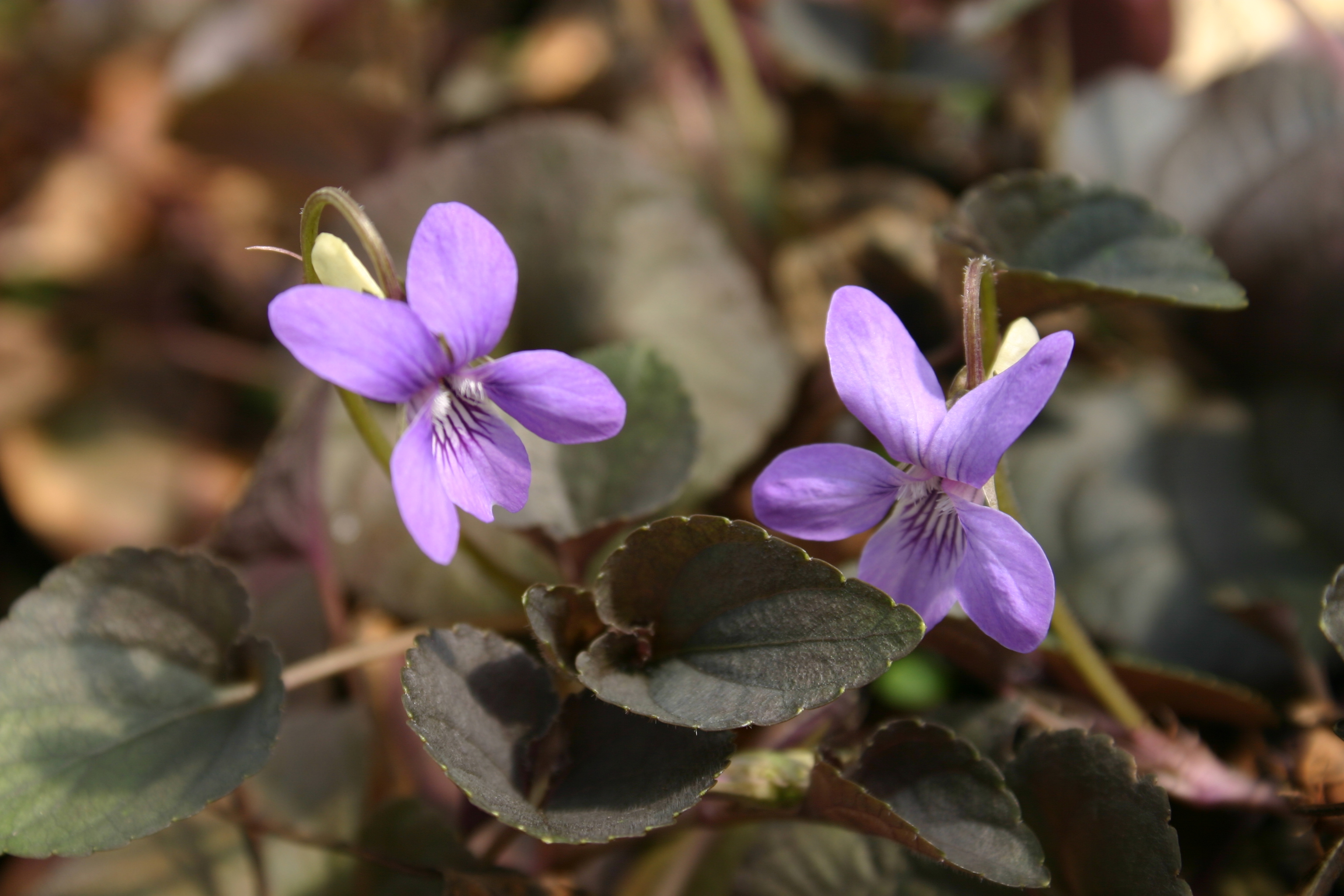
Purple Leaf Violet

This super northern arctic species is not a heavy yielder but looks spectacular in leaf. I did another planting of it last summer in a new location hoping for better results. It was very low yielding but has such bright foliage that it would be interesting to hybridize it for that alone. This is considered a North American species but it is circumpolar in real life like many plants and animals when we were all one giant supercontinent. Apparently there is some controversy of its identification within the botanical world.

Huron Sand Violet

Huron Sand Violet

This discovery was on a giant flood plain on the shore of northern Lake Huron. Nothing but rocks, stones and sand, this species has spread voraciously over many acres in this beautiful location. There were millions of plants in this area like a dense green carpet. The next year the lake rose to the point this plain was completely underwater. I wondered if the seeds would remain dormant in the sand below the water only to sprout when the lake recedes again. The foliage was very succulent, vibrant green and delicious. It was very early in flower and produced good yields in the spring.

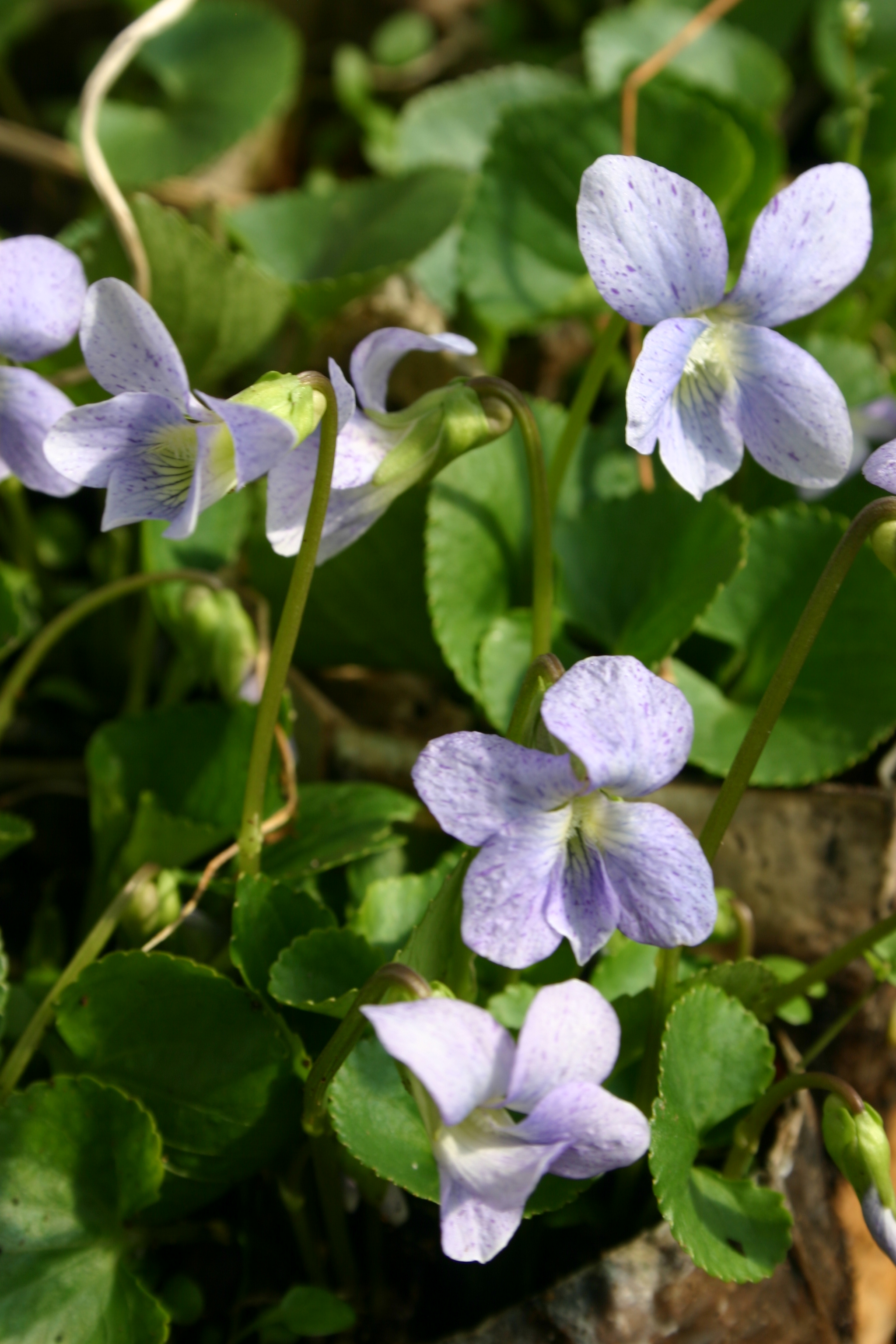
Freckles Violet

From Jellito seeds, this was a good one in terms of its clumpiness and yields. It wasn’t the most flavorable but it did remain in good condition late in the season. A lot of violets fade in the summer heat.

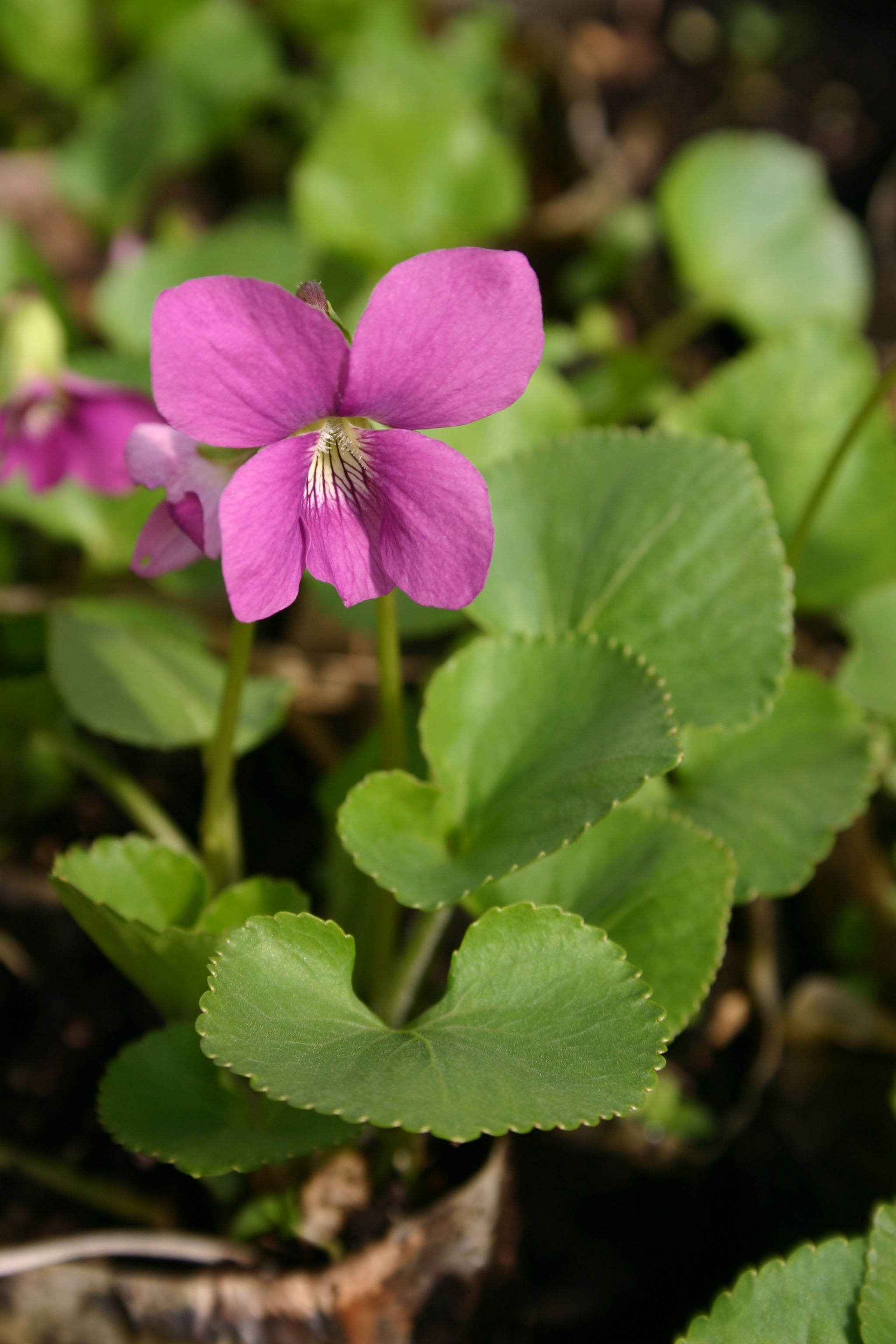
Magenta Violet

From Jellito seeds, this one was a great performer in terms of its yields out producing almost all the selections and species I have. Fairly drought tolerant, it continues to produce through the summer. The tall plant is dense in foliage and easily harvested. The flowers are a bonus as they stand out above the foliage.

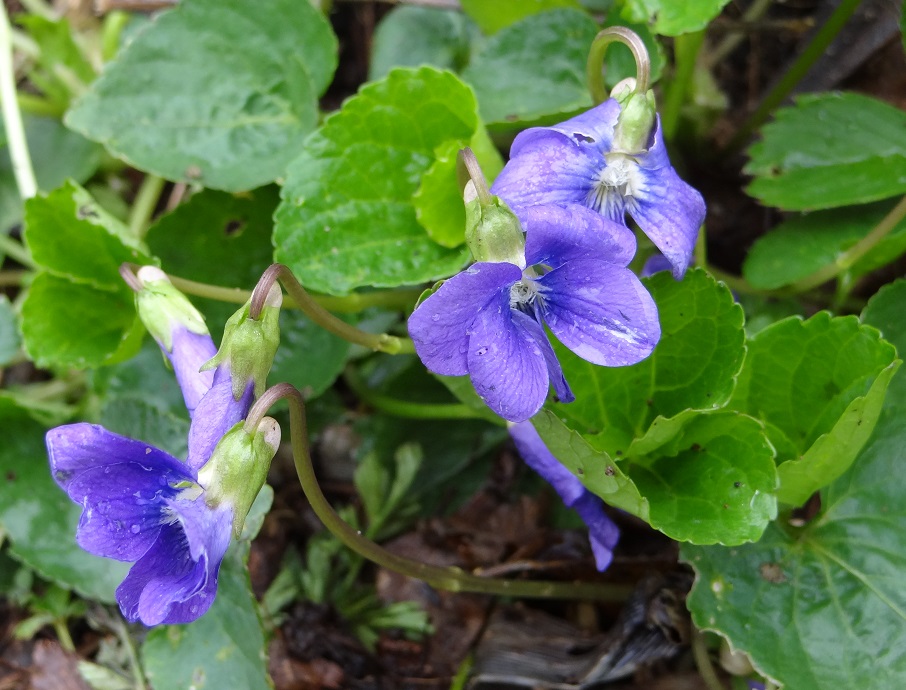
Lawn Violet

Of all the violets people know, this is the most common. From my subjective experience, this species is high in mucilaginous compounds. It is a very durable species and the rhizomes are persistant in competition with other plants. This species and Magenta create the best groundcover types and could likely be the next green drink to enlightenment if you know what I mean.

Unknown Species Violets

Like the lawn violet in Shields, Michigan, there are many species I just cannot identify. I am winging it as scramble through those damn botanical texts with funky terminology. When my father began a project involving a lawn service, he gave them access to drop grass clippings in a ditch and around a road at our farm. Within this hodge podge mixture of celluose lied dormant seeds which sprouted and grew in the road way. This was one of them. What I liked about this species was its fast growth. I thought it could of been hook-spur violent. I could be wrong because I am not fluent in funky terminology.

Appalachian Violets

This was one of the most unusual violets and not edible as far as I know. It is odd in that it spreads vigorously but then disappears entirely only to be found elsewhere on my farm.I think it might be biennial in nature more than perennial and the seeds stick to my rototiller. The plant responds to soil disturbance. It is the tallest of the violets I grew and very beautiful in flower. But then it disappears only to reappear somewhere else without fanfare. I like that.

Yellow Violets: Like the yellow snow, don’t eat it. All the books say they are poisonous to consume. I am not sure of the details but I am going to pass.

SUMMING UP VIOLA: Dense Carpet of Perennial Green Violet-Omni-directional All Space Filling Violet-One Beer on Friday Violet-A-Salading We Shall Go Violet.

Enjoy. Kenneth Asmus
Posted in Diversity Found, Ecology-Biodiversity-Integration | Tagged , , , , , | Comments Off on A-Salading We Shall Go with Viola

Cuppa Tea?

Anyone that has worked for me or comes to my farm in any capacity, knows I will ask them if they would like a cup of tea. I would always ask. There is a Kinks song, I would sing to myself once in a while when I was harvesting trees called ‘Have a Cuppa Tea” from the Muswell Hillbillies album.

If you feel a bit under the weather,
If you feel a little bit peeved,
Take granny’s stand-by potion
For any old cough or wheeze.
It’s a cure for hepatitis, it’s a cure for chronic insomnia,
It’s a cure for tonsillitis and for water on the knee.

Have a cuppa tea, have a cuppa tea, …….Hallelujah Rosie Lea.

The Kinks, 1971

Tea is my number one drink for the last 50 years so it was only natural I would try to grow it. Funnily enough it grew in Michigan quite well. I began to look at tea culture and tried to understand why no one in North America has ever grown the tea plant, Camellia sinensis. Later I did find one person in Florida who was selling plants and had a bona fide tea plantation of some size. After some serious seed searches I began purchasing seeds and plants as well as exchanging seeds. I had a lot of tea plants. People knew this beverage and the plant too. It was impossible to produce enough of them. It turned out that my ambitious program of trying to establish the tea plant outside was too much for the plant to survive a normal Michigan winter let alone a real cold one. But within that polyhouse window, the plants not only survived but flowered too. This shows the great potential of taking a crop which is grown thousands of miles away and producing it a ‘non-tea’ environment like Michigan. But having the plant grow here in a hobbyist sort of dream like mine is a teeny fraction of the whole tea story. There is processing and harvesting and finding the seedling populations as well as creating cultivars capable of minus 20 F. I visited the Washington, D.C. Camellia collection at the U.S. National Arboretum. This same idea is needed for the tea plant. You need a collection and a population of diverse genetic seedlings. Having a ornamental hardy Camellia is not quite the same as having a hardy tea plant. But it’s very close and doable.

For a while I also grew the Tea Oil Tree, Camellia oleifera. This species was very slow growing but durable and tough to fluctuating temperatures. I was able to obtain a very hardy seed source which was close to my climate. I had roughly 50 plants that survived very nicely in the polyhouses for almost a decade. Unfortuantely at the end of my nursery, the plants were exposed to dry winds in February which took them from lush and green to crispy and brown by spring. It is possible it could grow in a moderate zone 6. To me that was a hallelujah moment.

This is more than just a hint that it would be totally possible to develop and find full Zone 5 tea and tea oil plants for Michigan and other temperate areas. The issue becomes scale. You need a much larger population with diverse seed origins to find and create a hardy population especially with Camelia because it is usually clonally propagated as named varieties. You need to step away from that to find the treasure of diversity. Actually, that is not too hard to do. I would guess somewhere close to 100,000 plants could make that happen. Think of it like a bridge. Like all engineering projects, you want safety first and you should over engineer it in terms of finding and planting large numbers of seedling plants upwards to a quarter million. This may seem like a lot, but tea is easily grown from seed. The seeds are available on an international scale too. It would only require a place near the lakeshore of Michigan and sandy well drained soil. Tea loves sun and sun may be the limiting factor in its commercial production. Michigan is not sun drenched. We have fresh water oceans, but there are no dolphins. Sunlight is filtered through the clouds here. Tea could be produced in the continental United States but the price tag might prove very high because of the labor involved and processing. That part is the great unknown in agricultural circles but that too could be engineered. Let’s say you were magically transported to a land grant college or one of those fancy non-profit agroforestry organizations to talk to students and professors about your amibitious tea project. First we have to pretend they would listen. During your talk, the chuckles and negativity begin to drown out your ideas. This is ideal. Here is when your back up plan will kick in. It’s time to shine. You serve everyone tea. “This is pretty good”, they will think. “Why didn’t we think of this”,they will say. “Maybe tea is the future!” Hallelujah Rosie Lea.

Enjoy. Kennneth

Tea in the morning, tea in the evening, tea at supper time,
You get tea when it’s raining, tea when it’s snowing,
Tea when the weather’s fine.
You get tea as a mid-day stimulant
You get tea with your afternoon tea
For any old ailment or disease
For Christ sake have a cuppa tea.

The Kinks, 1971

Posted in Diversity Found, Ecology-Biodiversity-Integration | Tagged , , , , , , , , , , | 2 Comments

The Island of Plant Production: Small Nursery

When I first started my nursery, I soon found many nursery people who were in the plant business from their family. They had large farms devoted to plant production. Some were connected to the Christmas tree industry while others came later in the form of landowners with both production and large cold storage capabilities. They were the big wholesalers here in Michigan. We have this dune like sandy soil on the southwestern side of the state which is ideal for this type of production. That model and system would allow huge production as well as having human resources for shipping them throughout the country. They are in locations moderated by the climate of Lake Michigan.  They have several hundred employees to do the harvesting, processing, counting and grading required. They were often workers from Mexico traveling to the United States following the crop harvests in different sections of the country. I was fortunate to meet one family who worked alongside me in one of the nurseries I was employed at. The father of this family told me of the reality of his existence and all the places he was employed at over the years. No one really knew his backstory. The small retail nursery also had a back story. The owners were not farmers and usually had little knowledge of horticulture other than reading a few books. I began to ask them what they did for a living and what they were most interested in. These were the ministers, police officers, engineers, degreed in history or the arts, schoolteachers, multi-millionaire and oil magnate. Some were retired from the car industry and worked in manufacturing. Each of these individuals was part of the retail nursery industry and had found themselves in the sale of nursery stock. That is not an easy row to hoe. They shared one trait. They were short lived.

Today the nursery business is even more challenging. A small or backyard nursery is not sustainable unless you are using social media, and you are an educator and entertainer at heart. If you are a minister career wise, use those talents to spread your message of your plants as well as your life without being too preachy. Tell people your back story. Use your current occupation to showcase your talents related to your life experiences and why you are passionate about plants. For me I used the catalog system. Today that model is not used much at that level. Remember you are up against non-profits running nurseries, state land grant university nurseries, state level government run nurseries who regularly ship out of state, conservation industry wholesalers, low minimum order wholesalers of which most of them are already, as well as uncertified nurseries with no inspection or license to produce or sell nursery stock. It is a field of producers and sellers that is tough to weave through. Some companies are partially funded by government grants. This is particularly true of native plant nurseries that almost always have plant removal programs or bid on contracts for native landscape material for infra-structure projects. On the removal side of what is caught in the net of invasive species, I find it disheartening only because these same nurseries are being ecologically misled and exposing themselves to known carcinogenic compounds.

My model was the mail order business. This is not the same as it once was partially because of the costs of printing and mailing. People do like to read catalogs if they are well written with good images. The catalog is like the vinyl of the plant business. This is not J. Jill or the fashion industry.  The plant profit margins are tight.

The best aspect of the small individually run nursery is the ability to capture traits found in plants on a regional scale. It’s poor in terms of producing a profit but fantastic in its ability to do a turnaround on finding new plants, selecting them with new possibilities and then releasing them to the public. It is especially true with food plants. Most people ignore this category of nursery stock unless it is grafted trees. This broad stroke of selection, release and dissemination is critical in the years ahead of plants that are not known to be used in any current agricultural setting. It can include a vast array of exotic plants throughout the world including many unknown indigenous plants. The small nursery can fiddle with that because it has time and is not tied to any one single philosophy or idea entrenched in an ecology or agricultural textbook on the shelf. It is not commercial and scientists in modern agriculture will pretty much ignore you. You’re on an island. It is by designing this system of low budget, free of grant money trajectory allows you to leap tall buildings in a single bound. This is the nursery business model of tomorrow.  How that translates is yet to be seen but likely it will be advertising and social media that will help propel it into the future with success. Yes. People will respond with support for your mission and message whatever you decide to create and discover.

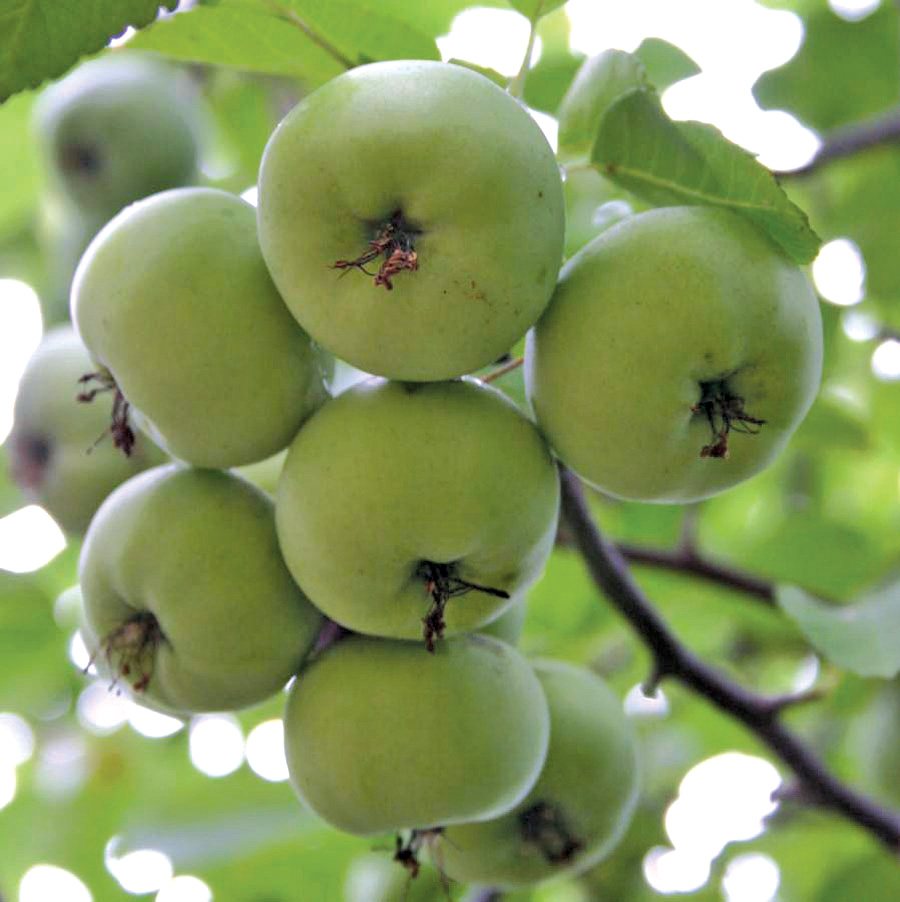
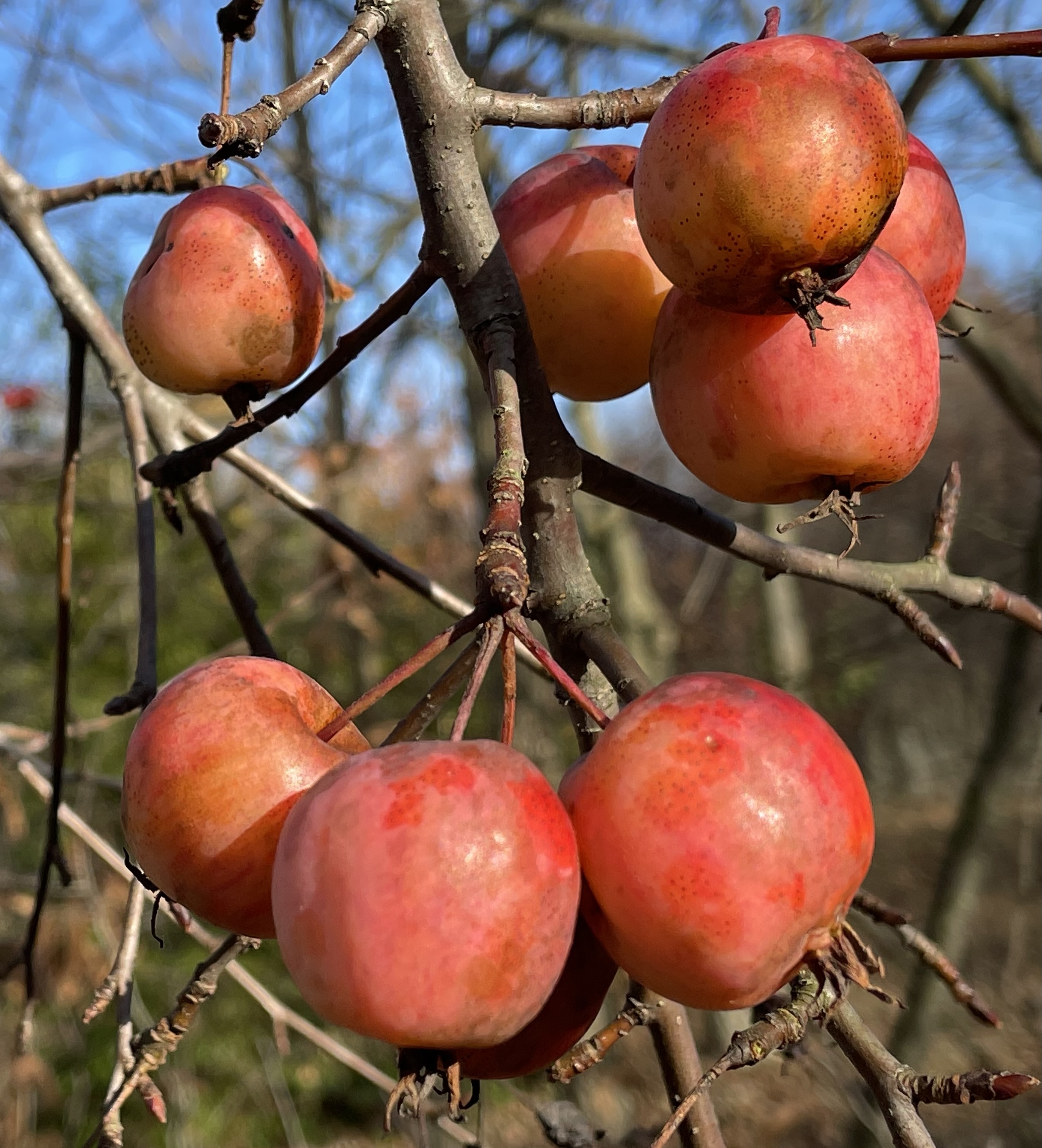
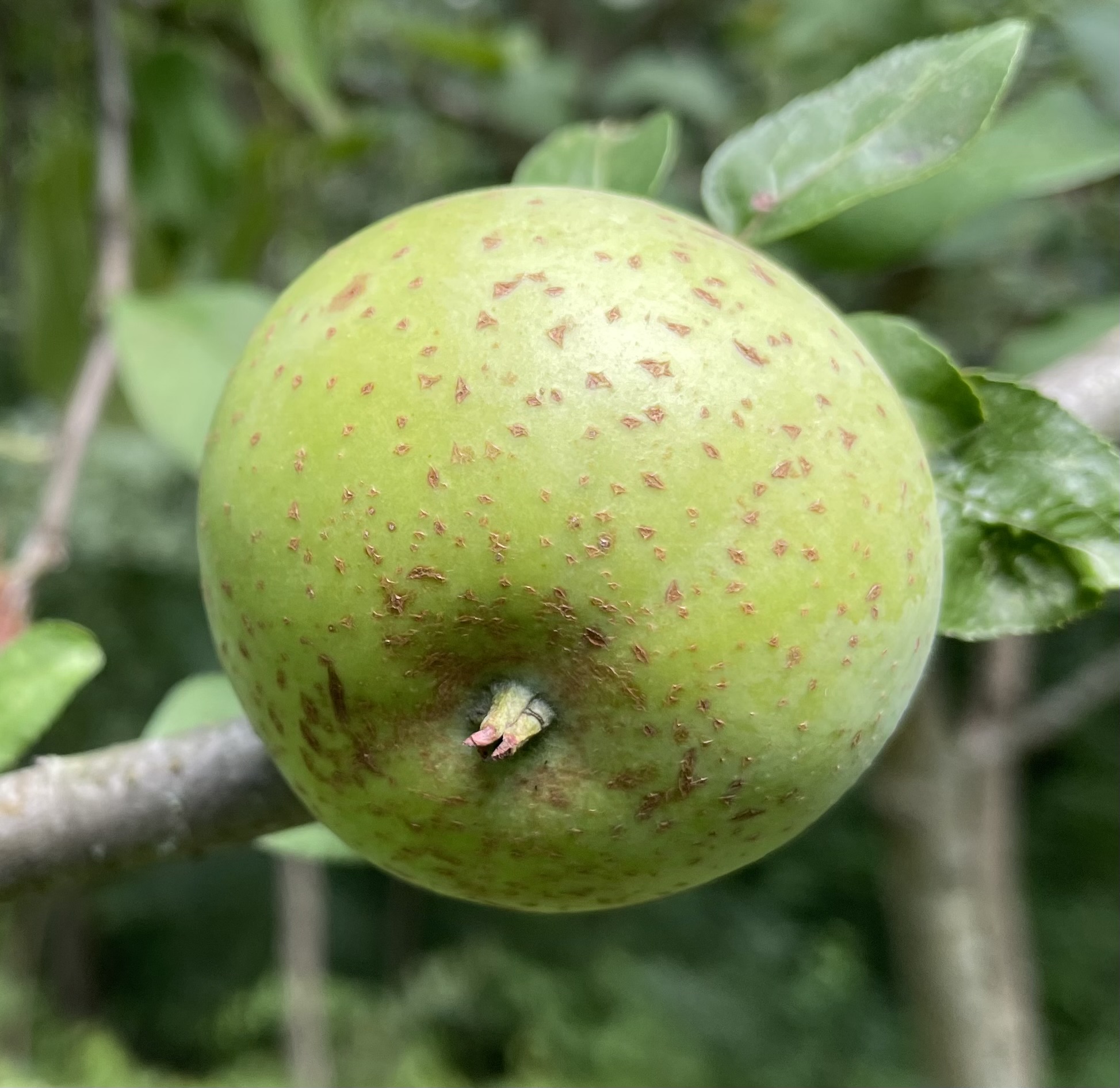
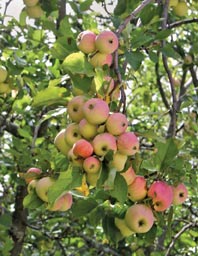
This wild apple was found on a peninsula far out into Lake Huron isolated from all other apples. It produced delicious large yellow fruit free of insects. It grew around the balsam fir on soil that was limestone shale and sand. Imagine the wind that comes off the lake hitting this tree over the years. It’s exposed on all sides.

An Example: Improving the Apple Via Small Nursery Style

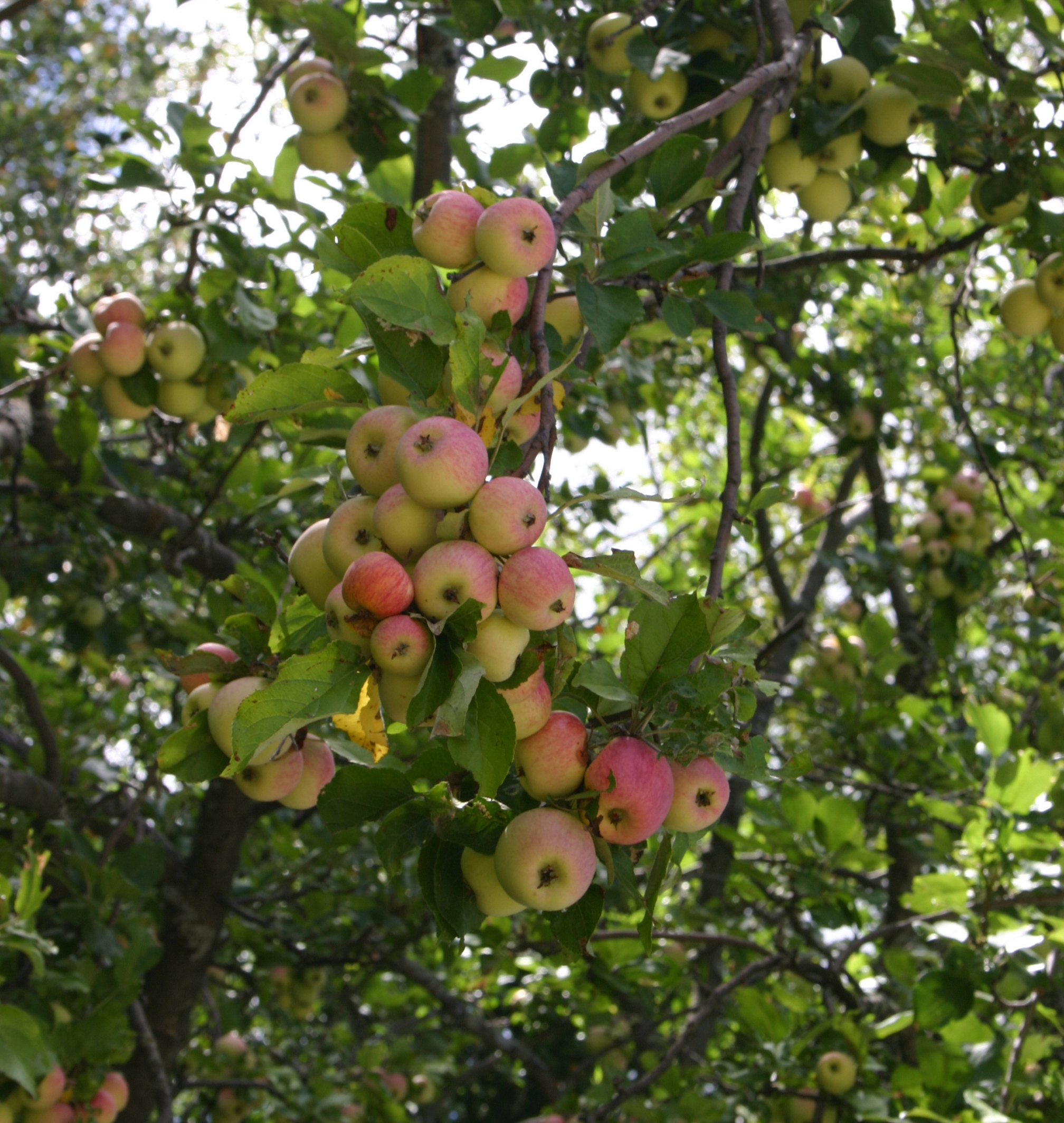
Apples are everywhere. It is the ‘cosmopolitan escapees’ that show the greatest promise. Here is a domesticated fruit, highly valued, which has ecologically integrated into the environment and roadsides. This type of selection is easy to harness in a small nursery. You collect a few bushels of fruit, process the seeds and plant them. A 50 ft. long by 4 ft. wide bed could easily grow a thousand seedlings. These seedlings spaced in 6 rows 8 inches apart are the future of your apple. You look for clean foliage as they grow. You look for a fast growth rate. At the end of the third year, you tag the plants that are well structured with clustered limbs, clean foliage and strong growth.  This is what is needed in the apple. Who cares if your bed of trees becomes a tangled mess of apple trees. You can leave them there if you wish or just plant out the ones you want. You can remove the weak plants in the row to space out the good healthy trees in the process. You only need a pair of lopers. Maybe your new apple bed will be a blockade for light and sound in your yard. Maybe it will become a giant floriferous hedge filled with bees and pollinators of all types. Maybe it will create a huge mess of apples all splatting the ground in one giant load of saucey goodness. It does not matter because you now have a future with these trees and soon you will share it with the world. It could be grafted or maybe you will save the seeds of the best selections however you decide what best is. Best is best for you.

 These trees are the beginning of your “breeding program” all done in a small nursery setting. No one cares about your apples at first. People may say it is a one in a million chance. Someone may ask you if it is native. It does not matter because your goal is to find no-spray apples. Your goal is a nutritious apple for syrup and cider. Your goal is to finally grow an apple free of bugs. This is only possible in your nursery because you care about the apple and how it grows. No one else does it like you. This is your island and soon it will grow to continent size if you harness the power of social media and finally disseminate your discovery. All of this is part of the small nursery industry and your small nursery while combining it with your life experiences. It’s a story for you to tell.  It’s not a hard row to hoe.

Try it. You will see.

Enjoy. Ken

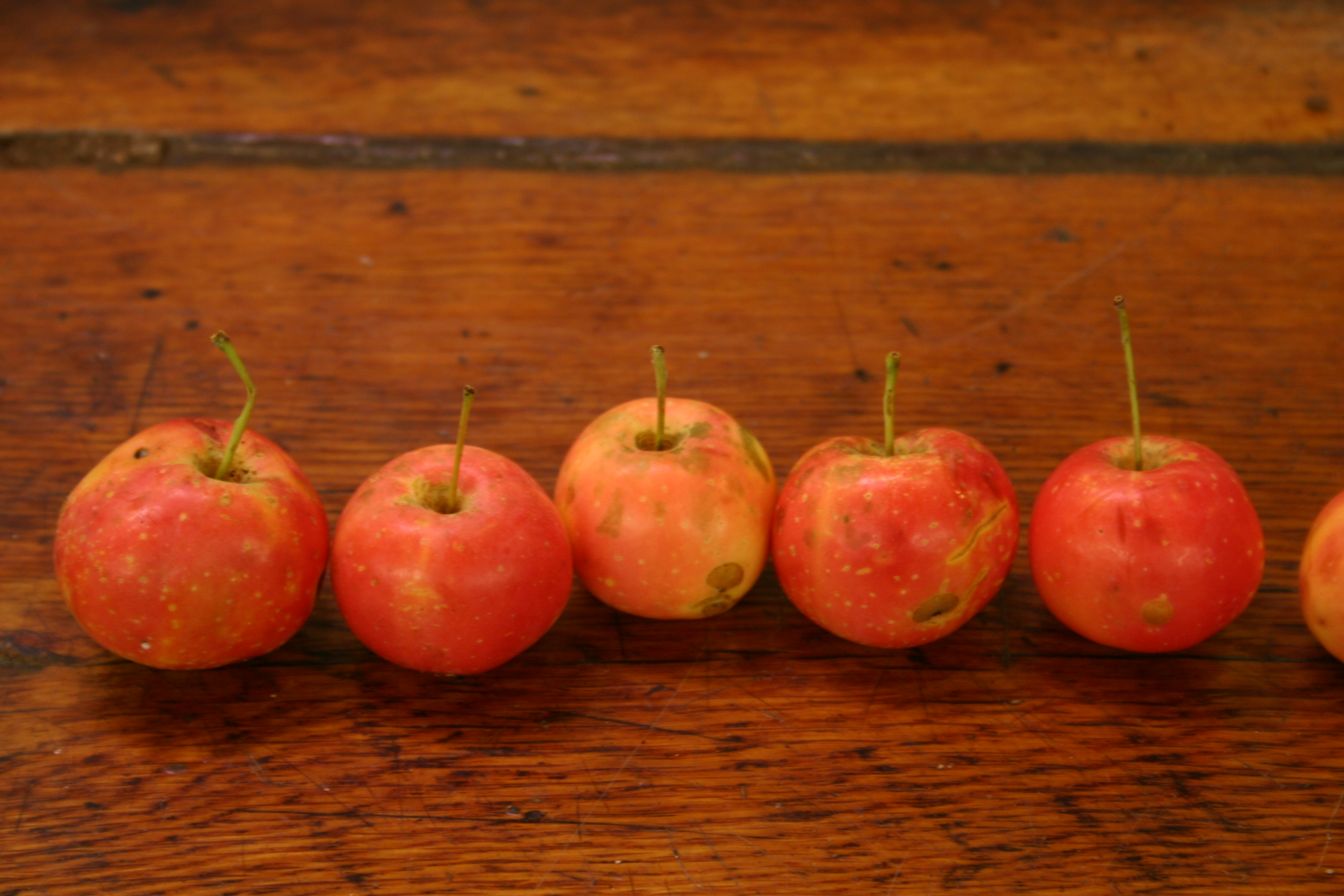
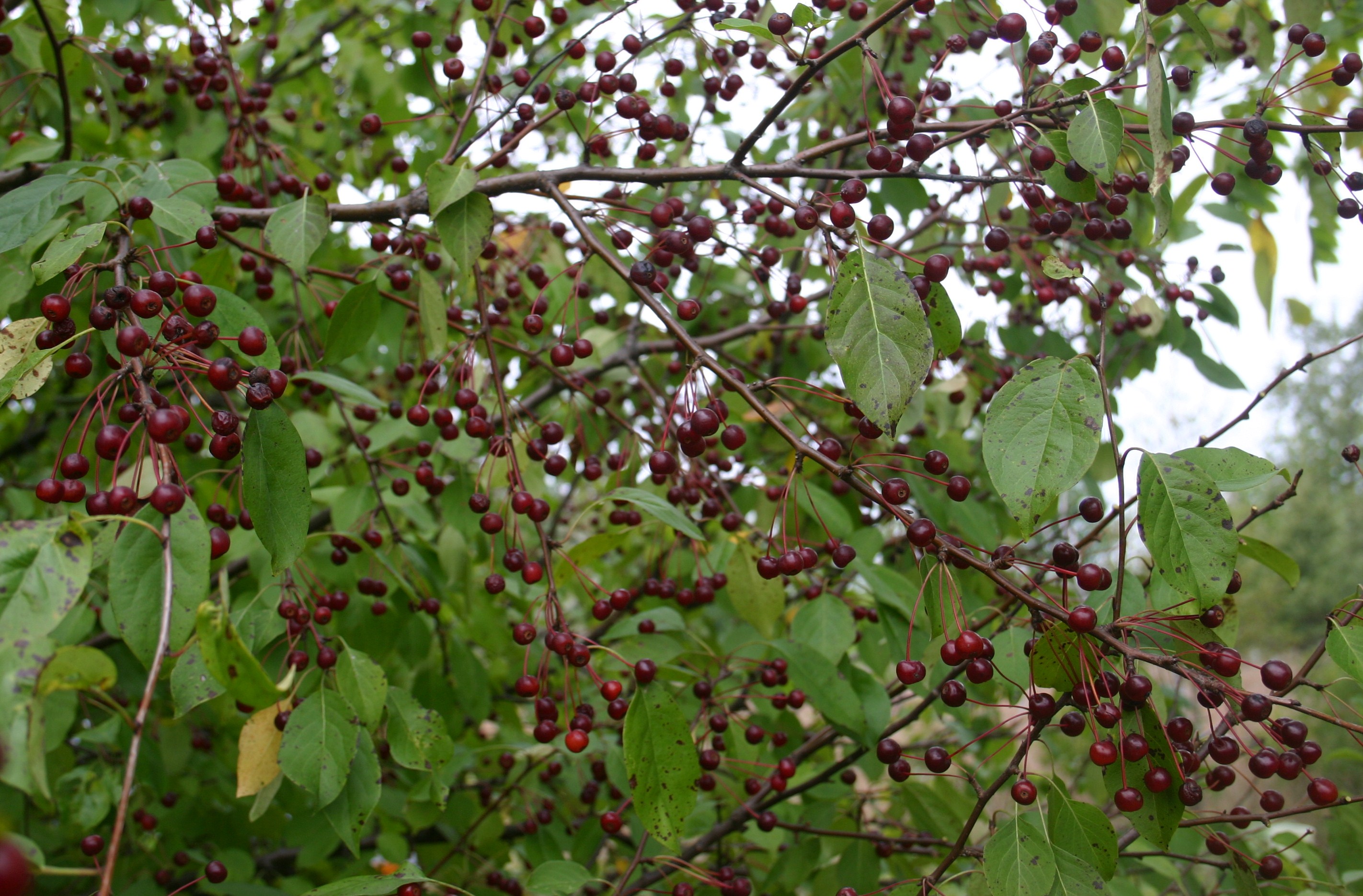
A small roadside tree found in northern Michigan. Perfect for the small nursery.

Posted in Diversity Found, Ecology-Biodiversity-Integration | Tagged , , , , , , , | Comments Off on The Island of Plant Production: Small Nursery

Wild Strawberry Sense of Humor

Everyone loves wild strawberries. It’s a universal fruit with universal appeal. The flavor is always rich in gold. They are impossible to resist. Here grows a small perennial plant that effortlessly skips along the ground rooting as it goes through rocks, sticks and sand. Maybe you did not look for it or have some sort of grand scheme of creating a strawberry empire; it doesn’t matter. As plants grow, it is hilarious and like laughter, you cannot stop it. Strawberry is funny after all, nailing the punch lines one after the other. As you know, timing is everything and the wild strawberry has that ability to be there at the right time dropping its new plants one at a time into the soil below. It never misses a beat. From the ground up, the strawberry colonizes the landscape in a simple way. It produces runners which touch down and root which in turn create a colony. Each colony can be just one individual as it reflects and contains within it the other colonies in its region. It is a good representation of population level changes so useful in creating healthy foods for people and profitable crops for farmers that can be raised in this new world climate. It is easily reproducible and can be tweaked to produce high quality fruit just like its cultivated cousin. This is my journey with growing wild strawberries.

Lake Huron strawberry boulder field

Not long ago, I visited a large rock strewn plain near Lake Huron. After a long walk through the stones, I discovered a strawberry with superpowers outperforming anything I had ever seen. It had the ability to produce 20 ft. long runners in a single season.  It had a long string of runners emanating from the mother plant skipping over and around the boulders before touching down in the crevices filled with sand and stone.  Nothing else could grow there. Another place I visited on Lake Huron was on a small island of pure sand at the end of a peninsula that had a giant strawberry colony just over a small ridge protected from the waves and water. Here the foliage was rich and tall, growing over a foot tall. There was no fruit, but the plants were incredibly dense in the colony shading the sand. The leaves looked lush and free of spots or disease of any type in this moisture laden environment. There were only a few willow twigs established on this teeny island with a lawn chair facing east to watch the sunrise. Laughter could be heard amongst the strawberries. Nailed it.

Many of these examples became part of my wild strawberry collection experience of which I continued for thirty years. Primarily, I did this because I love wild strawberries. I knew I could build on it easily and people did respond with support by buying the plants in my nursery. They were often used as native groundcovers in mixed plantings of many types of landscapes. But it was no commercial empire and this did not matter.  I was able to capture that wild strawberry flavor. This time it was funny to me because  I soon began to draw the attention of people who are ‘in the know’ on strawberries. One person told me “Ken, no one has ever done that before.”  He was referring to creating wild strawberry varieties using non-hybrids. I was surprised at this. The ‘real’ wild strawberry was left behind in the process of cultivation. My type of selection process would be considered kind of simplistic by strawberry breeders who are on the upper echelon of plant breeding. Another person told me my wild selections are controversial. Here laughter could be heard for miles around. I did not know this.  “You see”, he said, “they might not be pure.”  

I remember taking my children to pick your own strawberry fields. It was quite a production to create these planting beds including using Bromine to wipe out seeds and everything else in the soil. I purchased several books on strawberry cultivation assuming it would enlighten me on its culture. It did. But there was no mention of the wild crop other than the original seven South American coastal strawberry plants that created today’s modern strawberry.  In this world the wild strawberry,  Fragaria virginiana, is hard to get rid of in the cultivated fields of domesticated strawberries. Apparently, it is not allowed to co-mingle with its brothers and sisters in the glorious exaltations of cultivated fields of the straw-laced plastic lined fields of strawberry human heaven with the slight fragrance of bromine.  Am I over stating it? A little.

“Let me take you down to my strawberry fields.” The Beatles

On a mission. Must plant trees.

For me it started as an experience on my family’s Christmas tree farms.  My father was on a mission to smooth out new areas on the tree farm removing old stumps and other vegetation. He did this by using a disc and traversing repeatedly on these large areas of sand and peat. No herbicide was used. Then the scotch pines were planted. This habitat was absolutely the best for wild strawberries to grow quickly. With no grass established and plenty of ground to hug, the wild strawberry took off with its omni-directional runners. It was here that I found the wild strawberry in great abundance and decided to make jam from these patches.  I had my sister help me pick. I was at home from college at the time. It was incredibly time-consuming. The horse flies were relentless. At home taking off the calyx was equally time-consuming. I finally had enough to make jam. The flavor was like a concentrated syrup of blissful goodness. How could anything be this wonderful?  I held this memory as a beacon. I returned to this exact location to collect runners and seeds two decades later.

Intensity Woodland Strawberry flowers

To replicate this experience, I wondered what direction I could take in terms of the strawberry plant characteristics. All I could think of was the flowers. I noticed the largest flowers with the most stamens. I noticed larger clusters of flowers with a greater number of individual flowers on each stem from the basal part of the plant. This is where I started. When I fruited the plants, it was apparent I was home free. The yields were very high to the point you could see red from a distance in the small three-foot square area. The turkeys noticed and ate all the fruit. This selection process is done in isolation from other strawberries as well as using only wild seedlings highlights the non-hybrid approach to genetic diversity, all of which is found in its wild state. Now my so called breeding efforts are not breeding only putting everything in one spot so I can keep track of it. The yields can dramatically increase, and it could be done commercially.  Now you need technology to catch up in terms of harvesting and use. Harvesting a wild strawberry at peak flavor is the only way. The berry is very fragile and not possible to store or ship. It is a very soft fruit which cannot retain its original form. This works for processing and making that glorious jam that I produced as a young college student.

As time went on, the story of the strawberry grew at my farm. We used seeds in propagation as much as we could while making unnamed seedling selections. We then created planting beds outside with these forms known for their flowering, running and fruiting capabilities. In a similar fashion, I looked for additional wild selections and seed sources including as many species as I could find.  Some of the best and most prolific finds were in Michigan. I found a woodland strawberry near my home in a hickory and oak woodland. It was a woodland strawberry, Fragaria vesca and had very clean fruit that hung high on a tall plant. The yields and fruit size were good for a wild strawberry. I eventually named this selection ‘Intensity’.  We grew this mostly from runners but sometimes we did it as a strain from seed. It was here I began to see a new type of structure to the strawberry flower and fruit scape. They became taller and more branched over time. Once again, laughter followed, and the strawberry responded to its care and its environmental situation under cultivation.  I began to see the light on why this plant is so successful in cultivation worldwide and why it still is the most selected fruit plant of all time. In a twist of fate and humorous side note, the hybrids from the modern strawberries I used yielded poorly if at all. I did keep one plant because it was such an unstoppable runner producer, it eluded my rototilling and raking for new crops. I still don’t know if it yields anything.

The Runner Runs:

It is easy and not damaging to a colony to collect a runner from a plant to grow in your garden. You can continue this line of selection if you think it is something worth establishing and harvesting from home. Look for large flowers with heavy clustering. Look for clean large foliage and healthy new growth free of spots. Wild things do not live forever.  Moving the strawberry helps in its future success. Some colonies die out over time due to the natural change of the vegetation. There was an article on strawberry breeding in the Smithsonian a few years ago and one of the breeders was having lunch at Burger King. He discovered a type of strawberry in the dry barren landscape where everything else was brown. He took a few plants back to the greenhouses to continue his work on drought tolerance for California and Mexico.  Wild colonies under cultivation can surprise you.  I am still am a little upset that I did not harvest a runner in a parking lot near the buffalo pen when we were visiting a county park. That was a good one. But relax, more are around the corner. It’s a strawberry after all.

Wild Strawberry flower at my family’s tree farm.

The Flower Attracts: Look for flowers with heavy pollen and stamens within the Fragaria virginiana groups. Almost always these are the heavy fruiting individuals. For the Woodland-Fragaria vesca strawberry this is not apparent in the way the flowers are structured. There it is best to focus on quantity of flowers and tall stems that hold the flowers up past the foliage. This characteristics makes harvesting by hand faster and easier.

The Fruit Fulfills: Look for the largest stems and branches of flowers. You can always see them from a distance because the flowers are above the foliage.  This highlights the flowers potential fruit set.

Isolation and Friendships of A Strawberry Nature:   It is said within the strawberry populations are dioecious and sterile pollen plants that are not capable of producing fruit. These are said to be common in plants separated over time from other populations. Often time they make up for it by increased runner production or some other evolutionary work around. Nature never sleeps. I once found a plant I named and grew at my farm called, “Kellys Blanket”. It was one of those heavy flowering types that was half the height of a normal strawberry. Its clusters were dense and tight on the stalk. Very little fruit was produced despite being surrounded by many other types of wild strawberries. Some of these low fruiting types make great ground cover selections. I found a similar one selection ‘Huron’ which was an island form which I grew to fruition at my farm. It was very strong in runner production. These sorts of variations of a theme highlight the value of diversity and the amazing strawberry plant.

Kellys Blanket Wild Strawberry

Every now and then I am on a walk somewhere and I will spot a strawberry. I have this whole dialogue going on in my head. Oh look at that one. It’s a good one. I know it is. It is in my vision and impossible to let go. I know the fruit tastes good. I am pretty sure the strawberry is looking back at me. I can hear its laughter as I walk away. Maybe I will collect a runner after all. I too want to be surrounded by laughter.

Intensity Wild Strawberry
Posted in Diversity Found, Ecology-Biodiversity-Integration, Miracles of Nature | Tagged , , , , , , | Comments Off on Wild Strawberry Sense of Humor

Yew and I Will Grow It

I have always been fond of yew. It was one of those species that inspired me to grow trees in my mind. Where in creation is yew?  For me it was only in photographs. Like the one above, I saw them in the thousand-year-old trees in cemeteries and churches in the U.K. that made me wonder the history of such magnificent specimens. Most landscapes today have yews within them. They are the standard of the landscape industry as an evergreen shrub with rich dark green foliage. Their spiritual nature has been sidelined but not forgotten. Instead, yew liked us and decided to move in closer. They live a long time and tolerate the worst soil and air conditions while being disease free. When I began to grow the yew from seed, I started to notice large specimens that were not trimmed in untended landscapes. They became wedged in my consciousness as a sort of immortal species with the same ancient reverence that others enjoy in stone architecture. There was one yew shrub that grew a large multistemmed top to 50 ft. in diameter in front of a large home near a park where I still visit. I told the owner how special that plant was and not to ever remove it. Normally yews are rooted as varieties selected for specific ornamental appeal. I was more interested in the fruit and the wood quality than anything else. Late at night sometimes I would hear the deer bump into my house as they positioned themselves between the deck and planting bed eating my ornamental yews. In spring most of the foliage was gone. It is interesting that a cow or horse can eat a handful of yew foliage and drop dead. With its dozen or so alkaloids, it has protected itself against the human livestock. The deer benefits and thrives from the yew. I moved several seedlings out to my roadside. One made it past the browse line and is now ten feet tall straight as an arrow. This was yew I was searching for.

Yew trees are often planted as a form of protection in churchyards. It was said to keep the owners of their livestock out of those areas. This growth is a response to cutting and then resprouting from the root collars and trunk. This makes them difficult to age. Ballpark-2000 years old.

The English yew is Taxus baccata and it has never been developed as a tree crop. There is interest in preserving it in its native habitat with various laws in place but nothing really in growing it throughout the world or expanding its habitat. It is not forbidden. It is just not thought of. As humans, we are busy creatures not really thinking of our future with yew. Yet in the past it was the human that destroyed the trees for fear of death of their livestock and over harvested the trees for weapons of war-the English long bow. One of the oldest spears ever discovered was a 400,000 year old point made of yew. My guess is yew is confused about humans with this love hate relationship we have for it. The American yew is Taxus canadensis and it has never been used as an ornamental. For that the Japanese yew, Taxus cuspidata stepped in. It is more adaptable and capable of being sheared in different shapes. The American yew is a shrub which produces large colonies growing and rooting along the ground.  I have seen many of these along the Lake Michigan shoreline wedged in between the dunes. Each of these species are unique in their own habitats which are distributed by birds. They eat the ‘arils’ and drop the seeds with a small package of fertilizer while scarring the seed with their intestinal flora helping ready the seed for germination. The intermediate forms of tree and shrub are Taxus x media of Japanese and English origin. These create some fast-growing hybrid plants of various selections. If you grow them from seed, you will see some amazing growth forms and patterns as well as the original forest type of English yew all in one population.  It was from this vantage point, I began to grow these yew selections from seed pretty much all by the force of one person who wants to remain nameless. He secured for me the crosses and the species from old arboretum plantings both here in the United States and overseas. I had no idea what I was doing other than to grow the trees. It was not a success in terms of its sales.  People thought of the yew as a shrubby thingy-doodle next to their home. My species of yews were not considered desirable from a horticultural standpoint. They were not the thingy-doodles most of us know. The market was flooded with yews with hundreds of varieties of them. To add another one is another flavor of ice cream. I finally had a massive sale to clean them out of my polyhouses. Then I began planting out some of the seedlings from these batches of seeds.

An old Hetz yew is a multistemmed upright shrub growing to 20-30 ft. if left unpruned. Here is one I found in my neighborhood. It is the common ‘tree’ yew found in Michigan and throughout the United States.

With evergreen species, you normally want a wide range of seed sources to see what suits your climatic conditions. This is akin to the seed sources for Scotch pine for Christmas trees where different geographic regions produce different forms and growth rates.  I did not have that luxury. I had Romania. Luckily, Romania came through with big dividends. It was immune to winter burn on the foliage and completely hardy in southern Michigan. Romania had minimal side branching with a strong growth rate. It takes roughly four years from seed to see what is going on within the population of yew. Plus, two years to germinate the seeds. Here the growth rate was uniform in nature.   

I did hit a few bumps with yew. My out plantings were put on a windy and sandy west facing hill. The dry soil conditions were rough on the trees. Yews will ‘drop their top’ if conditions are not met that first year and then resprout from the roots. This is a common characteristic of the tree which is why you see 2000-year-old specimens with sprouts all along the root collars which make it look like a giant hedge plant. They have what is known as epicormic sprouting and they do not mess around. It is like a dense pin cushion of sprouts not just a couple of sprigs like some trees. They can do this on very old trunks too which in itself is not common with most trees. These same plants sprouted again from the central leaders only to be nailed mercilessly from the white-tailed deer. They rammed the cages to get the greens within. English yew tends to be one of the most shade tolerant trees able to grow in the canopy of deciduous trees very easily.  For this reason, you will find it in mixed beech and oak forests in Europe. The Swiss beech and yew forests are said to contain a great number and diversity of trees.  In my case, I have them near shellbark hickory, hybrid American chestnuts, hican and black cherry surrounding a row of edible Autumn olive selections.

English yew seedlings at my farm. Taxus baccata ROMANIA

I still have hope for yew. Last year I fixed them up again. The fruit production could be a side benefit of creating a healthy cancer preventative fruit. Yet I am not sure anyone has looked at the composition of the fruit to see if it does have some Taxol or other compounds within it. The warnings on not swallowing the seeds are noted.

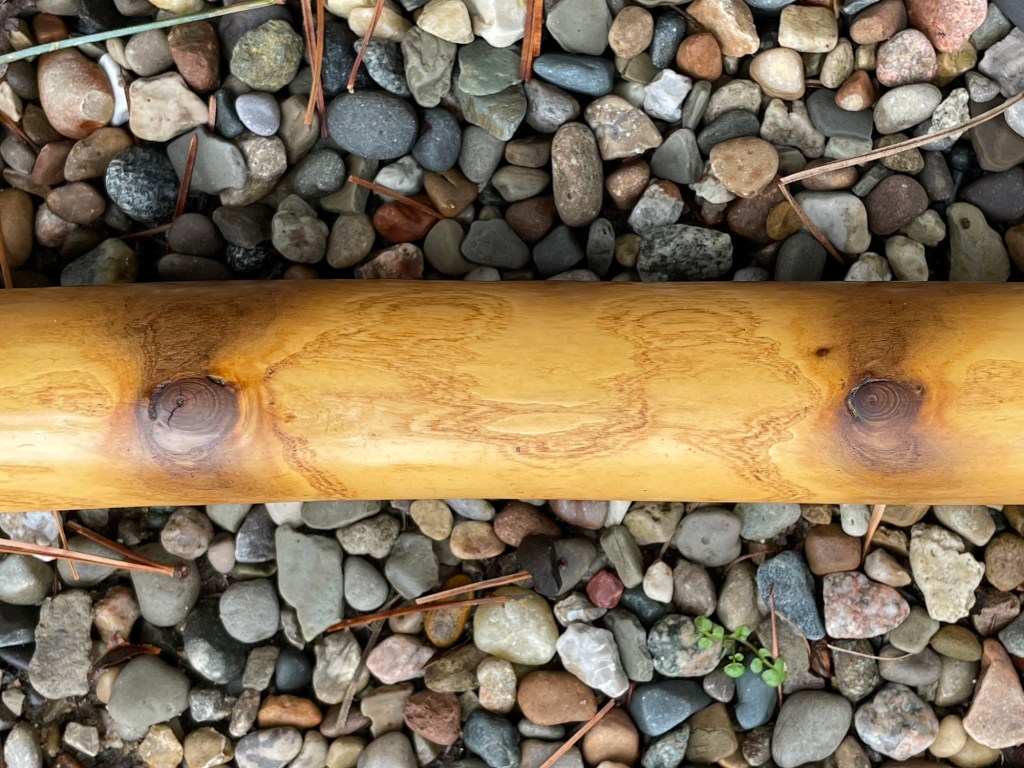
The wood is used for wood working for furniture today. (See below for link.) It is very dense and could be used to produce musical instruments. A luthier wrote about lutes that was made from this wood which was common prior to the use of Brazilian rosewood. The wood I have experimented with is very enticing. You would need several hundred acres of it to really get your foot in the door. Even if this sounds too pie-in-the-sky it could be possible to distribute small trees of it to farmers along farm roads here and there to test seed sources before committing to larger pieces of land. If the trees are tracked religiously for the next twenty years, you could create a marvelous seed repository and go from there. Pruning them would eliminate the knots in the tree and straight saw logs could be produced easily. It is possible that the epicormic sprouting would then kick in after cutting and you would have an established root system like black locust and popular which would continue the tree into the next cycle. In the right soil conditions the turnaround for a log could be at least 200 years. But under the right conditions and with the right seed and cultivar selection that turn around rate could easily be reduced to 75 years. Either way, it would not matter because you would hold it under a government entity owned by the population of the people who live there as an investment in their wood and lumber portfolio. The lumber investment would be compounded yearly as a form of wood earnings. While this is going on, the fruits and seeds could help pay the bills while providing cancer free human health in the process.

From seed: The seed coat of yew is extremely hard. It normally takes two cycles of cold dormancy to sprout them. The bacterial action of the soil along with the cold and warmth with the maturation of the embryo creates conditions to sprout. The best way is to put it in a flat of sand and peat and lightly cover the seeds. Then put hardware cloth over the flat to prevent pilfering from the mice. Move the flat outside to expose it to the elements. Make sure the screen is silicone caulked around the edges directly to the flat to prevent slippage and gaps. You can then pluck out the sprouted seeds of the flat and put them in peat pots.  This whole process takes about two or three years to sprout all the seeds.  The seeds are available from tree seed companies and other sources online. My experience is that they were often over dried. This destroys the embryo. The inside should be a bright white color not a dull opaque looking embryo. Soaking the seed will not change this. Ask what year the seeds were harvested and if they refrigerate their seed. The seed is designed for long term storage so it is fortunate that despite the mishandling by the people selling the seed, you will likely find good seed. Just do the cut test to make sure.  You can use the zip lock baggy method by placing them in lightly damp peat moss and then moving them from the refrigerator after 120 days to room temperature and then back again in the fall. This is the same natural cycle that will break the dormancy.

The edible fruit is produced in clusters along the branches but the seed within is poisonous. Even the sawdust of yew is poisonous with no known antidotes. I respect yew. The plants can be either male or female. The yew has the ability to change sex over time as well.

You may discover an old Hetz yew somewhere in a landscape that is very large. These were originally a kind of dense columnar tree let go and now its compacta nature is now more like a bad hair day. These once pyramidal trees make excellent seed sources. I know of three trees in a row in an open grass field next to an apartment complex. I am guessing they are 60 years old or more. The seedlings grown from these trees can be densely branched or sometimes not at all. They have strong central leaders usually because of the pyramidal genetics. In general, the mature Hetz yews I have visited always have had low yields of fruits. I am not sure why that is. The Japanese yews on the other hand can be prolific. One such group was near a strip mall parking lot. I have never seen so much fruit on a yew. Again, I am not sure why that is. Each of these selections hints at the possibilities of yew cultivation for fruit and wood. The seed sources are in front of us all the time. We just don’t notice them and view it as worthless other than their ornamental appeal. If you mention to a nursery person that you are growing a yew from seed, this is a hobby as well as a futile occupation. Nurseries only know the varietal selections from rooted cuttings. We do not understand their value to the health of the human family and the environment at large. The ornamental in our mind is stuck permanently in the planting beds near our homes in a comforting and controlled lifestyle where everything is kept snug and safe. This is a problem. Yew realizes it and plans a resurection and revival.

When yew breaks out, there is going to be beauty to be paid in health and well-being for the human family. These are the divendends of yew. Yew and I will watch from the side lines. It is all about yew after all.

Discover a tree by raising it from seed. From there you will see everything. Enjoy.

Kennneth Asmus

THE ENGLISH YEW WOOD AND TIMBER HARVEST

Posted in Diversity Found, Ecology-Biodiversity-Integration | Tagged , , , , , , , , , | Comments Off on Yew and I Will Grow It

Diversity Rises in the Forest: Wild Black Cherry

I did not grow the wild black cherry at my farm.  It grew by itself. Today it self-seeds freely under my tree crops. It is a native tree found from Guatemala to Canada. This huge range has great diversity. Almost all of it is not explored by horticulture. It is the kind of weed tree mentality that sinks great plant ideas. Yet it is not that hard to select better wood and fruit selections because by and large they are all over planet earth. It is not some sort of rare treasure. I was a great enthusiast of the tree and kept the few that I had in my pasture. Those five trees along with two black oaks made up my forest in the beginning.  I would climb them and put kestrel and screech owl boxes next to the trunk overlooking the pasture. This was successful and attracted these birds to nest on my farm. The idea was to lower the rodent population. I was planting a lot of food for rodents too. As the trees matured, it became harder to climb and put the nest boxes in stable locations where the wind would not blow them down. The last time I climbed, I lost the ladder and had to shimmy down the trunk while grasping the bark while clinging the trunk with my legs around the tree. Seeing the ladder fall with no one around within shouting distance made me rethink my love of predatory bird boxes. The Carhart pants I had on protected me and the future of my potential future family if you know what I mean. My back was stretched and out of whack so a series of Occupational Therapy treatments, medical massage therapy and yoga with a bit of Motrin thrown in got me to the other side free of pain and discomfort. I was always removing the lower branches of the trees to improve their form to a more Christmas tree shape with no lower limbs. They became unclimbable eventually. The image above shows one such tree that was one of the better timber-like wild black cherry.  I named it ‘Sweeta’ because it had very little astringency and larger than average fruit size.

I was left wondering if anyone had looked at the black cherry in the same way black walnuts are grown. I also began to wonder if there were some plants with good fruit to eat. It had potential both for its fruit and wood. I only knew one person at the time who was interested in its cultivation. Funnily enough he lived down the road from my farm.  He discovered by accident that the abandoned grape field he had purchased years earlier was soon the home of seedling black cherries that were dropped by birds while sitting on the trellis system, to the persistent herbicide strips below created by atrazine. Few plants can tolerate that, and it takes decades for the soil to repair itself. There in the dead leaves and grass the trees grew very vigorously. He had discovered that there were some seedlings that appeared super vigorous, and he began a process of selecting the strongest, apically dominant trees and removing the weaker plants. He said his major cost was buying a good pole pruner so he could do it from the ground. He was surprised at how fast the trees grew compared to black walnuts in this soil with minimal organic matter. As a wood worker and building contractor he also noticed at that time the price of black cherry lumber was equal to black walnut. Straight knot free logs were hard to come by. He also said that the selections he was saving seemed to be much better than the average tree either through cultivation or genetics or both.

This prompted me to begin a more thorough search of wild black cherry trees. Its interesting in that I discovered the tree far north of the range maps in the books. I noticed a few trees not far from Mackinaw City. There the trees were half the size of the trees in southern Michigan. I purchased seed of ‘Capuli’ wild black cherry from a commercial seed house. This was a native South and Central American form of Prunus serotina, wild black cherry known for its delicious fruit that could be upwards to one inch in size. Here in Michigan our black cherry fruits were around a quarter inch in size and barely edible in the ripened state. The Capuli cherries grew very well at my farm. They looked like peach trees with long willow-like leaves. Unfortunately, they did not survive the winter in Michigan.  I kept them for three years waiting for some sort of epiphany while they kept sprouting from the roots every spring enticing me with their beautiful willow like foliage. The epiphany did arrive and like all epiphanies it came from an unexpected direction. It was in front of me. I began keeping track of some of the black cherries that were growing on my farm when I purchased the land. Over time these characteristics of fruit and lumber became more defined as I kept more seedlings on my farm as well as visiting a local sawmill that harvested trees in the area for wood. I began to see what would be desirable should one make ‘improvements’ for the species itself if it was under cultivation.  Eventually I was able to find and grow a few trees I was searching for both for lumber and the quality of fruit. Did I solve a horticultural puzzle? Kind of, but frankly the mystery only deepened.

There was still something missing. There wasn’t a huge ocean of diversity. Wild black cherry is remarkably uniform. It was a pond of diversity versus an ocean compared to other species yet there was some wiggle room available to find and create selections. It turns out that the Wild Black cherry is an odd ball plant far different from other Prunus.  It has many chromosomes which make it a stable tetraploid. A stable tetraploid shouldn’t exist or be fertile in any way. Nothing adds up to why this happened and even today scientists who have looked at it are baffled. It does not cross with anything as far as they know yet it self-propagates itself quite easily. It is widely distributed throughout North America and Mexico ala all naturelle. And it tends to be very uniform in fruit and species characteristics. There is only one named form of it that I have ever seen listed called ‘Asplenifolia’ which has long clean leaves. There is mention of large, fruited types in West Virginia. Every now and then someone will take out scion wood out of an older horticulturalist’s private home who had hybridized the Capuli with its northern cousins. Yet today these are still not available in seed or scion. This is the way of the black hole repositories with no intention of ever making it available to the public. Once they collect and keep, the story ends.

We may never know what the two trees were that created the stable tetraploid we know as Prunus serotina. Yet when you see both the chokecherry and pin cherry, you get the feeling they may have had something to do with it. They do share many characteristics, yet they have never been replicated on a scientific level. No one is lining up to do that anyways.

I have a wild chokecherry in my forest that is so different than all the rest. It is straight and tall growing upwards to 40 ft. amidst the black oaks and sugar maples. For a long time, I could not figure out what type of tree it really was. I started growing pin cherry at my farm and was surprised at the large trunk sizes I found in the wild and the ones I created at my farm done with careful pruning. This variation signals potential for selection and use in cultivation. Yet to employ this on a large scale through the selection process is very difficult. This is the same case for wild black cherry. Even if you did create fertile hybrids of it within chokecherry or pin cherry who would really care?  If you build it, they will not come. It’s a novelty you are creating and discovering which is more art than science.  My little art project cannot be practically applied because it is too far removed from modern agricultural food production. This is a common experience for many who do these breeding and collection of food plants.

Wild Black Cherry and Sweet Black Cherry

The cultivated sweet cherry we consume and is well known and grown in the state of Washington also has its wild counterparts. These can be both from naturalization here in North America and actual real life wild forms of it found throughout Asia and Central Europe. They tend to have teeny fruit. Once while at a fruit conference, an award was given along with a wooden bowl made from sweet cherry. It was a beautiful deep rich reddish black color. I was surprised. I did not know this tree could be cultivated for its wood. Inspired by this bowl, (an art project by the way) , I began a process of using seeds of wild forms in Asia and elsewhere and planting them at my farm. They too have potential in this same ‘field’ of interest.  This too could be part of the overall cherry production using the timber forms found in Denmark as well as wild forms here in North America.  Once again, the epiphany is in front of us. We need a symphony of epiphanies as a spur to action. I hear a cherry bowl. What do you hear?

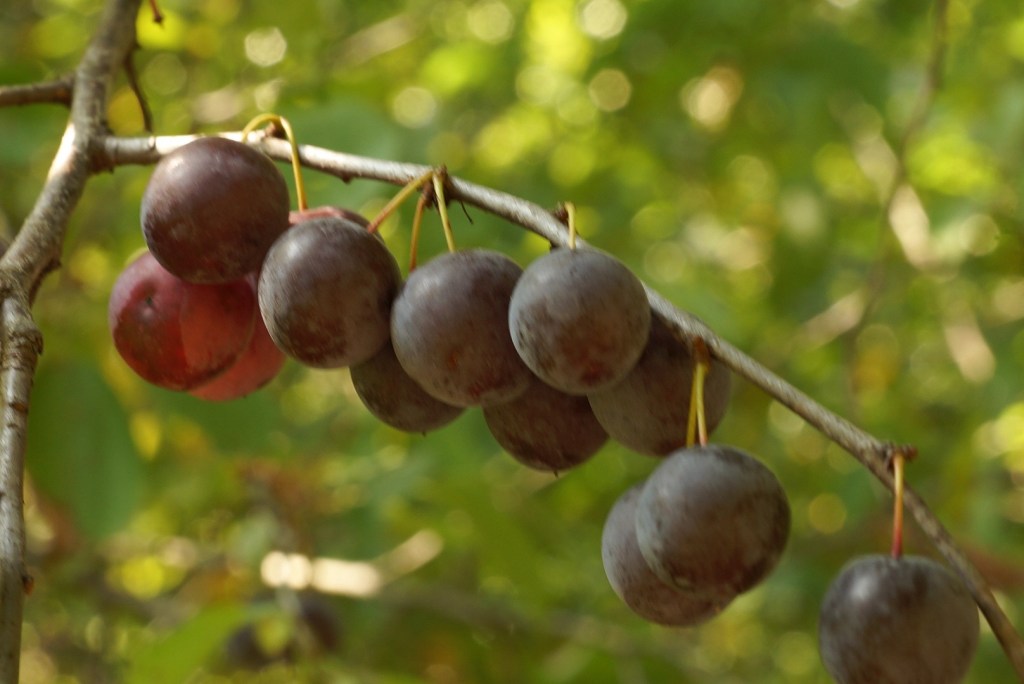
‘Sweeta’ Wild Black Cherry fruit.

Wild Black Cherry Fruit Flavor

I made jam using ‘Sweeta’ Wild Black Cherry following a Sure-Gel recipe for cherry. There was no astringency, and the flavor was like a super concentrated form of black cherry. From this experience you could easily see its use for syrups and flavorings. It was an intense dark purple color almost black. I found it heavenly. The problem was collection or harvest. I had to cut one limb to gather the fruit for the jam. That is not sustainable obviously. Under cultivation this forest giant would create a challenge to keep the fruiting portion of the tree using shaking techniques to drop the fruit. It ripens over a long period of time and each raceme does not ripen all at once so there are unripe fruits next to ripe fruits so you have to let it go long in its ripening period. At the same time if you are investing in a fruiting tree, you want to harvest the logs at some point and fruit tree structure is normally not lumber quality structure. It is possible to create at least one saw log of eight feet prior to breaking up the crown into a more vase shaped open central leader system. This would make it possible to maintain the tree for fruiting without narrow crotch angles as well as having limbs which would be more productive for fruit. Treat it as a large sweet cherry tree in an orchard setting with a saw log attached. It is difficult to combine both wood and fruit together because they are usually the polar opposites of tree structure.

Wild Black Cherry Wood

It is interesting that a certain percentage of any hardwood tree species will produce strong apically dominant trees. It is just a natural tendency. From hackberry to coffee trees, you see these trees all the time and not just the fastigiate and pyramidal selections people find once in a while. For many years, I would drive by one wild black cherry tree down a slope near a major highway. This tree had a strong apical dominant leader with a strong pyramid shape with symmetrical branching.  It was probably not the best location because highway living even 50 feet away is not far enough away to incur the wrath of safety-first tree removal, death by car or salt damage. For a brief time, a few nurseries offered an Appalachian form of black cherry. These were super vigorous and said to have very good apical dominance from seed with minimal culls. How did they find these? Some of the largest trees not messed with by human hands were found in this region where the tree can grow to magnificent heights completely knot free. These parent trees made excellent fast-growing trees easily growing 3-4 ft. tall in one year from seed. This type of selection is the nirvana of tree discoveries. What is not good is that no one had the foresight to make additional future forest seed orchards.  If you build it, will someone come?  I think it is the thought that maybe it is not necessary, and this is why the no show in seed orchards.  Black cherry is all over. Why would you want to increase it even more? It really is an ignorant argument. At my farm I did begin a new selection process using new seedlings. One such tree is now 20 plus years old, and it too maintains its strong growth even while fruting.  This tree flew by the hybrid pears I am growing for wood production and became a leave-it-and-see- tree at my farm.

Someday people will visit and wonder, “What is this?” Is it a pear, a cherry or something in-between? The answer contributes to this enigma of Prunus serotina. It looks like nothing we know. It creates a mystery within a mystery of its existence and life on planet earth. And you thought it was just a cherry tree with too many chromosomes.

Enjoy. Kenneth Asmus
Posted in Diversity Found, Ecology-Biodiversity-Integration, Miracles of Nature | Tagged , , , , , , , , , , | Comments Off on Diversity Rises in the Forest: Wild Black Cherry

Cactus Town

‘Elaine’

I saw it first on a walk with my daughter near a sidewalk. As we rounded the corner, a cardboard sign alerted us saying it was  “Free’. There it hung on a bamboo stake neatly tied by a small piece of string.  Below the sign a cactus sat waiting for a new home. Unearthed in a green plastic pot, the cactus winked at me with its possibilities as I walked by. Afterall, I did have a familiar face. I have grown cactus since I was a child. It was the first plant I had ever grown located directly above my underwear and sock drawer on a dresser top. Today this sidewalk cactus became the cast away plant that a human no longer needed as a flowering perennial in a landscape. It proved too much of a risk. It had big sharp thorns. It had imperceivable small thorns which are almost impossible to remove. The bright yellow waxy flowers were a joy to experience yet there was a cost to this plant as a part of the back yard. It had to go. Maybe it was a new dog or a child. Maybe it was a new stabbing while weeding which then precipitated anger AND remorse. Who knows?  Yet, it was also too painful to throw out like other plants. You have some good feelings for the cactus.  You are attached to it in some way. I know these feelings of all-things cacti. I too had a lot of cacti at my farm. They ARE cool and so easy to grow. You want the cactus to be adopted by someone that has this openness to it and loves its natural traits. Is love too strong a word? Not for cactus. It’s accommodating and will grow pretty much anywhere. You don’t throw it out. You share it with the world. That is also the way of the cactus. It reinforces the value we hold for conservation and dissemination.  Human introductions are the joy of cactus. Let’s move it. Cactus can heal and provide food. Even today it is uncertain where the exact range of certain species of cactus is because it was used so much by people over thousands of years. Never leave home without a cactus pad. It soothes burns, stings and cuts and then can be planted to produce a fruit which also has strong health benefits.

Ecos Cactus

As much as I wanted to, I did not pick up the cactus and take it to my farm.  I left it for someone who has not yet experienced its wonder and glory. You see, I am still grieving. I lost my collection. All except one. Here is how that went down in my cactus town.

When I first started growing cacti at my farm, I did not have any living germplasm to draw on. I remember seeing a giant field of Prickly pear cactus on a biology field trip when I was a student at Western Michigan University. It was the largest patch of densely packed pads I had ever seen in Michigan then or now. It was easily a solid acre of cacti growing out of pure sand. Since starting my farm, I have been a big fan of seed production of everything. Cactus is easy to grow from cuttings, but I really was on the hunt for seeds. It turned out there are huge growers of cactus in the U.S., and some have the most wonderful seed lists I had ever seen of any genera. I started by purchasing seed from J.L. Hudson Seeds of different mixtures they offered. I grew them on a hill near a boulder I meticulously dug out of the soil in one of my planting beds. The plants began fruiting in three years. Some individuals within that seed mixture were not fully hardy into zone 5. I knew that when I purchased the seed, but it was enough to create my first from seed cactus. It was the edible fruit I was most interested in. I knew that cactus fruit called tuna could be used to make jelly and is said to have great health benefits like aloe vera.

‘Ecos’ cactus on the left and Plains Prickly Pear on the right.

Immediately I gave a pad of one of those seedlings to my mom who planted it next to the back door of her home at the time. There the cactus grew for the next 30 years.  My mom took care of my indoor cactus collection when I was going to college for many years. It made her laugh when I handed her the pad. She liked cactus too.

At the rate I was going, Cactus town was in a cycle of slow growth at my farm. It did have a low crime rate. There was no disease. Many species and subspecies of cactus especially the local prickly pear cactus were missing. I began purchasing plants from a few nurseries as well as eBay.  eBay came through in many ways because cactus pads are easy to ship, and you find them all over the country including the thornless-glochid free Nopal. Many people like the cactus in their landscape and sell pads off their collections in cultivation. It is easy and safe to do especially if you don’t have soil attached. I tried pretty much everything under the sun. I was trying to build up enough of a collection where I could produce seeds and grow them from seeds in my polyhouses.  I began using some of the prairie species from Illinois. Here in Michigan, several selections were given to me from employees who had them in their yard or knew of someone who had wild cactus on their land in some capacity. Finally, between eBay, seeds from collections and wild Michigan cactus, I had enough diversity to produce cactus from seeds. Cactus town was rapidly growing and the rows of them were akin to cactus suburbia. They grew well in southwestern Michigan even with minus 20 F in the winter occurring several times.

Plains Prickly Pear
Rafine Prickly Pear

To grow cactus from seeds is easy. You whizz the fruit in a blender and then strain out the seeds. The seeds are incredibly hard, and the blades of the blender do not grind up the seeds. We would sometimes run it in reverse to prevent damage on some seeds we did this way.  Be prepared for massive amounts of clear gel which is very thick. The whole blender mix would turn to a clear slime with only a handful of fruit.  After the seeds are washed thoroughly through a screen, we would put them directly in a flat of a 50-50 mixture of Canadian peat moss and sand. The flats were heavy after they were watered. The seeds were tamped in just under the surface of the soil. It took a couple of winter cycles outdoors in an unheated polyhouse before they sprouted fully.  The seeds I was most excited about were species of cactus found in cultivation. I was potentially hoping to find hybrids with good fruit production and with unique low or no thorn selections and large succulent pads for eating.  During this time, I found several specialty cactus companies with available seeds with distinct origins like the prairies of Alberta, Canada or the coastline of New Jersey. This combination quickly improved my cactus town in terms of diversity. What I wanted most was full seed production of cactus. This was now possible because the fruiting was complete and some hybrids began to show up in the progeny as well. Now we have cute little baby cactus.  When people who propagated for me began planting the cactus flats, they always remarked how cute the little cactus are.  They were very cute. Maybe not baby hippopotamus cute, but close in the world of plants.

Cute Plains Prickly Pear

I was not aware of a looming problem coming. At the time we were just doing polyhouse production of cactus and nothing else. This allowed the dry winter months to put the cactus plants into dormancy very efficiently. A dry winter cactus plant is critical if it’s going to survive long. The pads are shriveled and lose a large portion of their water.  As time went on, winters were becoming warmer with much more humidity in the soil and air. There was also less snow and little frost into the ground. This is the perfect conditions for cacti in winter and now it was in short supply. My stock plants outside suffered from a physiological disease called ring spot. Pads were dropping off quickly and soon I lost my ability to produce seeds. Even the plants in the polyhouses were affected because the cold weather was not dry. This was the beginning of the end of my cactus town. One by one through seven different plantings all in different locations died out completely.

There was one bright spot. The cactus pad I gave my mother survived. On one of the last days of closing the family farm, I took a pad near the house and moved it to my farm. Now it was the lone survivor and there it thrived unnoticed by me until I closed my nursery in 2021. Now cactus town had a spokesperson of the glory years and the great times we had together. I named it ‘Elaine’ after my mom. Today it sits under a few holly trees along a road. It beautiful clear yellow flowers take center stage in the summer but few fruit are produced in the fall. The few that are produced are a light green color with no seeds inside. It has no thorns and very few glochids. It looks a bit like a succulent of unknown origin.  It has foot long, crispy looking pads that even the deer with take a bite out once in a while. It reminds me of my mom and our beautiful family farm.

Every now and then I get a hankering for increasing my cactus collection again. It’s always the yellow flowers in mid-summer that I see through the grass. I take notice of the colonies along the highway not far from my home. For a while, one prominent thornless planting caught my attention every time I approached the stop sign near it. It was in front of a home and took up a 50 foot long bed. The next year it disappeared when the house was sold. This is the way of human and cactus interaction. Not everyone is a fan. Just last year someone discovered a prickly pear in the upper Peninsula of Michigan. Over the years, a few people have told me about cactus sightings in the upper Peninsula of Michigan. However, no one likes to share their locations because it falls into two equally destructive categories. One is the ‘not very bright idea’ when people want to destroy the colony because it does not belong and is considered not native. Number two is also a ‘not very bright idea’ but it has ‘extremely rare and desirable’ stuck to it. Here you do nothing and leave it alone. Either way it is the end of the colony.  I tell them not to tell me. I don’t want to know. It’s a secret. If you really want biological diversity to continue, you must move it. It shouldn’t be held as a secret by those in the exclusive club of botanists with hands-off attitudes.  It’s the cactus way to move. It can heal. It can save. It can provide nutrition. The cacti bring life to places where very few things grow. It’s a leader. Cactus lead and people follow their way to cactus town. Eventually we all meet in the middle thorn free and rich in life. That is cactus town and why everyone wants to live there.

Enjoy, Kenneth Asmus

‘Elaine’
Brittle Prickly Pear Alberta Canada Strain from Seed
Elaine serving coffee to her mom and my uncle.
Posted in Diversity Found, Ecology-Biodiversity-Integration, Miracles of Nature | Tagged , , , , , , , , , , | Comments Off on Cactus Town

Wildlife Camera 2024 Images

Deer-Moth
2022 image: Eating the Remaining American Cranberrybush Fruit from the variety ‘Movin to Montana’

Enjoy. Kenneth Asmus
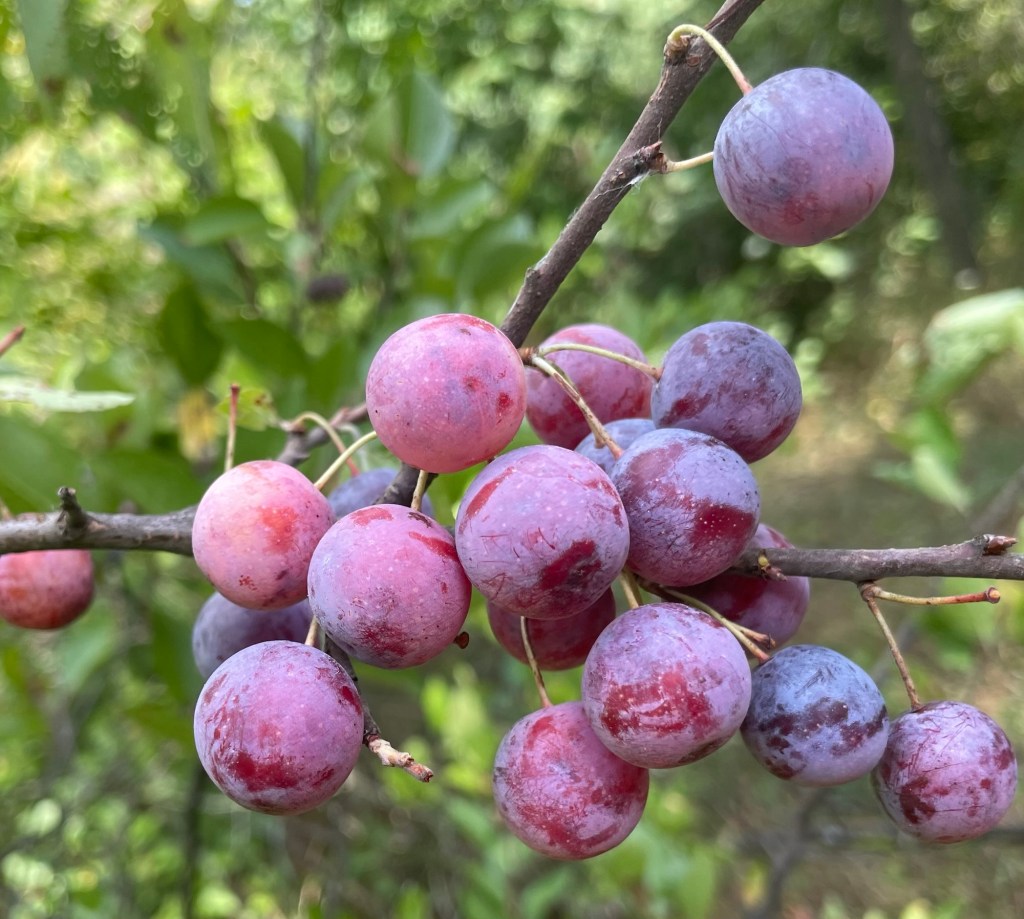
Posted in Diversity Found, Ecology-Biodiversity-Integration | Tagged , , , , , , , | Comments Off on Wildlife Camera 2024 Images