
When I first started my nursery, I soon found many nursery people who were in the plant business handed down in their family. Many had large acreages devoted to plant production. Some were connected to the Christmas tree industry and were producing millions of seedling plants for the landscape industry. They also had large cold storage facilities. My farm was 3 acres of seedling production with two small refrigerators and up to 7 employees at a time. I had this dune like sandy soil on the southwestern side of the state which is ideal for this type of production. There is also a lot of snowfall here which tends to protect the trees. The wholesalers often had several hundred employees to do the harvesting, processing, counting and grading required. The small retail nursery often had individuals who were not trained in horticulture or agriculture but had a passion for growing plants in some way. The business model for this is usually weak and rarely do they last past a decade. These were the ministers, police officers, engineers, degreed in the arts, schoolteachers, multi-millionaire business people. It’s amazing how many people want a nursery of some sort. I knew one that was never open to the public. Some were retired from other industries and essentially were making collections of a specific plant of some sort. Each of these individuals was part of the retail nursery industry and had found themselves in the sale of nursery stock. That is not an easy row to hoe but one they felt they could contribute to in some way. Again, they were often short lived.
Today the nursery business is even more challenging and difficult to navigate. A small backyard nursery is not sustainable unless you are using social media, and you are an educator and entertainer at heart. For me, I used the catalog system. Today that model is not as viable. Remember you are up against non-profits running nurseries, state land grant university nurseries, state level government run nurseries who regularly ship out of state, conservation industry and wholesalers. Some wholesalers have low minimum orders which makes inexpensive plants widely available. There are many uncertified nurseries with no inspection or licenses to produce or sell nursery stock. Some companies are partially funded by government grants. This is particularly true of native plant nurseries that almost always have plant removal programs. Many bid on contracts for native landscape material for infra-structure projects. I find it disheartening only because people are being exposed to known carcinogenic compounds in the name of ecology.
My model was the mail order business. This is not the same as it once was partially because of the costs of printing and mailing. People do like to read catalogs if they are well written with good images. The catalog is like the vinyl of the plant business. This is not J. Jill or the fashion industry. The plant profit margins are tight.
ON THE ISLAND
The best aspect of the small individually run nursery is the ability to capture traits found in plants on a regional scale. It’s poor in terms of producing a profit but fantastic in its ability to do a turnaround on finding new plants, selecting them with new possibilities and then releasing them to the public. It is especially true with food plants. Most people ignore this category of nursery stock unless it is grafted trees. This broad stroke of selection, release and dissemination is critical in the years ahead of plants that are not known to be used in any current agricultural setting. It can include a vast array of exotic plants throughout the world including many unknown indigenous plants. The small nursery can fiddle with that because it has time and is not tied to any one single philosophy or idea entrenched in an ecology or agricultural textbook on the shelf. It is not commercial and scientists in modern agriculture will pretty much ignore you. You’re on an island. It is by designing this system of low budget, free of grant money trajectory allows you to leap tall buildings in a single bound. This is the nursery business model of tomorrow. How that translates into a profitable business model is yet to be seen but likely it will be advertising and social media that will help propel it into the future with success. It can’t be left to chance or as a free catalog in the mail like I did. People will respond with support for your mission and message whatever you decide to create and discover.
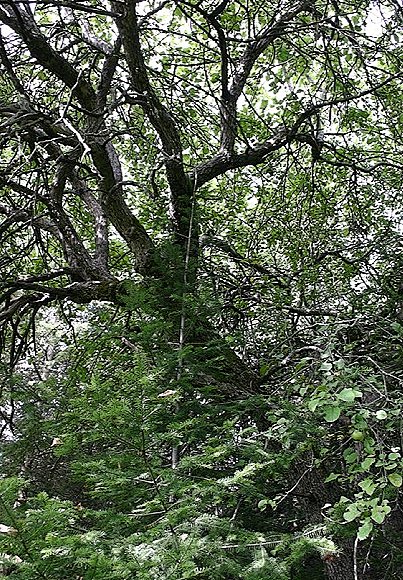
An Example: Improving the Apple Via Small Nursery
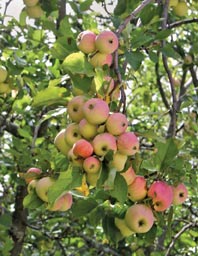
Apples are everywhere. It is the ‘cosmopolitan escapees’ that show the greatest promise. Here is a domesticated fruit, highly valued, which has ecologically integrated into the environment and roadsides. This type of selection is easy to harness in a small nursery. You collect a few bushels of fruit, process the seeds and plant them. A 50 ft. long by 4 ft. wide bed could easily grow a thousand seedlings. These seedlings spaced in 6 rows 8 inches apart are the future of your apple. You look for clean foliage as they grow. You look for a fast growth rate. At the end of the third year, you tag the plants that are well structured with clustered limbs, clean foliage and strong growth. This is what is needed in the apple. Who cares if your bed of trees becomes a tangled mess of apple trees. You can leave them there if you wish or just plant out the ones you want. You can remove the weak plants in the row to space out the good healthy trees in the process. You only need a pair of lopers. Maybe your new apple bed will be a blockade for light and sound in your yard. Maybe it will become a giant floriferous hedge filled with bees and pollinators of all types. Maybe it will create a huge mess of apples all splatting the ground in one giant load of saucey goodness. It does not matter because you now have a future with these trees and soon you will share it with the world. It could be grafted or maybe you will save the seeds of the best selections.
These trees are the beginning of your “breeding program” all done in a small nursery setting. No one cares about your apples at first. People may say it is a one in a million chance. Someone may ask you if it is native. It does not matter because your goal is to find no-spray apples. Your goal is a nutritious apple for syrup and cider. Your goal is to finally grow an apple free of bugs. This is only possible in your nursery because you care about the apple and how it grows. This is your island and soon it will grow to continent size if you tell others of your discovery, give it a good name and disseminate for all to enjoy. All of this is part of the small nursery industry and easily done. Your small nursery combines your life experiences and your love of plants. It’s only a story you can tell.
Enjoy. Kenneth


You must be logged in to post a comment.