Chinquapin Chestnut On the Move

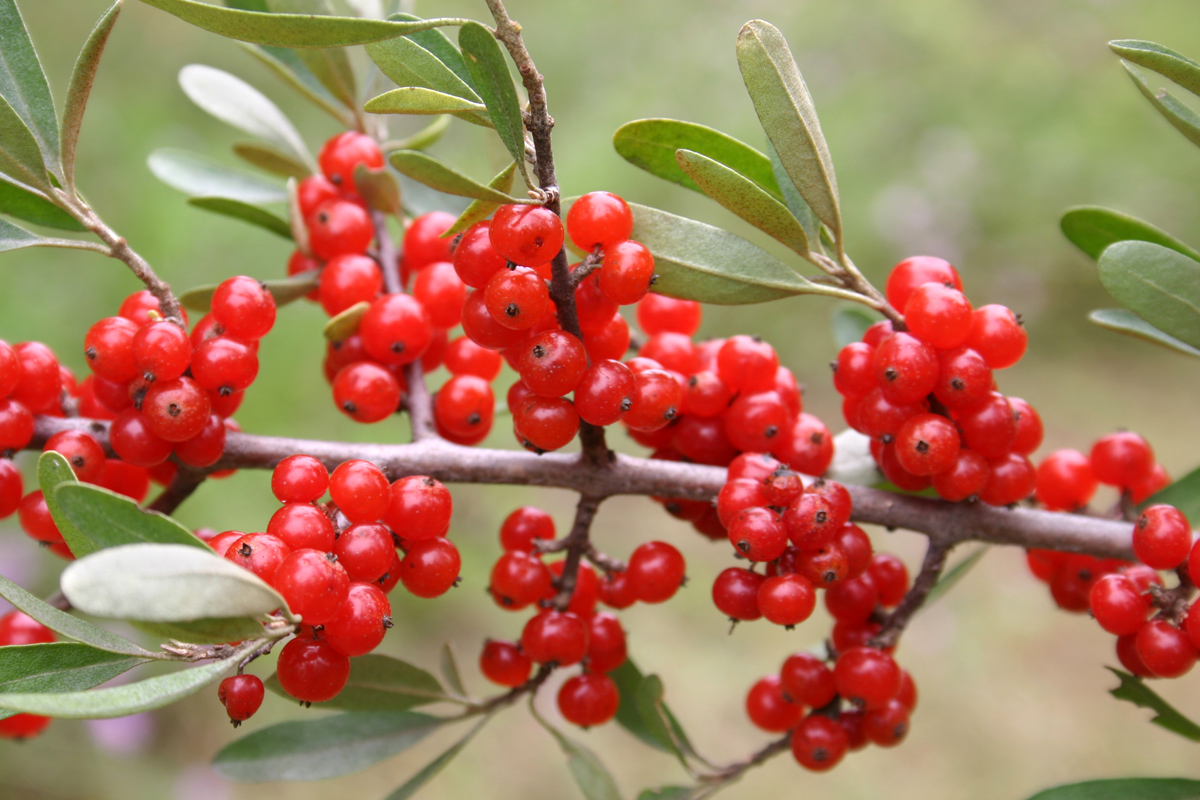
In the shadow of the hardwood forests of North America lies a well kept treasure rarely cultivated. It is a small nut shrub called the chinquapin. Unlike any number of chestnut trees cultivated or wild, the chinquapin is mostly thought of as wildlife food. For the most part people thought the nuts were too small to fiddle with. You cannot peel them like a normal chestnut. Nonetheless they are a great wild food easy to pick or shake while crunching away skin and all. From a cultivated point of view, the plants are precocious and fruit at a young age. They prefer a lightly acidic sandy well drained soil and can grow into zone 3. At my farm they took the minus 25F at my farm several times. The chinquapin is one tough little shrub with immense staying power. Despite chestnut blight and changes in the forests over time much of it human induced, it is still here cranking out nuts like there is no tommorrow. I became super absorbed into finding this rare treasure at one point and began producing it at my farm. The little shrub that could was not particularly easy to find in commerce either in seed form or seedling. Apparently no one was fiddling with it. I had to find out why.

My first introduction to the plant came from a nursery mentor that lived near me. It was right after college and he operated a wildlife nursery out of his yard specifically for birds. He only had one shrub. As a result, no nuts. It needs cross pollination with another of its species, Castanea pumila. The cute little burs would form but with no nuts were inside. It was a joy and frustrating at the same time to see it in growth but no way to taste or propagate it.

About a decade later, I was at a chestnut farm in mid-Michigan. By now I had my farm and was producing seedling trees. They too had only one shrub and it was at the edge of the orchard. It had a few burrs but they too were mostly empty. Because the chinquapin was surrounded by a lot of chestnut trees of many kinds, there was some light cross pollination between the species and the chinquapin. But it was no chinquapin nut bonanza and no way to taste test those precious three nuts from that one plant. Eventually those went into my orchard plantings where one still survives today.

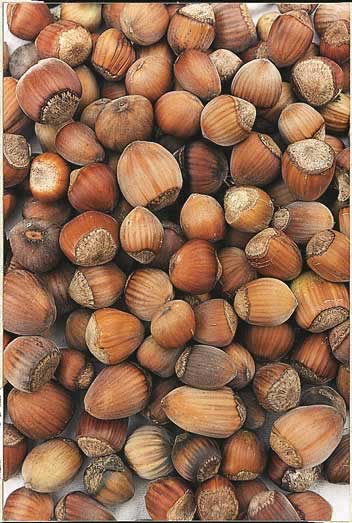
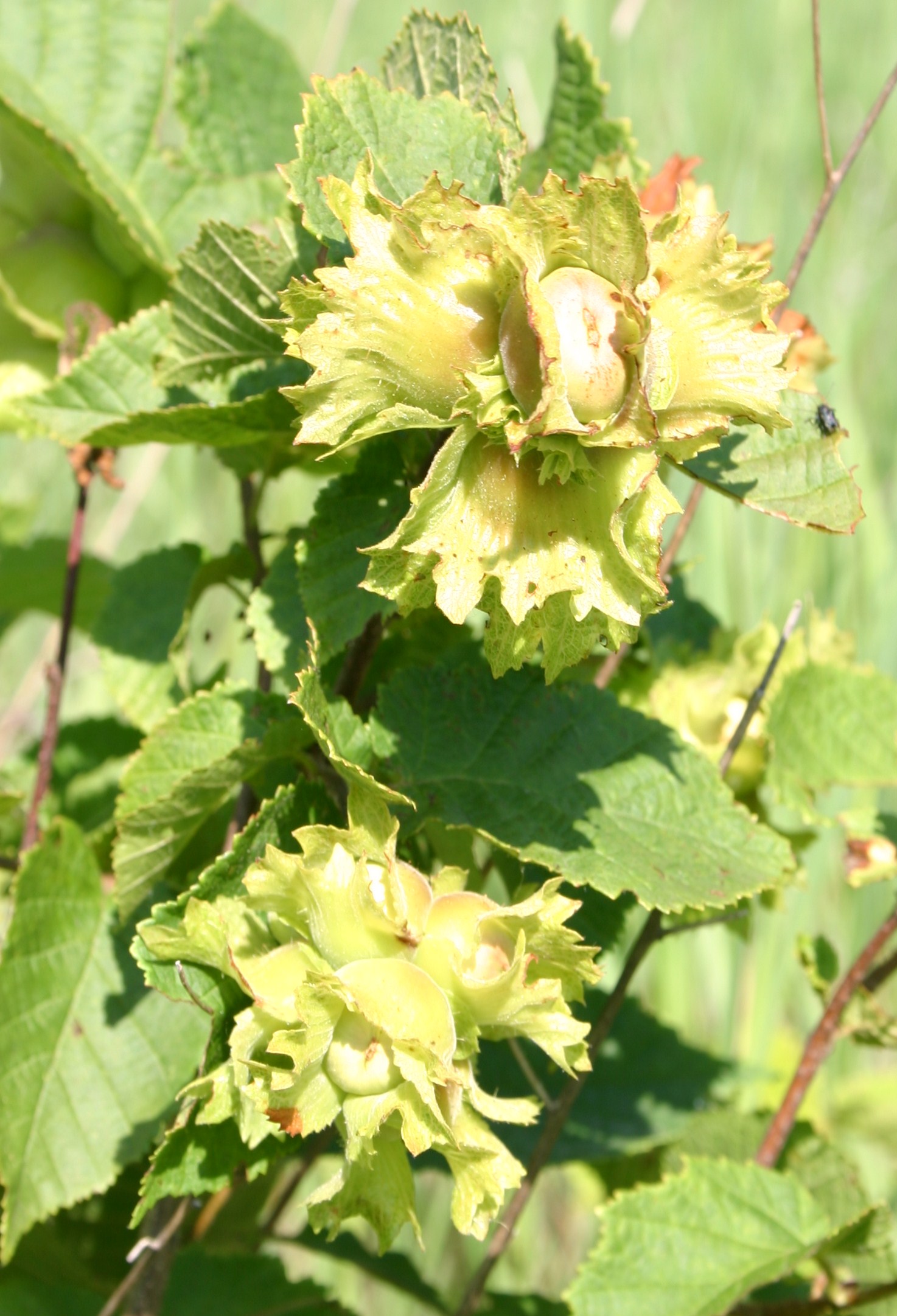
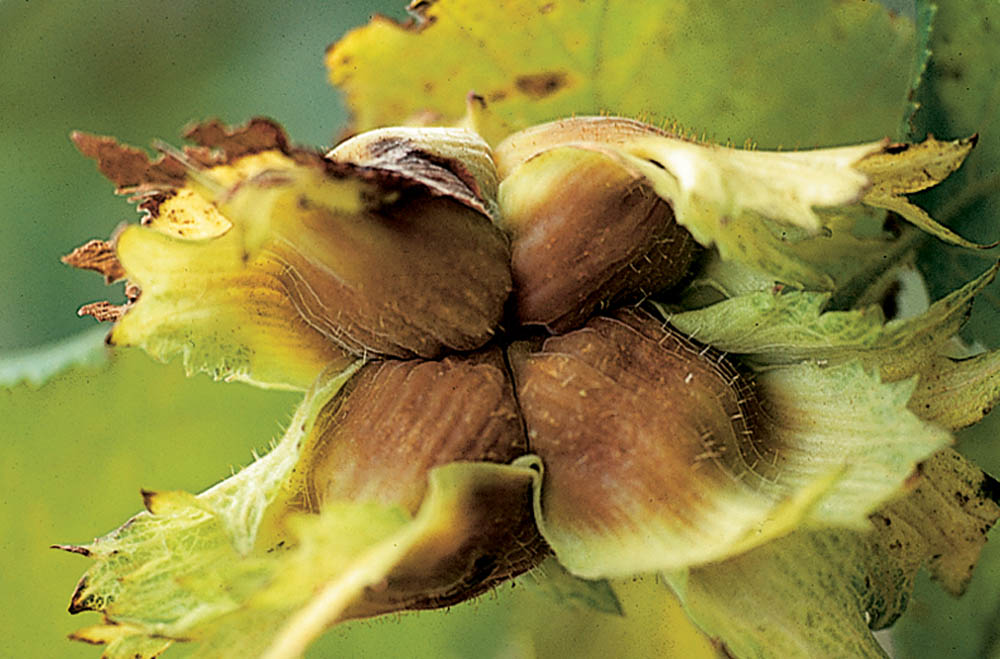
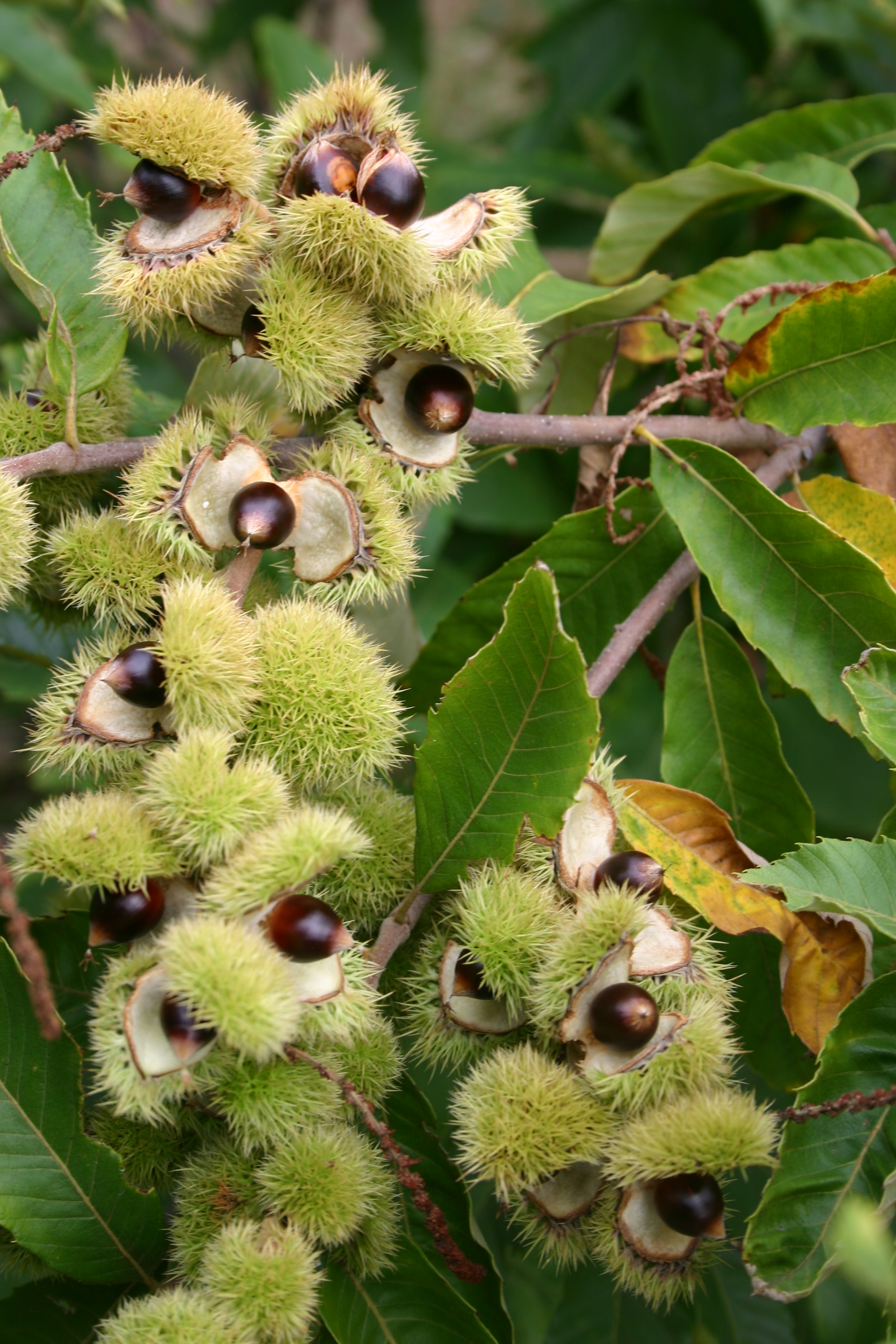
Hybrid chinquapin with small chestnuts and burrs. They too open up fully and expose their seeds to the birds to carry off.
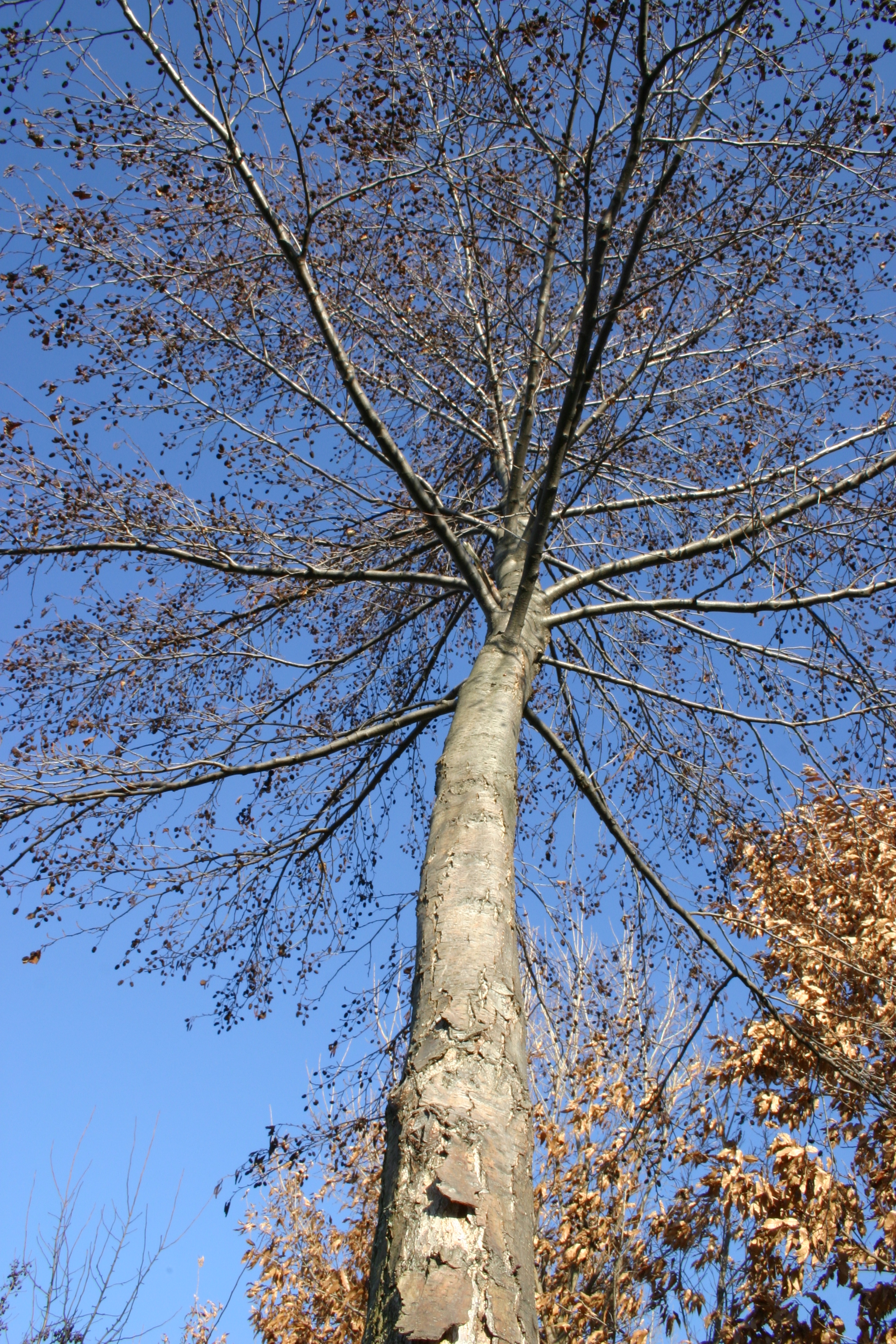
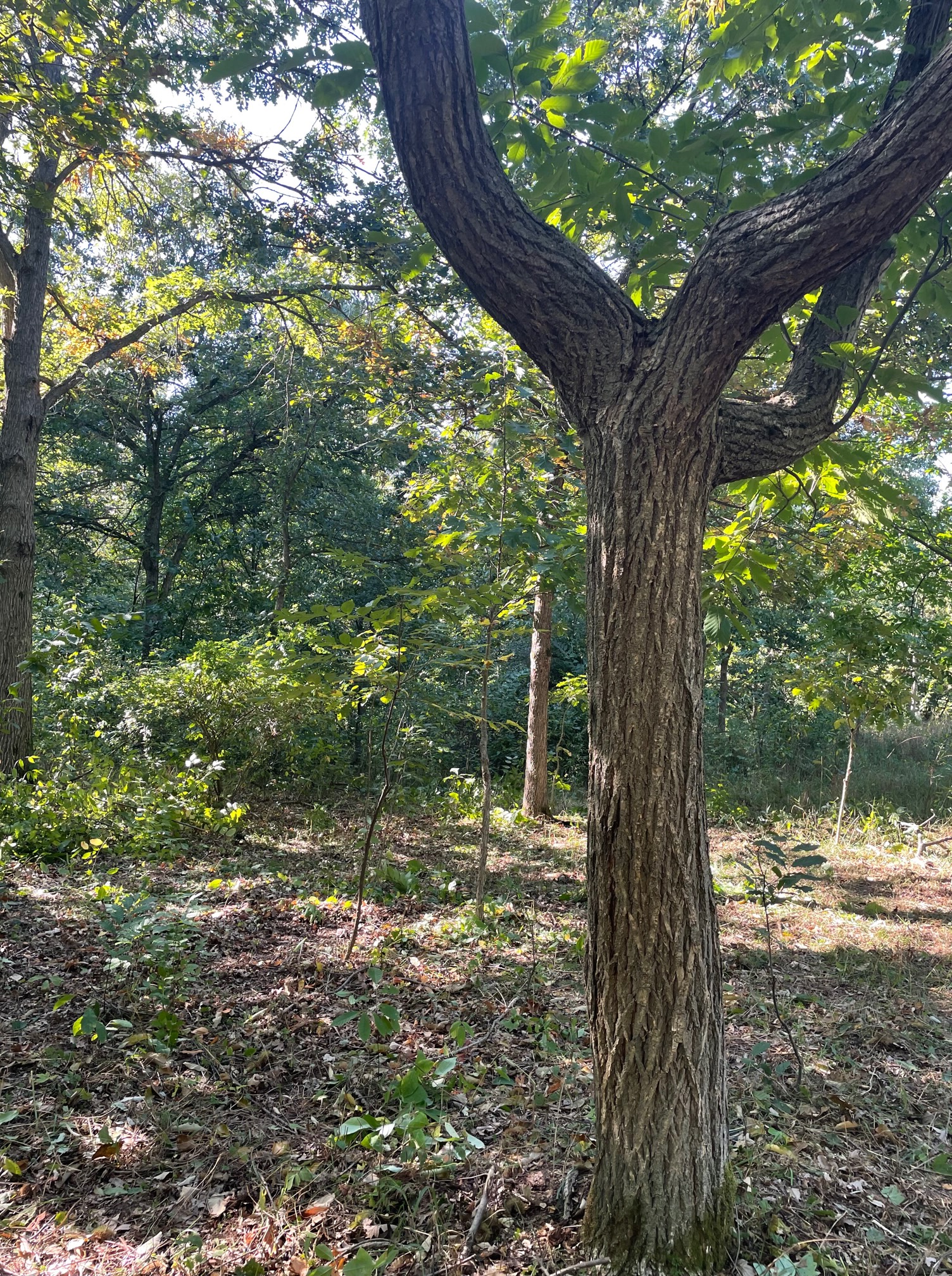
Hybrid chinquapin chestnut pruned upwards tree form.

I decided to create my own seed orchard. I ordered ten plants from a chestnut nursery in Ohio who had a group of ‘pure’ non-hybrid fruiting chinquapin shrubs. Along with the hybrid plants these are the seed sources I still offer to the public. That particular seed source has been stable and fruitful despite everything around it including chestnut blight. I still have two out of ten plants. As time went on I found a seed dealer in the south that provided me with even a greater variety of subspecies found in the southeastern U.S. He was accessing wild trees which were difficult to find and even more difficult to get there at the right time to secure the harvest. Evidently the chinquapin family tree has a lot of branches throughout the U.S. Each subspecies is difficult to tell apart and in many ways are considered more of geographical variants. Some are more tree like too. The highly perishable nuts are difficult to produce a plant from because they sprout immediately after harvest. Refrigeration is not good. They rot super easy no matter how you attempt it. You have to plant them immediately. They are hypogeal in nature throwing down a root first in the fall right after the seed is fully ripened on the tree. After winter dormancy, then the top sprouts which then grows the tree. We were doing potted trees and holding them over in the polyhouses as they sprouted their roots into the pots.This was a tenuous means of growing chinquapin with a thirty percent loss but it did work better than any other method. We would mulch the pots to prevent them from drying out in the winter. This finicky nature I had experienced is the definitive power of the tree to establish in new areas. The birds carry the seeds away and every now and then drop them where they get covered by leaves or pushed into the soil by deer hooves while the root sprouts and goes deep within the soil. Even if the nut is ripped off its root and is consumed by rodents, the root is already established and is not going anywhere. As long as there is an epicotyl or sprout there is no need for the nut now. It has done its job. It produces a new plant. Once winter dormancy is set in, the epiecotyl or sprout can begin its growth in the spring after the cold period of dormancy. Its a good system. Don’t mess with it. Fit in.
Today the chinquapin has gotten new fans.I see them as non-profits, institutions and on social media. New ideas have come along with hybridization, wild forms of selected plants immune to chestnut blight, digging up and resuscitating old breeding projects of the past as well as just growing the plants as they are found in the wild with no so called improvement. Sometimes improvement is over rated. Not everything humans do to plants are beneficial in the long run. But it would be of great benefit to have additional population level plantings accessible to the public to help promote the crop. Hybrid plants may create a more precocious and delicious chinquapin with a larger nut. Nurseries are not likely going to produce it. It is too much work for them as they are scramble to stay alive. But eventually you could find it in a nursery devoted to such an endeavor and nothing else. Because the chinquapin is a native North American plant, it might get promoted on that level including the hybrids or selections. If there ever will be such a thing as a commercial crop, a shaker and a machine to separate the spiny husks and nuts as well as a means to de-skin the nut would be ideal. Like the pistachio of chestnut, chinquapin would make a good snack food. I happen to agree with a lot of people who insist the chinquapin is the best flavored chestnut in the raw state. It is quite sweet and has a very nice smooth texture. I could see where it could make a fine flour or make a great nut milk. You can also have the once in while wild snack food crunching away skin and all.
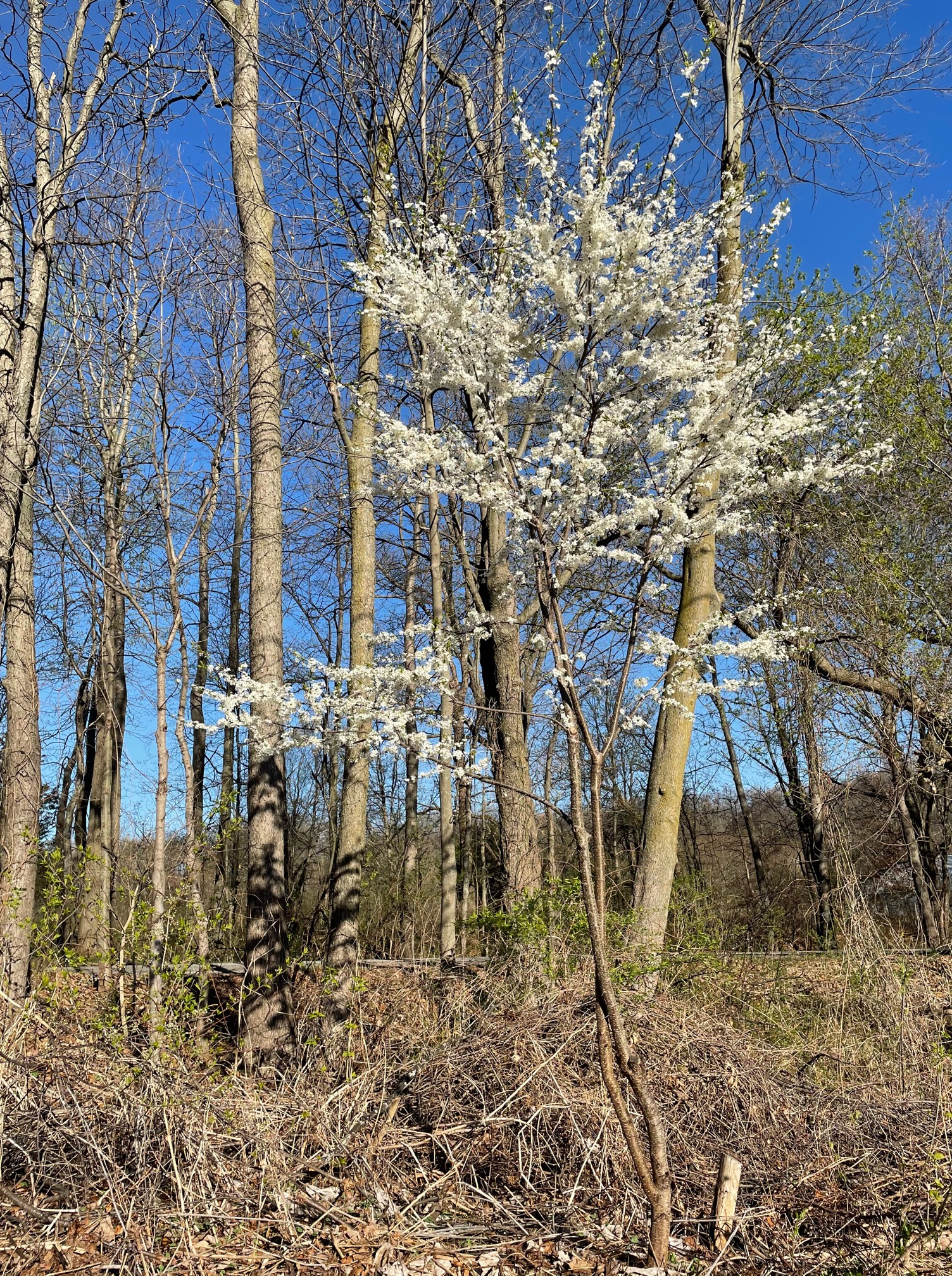
In many ways I get connected to certain plants because of all the experiences I have had with them. I tended to combine those over the years to try to grow something that others may benefit. That was my nursery despite making plants ‘commerce’. You become personally attached to those plants you grew or harvested. The last three years I made new plantings along a hillside where I lost a lot of chestnuts due to blight. I used the hybrid crosses as well as the species from the southern U.S. and put them in a single row hoping they will eventually cross pollinate each other and create full burrs of three nuts. This year a few started to flower and look robust. I planted a few potatoes around them as I mulched them with composted wood chips as if to welcome them to their new home. The deer took a few bites of foliage and added their calling cards. Chinquapin is on the move and I’m right behind it.

Enjoy. Kenneth Asmus

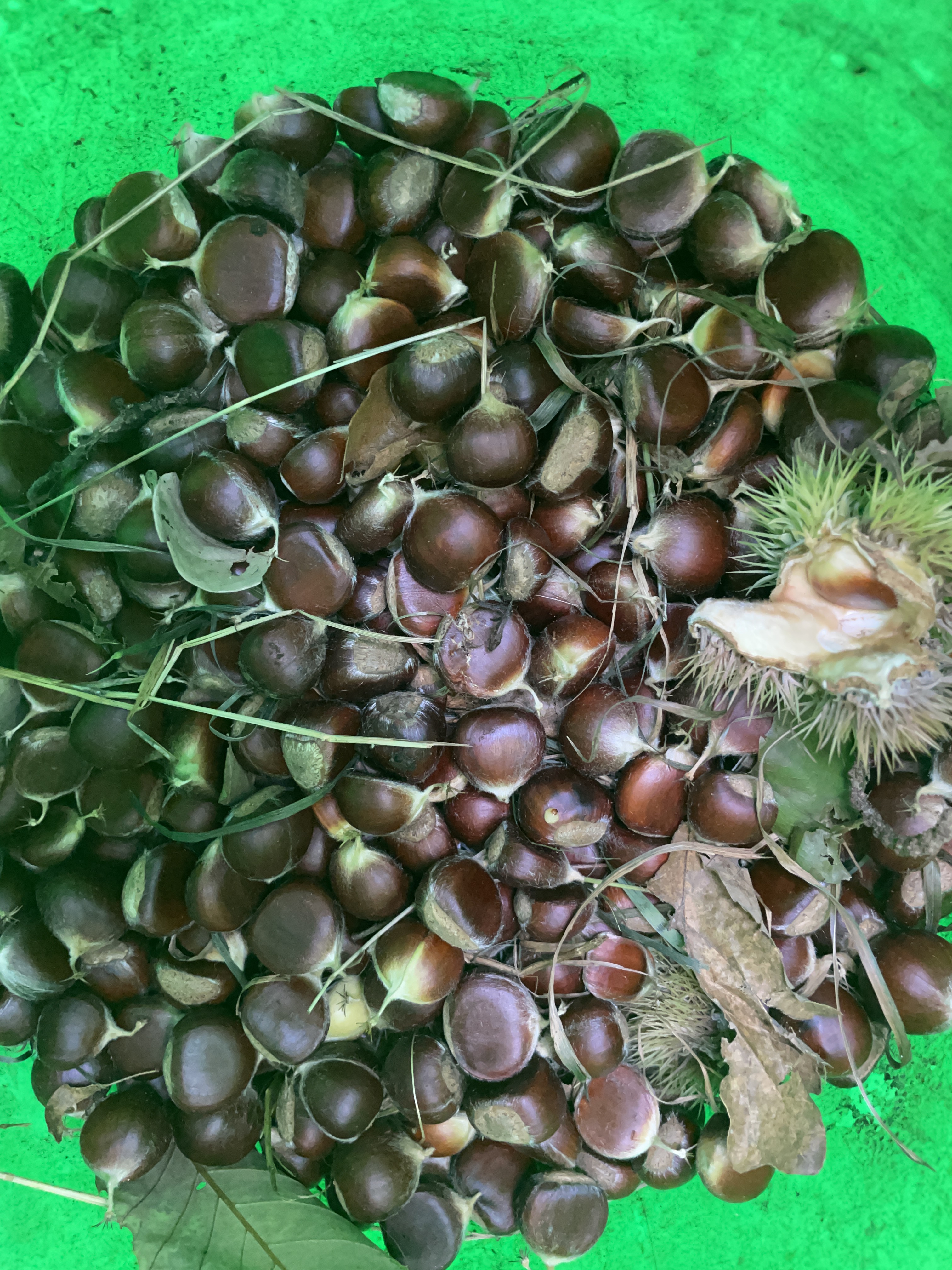
Chinquapin chestnut-non hybrid species type Castanea pumila
Posted in Diversity Found, Ecology-Biodiversity-Integration | Tagged , , , , , , , , , , | Comments Off on Chinquapin Chestnut On the Move

Hog Peanut Moves to the Light

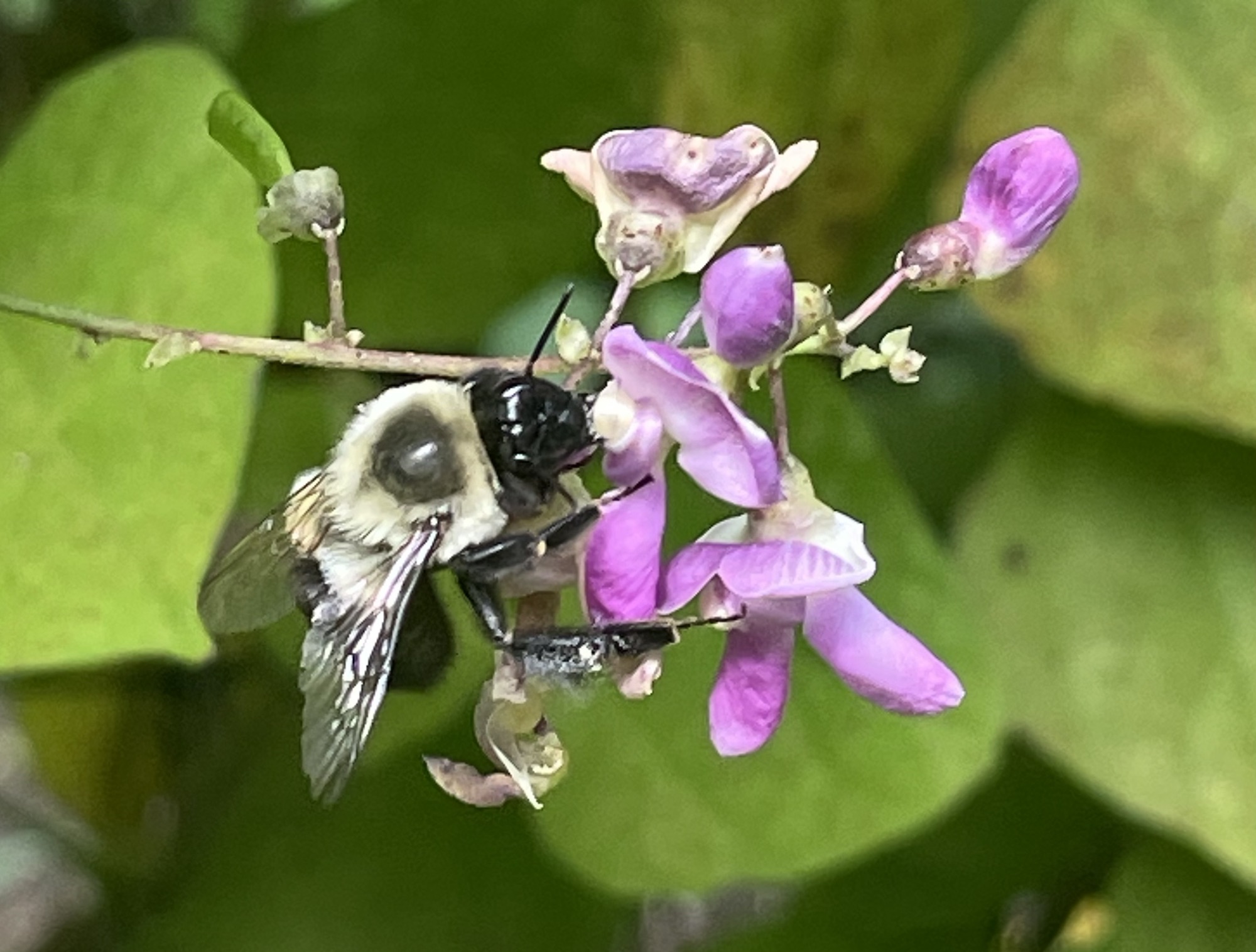
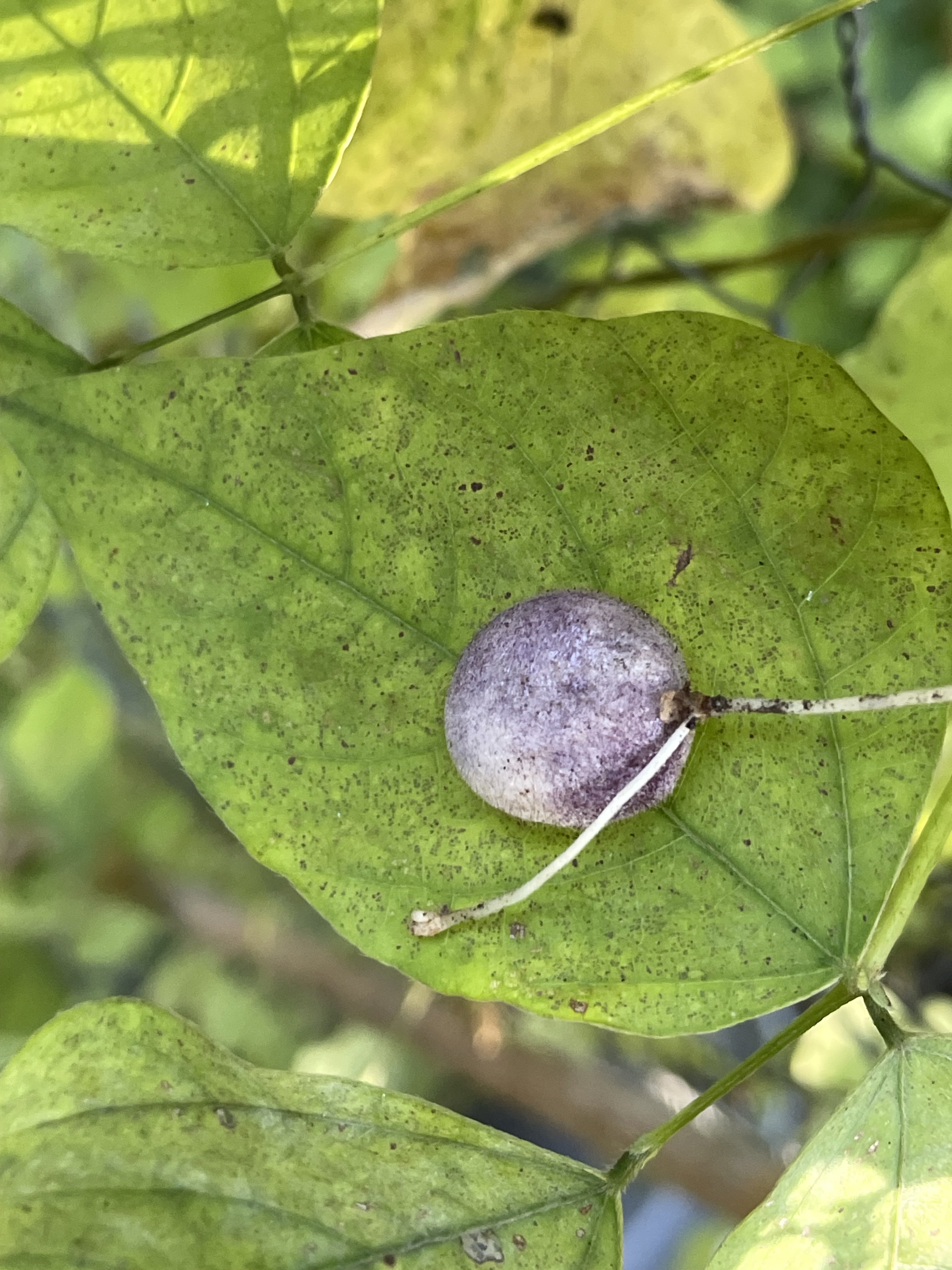
A heavy seed set is insured if the vines are grown in full sun and put on a trellis. This trellis is a four foot tall two foot diameter cone of one inch chicken wire. Pollination is done mostly by bumblebees.
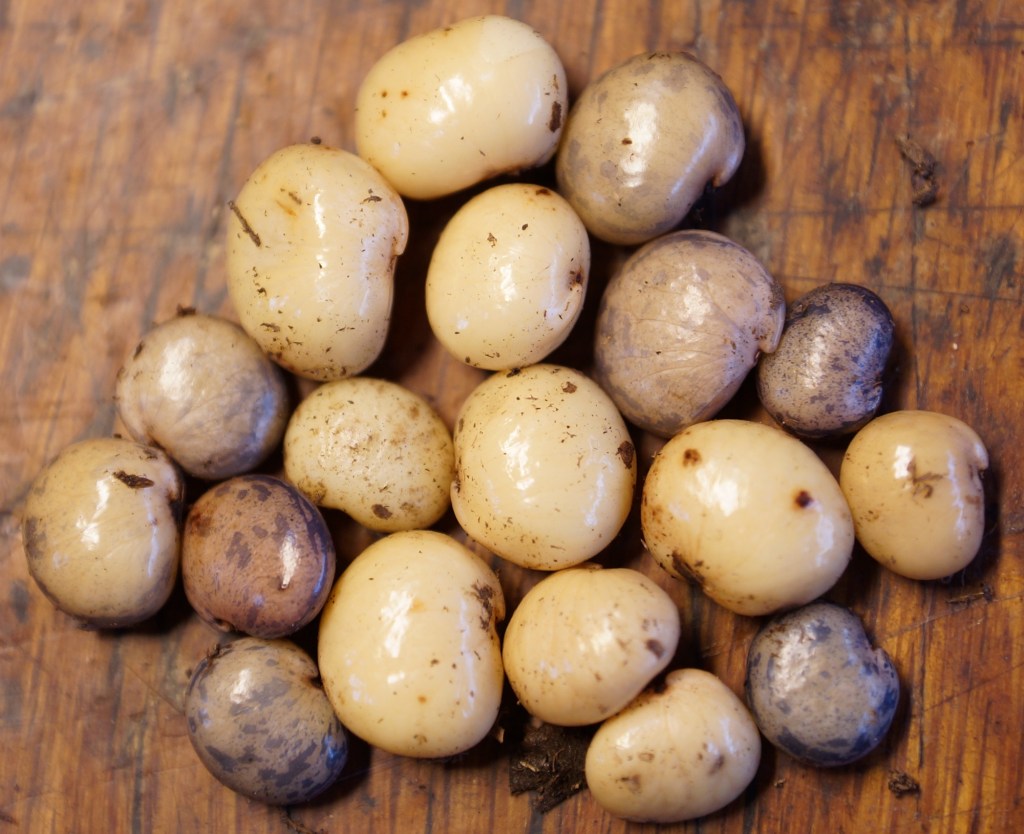
A small tuberous crop, hog peanut is harvested in the fall starting in early October. It forms on long rhizomes that develop directly from the vine and from the roots that spread from last year’s peanut. This variety called Crispy Snack was found at my farm and stewarded for a decade before releasing as a variety. It has larger than average tubers and is high yielding in aerial beans. It is from Michigan germplasm found in northern Michigan and given to me by a former employee and intern. Over time it likely crossed with the hog peanuts I have at my farm as well and created this unique variety.
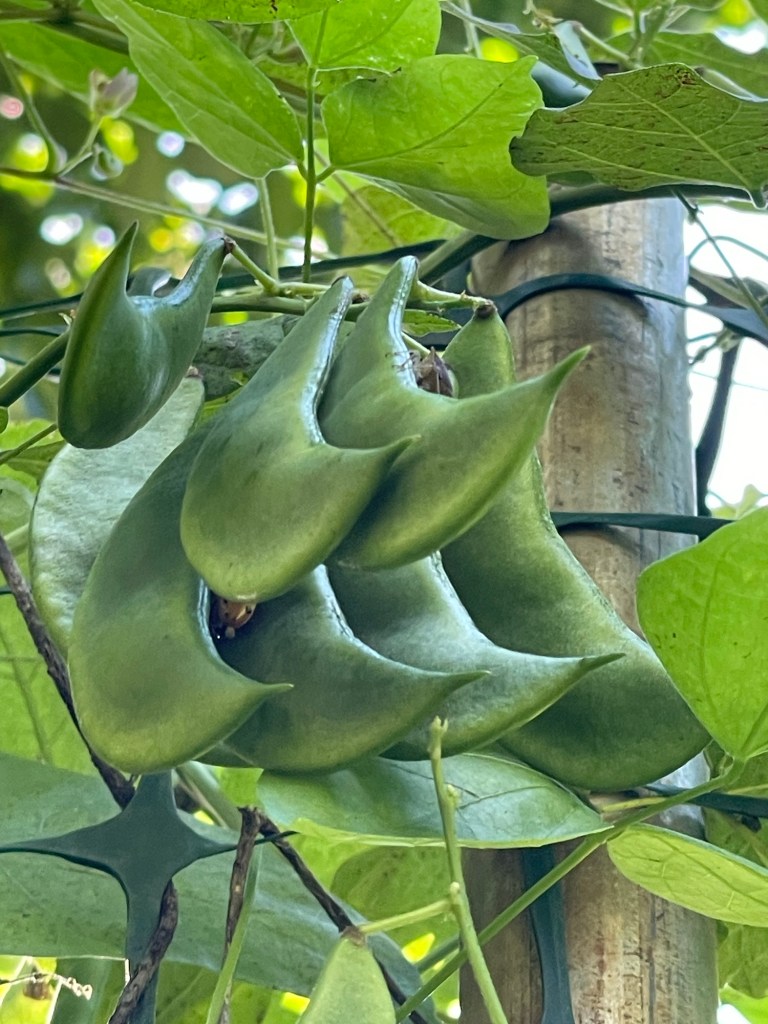
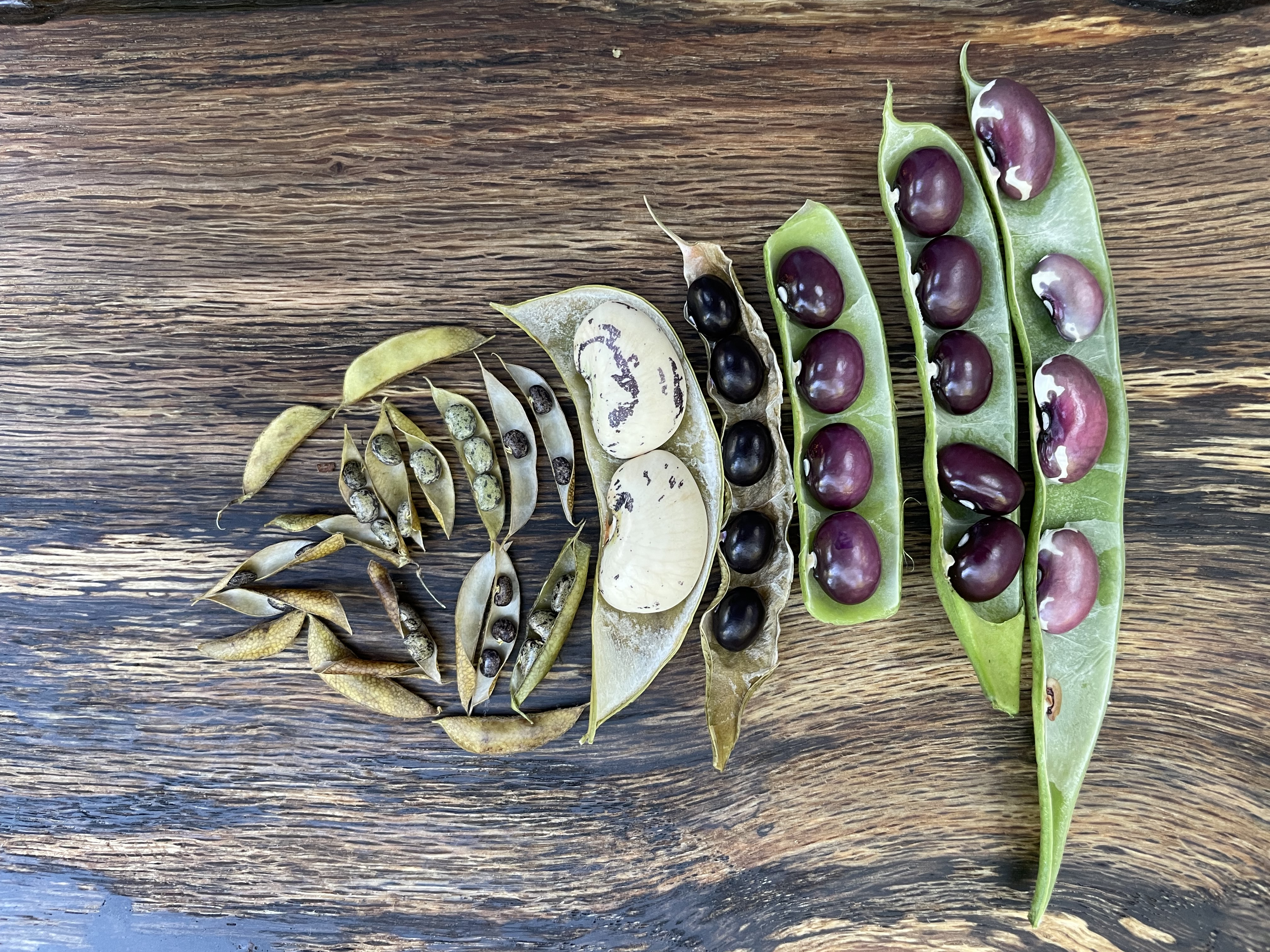
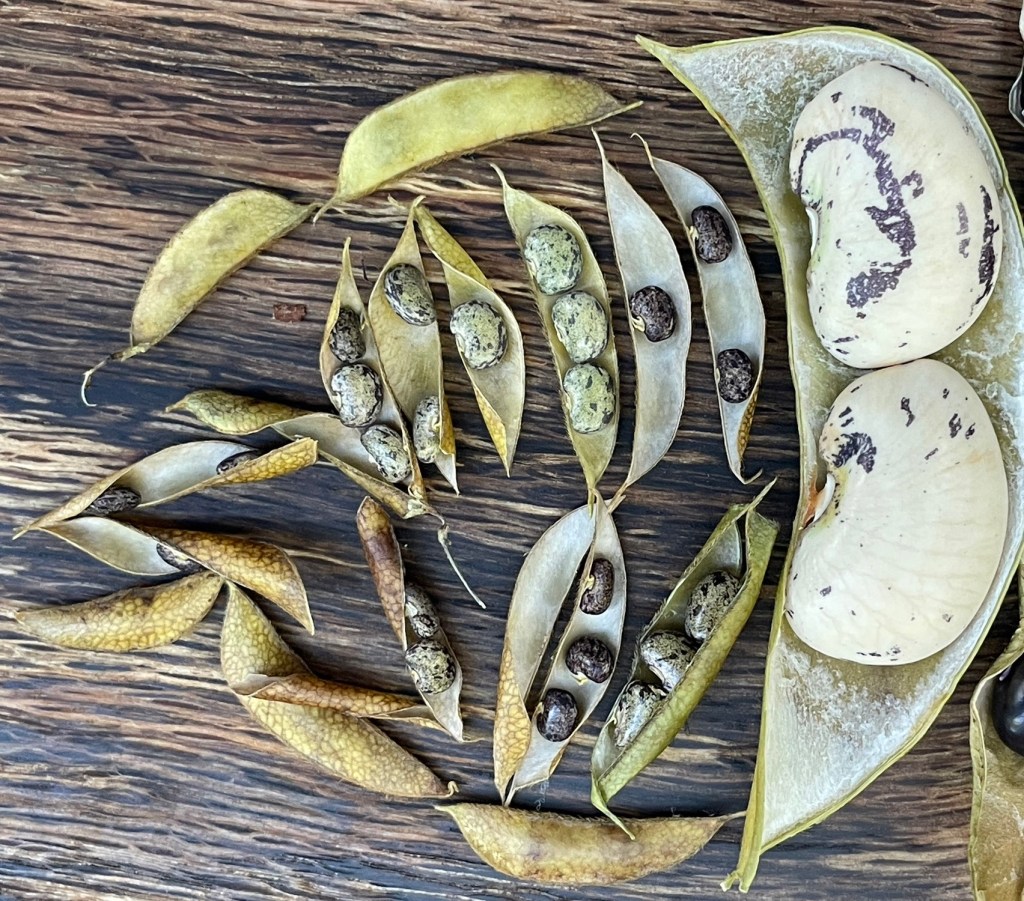
The small seeds are edible too and can be cooked like lentils. The pods produce 2-3 beans each and are very productive.
Seed production per plant is high and is useful to develop new varieties as well as an edible seeded variety for the aerial beans it produces. The pods twist to eject the seed at great velocity and distance.

Once a seed repository is built up including varietal selections like Crispy Snack, seeds can be used for the production of the tubers. You can pelletize the seed for greater uniformity and inoculate it with appropriate nitrogen fixing bacteria. It is two crops in one. Edible seeds and edible tubers.

The texture is very smooth with a creamy light buttery flavor in its raw state. The yields could be improved on as well as the way it is grown. It is one of my most flavorable tuber crops in the raw state. I just wish I had more of them to harvest. They are frustrating in terms of their low yields. I have plans made to increase the production of them for 2025. Seeds are available late fall this year. (2024) There are other individuals who have developed selections of them world wide that have focused on the tuber production. It wouldn’t surprise me the usually slow moving crop improvement industries of modern agriculture hoist one up related to its seed production. Maybe they are afraid of its invasiveness or weediness.

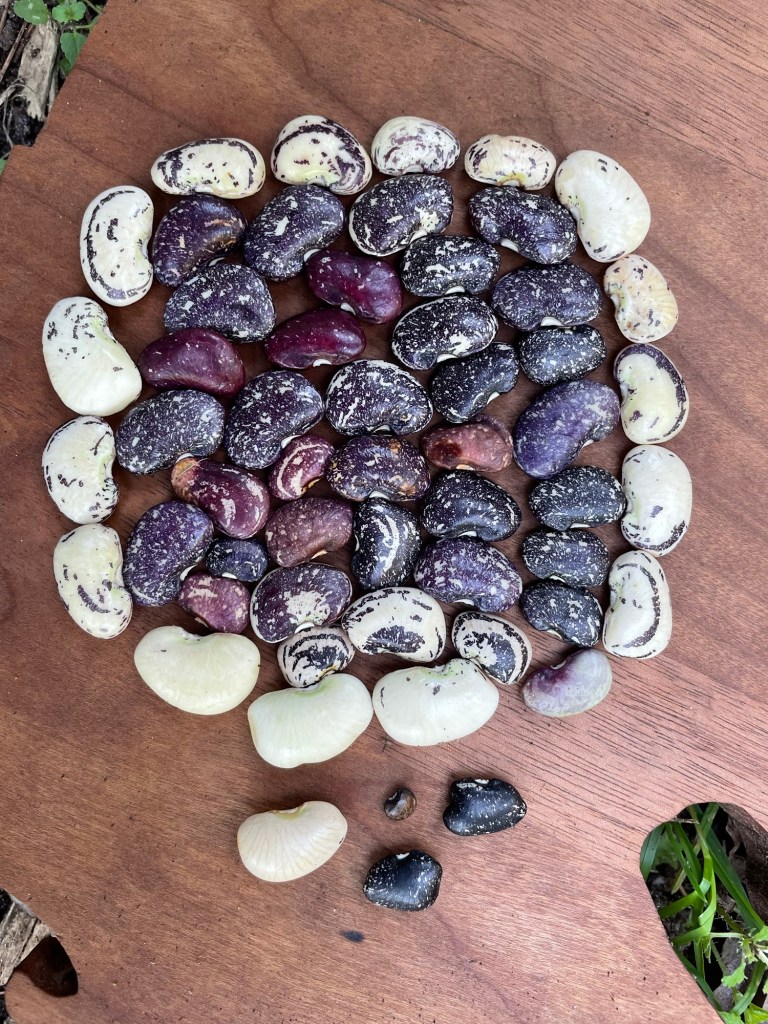
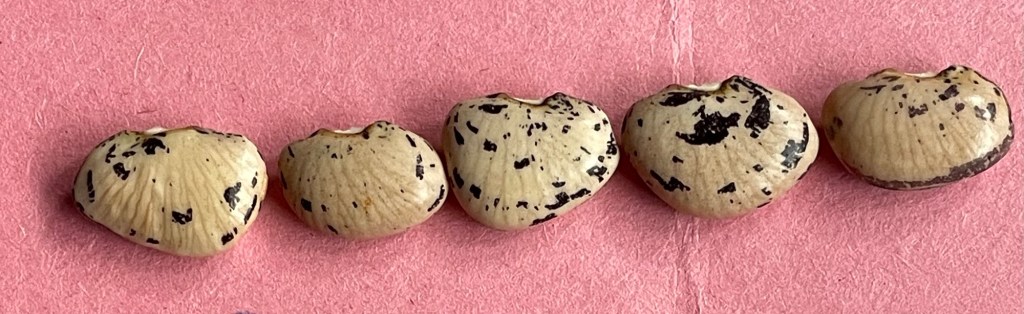
Left to right: Crispy Snack Hog Peanut seeds and pods, Lima bean hybrid, tepary bean (Dark Purple) hybrid, 1 dragon bean, 2 dragon bean and 1500 Year Old Cave Bean cross.

The light of day is also the light of our awareness which can shed light on the value of this crop and many others often obscured by our lack of knowledge of the natural world in its infintie variety.

Crispy Snack hog peanut tubers like all new root crops need conditions that are often not met in cultivation. For the hog peanut this low yielding rather stubborn tuber and its traits appear to be highly specific under certain conditions. Sometimes the yields are super high for one plant for no apparent reason whatsoever. What conditions those are and how they can be replicated is the next hurdle to overcome in this wonderful delicious perennial crop. In the meantime, this duo crop plant can produce both beans (seeds) and tubers too. No one has taken a look at what is within these delicious treasures in terms of its nutrition both the seeds and tubers. The seeds seem to have great possibilities to me in terms of growing and harvesting it within the existing technologies of modern agriculture. No need to gene edit. No need to create a massive breeding project. No need to raise money from individuals or government to make it a reality. It’s here now.

If someone wants to disparage the plant and says the ‘i’ word (invasive) then yelling fire in a crowded theater is not good. I have heard the lawyers of hog peanut have huge cash reserves and are ready for their day in court. How? But laying forward a path to a healthy and happy human being. Watch out. They mean business. This crop plant can take everything lying down on the soil while reaching high into the air. They win in court every time even against their fiercest adversaries who believe that the hog peanut is just a weed. Just a weed? Not possible.

Posted in Diversity Found, Ecology-Biodiversity-Integration | Tagged , , , , , , , , , , , , , , , | Comments Off on Hog Peanut Moves to the Light

The Perfect Plum

One of my early nursery experiences with another nursery owner on the west coast was with plums. He was producing an Asian species from seed like gangbusters. I started seeing them in the some of the giant retailers like Gurney Seed Company. He would crank out seedling Asian plum trees and then market them to the public as ‘new and improved’. I think his source was hardy into zone 3 and likely was the Ussuri plum. It is considered one of the world’s hardiest plums able to grow right up there next to zone 2. His nursery did not last long plus I was told he moved to a different country. I only knew of him as a company not in person. It was kind of a unique situation in that the fruit industry is totally using grafted trees of a clonal nature and here he was popping out a seedling tree of the same species for 45 cents. Obviously the fruit industry would not take this seriously and ignore his new and improved as yet another seedling tree. I was wondering if anyone every looked at the population of a well known cultivated plant that is only grafted? The answer was no. That is not how it works. The questions then become what is improved as a seedling and what is different about its use as a unamed seedling plant? And that really was and still is the issue. It does not fit into our nice categories of cultivated, grafted, clonal or seedling including new and improved. I want to know is this a valuable seed source and what can be expected if you did decide to grow it from seeds? I was going to find out.

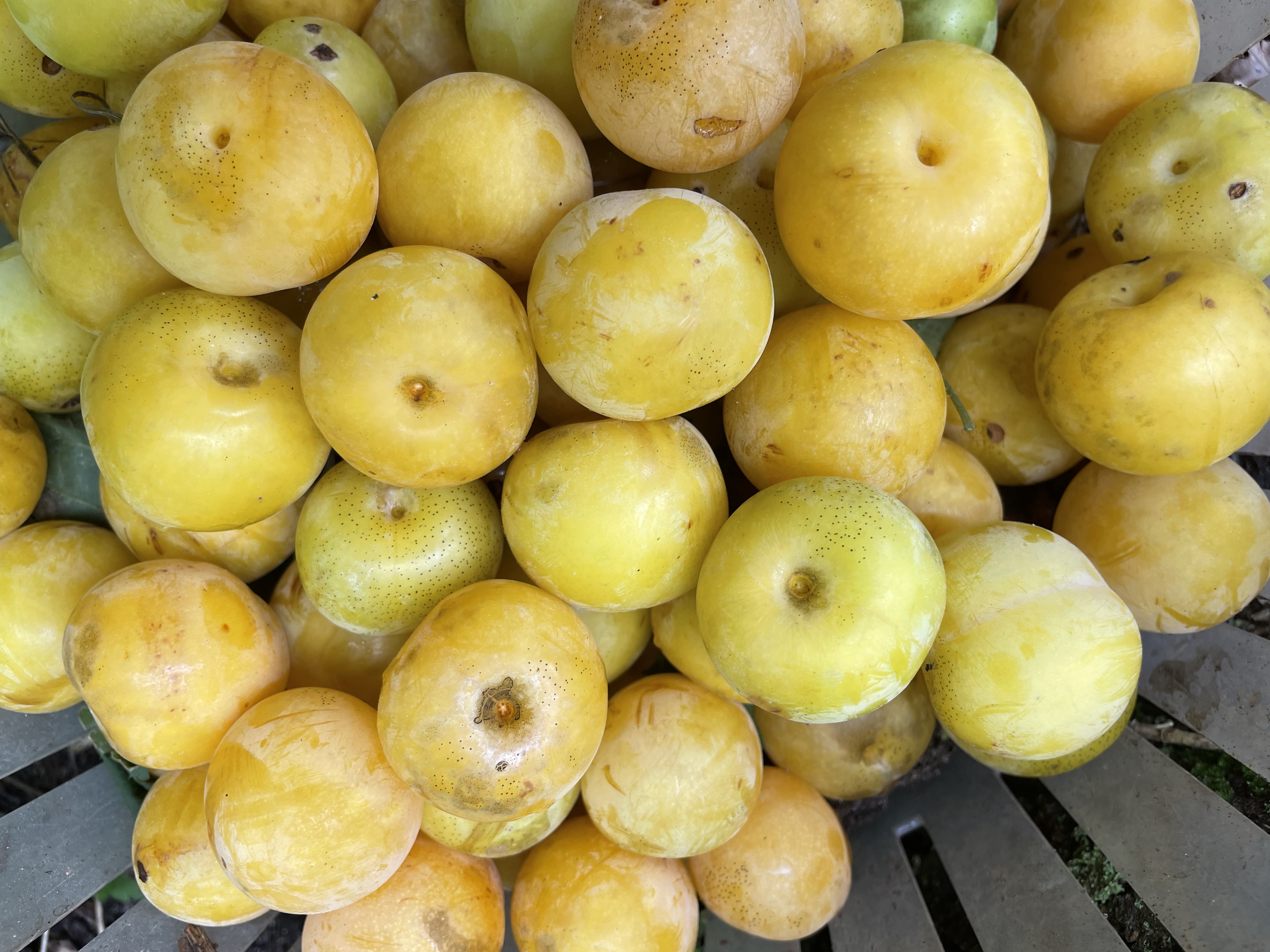
One year one of my friends had cranked out a huge volume of plums grown from a mail order retailer using grafted trees and possibly one of the west coast seedling plums at his home here in Michigan. He lived near me so I visited and found a massive crop on the ground when I got there. He let me harvest enough plums to process for seeds. It was definitely a seedling bonanza of Japanese plums. He had both the yellow and a large purple plum. They were very sweet. This species Prunus salicina is well known for its sweet plums highly cultivated throughout the world as “Shiro” and many other varieties all clonally produced. I had enough plum seeds and I produced over five thousand seedlings. Life was very good in the beginning with zero disease or insect problems on the trees. But eventually by years three and four black knot came calling and there was dues to pay for my care free selection process as my trees were in the real world now. Black knot disease exists on chokecherry and many other Prunus species. On some species, it has little or no noticeable effect. On others it encapsulates the branches and turns it into a ‘black knot’ filled with giant growths around the stems. The trees eventually die. My thousands of trees were soon exiting the real world for the land of mulch. I tilled them under. But before I rushed off to till, I made some selections that I thought were immune to the dreaded knot. There were very few maybe one per five hundred trees if that. The ‘new and improved’ was born in the form of black knot free. That was the only selection criteria. As those seedling trees began fruiting, I realized that the immunity was in more of a highly resistant category as I continued to loose a few more. However, this time it was only a small percentage. Sometimes you still had the disease but it was limited in its effects. Or in the Big Lebowsky way, sometimes you get the bear and sometimes the bear gets you. The fruits on the other hand make you forget your troubles when you first bite into them. The flavor is so sublime, sweet and full of rich juice. It is interesting in that the yellow color is the only color from the population despite using the red and purple colored selections. Purple was even more susceptible than the yellow turning into a deep fried tree. The immune trees are super vigorous often large reaching 30 feet easily. To me its a perfect plum. To others its just a seedling. I have a new area of several seedlings planted. I love to see the results despite not having enough room at my farm to do a lot of them. I planted them near a row of hickory and pecan hybrids as a type of understory tree. They seem to tolerate shade easily and still fruit.

Like any scientific endeavor, replication is the key. You need further plantings in new locations to secure the seed source and improve upon it even more. I know that new and improved needs constant attention to make it newer and even more improved than the original. That is the nature of seeds. And not just laundry detergent.

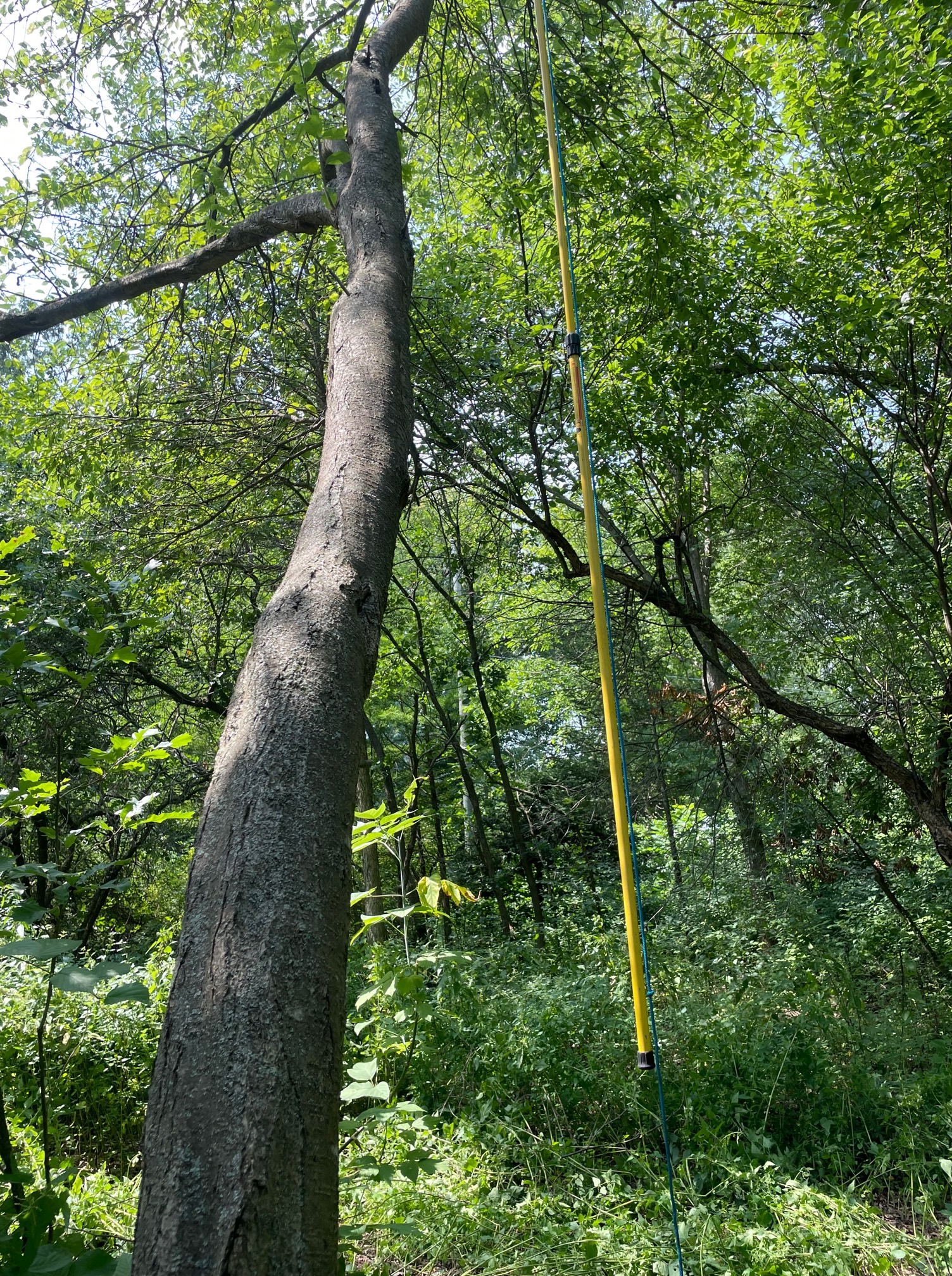
Forest like growth of the Japanese plum Prunus salicina var. ussuriensis From the original planting this tree has shown high resistance to disease for over 30 years. The disease itself also changes and will find a ‘work around’ so you need genetic diversity to stay ahead of the changes eventually passing the threshold of susceptibility. It all happens effortlessly within a population. Getting my pole pruner out of the tree as pictured above was not as effortless. I call it a wedgy.
Not too bad for no spray. Probably would benefit from neem sprays to lower insect and disease damage. Some worm damage occurs and those fruits drop early in the season.
A chipmunk planted young ussuri plum tree under pignut and bitternut hickory trees. This particular tree was incredibly fruitful but eventually was filled with black knot. I no longer use this seedling for seed as the yields continue to drop as the tree fades into the land of mulch. You always want to use trees that are immune to disease for seeds so those seeds will continue to produce another generation disease free and pass those traits on to the next generation. There is no real practical means to remove black knot. Pruning is only temporary and not effective. Some folks live in black knot free areas. These are often outside of the areas where this disease has never been found as it has no particular host plant upon which to survive. You cannot spread the disease via seed. The seed is impervious to getting infected. It has to be live stem tissue. Another advantage of growing a tree from seed.

Posted in Diversity Found, Ecology-Biodiversity-Integration | Tagged , , , , , , , , , , , , | Comments Off on The Perfect Plum

The Edible Rose

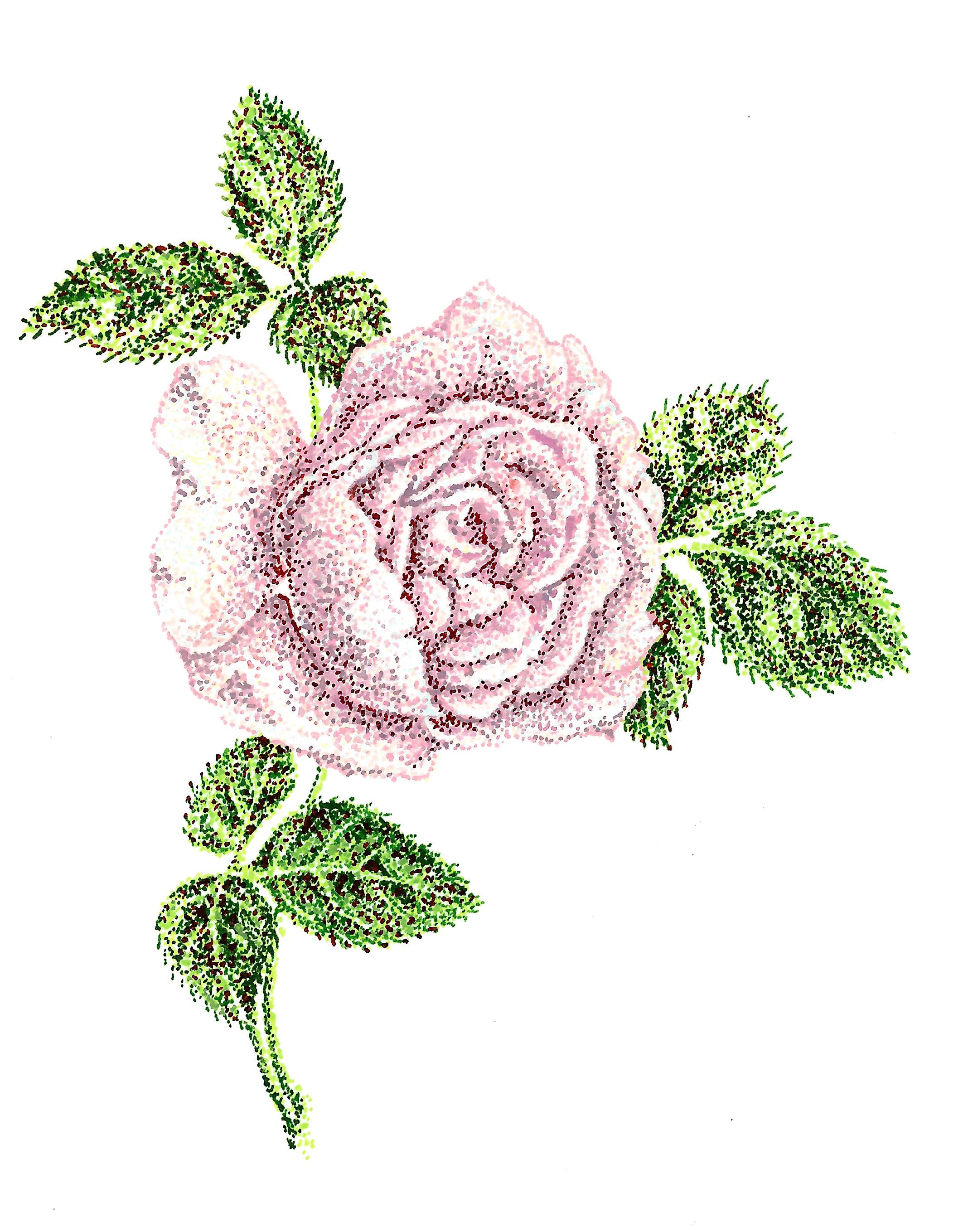
First rose selection done at my farm for its delicious edible petals

Starting in the early 90’s I started a collection of species roses at my farm. I would plant different cultivated rose seeds that I found in my area or wild roses I found on vacation. I placed the seeds in propagation trays to put them through dormancy outside in the polyhouses. Then we would pluck them out of the flats as they sprouted and plant them in paper and peat pots. It was a simple process to extract the seeds. When I found the hips on a certain plant I liked for whatever reason, I would take them to my farm and whiz them up in a blender and then decant off the fruit. I would put the seeds on a screen to dry a little before planting in the trays. In the nursery industry, there was only one or two species grown to any degree. In general, people had a fear of species roses because of the thorns and what is thought of as their uncontrollable nature. It was estimated at one point that 25 percent of all nursery sales in the United States were roses. Roses were grafted and grown in abundance in Texas. There are literally thousands of varieties of them. On the species level, there was maybe three or four.

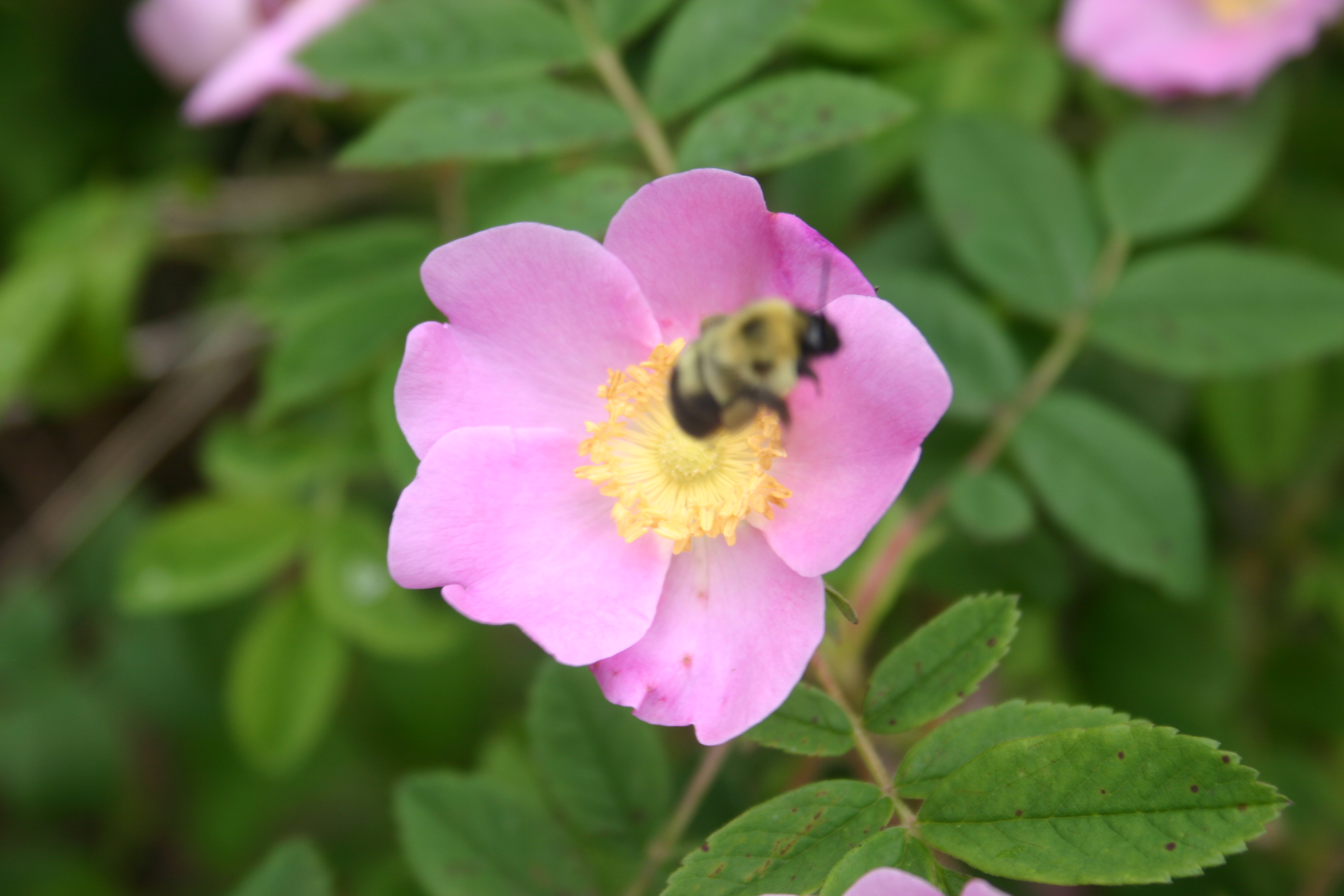
Davids Rose Rosa davidii This species grew well in Michigan.

I became focused on hip and petal production because of their well-known health benefits. As far as I could tell no one had bred roses specifically for this purpose. In the nursery trade it was the Rugosa rose for hips and nothing else. Damask rose was used for its petals for the Ayurvedic formula Gulkland made with rock sugar. I grew that species for a while but seeds were extremely rare as it was usually clonally produced. I knew I could find better examples that tasted better or were a lot easier to grow under cultivation. I was hoping to find more productive and longer lived selections and species. As far as I knew no one was looking at the global rose hip or petal production picture in terms of cultivation in the U.S.  Many countries had their own preferences or varieties developed. I was able to obtain seeds of some of these selections and began to grow them at my farm.  Everything that is within the edible rose market was imported. I was making rose petal jam from dried dog rose petals that I ordered from a local food co-op.  I loved the flavor of the Indian cabbage rose selections used in Ayurveda. Those had a long history of cultivation and use. The flavor was superior to everything else I had tried up to that point. I now had a goal for a flavor profile from the petals.

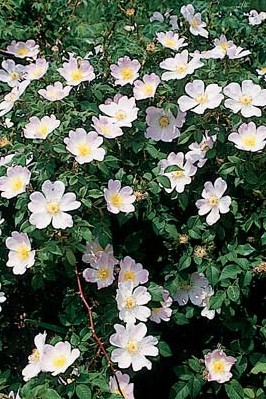
Wild Thang rose seed strain grown from seed. A hybrid with Rosa canina.

 I decided to start from scratch and grow them all from seed. Many were from arboretum collections all around the world. I also purchased pound lots of seed from seed dealers in the U.S. Because rose seed has an incredibly hard seed coat which is designed to go through the intestines of a bird, seeds processed by humans were usually good too. I found many rose hips on vacation on the shores of the Great Lakes as well as hips on ornamental roses. One of the ornamental types likely created the “Mary Jo” rose. (The above image)  It was my senior year in college and I lived about a mile away from campus. I had an old ten speed with horrible brakes that I used to get around on.  I overslept and was very late for my agricultural class exam on east campus. I had to take this one corner at the base of a steep hill very fast to get enough momentum to make it up the hill. The corner house had a wonderful garden of roses along a split rail fence. When I hit the curb and went airborne over the fence, the last thing I saw were the roses. I had the thought don’t crush the roses because I knew how much care and cost the hybrid T roses took. I did miss them and ended up in the lawn. The rim on my bike was completely bent and the people who owned the house let me store my bike there while I hobbled off to get to my exam late and beat up.  A decade later I moved to the area, and I decided to jog by that house. To my surprise, they still had the roses but not in the same density as before. I picked one of the hips near the road and extracted the seed. The hybrid T roses are highly bred and rarely have viable seeds. The hips are often a green fruit shaped like a cup with no seeds inside. The hips rarely ripen fully. But every now and then you get one large seed in the middle of the hip. This plant had one of those and I grew the variety ‘Mary Jo’ from it.  I since repeated this experiment using other highly bred roses with the hips harvested in November from public gardens where there is a good mix of varieties. It is interesting the progeny from these seed sources are so broken down genetically that rarely is there a plant that grows vigorously and healthy from the seed lots. I viewed it like breeding a ’race horse’ with few possibilities of winning the Kentucky Derby of roses. I loved the texture of the thick petaled hybrid T roses. Yet many of them did not have fragrance or flavor. The two go together. Even today when I see rose hips, I want to harvest them. Many times when I found certain selections, I would bring them to my farm only to realize there was no seeds inside. This is the world of over breeding and roses.

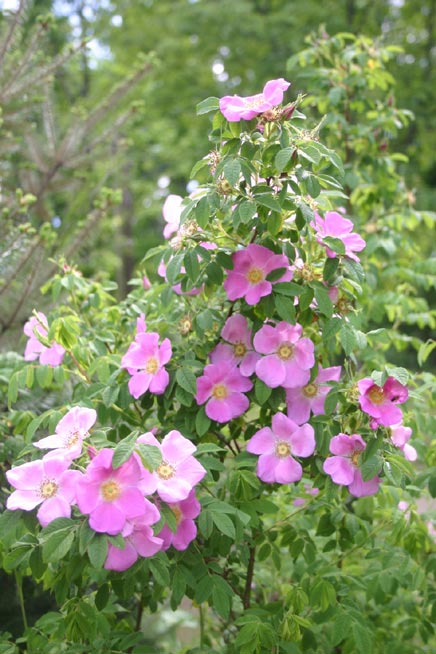
Prickly Wild Rose grown from seed from the upper peninsula of Michigan.

Many of the native Michigan species roses were very easy to grow from seed. There were many species that I collected in the Keewanaw peninsula in Michigan’s upper peninsula. They provided a nice selection of species roses for landscape use but they were not that flavorable or productive enough for hip or petal production. I did find one selection with a very strong bouquet and put it at the top of a hill at my farm. The whole area smells wonderful in early spring when this one plant flowers. It does not produce hips. This experimental attitude highlights the benefits of cultivation of roses for human consumption. Unless you test these species over time, you cannot appreciate or understand what direction a population is leading you in. Most people who breed roses are not going to fiddle with species. Like apple varieties, they need a cultivar at the end with a patent after their hard work. For me, I want a species population that is refined enough like corn varieties that can be produced from seed. It is more than making one or two selections. Unfortunately, I ran out of room. You need to have hedgerows of nothing but roses to test the whole system of cultivation for hips and petals. It is such a huge area of untapped potential. I think rose seed oil, rose petals and rose hips. Other people think Jackson and Perkins with the embossed metal tags.

In one of my grow outs, I found a small rose with intense fragrance and another with hips when only two years old. These greenhouse discoveries made me move several plants out to other areas of my farm to see how they would do on their own without spray or care other than sawdust mulch. It worked and today I have many very nice species types all established and growing on their own free of disease and insects. The hip production is significant. My original ‘Wild Thang’ roses were low yielding in hips but insanely vigorous and with large canes reaching up to 15 ft. long. They shared one unique trait. They had no foliar diseases. For a rose that is rare. At the garden center I use to work at, rose fungicides and pesticides were the leading chemicals in sales. No wonder people fear roses. You have to nuke the surrounding areas to enjoy them.

 Advancing the goals of a healthy environment and a healthy human being can create the means for coming out of the research of plant selection and smelling like a rose in the end.

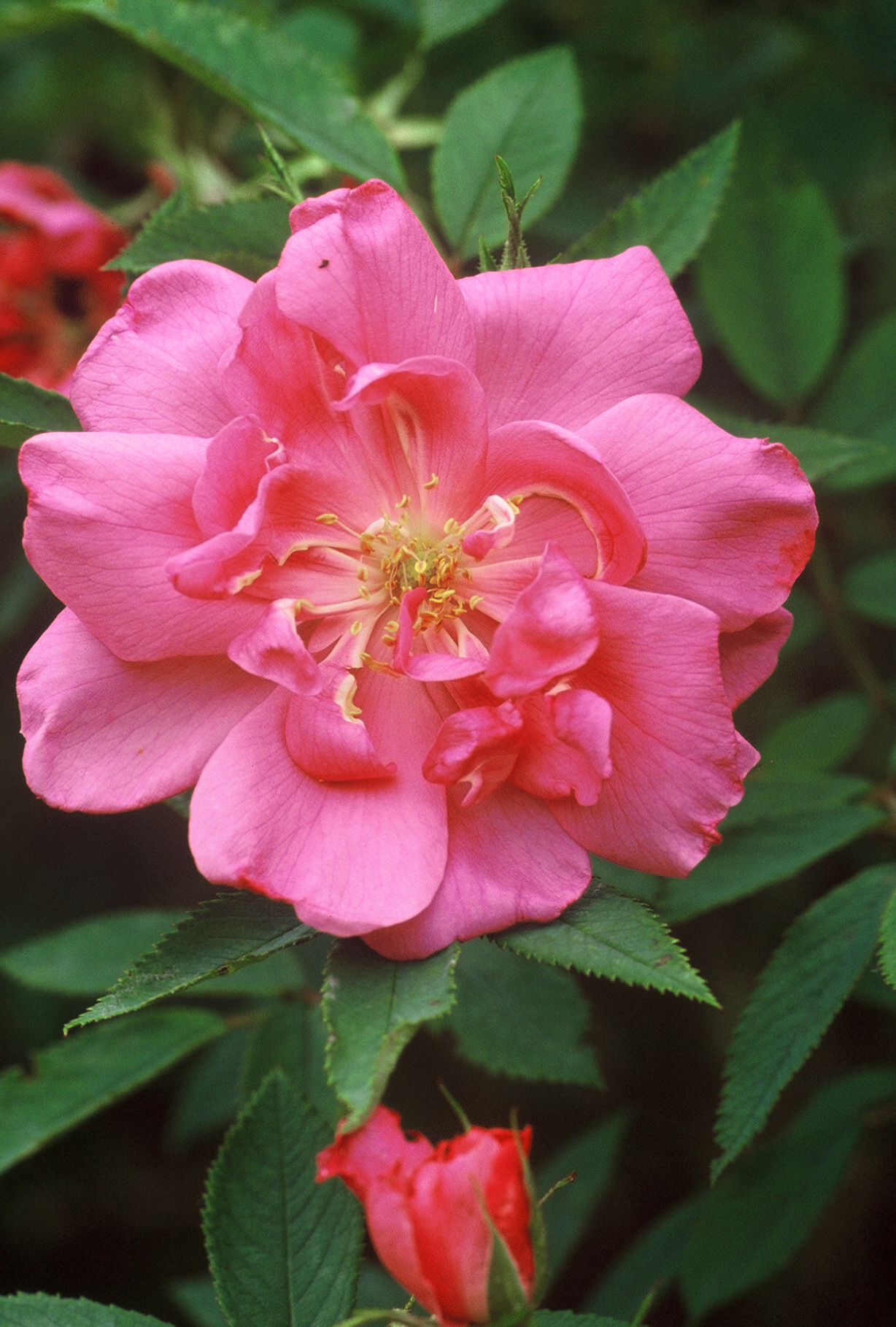
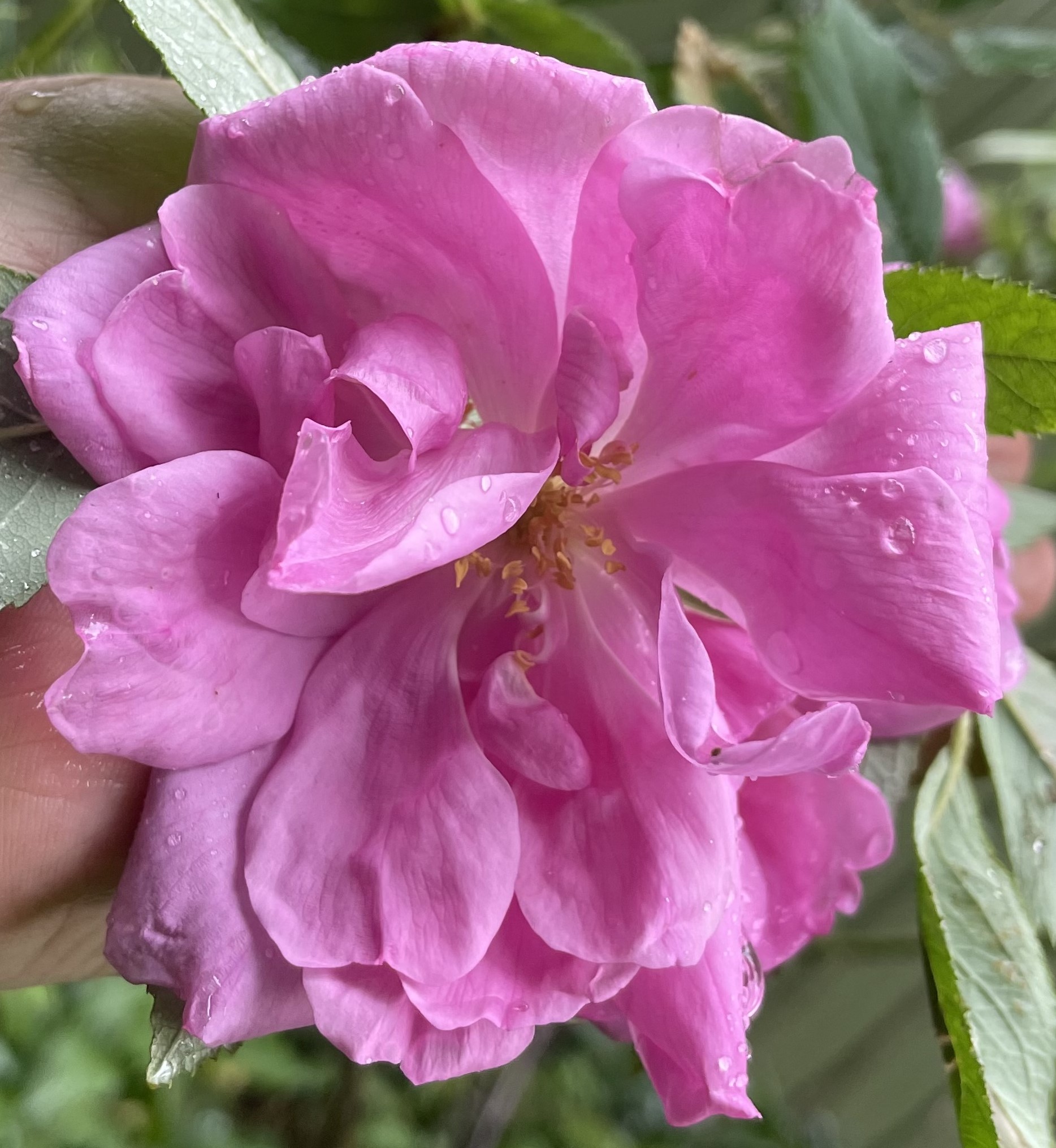
David Adams copyright.Selected seedling from my farm grown from seed from a highly cultivated rose.

Posted in Diversity Found, Ecology-Biodiversity-Integration | Tagged , , , , , , , , | Comments Off on The Edible Rose

Beautiful Orderly Plants

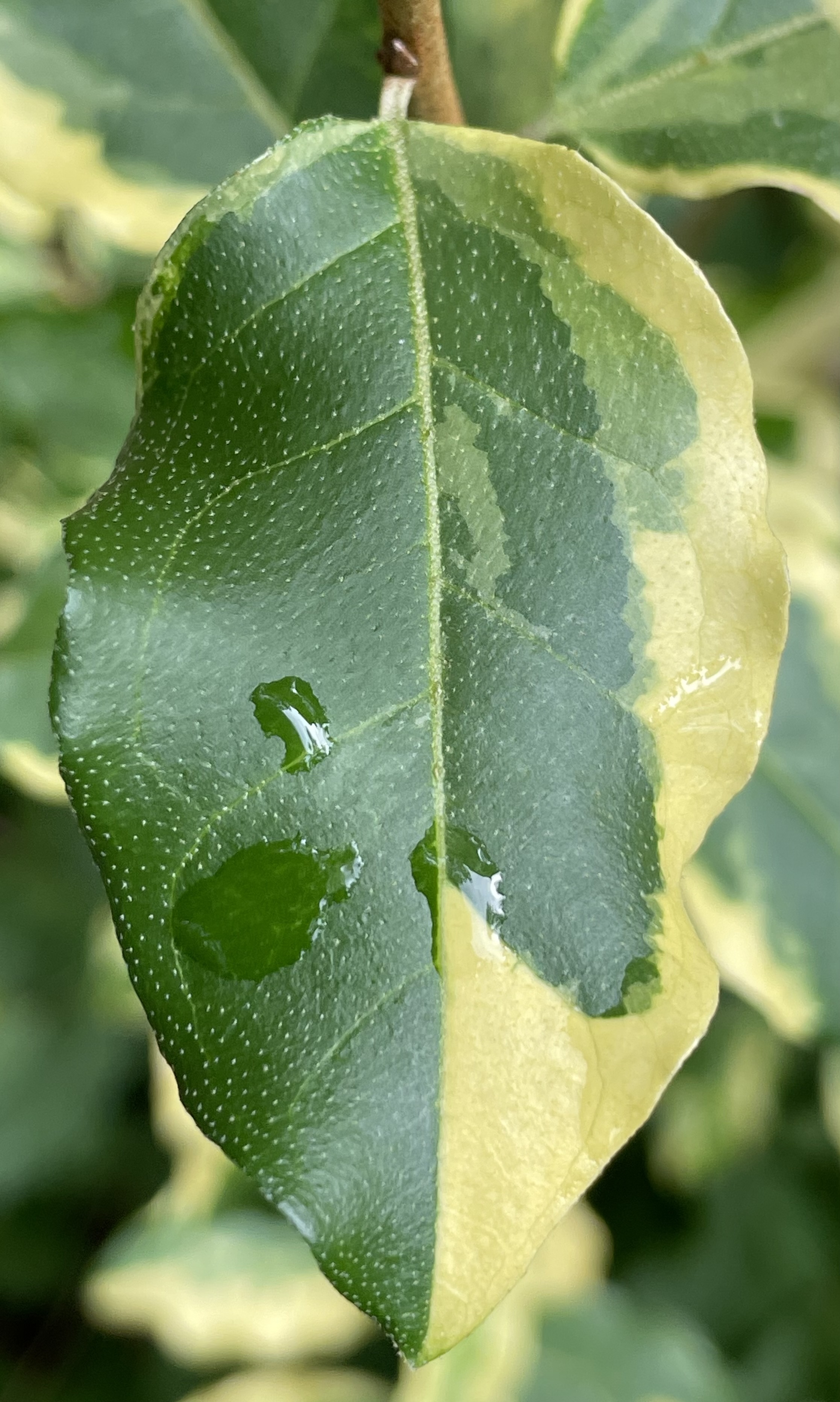
Variegation found as a bud sport.

Under a powerline ground to sawdust by the tree services of Consumers Power is an autumn olive bush which resprouted creating this one bud sport or sprout which is variegated. From a hundred sprouts only one is variegated. Variegation can be short lived or fade altogether in the years to follow. Variegation is attractive in the ornamental world we live in. There are many variegated Oleander family members like the autumn olive already in existence. This is the second autumn olive variegated seedling I have seen in my years looking for unique plants. Many years ago, a colleague of mine sold a variegated hosta plant from his nursery in an auction for the Hosta Society for over a thousand dollars. Why? It produced all variegated seedlings. That was something that was not found in other variegated hostas at that time and would make it easy to develop new hosta varieties. Hostas are highly propagated and valued. Not so much with autumn olive despite its use as a delicious and healthy fruit crop.

Looking at the roots of potatoes is enlightening. You start with a microscopic group of tiny cells along a rhizome which then explodes outwards into the spud we enjoy today. I always have the thought it is likely the same laws of nature that create galaxies but on a microcosmic level. Here is a slight variation of this trait like a clustering galaxy creating more galaxies of tubers found all from one small plant. It is a very unique and highly structured orderly potato.

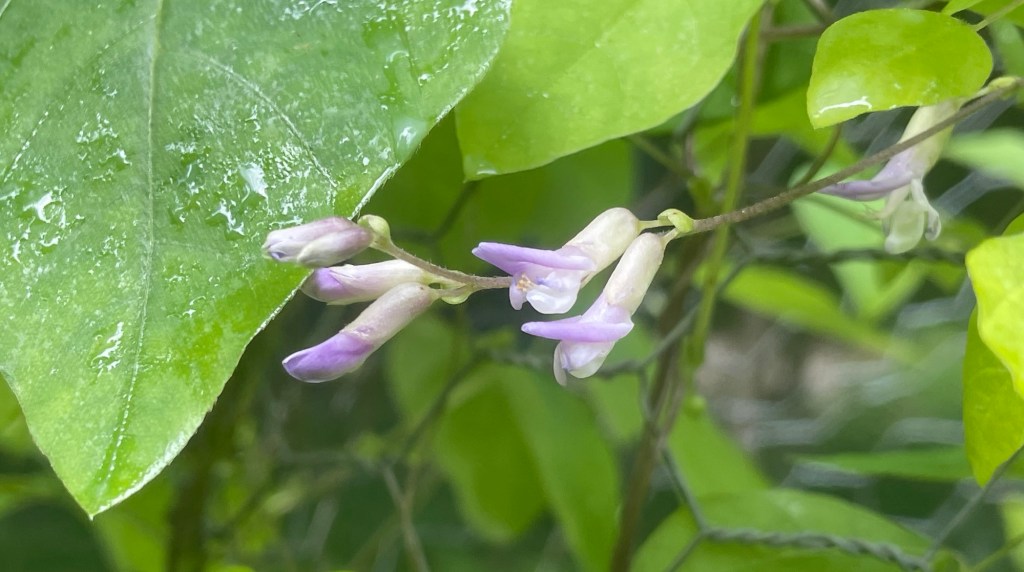
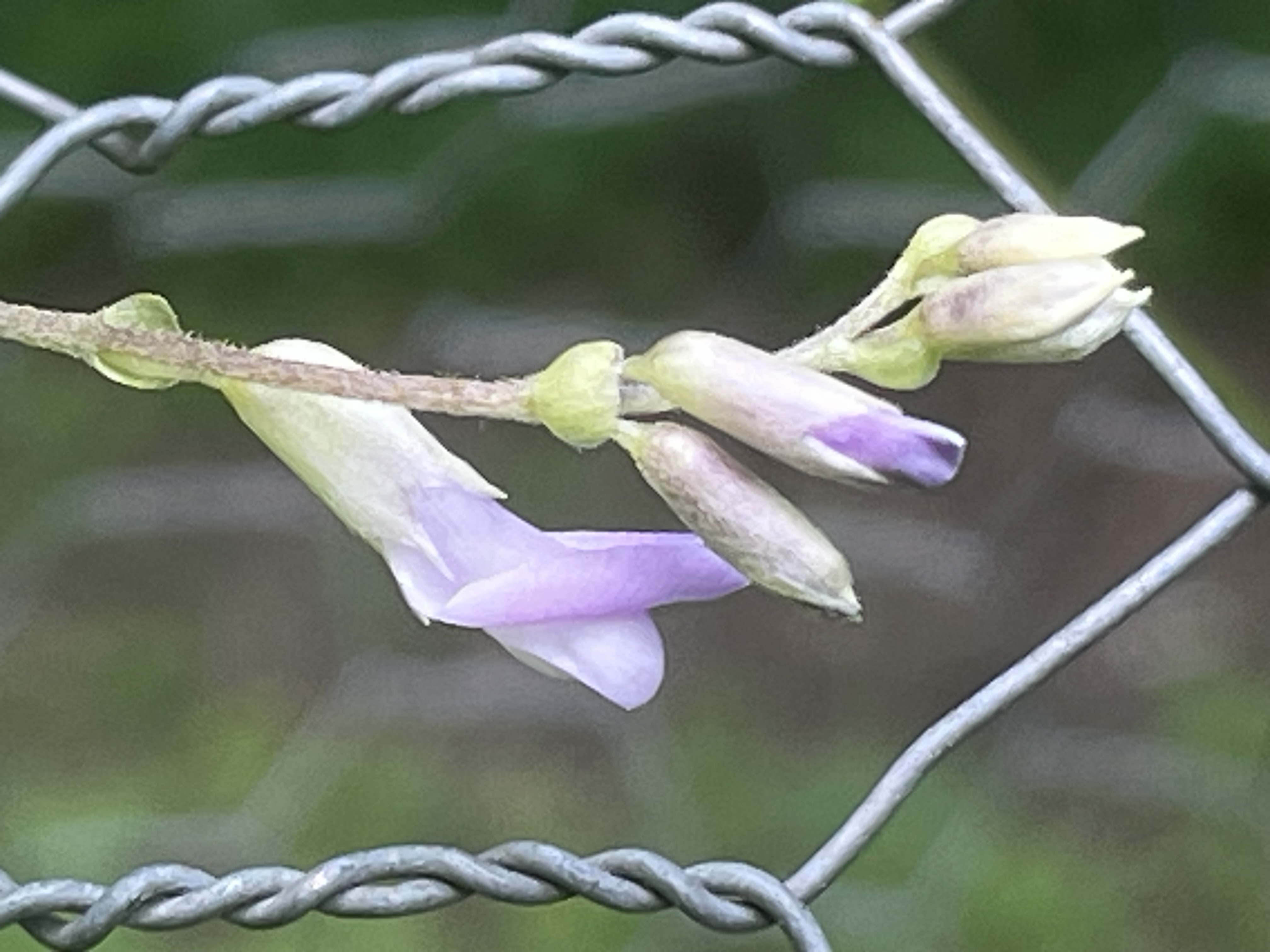
If you mention the words ‘Hog peanut’ it is not likely to get you the good seats at a concert. It’s confusing. Why hogs? And is it a peanut? I have never seen the flowers close up until this year when I put a cone of chicken wire around the plants and added fish emulstion to the soil mix. At five feet high the flowers and beans are prolifc. The flowers are at the ends of the vine and branch off the main ‘trunk’ like a tree. This structure produces a huge amount of seeds. From the variety ‘Crispy Snack’ I now have enough diversity to create the first ever hog peanut planting devoted entirely to this wonderful nitrogen fixing plant. I will not get the front row seats to REO Speedwagon though and apparently hog peanut cannot help me there.

I like the species name of this sunflower ‘anomalus’. Helianthus anomalus is the sand sunflower. Why is it an anomaly? It looks ‘normalus’. Being a desert plant, I found it is not a fan of my industrial peat driven high organic soil rich in micronutrients fed by chicken manure. It’s too much. But it did respond to the point, the plants fell over. I keep proping them up letting them lean on the corn and sunchokes. What is interesting in this flower is its large seed head for a wild species and its dense clusters of compact seeds. That head says volumes about its evolutionary history. I wonder how the seeds taste. When was the last time a human consumed this food in the desert? The heads protect the seeds more than any other sunflower I have grown. My guess is the orderly extraction of the seeds begins by birds and this is the best way to disemminate it in the real world.

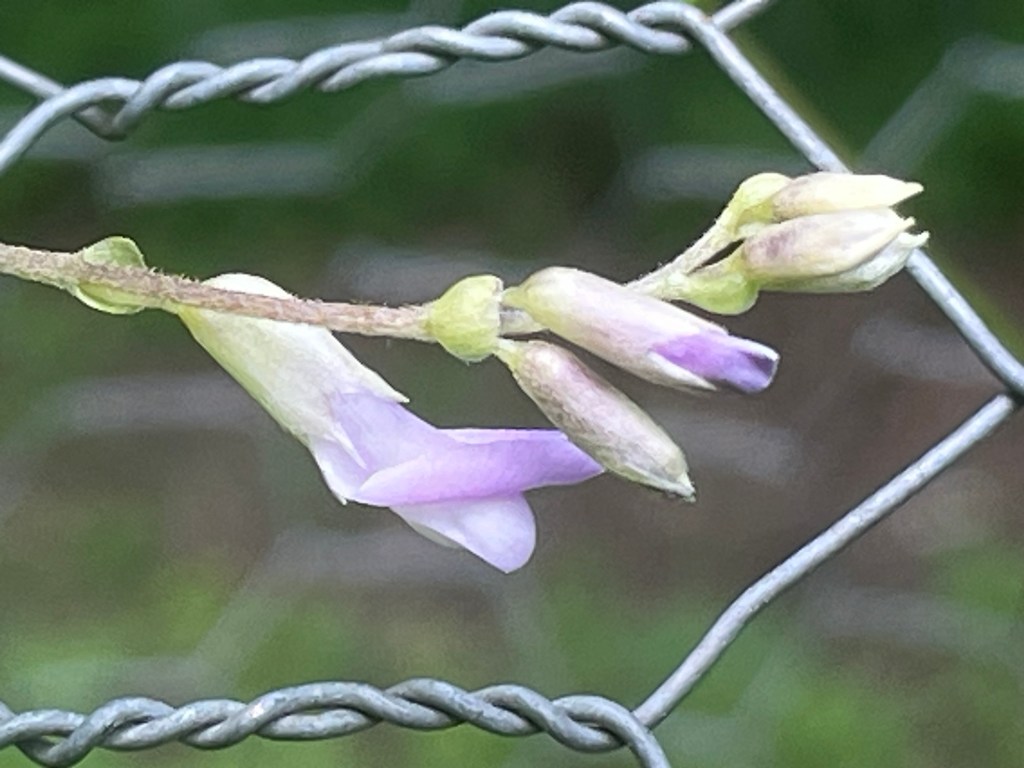
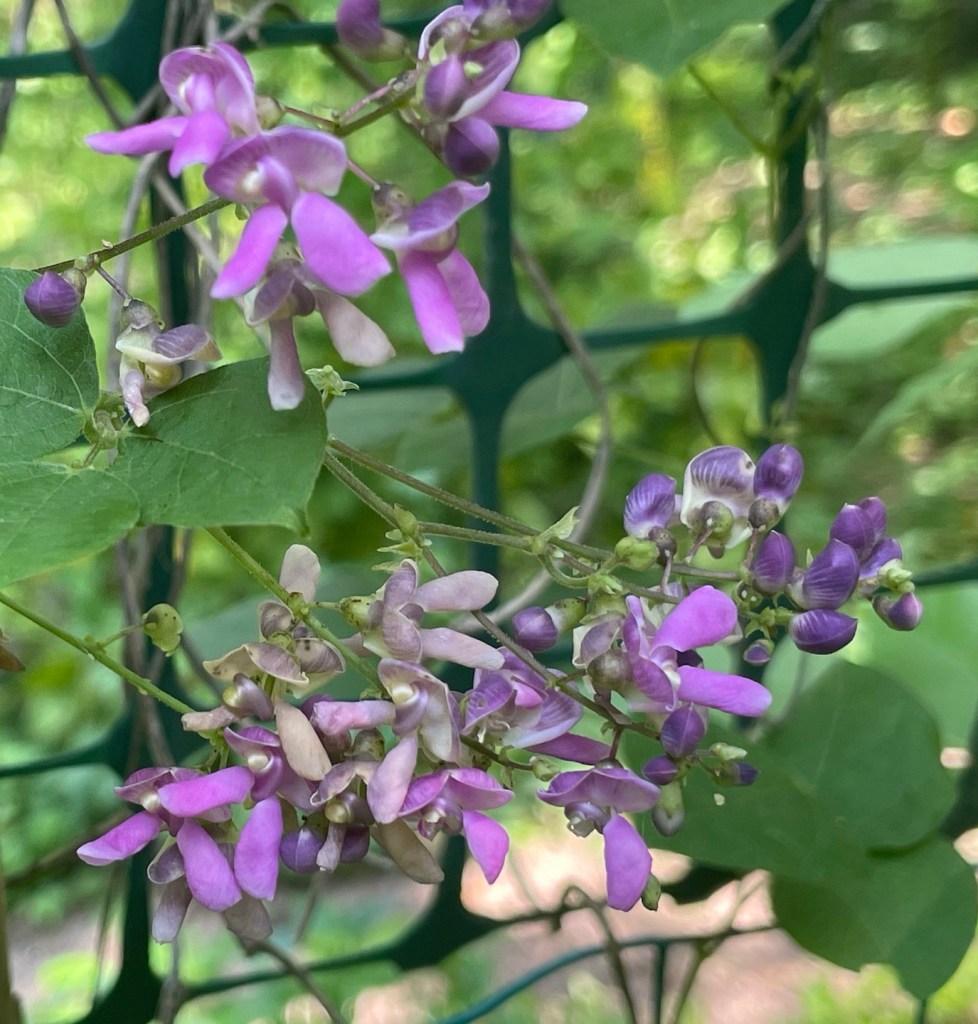
Thicket bean flowers go all out. It is all or nothing for them. Their large clusters seem to over produce compared to the actual fruit -bean pod-set. This is intentional as the plant can only support so much effort for seed production. Unlike an annual bean, it does not die and needs resources for its long deep tap root which can drill down twenty deep. This is one flower cluster that is the largest amount of flowers I have seen so far in the decades of growing it. Having a cluster of flowers that slowly opens over time ensures bean set. You do a little at a time to attract attention which then creates a road map in a bees brain where all the good stuff is. Very simple. Very orderly. The bee knows where it is and keeps coming back enhancing the production of seeds in the process. Order creates more order.

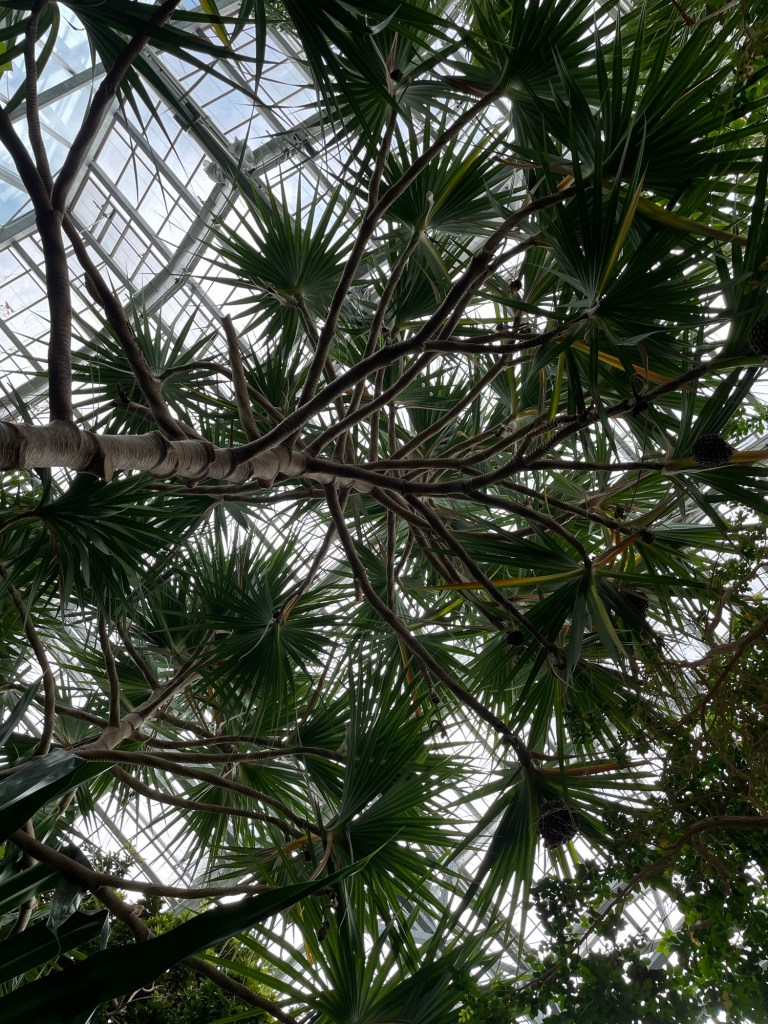
Looking at all the date palms and plants within the Frederick Meijer Gardens greenhouses is peaceful and comforting. Against the back drop of an orderly human structure, it appears we cognize the same structures found in nature. Each one supports the other in an orderly and beautiful fashion. Beauty is calming and attracts humans. We are by nature calm. Calm is where we do our best work. There order is found in the greatest amount.

Posted in Diversity Found, Ecology-Biodiversity-Integration | Tagged , , , , , , , | Comments Off on Beautiful Orderly Plants

Seeds Create-For the Love of Water

“Seeds are a source of wonder. They are objects of ernest inquiry in man’s ceaseless search for understanding of living things. Seeds protect and sustain life. Seeds are wealth. They are beauty. They are a symbol-a symbol of beginnings. They are carriers of aid, of friendship, and of good will. ” Victor R. Boswell USDA 1961 The Yearbook of Agriculture.

Seeds can do so much for us yet we only see a tiny reflection of a portion of the pond of diversity. Like the above image of my family’s farm pond, we are seeing only a small reflection of total potentialities at play at any one given time. We go back to the pond and each time it looks different yet it is the same pond. The expressions of the plants continue over time in unique ways as they play out in different environments. The benefits of seed knowledge and experience help us elevate humanity in its quest for better health.

There was always some new seed that I grew in my nursery that surprised me in some way. Some plants had very limited use and were not available to any great degree. I wanted to highlight these in my nursery even though they were not found in the marketplace. Think global, act global. The world is our family. Seed selections can actually mitigate a lot of world problems on a global scale.

Baldcypress and Pond Bald Cypress –Taxodium distichum and Taxodium ascendens

It is interesting in that one of my neighbors who lives down the road from my farm cannot figure out how baldcypress ‘got into’ his wetland. His words not mine. It doesn’t appear planted and yet the trees are not super old either. It confused him with his nativist bent on everything. Another one of my neighbors told me they harvested some cypress nearby for the making of one of their outbuildings long ago. She showed me the large posts her husband harvested holding up the tin roof. They probably came from his wetland years earlier. Other people told me of a massive hundred year old baldcypress tree existing in a wetland near Kalamazoo, Michigan. These outlying populations are likely not planted and are ‘natural’ extensions of their southern cousins from Illinois and Indiana. The range maps that have the smooth lines of existence of a plant are more dotted than you know. It is not likely someone waded into the middle of a swamp and planted baldcypress. To begin with, it is not that easy in Michigan. You cannot canoe it, God forbid swim or wade into it because of the deep black fine muck. Only turtles can traverse effortlessly unless you come back in the winter when everything is frozen solid. I am surprised no one has selected the baldcypress in terms of its forestry use and created selections for faster growth let alone collect seeds of the Michigan northern strains. This would be a good wetland species to plant into existing wetlands where ash and elm are no longer the dominant species. It can also grow in dry soils without irrigation and has a huge range of adaptibility. I did a trial at my farm using seed of two species of baldcypress from Louisana Forest Seed Company. There the baldcypress is prolific and seed production is plentiful. It is sold in broken balls which are hard as nails. The seed adheres to the cone tight, so normally it is purchased by these broken cones and seeds combined. The seed may make up a small percentage of the weight depending on the seed source. I could not get seeds of the northern forms unless I was willing to travel. I visited a tree once north of Fairfield, Iowa that was just a massive beauty in a front yard of a home along the highway. A friend of mine use to grow seedlings from that tree. Thankfully a customer sent me a sample from a beautiful large tree from his farm in Missouri. I grew both the species baldcypress and the subspecies the Pond Bald Cypress. I grew and selected trees that were fast growing using roughly 3000 seedlings. I noticed a few of the trees grew to 2-3 ft. tall while others were only 6-12 inches tall. I planted one row of the Pond Bald Cypress. I was hoping to use the trees for seed. Thirty years later they still have not fruited. It wasn’t until I saw other trees in landscapes that I realized these fast growing selections actually may be of great benefit to wetlands where few plants can establish in these low oxygen soils.

Using a super southern seed source and putting it in Michigan seemed like a long shot but I had no choice. Surprisingly there was no winter damage at minus 27F and the trees flourished here in my sandy dry soils. It turned out that baldcypress has a physiological response to extreme cold that even the most southern forms retain. The fast growth continued outside of their polyhouse homes and the trees are now fruiting. My row of Pond Bald cypress look true to form and are very slow growing reaching 10-20 ft. after 30 years. The foliage is very beautiful and feathery but no fruits yet. The species baldcypress that I made are now close to 50 ft. tall with minimal side branching. My one lonely Missouri tree has a large trunk and wide branching like a shade tree. It is like a different form entirely.

Every year I see the balls way up at the top of the trees far outside my reach.They disappear eventually hauled off by the red squirrels who have figured out a way to extract the seeds. Today they shade the subartic Finland Norway spruce trees. Louisiana meets Finland at my farm. The baldcypress is actually related to the Sequoia and it can naturally cross with it and produce fertile progeny. In Russia somewhere there are plantings of this cross. That would be one amazing planting to visit, study and get seed of for Michigan. That would be one powerful seed source of great diversity and potential use for Michigan forests and beyond. Seeds could create it. People could nourish it. And nature would benefit. Win. Win. Win.

Family farm ponds.

Posted in Diversity Found, Ecology-Biodiversity-Integration, Miracles of Nature | Tagged , , , , , , , , | Comments Off on Seeds Create-For the Love of Water

Discovery from Seeds

Sometimes its the small things that matter. Growing plants from seeds and finding traits that are inherited over time in a population of plants is a joy for me. I have no idea why I like it. I just find it enchanting. It is fortunate I am not following a predescribed trajectory laid out by years of scientific inquiry. I consider myself more in the ‘Miles Davis’ musical camp of no practice and using my intuition to hit the right notes unlearning my way in the process.

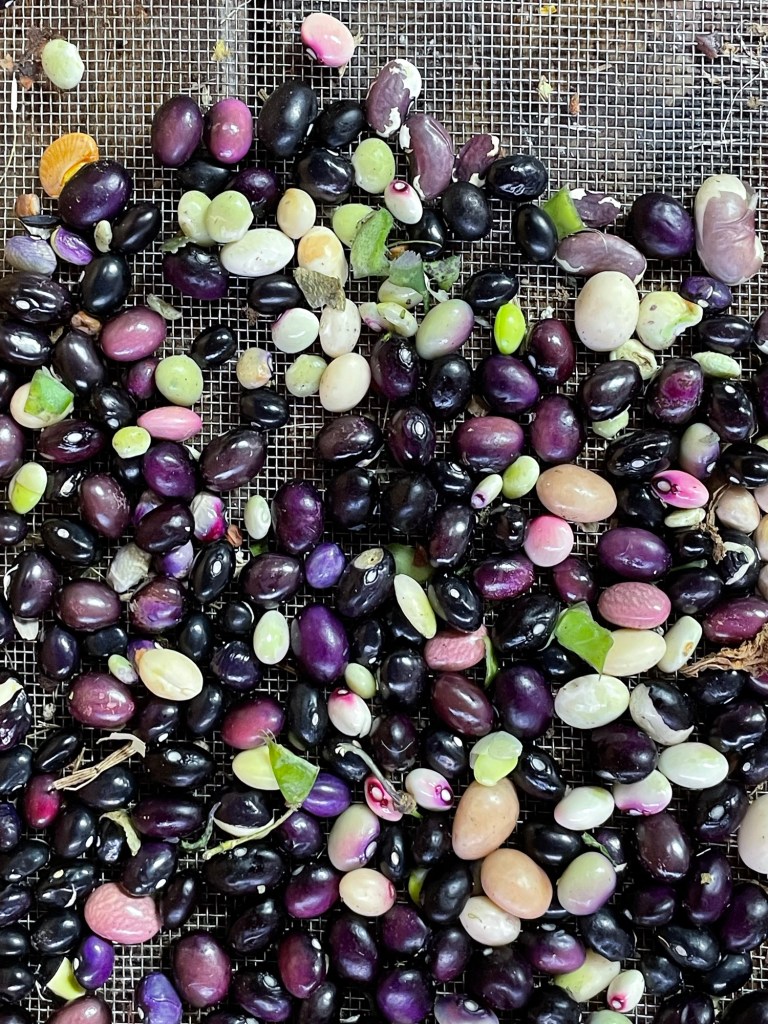
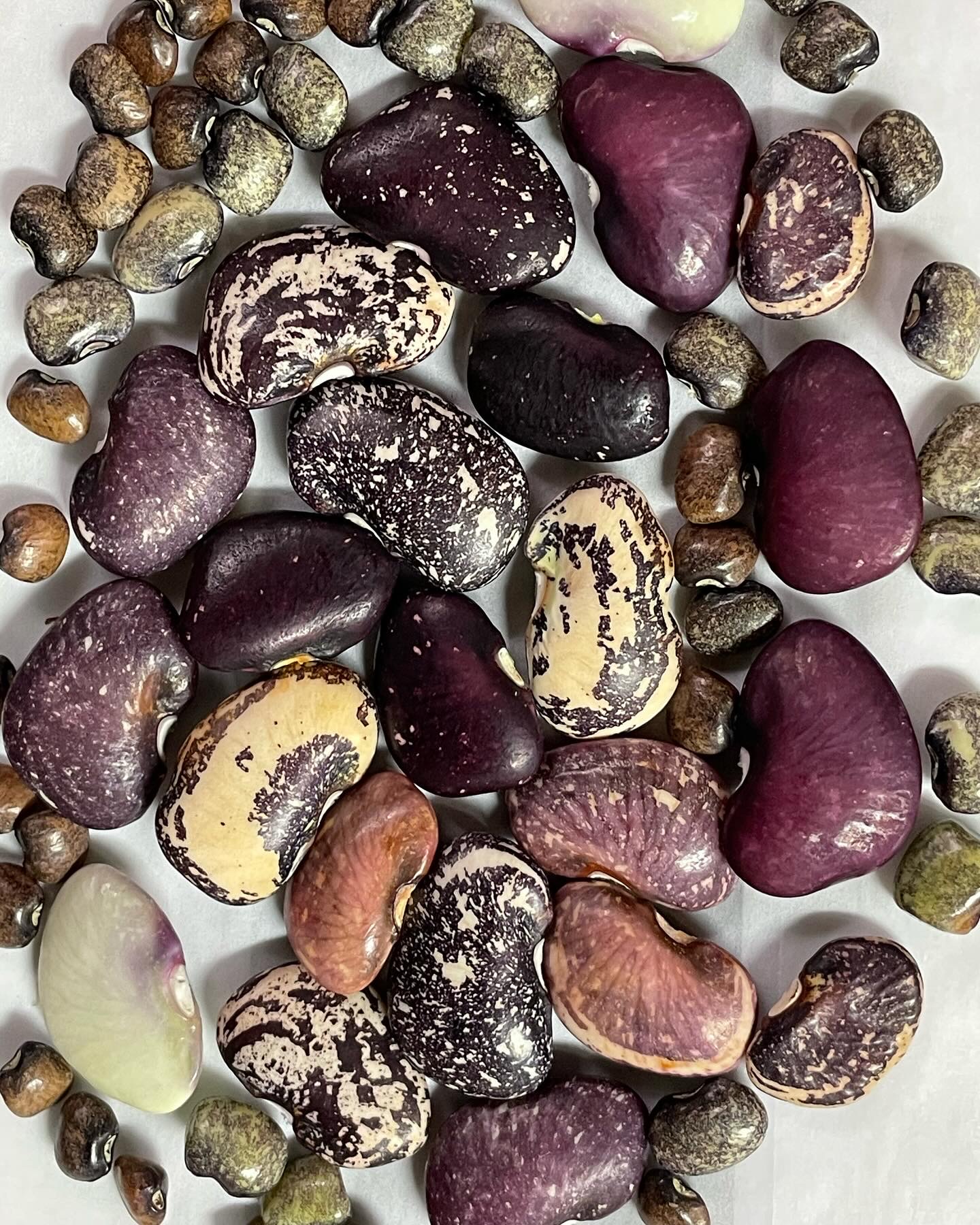
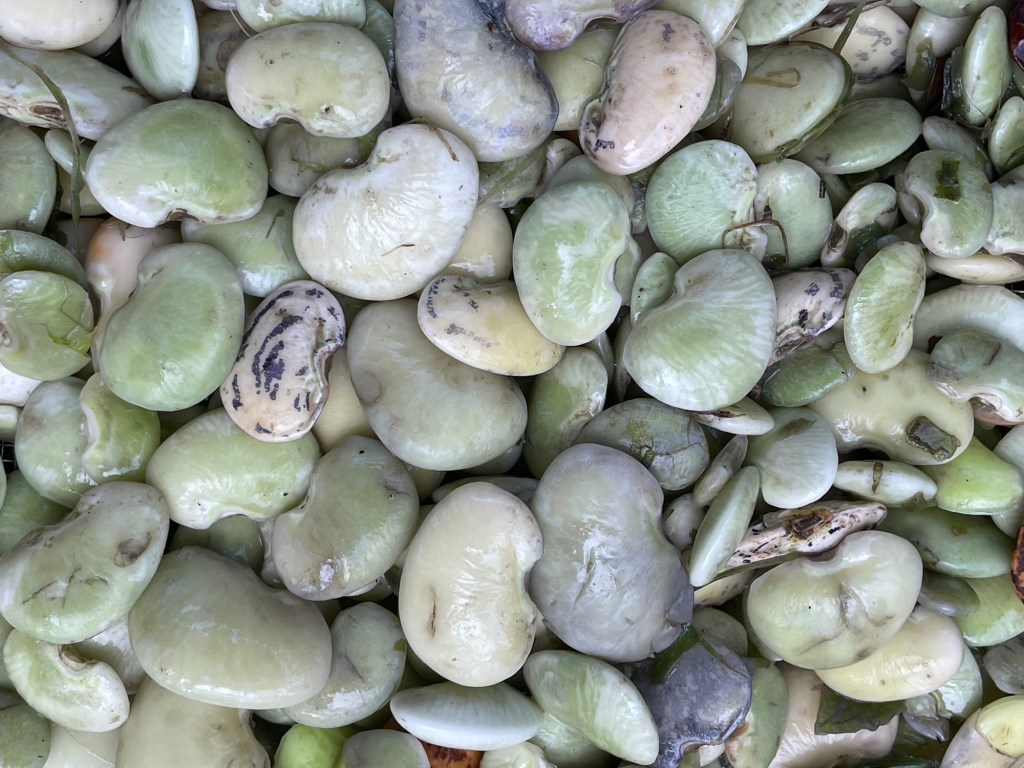
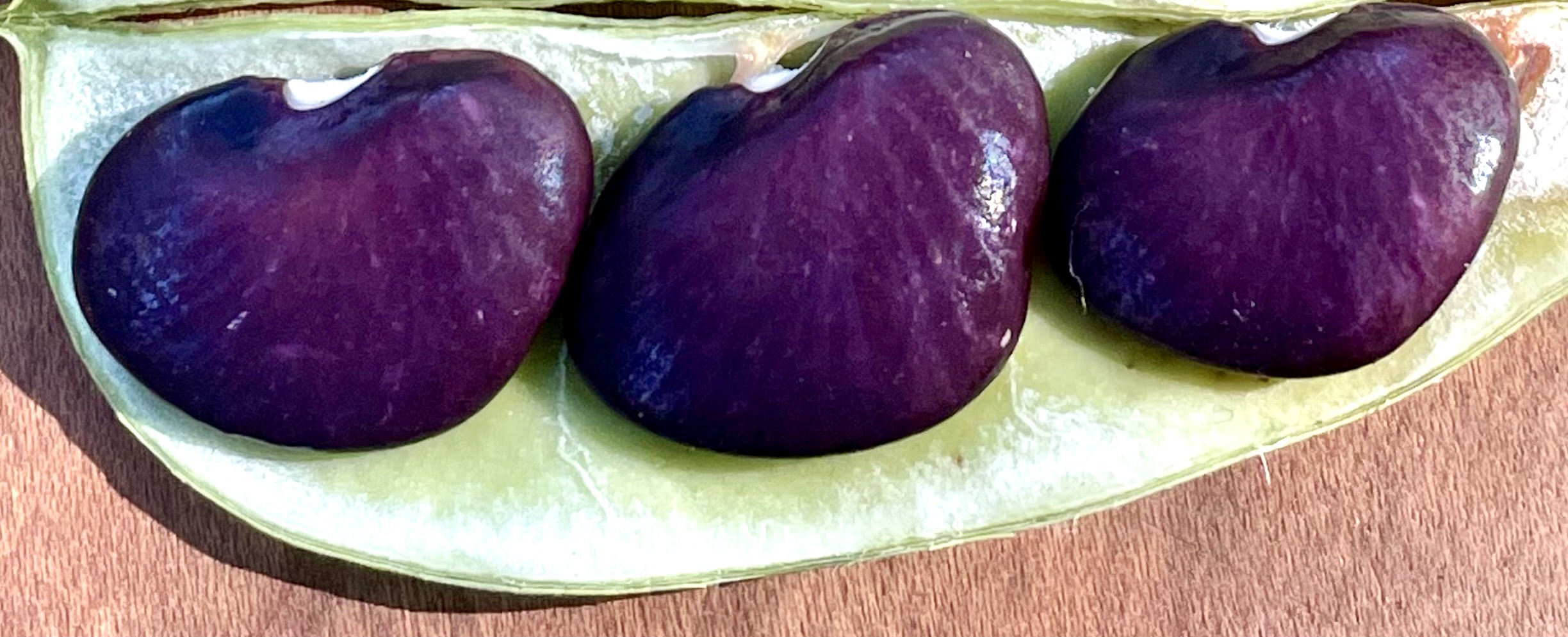
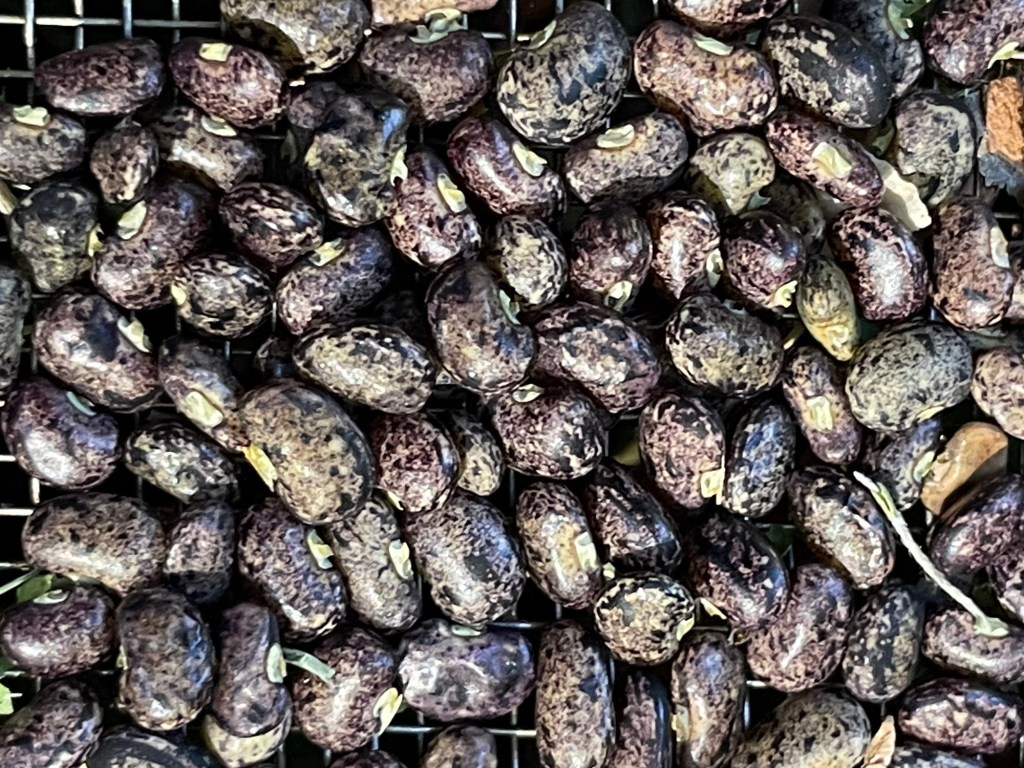
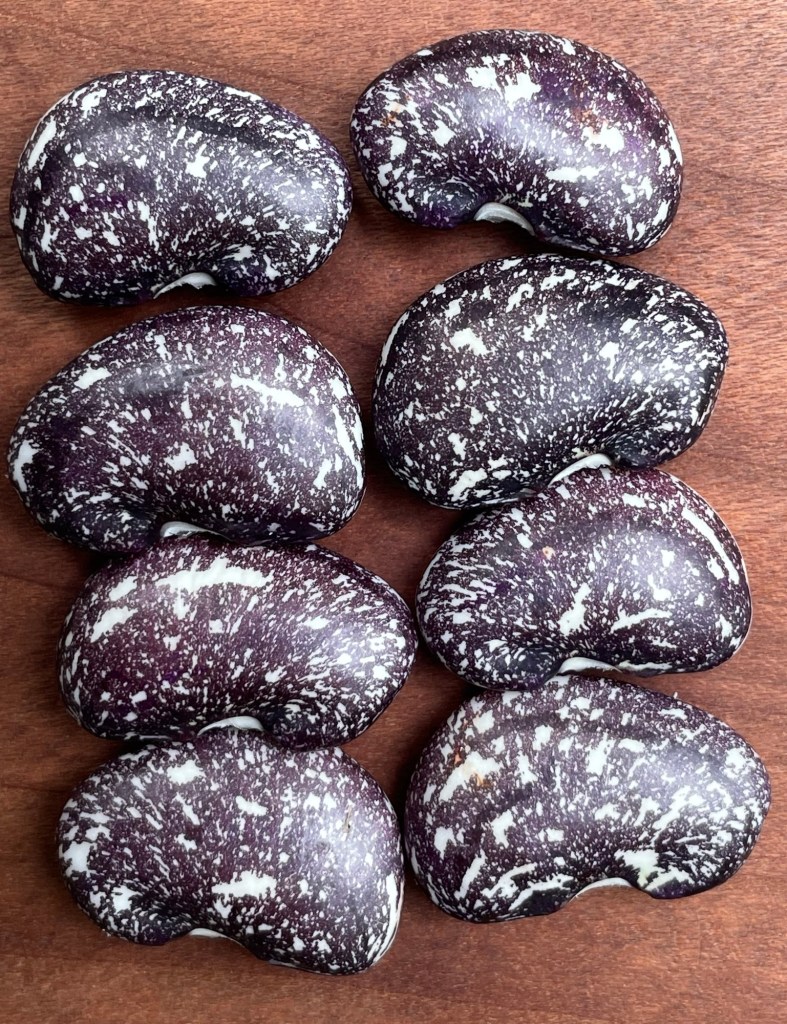
This week I uncovered these blue lima beans only because they had something that was hard to find and unexpected; all at once early ripening. That may not seem like a big deal but for years the limas that I was fostering through hybridization with their perennial cousin the thicket bean were creating very vigorous and unexpected results. These side light populations are beautiful but you need to have something very uniform in ripening with husks that split open easily expelling the beans. It makes cultivation much more practical and easy. There were only two plants. I have both the white speckled and blue versions. The yields are high all along the vine and not overly vegetative. For me it was a great discovery.

I grew a lot of sunflowers over the years. I loved all the varieties but they were too uniform to use for finding new characteristics. It was from this accidental seedling that I found near a cottage that had more variation and a means to find new traits of unknown possibilities. Here is the smallest plant I have found so far surrounded by its siblings. Under a foot tall with a tiny head is ideal to cross with the sunchokes. I bend down the Jerusalem artichoke flowers near this sunflower to make it easier for a bumblebee to go from flower to flower. The timing is critical and it might be too late but it is fine in that I can try a more robust planting of teeny sunflowers next year. I will save the seeds of the annual and perennial plants in the process and see what discoveries lie ahead. I blasted the area with fish emulsion and deer-off yesterday. This combination of stench and fertilizer seems to be a bumblebee magnet and brings them in to the point the whole planting is alive with the sound of music. zzzzzzz……go to the sunflowers my humble bees. I love the music you make.

Potatoes grown from true seed create a whole myriad of exciting traits some of which are confusing at first but revealing about the wild spud of yesteryear growing out of rocks in the Andes mountains. This particular clustering of tubers creates a very small one foot tall plant which produces between 50-70 potatoes. Its hard to count them all. The seedling was grown from my Perennial Perpetual Diversity seed mix and was one of those dense fibrous compact roots found in a seedling population. The above image is in the second year of growing it. Next year I will devote more time to this and split up the clusters a little. This was definitely an outlier in the population but seriously what’s not to love about this plant. To me its the perfect potato filled with wonder and excitement. The below image is another form that was found in the same population. Here the potato decided to produce the spuds in a more robust and larger fashion. It too is in its second year from tubers. You cannot predict what will happen and each one is different.

All joyous discoveries come from unexpected directions. Such is the case for the Umbrella magnolia below. Today they reside in my yard planted over 25 years ago. Originally a lone tree was found on a berm at a fast food restuarant. I got a call late at night from a horticultural friend of mine from college who asked if I had seen the fruiting Umbrella magnolia tree at the Long John Silvers restuarant. How in heck did that get planted there was his comment. I had driven by it for a few years thinking the same. How in heck? Here on a berm smack dab in front of the restuarant known for its delicious fried fish was a rather unusual horticultural find. The next day I found a grocery bag at my house filled with the beautiful red seed cones. He went in and asked the manager if he could pick the fruit. They thought it was odd but fine to do that. At that time, I was growing many seedling magnolias in my nursery but not this one. The issue usually is that seed companies ruin them by over drying. When I moved, I quit selling them and put the remainder around my home. I collected the seeds this year because there was quite a few. I thought back to my friend, fried fish and the eventual demise of the tree. I got an email from him letting me know the tree had been uprooted for a new landscape replaced by the sterile mini-compacta shrubs. He told me not to look as to avoid the pain. Too late, I saw it. It sat there on its side for some time before they chipped it up. Luckily I captured the germplasm. Its progeny will live on. I have the Long John Silvers near the parking lot entrance magnolia now. I had converted them to the black oak and hickory woodland. It was easy to do and there was only joy remaining.

the how in heck has been answered Magnolia tripetela
Posted in Diversity Found, Ecology-Biodiversity-Integration, Miracles of Nature | Tagged , , , , , , , , , , , , , | Comments Off on Discovery from Seeds

Full Seeds Ahead

Styrian Hulless Pumpkin Seeds

Every time I see seeds on a rack in a store I stop. They are always very organized. The packets jump off the rack. They are small and easy to pick. It is like the space between your hand and the seed is a quantum realm in a frictionless vacuum state. I love yellow wax beans. I need yellow wax beans. Instantly I have the yellow wax beans. There are more behind which keep popping out. How deep is the rack? It seems to hold a lot of seeds. When I was a store manager of a local garden center, people came in to buy bulk seeds in the spring. We would line the seeds up in clear jars like candy. We had an old scale. We sold a lot of seeds. The racks were near empty by the end of the day sometimes. There was few places that had seed racks back then. Today that same seed market is still there and going strong. The woody plant seed market is there but doesn’t exist in a cardboard display in the world of retail. Instead it lives as a direct by internet enterprise only. It is just not practical to sell seeds of woody plants in a store no matter how you frame it. Whether it’s local, native or exotic it’s different because now you have something people have to think about first. Also the dormancy requirements are too complex and slow for most people. I went full seed ahead fulfilling our small market. People did enjoy having a chance to tap into this diversity that would normally would have gone unnoticed by the big seed companies. Here are a few of my favorites.

The Naked Pumpkin Seed from Austria The Styrian pumpkin was well known before I grew it. One of my customers sent me seeds of it thinking I might be interested in growing it for its health benefits. I had heard about it a few times but thought it was difficult to grow. It was not offered in the U.S. to any degree at the time. There were other naked seed pumpkins on the market but this one was used specifically for cooking which was processed as a flavoring oil from Austria where it had been passed down as an heirloom. It was a species pumpkin that if grown alone, the seeds did not have shells like a normal pumpkin. The fruit itself had no flavor and was not used. The plant was easy to grow at my farm and was free of squash vine borers. Each plant produced one or two medium sized fruits. The naked seeds are easy to extract. The Styrian seeds make you want to consider buying a small hand oil press. The flavor is wonderful and way better than any pumpkin seed I have purchased in the store roasted or raw.

Alberta Clipper Corn

The Short Season Field Corn from Canada It was by accident I found out about this super short season corn for the coldest of climates by a Canadian researcher. Apparently corn was cultivated in the far northern regions but was lost over time. A researcher found one strain and was using it for breeding but the project was abandoned. When I received it, the corn needed additional growing to fully make selections from it. At first the ears were only three inches long with a couple rows of kernals. Eventually over a decade, I selected it for the 60 day ripening period and larger and fuller ears. I named it Alberta Clipper. It made delicious corn meal. The plants were dwarf growing only 3-4 ft. tall with a ripening in the area of 60-70 days when the corn is dried down enough to harvest. Even planting it on July 1st once worked. It wasn’t quite as robust but the ears fully matured.

The Productive Jerusalem Artichoke from Michigan Normally the sunchoke doesn’t produce seeds. It was by accident I found that having a great diversity of sunchokes in one area created a lot of fertile flower heads. Each year was slightly different but for a while Clearwater and Shiawassee were two varieties that kicked out a lot of fertile seeds. When you whittle down a bushel of sunflower heads and only get an ounce or two of seed you may think why is this so low. Yet this was actually very good compared to my previous attempts which made it to the point I would count the seeds by hand there were so few. For the first time in the history of the plant, I offered seed of it in small packets. Here you could grow this marvelous tuberous plant from seeds. That took a great deal of time to make that happen.

The Green Rhubarb from the United Kingdom I kind of grew fond of this because of its low oxalic acid and perpetual nature so you could harvest latter in the season. Plus my grandmother gave me a recipe for Firemans Rhubarb Pie which was a quick way to make a delicious crisp perfect for this variety. Fireman meaning it was quick to make and cook. Quick back then was 45 minutes in the oven. You could easily grow this ‘Glaskins Perpetual’ rhubarb from seed and for the most part it was very uniform. However, when I did that I did find some variation of light reds and all greens in the populations. There were a few plants that were totally green. If I were to do that again, I would attempt to select those milder all green ones and create an additional variety from it if it was that much difference. Rhubarb from seed was a good idea. I hear it is hardy into zone 2.

Sibirski tomato

The Off the Charts Flavorful Tomatoes from Russia and Germany For a while I received seed from an arboretum in Russia who had some amazing tomato selections done by the Russian people in their backyards over the centuries. Basically what they did was bring together all these land races and reselect and improve on the traits that made them so successful in the first place. I remember thinking ‘Sibirski’ is everything you want in a tomato and more. There were several other paste varieties and one that was an industrial hard as nails tomato for shipping too. Ironically even that tasted good! I also receieved a private breeders release of a cherry tomato from Germany that never split and was insanely vigorous growing while producing lots of delcious fruits far better than any cherry tomato I had ever eaten. ‘Kanaan’ was amazing. I plan to try to grow those again because I too want to relive my past with those particular tomatoes.

The Thicket Bean Makes a Good Stop to Refuel and Help the Colony

The 9000 Year Old Perennial Bean from Everywhere This perennial species bean was more of a horticultural oddity than anything. The flowers were beautiful and the vine was vigorous. I could see it in a packet under flowers more than beans. It was a delicious dried bean and worth growing even though the yields and the beans are small. I hope to expand on this species and find more productive larger bean selections. Found throughout North America, this could be our perennial protein.

The Flat Giant Yellow Wax Bean Vine from France It was by chance that I found a website that had quite a variety of green and yellow pole beans. I remember thinking I am sure they must taste better than the pictures look. I forgot about it for a while and shortly a U.S. seed company offered them. I think it was Baker Creek but I have forgotten where I got them from. Such is the nature of the packet especially if you throw it out. Whoops. I wasn’t sure it was the French or English selections but once I grew it I knew it was ‘close enough’. They were so good and way better than the pictures. I grew them again this year and they did not let me down. I saved enough seed luckily. Each pod may have up to a half dozen seeds. I hope they did not cross with the dark purple ones next to them but hey I’m fine with that too. I am sure they will jump off the shelf into your hands soon. It creates its own vacuum state. Watch out.

The Early Ripening Wild Tepary Bean from New Mexico
The Yellow Wonder Alpine Strawberry
Posted in Ecology-Biodiversity-Integration | Tagged , , , , , , , | Comments Off on Full Seeds Ahead

Seeds: River Cane, Pawpaw, Apple, Sloe Plum, Soybean

There is always something new to learn from plants. Growing them from seeds adds to the anticipation of discovery and connection to the natural world. When I grew plants in my nursery we use to routinely sell seeds along with nursery stock of the same species. People wanted to know how to do that and what would happen if they tried germinating a seed of a woody plant of some type. It was very popular. We made small packets and grew it up to 3000 packets per year. We tried to use species not available elsewhere in the seed trade. It was quite a time consuming occupation figuring out quantities and inventory. We did sell them internationally at the time and it was one way to spread the diversity inexpensively. People were very appreciative of the seeds and disappointed when I closed down the small packets especially the international customers like Canada. After a decade of doing that I was glad I no longer had to pack those tiny packets. It added a whole new step to fulfilling orders. Once in a while I would bring seeds home and pack while watching Seinfeld. It was not the summer of Ken that year. I put detailed information on germinating the seeds on line to help people in their quest to grow woody plants from seeds. There is a certain mystery to it but once the conditions are met the plants grow effortlessly as tomato plants. It is the dormancy part that is complex. Here are a few of my favorite from seed plants which were also rather popular when I grew them in the nursery and farm. Specifics on dormancy are included.

River Cane Bamboo- Here is one that did not work. I have yet to grow it successfully from seed. The seeds are fresh and produced at my farm. They appear viable and pure white in the embryo and fully developed. For whatever reason I cannot get them to sprout despite applying warm and cold periods as well as moisture. Bamboo is generally easy to grow from seed especially the Phyllostachyus genus. It is my favorite to grow from seed. I have tried the last three years. This year there is no seed crop, so I will have to wait. How long? They say when bamboo flowers every hundred years or so, the clone dies entirely as a kind of respect for the new progeny about to be produced. This has not happened to the River Cane so lucky I still have the original strains that I started with over 20 years ago.

Pawpaw-Asimina triloba This seed requires constant moisture from processing to planting. Never let the seed dry out on a rack or open air. The fruit is very soft and the seeds are encased in a clear celluose sack. Even after removing the pulp, that little sack has to be removed because it can rot the seed in dormancy. The fruit pulp has to be removed prior to it breaking down as the alcohol will kill the embryo if concentrated enough. The fruit has to ripen on the tree for this to happen as it relates directly to the maturity of the seed. It is not good to pick the fruit green and do it later. The fruit drops out of the tree with a light shake when mature so it is soft to the touch. This condition is ideal for the seed. The seed gets its nourishment from the fruit and the surrounding vascular system in the fruit which is directly connected to the tree. After extracting the seed and cleaning the fruit from it spotless, drop it into a moist media like Canadian peat moss. It should be lightly moist so you cannot squeeze out any more water from it using your hands. Apply a cold dormancy of 90-120 days from 34F to 38F is ideal. A refrigerator is fine but not freezing. Then put the seeds at room temperature. Seeds take a long time to sprout usually a good two months. At my farm pawpaw seeds sprout in July when planted in November. Pawpaw roots are produced first and then the top comes up. The plant needs to be in at least 50 percent shade the first year otherwise the first two leaves burn off in the sun and that is the end of the seedling. It will not resprout. Pawpaw seeds are odd brain looking seeds with deeply resessed cotyledons. This year I planted late and the seeds came up in early September. This is fine and the trees will grow like crazy next year because the tap root is now completed. My particular strain of pawpaw is the most northern in the United States and people have put them in areas of extreme cold from Finland to Minnesota. Apparently using this seed source will increase the plants northern range under cultivation.

Apples are very easy to grow from seed. I would recommend collecting wild apples that are blemish and insect proof. This is the future of apples. Organically producing them while improving the overall health benefits you can find the perfect apple far greater than research scientists. Anyone can contribute to this noble cause. Apple seeds are extracted by crushing the core or cutting them with a knife and popping the seeds out one by one if you want. I use to use a hand brick and patio sand tamper for crushing. Then I would put the apple pomice in a Vita-mix slowly grinding it in reverse to break the seeds out of the inner core. Then onto a large bowl and do a bit of panning action for gold where the seeds would sink to the bottom and the pulp would float off. Once cleaned then I would put them on a screen rack to dry. After drying for a couple of days, I would rub them and repeat the process adding a touch of Dr. Bronners peppermint soap. All-One Brothers and Sisters. Then let them dry again for a few days. From here I would let them after ripen for a month on a shelf where they were in an open zip lock bag with a bit of dry peat moss in there to let them continue the growth of their embyo. Finally I would add a teeny amount of water and mix thoroughly and store at 34 F to 38F for 90 to 120 days. Often apple seeds will sprout after 60 days or so. You cannot stop that so the seed needs to get planted soon because once its too etioliated, then it damps off easy. Sprouting them in the fridge is very good in terms of success. Sometimes a portion of them sprout the second year. So do not throw your seeds out thinking you failed. Check for rotting or mold. Wash and check for smelly seeds that are now part of the compost. Remember to plant at the level of the root collar and not the stem. You can skip all of this if you put them in a germination tray with drainage holes and germinate them outside. Make sure to cover the tray in window screeen to prevent mice and voles from consuming them during the winter. The tray should never let to be dried out. The apples will sprout in the spring in April and May.

Sloe plum is a good example of a species fruit that has huge health benefits yet it is not found to any degree in North America. For a while I was told I had the only planting of it. At that time, people had no idea what it was or anything about the plant. There was some misinformation about it being invasive because it spread by runners. We sold it a little. Eventually the spirit companies along with a few wineries purchased all of the plants I could produce. I remember finding the plant in a landscape in the early 1980’s in an apartment complex where I had a contract to do the lawn maintenance for one season. There was a woman from Latvia who lived in one of the units so I am guessing she got her starts from her homeland. The fruit was not possible to eat fresh as it was so highly astringent. It was used to flavor drinks. Eventually through an arboretum exchange I received enough seed to outplant an actual row of them from the variety, ‘Plena’. From here after the giant whittling down from black knot began and I ended up with 3-4 plants with zero disease. This is the ideal thing to do with seeds and seedling plants that are genetically different. Start with an unknown crop from a global perspective, cultivate the plant, make a useful product from it and find out what health benefits are within it. Spread the seed and spread the word. Sloe plum seeds need an after ripening period. I would whiz them up in a blender carefully not crushing the seed coats. I would do this several times over the course of a week going back and forth from blending to letting sit overnight on a screen after several washes. The fruit hangs on tight to the seed coat. After cleaning I would put them in a lightly moist media and store at room temperature for 2 months before refrigeration. Then cold 3 months and then store at room temperature for the next season. Some sprouting may be seen after three months of cold but normally this species requires two cold dormancies with a warm dormancy in between. This warm dormancy matures the embryo fully and the seed continues its growth prior to the last cold dormancy which then changes the chemical make up which prohibits sprouting. Once that seed is finished, then it can grow. The plant produces a very long tap root and a small top the first year. It is a plant that grows in rock and sand. From seed it takes roughly 4-6 years to fruit. This method described is pretty much the same with all Prunus but most do not require the second year dormancy to any degree.

I found these soybeans near the entry way to a cottage I was renting. What am I going to do with those? I planted them. A groundhog came by and ate most of the plant. They flowered and set fruit. I now have the same amount of seeds I started with. What am I going to do with those? I cannot tell what direction I may go. I tried once to buy the wild groundcover soybeans of Australia. I remember seeing the giant five foot soybean plants across the road from our farm when they first started growing them in the 1970’s. I remember trying to eat soybeans in college where even butter and soy bacon bits could not cloak the flavor. I do have four beans. I do have some ground. I will try again to see what the beans will say to me. Afterall they are seeds and Thoreau said to expect miracles. He grew soybeans.

Posted in Diversity Found, Ecology-Biodiversity-Integration, Miracles of Nature | Tagged , , , , , , , , , , , , | Comments Off on Seeds: River Cane, Pawpaw, Apple, Sloe Plum, Soybean

Meanwhile Back at the Grocery Store

The Korean pear seedlings from the grocery store did not disappoint in their interesting and flavorable fruits. The texture varies rather dramatically from smooth as silk to coarse as sawdust.

For many years I would keep the pits of some of my favorite grocery store fruit and try to grow them at my farm. Everything looks so spectacular coming exclusively from California. Everything is also patented and totally illegal to use without permission-leaf, pollen, buds or seeds I have been told. But here was the land of great promise in front of me. I have to try. I did it in secret. There I could find giant apricots the size of baseballs and white peaches that tasted liked sugar crystals. What I didn’t realize was that the breeding of fruits for this specific California climate would not allow me to grow their progeny in Michigan. Everything died in one winter. This beautiful diversity was useless for my climate. I was surprised something wouldn’t stick. I do not give up easy.

It was the fancy round pears in a mesh stocking that caught my attention. They were grown in another fruit rich climate of Washington state. I will extract the seeds and see what happens. It was a type of fruit I had seen before but was unaware of the species it represented or its wild counterpart at the time. I was working with several Korean strains of pears one of which was an insanely astringent pear rich in bitter flavors impossible to eat fresh. It was hard to believe that these are related. But in the world of fruit breeding, you know someone is going to create a selection sooner or later that is delicious and sweet. The seedlings I planted from the grocery pears grew slowly and were constantly hammered by deer in that location. I put 5 ft. tree shelters on them and even those got rammed and knocked over several times. Eventually with constant vigilance, I was able to get them up and beyond the browse line. As the trees matured and began fruiting I was finally able to taste test the results as you see above. Each seedling has its own profile of flavors yet you can get the giant pear flavor in all of them. Even the one that looks like a meteor has a flavor too despite its propensity to have cracks like the Grand Canyon on its surface. A few of the seedlings died due to fireblight and a couple just gave up the ship due to the deer eating the foliage. But those that did make it did represent a chance to clone the fruit in some way and bring in another Asian pear variety into existence should you want to.

The wild Korean pear is like the wild crapapples of pears. They ripen in August and drop to the ground when fully ripe. Tasting one takes a few minutes of your taste buds to readjust to normal again.

Amidst the piles of grocery store fruit, one stood out and made it through three decades of Michigan winters saying it was adapted, useful and delicious. Mesh nets are not needed. A couple of them splatter into sauce as they fall from great heights hitting the ground and spreading their fragrance throughout the area. The deer have noticed again. They too played a role in shaping the trees fruit spurs and all.

Wild form of the Korean pear. Grown from seed from wild collected seed in South Korea from one of the mountains of South Korea.

Posted in Diversity Found, Ecology-Biodiversity-Integration | Tagged , , , , , , , , , , , , | Comments Off on Meanwhile Back at the Grocery Store