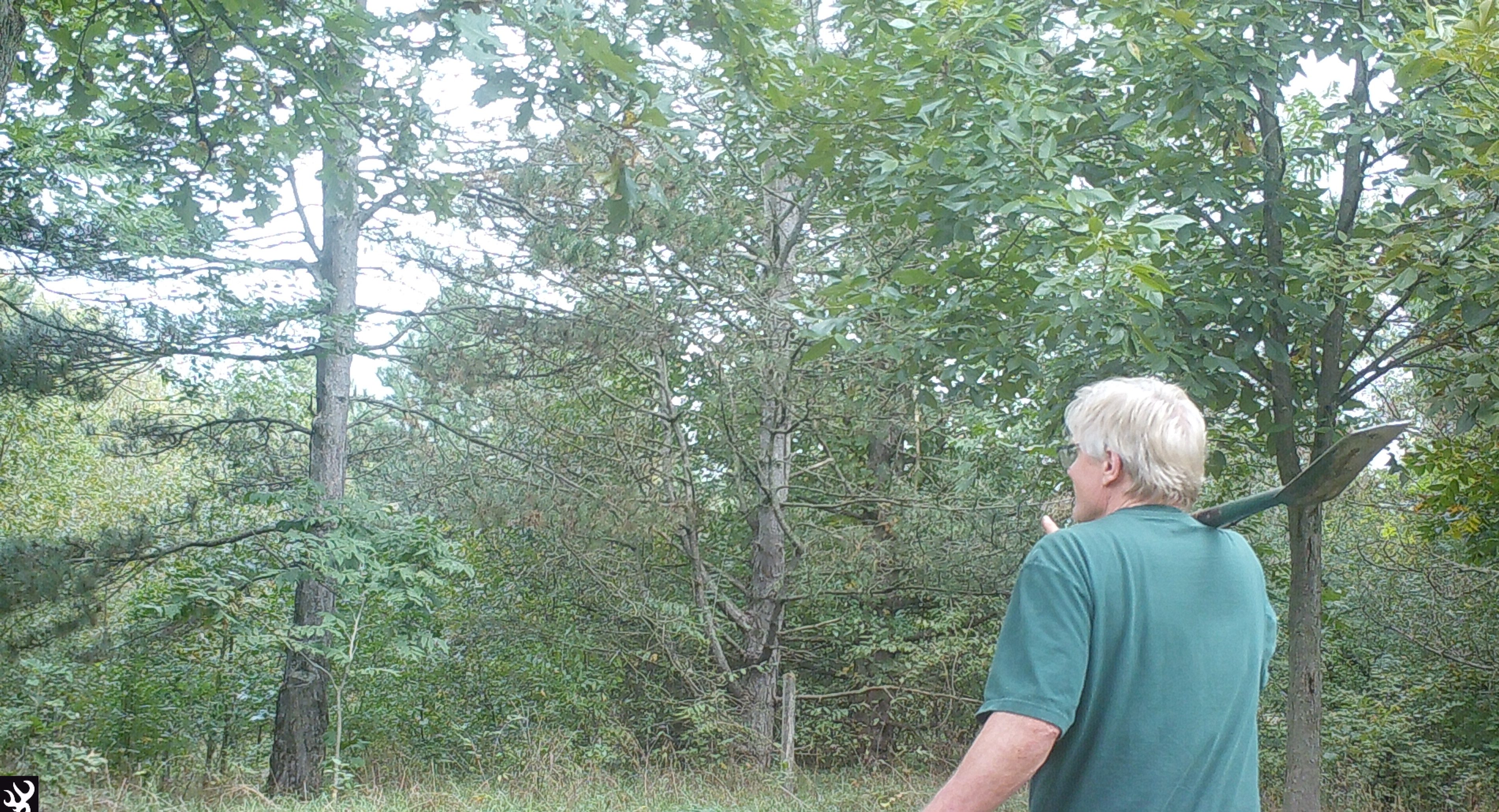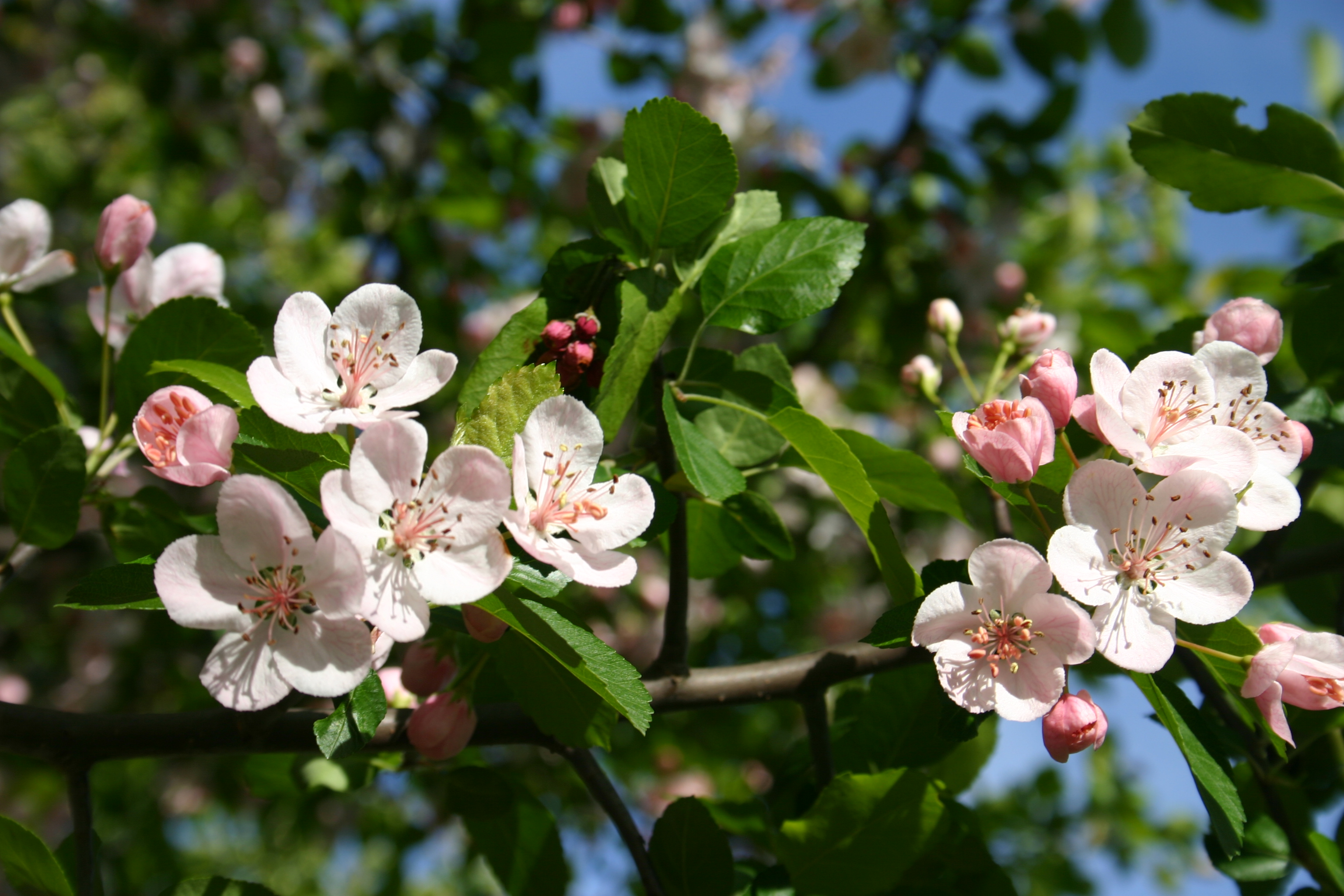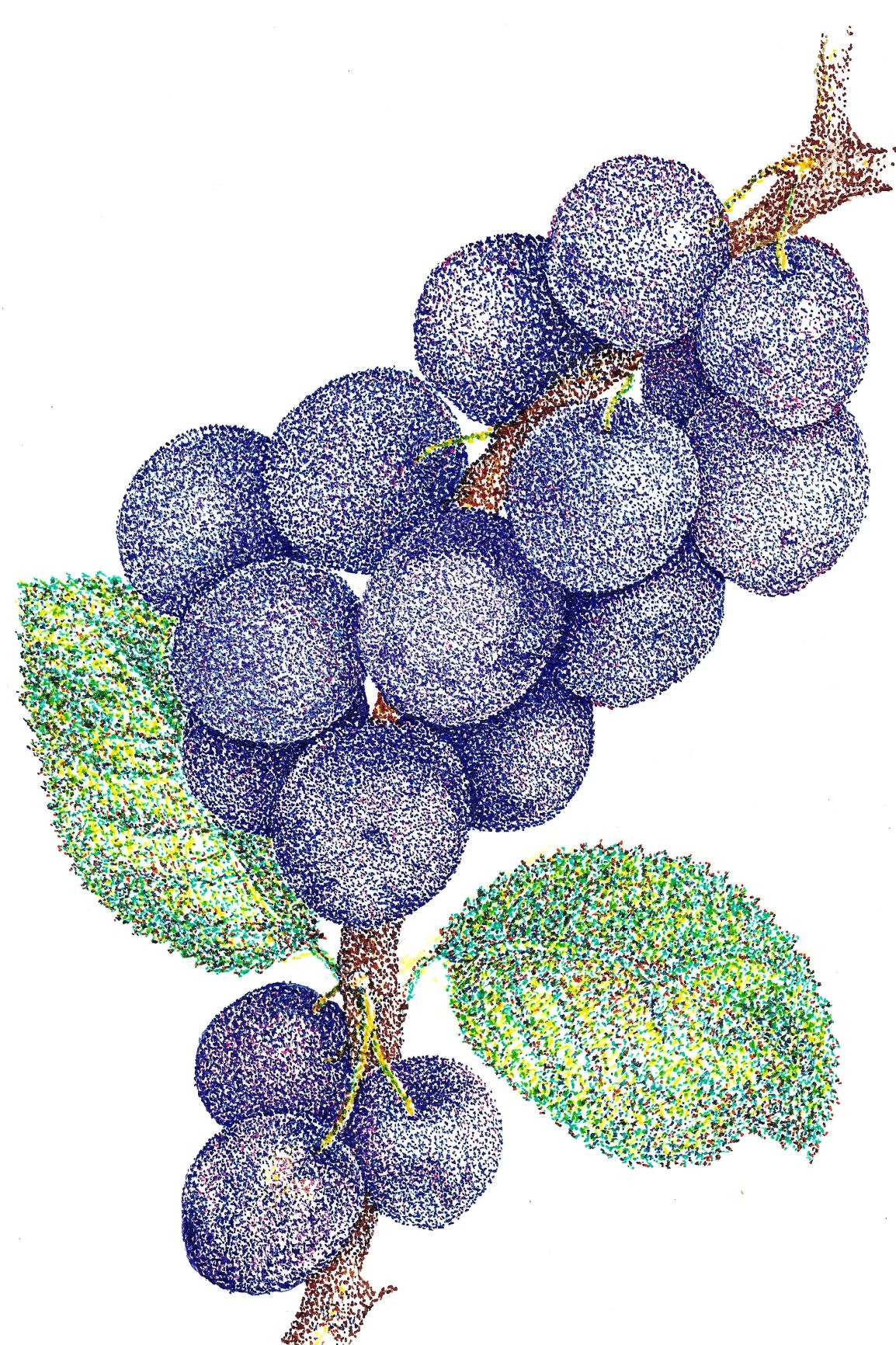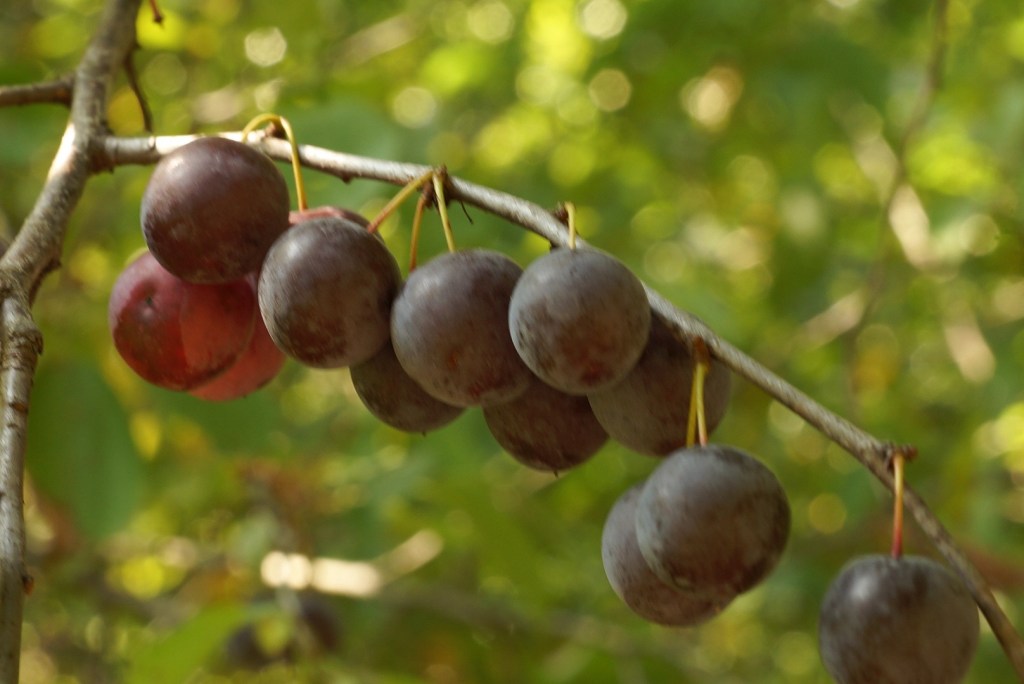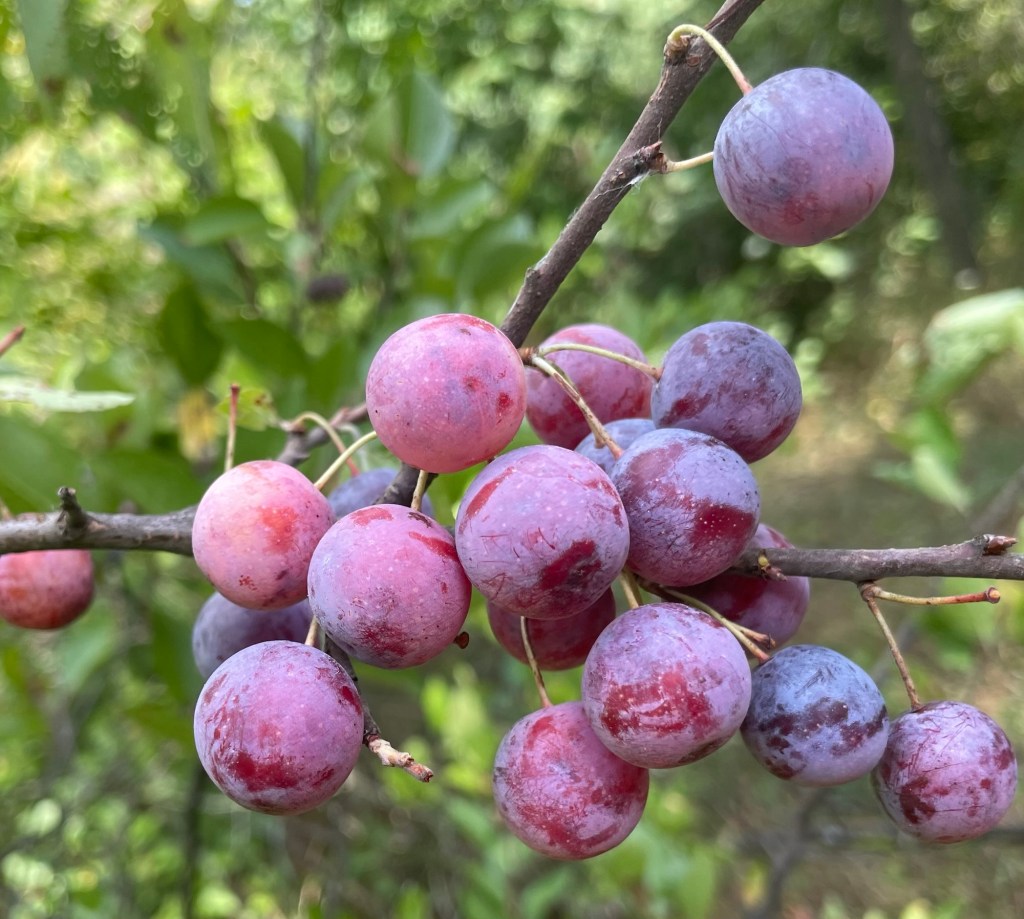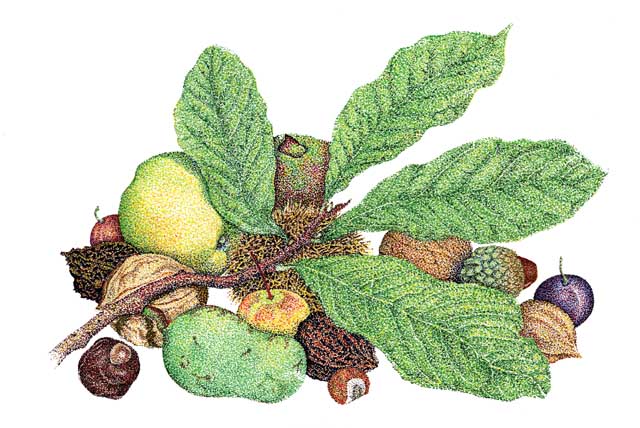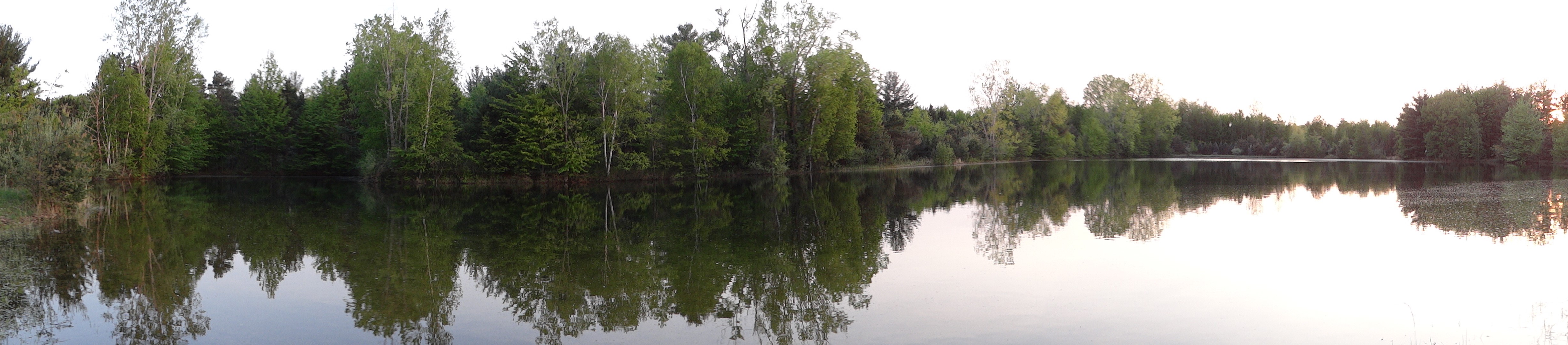
I first found the concept of Two Story Agriculture in the best selling book Tree Crops: A Permanent Agriculture byJ. Russell Smith. He was an economic geographer for Columbia University and had written extensively about land use and is considered the father of agroforestry. The title of his second chapter, “Tree Crops-The Way Out” with a sub heading of “Two Story Agriculture For Level Land” discusses the possibilities of using annual row crops with tree crops. It seemed to him that valuable real estate was being wasted and not used to its full potential. His ‘level land’ idea was to use trees as a type of vegetative buffer with different tree crops to harvest as well as to shade the soil and improve the crop yields below. As an example, you could also add the honeylocust or mulberry and then allow grazing of the animals in the pastures below supplied partially with additional feed supplements of the tree crops. My interpretation and implementation was to use woody and perennial plants in the understory in the attempt to create a highly diverse farm. The above image shows a slice of my plantings containing an example of two story agriculture. The tree on the far right is a shellbark-pecan hybrid followed by two types of late lilac species from China and then followed by a seed selection of northern pecan from Minnesota or Iowa. The tree in the background is a Quercus x bebbiana or Bebbs oak grown from seed discovered in Michigan. Each of these plants were grown from seedling in my nursery. It was very easy and inexpensive to do this. The crops in this area are pecan and hickory nuts and low tannin acorns. The results allow me to harvest seeds and make them available in a market of tree seeds. This in turn can make it possible for others to replicate my plantings in some individual interpretation of two story agriculture. Once in a while I will create something delicious from the crop plants. New seedling selections of chestnuts, apples, plums and cornelian cherries are coming on strong in this area most of which were planted by small mammals and birds. The largest trees tend to aid in this conversion of pasture to forest which essentially leads to a situation where it is not necessary to plant trees anymore. It is done for you.
Location, Location, Location
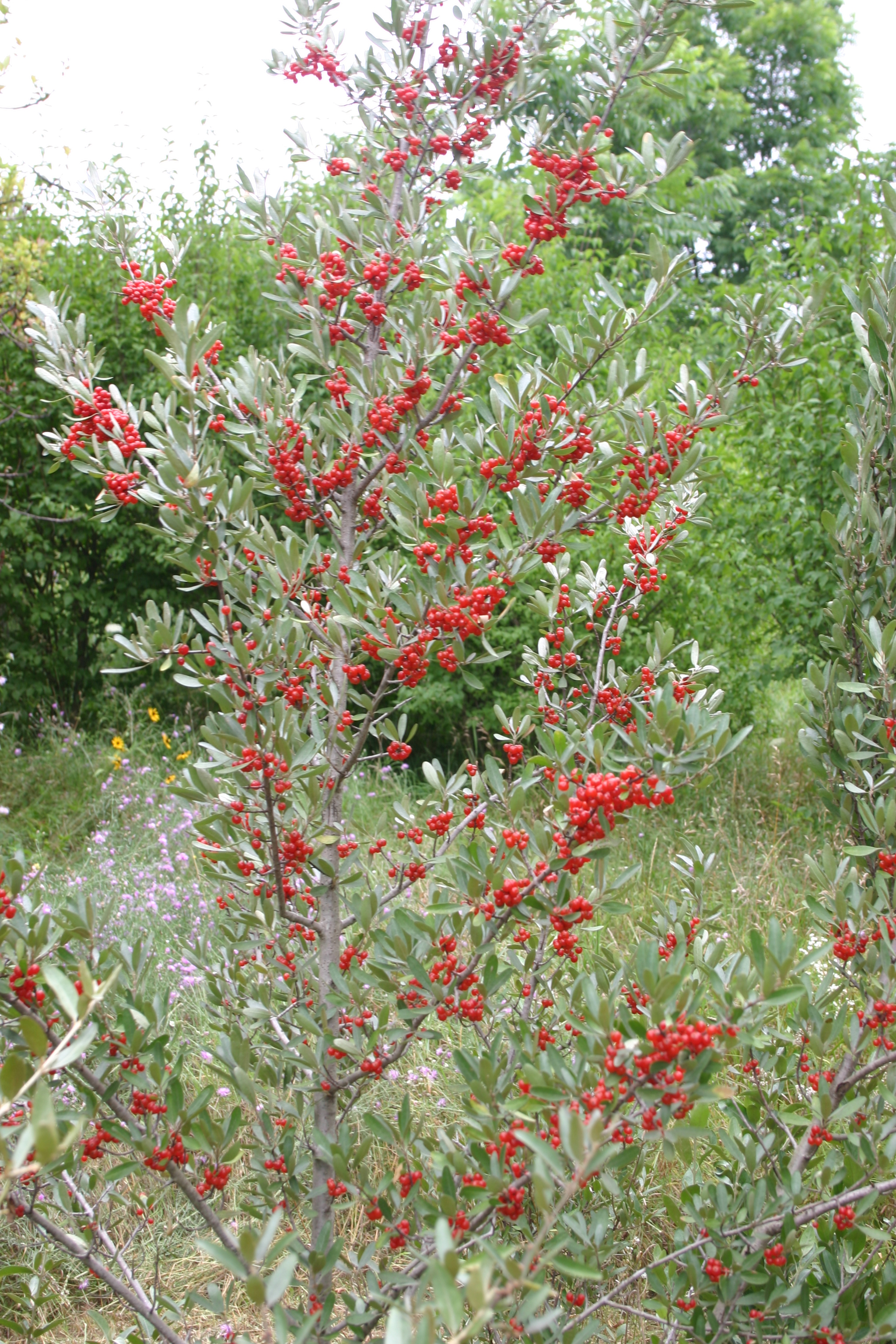
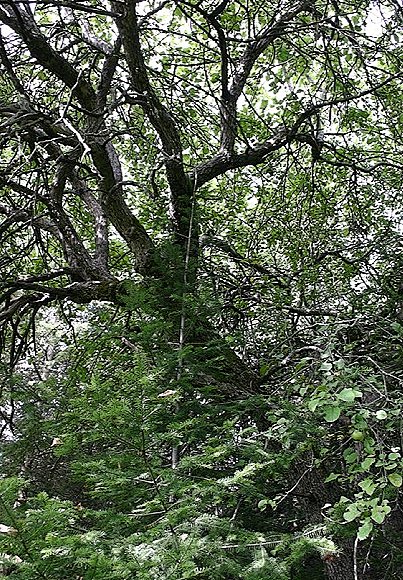
The image above is taken at the very top of the hill with the highest elevation in the area and was one of the most difficult places to establish trees due to the wind and drought in the summer. I lost a lot of trees when I first started planting there. With the advent of Tubex tree shelters along with changing my choices and timing, my success rate greatly increased. The fall planted oak and hickory began to make it through that critical first year. Just to the left of the picture is a steep hill facing due west. The prevailing winds are from the west and southwest. Particularly hit hard were many chestnuts and hazelnuts so I began using more oak and hickory within this area including shrubs like the lilac. As those species grew so did the self seeding of other trees including hybrid American chestnuts and shellbark hickory. It took 20 years for the whole system to begin to take shape. One area that is thick with dewberry, wild red raspberry and wild Himalayan blackberry became an ideal place to self seed as well as eliminating the pasture grasses.The turkey use this area to nest. Once the tap rooted trees grow deep into the subsoil, they grow very fast and are immune to drought even on this hill of sand. The two story root system reflects the canopy and is a mirror of what is below. Today it is very easy to grow other shrubs, small trees and perennial vegetables in this location due to the protection from the mature trees. Now it is time to make hay while the sun shines so the last few years I keep adding potato for groundcover. I am adding comfrey and self seeding yucca directly in the new plantings of plum and chinquapin chestnut.
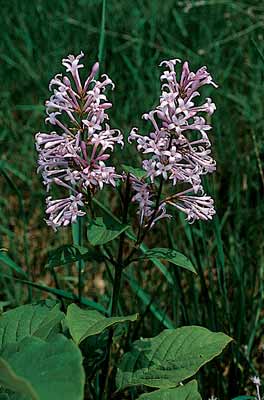
Preston Lilac developed for the Canadian Prairies
The Power of the Lilac and Its Olive Family
Conservation loves the lilac. It was the plant used extensively on the plains states as a wind buffer but it became popular due to the fragrance of the flowers and ease of cultivation. I started growing them from seed using commercially purchased seeds. There are many species of lilac and soon I created a collection of them at my farm meant for just this purpose. I focused on the seed production part of it as most of the Syringa vulgaris selections are done from cuttings. The common lilac was very prone to mildew so I looked for species that were immune to this weakening disease. I was particularly interested in the Himalayan, Preston, Late and the Korean species from seeds not clones. I scattered small plantings of them throughout my farm often in the worst locations where even the grass struggled. Typical of its olive family relationship, the Genus Syringa has very dense fibrous roots. This makes it very efficient at capturing water after a rain fall. If I had to do this again, I would of planted more lilac. The fragrance alone plays a role in calming down the human part of this equation of two story agriculture. I have been planting the northern olive look alike, Chionanthus virginicus, Fringe Tree and its Asian cousin, Chionanthus reticulatus hoping I could recreate the lilac effect plus make olives from the fruit. Chionanthus is much slower to establish in my ‘non-garden’ areas yet it has held up remarkably in those locations with reference to drought and competition from grasses. Three years ago a few started flowering after a fifteen year juvenile stage. No fruit so far therefore no experimental olives to experience. For now, I am going full lilac and plan to harvest seeds this coming fall. In the meantime, I continue to dream olives. Everyone has olive dreams, I am sure.
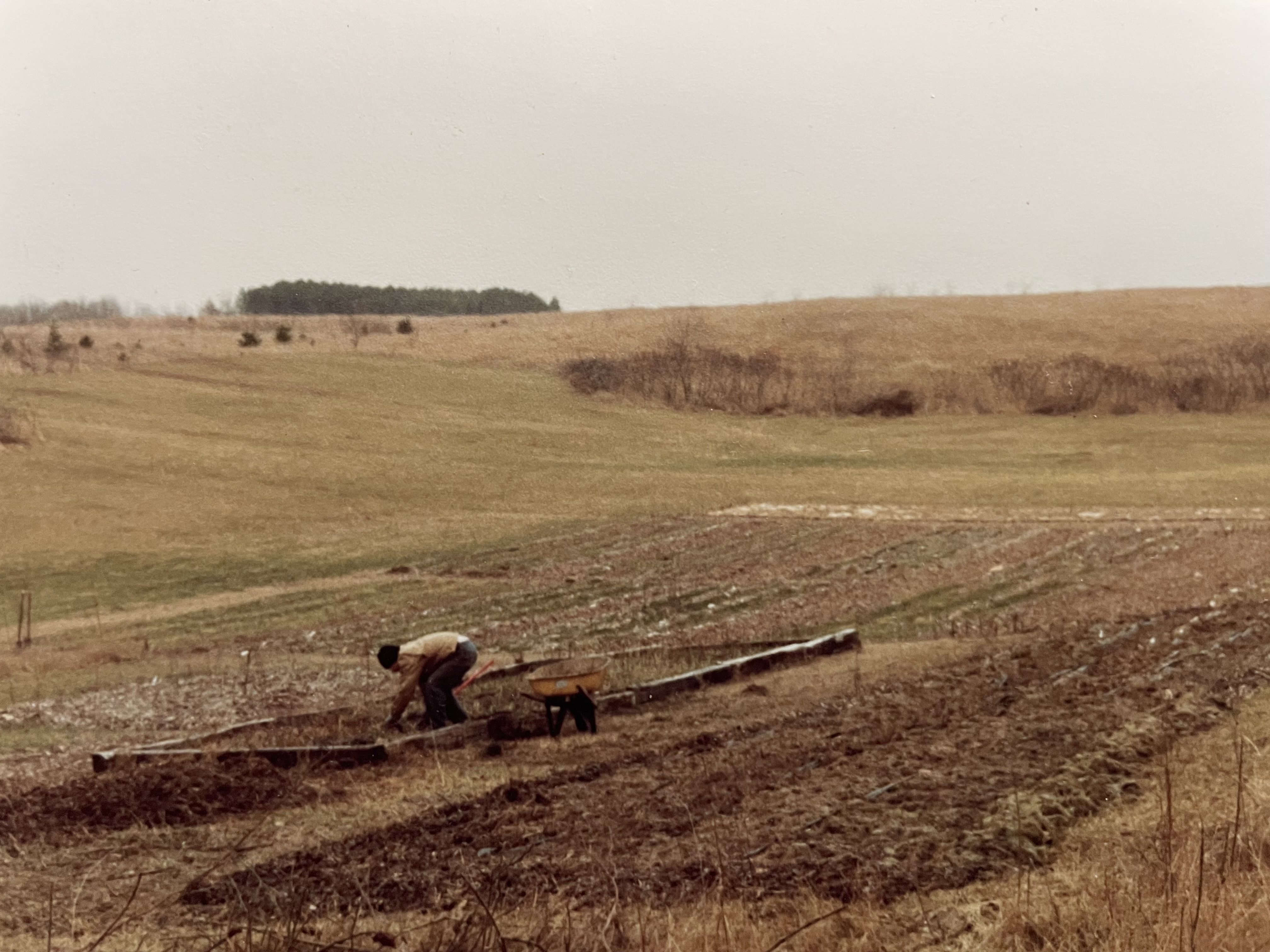
The hill featured in this story is in the background and goes to the right of the image. At the base of it was a large colony of Staghorn shumac. The mowed relatively flat area was the beginning of my nursery in the mid 1980’s. My father took this picture for me.
You could design and implement any number of combinations of two story agriculture with rich diversity. From ground up it could be wild tomatoes and white clover, plum and crabapple. It could be comfrey, wild peppers, neosinte-wild corn, plum and edible acorn oaks. This spring I am planting one now that uses comfrey and potato as groundcovers. The second story is cornelian cherry, Cornus mas. The third story is Chickasaw plum with shellbark hickory as an overstory. In this same area I am using a new form of Tree Lespedeza bicolor called Treefolia also known as shrub clover as a nitrogen fixer while direct seeding mixed species of yucca to help loosen the soil which will allow better water percolation. Even by acccidental or intentional human introduced associations, plants integrate and become the community of all inclusive possibilities in a two story system. My nearby Paulownia tomentosa selections for wood are slowly becoming engulfed with the Chickasaw plum colony. The Russian and Kansas selections of wild bergamont make up a portion of the groundcover as a flavorable tea plant. It is a guild with infinite variations where all tomatoes love carrots scenario. There are no weeds.
Tree Crops-The Way Out and Two Story Agriculture for Level Land. A few words is all I remembered. That was enough to help me fulfill my life with trees.
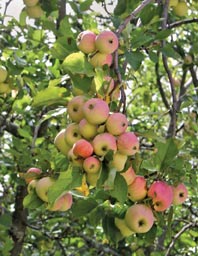
The above image is my tree crop farm where seeds from a global perspective created a food forest rich in diversity. It was a pasture cut for hay. Today the plantings contain many species apples with unique and powerful flavors.
From the time I was a child, I loved to grow plants. I threw a pit of a prune near the back door of my home. A tree emerged and I quickly put it in a pot. How could this happen? The seed did not look alive yet it produced a living tree. This was a straight line to growing trees. I have a few hand tools. I have an open field. And soon, like my father before me, I will have a tree farm. My land was devoid of trees. It was too small to be a commercial operation of a single species or cultivars. I did not have the resources to create a fruit farm. My nursery idea began in college when I would go to the library and read the reference books of Hortus and Brooks and Olmo Register of Fruit and Nut Varieties. As reference manuals go with their black and white images, they brought to life the great variety in nature. Often this variety was lost over time to the point where only a tiny fraction was used in modern agriculture. It was a mind expanding experience for me because I wondered where did the other plants go. There were many ‘castaway’ food plants that fell in the minor camp. This meant they were insignificant in terms of use. I wondered about culturing a few of these plants and how they could make a positive influence in the world family of farmers.
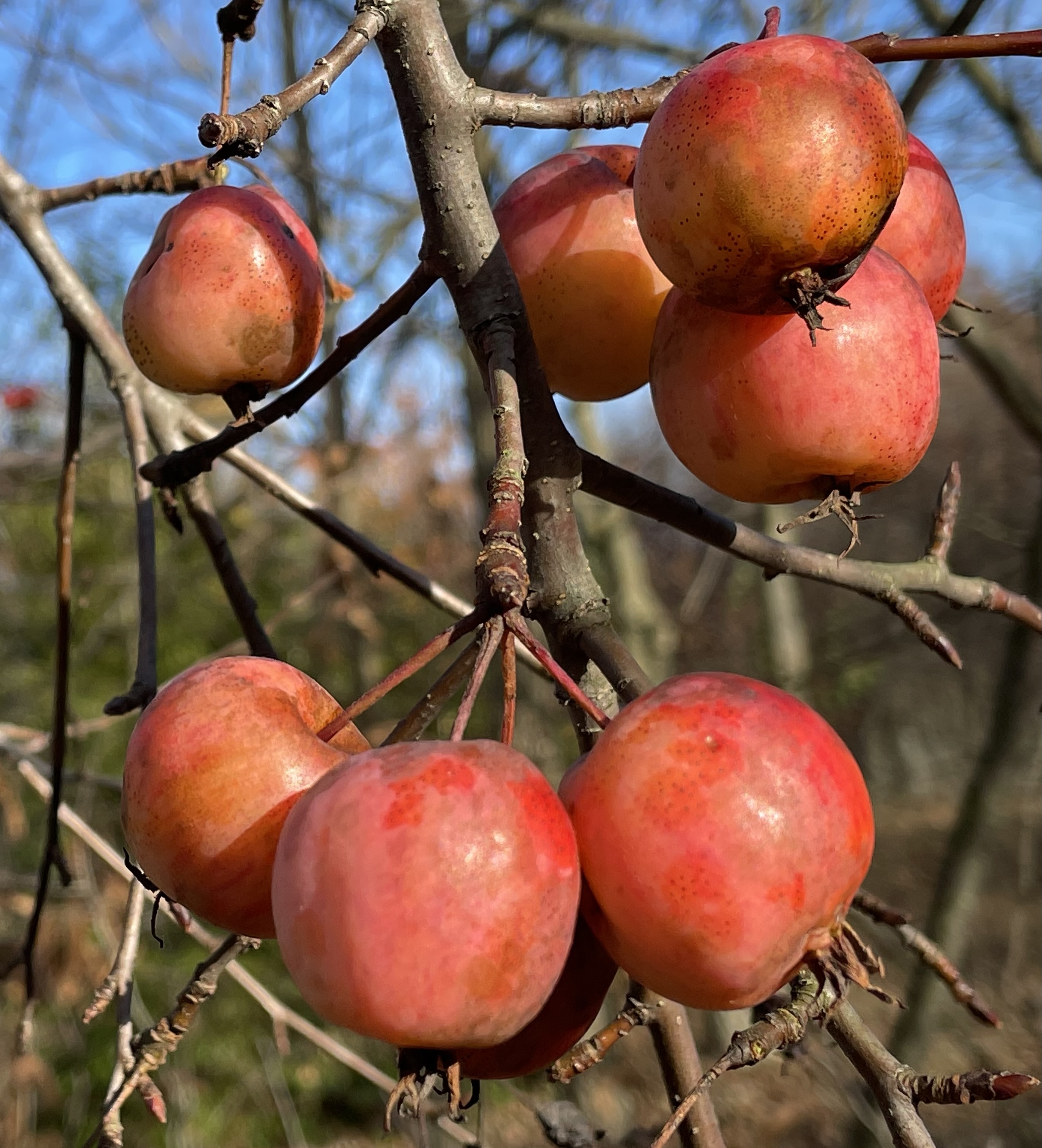
This indigenous North American species of apple is called Sweet Crab, Malus coronaria. It’s nearly impossible to eat fresh yet some seedlings like this one provide a rich flavor like a tart mini-Granny Smith apple. It is the only apple I found with zero worms and always had clean fruit.
My younger self didn’t realize that farming is highly segmented and specialized. It needed diversity yet didn’t want that in its production systems. There everything has to be the same plus it can’t be far outside the familiar tastes that people enjoy. Like my apple growing neighbor, you could have 30 varieties of apples, but the small tart green apples are not what people eat or desire. Having a collection of diverse species didn’t mean it would be put to use on a larger scale. Recently with the advent of small scale syrup and cider making for flavoring, the species apples have some great possibilities. Here was a way to harness these incredibly concentrated and complex flavors.
Woody plants take time and space to create a ‘grow-out’ to assimulate new genetic combinations. Ideally you would grow these non-clonal apple seedling collections and put them on public land to further test their capabilities in farmerless fields for long periods of time. There would be no spray or herbicide use. It would test the limits and explore the possibilities of no spray apples and the crabapple as well as create a means to developing timber form apples for wood quality. The public would then have access to new flavors of fruits and get inspired by the unlimited possibilities of the Malus genus and its variety. These public lands should be protected the same way a state park or federal land is. Instead of the native flora, these fields protect the global apple flora as a means to improve agriculture free of the breeding restraints put on the plants by humans who desire only the six genes that currently dominate the market. It is only by the cultivation of the species in a non cultivar way that these ideas will stay alive and integrate with our diets and lifestyle changes. This may sound like an apple pie in the sky but it is easily done. We have all the resources to make it happen and it’s inexpensive to do even on large acreages. We have the tools. We have the open fields. We even have the seeds. This is the future of tree crops and research in agroforestry in general. It is using the world’s flora to solve the world’s problems.
Apple Stories Come to Life From Seed to Tree
Here is my brief run down of a few species apples grown at my farm the last four decades describing their traits and possibilities in cultivation. All were done from seeds. Each one has a story to tell in its population and individual progeny.
The Manchurian Malus baccata
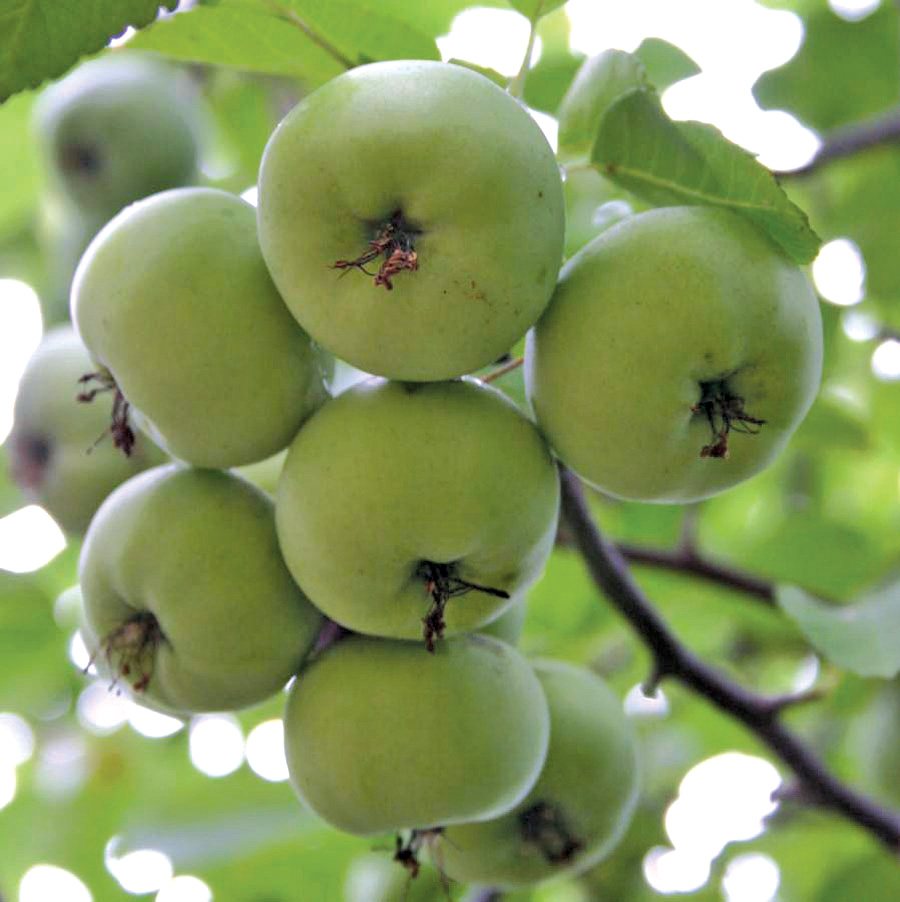
Normally, you would avoid pea sized apples filled with astringent and bitter compounds. This species is considered the world’s hardiest apple able to take minus 60 F. Biting into the teeny apples and chewing them into a paste is a good way to experience them in their totality. A few years ago while collecting fruits late in the season while competing with the cedar waxwings, the flavor was much more mellow snf possible to enjoy to some degree. This improved flavor is due to the successive frosts on the fruit. This is a common characteristic of many crabapples where long ripening times improves their edibility. The Siberian crabapples contain very high vitamin and mineral rich fruit as part of their chemical composition. This is the ultimate apple a day to keep the doctor away. My particular source came from South Korea on Mt. Kyebang where the apples were found growing in a very rugged, rocky environment. They are a very uniform non-hybrid population with some individual plants showing great vigor. They are free of fireblight, scab and rust. The species is very distinct with its bright clean light green foliage and large pure white blossoms. The fruits hang in the trees and rarely drop free on the gound on their own. The fruit quantity is usually high. This is the first apple species to blossom at my farm and does not hybridize easily because of that. This compontent of the apple forest is for a vitamin rich fruit for supplements and health products.
Hewes Applecrab Grafted SelectionHewes Applecrab-Seed grown from the grafted tree above.
The Virginia Crabapple: Malus virginiana-Hewes and Its Relatives
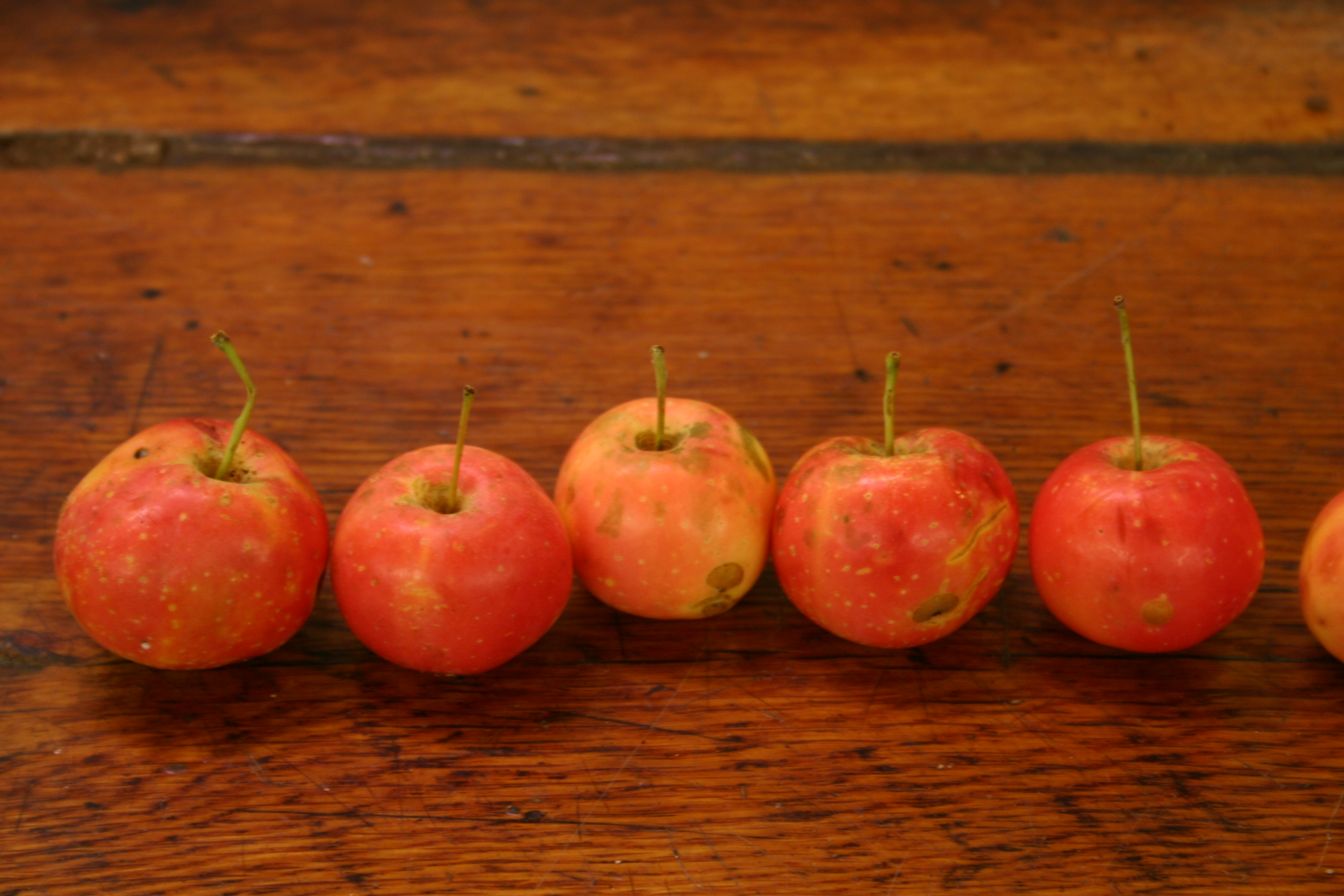
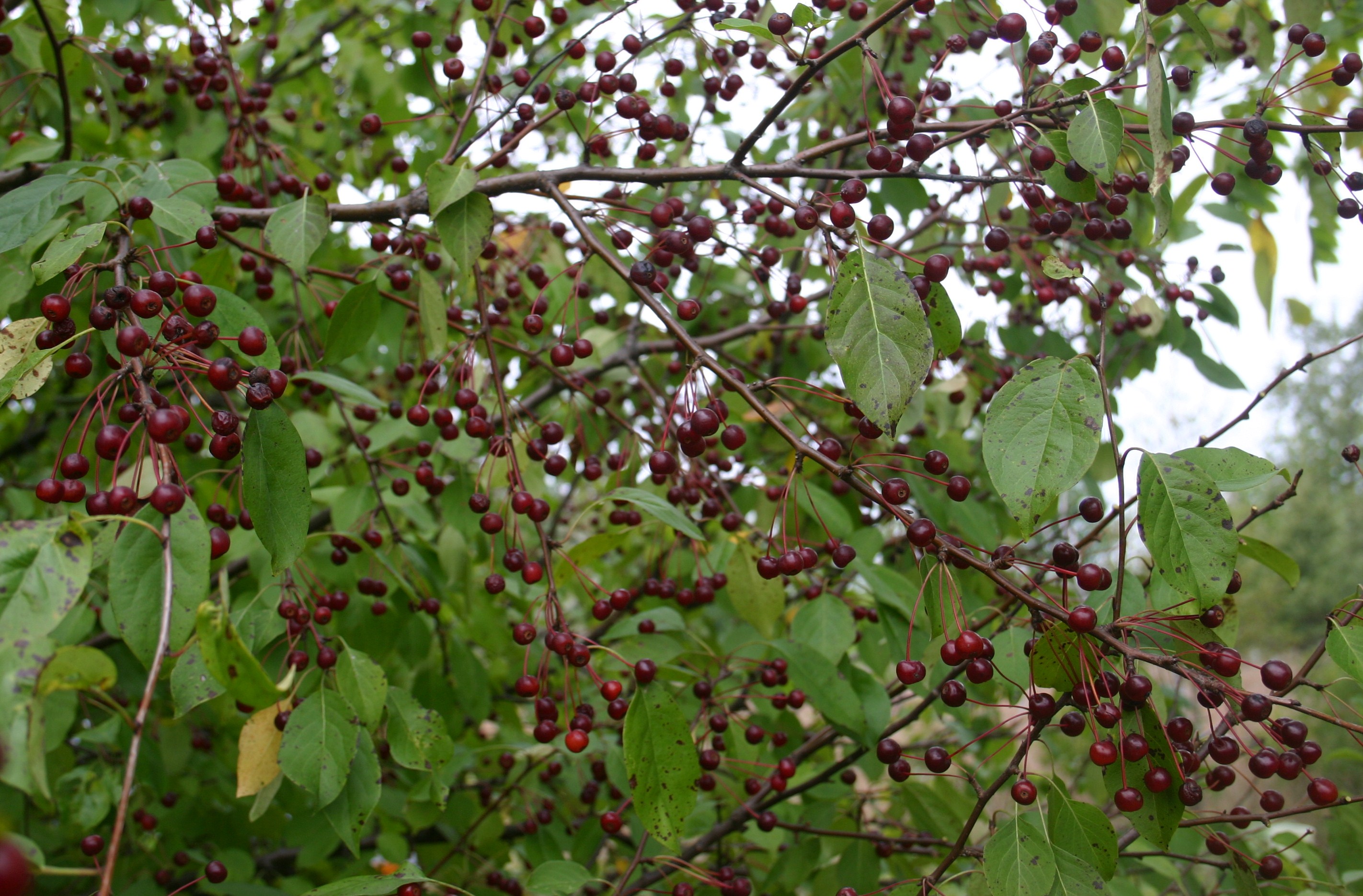
I took a short cut by buying a grafted tree from Edible Landscaping called Hughes. I planted the graft union below the ground to encourage it to self root. The Virginia apple is a loosely defined crabapple from the southeastern U.S. Over time I desconstructed the grafted form to its species level by growing out many seedlings and selecting those with the most vigor and clean foliage. This type of selection process created clean and heavy fruit production far greater than the original grafted tree. The seedlings were much more uniform than I thought they would be with all of them producing a one inch red apple in dense clusters. The trade off was the fruit was smaller and much tarter. The seedlings took on a timber like growth habit with broad spreading branches and a height to 40 feet or more. I limbed them upwards near the hybrid oak plantings. It would be a good tree to root from cuttings to maintain this vigor in orchard settings. The fruits can be shaken out of the tree easily by early October or harvested by hand on tarps. The Virginia crabapple makes an excellent jam and jelly. Its compotent of the apple forest is that of heavy fruit production for syrup, jelly and cider for adding flavor to other sweet and bland apples. The species itself is of use to go beyond clonal reproduction.
The Russian Crabapple: Sometimes called the Paradise Apple
The Russian Crabapple Malus pumila var. niedzwiecka
This particular species apple is a small apple species coming from the Russian apple forests and other species mixed in over time as it traveled throughout the world. I received seed of it from an overseas collection which said it was one of the original crosses. The seedlings were quite uniform but with larger fruit than the original seedling. I only had one tree of it. What I noticed about growing this particular crabapple was its red flesh and heavy yields. After 30 years, it continues to crank out large volumes of small crabs that if nailed by a few frosts taste very good like a concentrated berry. It still needs the sugar molecule to calm it down, but the flavor is super apple. The red and pink pigments are very pleasant to see and you can see why this species is used for adding anthocyanins to other larger cultivated apples. People back cross the apple to get red fleshed apples. I started a secondary planting from this one tree. They are all very vigorous and clean. This compotent of the apple forest is that of a berry and its ability to produce large volumes of clean, small red apples high in anthocyanins useful for food supplements, creating new flavors while preventing human illness. It is the apple a day species.
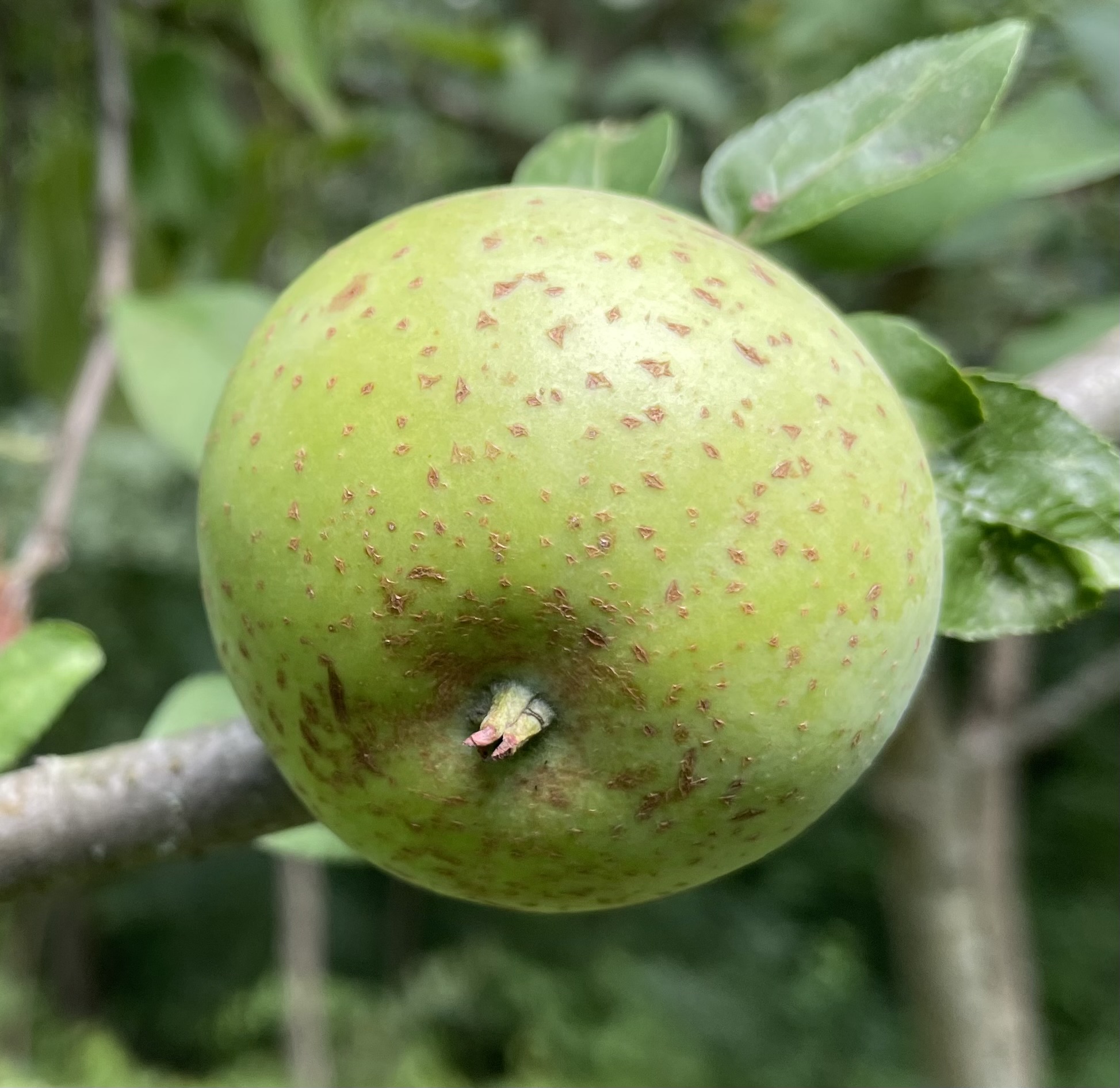
Seed produced from a Russet apple in a gift box.
The Russet Malus domestica
For a while I was buying apple gift boxes for Christmas to friends and relatives. This is when my dad quietly told me “We liked it…but don’t do it again.” Often these boxes are filled with russet apples like Grimes Golden that look like baked potatoes on a stem. My father was likely thinking this was not an apple and Ken is feeding us weird stuff again. I began chiseling out the seeds from these boxes and growing the seedlings. It happened that the thick skins on the russets comes through quite strongly in successive generations. These tend to repel insects from breaking through and destroying the fruit. Even codling moth seems to be blocked to some degree. Some of the apples are very funky in shape with weird protuberances looking like mini-volcanoes on the surface of the apple skin. The Russet became a means to discover completely no spray apples. Apples are sprayed 16 times a year. This is our way out of this apple nightmare for the apple and its human counterpart. This component of the apple forest delivers healthy fruit for fresh eating rich in nutrients and free of insects and free of all spray. Others have also discovered this work around in the search for developing unique cider apple varieties. Despite it being a breeding tool, a seedling planting of this cross also yields many types of crabapples in the process. Along with the insect resistance, this is an avenue to persue clonal reproduction using seeds only from open pollination.
The Prairie Malus ioensis
This species apple created a heavily ladened stolon producing tree rich in bright yellow fruit with strong astringency impossible to eat fresh off the tree. Jam from it turned it into a superball condensed nuetron star like mass impossible to put on toast without shredding the bread into pieces. It was true from seed and few if any hybrids are found in the population. I was surprised at how the main trunk was short lived. Evidently, the species tends to use the stoloniferous root system as a means for regeneration much like Staghorn Shumac. The colony is extensive. When I lost the original tree I could see the sprouts in the shade of hybrid American chestnuts and hybrid oaks over 40 feet away. It’s a traveler. The density of the fruit along with its bitter and astringent compounds provide a challenge for taming it into a syrup. Like quince, it could be boiled in sugar. You have to view it more like an olive or quince plucked off the tree. I did make one selection from the seedlings of roughly 2000 individuals. It was free of cedar apple rust and black spot on the leaves. One winter the deer browsed down all of the trees in the original planting bed except this one. So I obviously had to plant out the one the deer left alone. This compotent of the apple forest provides is a quince like characteristic rich in pectin. It could be used as a thickener and be combined with other sweeter apples. The natural variation in this species is of use for insect free fruit as well.
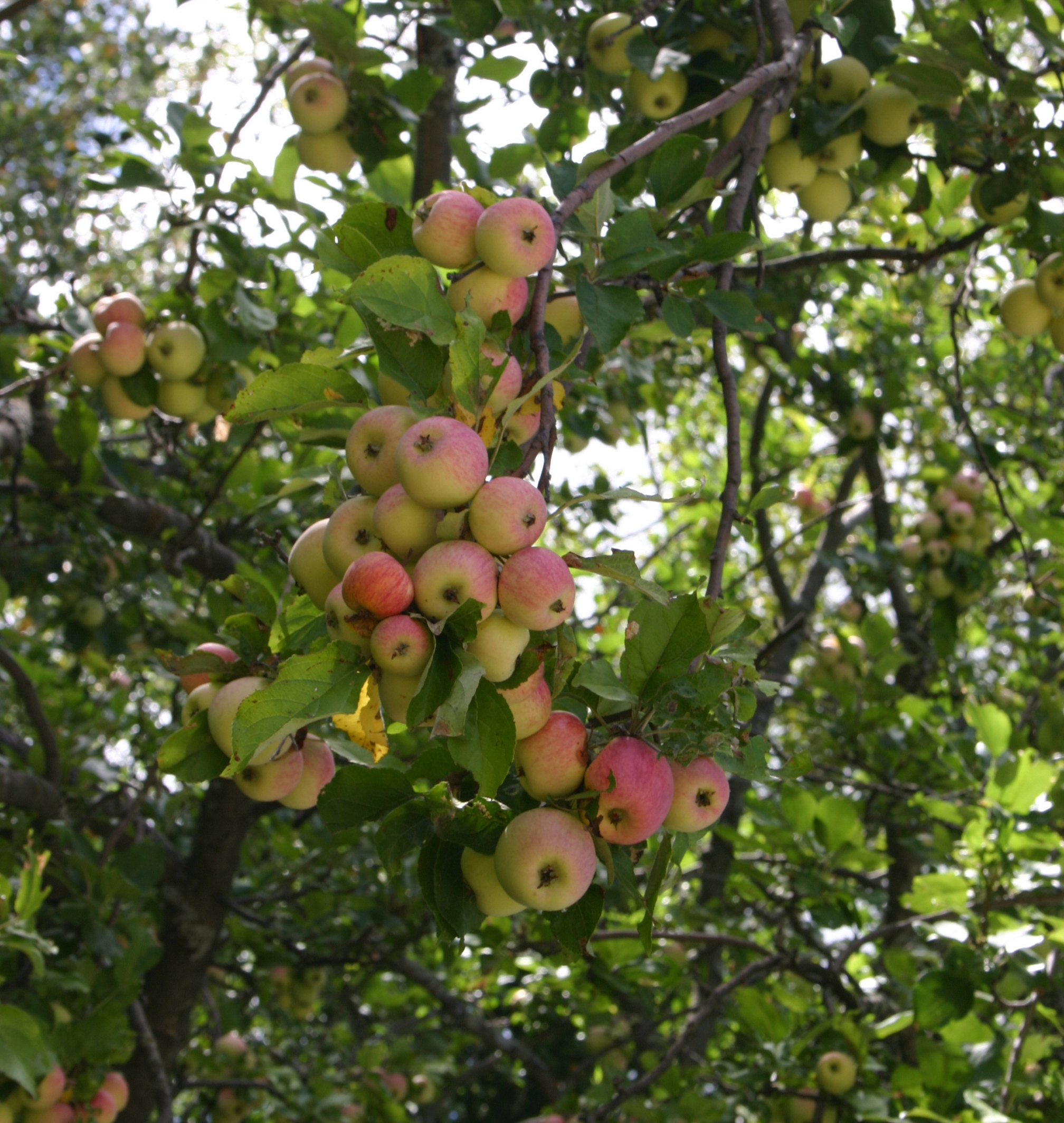
Found not far outside of Rogers City, Michigan this Michigan M-68 highway apple highlights the value of wild trees and their value to the humans that use them and the animals that thrive on the fruits. This was a clean one.
The Wild Apples Malus domestica
Pretty much any wild apple tree found as a seedling is useable for something. The problem arises if the fruit is filled with worms and other destructive diseases lowering the quality to the point of no return. But what if you had a field of similar seedlings each selected from other wild populations where fruit integrity is captured not as clones but as seedlings. All of a sudden your apple forest opens up into a wild population totally capturing the laws of nature in that region. It becomes local as a native apple. I began noticing a few of these uniform populations in northern Michigan on vacation. People use them for deer food during hunting season. In a few of the locations, the apples even out over time and began producing apples very similar to the parent trees. It is not a common occurence but it does happen because of the limited genetic diversity to begin with. Today these apples represent some of the older storing apples that people grew for eating in the middle of winter. When I grew out a planting of the seedlings produced by a customer from the Upper Penninsula of Michigan who sent me seeds from their orchard, I was over joyed at the clean foliage and large leaves of the plants. Many were super vigorous growing to 3 ft. tall in one year from seed. This is always a good sign. I still have not fruited the selections yet but to see such healthy plants gives great inspiration to those of us who grow apples from seeds from a cultivated setting. This compontent of the apple forest draws from wild local apples which will go back to its orchard origins while focusing on ecological adaptibility, creating tall, healthy and long lived trees.
On My Way Home Apple
A few weeks ago, while driving on my way home from my daughters, I spotted a crab apple with the most immense crop I had every seen on a tree. The whole tree was coated with one inch dark red apples to the point you could not make out the individual branches. It looked like a dark red entrance to a cave with the branches hanging to the ground in great profusion. When I came back about a month later to photograph it, the fruit was completely gone and consumed by birds and deer. These types of seedling trees have their origin due to a small mammal or bird. They eventually work their way up into the canopy of nearby trees. Every now and then someone unaware of what the tree is or could do as a food plant, cut them down and herbicide the stumps and surrounding area. Lets face it, nothing says wire fence like abandoned herbicided parking lot. This particular parking lot tree was used by truckers and let go when the business closed down. In the meantime, the cracks in the pavement became a means for seeds to germinate into the soil which in turn broke up the pavement further. These emerging forests contain the fruits of the animals that needed them the most to survive. Autumn olive, honeysuckle, multiflora rose and calllery pear are the first to arrive to create this new climax forest parking lot. The aspen trees blow in to help with the whole project. It is such a joy and truly is a work of art created by the laws of nature near this off ramp of Interstate 94. Without any effort on the human front, this is a glimpse of a global apple forest respository via expansion of a plant community where nothing existed before.
This compontent of the apple forest lies within our state of consciousness where it can freely grow before it expresses itself in novel ways shared by the Malus genus and harnessed by the human animal.
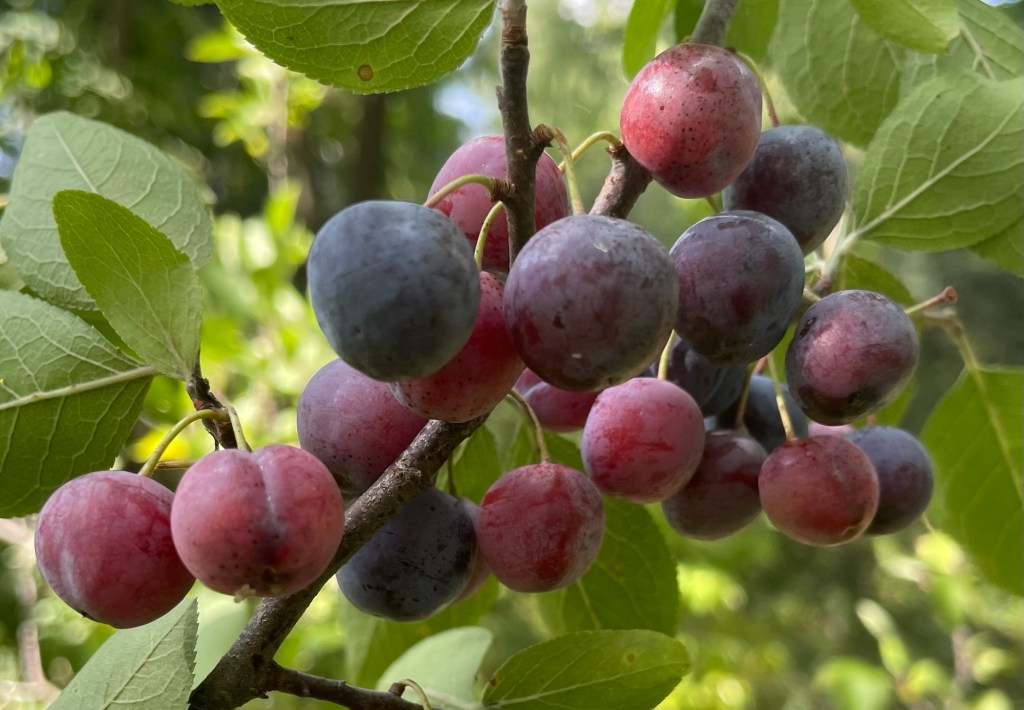
I always wondered about the range maps of plants found on the USDA Plants Database. Is the line of demarcation a real and genuinely smooth line or was it purchased directly from the Sears and Roebuck botanical books of yesteryear? And why couldn’t a plant like the beach plum just skip over a few counties inland? The answer to those questions as it relates to the beach plum is very simple. It never got a chance either through animal or human vectors. I was told years ago, there is a beach plum leaf sample in an old early 1900’s arboretum collection from the shores of one of the Great Lakes. No one knows much about it. Scientists want to know if it is natural and a lucky chance of nature or anthropomorphic. To the plant there is no difference. Fortunately, all plants are willing to travel to work elsewhere and this is what makes cultivation possible. The beach plum is not an exception despite its narrow range map along the eastern seaboard of the United States. It can move with the help of humans who desire its fruits the same way people eat Montmorency cherries which originated from France. For the beach plum, there is no difference between Nantucket and Paris. I applaud that.
When I started growing beach plums, I began to wonder if this plant ever grew in the dunes surrounding the Great Lakes. It is tempting to try it. I am sure it would flourish. It turned out, it is very easy to do at my farm because my farm was the beach of Lake Michigan thousands of years ago. I am roughly thirty miles from the beach today. Close enough the beach plum says. It was from here that I began growing out of thousands of plants for the mail order trade along with testing my own jam making abilities with this plant. It was easy and a joy to do. The plant is naturally at home in Michigan flowering later than any Prunus species missing all frosts. Although there are natural hybrids of it with the American and Wild Goose plums, even without breeding the plants are insanely productive with huge clusters of fruits produced all along the branches. You could easily produce an orchard of it without cloning. This type of sweet fruit production via Prunus is only possible in the worst soil and environmental conditions for a fruit farmer. Even the frost pockets could grow the beach plum. Each plant is genetically different, making the orchard a wild population. When previous growers failed at cranking out clones of beach plums it was only because they were not a fan of isolation. A genetically different population saves the day in terms of yields. This is difficult for horticulture to comprehend where everything is neatly selected in a uniform and tidy way. You can’t just have wild with everything radically different. Oh yes you can, and this is how the beach plum rolls. It’s not about you. It’s the beach plum way.
On the beach, there can be a lot of competing interests of humans and plants. If there is development pressure along the beach front or a change in the way the beaches are managed in some way, then the beach plum is not likely going to continue in that location you are fiddling with. No plants that I know are bulldozer resistant. Beach plums are very sensitive to herbicides. Bark transmission happens easily with this species. Early on in my career, I found out about this the hard way. This shortens their life and can kill the plant entirely in one season. If someone has the whacked idea of burning the vegetation while polluting the soil and air, then the beach plum will disappear entirely. Its retreat is the result of the sensitivity to changing conditions within the beach soil with its perfect balance on a microcosmic scale. Sand is soil although we don’t think of it that way.
“Nana” beach plum in full flower.
You want a lot of insect activity including flies for pollination. Anything that interrupts this is going to be bad for the beach plum. After 40 years of growing them, I am still at awe at the vast array of pollinators that are attracted to its flowers. It is never just one insect. Sometimes I see nothing and am confused at how the fruit is set to begin with. You need to camp out next to the blossoms to witness this miracle of flies and bees.
My biggest mistake growing them at my farm was mulching them with rotted hardwood wood chips. That finished off the older plants within two years. People experience the beach as a wonderful world of sun, warmth and frolicking. In reality, the beach is brutal in terms of fluctuating temperatures, wind and humidity not to mention soil you can fry an egg on. There is no volleyball or suntan lotion for the beach plum. There is no cool drink to sip on while basking in the bright sun. Yet not far off this scenario is a breathing root system deeply imbedded in the dunes going deep into the moist sand below. The soil is devoid of organic matter and their roots are exposed by the shifting sand. The beach plum perfectly reflects the laws of nature in that location. The wiggle room of cultivation is possible but think beach when growing them. Some people report a light salt spray on the leaves reduces fungal attacks.
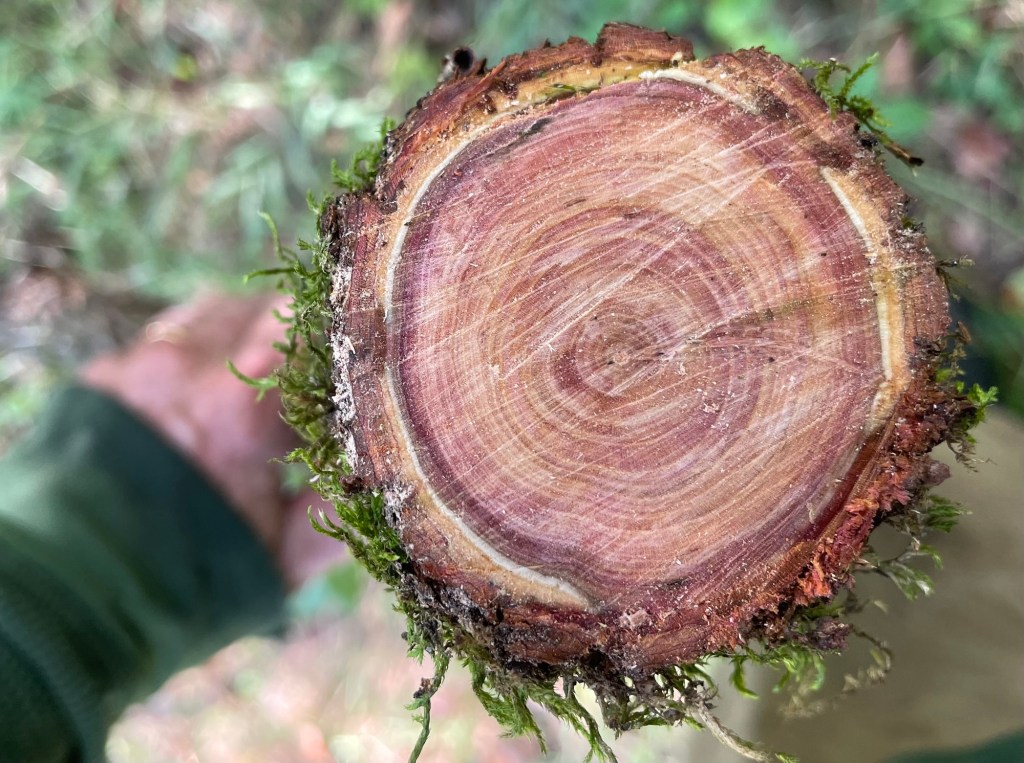
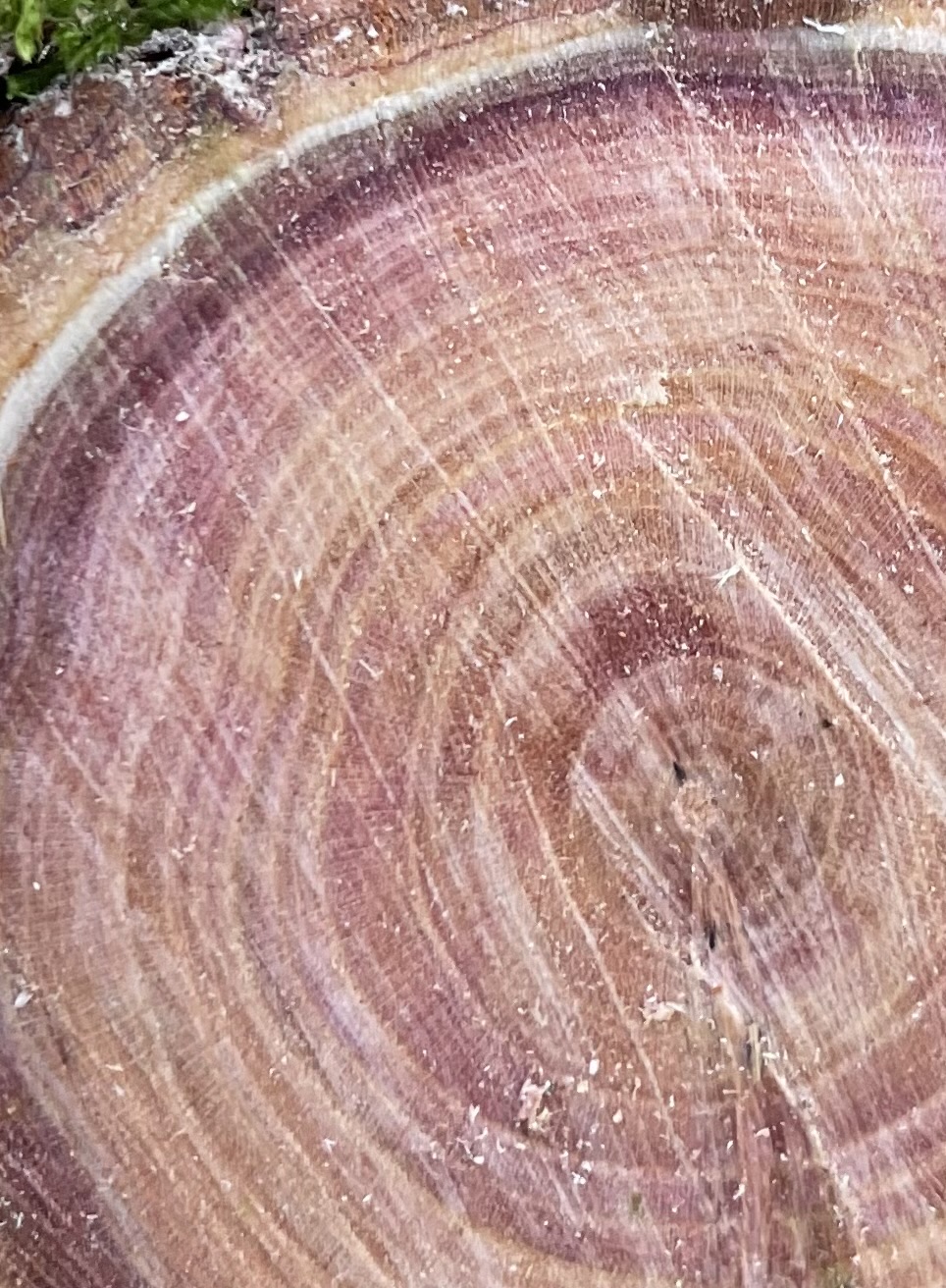
Rings tell the story on the beach.
This seed strain called ” Plum Island” is roughly 25 years old before I did this trimming. At this age, the plant weakens and discontinues fruiting. This is the ripe old age for the beach plum. You can see within the last 10 years of its age really decreased in growth rates.
Realize that the beach plum after fruiting for a decade or two will die completely. It is a short-lived species unless you allow sprouts to occur near the base of the plant and use those as your new plant. Some plants have the ability to sprout as they skip along the ground as a sort of modified stolon. This beach plum tendency was discovered in one of my seed selections called ‘Plum Island’. Even with the fading of yields after a decade or more of cranking out loads of fruits, the seeds you produce are easily germinated in the field within your orchard as it continues its multi-generational progeny in a smooth transition from old to new. This is a new orchard of the future where it continually replenishes itself in a way that directly benefits the farmer with lower cost and healthy fruit without spray. It is a diverse, every expanding always adapting in an evolutionary and ecological way. Now that’s an orchard.
Maybe we are just frolicking along as well following the path of the beach plum in making the world more fruitful and abundant with or without the beach.
When I first purchased my land in the early 1980’s, there was plenty of information in the books on conservation and ecology. I kept some of my texts from college like Fundamentals of Ecology by Eugene Odum and Shrubs and Vines of Northeastern United States along with all the botany books. What was missing for me was actual living collections by farmers in agriculture applying the ecology without the phytoxenophobic goals we see today. It would only be natural in that what comes out of these living food collections can be applied on a broader ecological and agricultural scale. The tree crop farm provides its valuable resources using plants from a global perspective keeping up with the demands of the modern world climate by producing progeny adapted to the new norm. On the level of ecology if you build it, they will come. The native plants arrive in greater abundance without a human planting it in a controlled time release way. I like that some of my favorite plants are seeding in from great distances and in an effortless manner. You don’t need burning or herbicidal applications. You need patience and that by itself is of short supply. I have some very delicious mulberries and sweet cherries that have seeded into but my favorite are the woodland flowers and many unknown plants which I cannot fully identify. I remember discussing this with a customer of mine who had a collection of 4000 plants in Florida. His name was Ken too. “Ken, this is Ken” is how he would say hello on the phone. His messages on cassette tape and later voicemail where quite long winded but never boring. He told me that new insects never before seen by modern science were being discovered in his plantings along with new plants he found he could use as a source of medicine for his personal health. He said diversity breeds diversity and there is no way to stop it because the plants are ‘calling out’ to everything around them to bring all life in to this type of ecological novelty. Like a beacon, plants stir the pot of diversity. I wasn’t entirely on board at first but now I get it. Ecology takes time on a quiet human mental level as well. You plant seeds and wait to see what sprouts.
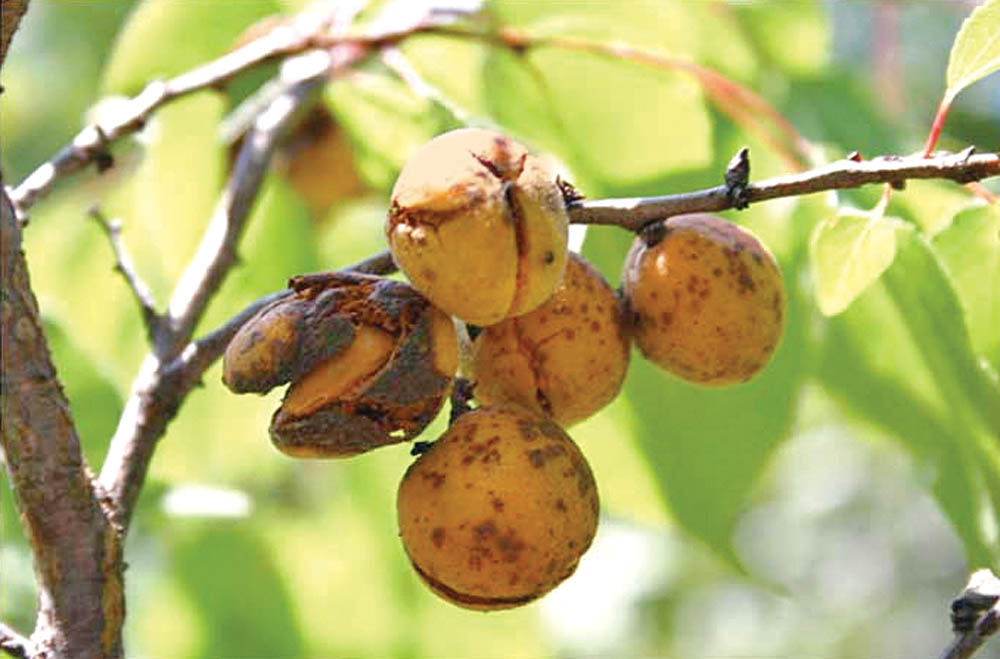
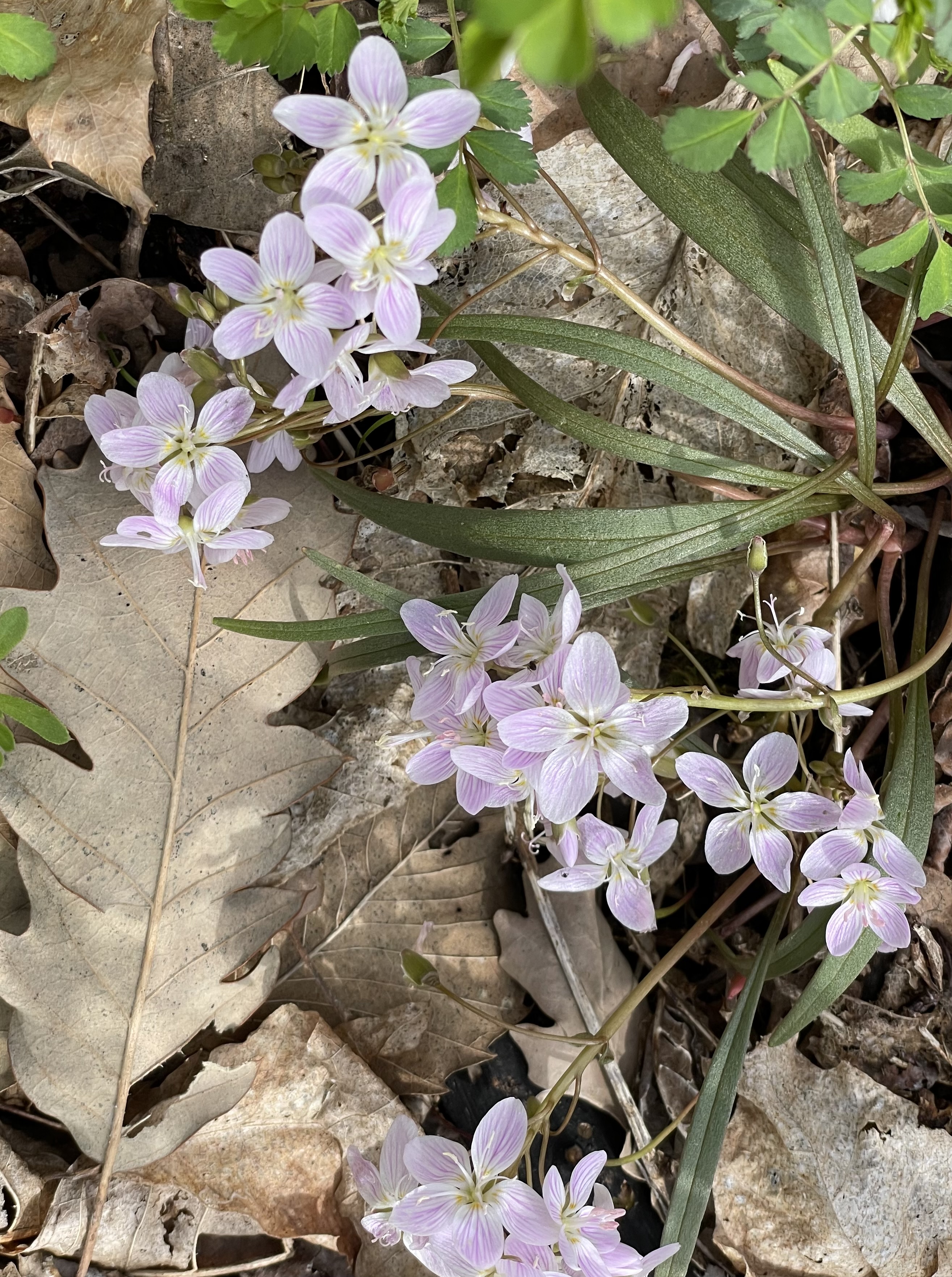
Spring Beauty-Claytonia virginica Seeded in under a multiflora rose which seeded in under a hybrid American chestnut tree. That tree was cut for lumber. Near the Turkey Oak, Quercus cerris and Paulownia fargesii trees. This was all a pasture cut for hay. Having a tree farm doesn’t mean you do nothing. Many times the simplest solution is the best. Here it is harvest time for these wild plums and apricots where I will go to ground level with a weed whacker to make harvesting faster and easier. In this process, I get a chance to scout for box turtles ( I found one here before) and new plants seeding in as well as the runners of the plums which I save and limb upwards. A few are removed to allow light in. Without new runners, the plums would perish and disappear entirely. The box turtles are found here frequently now and between this and the Callery-Asian-European hybrid pears has the greatest density of male and female turtles.
The prunings stay on the ground as fertilizer along with the whacked into green protoplasmic grass. Wild oregano of prairie origin is established here but it is not thick as other areas of my farm. That seeded in from 400 ft. away from a planting I did around 20 years ago. The existing Timothy and orchard grass are mixed in with some quack grass which is now fading over time to the point it is a minor concern as far as lowering the yields of the plum or apricot. Shade is a great equalizer in this arena. Patience is also needed for that to arrive to create that effect on the ever expanding plant community level. In this particular planting, there is one very large multiflora rose and amur honeysuckle that seeded in the shade of the plums brought in by birds who require the fruits to survive. When you prune the plants to the ground, the high protein sprouts become a favorite of white tailed deer and rabbits. Their manure is evident in this area which in turn feeds my plums with fertilizers. This in turn lowers the vigor of those plants and eventually they fade entirely. Both of these species also have viral infections which show up periodically and reduce and sometimes eliminate the plants entirely. Just another normal day at the tree crop farm.
You know what I feel guilty about? I wish I could produce my own fuel for my weed whacker. Maybe I wouldn’t feel like I’m in the Judge Judy courtroom of nature. Look at me when you say that! I had a friend who tried creating fuels for his truck during the seventies with a still. He loved using Jerusalem artichokes the best. It exploded at night when no one was around. The explosion brought in a lot of police cars and fire trucks to an abandoned barn. Luckily he did not live there, but he heard later the neighbors who gave him access were not happy with his biofuel project running amuck. It may have caught the barn on fire. I’m not sure. As a social worker who was used to calming people down; he went back to the gas stations after that trying to keep a low profile. Just getting some non-alcoholic gas here. Move along now.
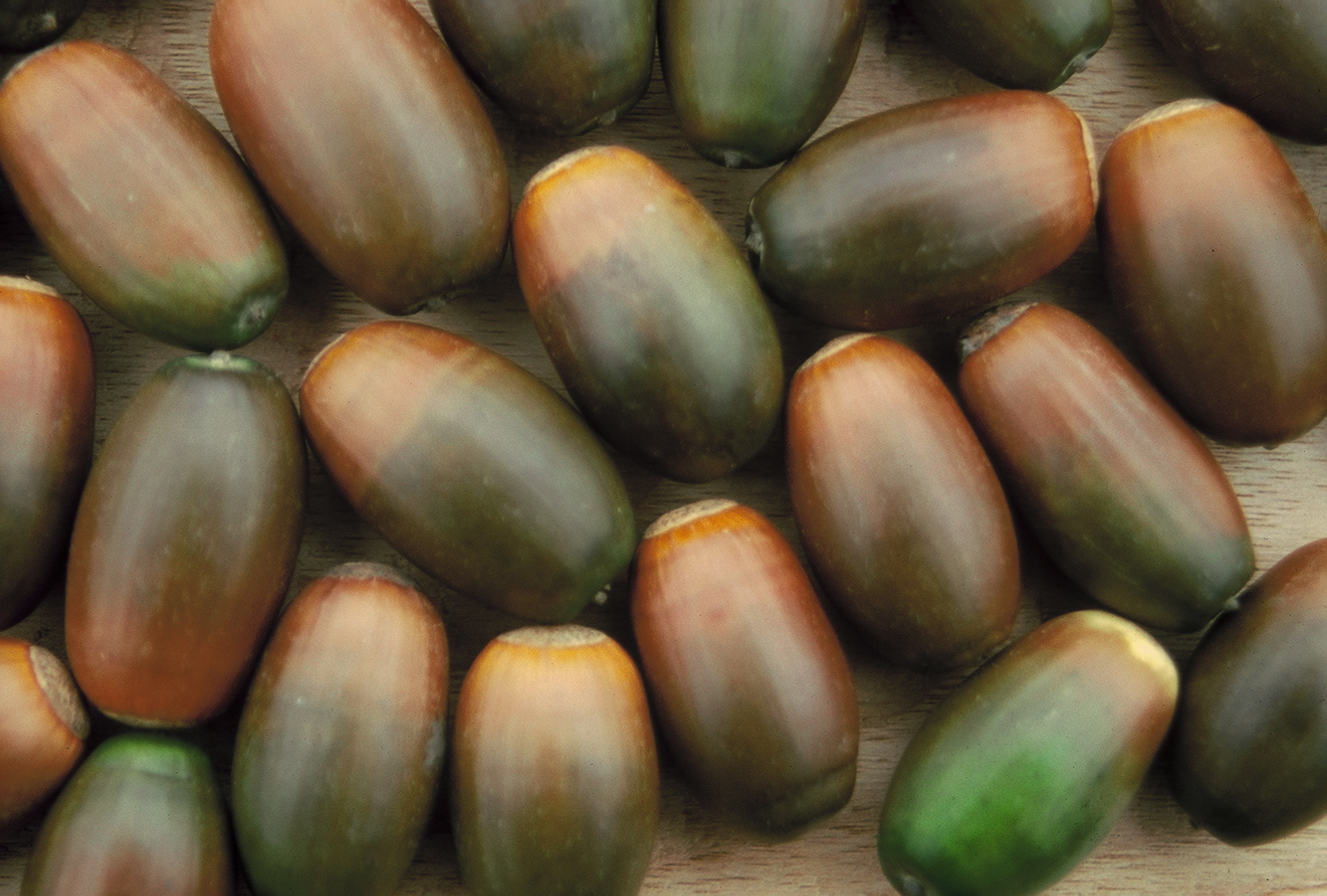
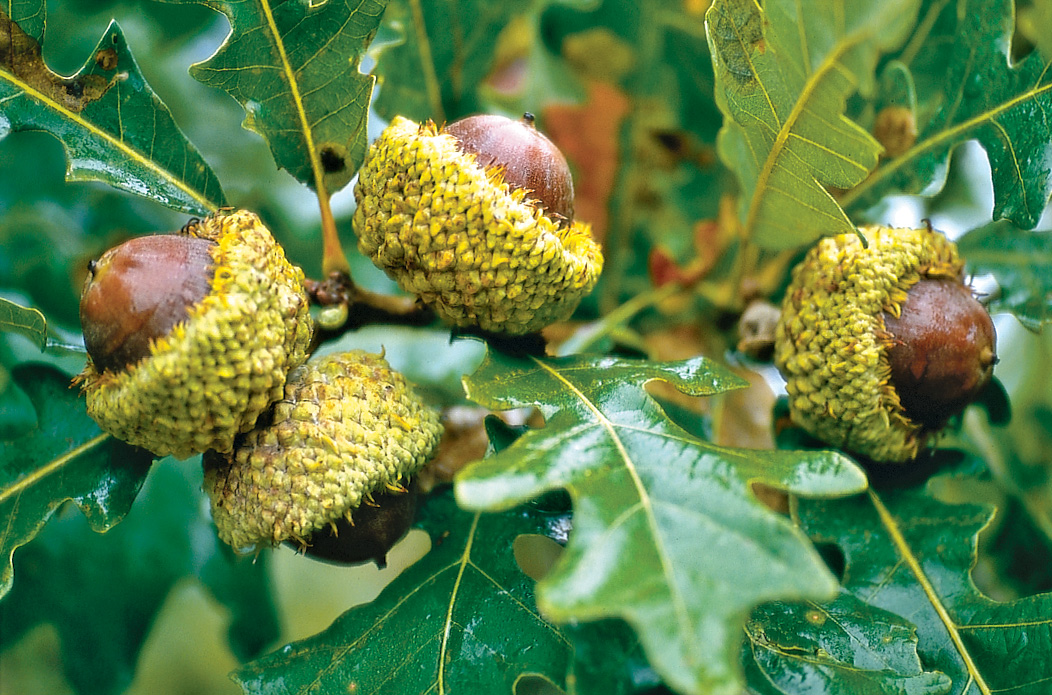
I was surprised to read this descriptive terminology of the oak genus and related families by a taxonomist many years ago. It really stuck and I have used it many times in writing about oaks in my catalogs. Usually cold and without life, plant descriptions are written only to fill the pages of the journals of botany. The “Young and Evolving” is not a soap opera on oak trees. Although it could be, it really tells the story of the great diversity of the oak genus AND its ability to change overtime very quickly. Here you have a sort of fluid plasticity to the species concept. Of course, there is sex involved including outside the norms of plant society but it is not in the human world. It is the wide crossing of the oak genus and species defying what is thought of as impossible or normal in the process of creating progeny unique in attributes carried through in succeeding generations. This was exactly what I found with all the thousands of oak seedlings I grew. They WERE young and evolving. We think of oak trees as slow growing and unable to change. We view oaks as stubborn, slow and unchanging over time. Thanks to the poets, they are the oh-so-slow immortal oak trees after all. Yet at my farm the changes could be seen within the first generation and continued unabated with zero boundaries of cross pollination. It was like a dam of diversity broke and huge rivers of infinite progeny opened into vast deep pools of genetic resources. Dramatic! This is at the end of the season show with the big reveal where the whole cast cries. Cue the woodwinds!
The big question becomes what is the value of this type of diversity and how can this be harnessed both as a population and to create cultivars from. More than ever we need the oak tree. It can do so much. The diversity was so large in my grow outs, it was ridiculous to think there was one plant better than another so common in the nursery trade. To top it off, I had supporters who helped me immensely with my acorn habit which was growing exponentially as I grew thousands of seedlings at my farm. I created a backlog of trees and soon I had to jump the hybrid oak ship. That’s right. Few people were buying them to keep up with my production and I had to get out the saws. Yet, I kept meeting people with a similar mind that the oak tree had huge potential for food from acorns as well as selections for lumber with unique colored sapwood and heartwood. Even today people show an interest in hybrid oaks. Unfortunately, it is mostly within the wildlife food-habitat hunting circles that have stuck. There is little about acorn bread for the most part other than the foraging movement and zero about increasing the timber production of oak trees. This could be a direct route for the young and evolving oak tree. Now you have an opportunity to harness the oak tree on a bigger scale which is needed to make it practical. Oak trees inspire us to go big anyway.
Here are two examples of me trying to go big in all things Quercus while discovering the small and subtle aspects of the oak and acorn agriculture.
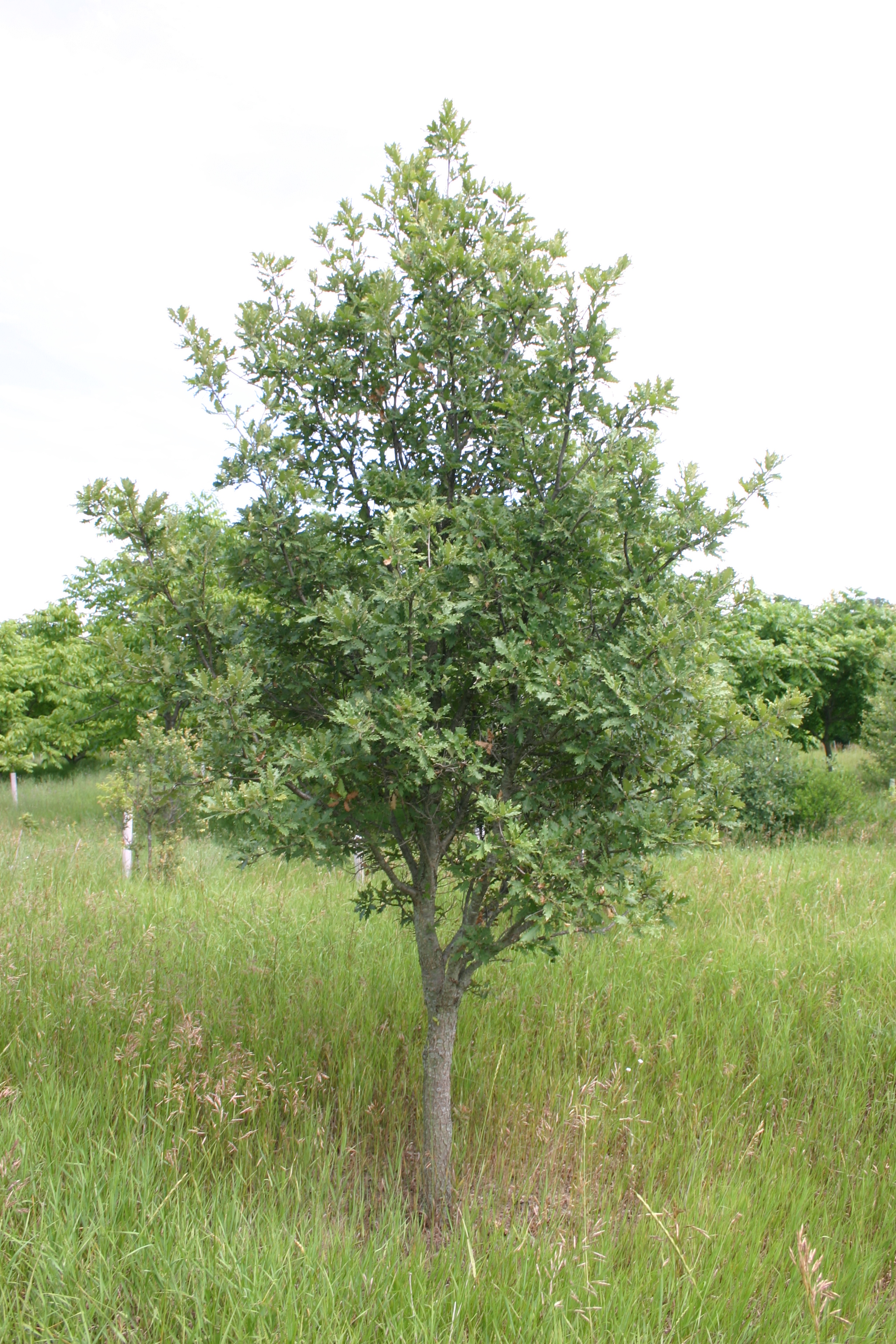
Quercus macrocarpa x robur Burenglish oak
Burenglish Oak
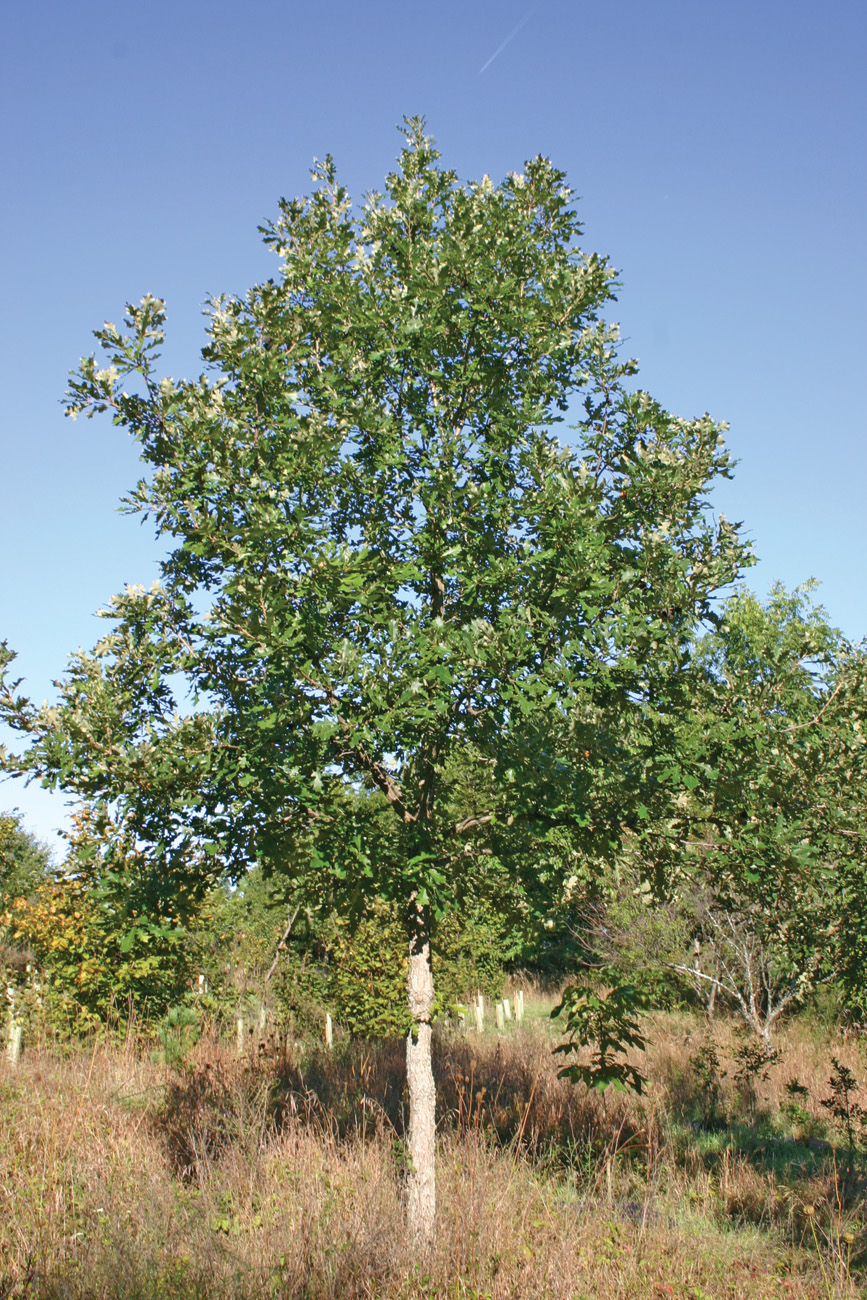
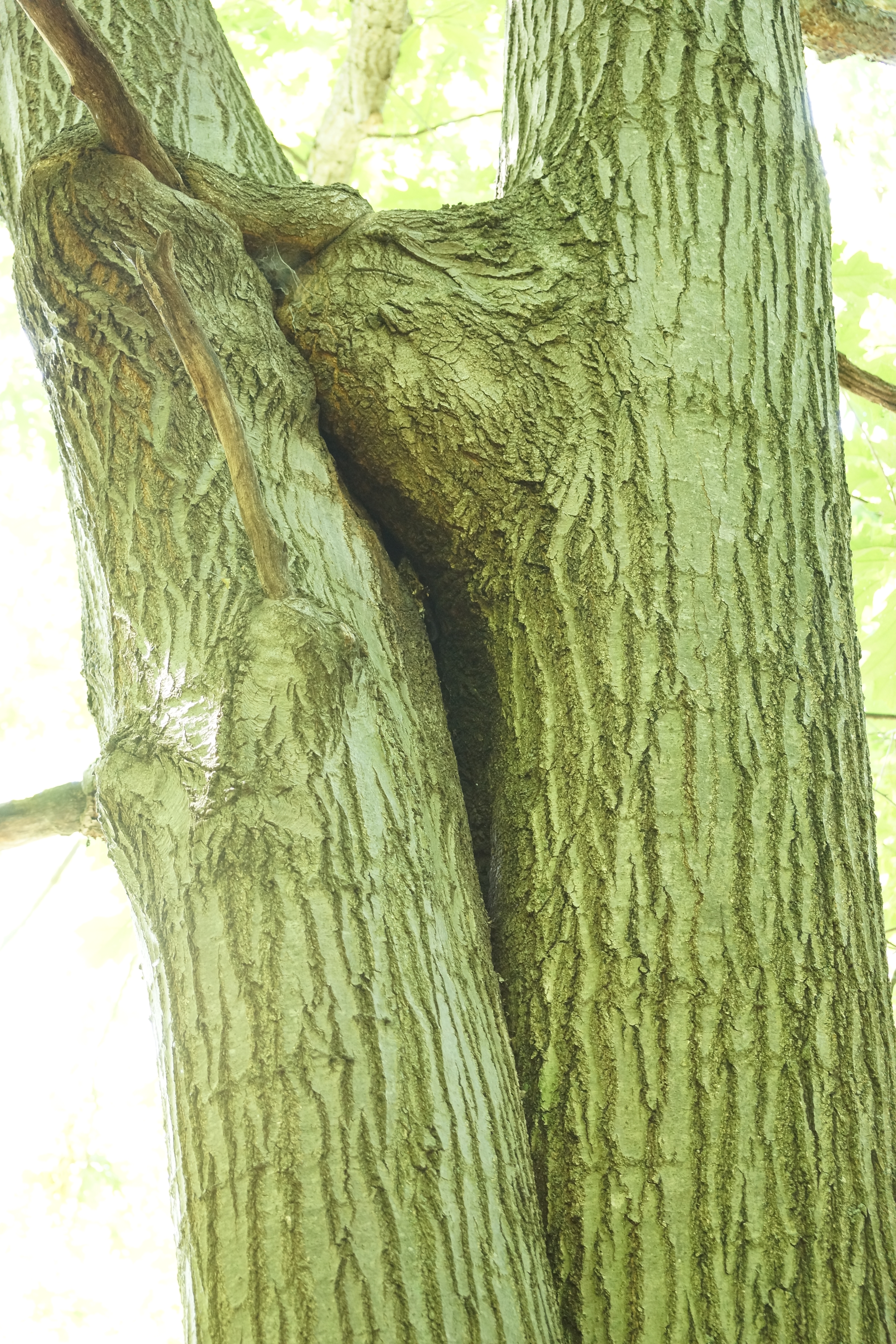
This particular hybrid was discovered in a cemetery in Illinois. It was not something you would find normally as a chance seedling let alone in a cemetery. It is rare as a natural hybrid. There were two very large trees cranking out huge volumes of acorns. Before the trees were cut down for unknown reasons, I purchased a few hundred pounds of them from a friend who discovered these trees by accident. One of the trees with the largest acorns I grafted at my farm. “Invincible” came from this place of rest for the weary. This particular hybrid produces very uniform vigorous seedlings. I planted some of the fastest growing trees in my outback selected from roughly four thousand trees. Selecting from this group was not simple because all the seedlings were fast growing with minimal differences. These same seedlings today are now have trunk diameters over 18 inches. They proved to be incredibly healthy with large leaves and moderate acorn production. Burenglish oak would be a good timber hybrid. The pieces I have cut from the trees have very distinct growth rings with dark brown heartwood. It combines the best of bur oak and English oak in terms of its wood quality. Its growth rate is twice that of white oak and could be further improved from my populations. Forty acres would be enough to create a seed repository of this cross while using all seedlings selected for speed of growth. Other hybrids from this same cross from Utah did equally as well but are much higher in acorn production. That particular group appears to have more of the English oak within it.
Heavy acorn production can lower growth rates. In the off years, vigor is increased to make up for the production of nuts. It is in the off years that applying fertilizer will bring it back into production much faster than doing nothing. I’m a big fan of layering fertilizer like manures as this slowly breaks down and little is lost in the process. My dad’s cure all was triple 12. “You need triple 12 Ken,”he would say. I would respond. I need poop dad. Pelletized chicken manure. These types of fertilizers are perfect for the oak only because they take time to release their nutrients and come with calcium which aids in nitrogen absorption.
The burenglish oak has a potential to be used along corn and soybean fields as a lumber tree while doing double duty as a shelter tree and acorn producer for animals. The acorns could be processed as well for flour. This type of area where it is free of shade and heavy in wind into zone 3 would be ideal to establish repositories of this particular hybrid. Because of the fast grow in a wide range of soils, it would not be disappointing to the farmer. The shade produced would be minimal into the field of crop plants which would not diminish the yields. It should not exceed 1 percent of the acreage to do this either because the greatest biomass is in the air not the ground like a prairie planting. It is much more efficient.
Quercus macrocarpa x turbinella Burlive Oak
Burlive Oak
When I see the extremely dry and hot climate affecting the hills of southern California in the form of fire, I do wonder if an oak forest would help in some way. Could an oak tree slow or suppress fire in some way? Is there too much leaf litter? And would oak trees help retain soil moisture compared to other types of vegetation? What could you add to the existing ecology to mitigate the problem in a fast, economical and efficient way? Here is where this oak could step in. You take a few acorns like the fictional “Man Who Planted Trees” and begin reforesting the hillsides with oaks. You plant 20 acorns per acre and slowly but surely make oak trees within the rocky soils. It could easily be done with a stick and a small canvas bag attached to your belt. Harvest acorns from the University of California. Check. Hire a work force to reclothe the hills of California. Check. Give California life again and help those who need it most. Check. When these plants fruited, you would let the birds and small mammals distribute them to fill the valleys with oaks. You need vigor, thick waxy leaves and extremely deep roots to create a rock hard wood able to hold the soil and air humidity around the trees themselves. The desert oak hybrid bur and shrub live has these genetics which are perfect. The burlive oak would fit into an agroforestry scenario for hot dry climates yet retains a tree form which increases shade. Shade equals cooling. The great shrub live and bur oak cross with thick dark green leaves makes it happen. Most of my crosses came from Utah and California as the Cottam hybrids. A second batch came from selections from the late oak breeder Miguel Marquez in Texas. To this day, the heavy acorn production along with its durability over time could easily fit into these hot and dry times ahead.
Seed selections from the amazing Shrub Live oak Quercus turbinella include: Asmus Oak Quercus garryana x turbinella, Englishlive Oak Quercus robur x turbinella. These particular crosses thrive in heat and drought and work in areas with higher soil and air humidity compared to pure Shrub live oak which perished here in Michigan within 4 years. The reason for a hybrid oak is not because it is better in some magical way. It just has a vigor greater than the species alone has. This was not a cross done in a controlled laboratory setting. In fact, intentionally crossing species of oaks is difficult to do. Yet in nature, it happens effortlessly. It is an effect of two young and evolving species of oaks exploring and creating diversity in novel ways outside of what ‘normal’ biologists think of as the immutable species. That is dramatic.
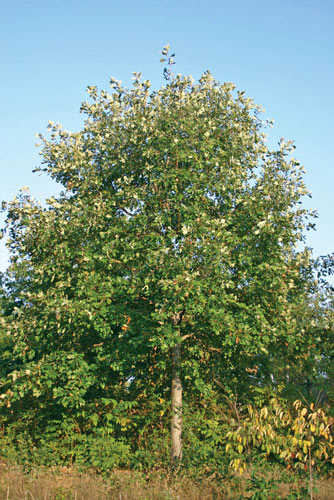
Cue the strings.
Oh-its-Natural grafting. Red oak at my families farm.
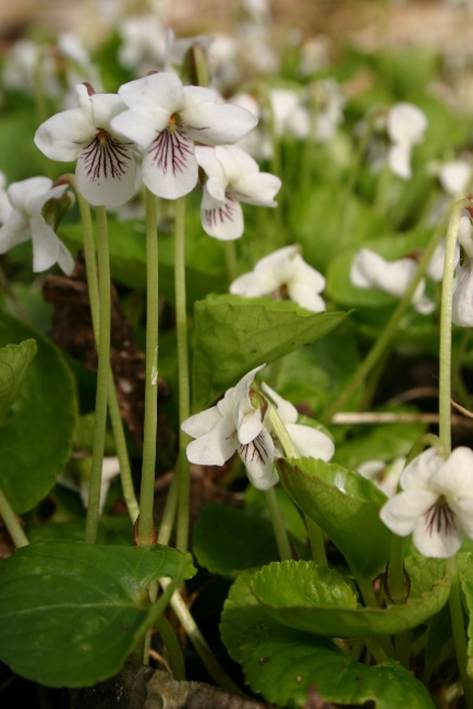
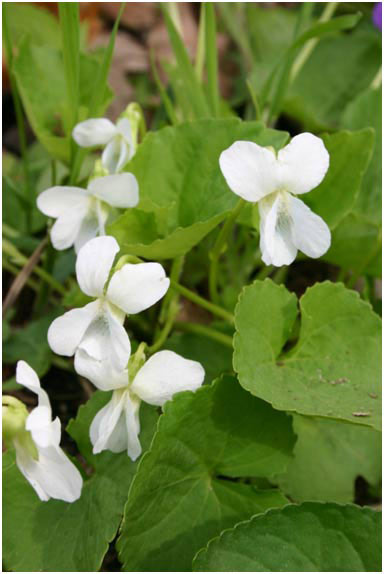
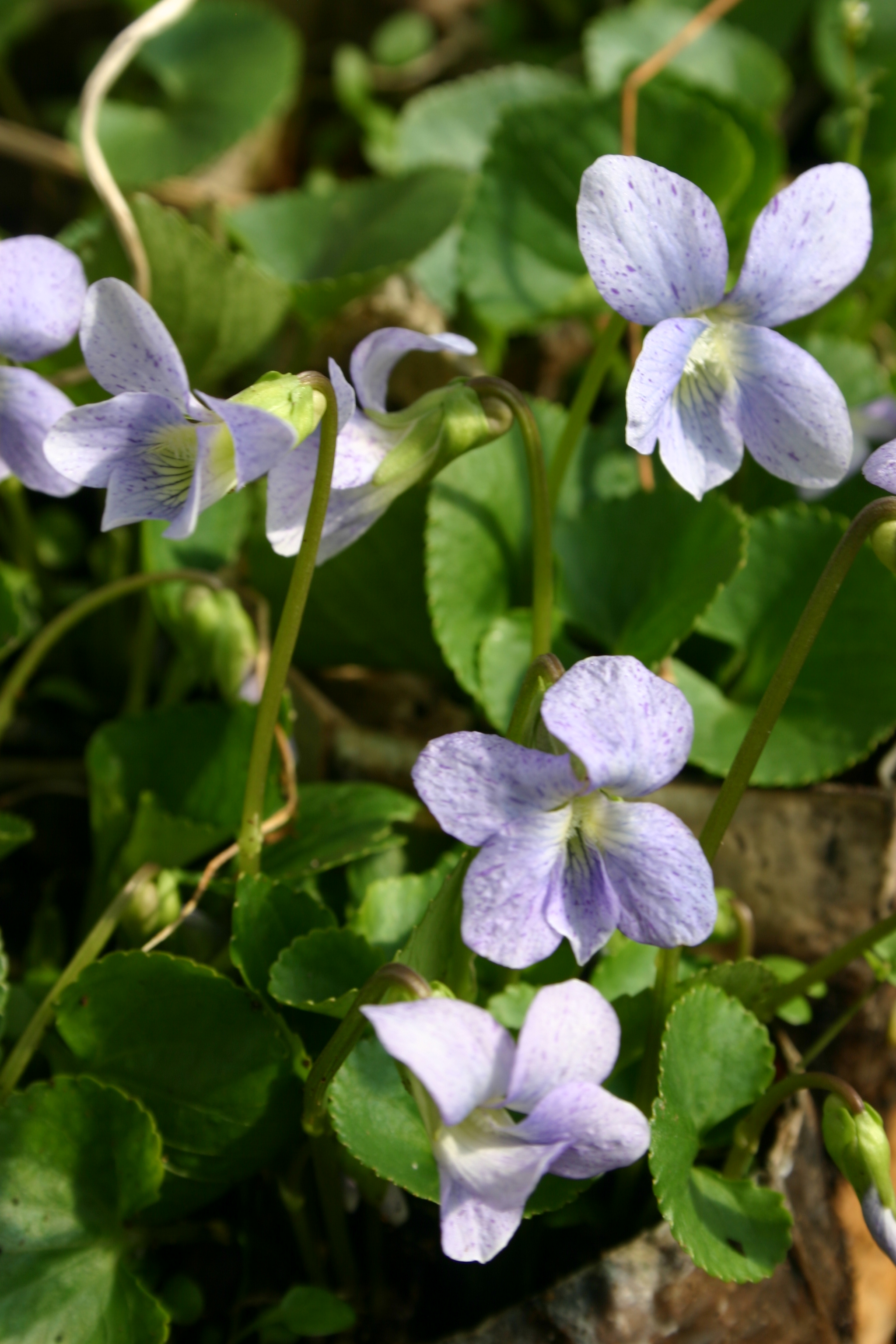
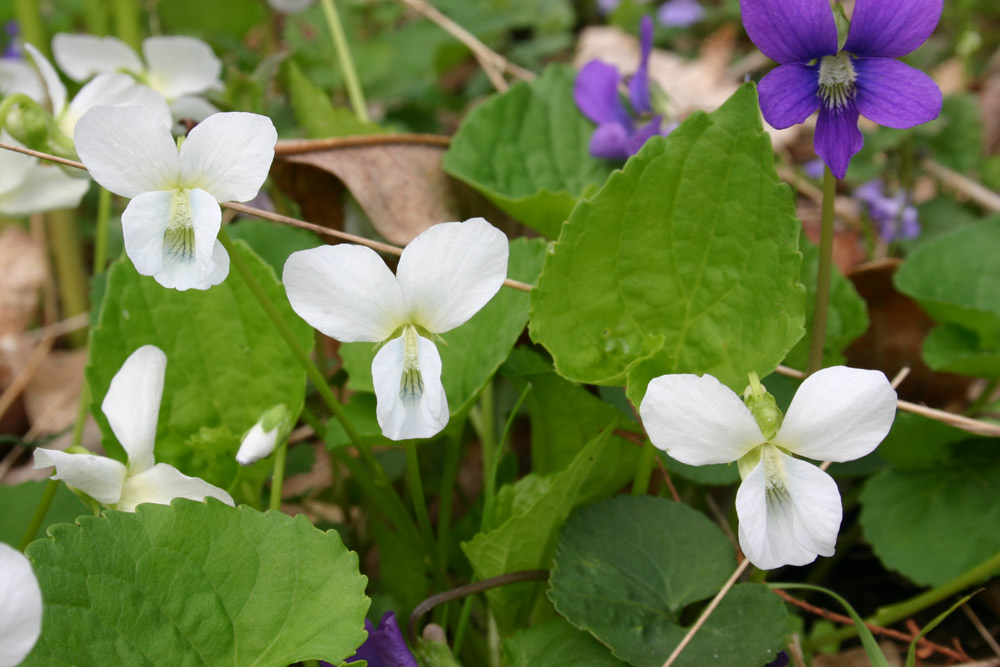
Ecos White Violet-One of the best flavored and productive of the Viola Genus
Crop Diversity: Perennial Greens-Violets
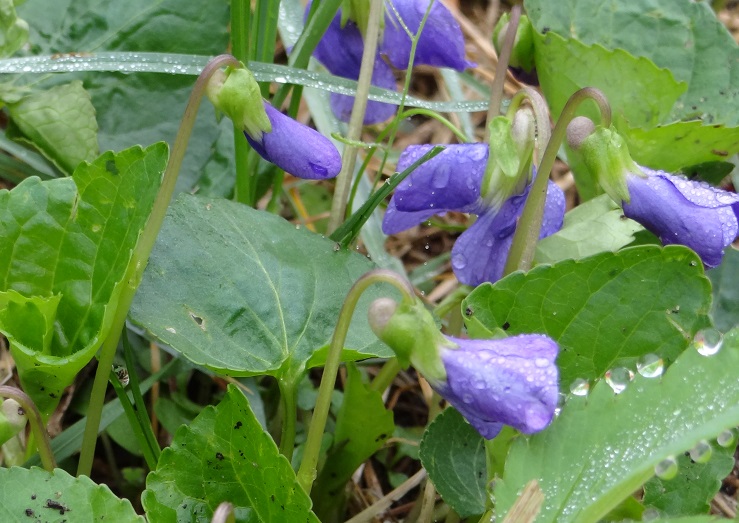
Growing edible perennial greens is part of the edible landscape movement. It was born with the idea that an ornamental plant can provide food. The edible greens created by a violet can be harvested as a source for salads while doing double duty as a groundcover. The violet can be planted in part shade under and around other plants and its perennial producing greens year after year. To further refine this Viola ideal, I began a search for wild species of violets in Michigan as well as the named selections from flower seed companies. I was most interested in the flavor and amount of foliage that could be harvested. This meant taste testing a lot of violets. Flavor is never mentioned in the plant descriptions, and it was not in the radar of the floral industry where Violets are produced by the millions in the bedding plant industry. That was a strictly look-but-do-not eat universe.
After the final chomping, it was the Manchurian violet, Viola mandshurica with its long leaves that had the best flavor and most succulent texture of the dozens I tested in the raw state. This species is more biennial than perennial and faded quickly in the woodland garden we planted it within surrounded by hybrid oaks, ginseng and ginger. The potential exists for all violets to be used on a larger scale yet no one is rushing to grow it as an edible green adding it to salad mixes or dried down for the powdered green drinks. Many violets are high in mucilaginous compounds. The texture of a violet leaf makes it easy to consume moderate amounts compared to aloe vera, chia, psyllium or flax seeds. This polysaccharide is well known for its treatment for burns, inflammation and a digestive aid. People use a form of these seeds or the pure thing for improving digestion. I had a friend in college who was into this purification diet of which flax and psyllium seed was on top of the list. The drink was like a clear viscous gel rich in mucilaginous compounds. I used to tell him it was suitable for fixing the cracks in the sidewalk out in front of our rented house. On Fridays, he would treat himself to one beer as a reward to the torture he experienced the days before. He thought it paid off for him in spiritual dollars. He even found a book about this diet which I started to read. It was filled with all sorts of majestic cosmic experiences once your body was aligned properly. I had my doubts until one evening late at night I saw ethereal lights above our septic system. As I lit some incense, the explosion could be seen …… Okay, just kidding on that. Luckily violet leaves are not as brutal. The violet creates this same path to enlightenment with the added benefit of it being a delicious salad green rich in vitamin C. In this whole process of discovery of violets to produce at my nursery, I became hyper-aware of violets wherever I went. This is a common experience where you begin to see a familiar sight as you focus on one thing. This was how my collection began and continued over a decade while growing them at my farm.
Violets are a common lawn weed pitching seeds and doing its underground reproductive strategies. It survives where grass cannot prevent its introduction. One lawn in particular I spotted was in Shields, Michigan. It had a dense carpet of violets where grass was missing entirely. No one was a-salading there but nothing else could grow in this location and the owner just let it go under the Norway spruce trees. To me that was the perfect lawn: one that didn’t require mowing.
Few know about edible violets. They are a small but powerful plant with a sense of urgency to colonize if the conditions are right. When I dumped them into a crevice created by a plow from the previous owner of my farm, they slowly but surely filled in as the grass died due to shade of my hybrid oak and chestnut trees. The violets had a plan. I did nothing. Today that violet planting measures over 100 ft. across and is pretty much all violets. The deer show up in summer and will eat the foliage prior to the plants going semi-dormant during the summer months. All of that was solved in one Viola swoop. The plants originated from a lawn I was working on in my early landscape business which was filled with moss and violets.
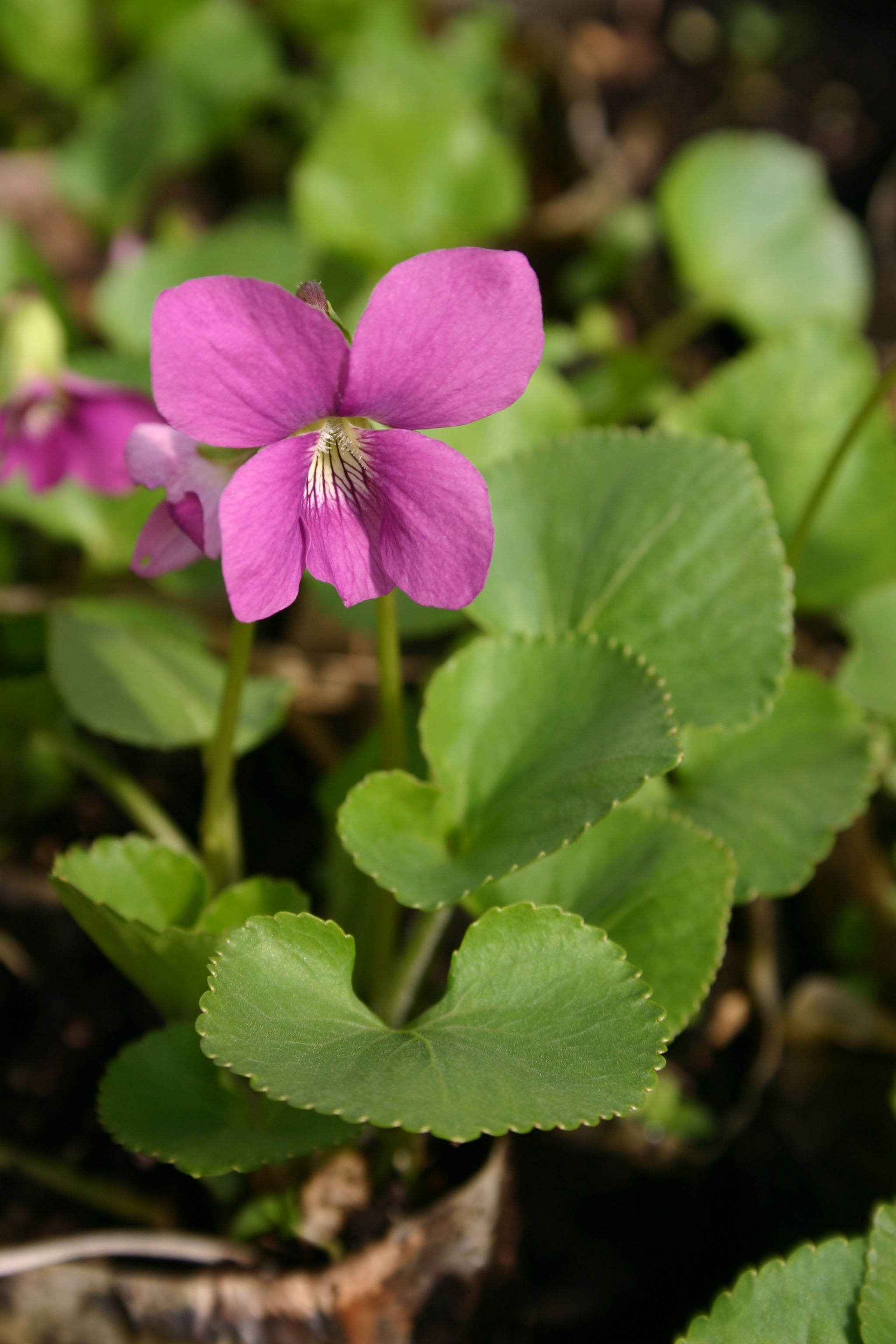
Here are a few of the species I discovered in the process of going a-salading both in the wild and under cultivation as species and selections. All of these provide an edible green worth cultivating as an edible landscape plant.
Kidney Leaf Violet
Although the leaf production was low, this little plant was a good rhizome producer and created clumps of dense foliage. This species was found on my families farm growing on an abandoned farm road in an oak woodland. The population was extremely small to the point it almost disappeared entirely. This was one of my favorite groundcover types.
Edible White Violet
This was a form of the common blue violet discovered as a chance seedling under an oak tree at my farm. It has very mild flavor in the foliage department and a good yielder. It is easily digestible and not fibrous. It self seeds and comes out true from seed.
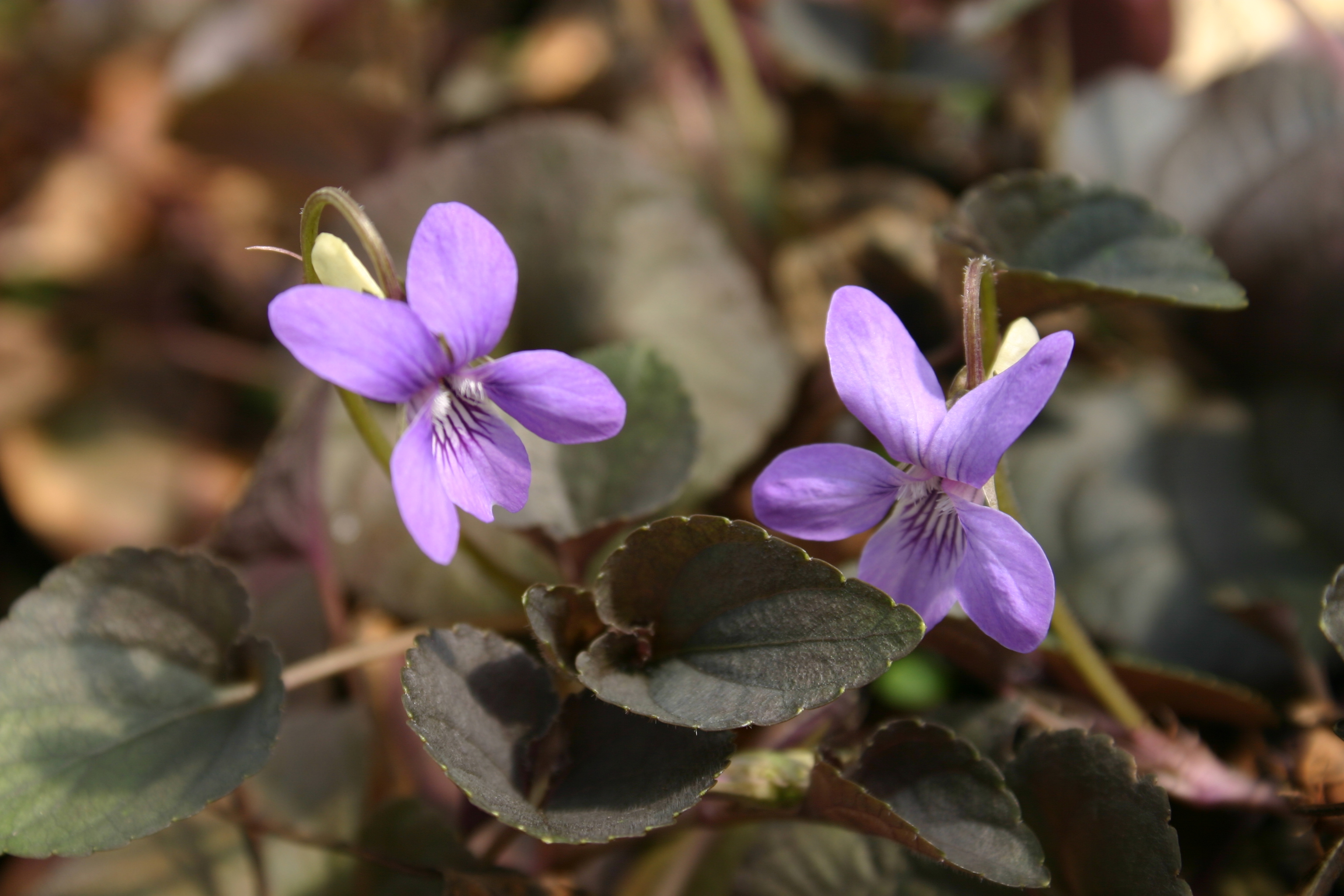
Purple Leaf Violet
This super northern arctic species is not a heavy yielder but looks spectacular in leaf. I did another planting of it last summer in a new location hoping for better results. It was very low yielding but has such bright foliage that it would be interesting to hybridize it for that alone. This is considered a North American species but it is circumpolar in real life like many plants and animals when we were all one giant supercontinent. Apparently there is some controversy of its identification within the botanical world.
Huron Sand Violet
Huron Sand Violet
This discovery was on a giant flood plain on the shore of northern Lake Huron. Nothing but rocks, stones and sand, this species has spread voraciously over many acres in this beautiful location. There were millions of plants in this area like a dense green carpet. The next year the lake rose to the point this plain was completely underwater. I wondered if the seeds would remain dormant in the sand below the water only to sprout when the lake recedes again. The foliage was very succulent, vibrant green and delicious. It was very early in flower and produced good yields in the spring.
Freckles Violet
From Jellito seeds, this was a good one in terms of its clumpiness and yields. It wasn’t the most flavorable but it did remain in good condition late in the season. A lot of violets fade in the summer heat.
Magenta Violet
From Jellito seeds, this one was a great performer in terms of its yields out producing almost all the selections and species I have. Fairly drought tolerant, it continues to produce through the summer. The tall plant is dense in foliage and easily harvested. The flowers are a bonus as they stand out above the foliage.
Lawn Violet
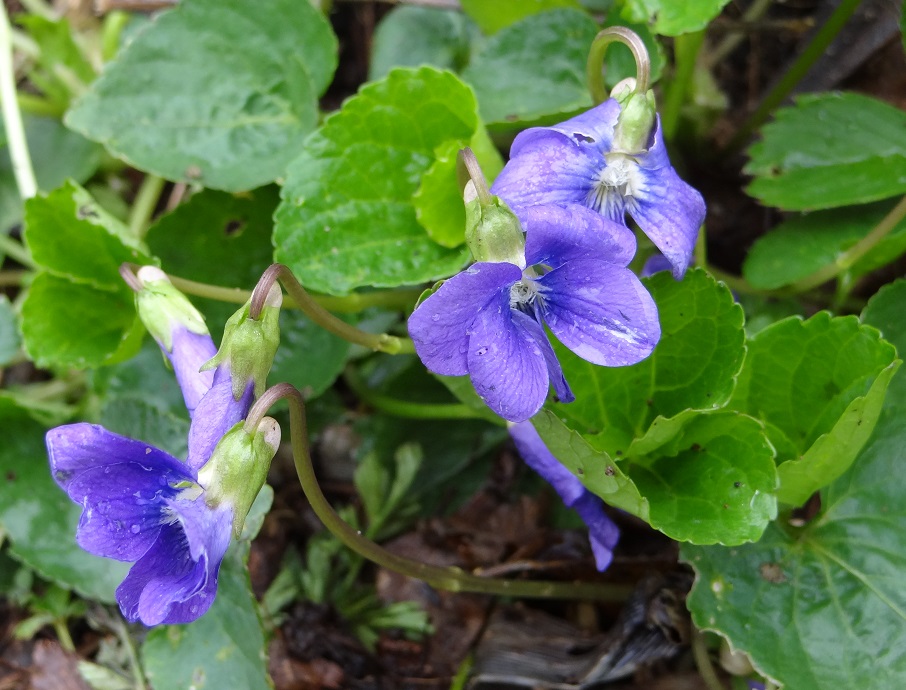
Of all the violets people know, this is the most common. From my subjective experience, this species is high in mucilaginous compounds. It is a very durable species and the rhizomes are persistant in competition with other plants. This species and Magenta create the best groundcover types and could likely be the next green drink to enlightenment if you know what I mean.
Unknown Species Violets
Like the lawn violet in Shields, Michigan, there are many species I just cannot identify. I am winging it as scramble through those damn botanical texts with funky terminology. When my father began a project involving a lawn service, he gave them access to drop grass clippings in a ditch and around a road at our farm. Within this hodge podge mixture of celluose lied dormant seeds which sprouted and grew in the road way. This was one of them. What I liked about this species was its fast growth. I thought it could of been hook-spur violent. I could be wrong because I am not fluent in funky terminology.
Appalachian Violets
This was one of the most unusual violets and not edible as far as I know. It is odd in that it spreads vigorously but then disappears entirely only to be found elsewhere on my farm.I think it might be biennial in nature more than perennial and the seeds stick to my rototiller. The plant responds to soil disturbance. It is the tallest of the violets I grew and very beautiful in flower. But then it disappears only to reappear somewhere else without fanfare. I like that.
Yellow Violets: Like the yellow snow, don’t eat it. All the books say they are poisonous to consume. I am not sure of the details but I am going to pass.
SUMMING UP VIOLA: Dense Carpet of Perennial Green Violet-Omni-directional All Space Filling Violet-One Beer on Friday Violet-A-Salading We Shall Go Violet.
Anyone that has worked for me or comes to my farm in any capacity, knows I will ask them if they would like a cup of tea. I would always ask. There is a Kinks song, I would sing to myself once in a while when I was harvesting trees called ‘Have a Cuppa Tea” from the Muswell Hillbillies album.
If you feel a bit under the weather, If you feel a little bit peeved, Take granny’s stand-by potion For any old cough or wheeze. It’s a cure for hepatitis, it’s a cure for chronic insomnia, It’s a cure for tonsillitis and for water on the knee.
Have a cuppa tea, have a cuppa tea, …….Hallelujah Rosie Lea.
The Kinks, 1971
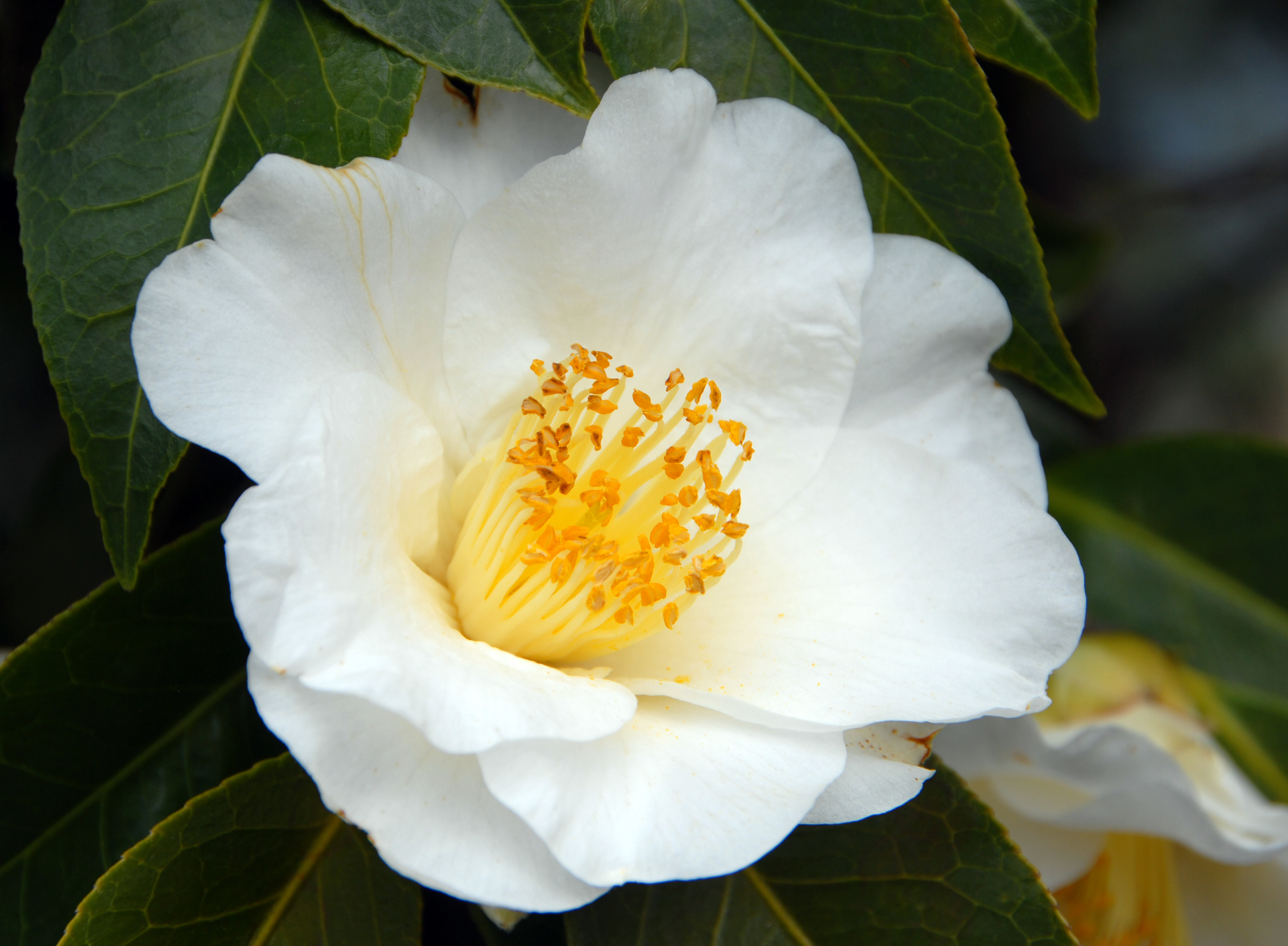
Tea is my number one drink for the last 50 years so it was only natural I would try to grow it. Funnily enough it grew in Michigan quite well. I began to look at tea culture and tried to understand why no one in North America has ever grown the tea plant, Camellia sinensis. Later I did find one person in Florida who was selling plants and had a bona fide tea plantation of some size. After some serious seed searches I began purchasing seeds and plants as well as exchanging seeds. I had a lot of tea plants. People knew this beverage and the plant too. It was impossible to produce enough of them. It turned out that my ambitious program of trying to establish the tea plant outside was too much for the plant to survive a normal Michigan winter let alone a real cold one. But within that polyhouse window, the plants not only survived but flowered too. This shows the great potential of taking a crop which is grown thousands of miles away and producing it a ‘non-tea’ environment like Michigan. But having the plant grow here in a hobbyist sort of dream like mine is a teeny fraction of the whole tea story. There is processing and harvesting and finding the seedling populations as well as creating cultivars capable of minus 20 F. I visited the Washington, D.C. Camellia collection at the U.S. National Arboretum. This same idea is needed for the tea plant. You need a collection and a population of diverse genetic seedlings. Having a ornamental hardy Camellia is not quite the same as having a hardy tea plant. But it’s very close and doable.
For a while I also grew the Tea Oil Tree, Camellia oleifera. This species was very slow growing but durable and tough to fluctuating temperatures. I was able to obtain a very hardy seed source which was close to my climate. I had roughly 50 plants that survived very nicely in the polyhouses for almost a decade. Unfortuantely at the end of my nursery, the plants were exposed to dry winds in February which took them from lush and green to crispy and brown by spring. It is possible it could grow in a moderate zone 6. To me that was a hallelujah moment.
This is more than just a hint that it would be totally possible to develop and find full Zone 5 tea and tea oil plants for Michigan and other temperate areas. The issue becomes scale. You need a much larger population with diverse seed origins to find and create a hardy population especially with Camelia because it is usually clonally propagated as named varieties. You need to step away from that to find the treasure of diversity. Actually, that is not too hard to do. I would guess somewhere close to 100,000 plants could make that happen. Think of it like a bridge. Like all engineering projects, you want safety first and you should over engineer it in terms of finding and planting large numbers of seedling plants upwards to a quarter million. This may seem like a lot, but tea is easily grown from seed. The seeds are available on an international scale too. It would only require a place near the lakeshore of Michigan and sandy well drained soil. Tea loves sun and sun may be the limiting factor in its commercial production. Michigan is not sun drenched. We have fresh water oceans, but there are no dolphins. Sunlight is filtered through the clouds here. Tea could be produced in the continental United States but the price tag might prove very high because of the labor involved and processing. That part is the great unknown in agricultural circles but that too could be engineered. Let’s say you were magically transported to a land grant college or one of those fancy non-profit agroforestry organizations to talk to students and professors about your amibitious tea project. First we have to pretend they would listen. During your talk, the chuckles and negativity begin to drown out your ideas. This is ideal. Here is when your back up plan will kick in. It’s time to shine. You serve everyone tea. “This is pretty good”, they will think. “Why didn’t we think of this”,they will say. “Maybe tea is the future!” Hallelujah Rosie Lea.
Enjoy. Kennneth
Tea in the morning, tea in the evening, tea at supper time, You get tea when it’s raining, tea when it’s snowing, Tea when the weather’s fine. You get tea as a mid-day stimulant You get tea with your afternoon tea For any old ailment or disease For Christ sake have a cuppa tea.
When I first started my nursery, I soon found many nursery people who were in the plant business handed down in their family. Many had large acreages devoted to plant production. Some were connected to the Christmas tree industry and were producing millions of seedling plants for the landscape industry. They also had large cold storage facilities. My farm was 3 acres of seedling production with two small refrigerators and up to 7 employees at a time. I had this dune like sandy soil on the southwestern side of the state which is ideal for this type of production. There is also a lot of snowfall here which tends to protect the trees. The wholesalers often had several hundred employees to do the harvesting, processing, counting and grading required. The small retail nursery often had individuals who were not trained in horticulture or agriculture but had a passion for growing plants in some way. The business model for this is usually weak and rarely do they last past a decade. These were the ministers, police officers, engineers, degreed in the arts, schoolteachers, multi-millionaire business people. It’s amazing how many people want a nursery of some sort. I knew one that was never open to the public. Some were retired from other industries and essentially were making collections of a specific plant of some sort. Each of these individuals was part of the retail nursery industry and had found themselves in the sale of nursery stock. That is not an easy row to hoe but one they felt they could contribute to in some way. Again, they were often short lived.
Today the nursery business is even more challenging and difficult to navigate. A small backyard nursery is not sustainable unless you are using social media, and you are an educator and entertainer at heart. For me, I used the catalog system. Today that model is not as viable. Remember you are up against non-profits running nurseries, state land grant university nurseries, state level government run nurseries who regularly ship out of state, conservation industry and wholesalers. Some wholesalers have low minimum orders which makes inexpensive plants widely available. There are many uncertified nurseries with no inspection or licenses to produce or sell nursery stock. Some companies are partially funded by government grants. This is particularly true of native plant nurseries that almost always have plant removal programs. Many bid on contracts for native landscape material for infra-structure projects. I find it disheartening only because people are being exposed to known carcinogenic compounds in the name of ecology.
My model was the mail order business. This is not the same as it once was partially because of the costs of printing and mailing. People do like to read catalogs if they are well written with good images. The catalog is like the vinyl of the plant business. This is not J. Jill or the fashion industry. The plant profit margins are tight.
ON THE ISLAND
The best aspect of the small individually run nursery is the ability to capture traits found in plants on a regional scale. It’s poor in terms of producing a profit but fantastic in its ability to do a turnaround on finding new plants, selecting them with new possibilities and then releasing them to the public. It is especially true with food plants. Most people ignore this category of nursery stock unless it is grafted trees. This broad stroke of selection, release and dissemination is critical in the years ahead of plants that are not known to be used in any current agricultural setting. It can include a vast array of exotic plants throughout the world including many unknown indigenous plants. The small nursery can fiddle with that because it has time and is not tied to any one single philosophy or idea entrenched in an ecology or agricultural textbook on the shelf. It is not commercial and scientists in modern agriculture will pretty much ignore you. You’re on an island. It is by designing this system of low budget, free of grant money trajectory allows you to leap tall buildings in a single bound. This is the nursery business model of tomorrow. How that translates into a profitable business model is yet to be seen but likely it will be advertising and social media that will help propel it into the future with success. It can’t be left to chance or as a free catalog in the mail like I did. People will respond with support for your mission and message whatever you decide to create and discover.
This wild apple was found on a peninsula far out into Lake Huron isolated from all other apples. It produced delicious large yellow fruit free of insects. It grew around the balsam fir on soil that was limestone shale and sand. Imagine the wind that comes off the lake hitting this tree over the years. It’s exposed on all sides.
An Example: Improving the Apple Via Small Nursery
Apples are everywhere. It is the ‘cosmopolitan escapees’ that show the greatest promise. Here is a domesticated fruit, highly valued, which has ecologically integrated into the environment and roadsides. This type of selection is easy to harness in a small nursery. You collect a few bushels of fruit, process the seeds and plant them. A 50 ft. long by 4 ft. wide bed could easily grow a thousand seedlings. These seedlings spaced in 6 rows 8 inches apart are the future of your apple. You look for clean foliage as they grow. You look for a fast growth rate. At the end of the third year, you tag the plants that are well structured with clustered limbs, clean foliage and strong growth. This is what is needed in the apple. Who cares if your bed of trees becomes a tangled mess of apple trees. You can leave them there if you wish or just plant out the ones you want. You can remove the weak plants in the row to space out the good healthy trees in the process. You only need a pair of lopers. Maybe your new apple bed will be a blockade for light and sound in your yard. Maybe it will become a giant floriferous hedge filled with bees and pollinators of all types. Maybe it will create a huge mess of apples all splatting the ground in one giant load of saucey goodness. It does not matter because you now have a future with these trees and soon you will share it with the world. It could be grafted or maybe you will save the seeds of the best selections.
These trees are the beginning of your “breeding program” all done in a small nursery setting. No one cares about your apples at first. People may say it is a one in a million chance. Someone may ask you if it is native. It does not matter because your goal is to find no-spray apples. Your goal is a nutritious apple for syrup and cider. Your goal is to finally grow an apple free of bugs. This is only possible in your nursery because you care about the apple and how it grows. This is your island and soon it will grow to continent size if you tell others of your discovery, give it a good name and disseminate for all to enjoy. All of this is part of the small nursery industry and easily done. Your small nursery combines your life experiences and your love of plants. It’s only a story you can tell.
Everyone loves wild strawberries. It’s a universal fruit with universal appeal. The flavor is always rich in gold. They are impossible to resist. Here grows a small perennial plant that effortlessly skips along the ground rooting as it goes through rocks, sticks and sand. Maybe you did not look for it or have some sort of grand scheme of creating a strawberry empire; it doesn’t matter. As plants grow, it is hilarious and like laughter, you cannot stop it. Strawberry is funny after all, nailing the punch lines one after the other. As you know, timing is everything and the wild strawberry has that ability to be there at the right time dropping its new plants one at a time into the soil below. It never misses a beat. From the ground up, the strawberry colonizes the landscape in a simple way. It produces runners which touch down and root which in turn create a colony. Each colony can be just one individual as it reflects and contains within it the other colonies in its region. It is a good representation of population level changes so useful in creating healthy foods for people and profitable crops for farmers that can be raised in this new world climate. It is easily reproducible and can be tweaked to produce high quality fruit just like its cultivated cousin. This is my journey with growing wild strawberries.
Lake Huron strawberry boulder field
Not long ago, I visited a large rock strewn plain near Lake Huron. After a long walk through the stones, I discovered a strawberry with superpowers outperforming anything I had ever seen. It had the ability to produce 20 ft. long runners in a single season. It had a long string of runners emanating from the mother plant skipping over and around the boulders before touching down in the crevices filled with sand and stone. Nothing else could grow there. Another place I visited on Lake Huron was on a small island of pure sand at the end of a peninsula that had a giant strawberry colony just over a small ridge protected from the waves and water. Here the foliage was rich and tall, growing over a foot tall. There was no fruit, but the plants were incredibly dense in the colony shading the sand. The leaves looked lush and free of spots or disease of any type in this moisture laden environment. There were only a few willow twigs established on this teeny island with a lawn chair facing east to watch the sunrise. Laughter could be heard amongst the strawberries. Nailed it.
Many of these examples became part of my wild strawberry collection experience of which I continued for thirty years. Primarily, I did this because I love wild strawberries. I knew I could build on it easily and people did respond with support by buying the plants in my nursery. They were often used as native groundcovers in mixed plantings of many types of landscapes. But it was no commercial empire and this did not matter. I was able to capture that wild strawberry flavor. This time it was funny to me because I soon began to draw the attention of people who are ‘in the know’ on strawberries. One person told me “Ken, no one has ever done that before.” He was referring to creating wild strawberry varieties using non-hybrids. I was surprised at this. The ‘real’ wild strawberry was left behind in the process of cultivation. My type of selection process would be considered kind of simplistic by strawberry breeders who are on the upper echelon of plant breeding. Another person told me my wild selections are controversial. Here laughter could be heard for miles around. I did not know this. “You see”, he said, “they might not be pure.”
I remember taking my children to pick your own strawberry fields. It was quite a production to create these planting beds including using Bromine to wipe out seeds and everything else in the soil. I purchased several books on strawberry cultivation assuming it would enlighten me on its culture. It did. But there was no mention of the wild crop other than the original seven South American coastal strawberry plants that created today’s modern strawberry. In this world the wild strawberry, Fragaria virginiana, is hard to get rid of in the cultivated fields of domesticated strawberries. Apparently, it is not allowed to co-mingle with its brothers and sisters in the glorious exaltations of cultivated fields of the straw-laced plastic lined fields of strawberry human heaven with the slight fragrance of bromine. Am I over stating it? A little.
“Let me take you down to my strawberry fields.” The Beatles
On a mission. Must plant trees.
For me it started as an experience on my family’s Christmas tree farms. My father was on a mission to smooth out new areas on the tree farm removing old stumps and other vegetation. He did this by using a disc and traversing repeatedly on these large areas of sand and peat. No herbicide was used. Then the scotch pines were planted. This habitat was absolutely the best for wild strawberries to grow quickly. With no grass established and plenty of ground to hug, the wild strawberry took off with its omni-directional runners. It was here that I found the wild strawberry in great abundance and decided to make jam from these patches. I had my sister help me pick. I was at home from college at the time. It was incredibly time-consuming. The horse flies were relentless. At home taking off the calyx was equally time-consuming. I finally had enough to make jam. The flavor was like a concentrated syrup of blissful goodness. How could anything be this wonderful? I held this memory as a beacon. I returned to this exact location to collect runners and seeds two decades later.
Intensity Woodland Strawberry flowers
To replicate this experience, I wondered what direction I could take in terms of the strawberry plant characteristics. All I could think of was the flowers. I noticed the largest flowers with the most stamens. I noticed larger clusters of flowers with a greater number of individual flowers on each stem from the basal part of the plant. This is where I started. When I fruited the plants, it was apparent I was home free. The yields were very high to the point you could see red from a distance in the small three-foot square area. The turkeys noticed and ate all the fruit. This selection process is done in isolation from other strawberries as well as using only wild seedlings highlights the non-hybrid approach to genetic diversity, all of which is found in its wild state. Now my so called breeding efforts are not breeding only putting everything in one spot so I can keep track of it. The yields can dramatically increase, and it could be done commercially. Now you need technology to catch up in terms of harvesting and use. Harvesting a wild strawberry at peak flavor is the only way. The berry is very fragile and not possible to store or ship. It is a very soft fruit which cannot retain its original form. This works for processing and making that glorious jam that I produced as a young college student.
As time went on, the story of the strawberry grew at my farm. We used seeds in propagation as much as we could while making unnamed seedling selections. We then created planting beds outside with these forms known for their flowering, running and fruiting capabilities. In a similar fashion, I looked for additional wild selections and seed sources including as many species as I could find. Some of the best and most prolific finds were in Michigan. I found a woodland strawberry near my home in a hickory and oak woodland. It was a woodland strawberry, Fragaria vesca and had very clean fruit that hung high on a tall plant. The yields and fruit size were good for a wild strawberry. I eventually named this selection ‘Intensity’. We grew this mostly from runners but sometimes we did it as a strain from seed. It was here I began to see a new type of structure to the strawberry flower and fruit scape. They became taller and more branched over time. Once again, laughter followed, and the strawberry responded to its care and its environmental situation under cultivation. I began to see the light on why this plant is so successful in cultivation worldwide and why it still is the most selected fruit plant of all time. In a twist of fate and humorous side note, the hybrids from the modern strawberries I used yielded poorly if at all. I did keep one plant because it was such an unstoppable runner producer, it eluded my rototilling and raking for new crops. I still don’t know if it yields anything.
The Runner Runs:
It is easy and not damaging to a colony to collect a runner from a plant to grow in your garden. You can continue this line of selection if you think it is something worth establishing and harvesting from home. Look for large flowers with heavy clustering. Look for clean large foliage and healthy new growth free of spots. Wild things do not live forever. Moving the strawberry helps in its future success. Some colonies die out over time due to the natural change of the vegetation. There was an article on strawberry breeding in the Smithsonian a few years ago and one of the breeders was having lunch at Burger King. He discovered a type of strawberry in the dry barren landscape where everything else was brown. He took a few plants back to the greenhouses to continue his work on drought tolerance for California and Mexico. Wild colonies under cultivation can surprise you. I am still am a little upset that I did not harvest a runner in a parking lot near the buffalo pen when we were visiting a county park. That was a good one. But relax, more are around the corner. It’s a strawberry after all.
Wild Strawberry flower at my family’s tree farm.
The Flower Attracts: Look for flowers with heavy pollen and stamens within the Fragaria virginiana groups. Almost always these are the heavy fruiting individuals. For the Woodland-Fragaria vesca strawberry this is not apparent in the way the flowers are structured. There it is best to focus on quantity of flowers and tall stems that hold the flowers up past the foliage. This characteristics makes harvesting by hand faster and easier.
The Fruit Fulfills: Look for the largest stems and branches of flowers. You can always see them from a distance because the flowers are above the foliage. This highlights the flowers potential fruit set.
Isolation and Friendships of A Strawberry Nature: It is said within the strawberry populations are dioecious and sterile pollen plants that are not capable of producing fruit. These are said to be common in plants separated over time from other populations. Often time they make up for it by increased runner production or some other evolutionary work around. Nature never sleeps. I once found a plant I named and grew at my farm called, “Kellys Blanket”. It was one of those heavy flowering types that was half the height of a normal strawberry. Its clusters were dense and tight on the stalk. Very little fruit was produced despite being surrounded by many other types of wild strawberries. Some of these low fruiting types make great ground cover selections. I found a similar one selection ‘Huron’ which was an island form which I grew to fruition at my farm. It was very strong in runner production. These sorts of variations of a theme highlight the value of diversity and the amazing strawberry plant.
Kellys Blanket Wild Strawberry
Every now and then I am on a walk somewhere and I will spot a strawberry. I have this whole dialogue going on in my head. Oh look at that one. It’s a good one. I know it is. It is in my vision and impossible to let go. I know the fruit tastes good. I am pretty sure the strawberry is looking back at me. I can hear its laughter as I walk away. Maybe I will collect a runner after all. I too want to be surrounded by laughter.
You must be logged in to post a comment.