
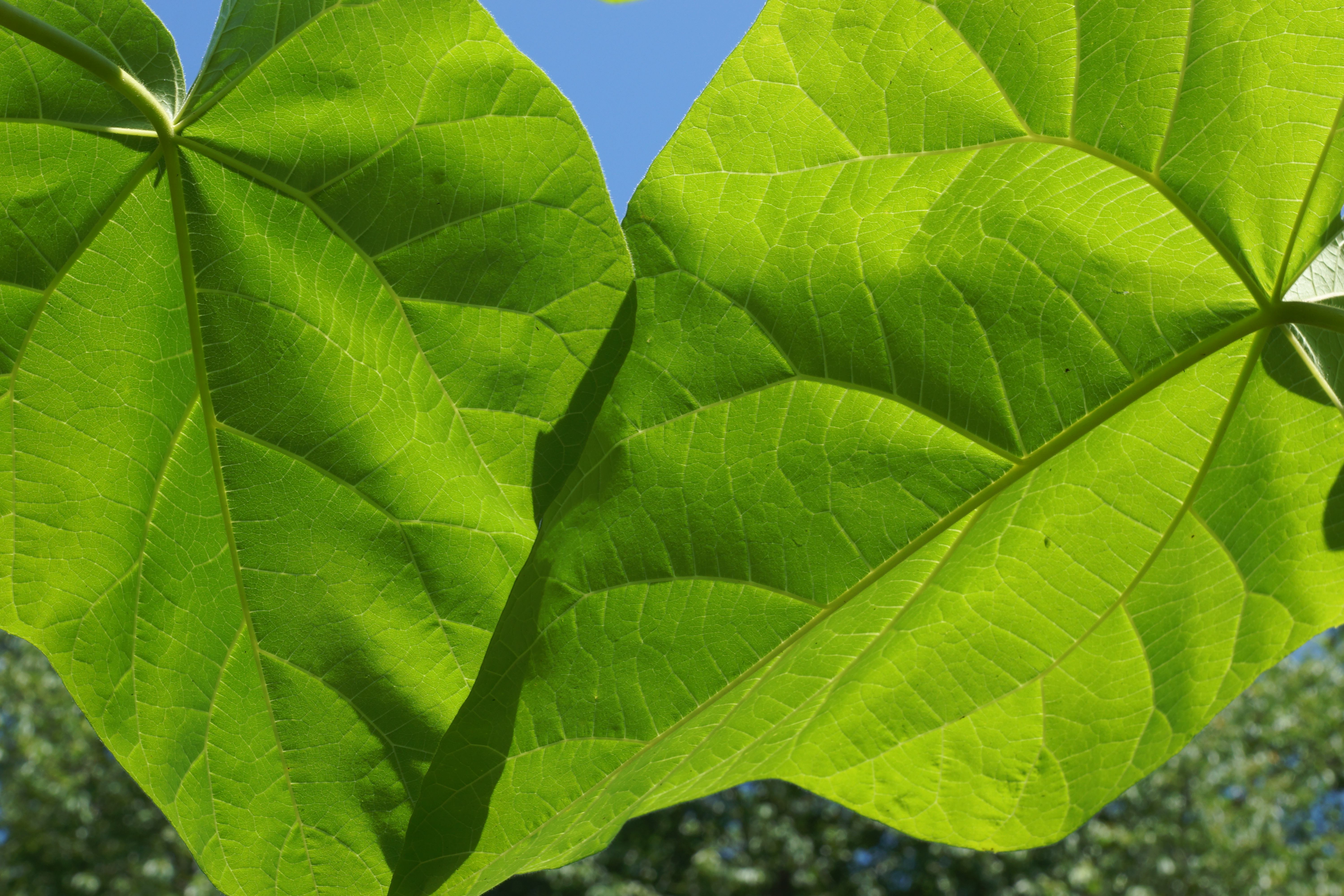
One of my first acquaintances in the tree crop arena was a research technician in the pharmaceutical industry. He was very passionate about growing his own firewood. This was in an era when the hybrid-popular market was in full swing because of rising energy costs. Everyone wanted fast growing trees, especially for firewood to heat their homes with. The idea was based on growing a tree with a quick turnaround rate from planting to harvest. Specific selections were developed that were easy to propagate by dormant cuttings. You would stick the cuttings in the ground in rows similar to Christmas trees. He began developing his own selections based on this same model. He told me he found several large popular trees free of canker and the normal dead limbs which is normal in this genus. Many of them were also sterile and free of the giant clouds of seeds that are often produced. Using this same model for lumber to grow your own home is possible if it is built to scale as well as finding the right species. There is no shortage of fast growing trees one could use.
Such is the case for Paulownia. Not many people know this tree in Michigan. You would see the Empress tree advertised in the Sunday papers as “the tree that zoomed up” as an ornamental tree with lavender bell-shaped flowers. Every now and then I would see one fried back to the ground as a sort of hail Mary to fast growing trees. From a distance it looks like a catalpa tree. One Paulownia tree I still drive by regularly sits with four trunks and a top barely making 20 feet after 30 years. It is wedged between the sidewalk and the street. The attempt was made to block the view and noise of the street. Hybrid willows soon took that market as the substitute “zoomer” tree for cold climates. The minus 16.6 F limitation of Paulownia was just too much to ask for in Michigan where minus -25 F is common.
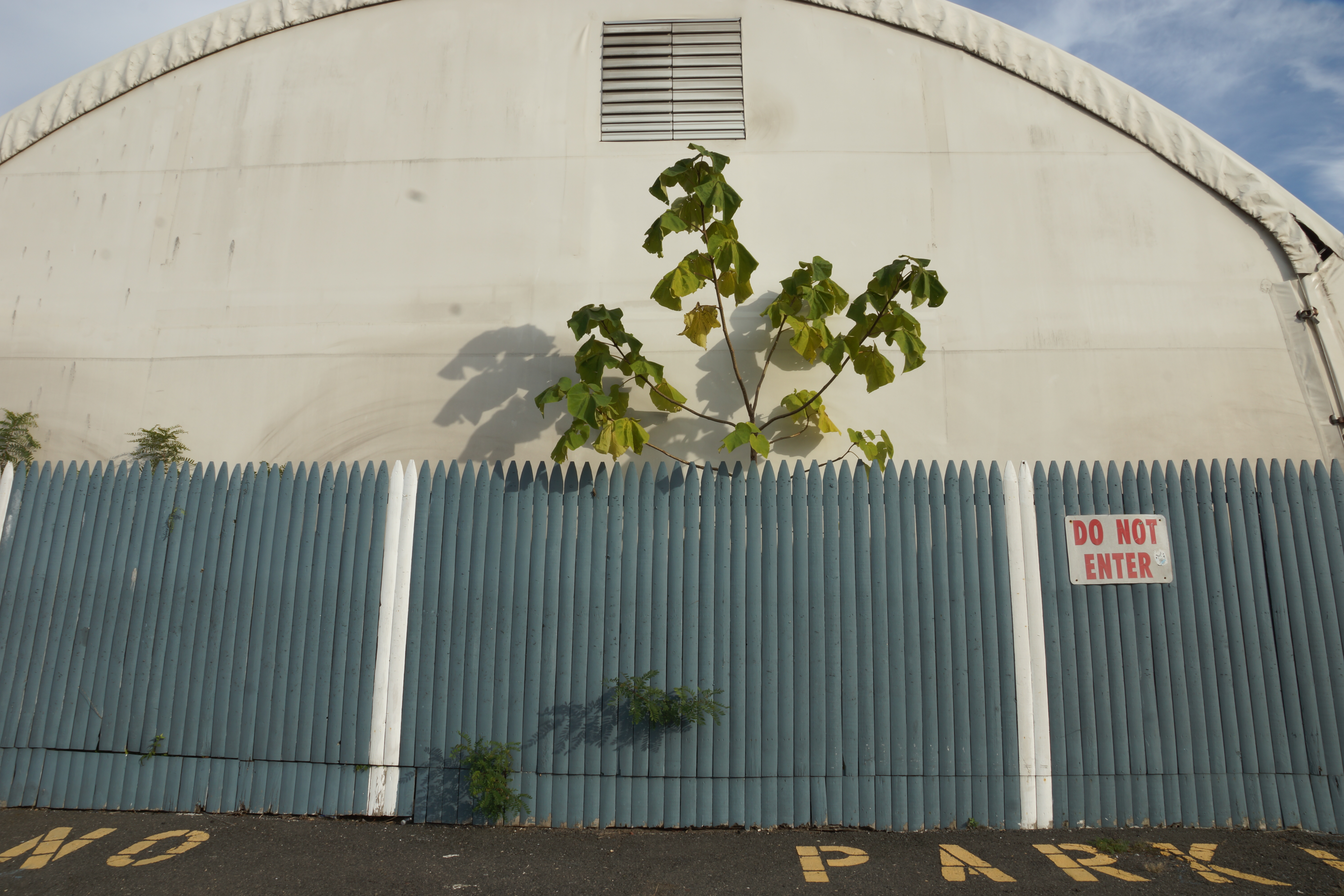
I too gave it a go with my limited germplasm starting in the early 1990’s. Like everything I grow, I started from seed. It is fortunate that the Empress tree historically has been used for both its high value lumber and the ornamental landscape trade. It was more than just firewood or wood pulp. It had high value and like black walnut had a following of experimenters and growers. For the United States, Paulownia was an accidental introduction into the U.S. as packing peanuts and then dumped in places like this New York city harbor I was at while at while visiting family. These dumps created small colonies some of which still persist to this day. See below. Growing out of solid rock this was the ideal location for Paulownia. It entered and parked.
I used seeds from the most northern wild trees and tried to find potential hybrid trees collected from arboretums. Above all, I was testing the waters of hardiness. I began throwing out batches of seedlings that fried after a cold winter. It was a gritty not pretty selection process. It was less than one per one hundred ratios as survivors go. The throw out pile took on a life on its own too. The toasted trees were grown in paper pots of which I would pitch them into an open grassy field at my farm. With living roots still intact, some of the trees hung on. A couple of the trees emerged as winter hardy past minus 27F. A second group of intentionally planted wild germplasm trees was also making headway. This area pegged a minus 29F once. The deer were rubbing them periodically. Surprisingly, the speed of callus was also fast which closed the entire wound the following season.
My final ‘hail Mary’ began with the second generation of a Paulownia lilacina (fargesii) tree at my farm which set seed. This was a rare event. Apparently, this tendency in cold climates has been noticed in other parts of the world where the tree has limited reproduction from seeds. This second generation produced 7 additional trees which also showed zero winter damage. These were planted recently near the original tree picking up real estate of the hybrid American chestnuts, hybrid oaks and walnuts. The interesting characteristic about this species is it’s tall, slender growth with very little side branching. It could be just the one idividual I have or the population as a whole. I am still finding out the secrets of this tree. Last year a pileated woodpecker drilled halfway through it. The result was a quickly callused wound. The woodpecker must of thought he hit the hyperspace of woods. There were no carpenter ants.
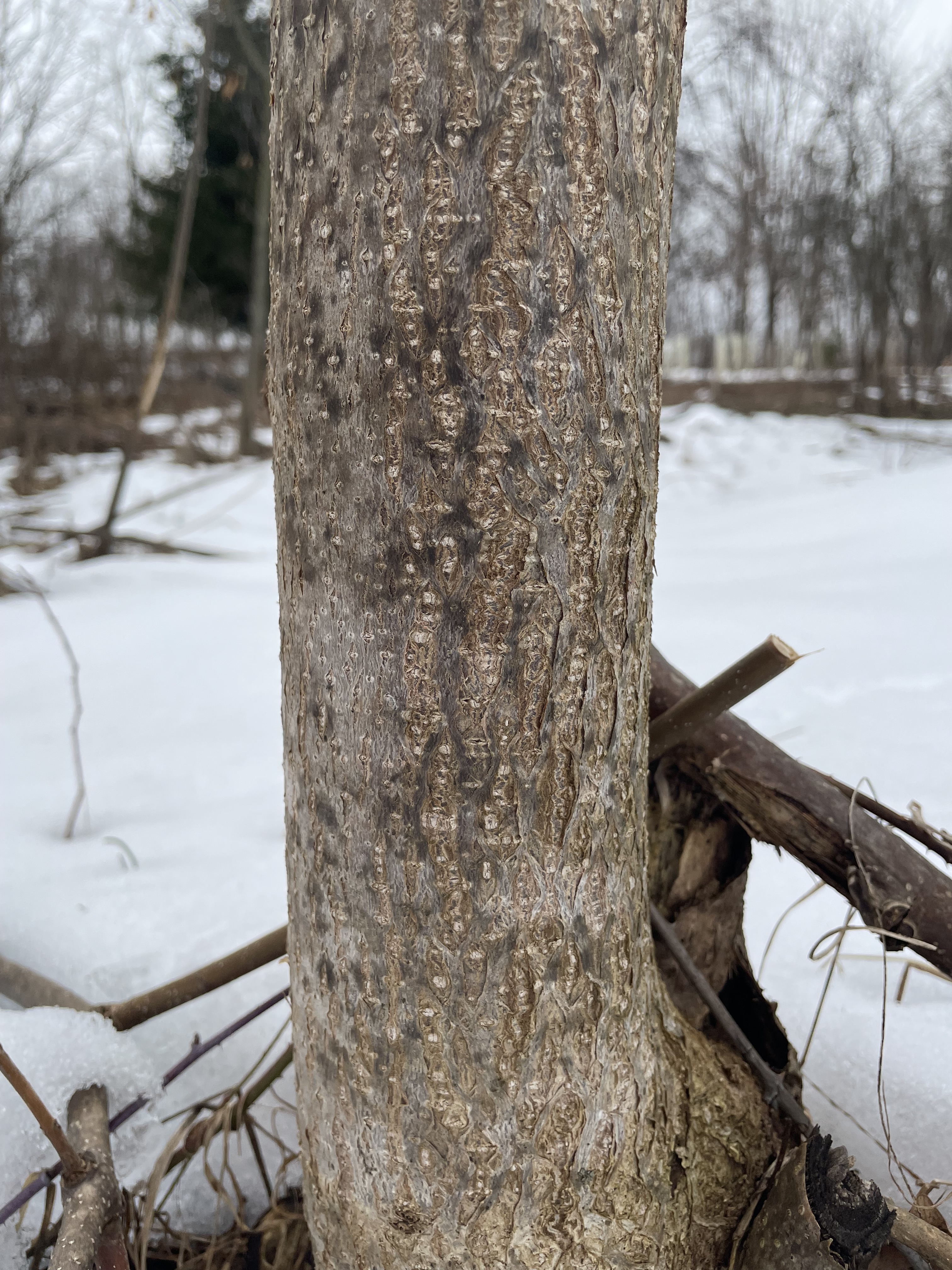
It is easy to see the possibilities of Paulownia. I went online and purchased Paulownia wood. I watched many Youtube videos on Paulownia cultivation. I took out a log I cut from one of my first Paulownia trees and began putting it to use in my woodworking. I’m thinking about buying a Paulownia electric guitar. I’m still looking. Yet, I still feel I am one tree short of a full rack. I am missing collaboration and secondary monoculture plantings to scientifically analyze and test my trees in other locations throughout the state of Michigan. This may sound sacra religious, but you need a monoculture to make this happen efficiently. You need to allow the roots to resprout and grow as a regenerative perennial based woody crop plant the same way popular is grown and harvested today. Monoculture is not our enemy. Monoculture can be the start to polycultures. Paulownia could be used in novel ways outside of a plantation. It is the most valuable woody crop plant available today. Paulownia has a place in the wood industry just like black walnut and black locust. I’m hoping for a fast and straight growing osage orange tree next.
Trees are zooming by. The empress has spoken.
Enjoy. Kenneth Asmus
Interesting Characteristics of the Paulownia Tree and the Things Surrounding Its Cultivation
- Is considered the world’s fastest growing woody tree. 8-12 feet per year in temperate climates.
- Has nearly double the fire-retardant properties of pine.
- Has the highest strength to weight ratio of any wood compared to any other tree. Similar to balsa in weight but much stronger. The wood is soft and easy to work. I notice it ‘dents’ easily. So for woodworking, it needs a hard finish.
- The turn around rate from planting to harvest is between 8-12 years. Similar to Christmas trees in Michigan. At my farm, in southwestern Michigan it may take longer.
- Specific named clonal selections are sterile and free of seeds. This prevents unwanted spread outside the planting areas which makes it easier for the farmer to manage. Some selections do not flower, and others naturally have a low reproduction rate. At my farm, there has been zero natural regeneration from seed. The seed needs to fall on bare soil to sprout. In twenty years, only once did my mature trees fruit. Over a million seeds per pound. My tree tree produced about 6 ounces of seed. The seed only remains viable for one year.
- Fast growing selections are done by rooted-root cuttings. Root cuttings are clonal and capture the fastest growing trees with the largest diameter trunks. Phoenix One and Shandong are two of a few showing remarkable large diameter trunks nearly double or triple other seedlings. BioEconomy Solutions has developed very fast growing and sterile hybrids by cross breeding three species.
- Paulownia shows remarkable regeneration. After harvest, the roots are kept active and resprout into a new tree. One established a single root at my farm grew a top 10 feet in the second season.
- Listed as an invasive species in several southern states as well as worldwide, Paulownia seed free cultivars are a means to grow the tree as a source of wood outside the ornamental market the same way sterile Miscanthus is currently being grown for bedding and cellulose production. Some places allow it in that category. It will take an industry to challenge the laws that prohibit the plant even if it is sterile or flowerless. A good example of this scenario is Berberis (barberry) where even seedless and rust resistant varieties are prohibited despite solving the ‘problem’ of invasiveness and wheat rust. The laws are written this way and do not allow it to exist in commerce. There is also a no ‘use’ allowance. It is worse than the Ribes genus in some ways. I call it the ‘it’s still a hammer’ law. For instance, if I want to grow autumn olive for juice on a commercial scale I would be prohibited from that use in Michigan the same way if it was wildlife food. Possibly there is permitting that would allow it in the future if it is not already established. As you know, you can hurt your thumb with a hammer. Ban the hammer. Or if you want, you can build a beautiful home.
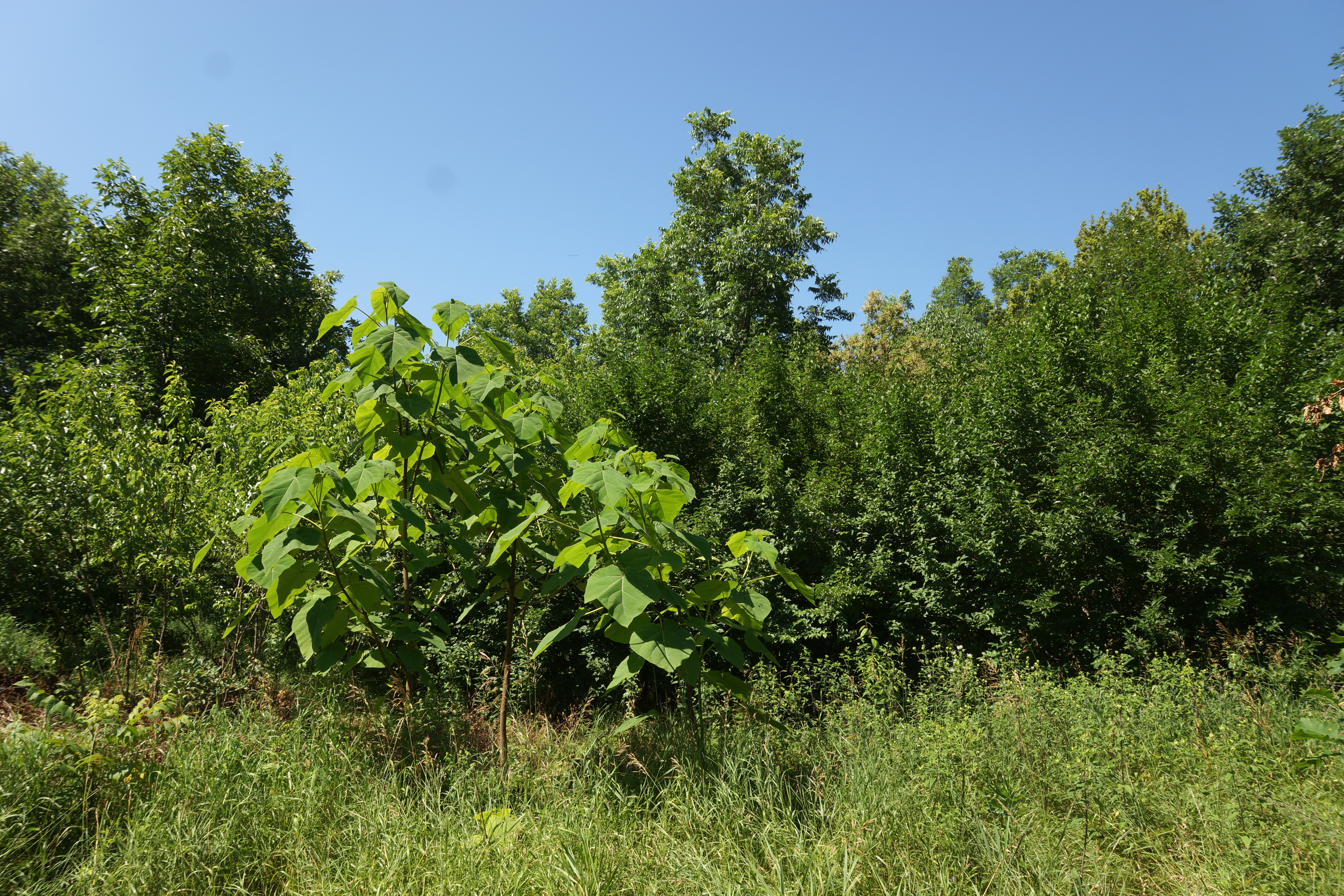
Growing wild forms of Paulownia tomentosa is one means of finding hardier selections into a full Zone 5. This paricular grouping of 10 trees (above image) were grown from seed collected in the wild from Japan. Two of the trees have shown remarkable hardiness. Backed by Cornelian cherry and Chickasaw plums, the chickasaw plums are slowly colonizing this area taking over the understory of the Paulownia. One tree flowered last year but no seed was set. The tallest tree is 20 feet high. Pruning is required to accentuate the growth rate and minimize sprouting from the base which is common with this species.
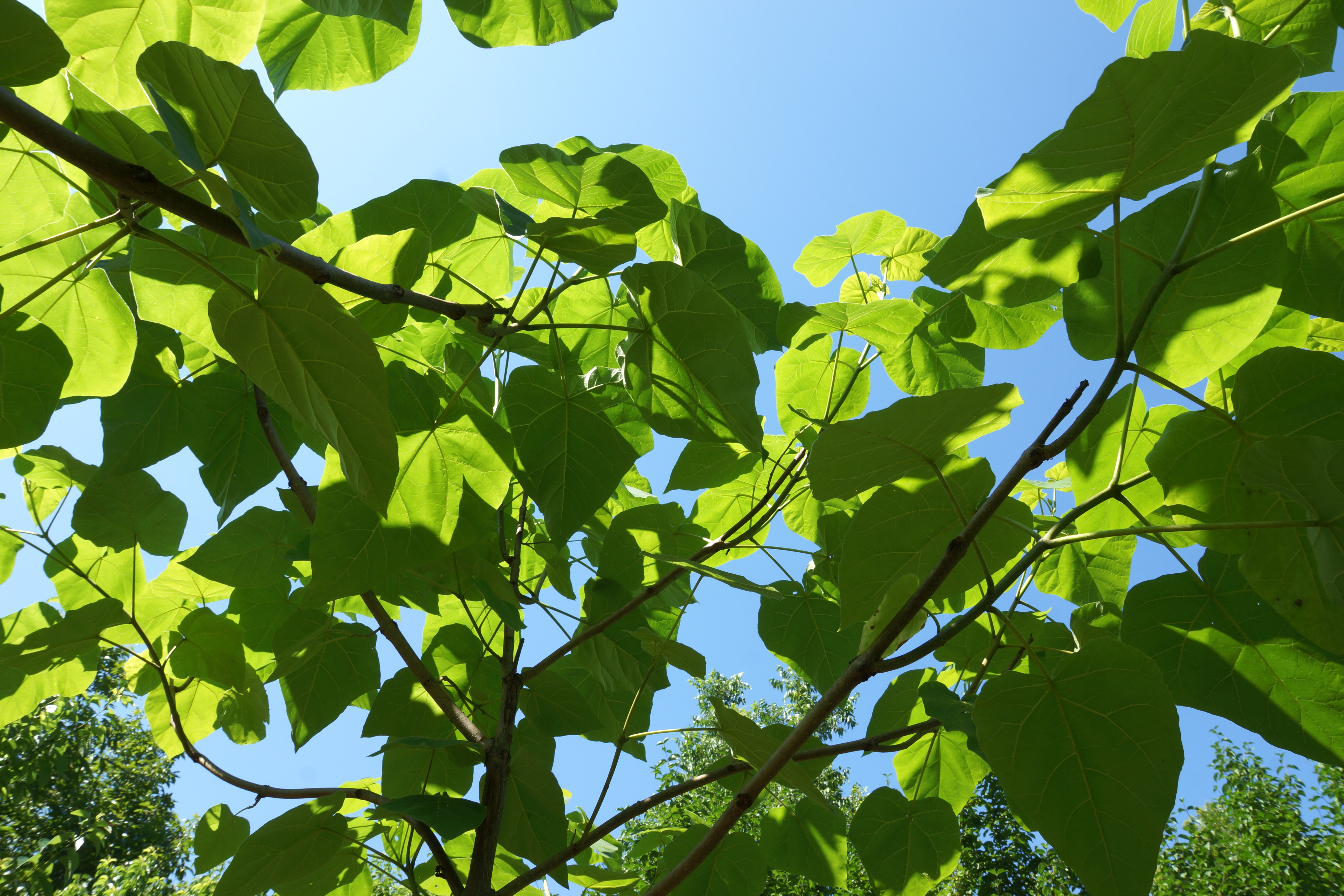
Post: A new variety of Paulownia will be offered in spring of 2027 from Oikos Tree Crops. Named “Zoom One”, “Zoom One” was from a grow out of seed labeled Paulownia lilacina. A very limited supply of root cuttings will be offered for further propagation and distribution. It is not patented. A full description and the cost for root cuttings will be put up on the Oikos Tree Crops website.


You must be logged in to post a comment.