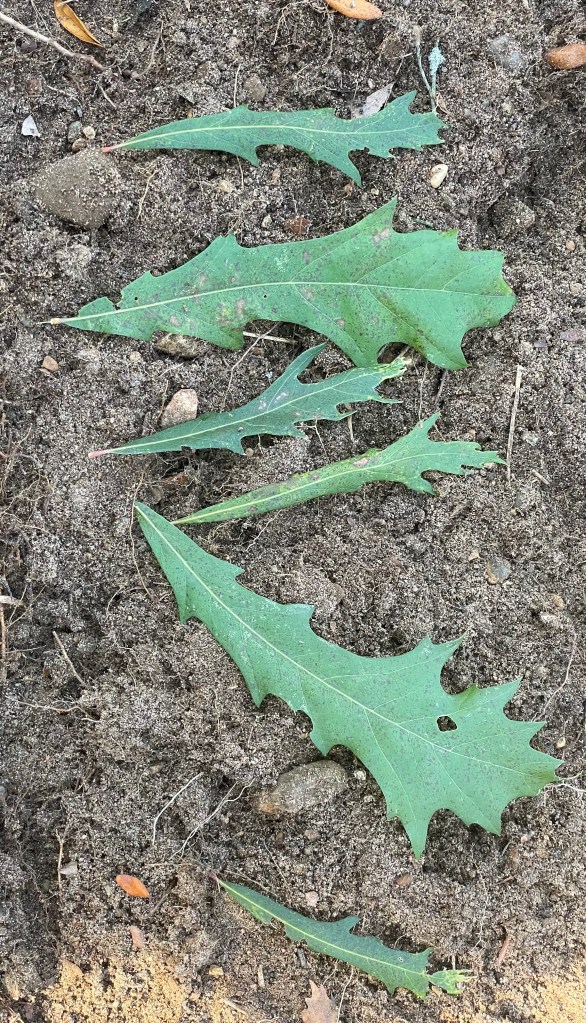
The evergreen foliage in Michigan is always associated with trees that produce needles not leaves. We might have rhododendrons in protected spots near our home in a landscape situation but there are no shade trees that retain their leaves in a green state for very long. Yet green associated with evergreen broadleaf plants is found in many a genus. Like the live oak, many are huge trees. Since oak is so widely distributed, I began to wonder if I could find or create seed strains of hybrids or species rich in evergreen-ness. I have a friend who lived in California for a while and he sent me acorns of the evergreen species there. The thick dark green leaves did not last long but they were beautiful. I loved the foliage of the Canyon Live Oak but Michigan was too much to ask. To find out more about the many evergreen oaks I planted them like I lived in Mississippi. Several of those-who-love-oak people sent me acorns of many everygreen species. I used polyhouses to grow them away from the winter winds and to test the waters of hardiness. I found many wonderful evergreen oak trees from cork to shrub live oak. The polyhouses created a zone 7-ish location. To give you an idea, in the largest unheated inflated double poly polyhouse we had toads hopping around December a few times. It was toasty.
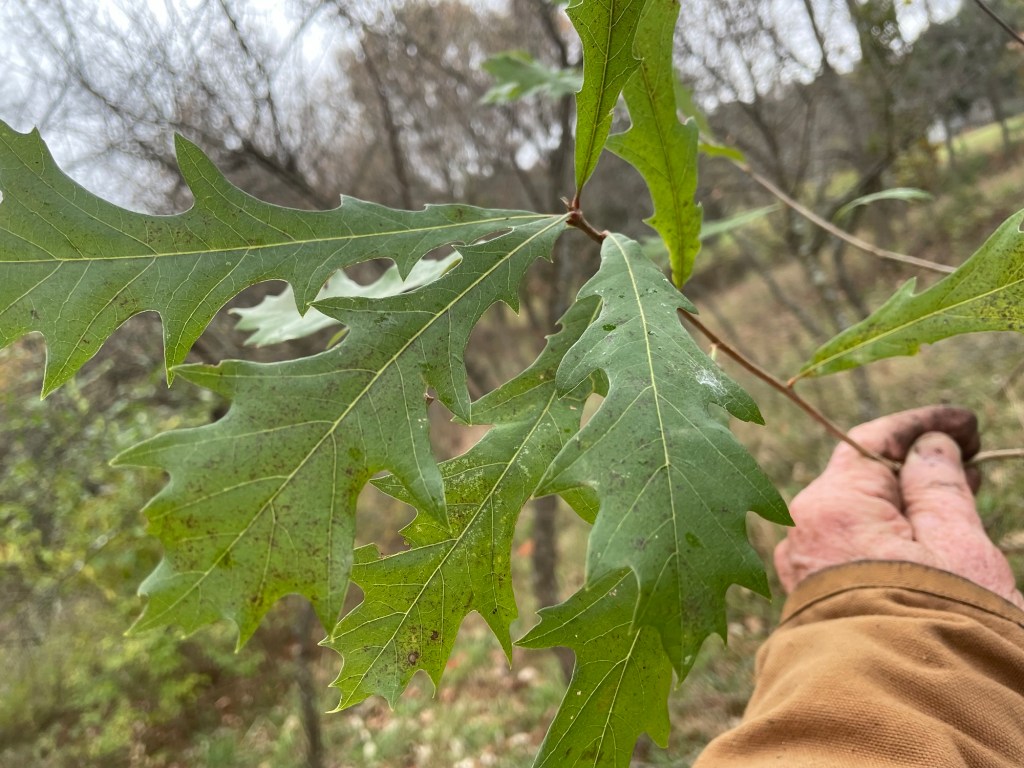
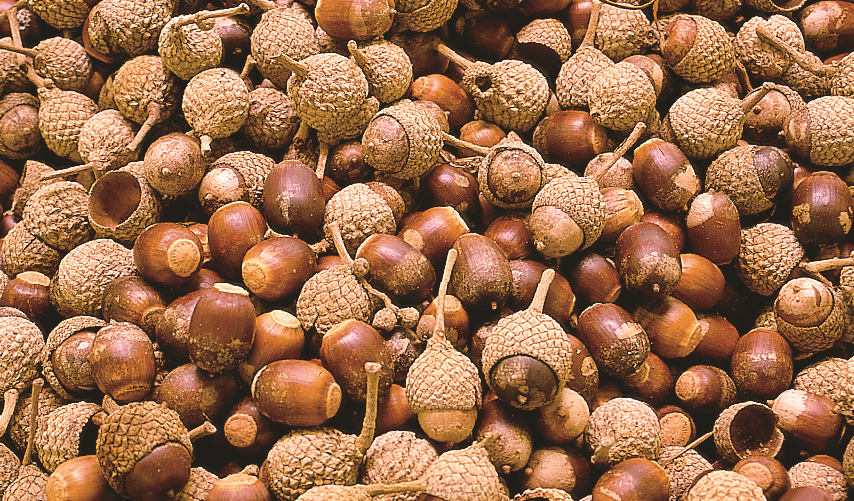
On the reverse side, I had two exposed hills that receive the full brunt of the prevailing westerly winds during the winter. This is a spot where you cannot lollygag around in a t-shirt even in April. It was a perfect spot for the evergreen oaks with good air and water drainage. The expression “tardily deciduous” is appropriate here and it was this spot I grew several Comptons oaks at my farm. It has the evergreen live oak genes in it along with the overcup oak which is a deciduous wetland species. Both are southern species and not found in Michigan. Perfect. You could buy the acorns in bulk.
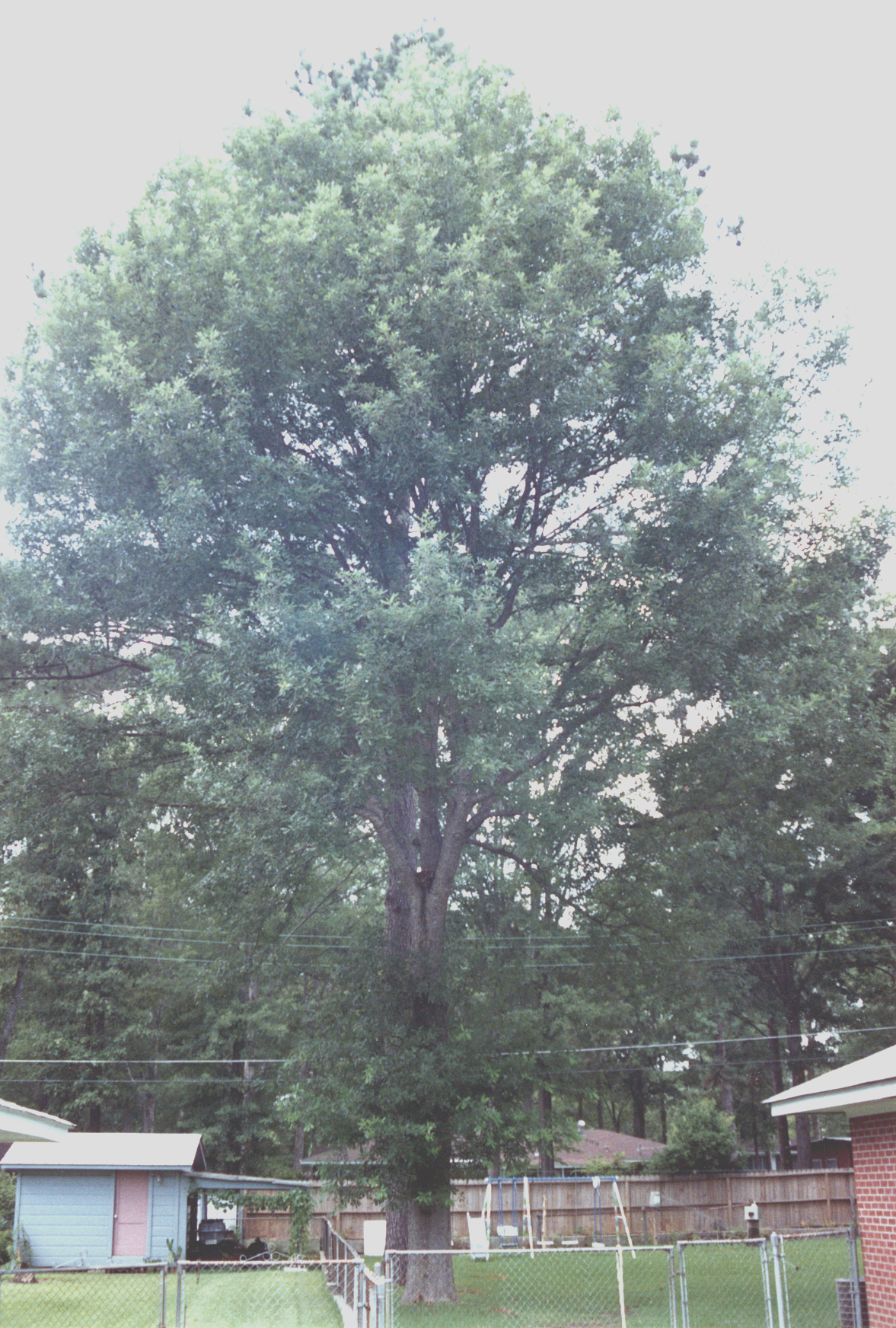
There was one private collector who had a huge tree in a relative’s backyard. That tree was very uniform in its population. The commercial seed companies had trees with greater variation. I visited a commercial tree planting that contained many seedling Compton oak trees in Texas. They were very uniform in tree structure and growth habits. As I expanded my Compton oak plantings I could see the loss in greater numbers. I was getting a much better idea of the nature of the Compton evergreen oak and how tardily deciduous it would be in southwestern Michigan.
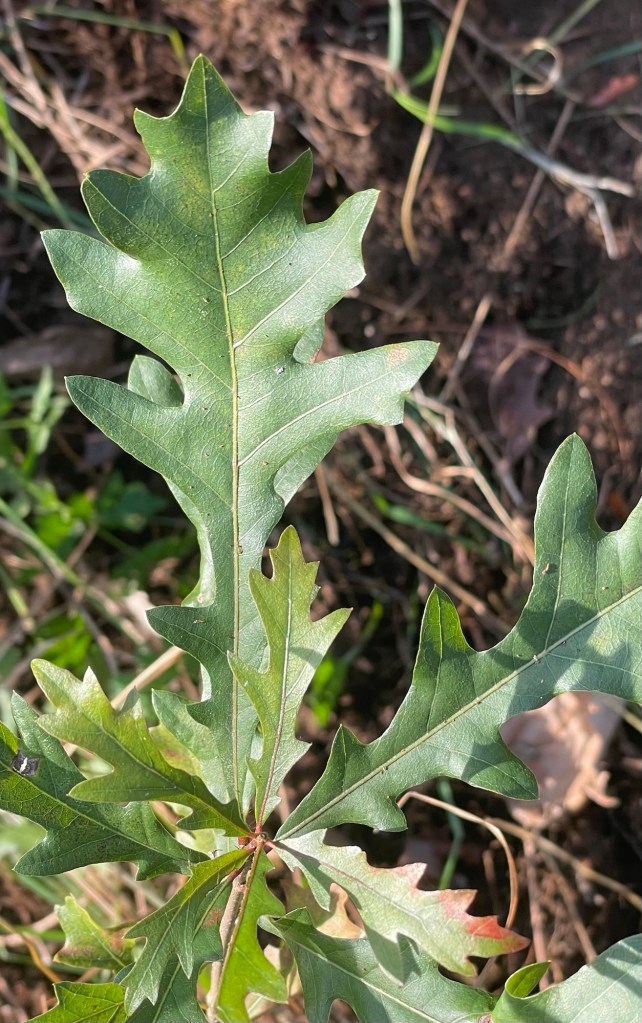
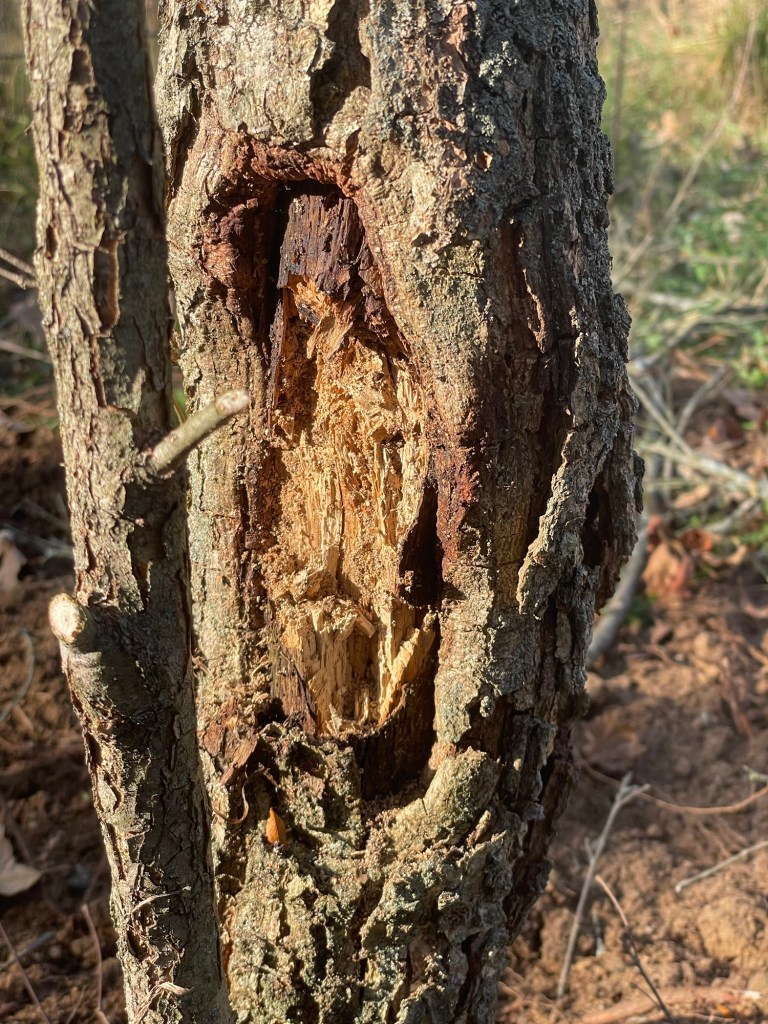
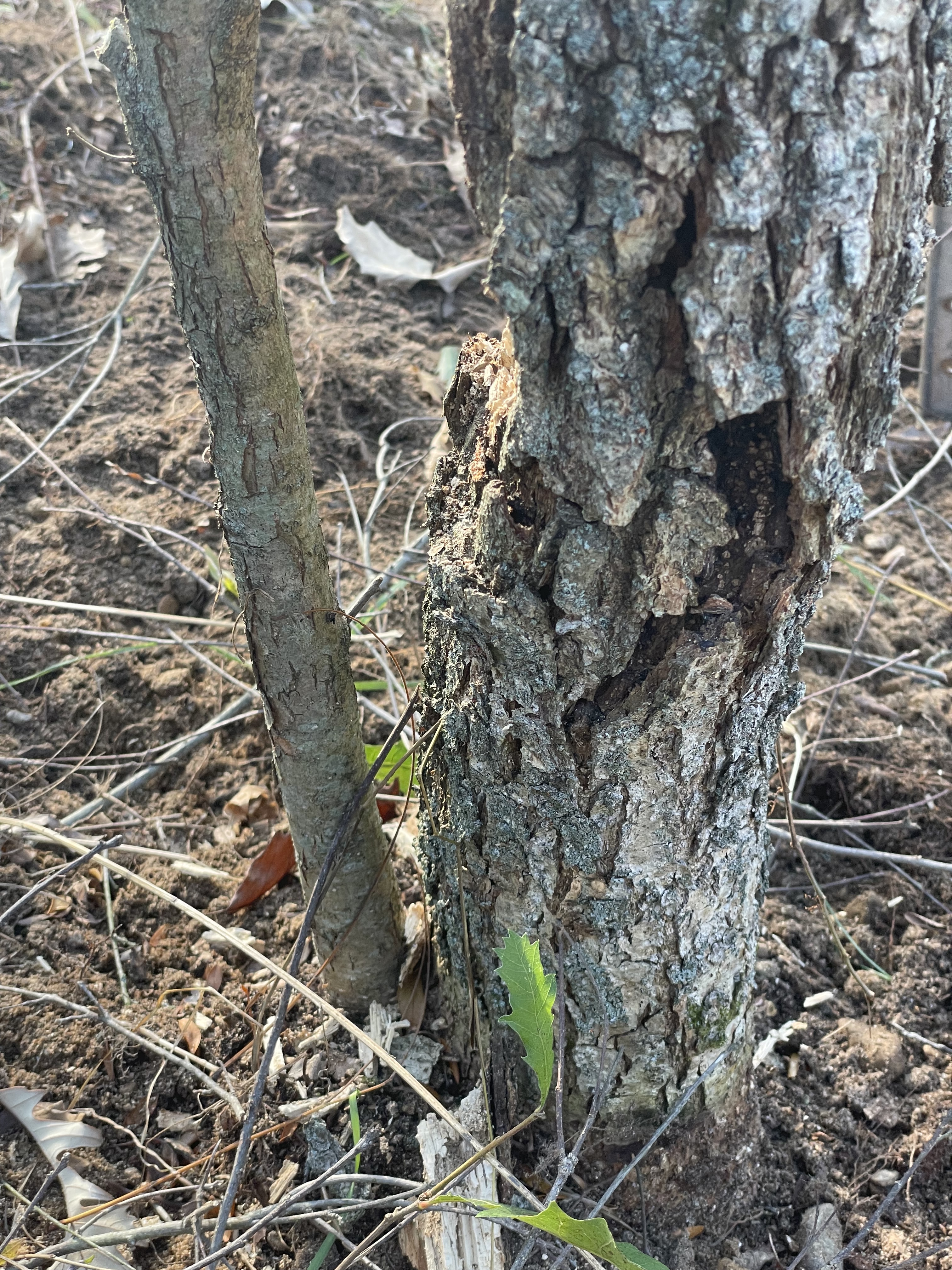
Yesterday while searching for some of my lost sheep trees, I found two of the original crosses of Compton Oaks that persist to this day. They are evergreen. They are barely hanging on the cliff of hardiness on my west facing hill where soil meets dune sand and crushed rock. I was happy to see them despite the battle scars of winter. I removed the sod around them and layered pelletized chicken manure with calcium around each tree. The goal is to speed up the suckering, increase foliage production and increase the speed of callus. Hopefully the trees will fruit soon since they were planted in 1993. They are nearby the dwarf chinkapin and bur-shrublive oaks. That my help their future self. I remember eating the acorns. They were very low tannin and delicious even in the raw state. I have oak dreams. Everyone does. It is a common experience. Whatever is the most adaptable oak, then I would follow that direction green leaves or not.
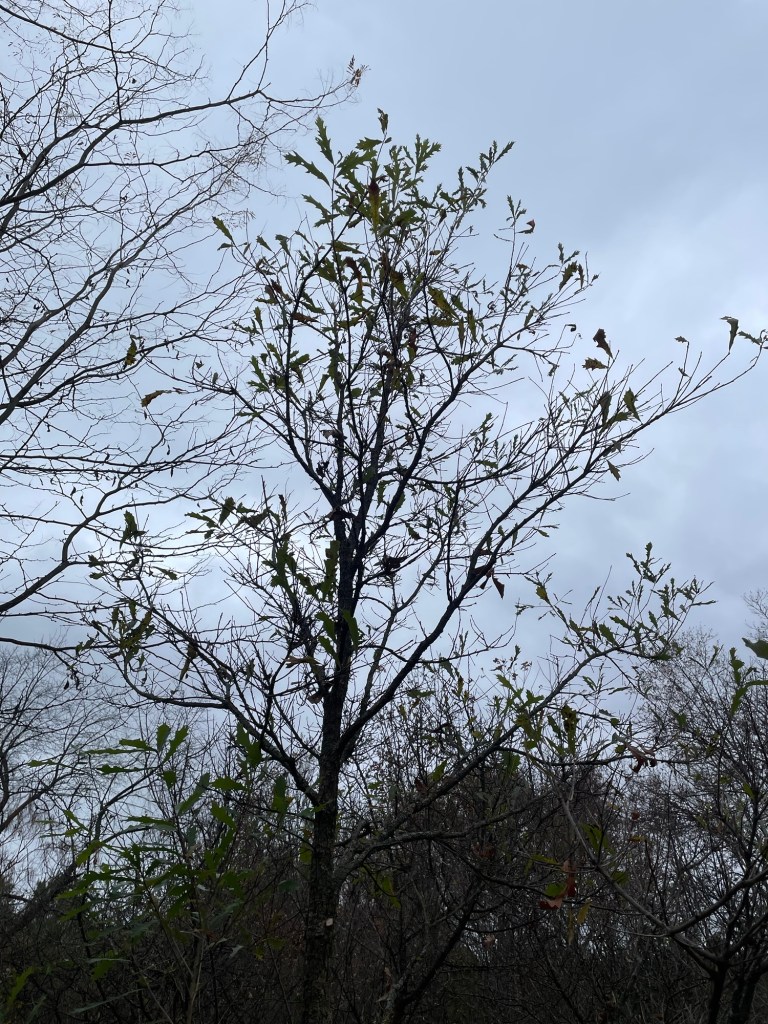
The Comptons oak rises above the climate during this cloudy day of a Michigan fall season of 2026. Soon acorns will fall.
In the meantime, the towering American hollies are nearby, and I will build a shelter there to stay for the winter.
Enjoy. Kenneth Asmus


You must be logged in to post a comment.