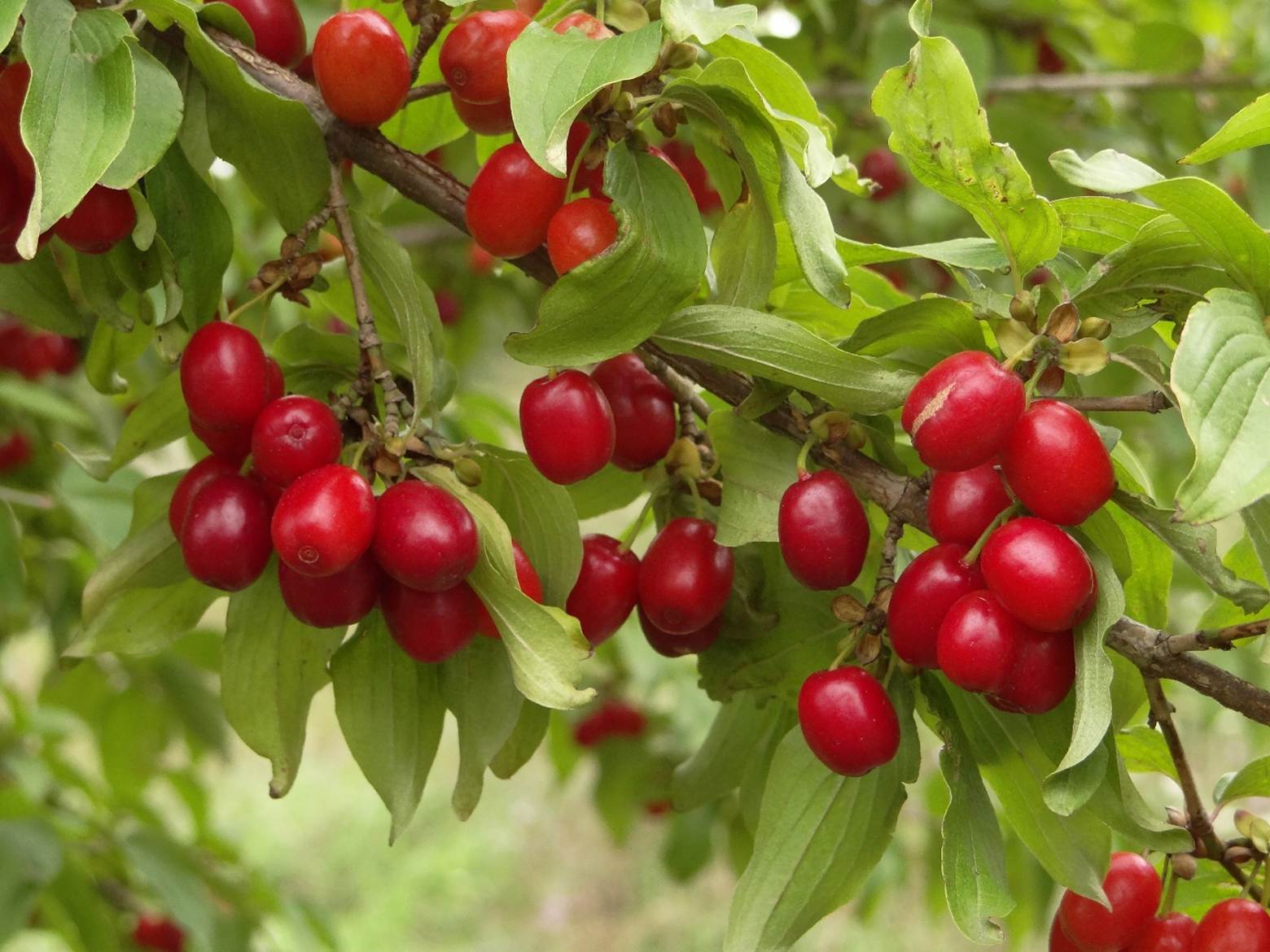
On a camping trip when I was in high school I ate a bunch of bunchberries, Cornus canadensis. It is a common groundcover found in the northern woods of Michigan. The edible wild book that I had said they would sustain you. This was true. It was bland but it was edible.
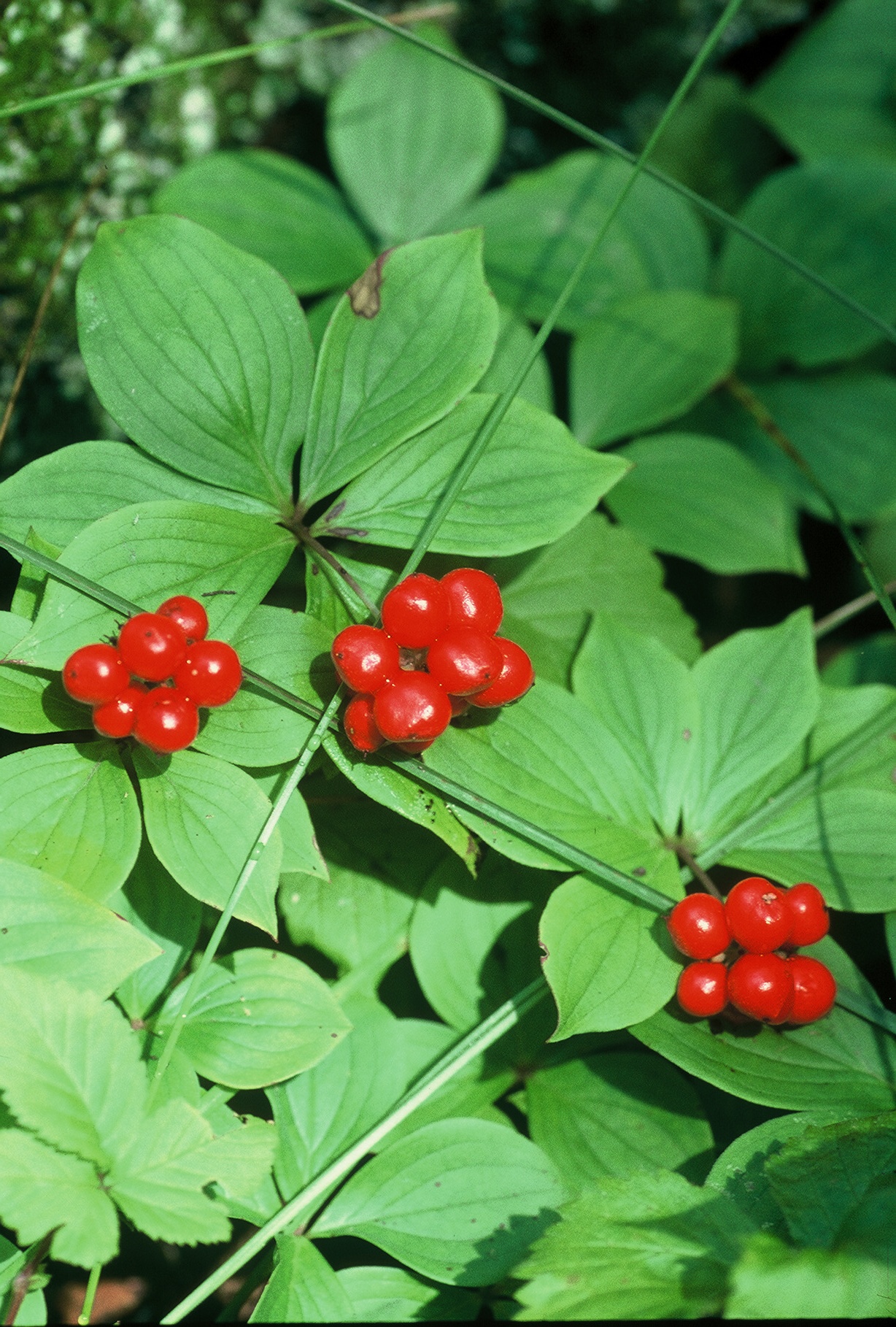
Through my camping experiences I found many of the shrub dogwoods had a similar type of texture and flavor. As I started growing the silky dogood, Cornus ammom, in my nursery for wildlife use, I had heard about a culinary type of dogwood used for food for generations in central Europe called the Cornelian cherry, Cornus mas. It was of great interest to me to hear about the cherry-sized fruits used historically the same way sour cherries are used today. Where would I find such a tree already fruiting? It was not a common tree in the nursery industry and no examples could be found in any landscapes I was familiar with.
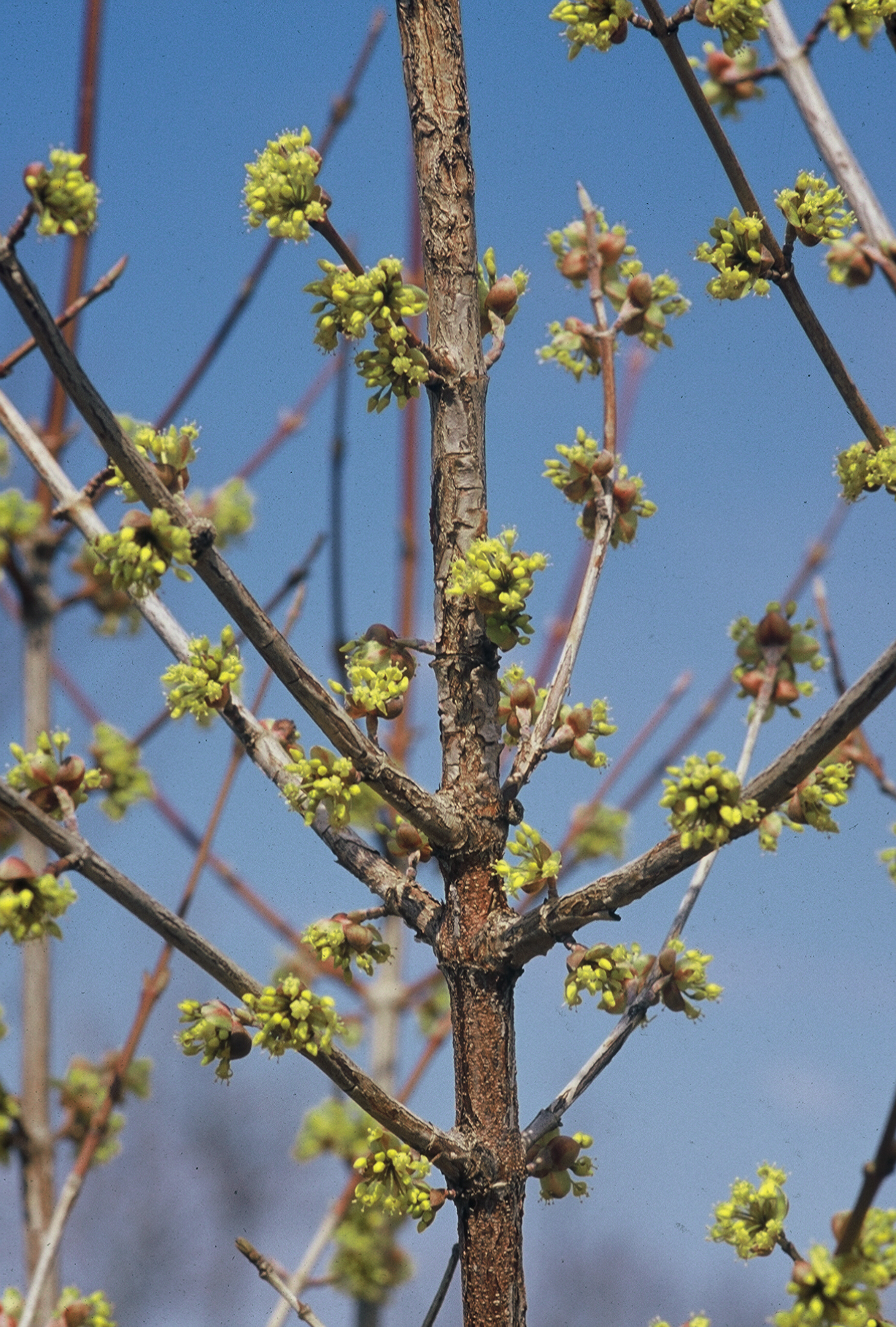
Not long afterwards, I found you could easily spot it in March with its faint golden yellowish green flowers when nothing else was flowering. It often flowered before forsythia. This plant was used in many of the older homes in the city as well as some college campuses. My experience of the plant changed when I happened to be in the older part of town and noticed several large cornelian cherries fruiting surrounded by a parking lot and a sidewalk. Here I could taste the ‘wild’ cornelian cherry. The extreme tartness was something to appreciate much like the high vitamin C acerola berries that are used in supplements. Two major roads in downtown Kalamazoo, Michigan intersect there and the red stains on the cement were clearly visible at the stop light. I knocked on a few doors and got permission to collect and sweep the parking lot. It was a non-profit organization who rented the home, and no one would park their cars underneath the plants during fruit drop. For me it was a glorious mess. Now I could obtain fresh seeds and eat plenty of the fruit while picking away. Normally I would just suck on them like throat lozenges one at a time. I would then process the bulk of the fruit back at my nursery for seeds for planting. I even hand picked some fresh fruit for my jam making. The high pectin fruit would make a dense spread rich in red color and flavor. People spoke highly of it despite its acidic nature.
If the light was red at the corner, people really stared at our fruit shenanigans. Sometimes we would climb up the trees a little and shake the fruits on a tarp below or use pole pruners to release the fruits. It rained fruits at times because the yields were significant on these old trees. Then we would sweep up the mess with push brooms. Since it was an area with international students, occasionally someone would yell out from their car, “We have this in my country” or “I know what this is.” As if it was a secret handshake to a world of unknown flavors, the cornelian cherry spoke to people who wanted to let me know their connection to the plant. Several people stopped by on the sidewalk and I would ask if they would like a taste. I was happy to see their expression on their faces. Students from Iran, Hungary and China all knew the fruit. Not everyone liked it in the fresh state but smiles erupted despite the tartness. It was the ‘cornel’ dogwood. Dried, made into drinks, compotes, and olives it was collected and harvested the same way tart cherries are used in Michigan. Because of the chart-topping Vitamin C and tartaric acid, it was like a sweet tart candy on a tree.
The Cornus mas was a forgotten fruit plant and was only remembered as an early flowering ornamental plant in North America. It fell into the forsythia camp of spring flowers. Few knew about the fruit let alone how to make something delicious from it. When the plantings at my farm started fruiting, I would often make jam and offer taste testing at the farm shows I was displaying at. Processed with sweeteners, it became a whole new fruit. Once made into jam, syrup or salsa the fruit became known again as worth growing even on a small scale. Today those trees on that corner in the city are long gone. They were replaced with less obtrusive bushy tufts of native bunch grass, daylilies and stone. The cement painting done by the Cornel has been erased by time.
I too know that fruit. We have this in my country.
Enjoy. Kenneth Asmus
From Seed to Fruit: Cornus mas
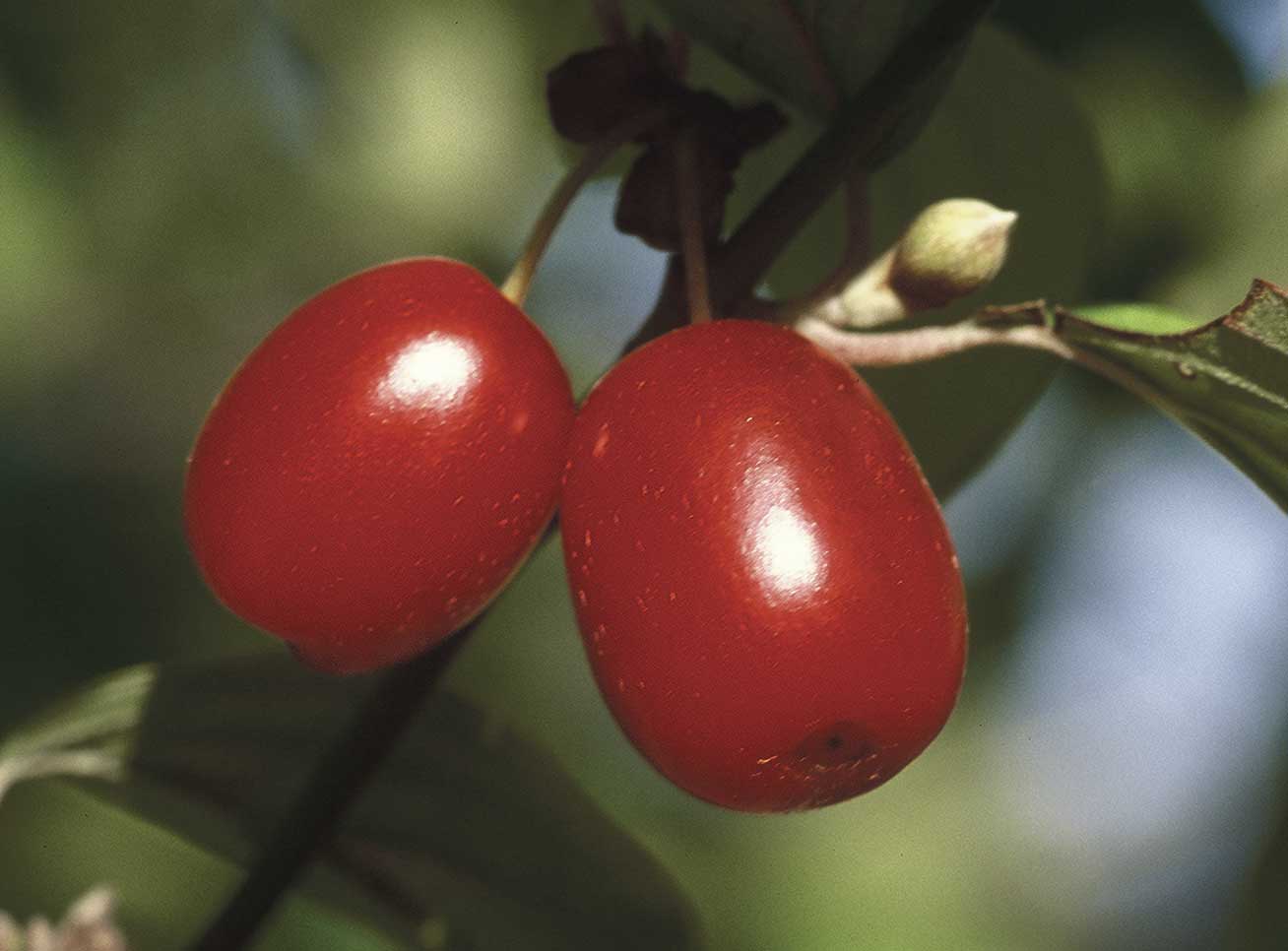
Cornelian cherry can easily be grown from seed. The seedlings are almost always heavy bearing and produce similar fruit in size, shape and flavor. It is a very uniform population of fruiting plants with similar characteristics. Although the plant is self-fertile producing both male and female blossoms on the same plant, it appears from my plantings that having several plants near each other improves the yields. It takes between 4 to 8 years to bring the plant to fruit from seed. Plants are usually 6-8 feet tall at this point. Fruit is produced all along the inside of the limbs in clusters and increases with age. Mature shrubs can produce upwards of 50 pounds of fruit.
The seeds have a long dormancy. They require contact with the soil which breaks down the hard seed coat. This takes from 2- 4 years to release the multiple embryos found within the seed so each seed can have 2-3 individual plants within it. Many of the seeds start sprouting in the second dormancy after winter. This would be a warm and cold treatment twice before sprouting. After the second year some seedlings will continue to emerge after the third winter and a few even into the fourth year. This is just common with a multiple embryo seed and a seed coat which is extremely hard and dense. Plant ½ to 1 inch deep. Tamp into the soil good as they tend to migrate to the top over time.
Cornelian cherry can be grown commercially from seed as a fruiting plant for processing. There are no insect or disease issues with trees or fruit. Frost seems to have a very limited or no effect on the flowers even if the trees open in February or March. They flower based on air temperature and warm spells will cause them to flower quickly much faster than apricot or cherry. The flowers are used by different species of hoover flies and solitary bees. Since it is very early in spring few bumblebees or honeybees will use them to any degree unless it is a late spring year. Cornelian cherry in one of my plantings is heavily producing despite being in the shade of walnuts and hickories. As an understory tree in an agroforestry application, it could provide a source of fruit in semi-shaded conditions.
Two seed sources which worked well at my farm was “Redstone” and “Hungarian”. Redstone was a seed selection from Arnold Arboretum. The fruit quality was slightly less astringent with its slightly larger than normal dark red fruits. Hungarian was seed purchased from fruiting cultivated plants in Hungary. The robust large shrub is heavy bearing producing uniform fruits in great quantity. Other seed sources were not inferior in any way. Most of my plantings were done with both arboretum and private landscape plants. All produced good quality fruit. There are cultivar selections which have improved the edibility of the fruit in its fresh state having higher sugar content or less ascorbic acid content. Dark red fruit is preferred with a smoother flavor with less tartness. Yellow fruiting ones also fall into this camp. These varieties could add to the flavor profiles of the cornelian cherry as a cultivated fruit. Most are not widely available and are expensive to produce taking upwards to three years just to grow the rootstock. This plant could easily grow in short season areas as ripening is from August to September at my farm in southwestern Michigan. It is hardy into zone 3.


You must be logged in to post a comment.