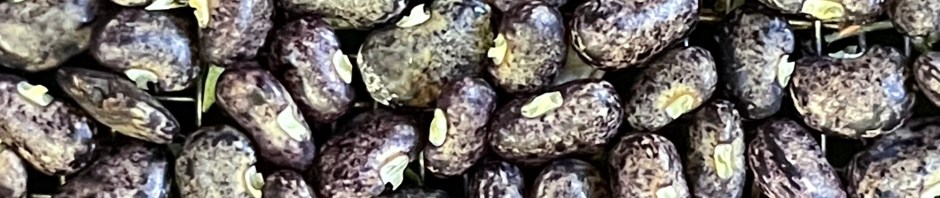

While harvesting American hazelnuts on my farm near the electric line right of way, I discovered the hog peanut. I pulled up on the vine and found several larger than average tubers (dime sized) connected on a string. I had never noticed this before. The vine had produced a few small beans (lentil sized) in a pod wrapped around the top of the hazelnut bush which supported the crop. Here was a nitrogen fixing legume growing untended doing its thing while the hazel cranked out nuts. It was providing additional food resources while improving the soil. As time went on in my nursery, I grew several seed strains of it including some seeds sent to me from a former employee from northern Michigan. My farming activities naturally increased the locations of this plant. Even the polyhouses had a few colonies in them. It snuck in there and grew very nice in our purposedly designed nitrogen deficient soils of the seedling cactus propagation area. From here I started harvesting large amounts of hog peanuts under the trays growing on top of the ground cloth. This accidental system was the first time I had enough of those precious tubers to create further repositories around the farm and make specific selections.
It was one of the plants that over time had a growing number of followers. Like all good plants, a few critics were sucked into my whirlpool of plant enthusiasm. For some it was too weedy and invasive. The letters were shredded. The emails were blocked and I went on my merry way with the Crispy Snack hog peanut and its marketing. We made additional planting areas outside and in a new greenhouse. I also began growing them in spun polypropylene growbags with fencing. This way I could capture those twisty explosive pods before the seeds were ejected with great velocity. I was in the hog peanut business baby! I was flying around the world, renting jets, staying in five-star hotels and dining with celebrities. Let’s face it. It’s the nursery business and that too was of small consequence with no fanfare. It did have a good following and eventually reached the heights of academia a teeny bit. I can smile when I spot it in some out of place area where I did not plant it. It too has woven itself into the fabric of my tree crop farm.
Enjoy,
Kenneth Asmus
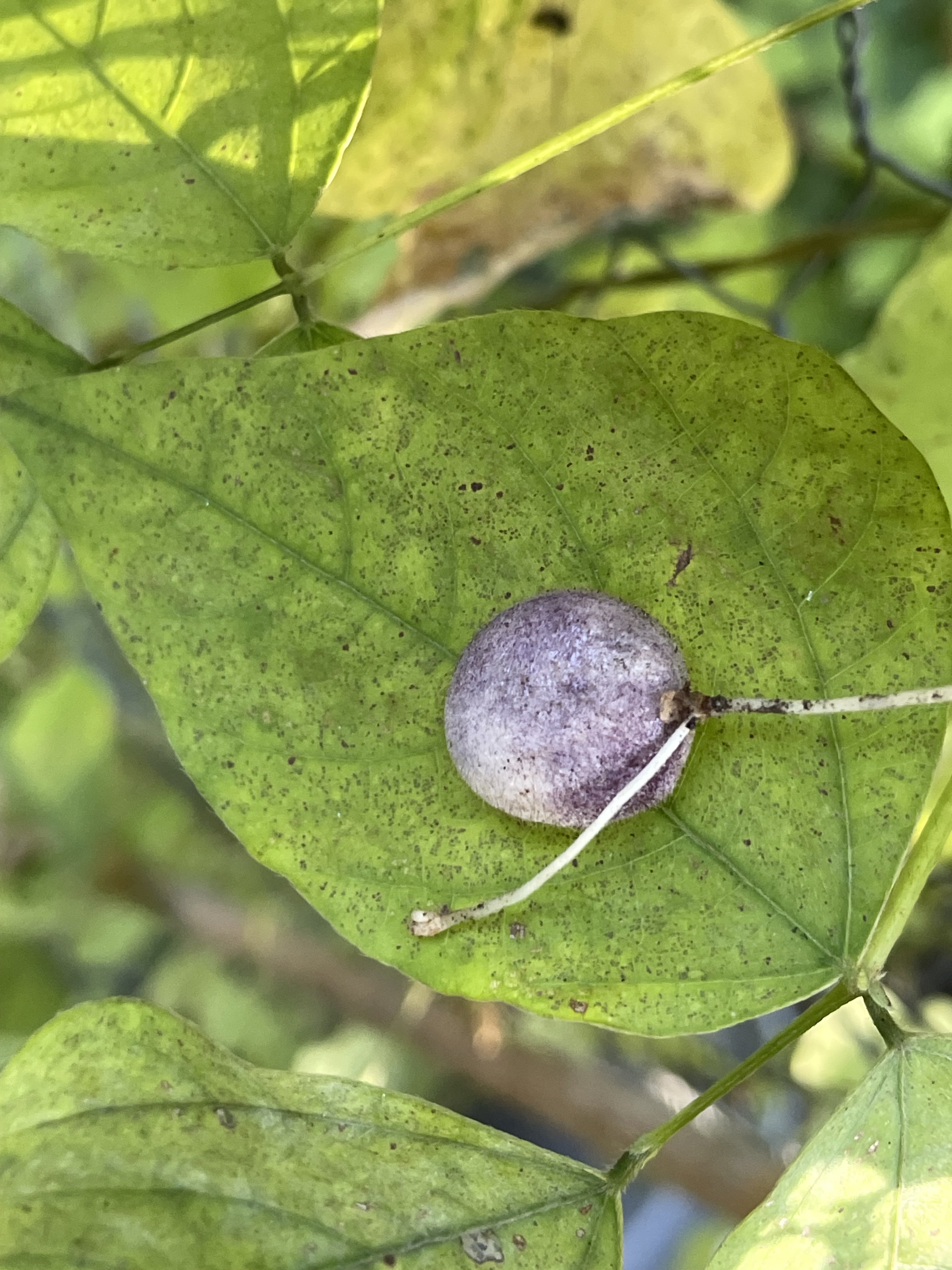
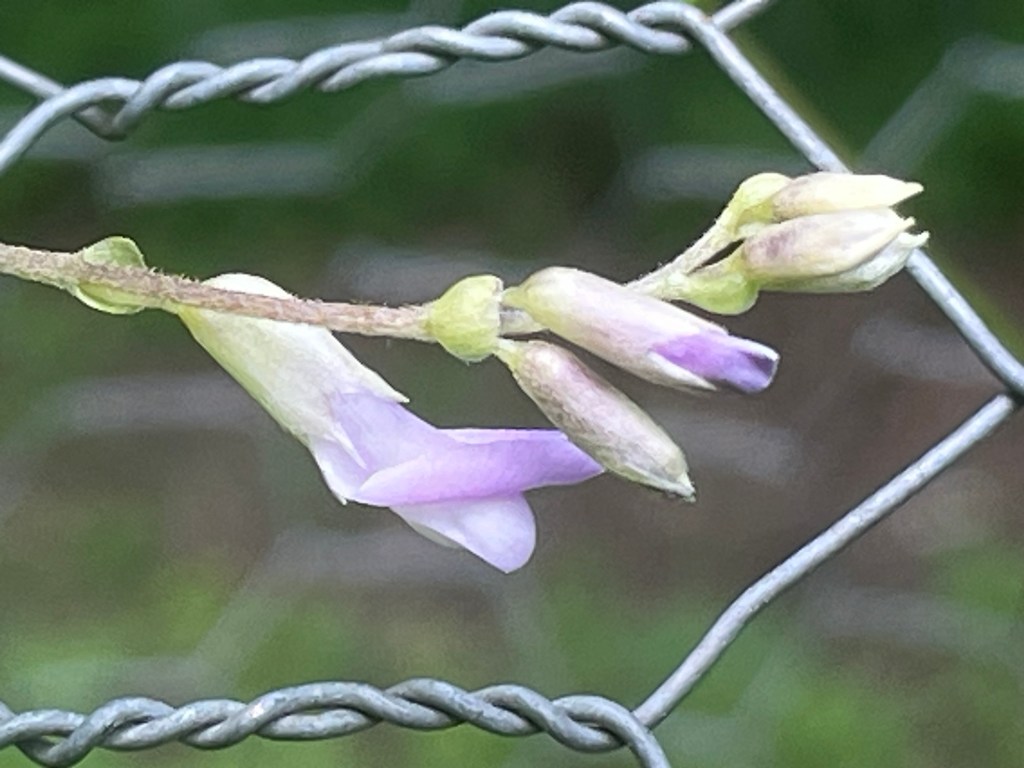

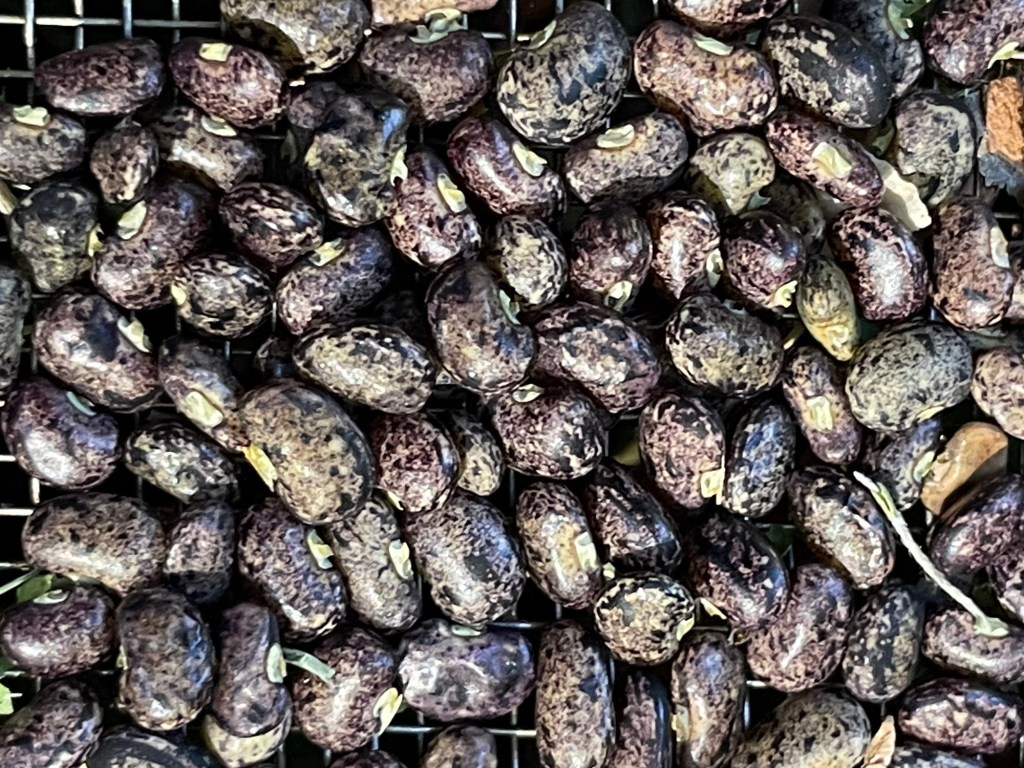
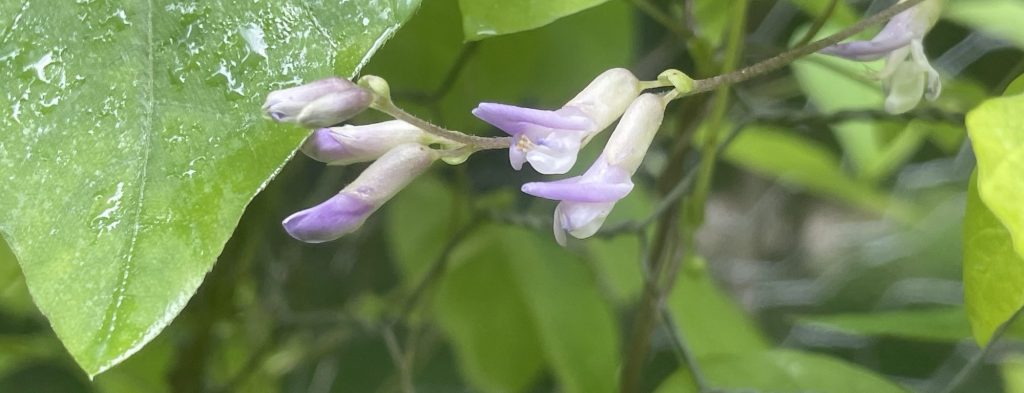

Once a seed repository is built up including varietal selections like Crispy Snack, seeds can be used for the production of the tubers. You can pelletize the seed for greater uniformity and inoculate it with appropriate nitrogen fixing bacteria. It is two crops in one. Edible seeds and edible tubers.
This variety Crispy Snack was found at my farm and stewarded for a decade before releasing as a variety. It has larger than average tubers and is high yielding in aerial beans. It is from Michigan germplasm and likely crossed with other nearby hog peanuts. The plant itself grows well in disturbed sites in sun or shade. Tubers produced in my oak plantings were lower yielding than part sun areas.
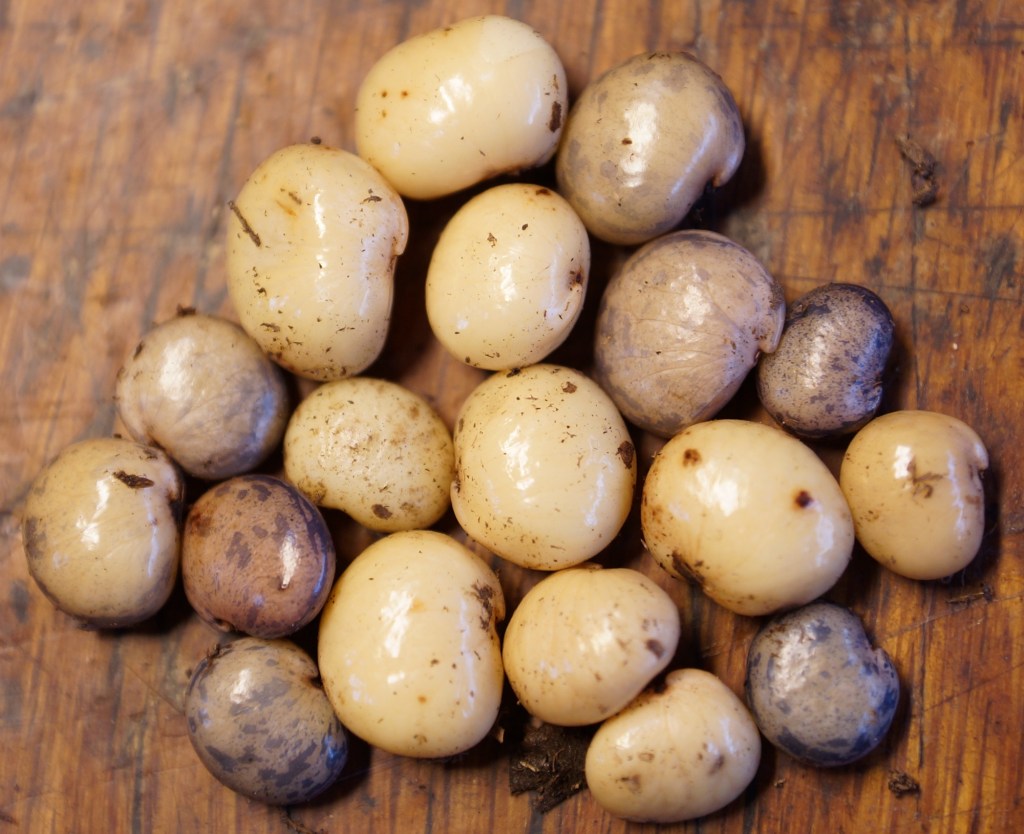
The texture is very smooth with a creamy light buttery flavor in its raw state. It is one of my most flavorable tuber crops in the raw state. I just wish I had more of them to harvest. They are frustrating in terms of their low yields however inoculating the seeds and tubers increases the seed yields. There are other individuals who have developed selections of them world wide that have focused on the tuber production. Some are quite large upwards to lima bean in size.
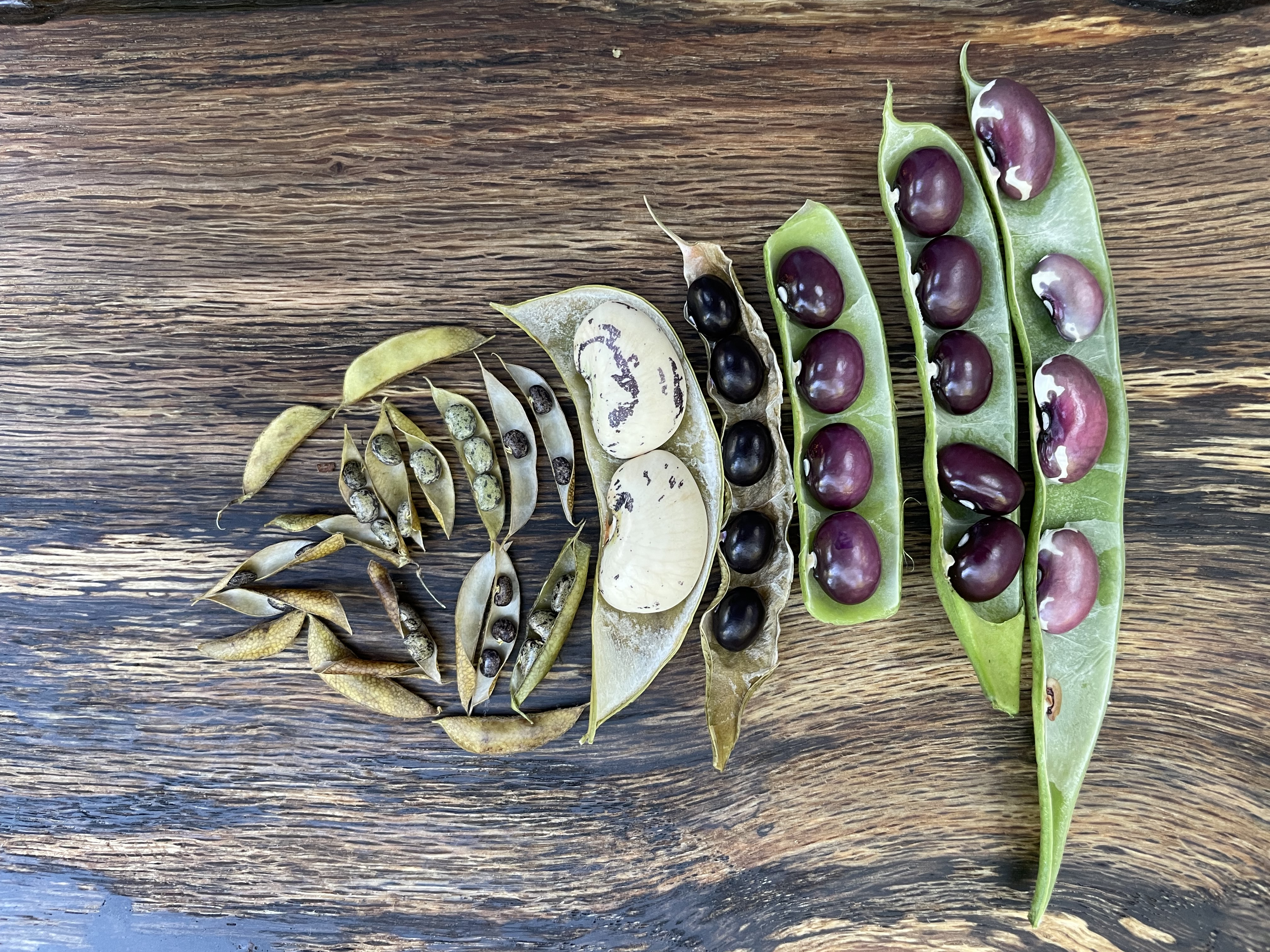
Left to right: Crispy Snack Hog Peanut seeds and pods, Lima bean hybrid, tepary bean (Dark Purple) hybrid, 1 dragon bean, 2 dragon bean and 1500 Year Old Cave Bean cross.
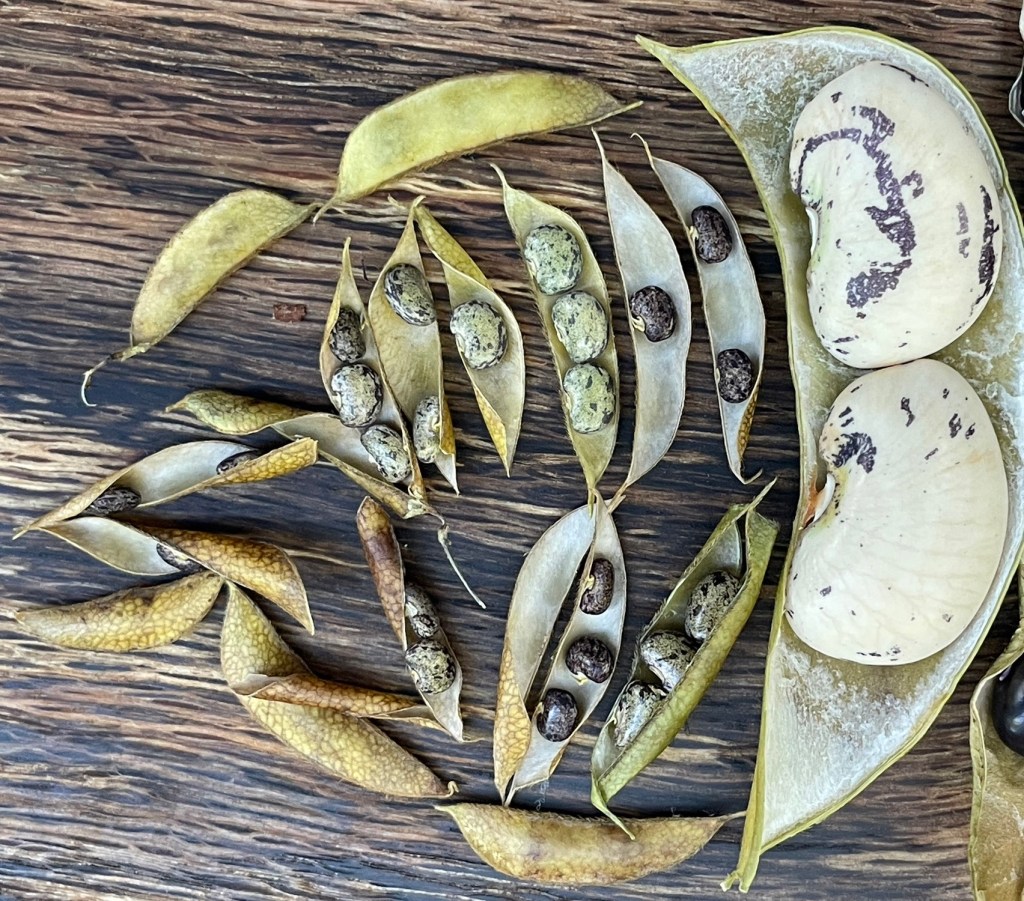
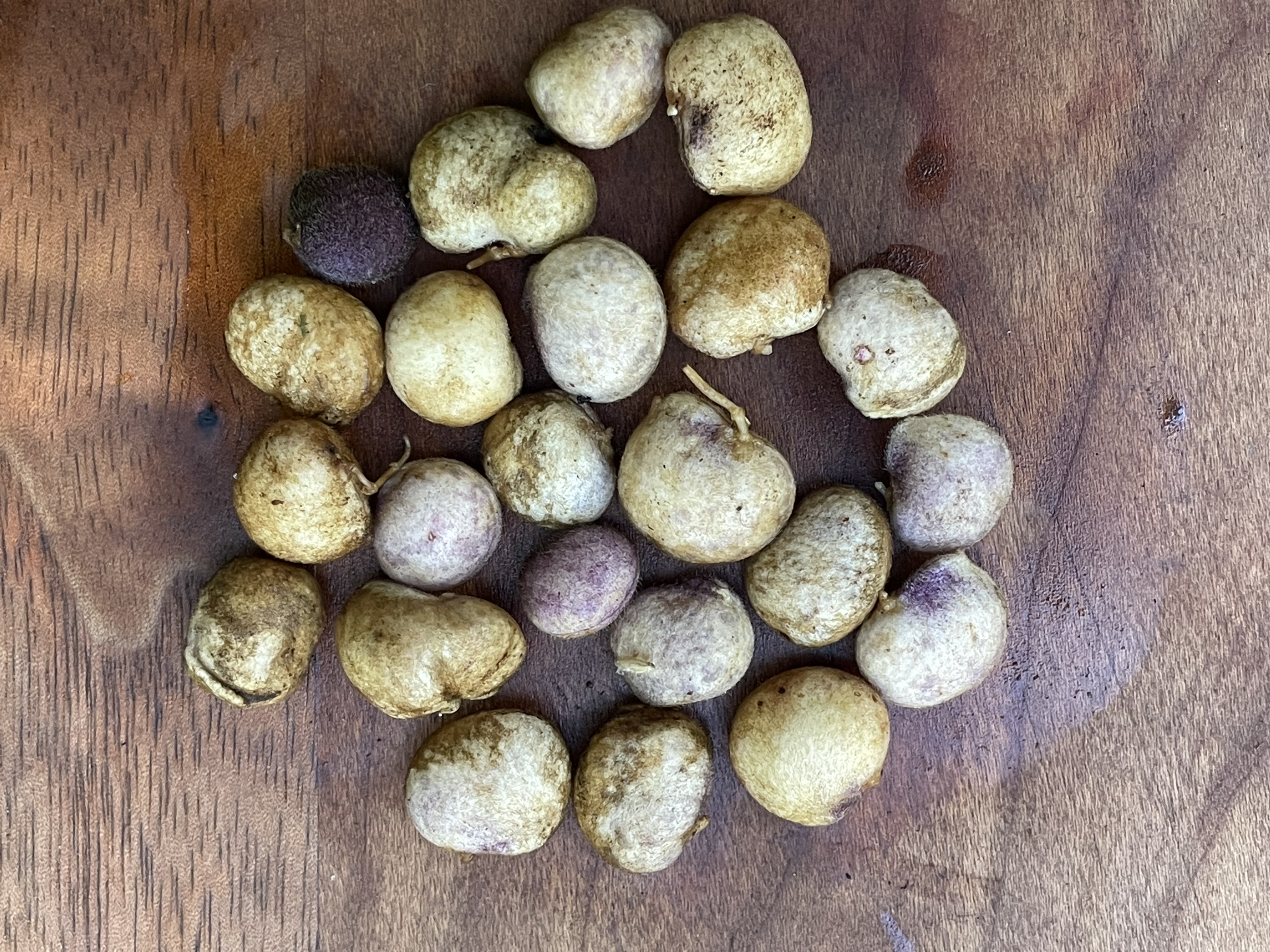
Crispy Snack hog peanut tubers like all new root crops will need a farmer willing to grow and steward the plant. It is a bean and a tuber. Cultivate and disseminate.


You must be logged in to post a comment.