
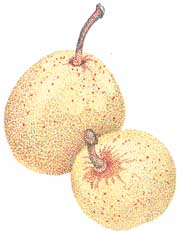
If you were to take a peak into the secret life of pears, you will find treasures hidden in places that are not easily accesible. These are not “escaped” pears but subspecies that someone in the taxonomic botanical world has gone to the trouble to identify clearly, track down and catalog in a very precise manner. They may exist only on paper as a single line of text in a book impossible to find in print. Some grow high in the mountain valleys and some are hanging on cliffsides. Usually plant scientists in this realm think breeding material. For me, I think eating material. Can we use the fruit as it is without the whole hoopla of selection and refinement? Does it matter if it is small or crabby like an apple?
When I first started growing pear species, I did so for the sole reason of finding the greatest biodiversity of the Pyrus genus. There was really only two species represented and available. I was looking for fruiting pears with unique flavors and sizes within the commune of Pyrus communis, the pear of commerce we all know. Through both seed exchanges in many of my professional organizations and purchasing seeds from wholesale companies, the pear genus did not disappoint. The germplasm was easily accessible. I extracted seeds from grocery store fruits. I stopped on major highways to collect fruit. I knocked on doors. I went the extra mile to achieve my plantings of which I maintain to this day. I love the wood of pear. I love the fragrance of the blossoms and its ability to crank out huge volumes of clean bug and disease free fruit even in the worst years. And for those people who tell me they hate pears, I quietly wonder how many other people fall into this boat. Is it lost in their own tastes or just have not had a good pear in a form that is pleasant and enlightening to them? The pear offers some solutions to tree crops and agroforestry more than the apple. I’m knocking on doors. Here are a few openers in my Pyrus sales pitch.

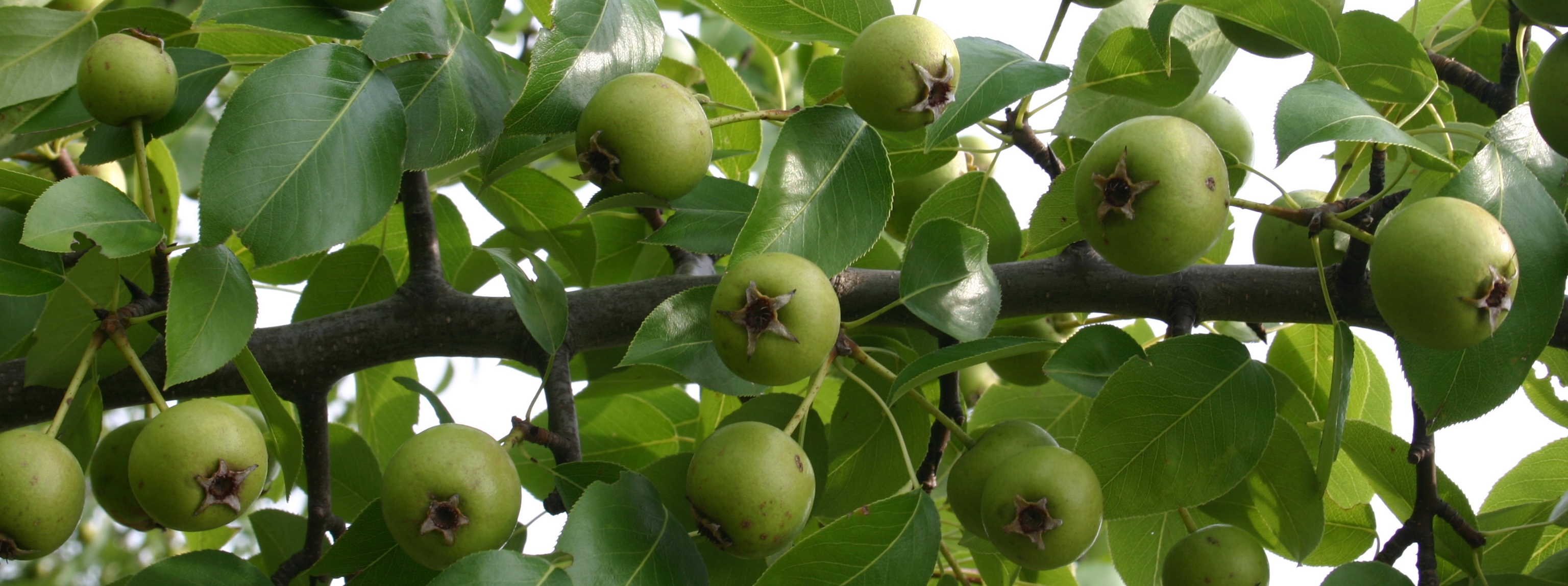
I received seed from a few populations from a forester that sent me the seed and a print out from those journals used to catalog the subspecies. Balansae is thought to be the one of the origins of the pear we eat today. It is considered to be a dwarf and compact tree in the wild. Found in the mountains of France, the fruit is highly astringent and not possible to eat fresh off the tree. The red squirrels target this tree and its seeds which made it difficult to collect the seeds. The fruit has a strong aroma if fully ripe and soft. Yet, how could a human create or find an edible fruit from this complexity of tannin and astrigent flesh? It seems impossible to me. Several of these trees have died recently and I am replacing them with its seedlings.Within this group there was a four indestructible seedlings with dense branching. Like its parents, they too will be put into this same rock quarry soil. To plant anything here is more like mining and requires a pick ax. This spring I found a nice pudding stone the size of a volleyball here while planting hardy oranges. Like its rocky Alps homeland, this is ideal for this pear which shows the greatest promise to grow fruit in places not thought possible.
Balansae is balancing.


The Wild European Pear Part Two
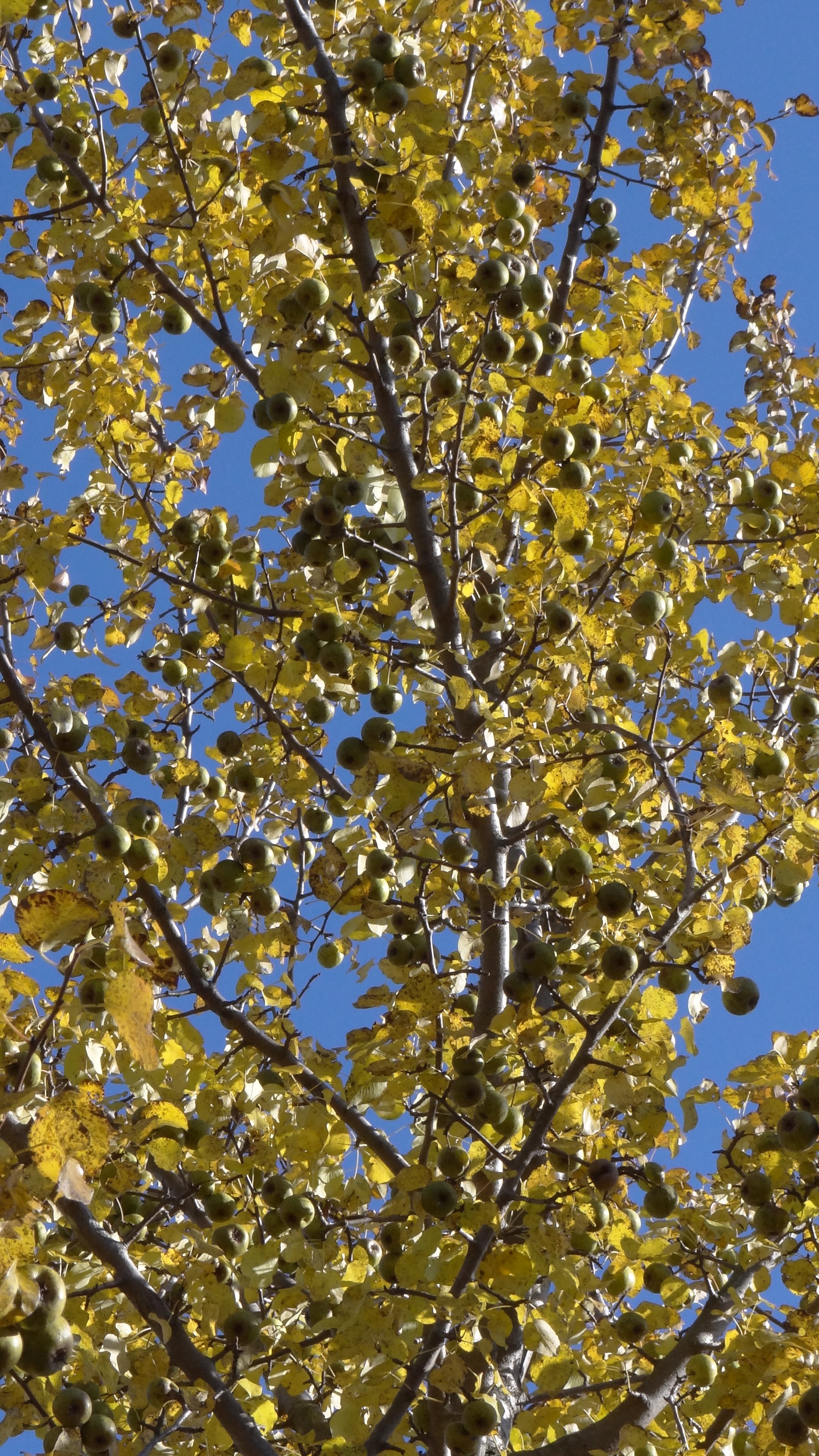
There are certain forms of wild pear that represent the wavy line of domestication. Pears represent the very earliest distribution of fruit by humans. Keep in mind this is a hard fruit that could be carried and stored for a period of time and eaten when few fruits were available. People wonder about the unknown human vector. In the U.K. this species goes way back from the early cultures that made their home on this island nation. Pyraster pears are related to the central European forms found wild today. This particular species was discovered as one of the earliest plants carried by humans across central Europe. Many of the wild trees are now woven into the modern pear varieties because they all carry with them their past forms since the beginning of time. It was how the plant moved across continents in the blink of an eye. It was healthy and delicious. Because of its discovery in several Neolithic sites it is called an archaeophyte. The pear became native carried by native peoples. Humans were the vector because it helped sustain human health. In the process, everything else that ate the pear and its seeds benefited as well. From an evolutionary stand point, that is a win-win.
My pyraster seed came from a wild tree that has the characteristic tall straight growth habit eventually forming a tree 60 feet tall or more. It grew well on my farm and produced huge volumes of fruit. It had some issues with fireblight and was reduced by one third of its height one hot summer year. But it bounced back and began cranking out fruit after a decade of healing and regrowth. The thick spurs hold a large crop high in the tree. Shaking is the only way to bring it down. The hard fruit has to sit to fully ripen to remove the tartness and astringency. It mellows with age. Mushy is the ideal state to eat this fruit. No wonder it was a cherished fruit.
Yello Yellow Mr. Kite
On my daily walking route, I always pay attention to the plants along the road and in people’s yards. It was a surprise to me to see a yellow trillium this spring in a forest of black oak and pignut hickory just 30 feet off the road. See below.
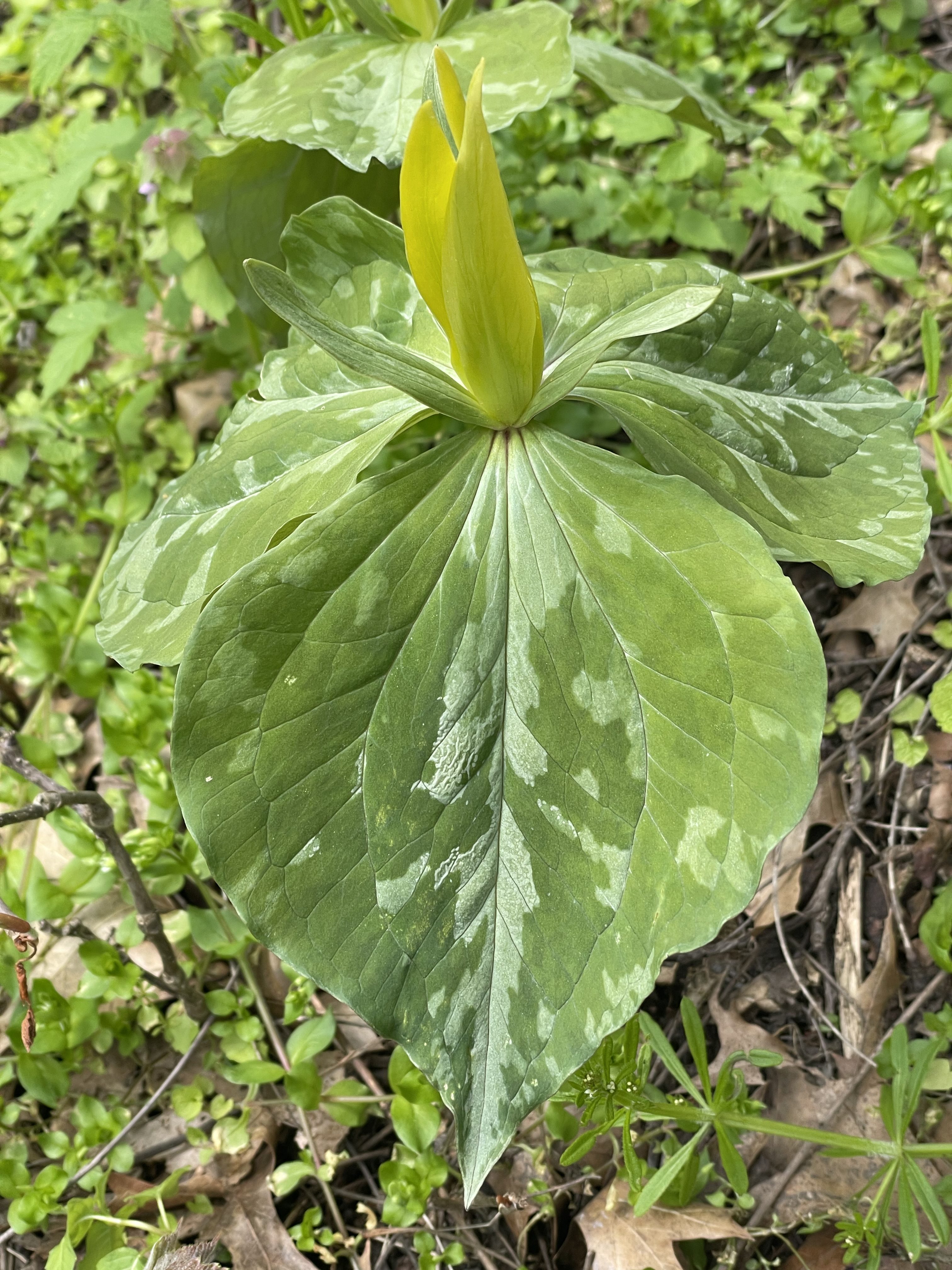
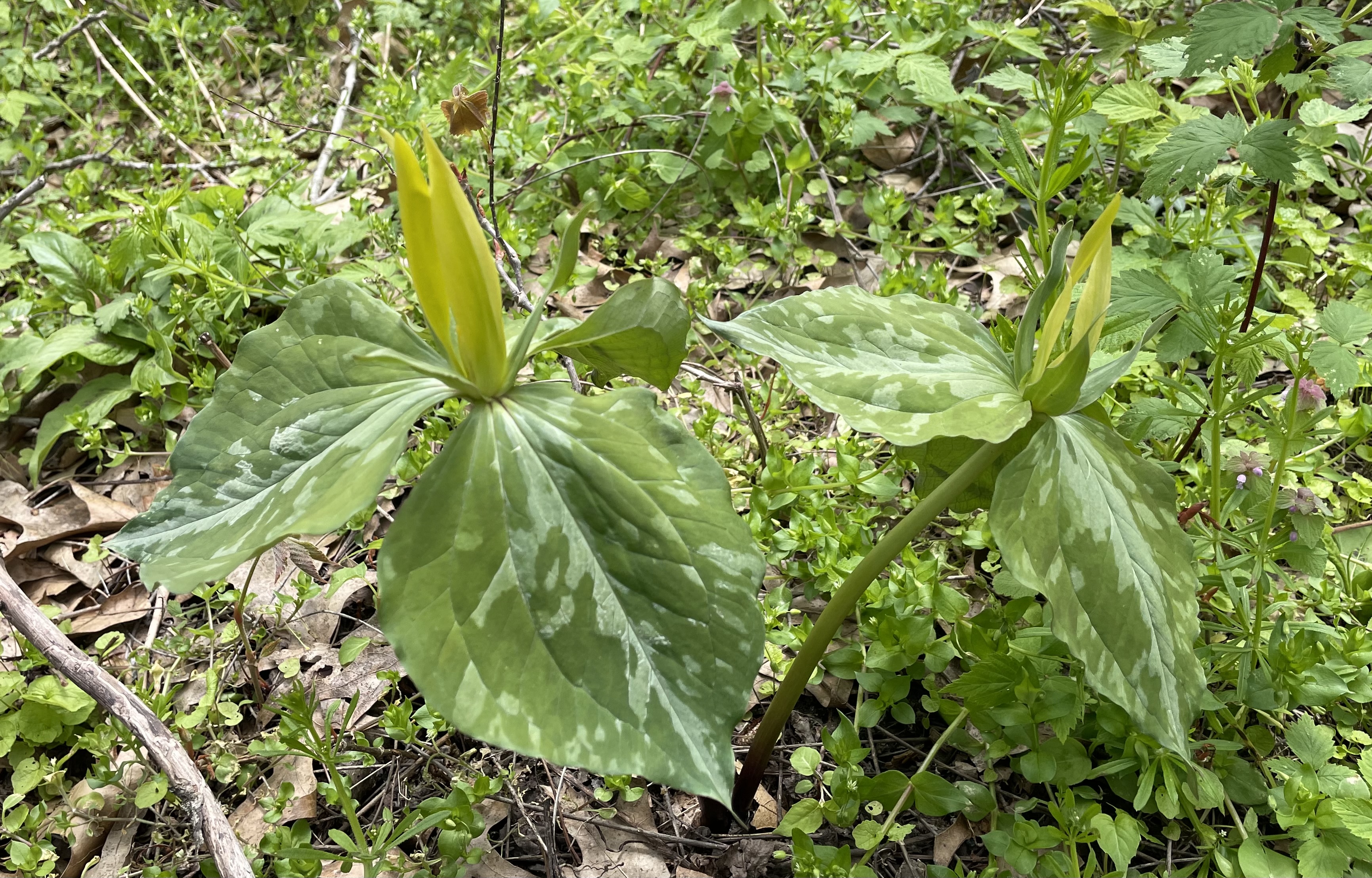
I never noticed it before because I rarely walk the route in the spring. I have grown this species once before at my farm. It was short lived. This form was different in leaf and flower. When I got home, I checked the book “Trilliums” written by Frederick and Roberta Case. As a teenager, I was fortunate to meet him at a botanical tour near Saginaw, Michigan, my hometown. This species is attributed to garden escapes. They say the yellow trillium is a southern plant and is way outside its ‘natural’ range. I am not convinced totally about that only because I have never seen it in commerce much if at all. About two weeks ago, on my way to my tree farm a Mississippi Kite flew right over my truck crossing paths not far from I-94. It is a rare sighting I was told. About a decade ago, someone spotted the bird about a mile from my home. Birders from all over came to see it. You see it’s an ‘accidental’ and it too is a southern species. I’m rather cavalier about life imitating gardening or vice versa. It’s no big whoop to me if either decide to stay. Their presence indicates they are now part of the native flora and fauna dipping their toes into this new pond of biodiversity I call home. The pear knows this. With or without the hands of humans, things are on the move. I say welcome. There’s room for all.
Enjoy. Kenneth Asmus


You must be logged in to post a comment.