Mackinaw Peach

There is something very satisfying growing a tree from seed. Every now and then I will save the pits of plums and peaches from the store and squeak out a few plants. Since all of the fruit comes from California and is patented, to do so is illegal is some way. I am not sure how illegal is illegal. Was it a 70 in a 55 zone or worst? For many years, I told no one. I was afraid of the pit police aka patent owners. Winter in Michigan was a great equalizer and plants did not survive making my experiment short lived and where my crime spree ended. It was this peaches from pits scenario that kept me looking for peaches that were used in some way from seedlings and were not named varieties. That is not as common as you would think. That was the inspiration. Over twenty years several kinds arrived at my doorstep and I began producing them for sale and for my own plantings. Some had names already, others were species and a few were colonies of sorts with great winter hardiness found in someone’s back yard.
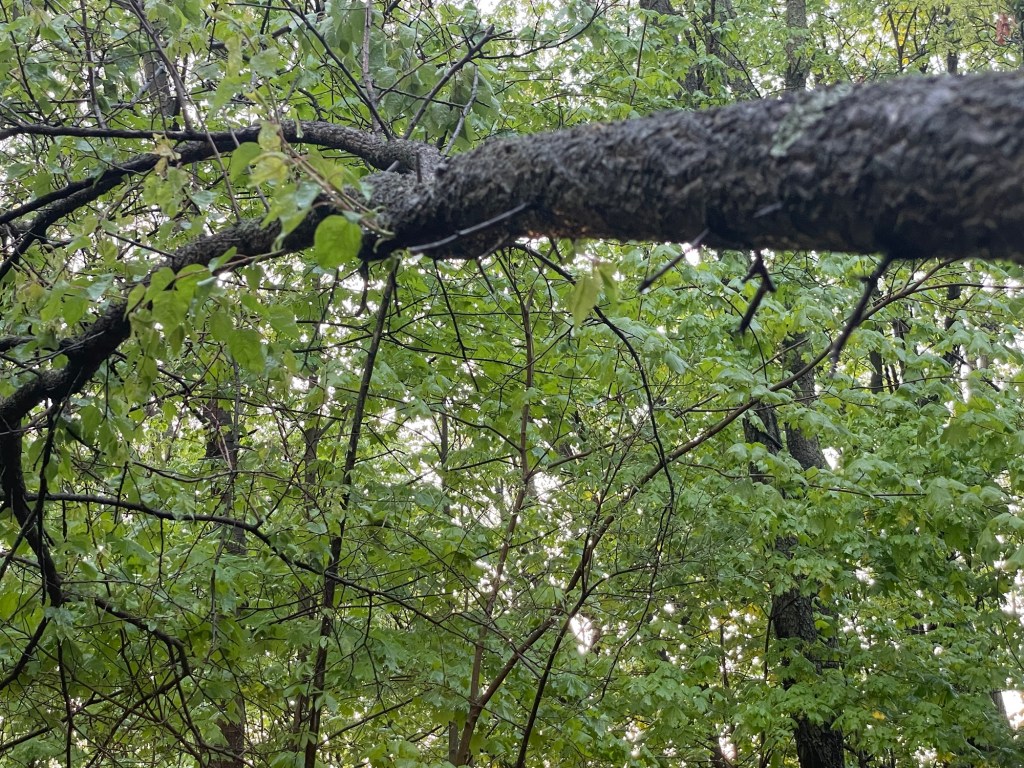
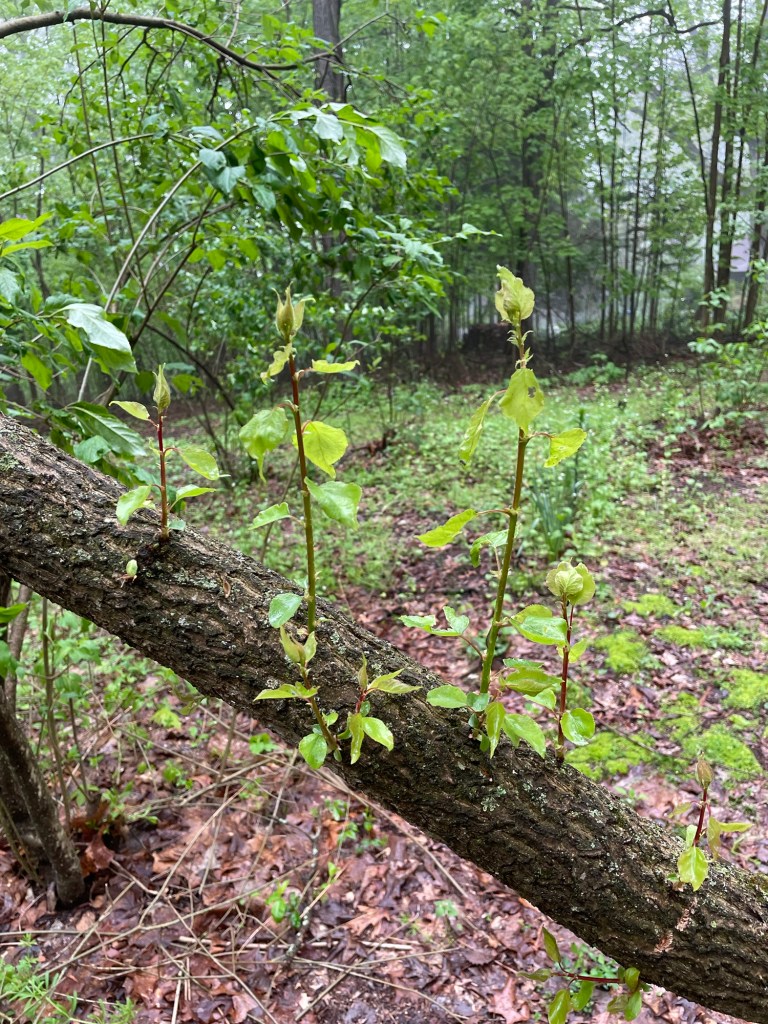
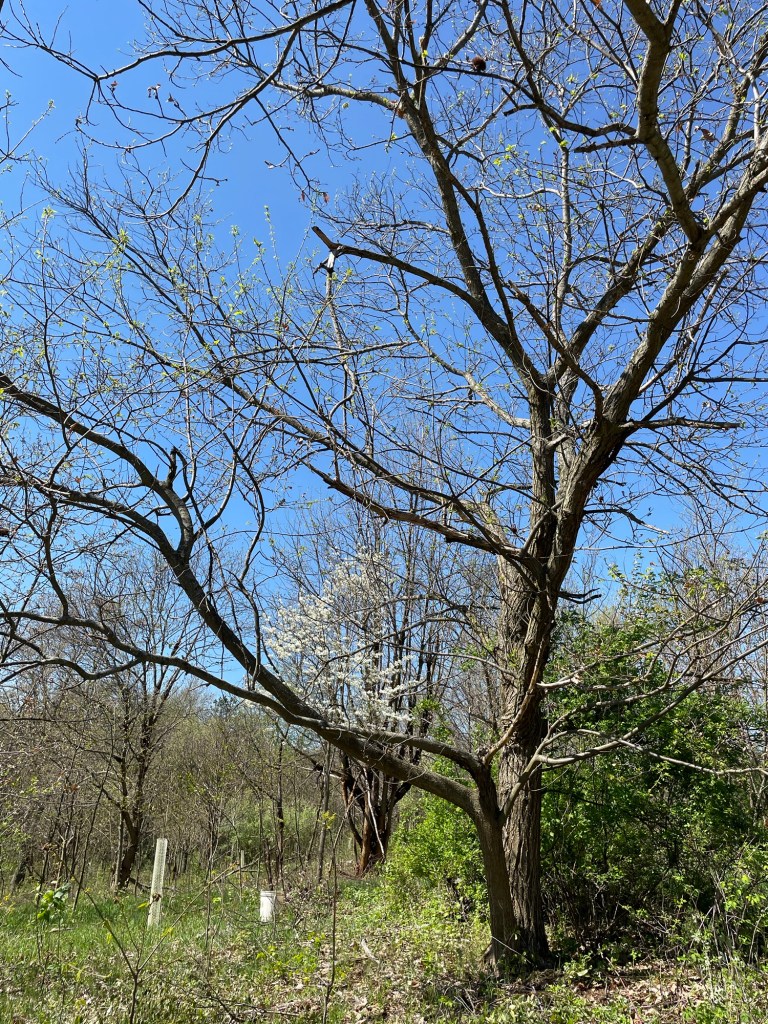
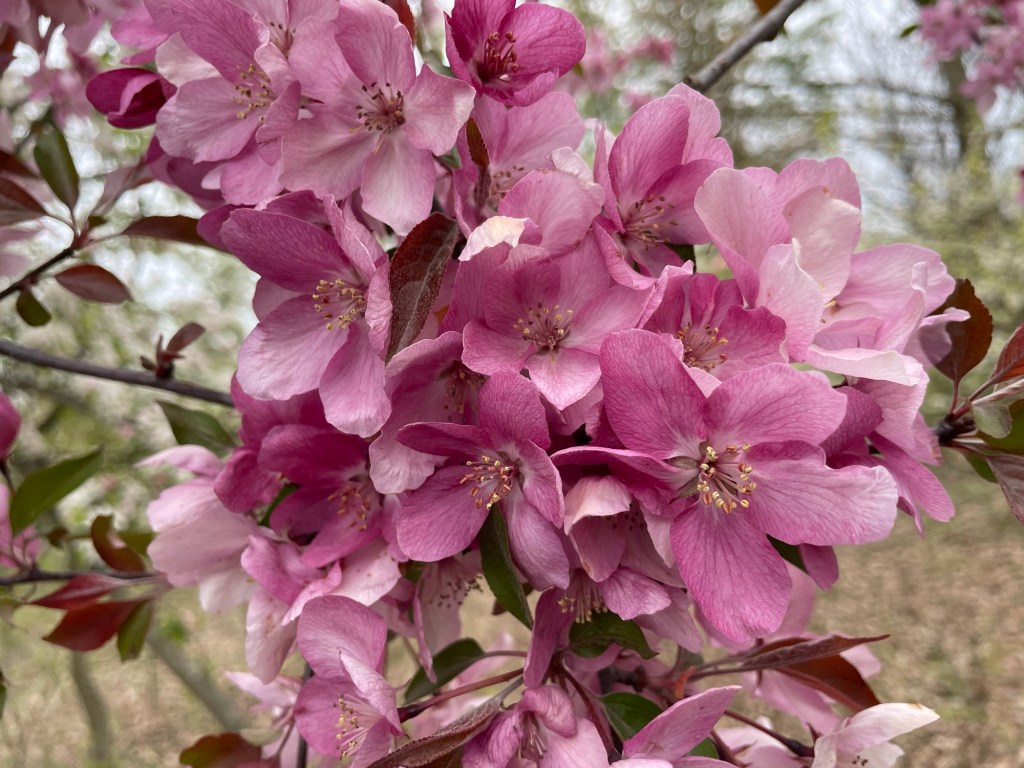
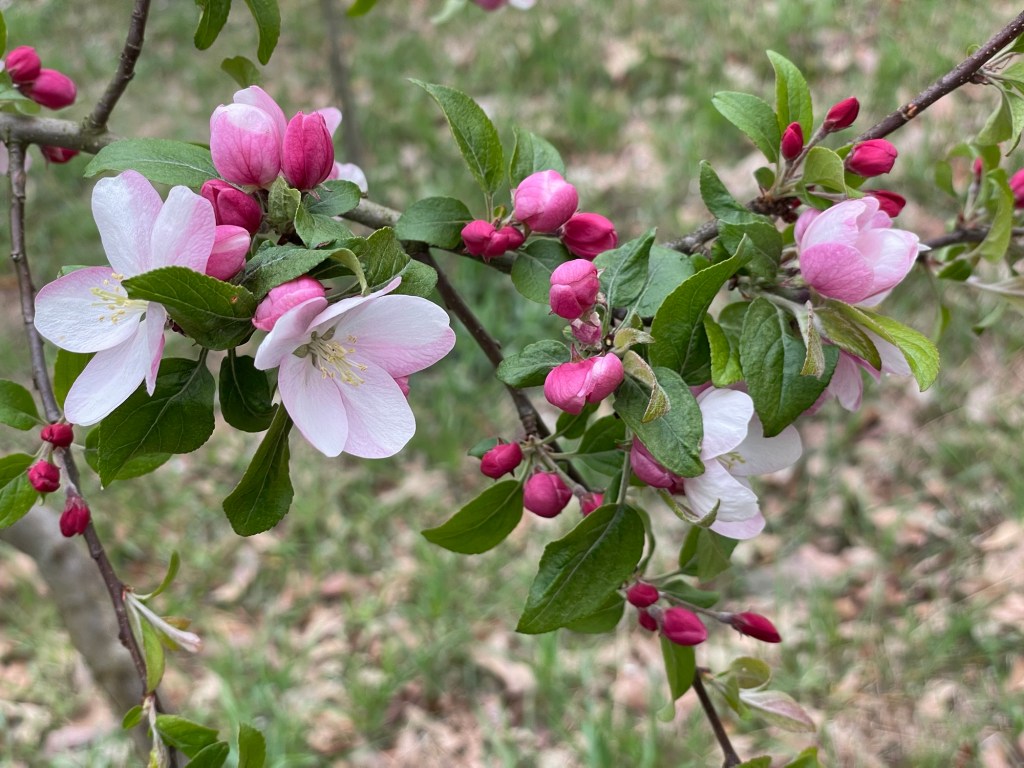
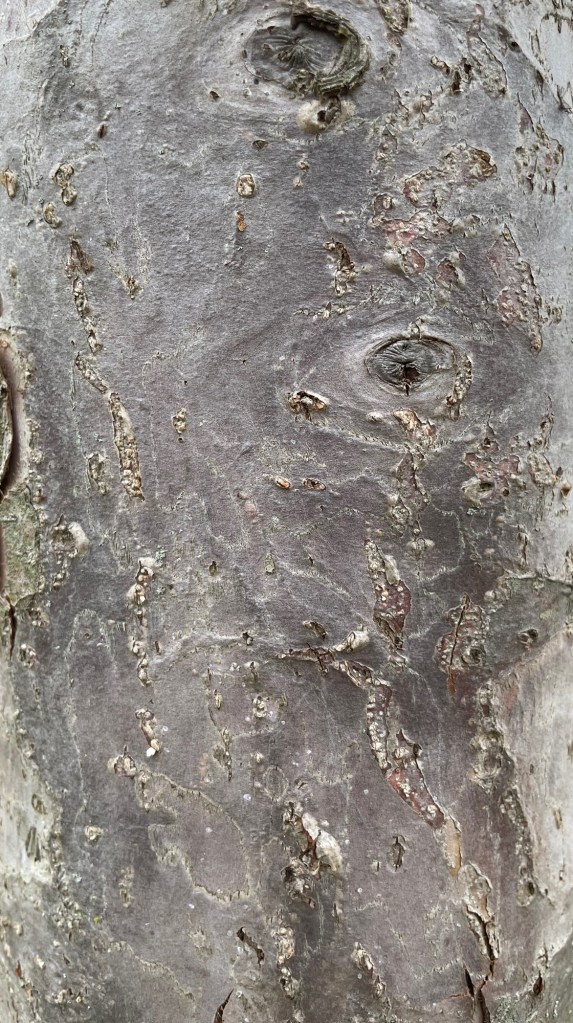
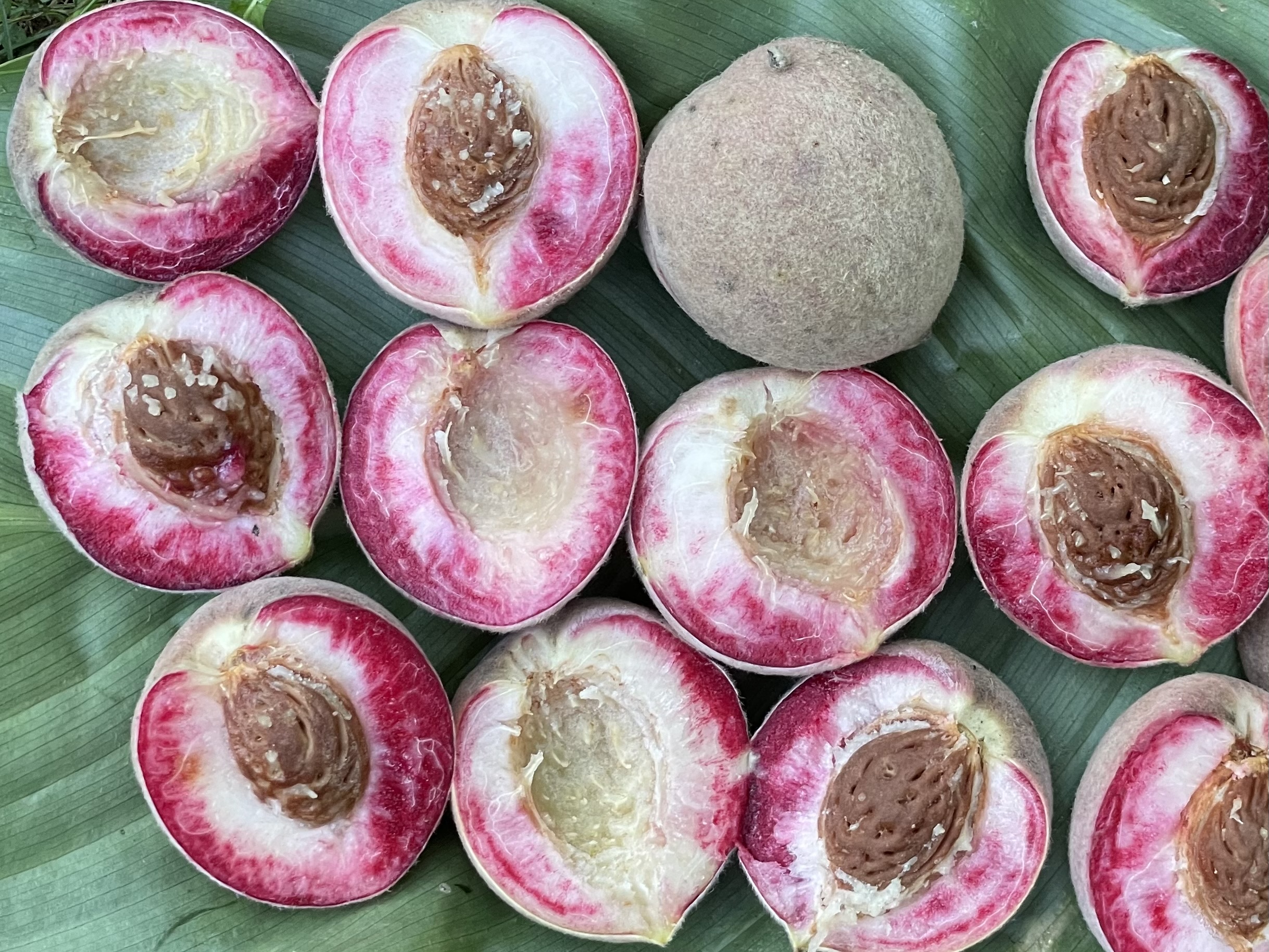
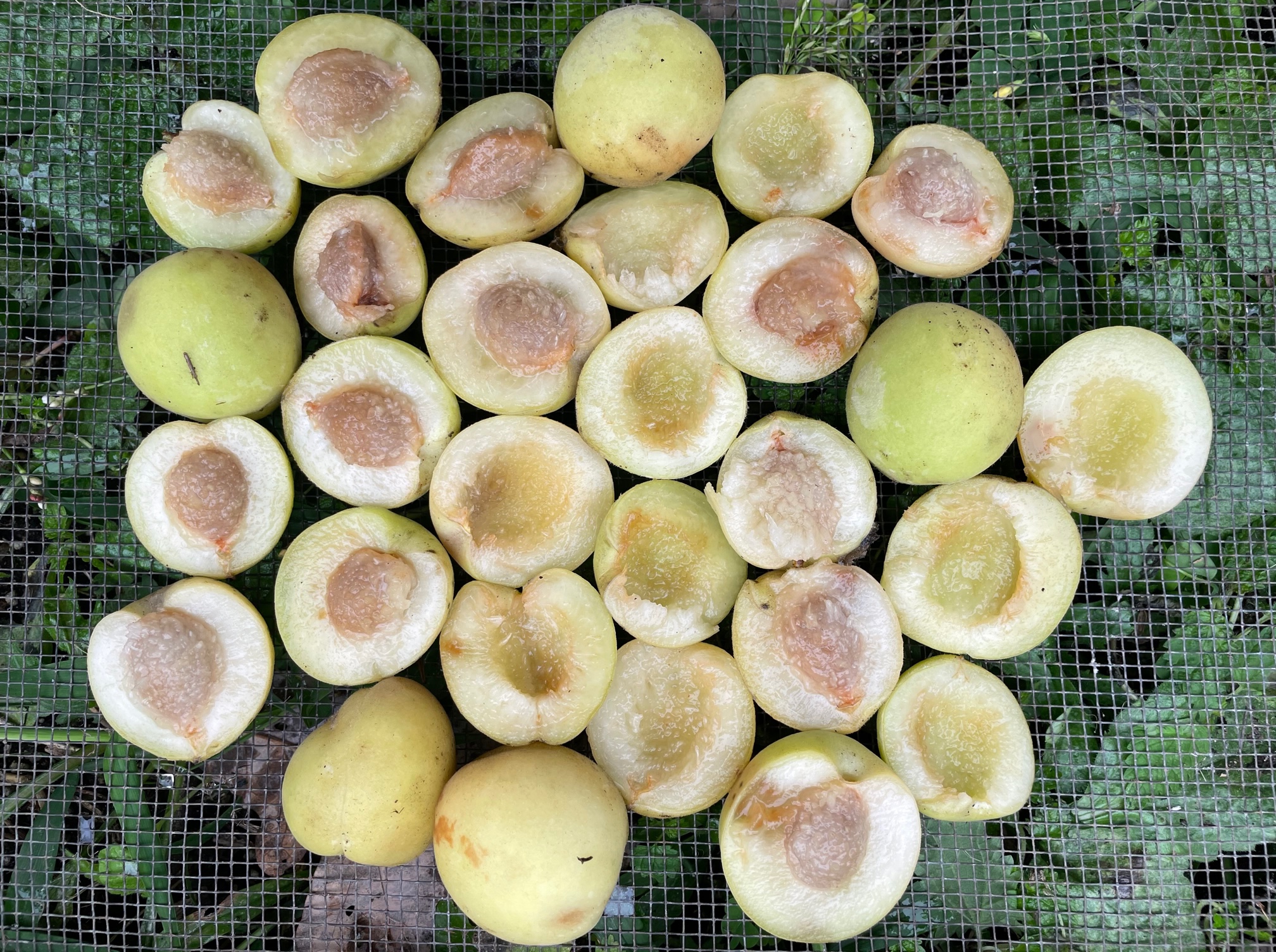
The Mackinaw peach was found as two chance seedling groups from northern Michigan and Wisconsin. It was Steve from Wisconsin who exclaimed in great wonder, “Look what I found!” This image was the first full fruit year on four trees that were the most vigorous and healthy in terms of few fungal issues and insect damage.

At the time of doing all these grow outs of various commercial fruits, the peach was an elusive being. To ask for seed from China was also illegal. To import it became a quantum entanglement of immense proportion to the point I secretly labeled them in the greenhouses as peach one,two,etc. and made a paper only list just in case. In my mind, I thought I was doing 95 in a 55 zone. Looking back, it was not that. It was just that commercial fruit farming was dictating what is good and what is bad to the point it began influencing my thinking which in turn created fear. As it turns out, peaches from pits are used for rootstocks, ornamental peaches and of course for breeding better peaches. Peaches from pits do not carry virus or any disease or insects. Its the perfect package for creating a new peach seedling free of any health issues. People use the peach like the wild apple in a way that is more personal and a connection to their culture. This is true in Latvia, Germany, Iowa, Navaho and in its homeland of China. These small satellite peaches revolve around people who love the peach and do something few do. They save the pits. Look what they found!

Latvian Purple Peach from a homestead here in Michigan
Wild Texas Peach-Ripens in October. Completely free of bugs and disease. Delicious small white peach. Southwestern U.S. wild sown selection.
The Mackinaw peach was named after the famous episode on Seinfeld. The show aired at the same time I was knee deep in peach pits and experimenting with ‘landraces’ of peaches from seeds. When I found out that the Mackinaw peach only existed on paper, it was natural for me to name it after the town and the island of which my family has visited many times to vacation. The Mackinaw peach combined two land races of peaches to create a population adapted to colder zones without the use of clonal propagation. oh yeah, it’s not a sub par fruit and is only available for two weeks a year.
Posted in Ecology-Biodiversity-Integration | Tagged , | Comments Off on Mackinaw Peach

It’s Just a Seedling

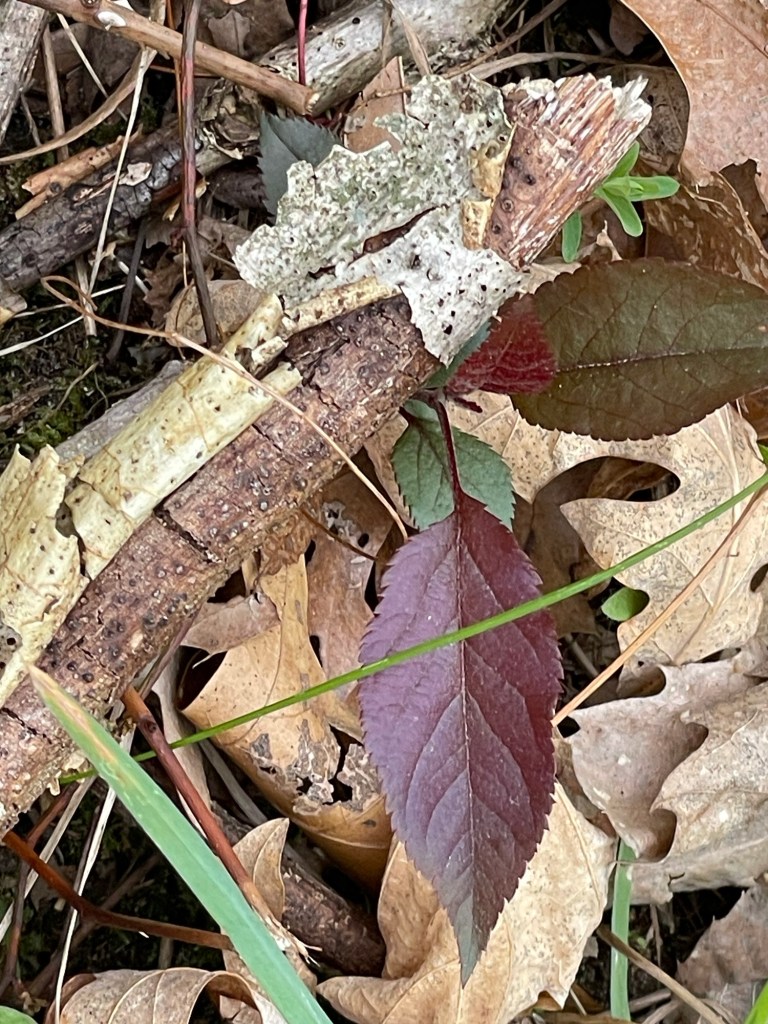
Here nestled into the leaf litter of a farm road I drive over, a small apple tree has sprouted and taken root. This apple tree might be considered an accidental visitor or a plant out of place for some but for me it’s a revelation filled with latent possibilities. I started saving these so called “out of place trees almost all of which came from parent trees at my farm. I saved seedlings from my neighbors landscaping too. Being in the middle of the road has its disadvantages so I will likely move it to the side. I like plants not in rows. It’s a forest with precision planting skills of birds, squirrels and other small mammals. Even the deer play a role with their perfectly designed hoofs.

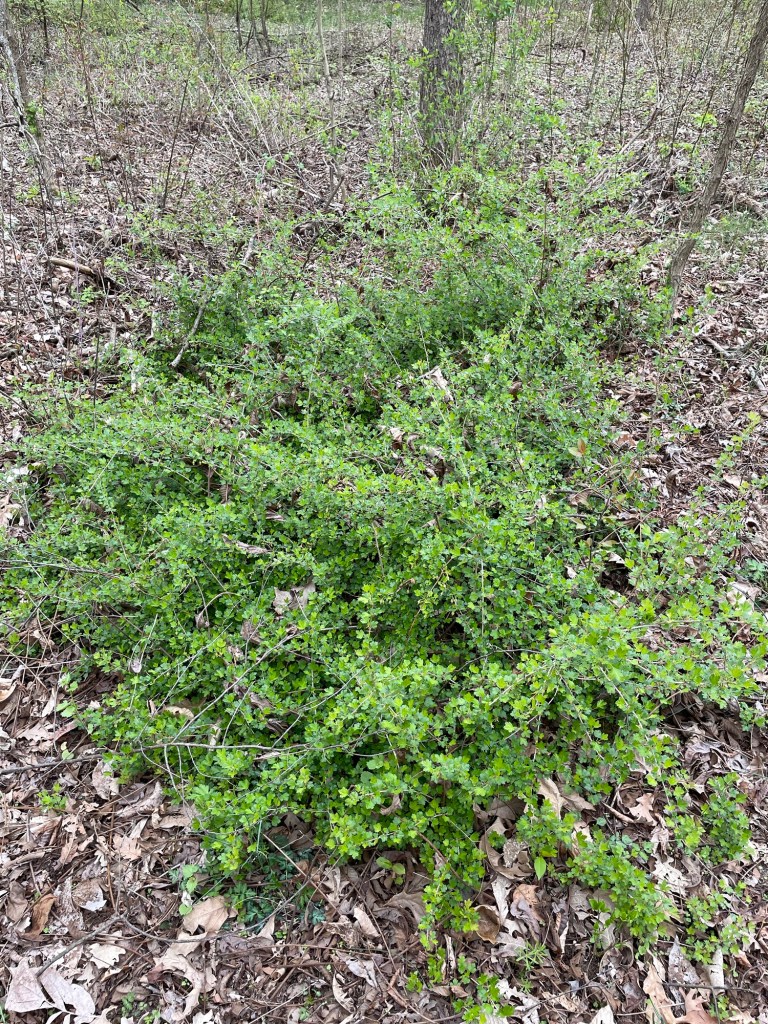
Yellow Leaf Barberry
Seedling Plums under a Hickory hybrid I planted.
Seedling apple preserved under a seedling hybrid American chestnut

As I discover more and more seedlings I soon realize the tree farm is planting itself into the future. As I carefully prune back other trees, limb them upwards and cut back to the ground other plants I soon have my three story agriculture. I am guiding it to a more edible future by giving light to these seedling plants and getting them outside of the browse line of deer. It is never native versus exotic. There are no invasive plant species. That is entirely a fabrication to begin with. One plant helps the other while I quietly participate in this ever widening and diverse world we live in today. The plants are truly a reflection of all cultures. The values become:

  • Restorative
  • Regenerative
  • Integrative
Sour cherry type species- Prunus jacquemonti-under a hybrid chestnut English oak hybrid
It’s just a seedling apple under the pecans. An apparently random act of kindness of which I had nothing to do with.
Posted in Ecology-Biodiversity-Integration | Comments Off on It’s Just a Seedling

The Real Estate With the Best View of the Forest

Look up. The canopy is filled with fruits and nuts. Look down. Do you see anything? This was my beginning of finding and developing shade loving fruit crops. There are many plants that will tolerate shade but few that will relish it and produce lots of delicious fruits. Shade is a great equalizer. Some species will produce a light sprinkling of fruit and others are prolific. Even the raspberry will sneak in but robust in the open does not mean robust in shade. Shade itself is subjective depending on the canopy too.

Flower of Red Tart gooseberry. Bumblebees are the pollinators.

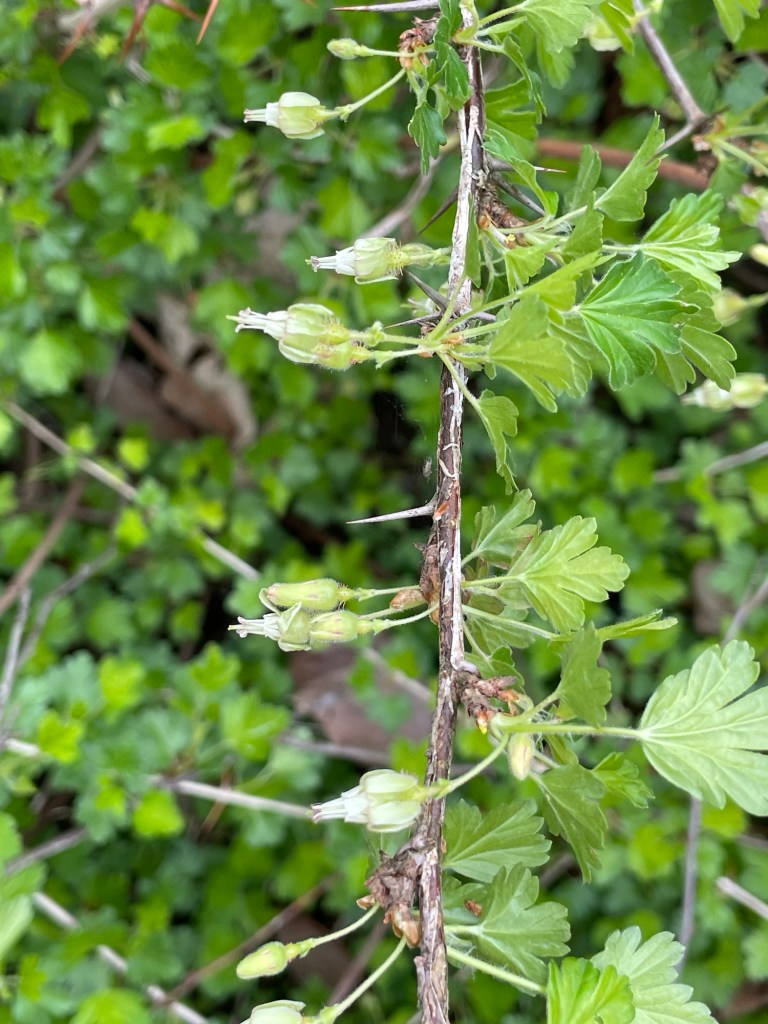
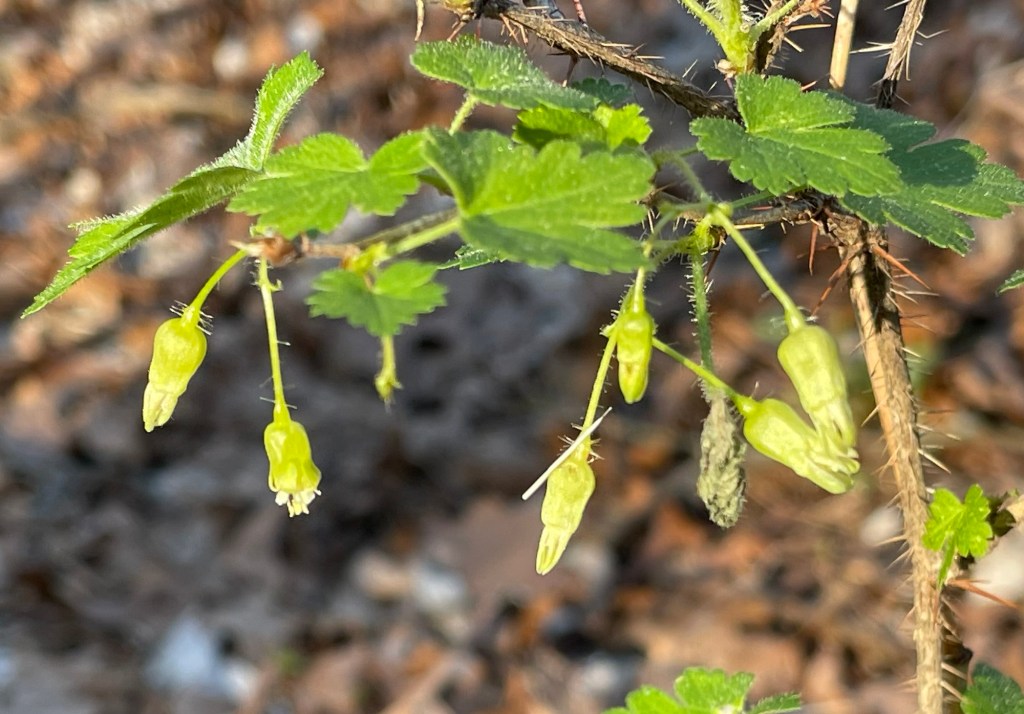
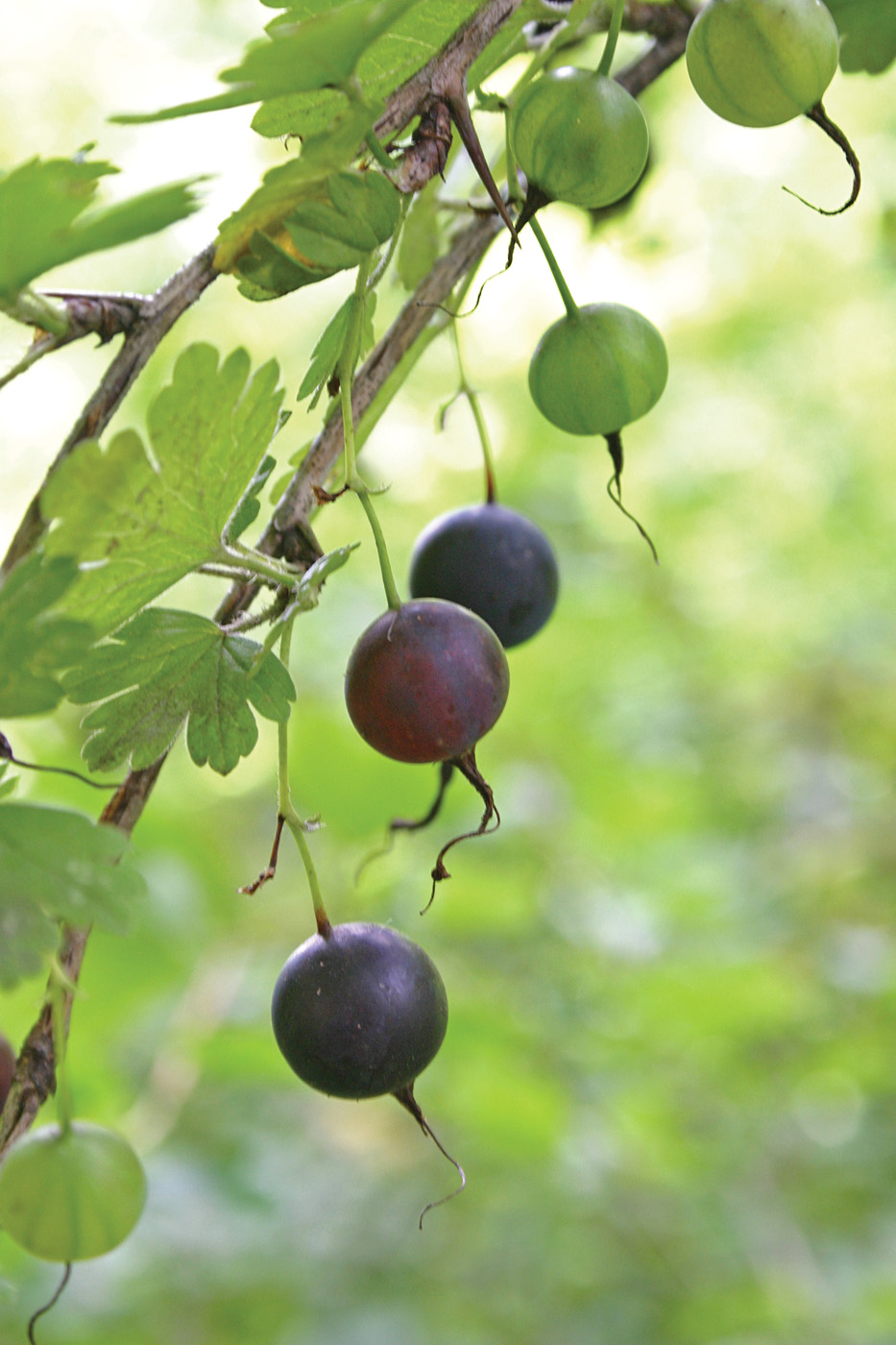
The image above shows my attempt to capture the gooseberry in the shade of my forest plantings. Here the canopy is shellbark hickory, pecan, heartnut and a few American persimmons. In this same spot existed over twenty types of cultivar gooseberries and currants. They are all gone. One seedling of ‘Red Jacket or Welcome ‘did flourish and eventually I named it Red Tart and began to root it and grow it from seed. It had the advantage of rooting as it grew plus produce lots of fruit. The caveat was the fruit itself is the opposite of all gooseberry cultivars. Prickly with spikes, the delicious fruit is covered in them. It is not a smooth gooseberry. To top it off the stems are super armed with thorns. This is not your grandmother’s gooseberry. Yet the insane yield, the immunity to all foliar diseases and the fact that the animals love this fruit makes me take notice. People were on board with this plant, and I sold out when I grew it. This reinforced my gooseberry belief system of good fruit and high nutrition all in the shade. But here the real estate market is tough to get into, so it was accepted as a possibility in my forest. Now the possibility is a reality. Every homeowner wants to live there.

Green and lush should be the foliage of the gooseberry filled with flowers prior to the forest going into full leaf.

There are lots of shade loving native gooseberries, but their yields are generally low. Missouri gooseberry is the most productive in the species realm, but it too languishes in deep shade often losing its leaves to mildew. This is normal and desirable for the gooseberry. Is it possible to find a more fruitful gooseberry? You do this the same way nature does it. You grow and wait. Unfortunately, the cultivated gooseberry is so far off the beaten track of its wild counterpart and it is exceedingly rare to find and maintain healthy plants for long. Red Tart taught me how turkeys, songbirds and chipmunks love this fruit. It was difficult to collect on time. This pointed me to its value for me to eat as well. The Ribes genus is filled with possibilities for health. It is the North American equivalent of the amla fruit and likely has the same health-giving properties. When I went shopping for gooseberries years ago, I found the most confusing information about the plant as well as the legislation governing distribution. The cultivars available were weak. I had over 30 cultivars at one time. I have several spots around my farm devoted to their breeding and selection but it was very difficult to select as individual plants and small populations of species and/or hybrids. I never told anyone because I could never tell if I was making progress or not. Red Tart begins this process of finding and producing a population of Ribes that contain health giving properties that combine the long history of the gooseberry in today’s modern world of agriculture. It fuses native and exotic. It is more than the sum of its parts. You need to find the selections that bring the greatest adaptability to the climate we live in today first. Ribes rises above.

Ribes cynobasti Green gooseberry
Flower of American black currant
Missouri black gooseberry
Posted in Ecology-Biodiversity-Integration | Tagged , , , , | Comments Off on The Real Estate With the Best View of the Forest

Flexibility and Stability:Wild Apple

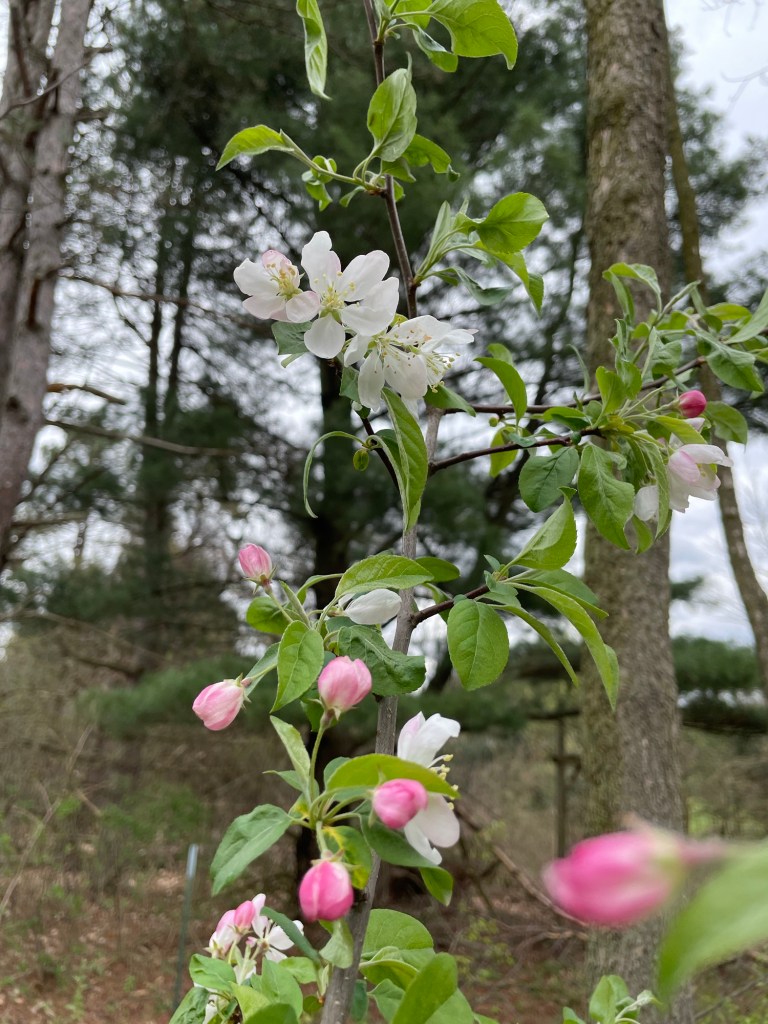
Malus pumila var. niedwetzkyana I received this seed from an overseas arboretum collection many years ago. It is a white flowering form of a normally red flower and red flesh crabapple. I only had one tree of it at the time and planted it near a group of Finland subarctic Norway spruce. It does have the red flesh. I grew many seedlings of it of which I added to the population by selecting four of the most vigorous seedlings. The seedlings had larger fruit than the parent and were also very fruitful at a young age. When fully bletted, the fruit has a powerful almost too strong of a flavor. Astringency is very high until it breaks down fully. After that it is like apple concentrate but paste like in texture.

Stability

The tree can support huge weight on its limbs. It often bends to the ground with its yield. It fruits every year.

I can see that Niedzwetzky’s Apple could be used for syrup, cider and flavoring. Probably using a limb shaker would help in harvesting. I climb and shake the limbs or use a pole pruner to drop the fruit. It is always clean. Even though this selection is not “true” it inherits many of the wonderful features of the subspecies and species of the domestic apple without the usual problems. Flavor on I say. Never mind the size. Pass the paste.

Posted in Diversity Found, Ecology-Biodiversity-Integration | Comments Off on Flexibility and Stability:Wild Apple

The Species Pear: Balancing Act

If you dare to look into the taxonomy of pears, you will find some treasures hidden in the mountains in France far outside cultivation. These are not “escaped” pears but subspecies that someone in taxonomy has gone to the trouble to identify and catalog. They exist on paper as a single line of text but not found in cultivation.

Pyrus communis var balansae

I received seed of a few populations from a forester that sent me not only the seed but a print out from those journals not found on the internet. Here is one of those species: Pyrus communis subspecies balansae. It is thought to be the origin of the pear we eat today.

Surprisingly it’s not edible and is highly astringent. The squirrels love it and dive into the seeds in July. How a human found or created an edible fruit from this subspecies over time seems impossible. But it did happen.

Pyrus communis var. balansae

These vigorous trees were hammered by deer and shaped by drought and fire blight before settling down to a few trees on a steep slope with shallow top soil at my farm. Over time I became kind of enamored with their growth on this site with extremely shallow soil and a lot of rocks.

I can enjoy the fragrance and beauty of the flowers. Possibly the wood quality is perfect for making musical instruments like the wooden pear recorder I have. Maybe I can find a way to harness the nutrients in the fruit while dreaming of the pear we have today and how we got from balansae to the pear we eat. That must of been quite a culinary journey. In the meantime, my balansae is balanced as a small population on a hillside started in the middle of a field where nothing grew before. That is a pear.

Posted in Ecology-Biodiversity-Integration | Comments Off on The Species Pear: Balancing Act

The Oregon Grape Holly

This particular species of broadleaf evergreen is part of a broad range of species as well as hybrids used as ornamental landscape plants. One of my ‘seedy’ friends sent me several types of seeds harvested from older arboretum collections. I love the flavor of the grape flavored fruit. It’s intense. One small fruit fills your mouth. Winter was a bit rough on the foliage on many of them but eventually I ended up with two good colonies of Dwarf Grape Holly and possibly a hybrid of it with a strong trunk and strong lateral branching. My thought is since it is related to Berberis it might contain loads of anthocyanins and be vitamin rich. In full flower, it is beautiful.

Tall robust selection.

Robust hybrid type to 5 feet.
Mahonia repens – light fruiter but durable. Shade tolerant in my hybrid oak planting.
Mahonia repens, seeded under a chestnut-English oak hybrid.

Each of these types provides a window into a new crop with potential as an understory fruiting plant into zone 5. It is not a common ornamental anymore and deserves a wider audience as a fruit bearing plant. Selections can be rooted easily. Even the species can be grown without breeding. I once saw a fantastic fruiting type on a college campus in central Michigan. It was protected from wind from a large building. The fruit quantity was the most I have ever seen on a single shrub. Often these individual plants vary in production so heavier fruiting selections can easily be grown, selected and propagated from rooted cuttings. The soil does not have to be that acidic. Mine are growing in a ph of 6 and mulched with wood chips every three years. They do produce some stolons and these can be used to create a more robust planting or for propagation.

5 ft tall specimen surrounded by black oaks. Southwestern Michigan. Single trunk, robust plant with good fruit set. Irrigation helps with fruit quality if it’s a dry summer.
Posted in Ecology-Biodiversity-Integration | Comments Off on The Oregon Grape Holly

Perennial Solutions to Annual Problems

One of the constant challenges when faced with any horticultural endeavor is finding ways to eliminate or greatly reduce plants that are competing with your crop plant.  Here are a few examples of ways to enhance what nature has already done: companion planting with perennials, tree and shrub crops where mutual coexistence is an advantage.

Crownvetch and PotatoEcos purple potato-crownvetch

This was a planting done in December of 2014 in central Michigan.  I planted Ecos Purple Potato in early December in a large patch of crownvetch.   Crownvetch is a nitrogen fixing plant which forms a nice mat of vegetation which excludes many annuals. It was the preferred plant for highway plantings as it quickly  prevents soil erosion.  The potatoes as of July looked very healthy with good top growth.  The thin shallow rhizomes of crownvetch have a different root profile than that of potatoes.  I am going to do a larger planting next year if I can find a larger undisturbed patch of crownvetch. (Not that hard to find)

crownvetch roots

Autumn Olive and Serviceberry

One of the great nitrogen fixers, autumn olive with its delicious healthy fruits creates a soil condition perfect for natural regeneration of serviceberry.  Beneath the plants is a perfect nursery soil for bird dispersed seeds of this plant. To speed the growth of the serviceberry, prune back the autumn olive shrubs in mid- summer and again in early spring of the next year. Keep the branches crushed and near the base of the desired plant. This is your fertilizer.  Serviceberry and pawpaw grow well with autumn olive.

autumn olive saskatoon

Seedling Amelanchier at base of Elaeagnus

Precoce Asparagus and Earth Pea Earth pea asparagus

These two species represent two compatible perennial vegetables that provide both greens and tubers in one planting.  The tubers of earth pea are produced all along the base next to the thick rootstock of asparagus-both which have radically different root profiles. (A key to this ‘opposite attracts’ companionship.) The asparagus provides a perfect trellis system for the pea and the pea simultaneously fixes nitrogen for the asparagus.  The asparagus ripens long before the earth pea becomes dominant. Peas are produced in greater abundance with this natural trellis system perfect for harvesting seeds to make more plants.

Posted in Diversity Found, Ecology-Biodiversity-Integration | Comments Off on Perennial Solutions to Annual Problems

Wood is Good:The dream of the American Chestnut

It was only by accident that I found an American chestnut tree one summer while doing yard work for a little extra money in my senior year in college.  The dried burrs I found beneath it made a great ornament on my desk. “Look but do not touch” it said.  I read as much as I could find about the tree. Yet the history of the tree and its dilemma with disease were of little concern to me.  I thought I  was just lucky to find a single tree because Michigan is not its home base. It wasn’t even mentioned in my botany courses.

Timburr-Chestnut-tree

When I started my nursery a few years later, I found out that a number of nut growers had produced hybrid progeny that would at least repel the dreaded blight. Some said immune, some said resistant and others said good luck.  Being young and stupid has its advantages as once again, I ignored the warnings  and went ahead with my plans. With check book in hand, I purchased as much seed as I could buy. Prior to ye ole internetti, I made a lot of phone calls and letters. Eventually I set out numerous seedlings on my farm and sold many thousands of hybrid chestnuts in my nursery. Within 6 years my orchard was bearing and I began enjoying my own seed source. This was encouraging and reinforced my go it alone approach.  Oh the nuts were delicious. The trees were magnificent. Some of the trees grew 6 ft. in a single year. Others had 8 nuts per burr with some young trees producing in 2 years from seed.   It was somewhere around the  15th year that chestnut blight finally ended up in my orchard. It was not pretty. My guess was that it probably blew in from a tree far away. I had never brought in seedlings, scions or wood of any type to risk infection. One afternoon while cutting some trees down someone came up to me and said, “Aren’t you sad you had to loose these trees after all those years?”  Well..not really. There certainly was a loss but the gain for me and my planting far overshadows this. A  plant world without disease, insects or any powerful force of nature would be a world without progress or change.  To overcome these obstacles, you have to start with the seed and preferably from the seed of the most recent generation. The simple act of planting a seed can only give this result time after time. Going to grafting or cultivar selection only arrests that process.  Thank goodness I did not have a grafted hybrid orchard as all the trees would have perished. Now that I appear to be a little wiser (the verdict is still out),  I am replanting with a greater diversity than I did before plus using the many naturally regenerated seedlings that grow around my parent plants that have no blight and leaving them in a greater density than before.  Anticipation is a joyous state of mind.

As I look over that beautiful lumber, I am not thinking death but rebirth as to what new life I can bring to this wood. A table, guitar or a chest of drawers made from the trees I grew on a whim given to family members would be a way to say thank you to the trees that constantly give life even after death.  Nothing is lost.

David-Adams-Chestnut-Art

Farmerless fields can create sustainable forests of specialty woods using only a small portion of land by focusing on soils that fit perfectly with the tree crop. It doesn’t have to be all or none or create a strain to the landowner. The chestnut is a good example.

Posted in Ecology-Biodiversity-Integration | Comments Off on Wood is Good:The dream of the American Chestnut