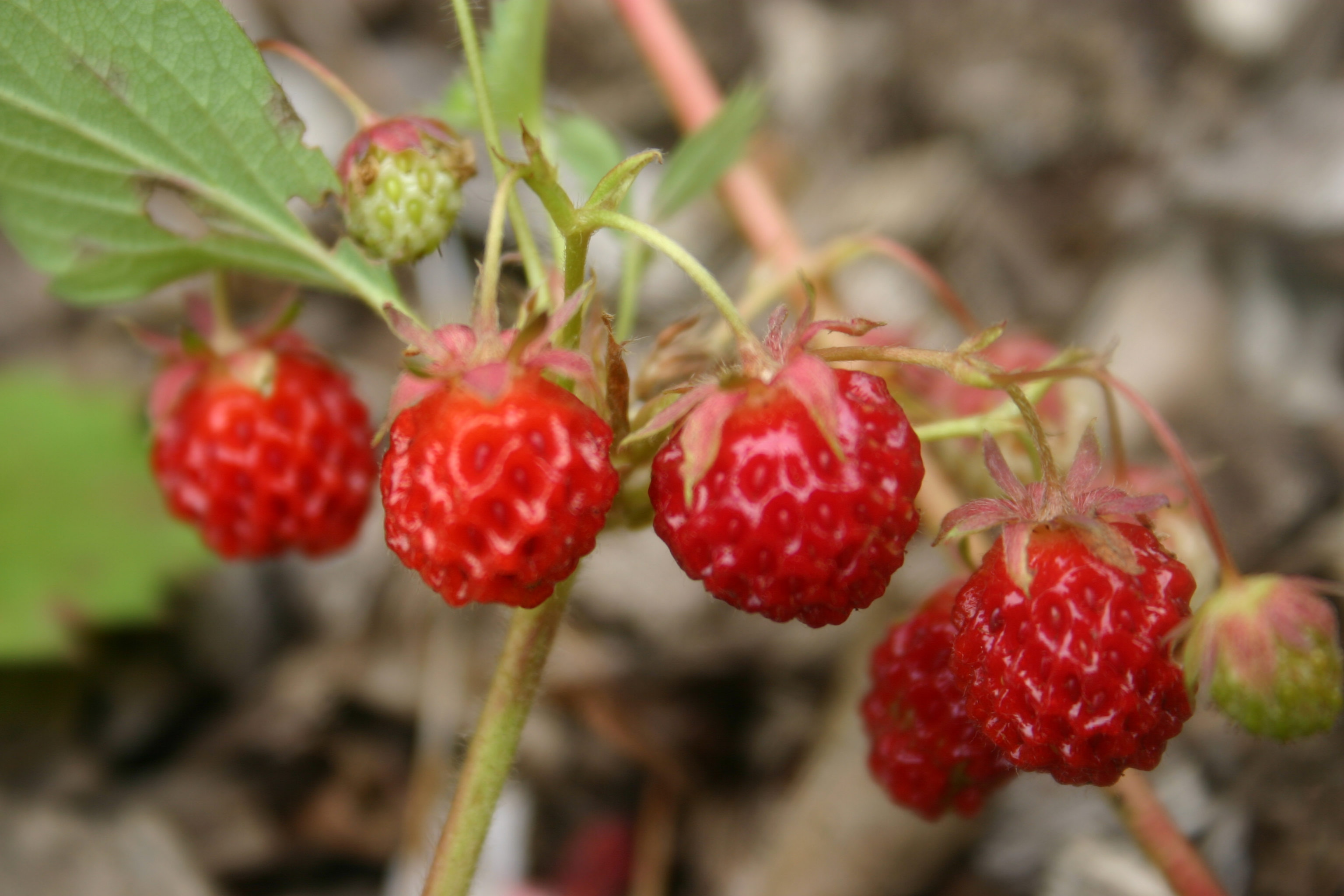
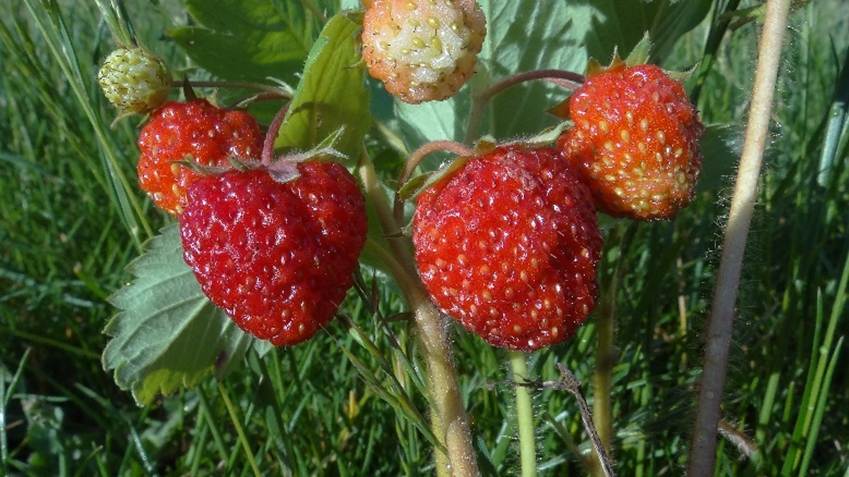
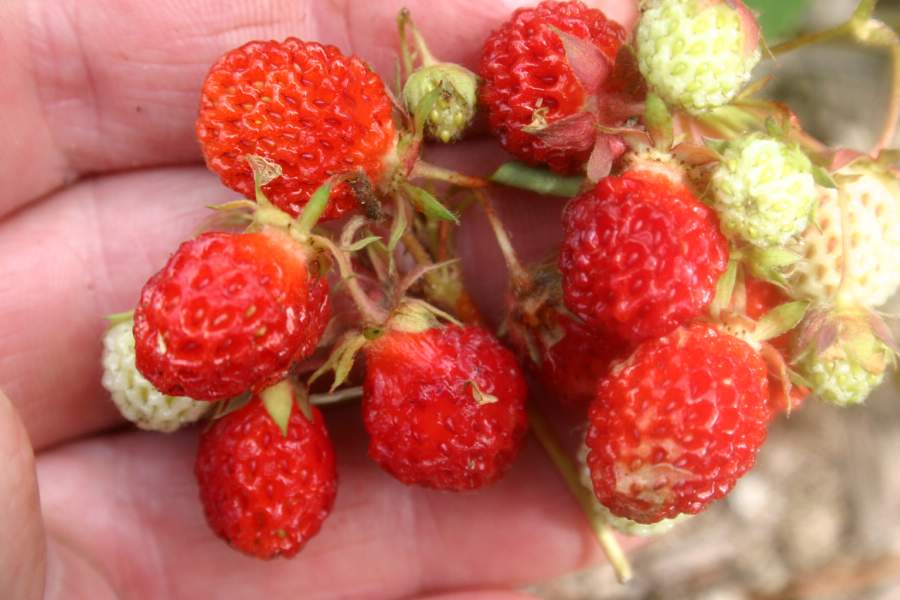
Everyone loves wild strawberries. It’s a universal fruit with universal appeal. The flavor is always rich in gold. They are impossible to resist. Here grows a small perennial plant that effortlessly skips along the ground rooting as it goes through rocks, sticks and sand. Maybe you did not look for it or have some sort of grand scheme of creating a strawberry empire; it doesn’t matter. As plants grow, it is hilarious and like laughter, you cannot stop it. Strawberry is funny after all, nailing the punch lines one after the other. As you know, timing is everything and the wild strawberry has that ability to be there at the right time dropping its new plants one at a time into the soil below. It never misses a beat. From the ground up, the strawberry colonizes the landscape in a simple way. It produces runners which touch down and root which in turn create a colony. Each colony can be just one individual as it reflects and contains within it the other colonies in its region. It is a good representation of population level changes so useful in creating healthy foods for people and profitable crops for farmers that can be raised in this new world climate. It is easily reproducible and can be tweaked to produce high quality fruit just like its cultivated cousin. This is my journey with growing wild strawberries.
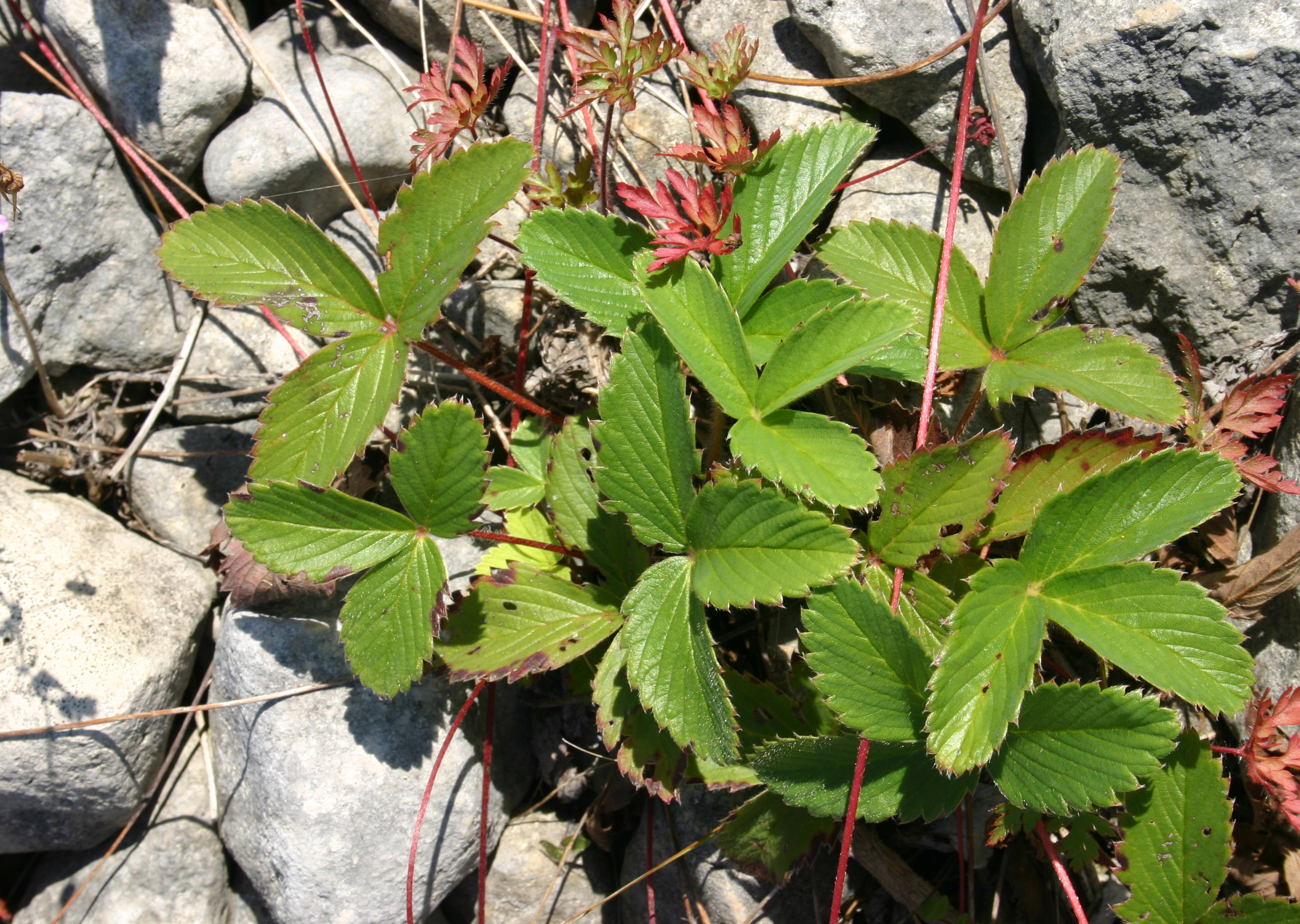
Not long ago, I visited a large rock strewn plain near Lake Huron. After a long walk through the stones, I discovered a strawberry with superpowers outperforming anything I had ever seen. It had the ability to produce 20 ft. long runners in a single season. It had a long string of runners emanating from the mother plant skipping over and around the boulders before touching down in the crevices filled with sand and stone. Nothing else could grow there. Another place I visited on Lake Huron was on a small island of pure sand at the end of a peninsula that had a giant strawberry colony just over a small ridge protected from the waves and water. Here the foliage was rich and tall, growing over a foot tall. There was no fruit, but the plants were incredibly dense in the colony shading the sand. The leaves looked lush and free of spots or disease of any type in this moisture laden environment. There were only a few willow twigs established on this teeny island with a lawn chair facing east to watch the sunrise. Laughter could be heard amongst the strawberries. Nailed it.
Many of these examples became part of my wild strawberry collection experience of which I continued for thirty years. Primarily, I did this because I love wild strawberries. I knew I could build on it easily and people did respond with support by buying the plants in my nursery. They were often used as native groundcovers in mixed plantings of many types of landscapes. But it was no commercial empire and this did not matter. I was able to capture that wild strawberry flavor. This time it was funny to me because I soon began to draw the attention of people who are ‘in the know’ on strawberries. One person told me “Ken, no one has ever done that before.” He was referring to creating wild strawberry varieties using non-hybrids. I was surprised at this. The ‘real’ wild strawberry was left behind in the process of cultivation. My type of selection process would be considered kind of simplistic by strawberry breeders who are on the upper echelon of plant breeding. Another person told me my wild selections are controversial. Here laughter could be heard for miles around. I did not know this. “You see”, he said, “they might not be pure.”
I remember taking my children to pick your own strawberry fields. It was quite a production to create these planting beds including using Bromine to wipe out seeds and everything else in the soil. I purchased several books on strawberry cultivation assuming it would enlighten me on its culture. It did. But there was no mention of the wild crop other than the original seven South American coastal strawberry plants that created today’s modern strawberry. In this world the wild strawberry, Fragaria virginiana, is hard to get rid of in the cultivated fields of domesticated strawberries. Apparently, it is not allowed to co-mingle with its brothers and sisters in the glorious exaltations of cultivated fields of the straw-laced plastic lined fields of strawberry human heaven with the slight fragrance of bromine. Am I over stating it? A little.
“Let me take you down to my strawberry fields.” The Beatles
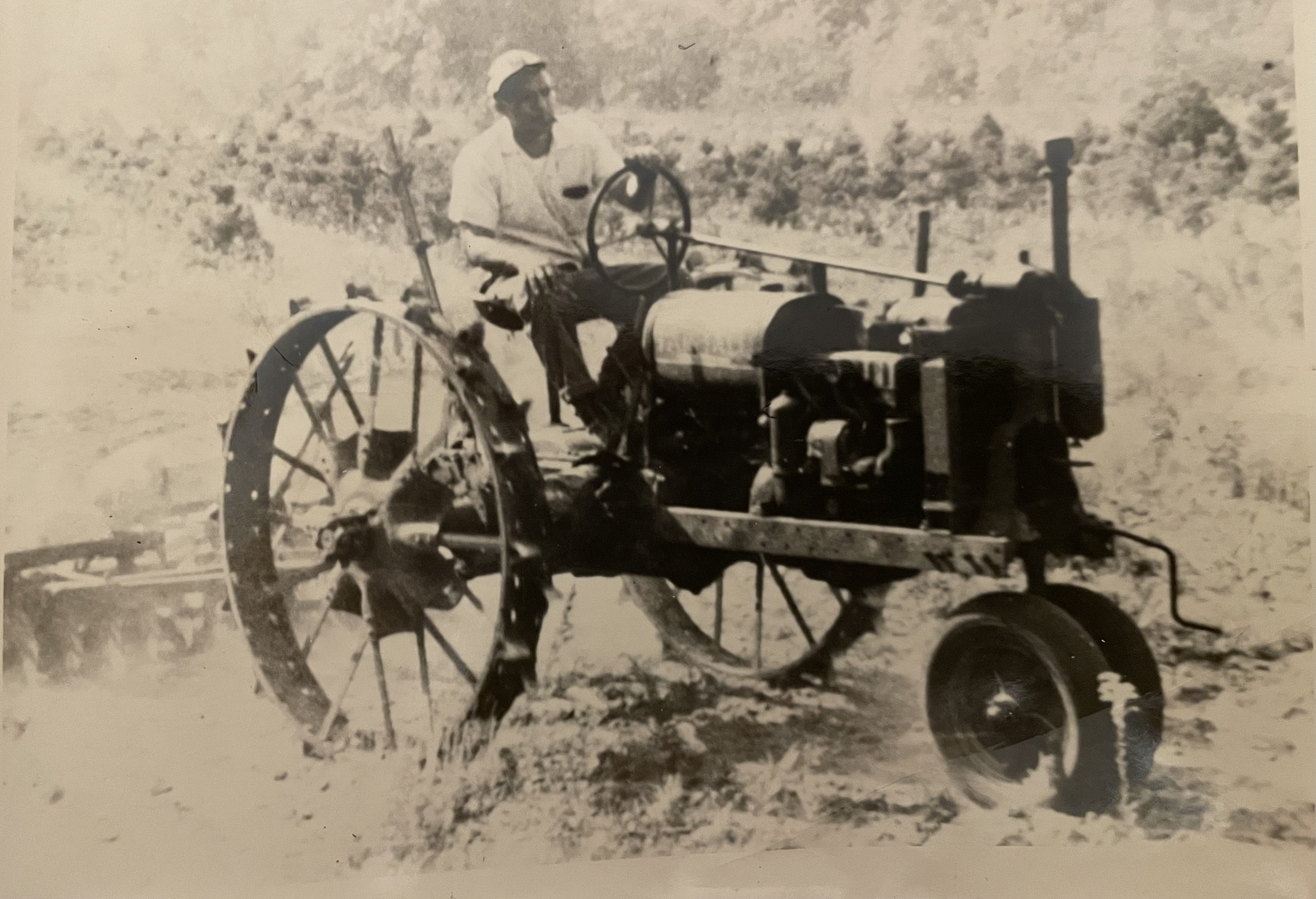
For me it started as an experience on my family’s Christmas tree farms. My father was on a mission to smooth out new areas on the tree farm removing old stumps and other vegetation. He did this by using a disc and traversing repeatedly on these large areas of sand and peat. No herbicide was used. Then the scotch pines were planted. This habitat was absolutely the best for wild strawberries to grow quickly. With no grass established and plenty of ground to hug, the wild strawberry took off with its omni-directional runners. It was here that I found the wild strawberry in great abundance and decided to make jam from these patches. I had my sister help me pick. I was at home from college at the time. It was incredibly time-consuming. The horse flies were relentless. At home taking off the calyx was equally time-consuming. I finally had enough to make jam. The flavor was like a concentrated syrup of blissful goodness. How could anything be this wonderful? I held this memory as a beacon. I returned to this exact location to collect runners and seeds two decades later.
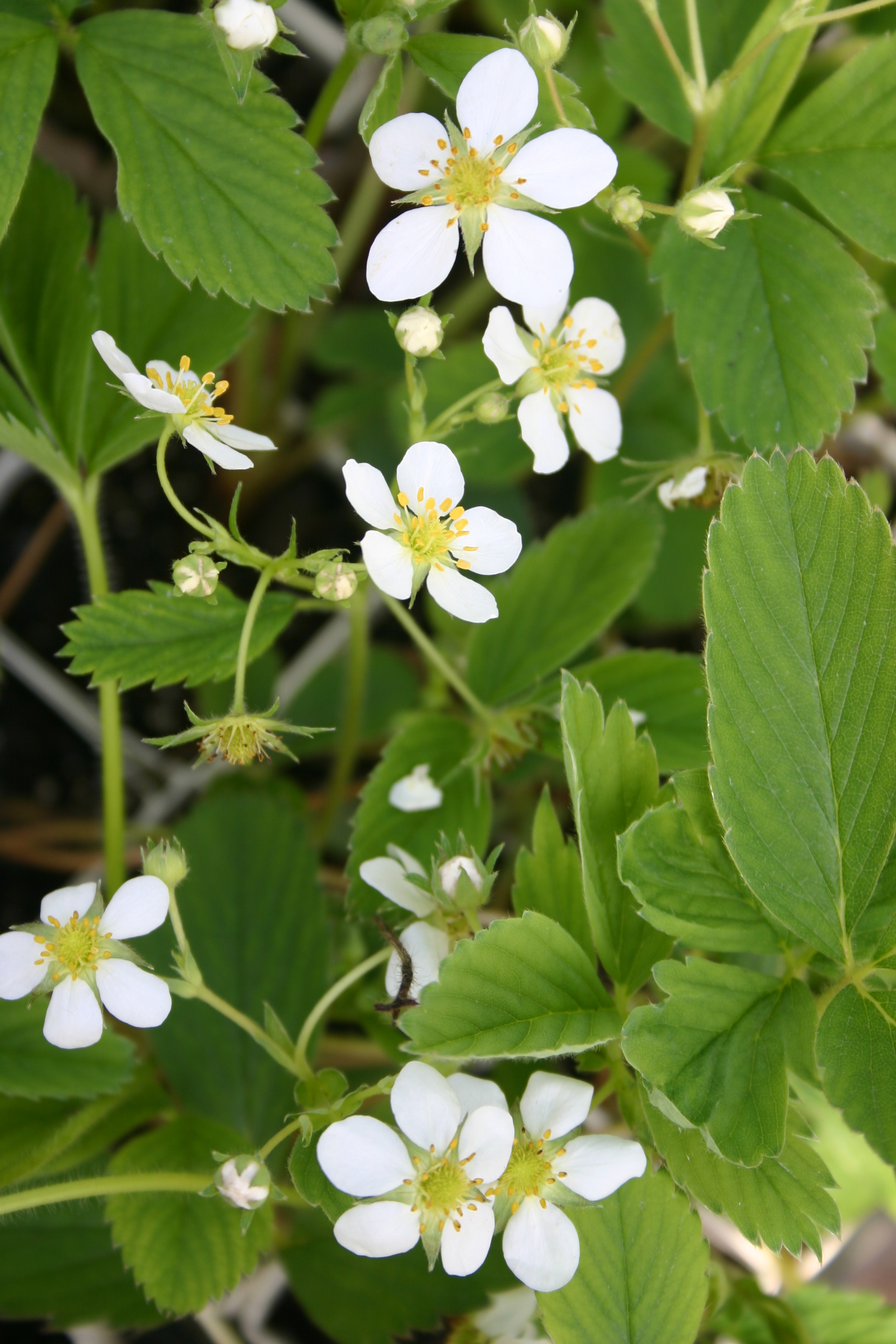
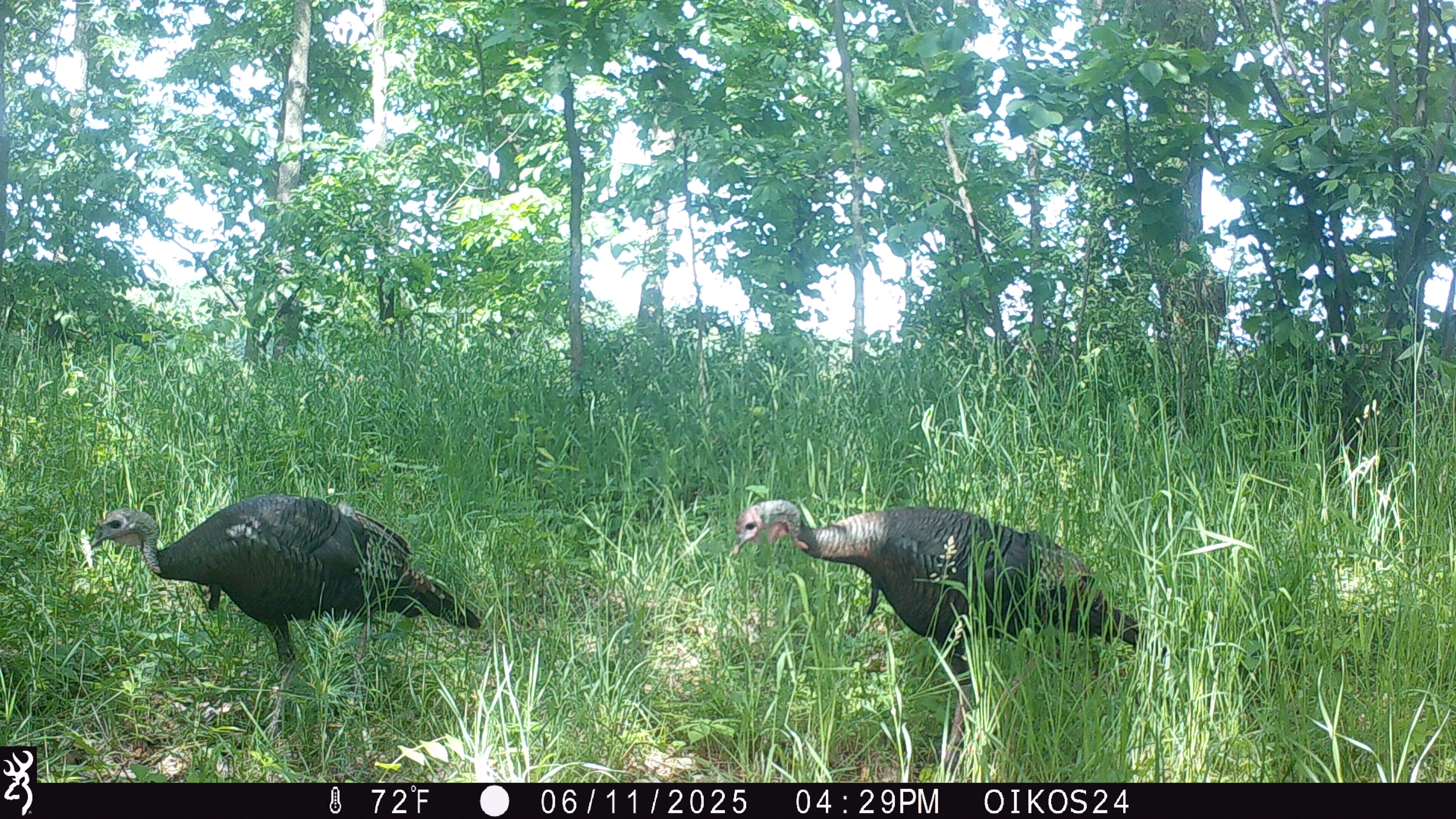
To replicate this experience, I wondered what direction I could take in terms of the strawberry plant characteristics. All I could think of was the flowers. I noticed the largest flowers with the most stamens. I noticed larger clusters of flowers with a greater number of individual flowers on each stem from the basal part of the plant. This is where I started. When I fruited the plants, it was apparent I was home free. The yields were very high to the point you could see red from a distance in the small three-foot square area. The turkeys noticed and ate all the fruit. This selection process is done in isolation from other strawberries as well as using only wild seedlings highlights the non-hybrid approach to genetic diversity, all of which is found in its wild state. Now my so called breeding efforts are not breeding only putting everything in one spot so I can keep track of it. The yields can dramatically increase, and it could be done commercially. Now you need technology to catch up in terms of harvesting and use. Harvesting a wild strawberry at peak flavor is the only way. The berry is very fragile and not possible to store or ship. It is a very soft fruit which cannot retain its original form. This works for processing and making that glorious jam that I produced as a young college student.
As time went on, the story of the strawberry grew at my farm. We used seeds in propagation as much as we could while making unnamed seedling selections. We then created planting beds outside with these forms known for their flowering, running and fruiting capabilities. In a similar fashion, I looked for additional wild selections and seed sources including as many species as I could find. Some of the best and most prolific finds were in Michigan. I found a woodland strawberry near my home in a hickory and oak woodland. It was a woodland strawberry, Fragaria vesca and had very clean fruit that hung high on a tall plant. The yields and fruit size were good for a wild strawberry. I eventually named this selection ‘Intensity’. We grew this mostly from runners but sometimes we did it as a strain from seed. It was here I began to see a new type of structure to the strawberry flower and fruit scape. They became taller and more branched over time. Once again, laughter followed, and the strawberry responded to its care and its environmental situation under cultivation. I began to see the light on why this plant is so successful in cultivation worldwide and why it still is the most selected fruit plant of all time. In a twist of fate and humorous side note, the hybrids from the modern strawberries I used yielded poorly if at all. I did keep one plant because it was such an unstoppable runner producer, it eluded my rototilling and raking for new crops. I still don’t know if it yields anything.
The Runner Runs:
It is easy and not damaging to a colony to collect a runner from a plant to grow in your garden. You can continue this line of selection if you think it is something worth establishing and harvesting from home. Look for large flowers with heavy clustering. Look for clean large foliage and healthy new growth free of spots. Wild things do not live forever. Moving the strawberry helps in its future success. Some colonies die out over time due to the natural change of the vegetation. There was an article on strawberry breeding in the Smithsonian a few years ago and one of the breeders was having lunch at Burger King. He discovered a type of strawberry in the dry barren landscape where everything else was brown. He took a few plants back to the greenhouses to continue his work on drought tolerance for California and Mexico. Wild colonies under cultivation can surprise you. I am still am a little upset that I did not harvest a runner in a parking lot near the buffalo pen when we were visiting a county park. That was a good one. But relax, more are around the corner. It’s a strawberry after all.
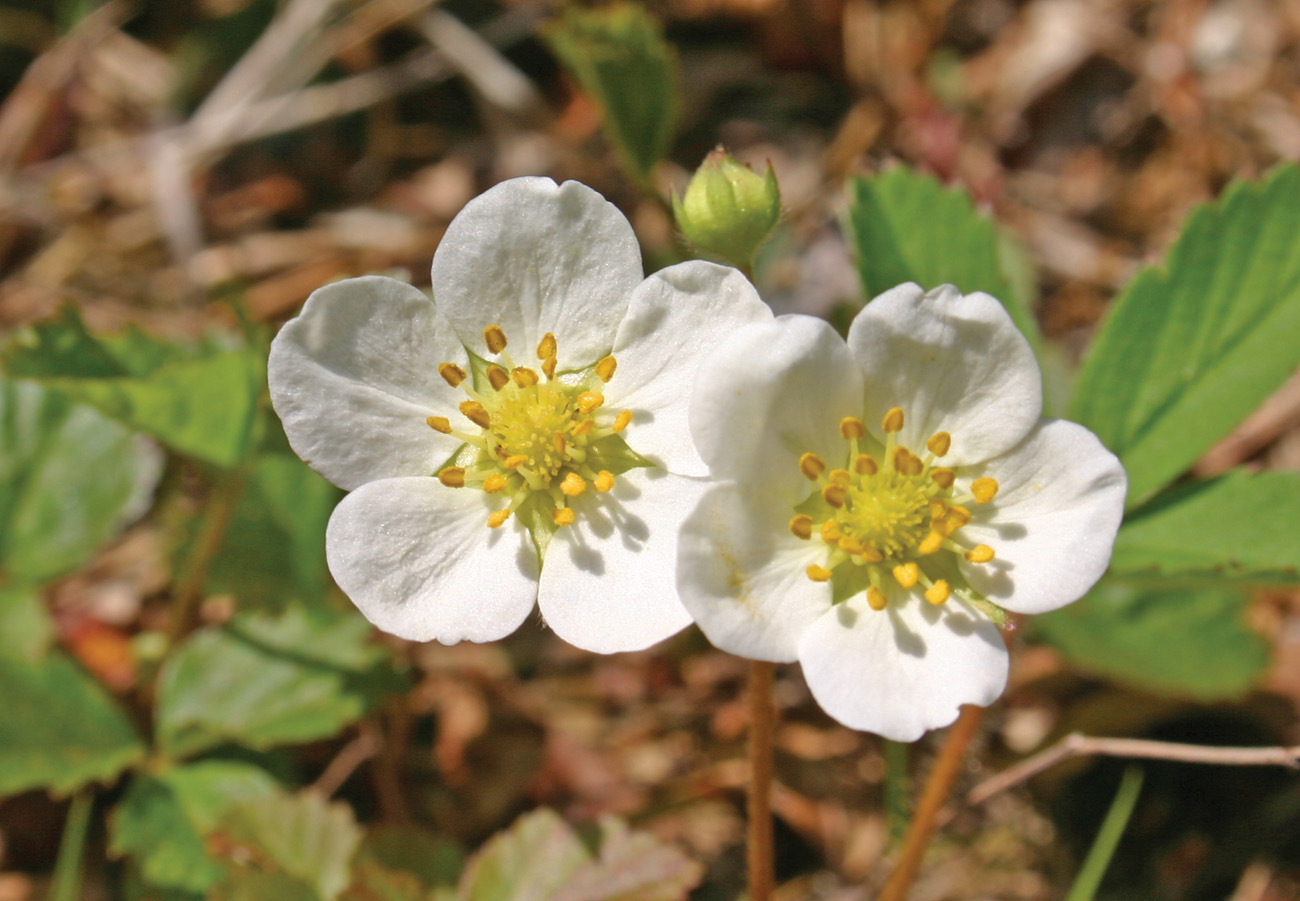
The Flower Attracts: Look for flowers with heavy pollen and stamens within the Fragaria virginiana groups. Almost always these are the heavy fruiting individuals. For the Woodland-Fragaria vesca strawberry this is not apparent in the way the flowers are structured. There it is best to focus on quantity of flowers and tall stems that hold the flowers up past the foliage. This characteristics makes harvesting by hand faster and easier.
The Fruit Fulfills: Look for the largest stems and branches of flowers. You can always see them from a distance because the flowers are above the foliage. This highlights the flowers potential fruit set.
Isolation and Friendships of A Strawberry Nature: It is said within the strawberry populations are dioecious and sterile pollen plants that are not capable of producing fruit. These are said to be common in plants separated over time from other populations. Often time they make up for it by increased runner production or some other evolutionary work around. Nature never sleeps. I once found a plant I named and grew at my farm called, “Kellys Blanket”. It was one of those heavy flowering types that was half the height of a normal strawberry. Its clusters were dense and tight on the stalk. Very little fruit was produced despite being surrounded by many other types of wild strawberries. Some of these low fruiting types make great ground cover selections. I found a similar one selection ‘Huron’ which was an island form which I grew to fruition at my farm. It was very strong in runner production. These sorts of variations of a theme highlight the value of diversity and the amazing strawberry plant.

Every now and then I am on a walk somewhere and I will spot a strawberry. I have this whole dialogue going on in my head. Oh look at that one. It’s a good one. I know it is. It is in my vision and impossible to let go. I know the fruit tastes good. I am pretty sure the strawberry is looking back at me. I can hear its laughter as I walk away. Maybe I will collect a runner after all. I too want to be surrounded by laughter.













 biologicalenrichment
You must be logged in to post a comment.