Simply Making the Plant World More Diverse

One of easiest ways to increase plant diversity in the natural world is to look for potential species that can reproduce and increase on their own without burning, mowing or herbiciding everything to near death. The same can be said for breeding. If its too elaborate, forget it. We do not have he luxury of resources to fulfill some lofty goal that always appears just out of reach. There is already a huge library of potentialities so it is hard to choose the right plants for the right spot. A truck drives off the highway and plows the sod. The next year there is a huge diversity of annuals growing to more or less mend what has happened. You could call that a successful strategy. It is because the decades old seeds within the soil kick start a series of events to stabilize the damaged area. There is one plant called toadflax which is one of the few species of any plant in the world that can tolerate diesel and other petrochemicals. You will see it often along the highway damage as well as roalroad right of ways where only horsetail survives due to its silica based herbicide proof covering. But of course you do not design management plans based on damage to the natural world. Instead you look for species of plants that can grow in the existing cover crops that will create the greatest possible spectrum of possibilities. That is where you should start. Ironically it is almost the opposite today with huge loss of carbon in burning and herbicide damage and sickness to those who apply the chemicals and the non-target plants and animals in the way of the fake sacred purity of native only philosophy. What can you do? Lead by example. Show the benefits of these wonderful food plants from around the globe and demonstrate their health values to those who will listen is my solution. Ecology could be so much more in terms of its application to a healthy food and fiber world far outside the native realm. Never let anyone speak for you in terms of your own experience. That is something I forgot to do in the past and know it was my lack of courage in this realm that created confusion in my own thinking.

This was a revelation for me that I learned early on in terms of using prairie species. I did not want to create a pseudo prairie based on yesteryears ecological plant surveys. However, I did want to tap into some of those wonderful plants as a means to fulfill an idea I learned from Buckminister Fuller’s discoveries as an ‘all-space-filling’ of the green ‘fabric’ we call vegetation which always has the potential to change based on real world climatic energy events. I viewed it as overlapping spheres of influence created by plants and the animals that used the plants. It was my food web Biology 101 only four dimensional. The DNA of the animals and the DNA of the plants are also woven together. That part we do not see. We pretend we know what we are doing in terms of ecological thinking and tell people we are bringing balance even though there is no scientific definition to that. Every moment is balancing. Even new plants are physiologically integrated into the animals life and that is now the new ‘native’. It does not matter of the plants origin, abundance or lack of abundance. Even within the ‘failing-no-maintenance’ prairie plantings in Michigan you really begin to see the strength and weakness of many of these native plants and how each of those could be used on a broader scale very inexpensively. The plantings are also filled with the existing vegetation as well. This is the new ecological integration.

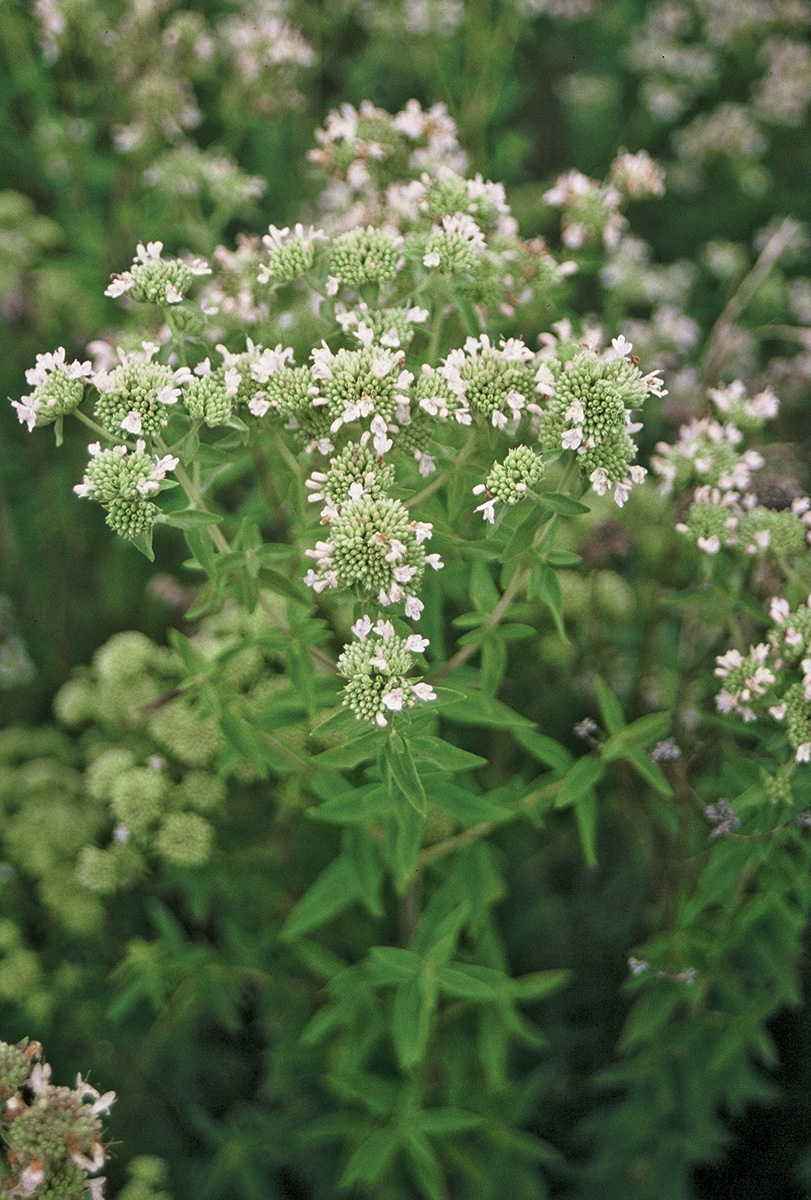
The common bee balm is surprising durable and long lived in untended locations. The seeds need to be tamped into the top surface of the soil to get a take. I have a few species of it, but none look as good as this planting near my home that someone put in on state land with other prairie species. This particular seedling looks more compact and shorter than others in the planting. This is a good seed source as it is also free of mildew in an area with quite a bit of water.

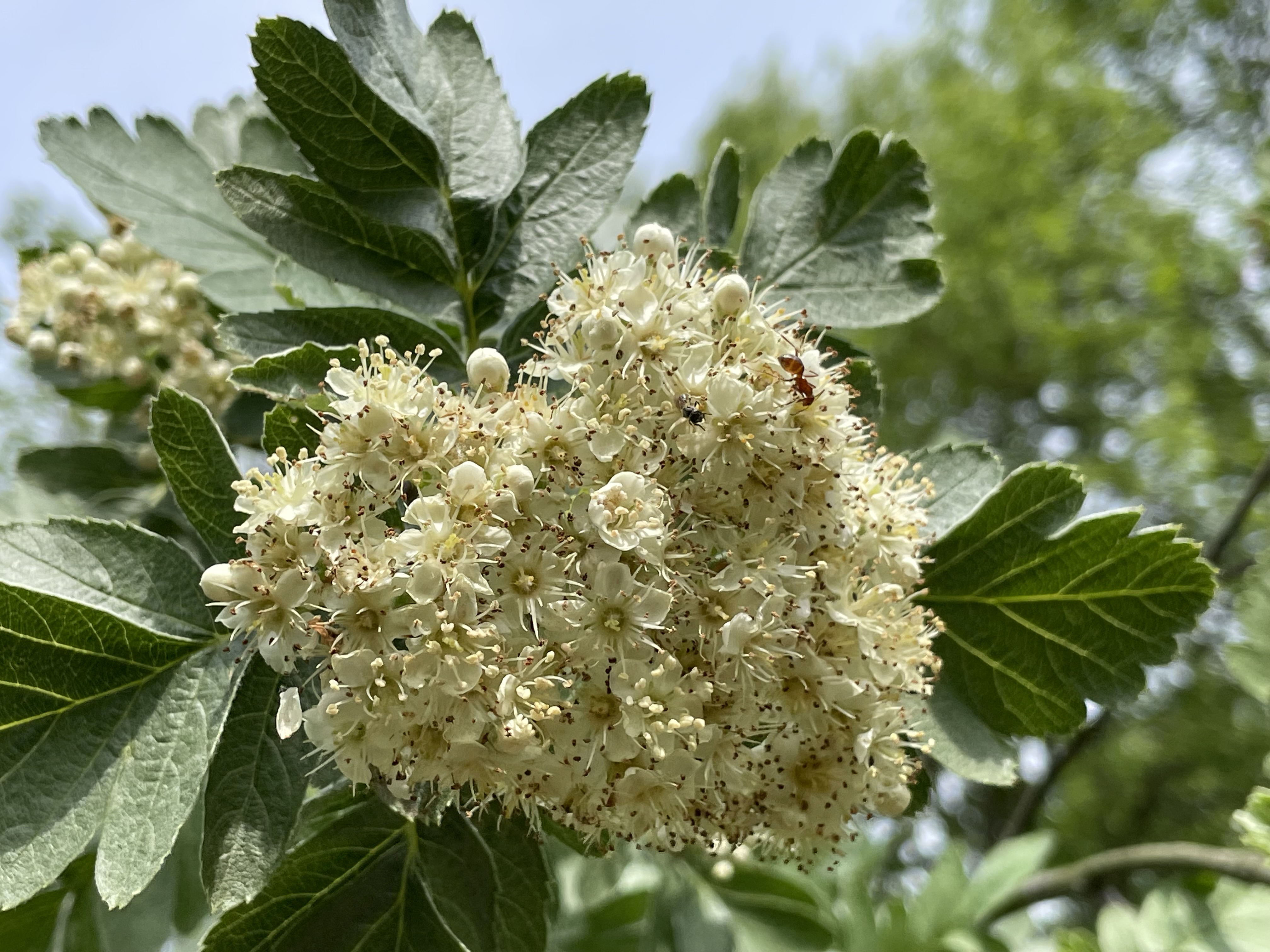
Using a wide array of natural hybrids like this Mountain ash (Sorbus) and chokeberry (Aronia) hybrid creates possiblities for new flavors and dense nutrtion found in these wonderful crosses of both native and non-native species. That in itself is a library filled with promising literature of health and well being.

The Bergamot and Mountain Mint Arrive: Tubular flowers combines with minty freshness

Along with my ever expanding plant universe, I began to use two species of this bergamot relative from an Illinois prairie collection and a mint relative. I used it in an area of grass where I mulched it for several months with my old shag living room carpet to take out the quack grass a bit. It worked. Every now and then late at night I hear Grand Funk Railroad out there. Just kidding. I planted a lot of prairie plants in thie small area along with gooseberries and rose species filling in as a small hedge along one edge. Over time most of the prairie species faded away and did not self seed much. During this discovery, two of the most powerful and dynamic species came to light. The first was the Virginia mountain mint. I remember walking out to this top of the hill location and discovering huge amounts of blue mud dauber wasps all over them. I was shocked because that is not a normal species you would see in abundance in an open field far from any wetlands. I found that it was a species that did reproduce a little by seeds on its own but mostly it was a runner induced spread. It tolerated drought and competition from other grasses. It was as plants go, a permanent addition to my tree crop farm. The second species, Clinopodium or wild bergamot now covers roughly two acres all started by four plants. It followed the break up of my pasture grass system along with the introduction of star thistle near a damaged Christmas tree planting near my northern border. The quack grass began to thin due to drought in 1988. It was the star thistle that created the gaps for the bergamot to self seed. It is a bit shade tolerant too and that helps in terms of its growth under my crop trees. Both of these species are off the charts in terms of its use by butterflies, bees and moths. I often see hummingbird moths in this area now. Both are very good spreaders and hold their own within the existing timothy and orchard grass system. The bergamot could likely take mowing to a certain degree and continue its journey. It does self seed so this is another great advantage. It is readily available by many native seed companies. I have never collected it, but plan to in 2024. After all, it is the year of all possibilities.

Wild bergamot, non-aromatic with tubular flowers filled with nectar.
Virginia mountain mint rich in delicious goodness as a tea plant and highly beneficial flowers. It has the rhizomes needed for long term colony establishment. Jackpot! Narrow leaf Virginia mountain mint did not grow as vigorously and was non-aromatic.
Posted in Diversity Found, Ecology-Biodiversity-Integration | Tagged , , , , , , | Comments Off on Simply Making the Plant World More Diverse

Now That’s A Grape

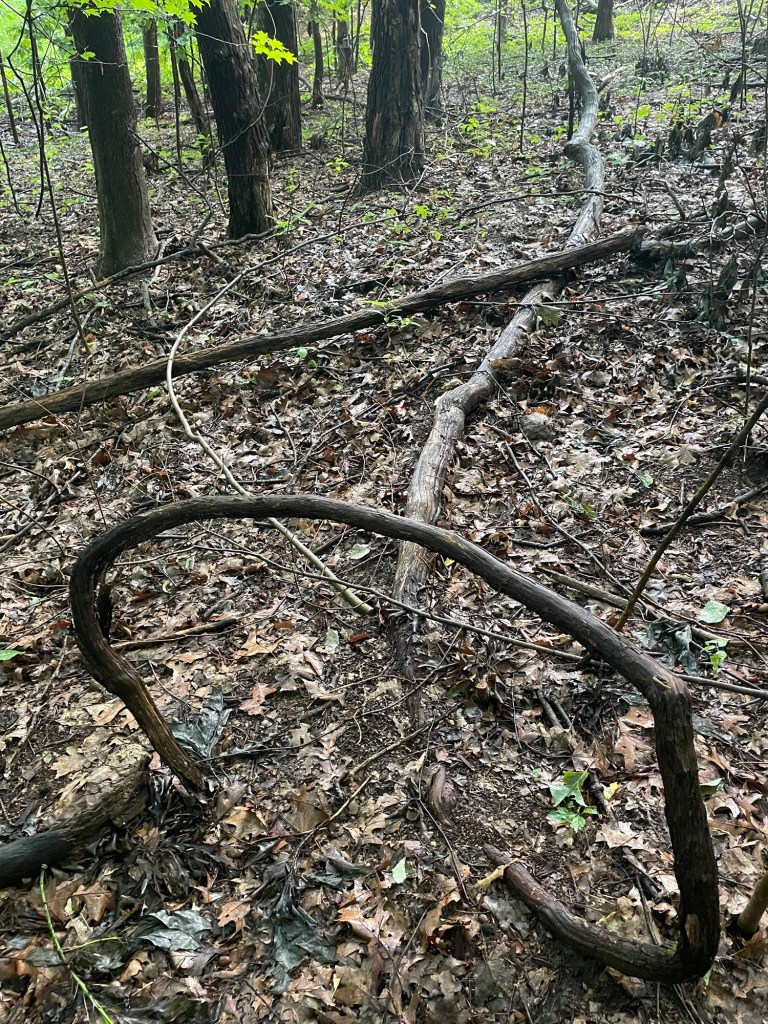
Its interesting in that grapes are so widely consumed in so many forms, yet if you mention woody agriculture or tree crops, they are not considered in the same life saving way as a tree. Vitis is vine in Latin. You just can’t plant grape vines as is and wait for miracles to happen. Its a whole system called a vineyard and apparently that is what you need. Yet non-vineyard grapes are common as grass and that is what exactly happens in nature. Huge vines reaching 100 feet or more make it to the tops of trees of which we tend to think of them as pests to the trees. They cover other trees as well as untended fences.

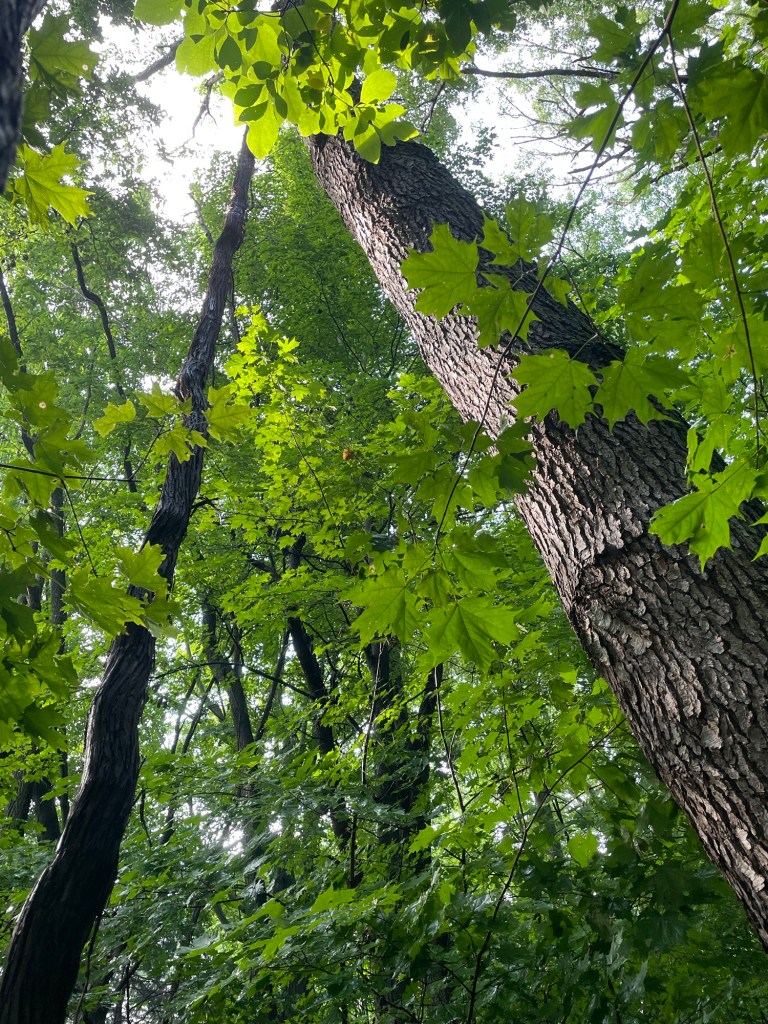
River grape and tulip tree. They were meant to be together.

All it takes is a few seeds distributed by birds. They are a very common plant at my farm and have increased only because I have trees as the overstory of which they rest on during the cycle of cosumption and elimination. It is thought the scarring action of birds stomach aids in grape seed germination. Often the seeds remain dormant for two or three years before sprouting. This is a common experience of those who dare try to grow grapes from seeds. How dare thou? Well for one reason diversity in the genus Vitis. All these grape regions in the world are undergoing huge climatic fluctuations and many wine grapes are sensitive little creatures not able to take the 120 F that they are getting nailed with let alone the insects and diseases that follow soon afterwards to finish off the job. Yikes.

Once I hiked out on a long thin peninsula with my family in Lake Michigan that jutted out way into the lake. It was a calm day and this particular spot was part of a shallow bay area west of Mackinaw City. They were like little islands. Like clouds in the sky separated by shallow water you could wade through and cool your feet as you hiked along. At the time, the lake was at a historic low and we were able to walk all the way to the end of the ‘trail’ as we island hopped our way along. We stopped and had lunch on a tiny sliver of land at the end. As I sat down I realized we were surrounded by grapes on the shoreline. There were no trees just grapes, bearberry and a few willows and grass plants of various species. A form of ground hugging juniper was common there. A viceroy butterfly blew in and landed on the flowers of a single phragmites clump which was in bloom. Covered with sand the grapes were quite fruitful and growing flattened out on the shore. The tiny clusters had delicious grapes which were very tart yet good to eat even though not fully ripe yet in late August. The bright sun, water and sand helped shape the flavor as well as the structure of this natural vineyard. Who knows how old those vines were? I collected some seeds and grew them on my trellis in southern Michigan where they are fruiting now. Since that vacation time, I began to take notice of wild grapes and look at the immense variations found within them. Some had huge yields and others very light. The different species were not as clear to me as I began looking at the leaf and vine I realized later that I was looking at several species as well as possible varietal selections I could make too. The whole world of grapes is still calling me and there are several out of the way places I want ot get cuttings from along the highway fences put up by the state of Michigan. In general, this is not a particularly safe spot to bontanize let along clip a few cuttings. I did find one particular clone along a Michigan highway which would be more tourist friendly if I stopped there to evaluate the grapes. I know there is a lot of grapes along the railroad lines too as I use to jog on the right of ways. My understanding is I could get arrested for such behavior. So for now, I haven’t explored that in many years plus I stopped jogging! After leaf fall you can really see the yields and variations.
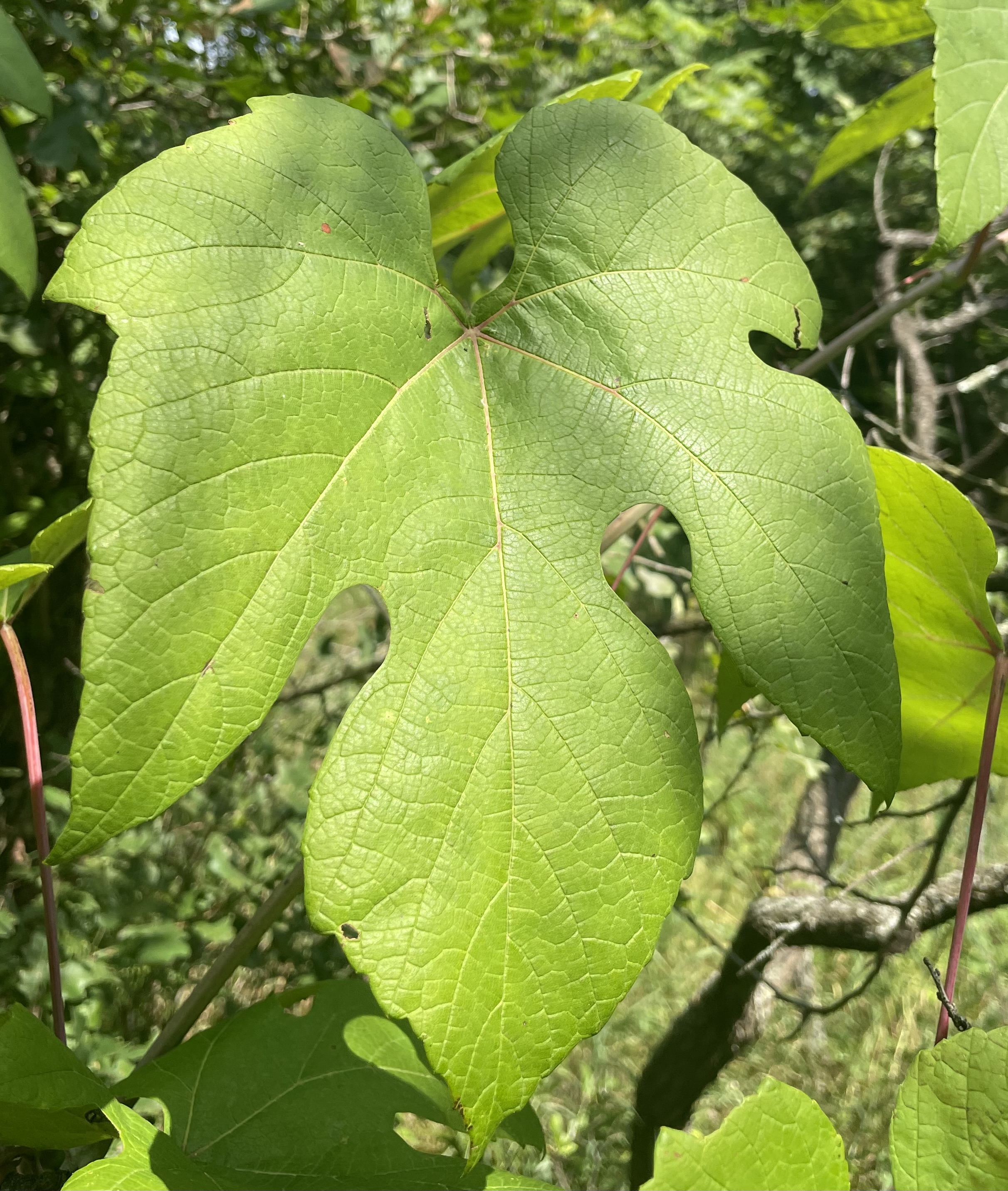
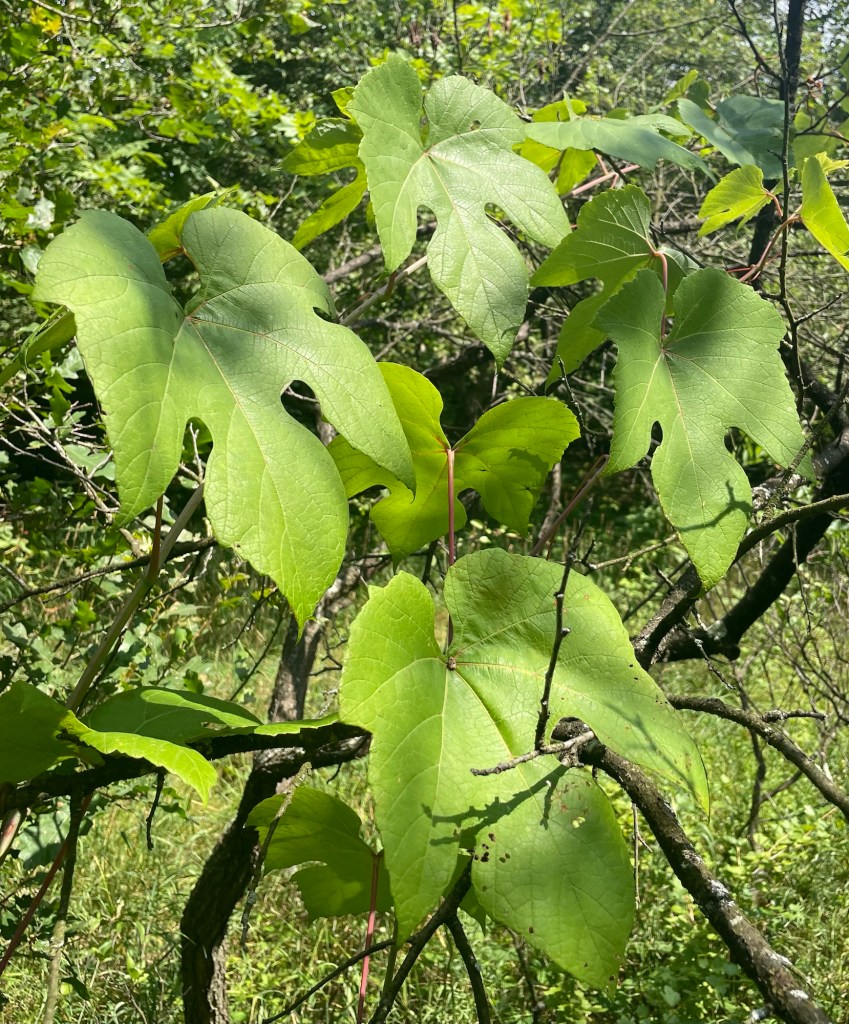
This species grape came to my farm as a seedling from my hedgerow near the road. It established in my pear and plum seedling area. For a while I actively removed it and now realize that it deserves a place in my orchard and trellis. It is called Vitis aestivalis or Summer grape or bunch grape. It is interesting in that it was used by the Cherokee in particular and had a bit of a following with one named varietal called Norton. It is considered the oldest North American species grape in cultivation. I now realize the value of this find and plan to move one of the plants this winter. It is considered very difficult to do dormant cuttings with so I am digging up the root and all. They tend to skip along the ground and root from there. I can’t believe I didn’t notice this before and view it as a great value. Look at those clean large leaves.
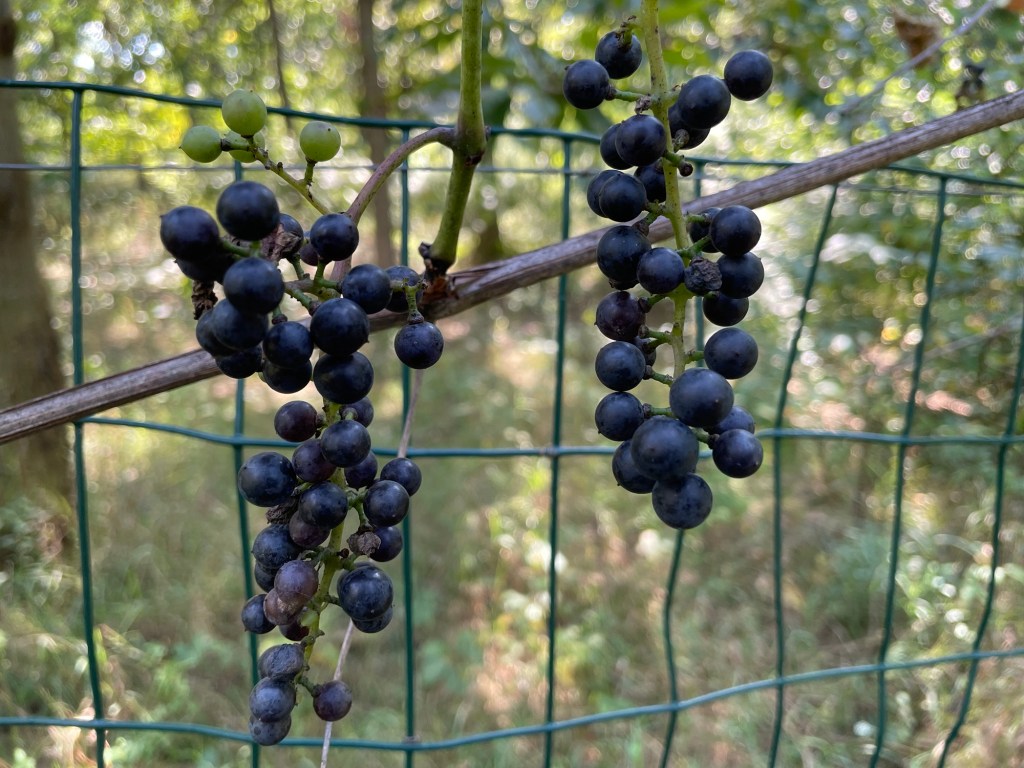
This species grape was found in a state park of which it had engulfed an apple tree someone had planted many years ago. The tree became the trellis. It could be the sand grape which is considered a subspecies of river grape. This is a good example of a high yielding wild grape. It should be grown from seeds and cuttings. Lake Michigan was about a mile away from this plant.
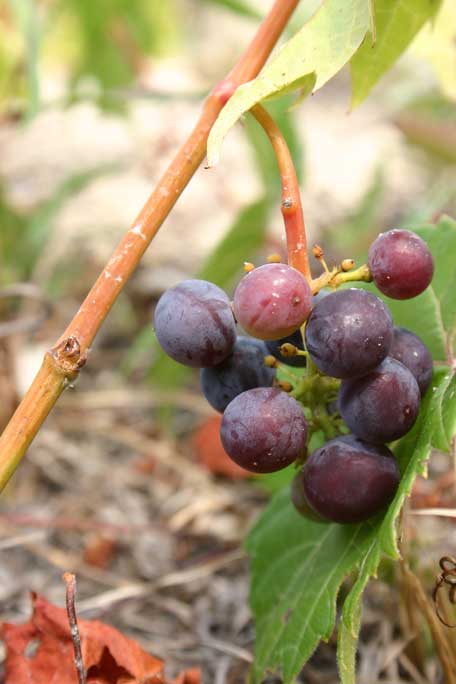
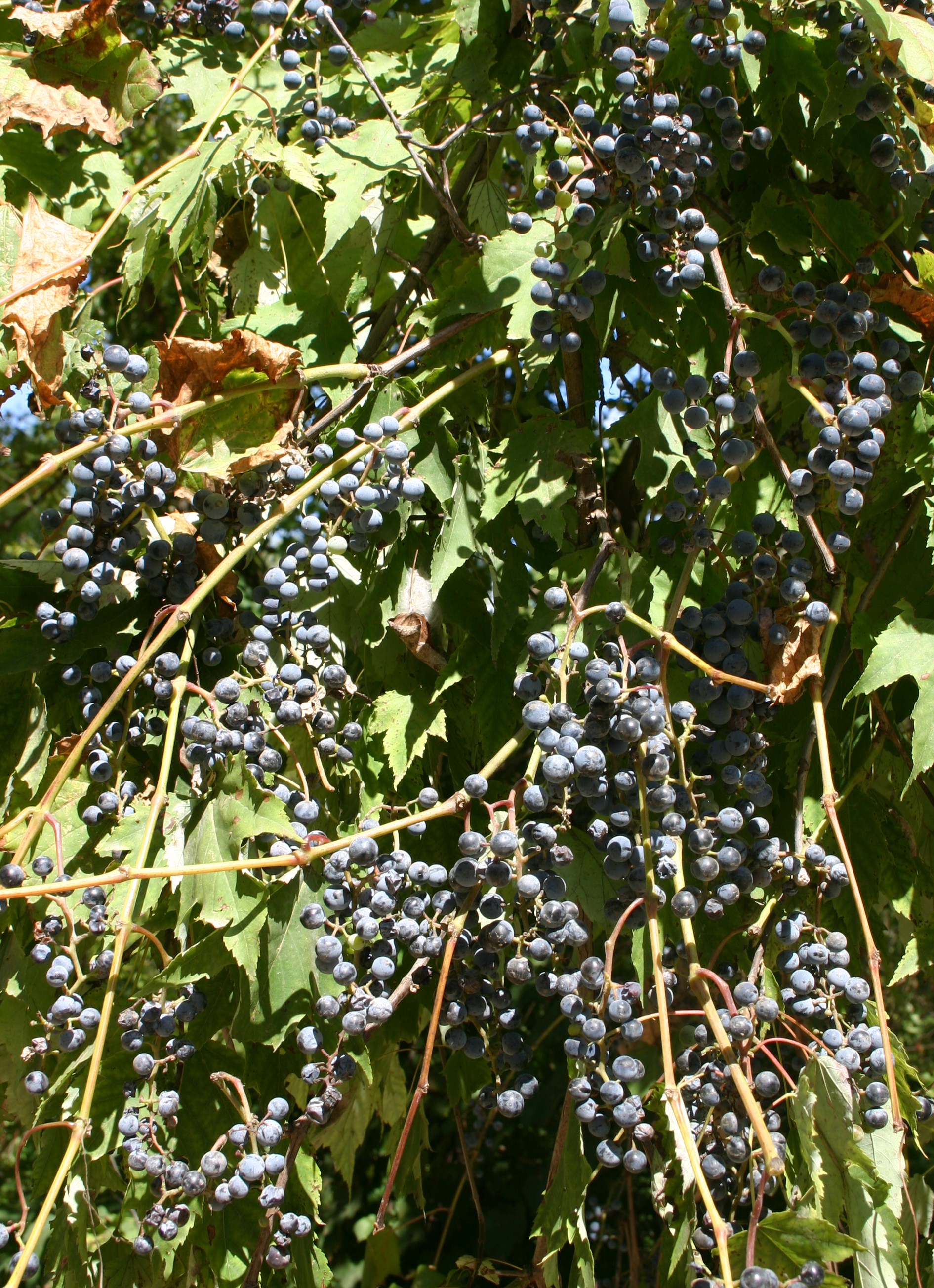
This is one of the wild River grapes grown from seed at my farm. It turns out that out of several species of grapes used today, River grape is more or less on its own and never cultivated to any extent. It is found as a breeding parent sometimes used for wine and juice grapes. There are a couple of selections of it before I released the variety “Blue Blaze”. They were used only for breeding and were not particularly productive at my farm. Blue Blaze is probably the most productive one I have but like all thing grapes, I could do better. The flavor is strong and over the top like a concentrated grape juice straight from the frozen food section without the corn syrup! There has to be super health benefits to these wild grapes far beyond the vineyard grapes. I am going out on a peninsula now with that statement.

The Summer grape seems to have huge possibilities to me. First it has a strong branching habit. Second it is not overly vigorous and grows very stout. It would be a simple thing to trellis much easier than the River grape which tends to consume a trellis very quickly. Pruning is necessary and the Summer grape would be easier to manage. The question still remains, how does it taste. Well, finally after learning my lesson and cutting it down several times, I am going to find out. This is a kind of unknown in all things Vitis. Being the oldest cultivated grape, doesn’t necessarily bring you notoriety.

Posted in Diversity Found, Ecology-Biodiversity-Integration, Miracles of Nature | Tagged , , , , , , | Comments Off on Now That’s A Grape

Purpurea

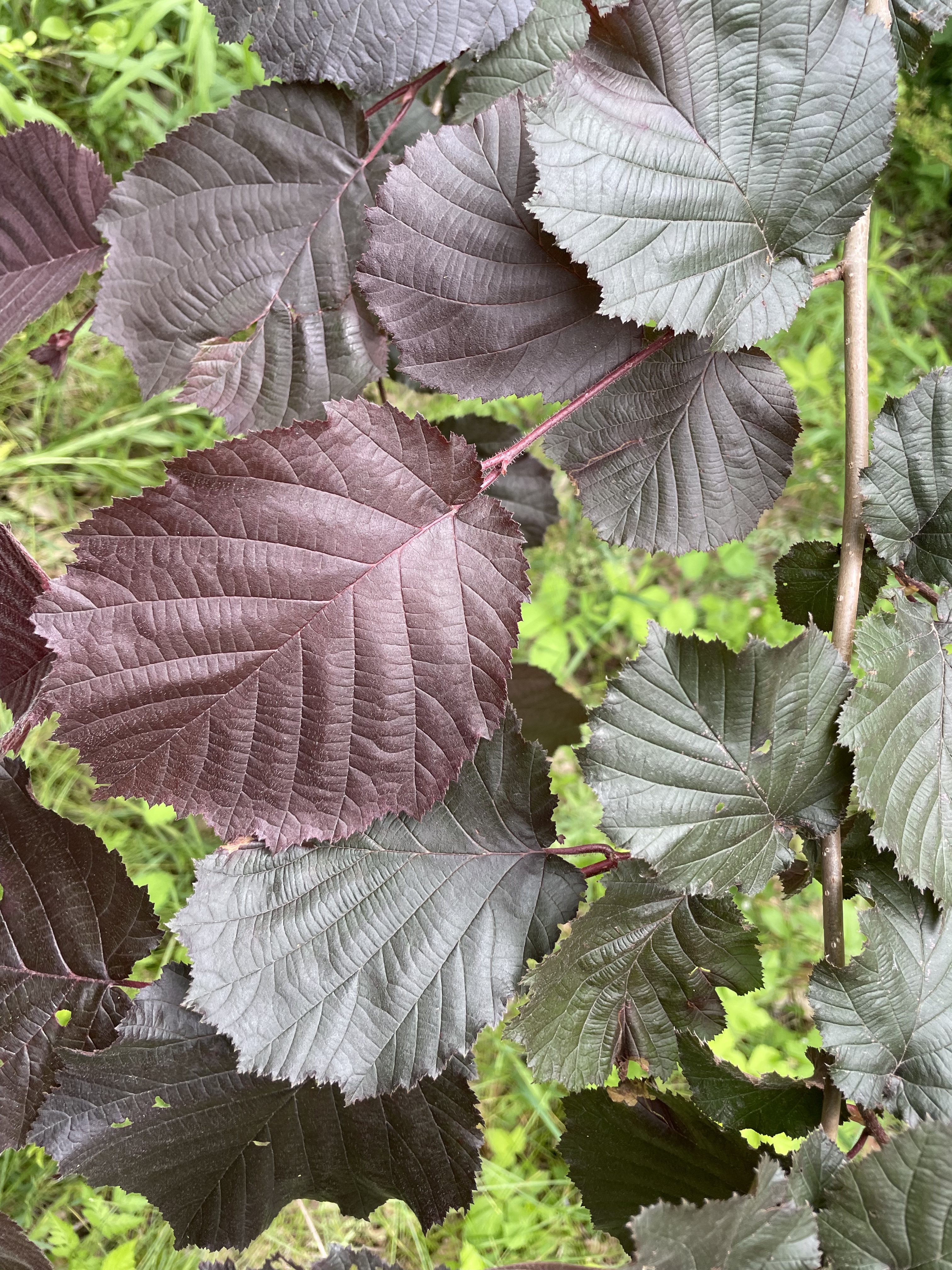
Purple pigments in plants attract attention. Probably the most well known purple plant is the purple leaf Norway maple. It is produced from seed as well as varietal selections with intense purple coloration. You still see it in the nursery industry a little but like everything purple including purple leaf crabapples, the ebb of flow of cultivars changes as selections increase and peoples preferrences change. This purple leaf hazelnut is one of many I grew from seeds. It had one giant problem called filbert blight which whittled them down to sticks within a few years. This one is the last one standing and it too has some blight but is looking very good right now. However, I am suspicious because the disease is so powerful. I grew many thousands of hazelnuts for the mail order companies. In this process, you would see certain plants with purple or variegated foliage. I use to tag those and plant them in my plantings. In the world of Corylus, these hybrid plants could not survive long. Variegation itself is a kind of weakness in that there could be sections of the leaves totally devoid of chlorophyll. Purple on the other hand does not suffer from the change of pigment. Why is that? I have no idea but having the purple pigment could actually be of benefit in terms of having the purple pigment within the nuts. I did get one nut last year from this plant, but it was a blank. The whole nut was purple though. People have experimented with purple almonds too and it is possible to select nuts with a higher anthocyanin compounds within the nuts themselves. How much of a benefit that would be is unknown but it would depend on the concentration and of course flavor. The flavor would likely change too.

There are patented purple leaf filberts already but I am unaware of their resistance to filbert blight. There is resistance and then there is immunity. You need immunity. This particular disease is wind distributed and is everywhere there is American hazelnuts. American hazelnuts are immune to it. The hybrids and other species are usually very susceptible unless specifically bred intentionally or using luck like I did and produce massive populations and letting ‘nature’ have at it. It is interesting that the purple color attracts so much attention. The Purple beech is a good example and used extensively at the turn of the century. It is still with us today along with new cultivars being planted. Whatever Purpurea is, its not leaving the eyesight of people who love plants and all its infinite variations. Not everyone is happy with variations but variations provide a means to change over time and adapt to changing conditions. Some just happen to be ornamental plants.

Once I had a visitor to my farm that produced wildflower seed. He had this one type of sunflower that he spent a lot of time on and was one of the first to offer seed of it in bulk to the ever growing meadow and prairie plant market. Every now and then he found double flowers in his field. This upset him and he quickly destroyed them. I don’t think he realized that this natural form of mutation is common in flowers. Instead he blamed it on a woman a few miles away who had a flower garden who had a double form of sunflowers of which he thought they were tainting the purity of his sunflowers. I found that funny. I was thinking of the song. “Everyone Wants to Rule the World” by Tears for Fears. I had heard he stopped at these plantings and told people to remove these double flowering evil sunflowers. I am pretty sure that is a mental illness but I am not sure it is treatable. He wants to rule the world. The flowers already rule the world and diversity is inevitable. That you can’t stop.

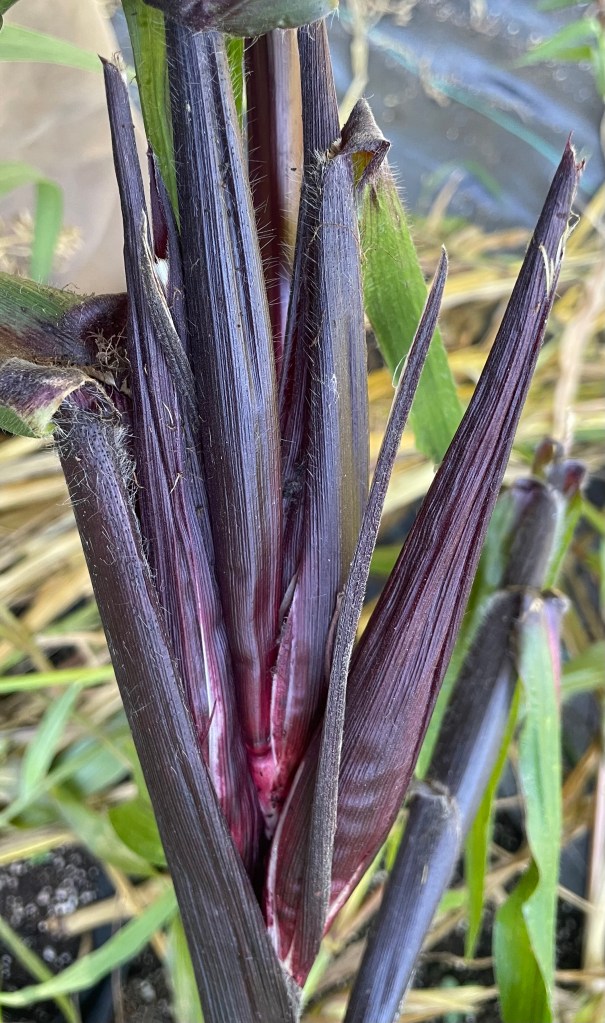
Hybrid purple teosinte. Even the kernels are purple. They pop!
Posted in Diversity Found, Ecology-Biodiversity-Integration, Miracles of Nature | Tagged , , , , | Comments Off on Purpurea

Meet the Perennial Brassicas

Finding the right combination of flavor, foliage production in a perennial Brassica seems easy to do at first.
You try to create seed produced populations using plants that will remain perennial for at least a decade.
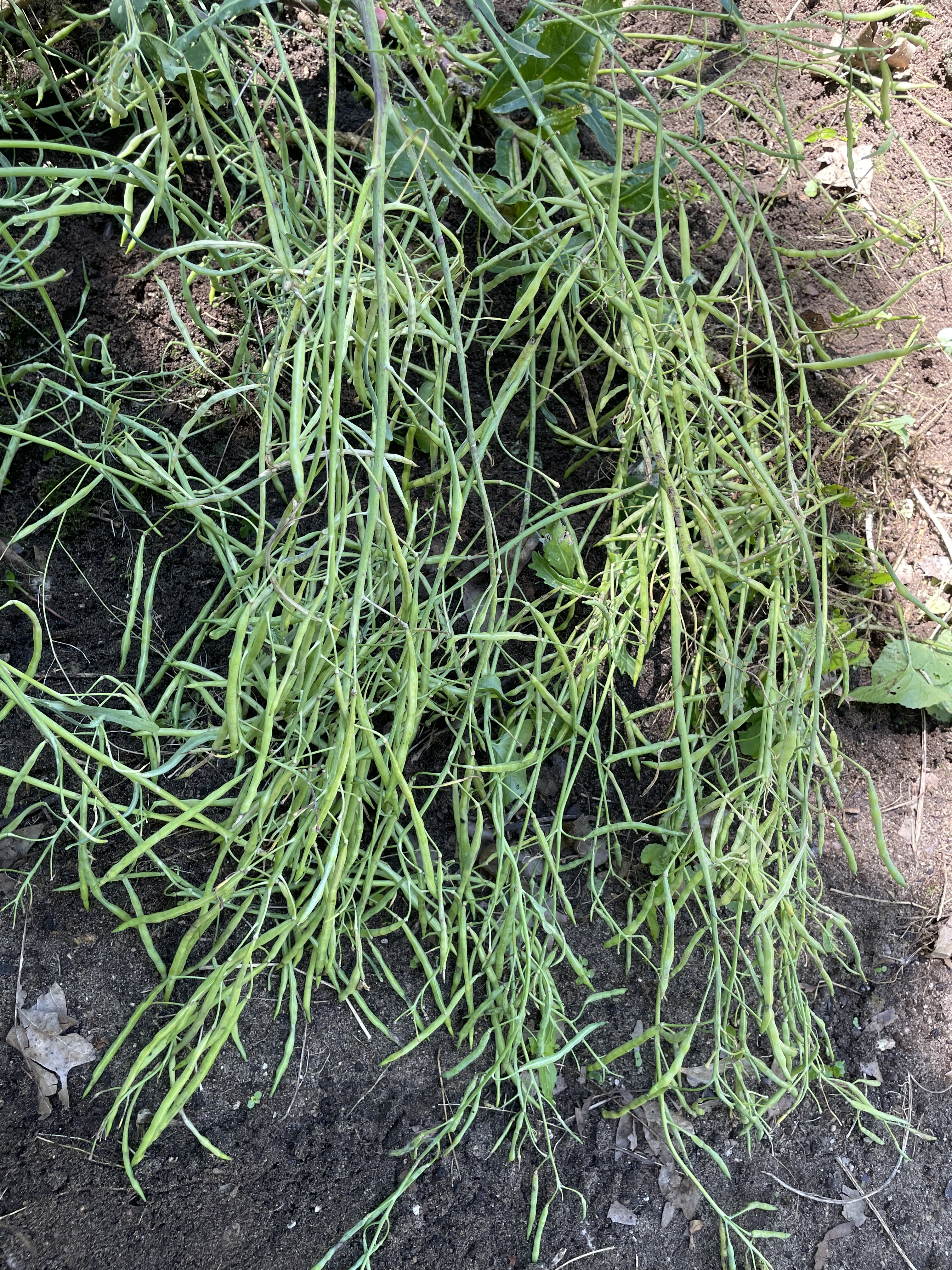
Flowering and setting seed can bring the end of a perennial-biennial brassica plant. This particular specimen is a great bumblebee magnet. The goal is to set seed yet not enough to weaken the plant ending its “perennialness”.

It’s a common experience with gardeners to discover sprouts on year old broccoli or cabbage stalks from the year before. Even the Brussel sprouts will kick out a new stem in the second year. This is because by and large Brassicas are bienniel in nature. Yet within this wonderful genus of mustard plants comes a certain perennial aspect of it, selected over time by humans. This is the case for tree collards. Being in a mild climate helps in this process. In Michigan, the minus 20F is a great equalizer and the perennial ideal fades with time. This idea of creating a perennial brassicaneither by cloning or seed is a good idea but only if it resists insects, disease and climatic issues. This is not breeding as you would normal vegetable plants. It is more like finding seedling selections of walnuts and oaks. It is a subjective experience similar to creating music. It is like listening to Miles Davis. I use to play coronet. I never sounded like that. Why is that so good compared to your average trumpet player? You are following instinct and letting nature take control. You’re still involved but following the population along to attain an all perennial Brassica. The individual selection is abandoned while following the population. It’s anti-breeding.

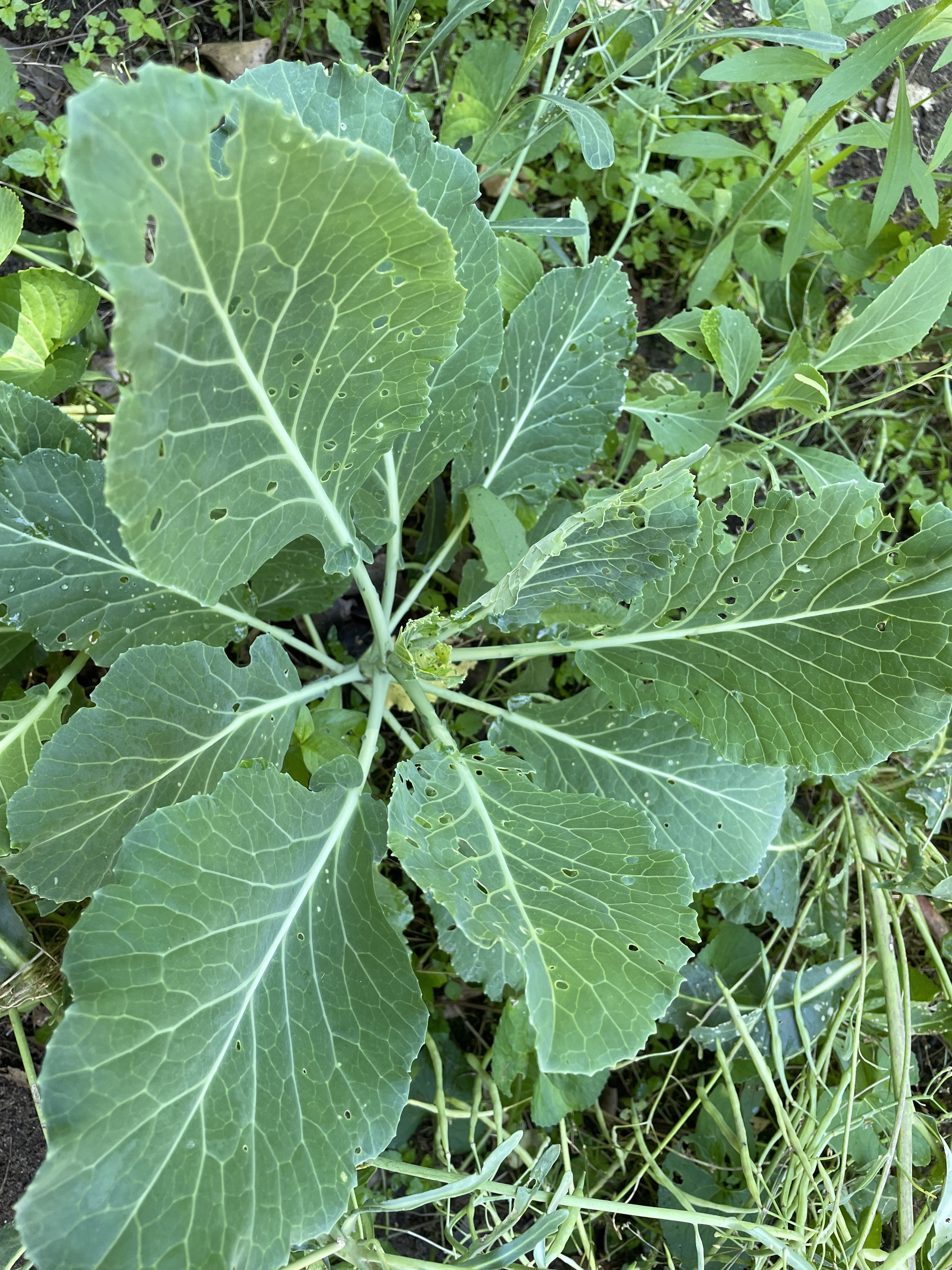
Clean bug free foliage is ideal! This grouping came from the variety, Michigan.

You Are The Human Being Grazing Machine

Successful hardy selections could be used in unheated polyhouses because of their extensive root systems and long life. You basically would act like a human being lawn mower and harvest the foliage on a regular basis over a six month period. The plants would flourish for decades gaining in strength over time. From there you could let them seed and create even longer lived selections. The harvest window would expand in the polyhouses as time went on. Sea kale was attempted at my farm for a while however it was too weak growing and the flavor was bitter. In this case, the species level plant which is the origin plant for many brassicas was not adapted to Michigan and rarely made it past two years outside in our planting beds.

Turkish Rocket: Perennial Broccoli Not in the Brassica Family

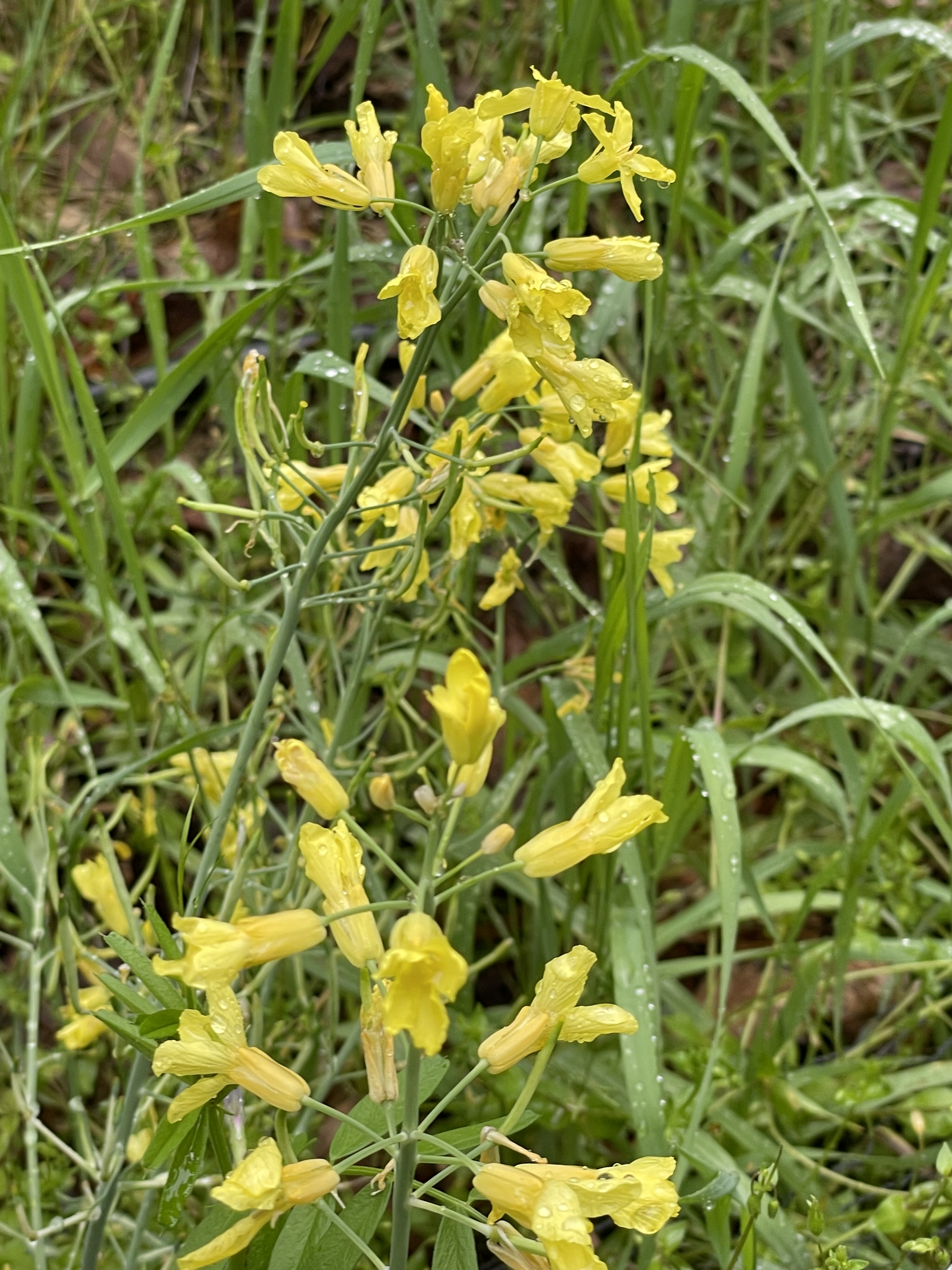
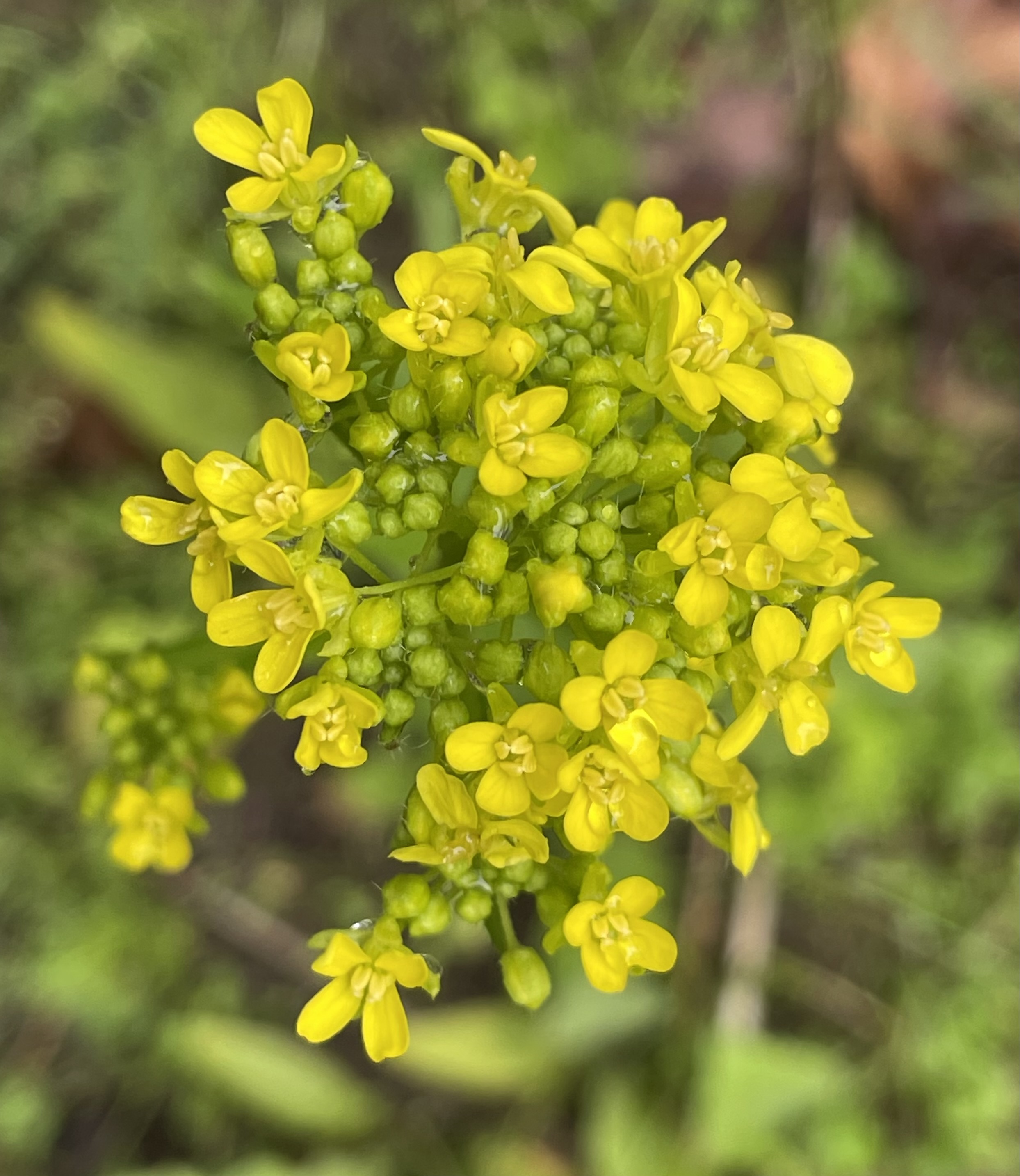
Turkish rocket in flower.
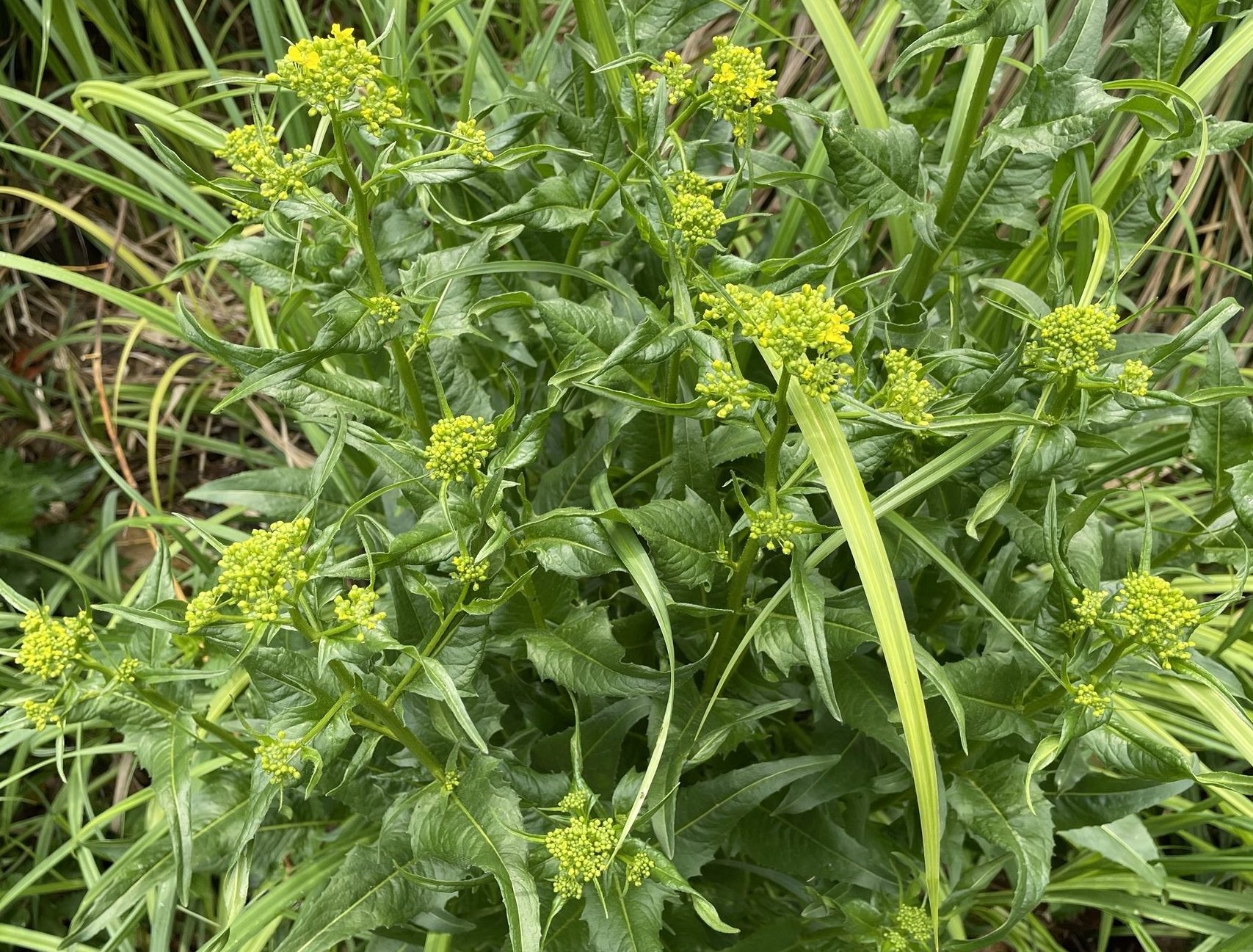
Turkish rocket is a short lived perennial growing upwards to 5-10 years. It is low yielding in seed production. The flavor is very good and provides one cutting of small one inch heads in the summer. It is free of cabbage butterfly larvae and is a deep rooted plant which can be reproduced by root cuttings.

The turkish rocket is an unknown plant and rarely cultivated for its shoots or leaves. The seed production is low. A few seed companies do offer it as a permaculture dream. It is a good adjunct perennial green plant easy to cultivate into zone 3. It is not weedy and rarely self seeds. For it to self seed, it needs disturbed soils to reproduce free of grassy competition.

Why would you grow this instead of broccoli? Flavor! The tiny small one inch heads are delicious and easily used in the spring. Hardy into zone 3 this species has no cabbage butterfly larvae and completely bug free. What is the down side? It is not super productive. There is some natural variation in this plant including seedlessness and compact head production. This alone would allow anyone to make selections and find ways to grow it in larger amounts profitably.

I made one selection from the Turkish rocket called: Seedless. It produces zero seeds. I can see where this plant could be harvested in bulk as a form of wild greens. It has all the hallmarks of healthy brassica as a deep rooted perennial and could be grown in areas where heat and cold would wipe out broccoli.

To seed or not to seed. Seed is always the answer.

Enjoy. Kenneth Asmus

Bunia orientalis
Posted in Diversity Found, Ecology-Biodiversity-Integration | Tagged , , , , , , , , , | Comments Off on Meet the Perennial Brassicas

The Wild Andean Pumpkin

I have always enjoyed finding and growing the ancestors of crop plants. Unlike what would be called scientific breeding or selection I have a different motive. I want to see the plant that began it all. I want to time travel back to the origin of the cultivated plant and take a look around and see what’s doing. I want to leave with knowledge of the plant and what it was that civilization needed from this plant at the time and the culture that initially found it growing in its wild habitat. Then I want to share that experience with the rest of the world in forms of knowledge and seeds. It’s the straight arrow of experience plus knowledge equals enlightenment.

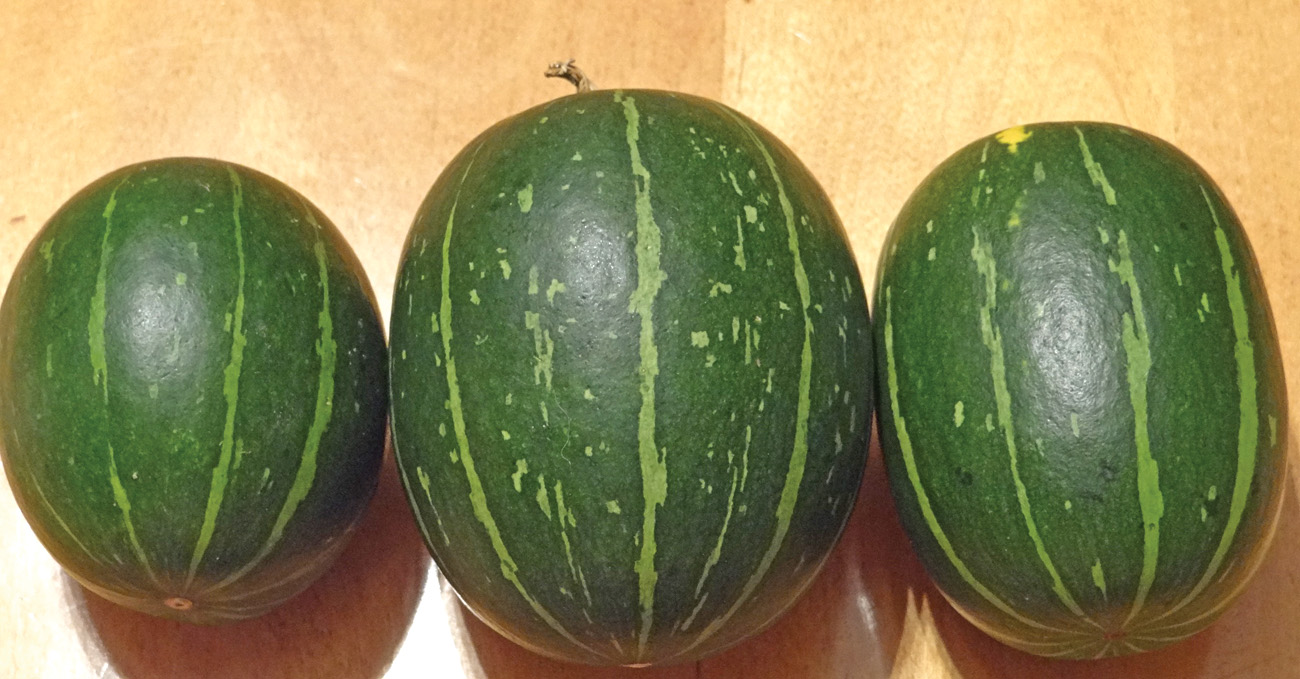
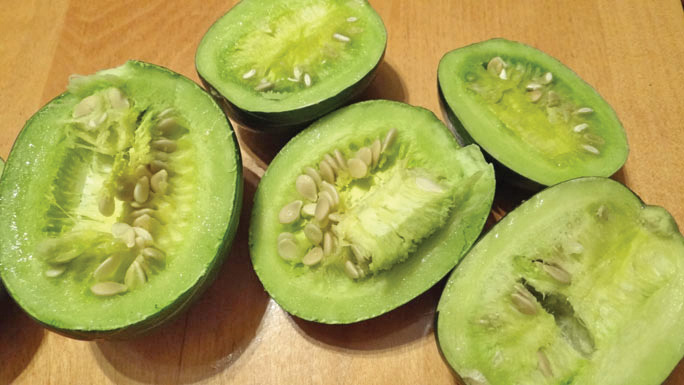
I found a seed source through a now out of business seed company that had managed to find the wild pumpkin in Peru. This is a certain subspecies that is considered not edible and poisonous to consume. I was doing a small planting in an area that was recently cleaned of nursery stock and was awaiting a new polyhouse. In this area I was attempting to grow both wild forms of watermelon and pumpkin in this wide open sandy area wedged into between the northern pecans, wild pears and persimmons. It was a good location with sandy low organic well drained soil. The pumpkin vines grew luxuriantly and tapped into the soil at each node growing up to 100 foot long. There were no insects, no deer damage and great competitive leaf canopy unphased by drought and weeds. As the vines grew, I was excited to harvest the little green balls and see what the flavor was like. As I cut open the fruit, I realized this might not be the same as the pumpkin I know. It wasn’t. The bitter alkaloids flooded my mouth numbing my tongue for a good three minutes. Water only seemed to make it worse. Yet, there was this aroma in the background that was very pumpkin like. You could smell it, but not taste it. One fruit had a tiny orange sliver of a speck on it. “There you are my little pumpkin”, I thought. The orange speck said it all. The orange portion made up less than one percent of the fruit, yet this one percent was the future pumpkin. How did someone even know this? My guess is pumpkin consciousness. Someone had knowledge of this plant at its very source and as unusual as this sounds, the pumpkin told him or her in some way either through cognition or a ‘medicine man’ as a intermediary where to look and made changes to help the farmer, the curator of its knowledge. Life is mutual. Otherwise the pumpkin from the wild form would have never arisen. You have to know a direction to follow otherwise it would take too long to develop and actually use and eat. Whole civilizations would crash and burn if they were forced to eat this fruit I just tasted.

One year on the way home from my farm, I noticed a great deal of smashed pumpkins on one particular country road from Halloween night. Pieces of pumpkin littered the road as cars crushed the remaining pieces into an orange paste. The following year in the same area I began to notice a few ‘wild pumpkins’ making their way to the gravel shoulder of the road. It had turned out that these teenage planted pumpkins were making a go of establishing under the sugar maples and black walnuts along the road. One vine in particular was working its way into the road and was loving the open pavement. It appeared for a brief moment that teenage pumpkins were being purposedly being avoided by traffic too. I know. The vine inched out more and more everyday. I swerved around them. Don’t hit the pumpkin vines. Like a late night possum, teenage pumpkins are worthy of living a life uninterrupted. Everything was looking spectacular until the county road crew and their mowers showed up. At that point I had visions what the end of the world would look like when the streets were filled with pumpkins rich in fruit. Imagine a pumpkin laced roadside rich in nutrition. Now I was onto something. My dreams were the same as the pumpkins. Pumpkin consciousness was here to stay as long as I kept the thought alive in my mind.

Today this is my new life with the pumpkin. My hats off to the angst ridden teenagers and the wild Peruvian pumpkins. Eventually they will meet and find a solution for all of humanity. It can happen. I saw it. It is true.

Posted in Diversity Found, Ecology-Biodiversity-Integration | Tagged , , , , , , , | Comments Off on The Wild Andean Pumpkin

The Edible Lily

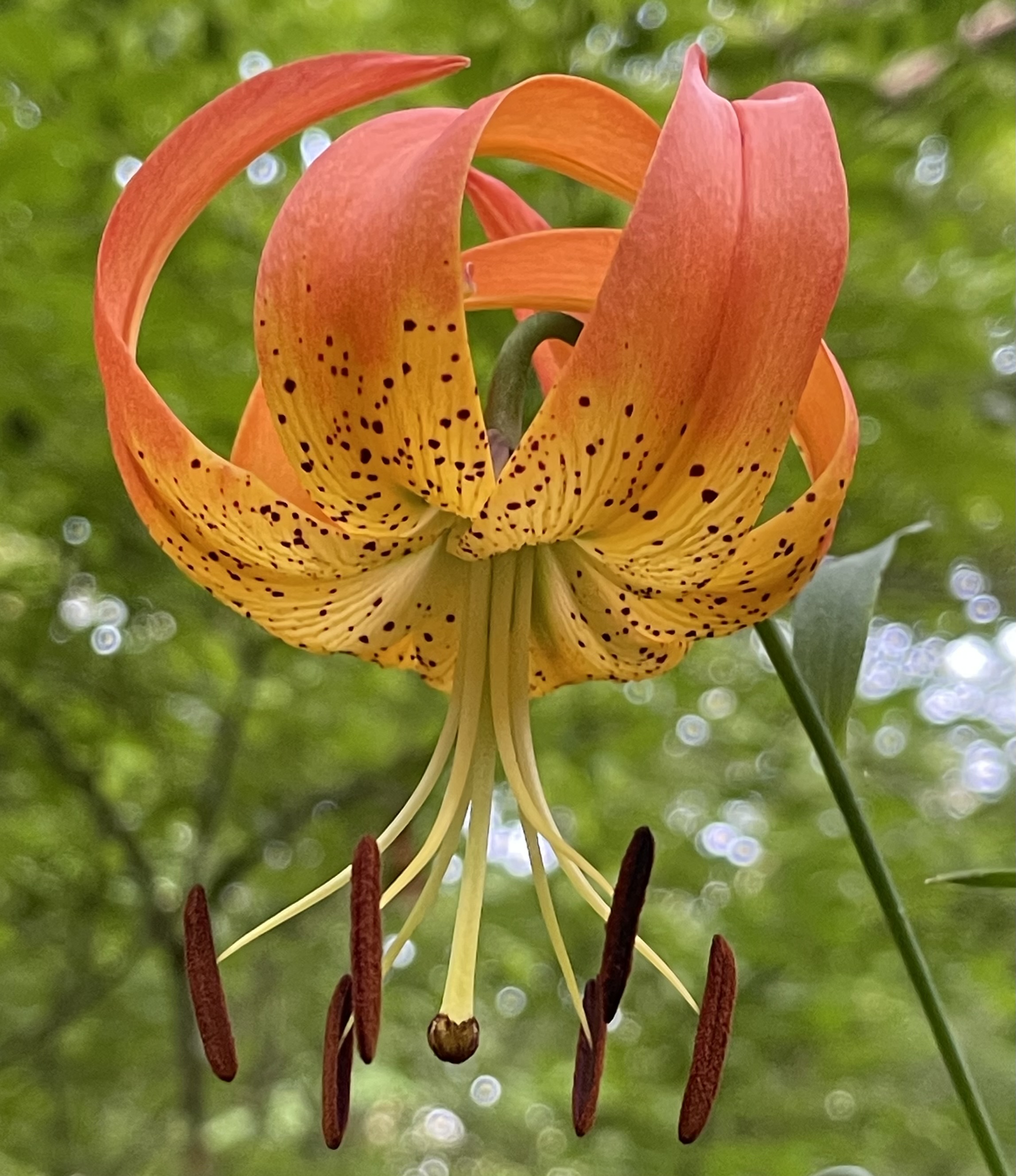
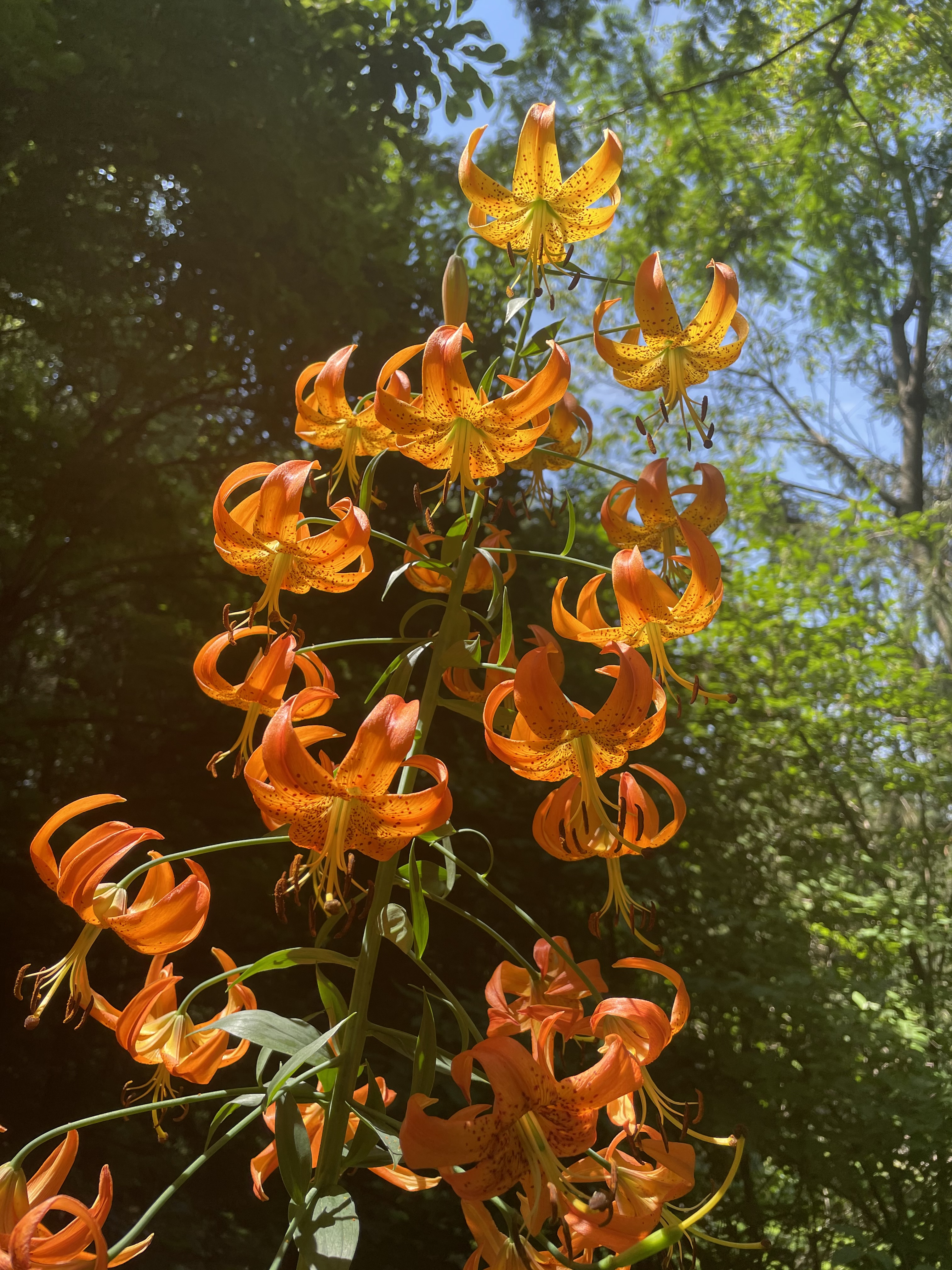
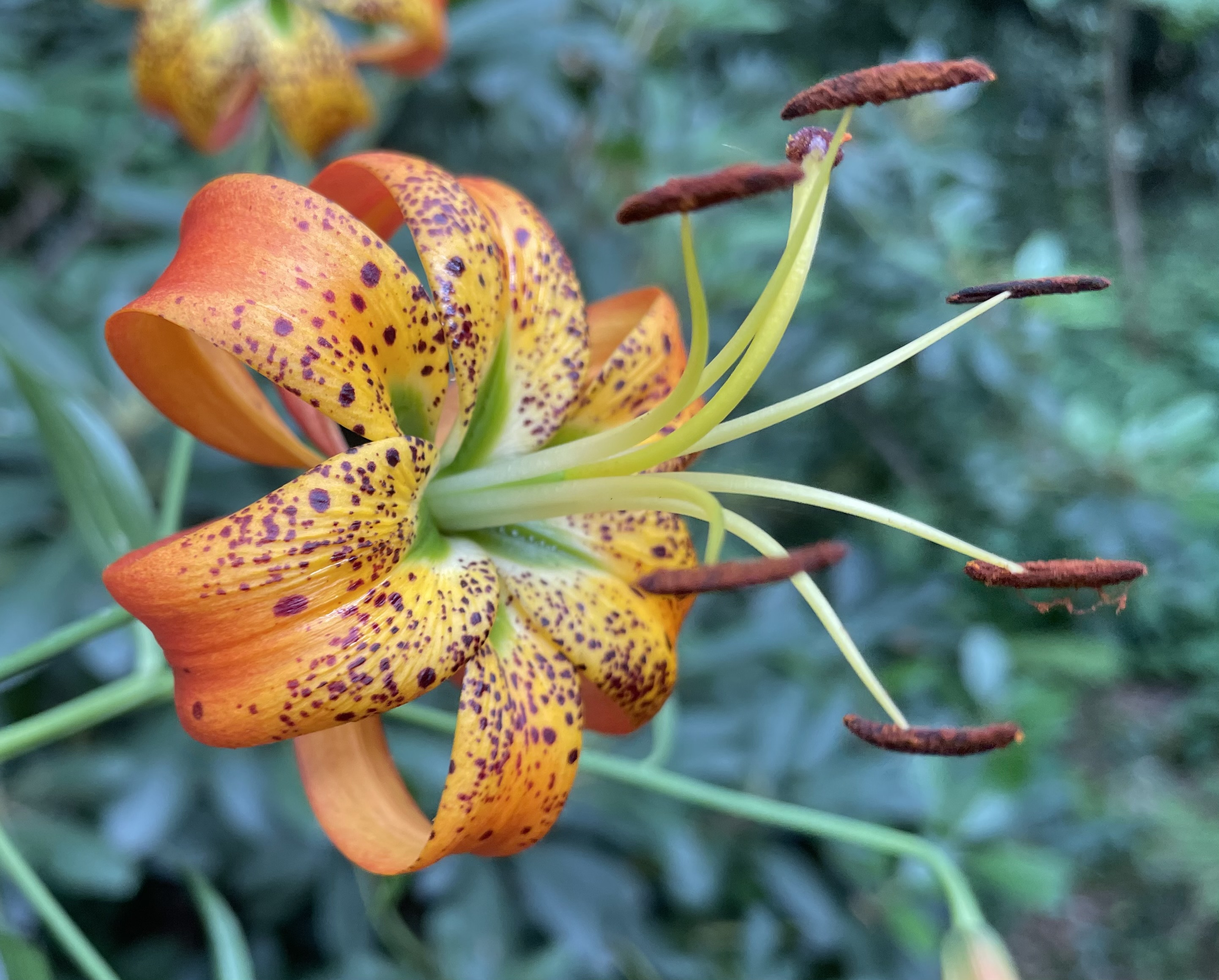
I have always found it fascinating to read about the use of wildflowers as food plants. In particular, I wondered how anyone could make a go of harvesting lily bulbs to any degree for food. You hear stories of many cultures eating the lily bulb and you will read the rich ethnobotanical literature about the Lilium genus. When you test that knowledge and grow the bulbs from seed and wait a decade you soon realize the food potential seems very low. If you were to harvest them for a meal, there would be nothing left. On the other hand, you see lily producers from Holland crank out mega-tons of lilies for the flower market. So you know it can be cultivated in mass and be used as a delicious tuber.

The raw bulbs taste good and have a nice crispy texture but I am hampered by yields and knowledge of cultivation for food as well as its culinary details. I was trying to figure this out and only recently discovered a few secrets. For many species lilies, the developing colonies take centuries to form. This is not like Jerusalem artichokes or potatoes. They are not like any other bulb plant that is consumed because the colonies are very slow to establish. One twenty year patch that I have is roughly four foot across. This colony started as seeds which took two full years to germinate which created five bulbs. You must treat the colonies as a super long term tree crop with maturation rates measured in decades at least. The bulbs of the two North American species are small and grow along a small rhizome which looks like a string. It is a different form of colonization of each Lilium species. What is interesting is that some of the bulbs lie dormant and wait their time to flower once free of the rhizome. What would be the impetus to flower and spread outside of seed production? Here is a personal example.

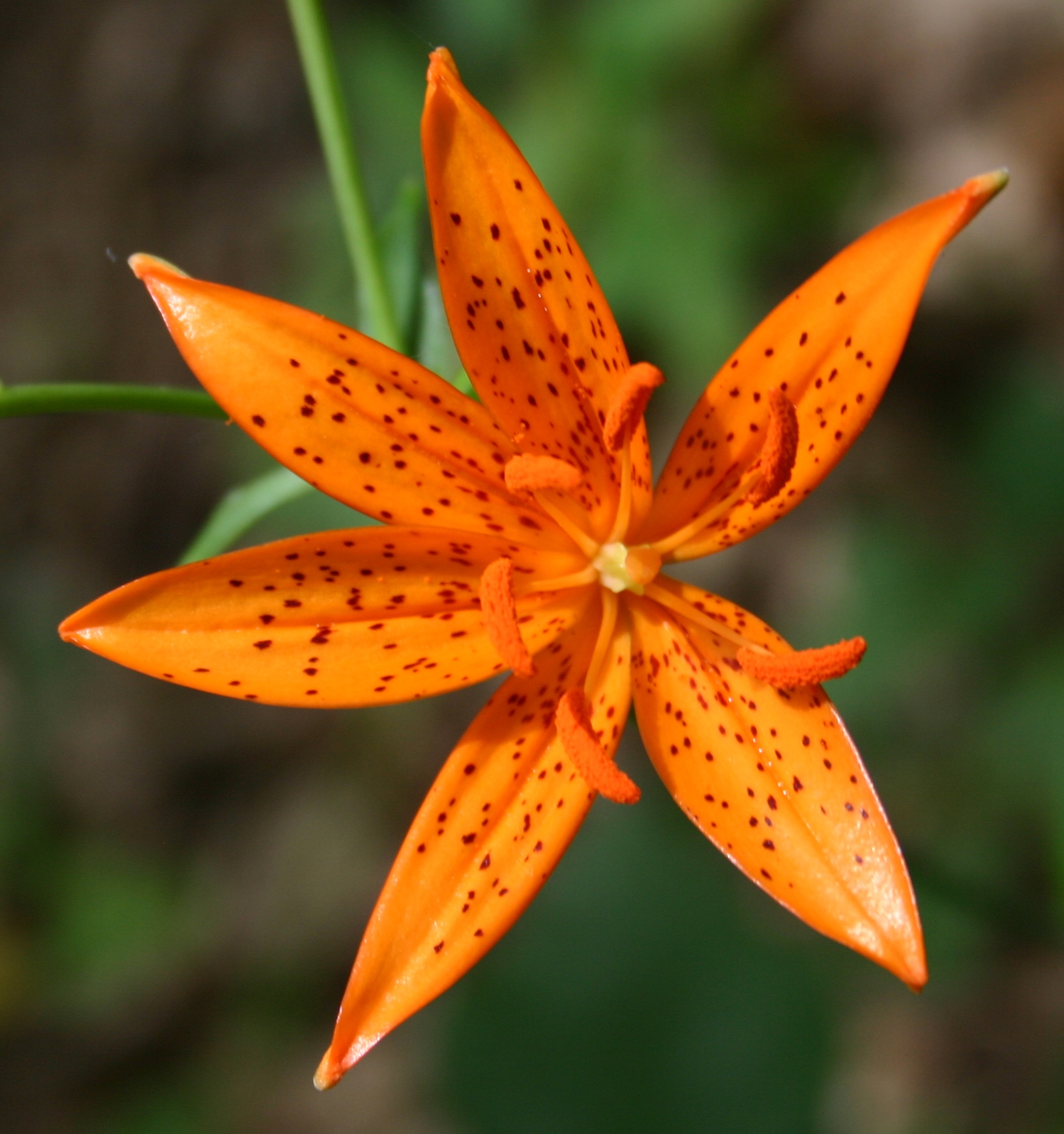
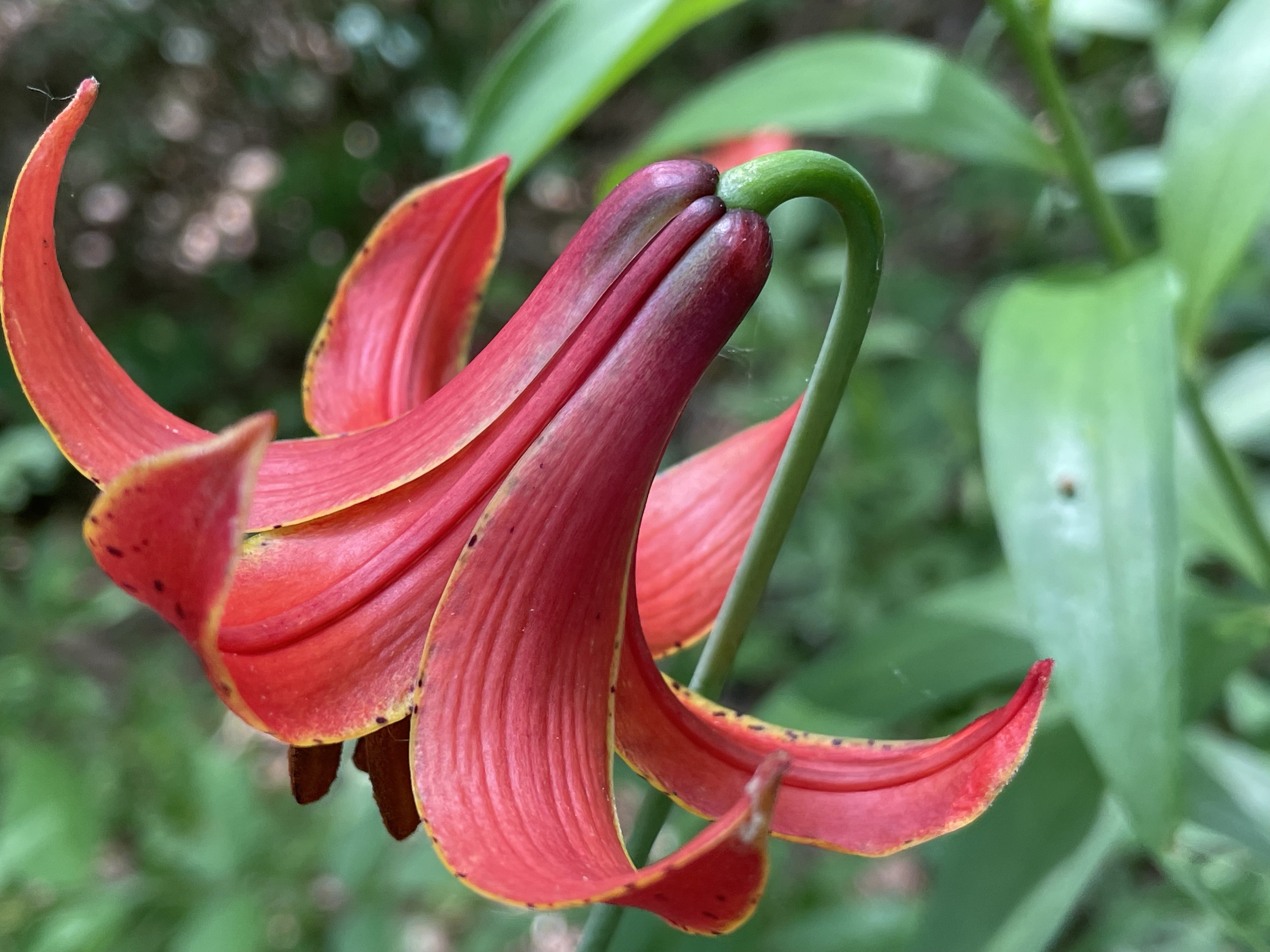
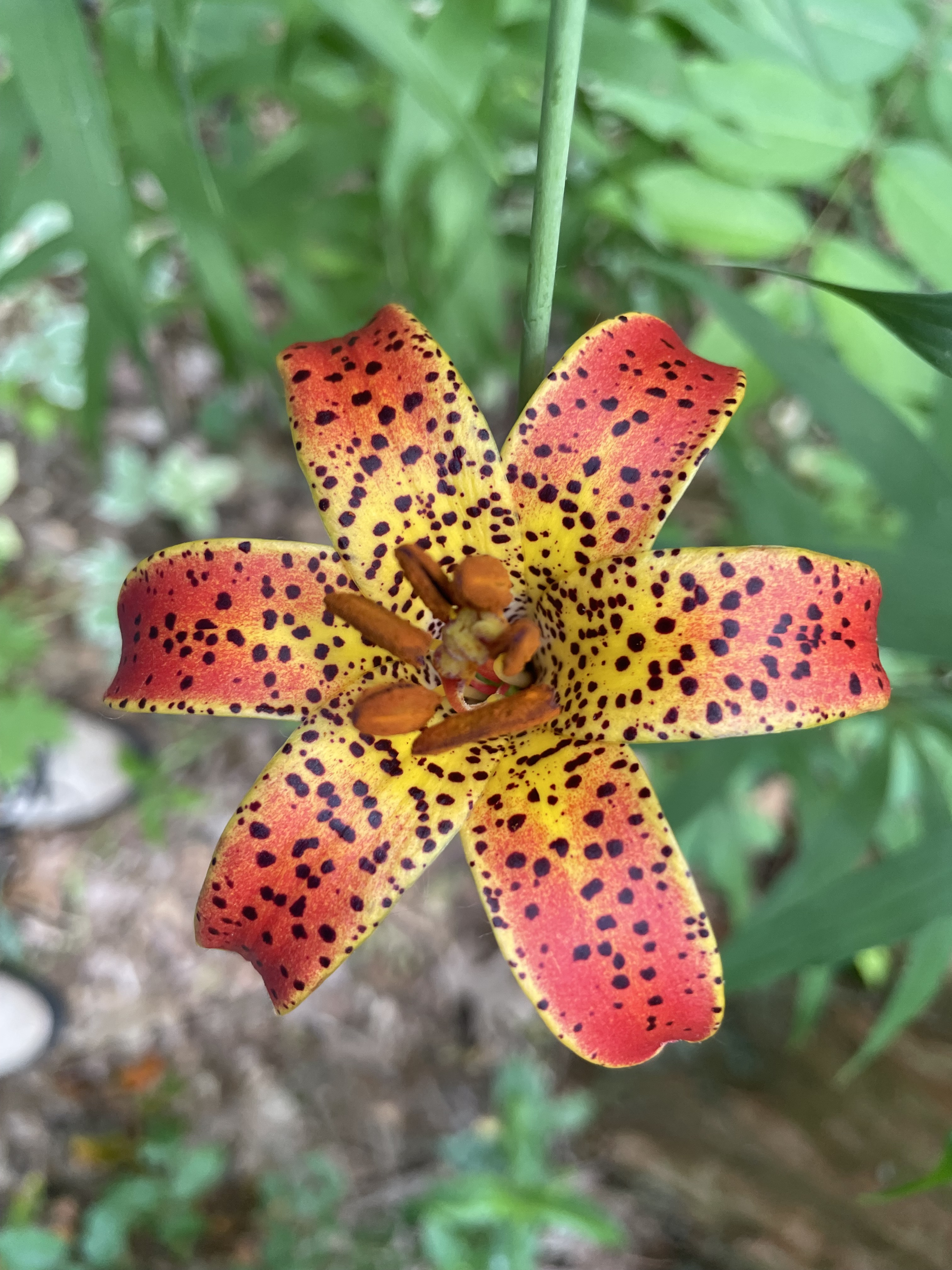
Lilum canadense Canada Lily
Michigan Lily Lilium michiganense

I got a call when I was in sophomore in college from my father one December day that he needed me home to help on the farm. It was Christmas tree season and sales were off the chart on our new 400 acre wholesale tree farm. Unfortunately, I was not able to help due to school work. I never really thought much about it until I had heard from my brother who said that some problems that winter were way more difficult to solve than giving out a few candy canes here and there. To begin with it had been a wet winter and the farm itself was more or less a wetland lined with drainage ditches. In the process of harvest a giant cluster of machinery of pretty much everything my dad and his partner owned ended up getting stuck and going subsoil way past the axles in the middle of a field. This involved a flatbed truck, two tractors, bulldozer, tree bailing machine and I think a wagon. The memory of it alone was so brutal to my father, he refused to even drive by that area where it occurred years later. Finally out of curiosity in the summer, I scouted around for the location and saw it from a distance punctuated by loads of beautiful orange lilies. As if it was a location of great purity, the lilies sprang from the soil like nothing I have ever seen before or after. When I got into one of the ruts, my eye sight was level with the field soil. It was like standing in a forest of lilies. I’m surprised they didn’t find a mastodon. At our farm the lilies were spread out over the fifty foot area rich in muck and sand caused by the attempts to extract the equipment. This location may have had a few lilies before but I never noticed them. From reading about lilies, you will find that bears and other ground rooting animals eat the tubers. I am sure wild hogs love them too. Either way it is this love of the edible lily bulb that helps bring them into production more. You have to do a bit of subsoiling. I have an area I planted them that was set up as a hugelkulture. They thrived for quite some time. Now they are on the decline. I need to get in there and loosen those strings of tubers. It is this process that can speed the spread of the plant. I threw some out under a walnut planting and there they really have taken off. But the colonies are clustered together tightly because I have no bear or wild hog to kick start the spread. I do collect the seeds so I will likely self seed them in certain locations free of dense sod and other vegetation that may impede the grass like foliage when they first sprout. I will try different locations under shrubs or trees including some dead wood where the grass is gone and is now covered with wild black raspberries. I do have groundhogs, skunks and racoons but they do not appear to have the lily as part of their diet.

Perhaps I could go there in December and bring with me a flotilla of equipment, get stuck and go subsoiling while searching for mastadons. I know that works.

Enjoy, Kenneth Asmus

Michigan Lily
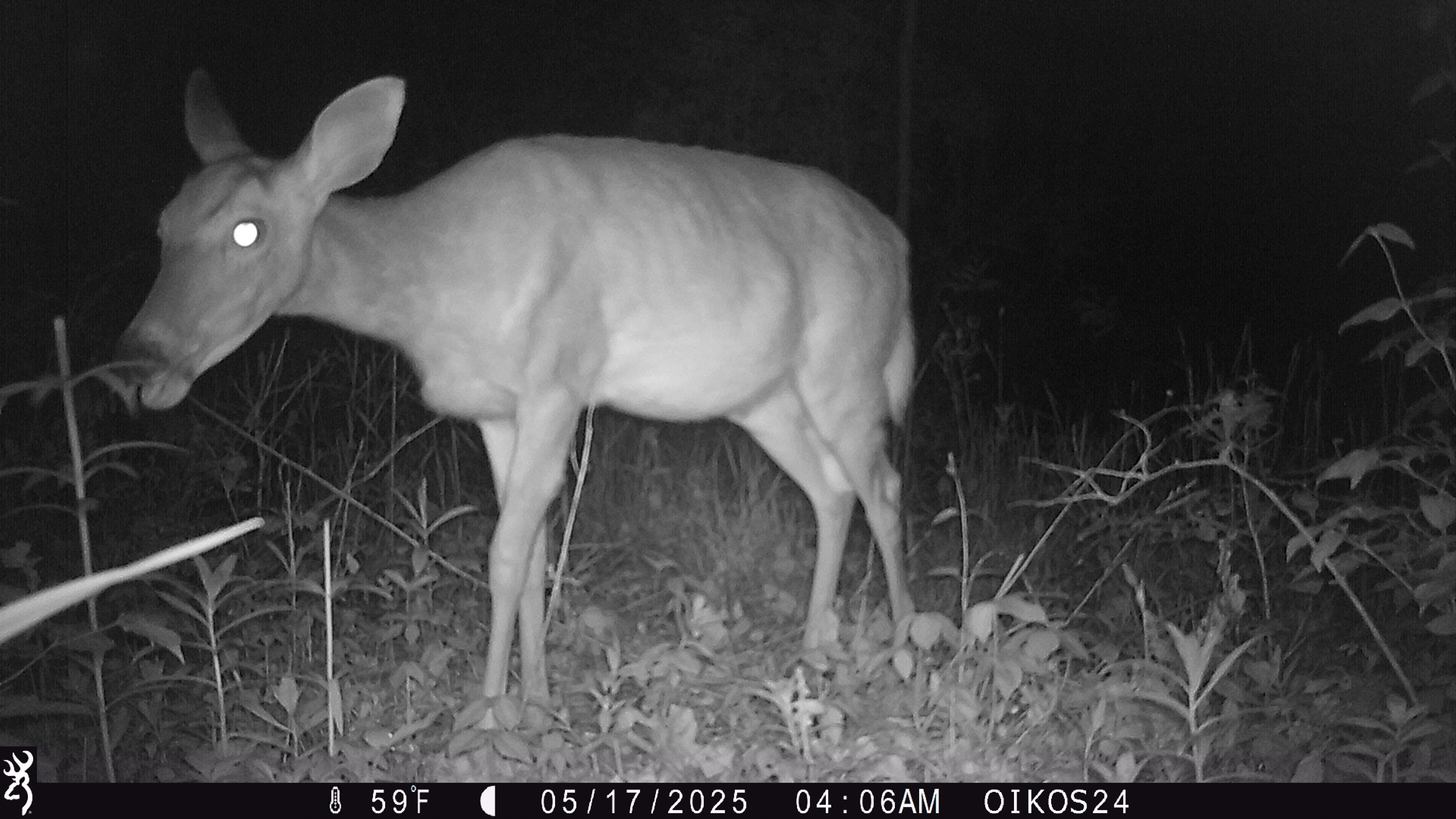
White tailed deer love the foliage of this Lilium brownii and other species planting.
Lilium species grown from seed. Western species from North America
Lilium species grown from seed. Likely Lilium brownii.
Posted in Diversity Found, Ecology-Biodiversity-Integration | Tagged , , , , , , | Comments Off on The Edible Lily

The Earth Pea

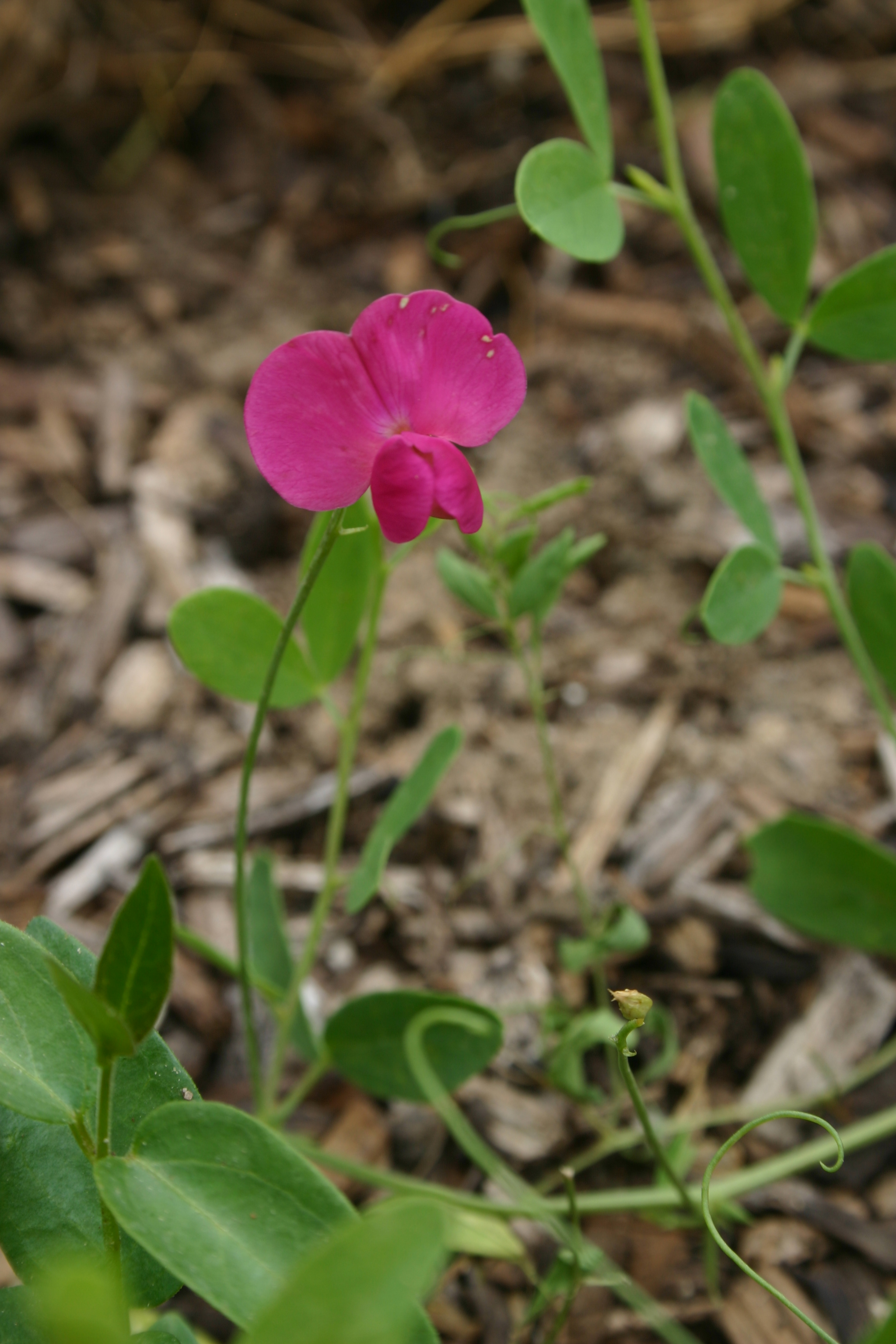
One of the most interesting perennial crops I grow is the earth pea, Lathyrus tuberosus. It reminds me in many ways of the highway pea that is so common along roadways used as a soil stabilizer and nitrogen fixer. As a cultivated perennial vegetable, the earth pea was low yielding but had delicious crispy pea tasting tubers. Definitely worth growing for the flavor. It was not a colonizer like the highway pea and needed a bit of care to establish. Once established it came back every year despite temperatures below minus 20F and me tilling it under several times in an area that I was planting new things in. It never took over an area unfortunately as I wished it would. Today it resides on a trellis as I continue to plant its seeds again and try to establish it by planting a few seeds every year.

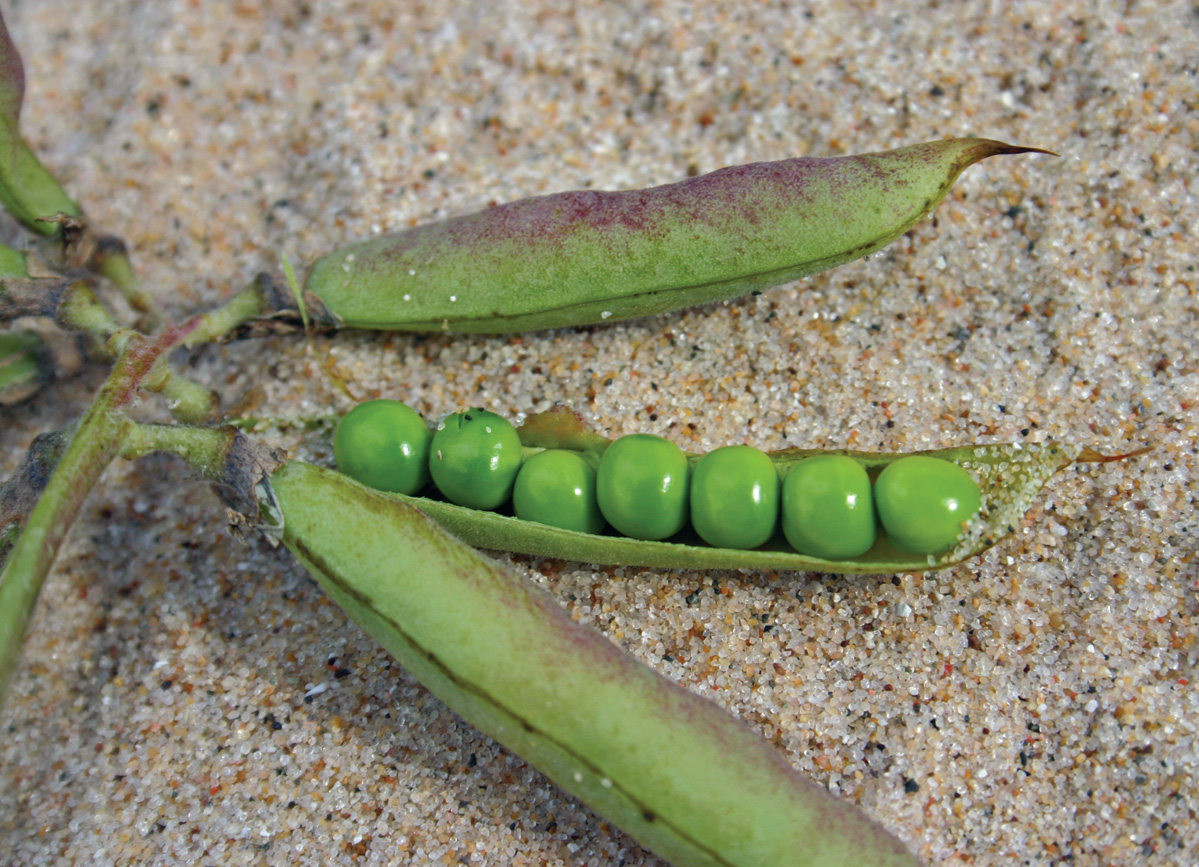
The earth pea is a nitrogen fixer and this is an advantage if you wanted to combine it with other woody plants in a landscape. On its own it could likely be developed as an agricultural crop in the same way radishes are grown and used. It doesn’t necessarily need a trellis and it will sprawl along the ground and branch outwards like the highway pea. I grew several North American pea species including the prairie and beach peas from the Great Lakes region and Washington state. These species usually produce poisonous seeds each to a different degree and long thin rhizome roots. They were short lived in my location likely because of their specific soil conditions which were not met at my farm. The perennial beach peas on the Great Lakes are edible and can be snacked on. But there is some concern eating a lot of them could be a problem. Beach peas do have a good flavor. There is a larvae of a moth that drills into them turning the peas into frass. This is a common occurrence if you decide to collect or eat the peas. The earth pea does not have much of a pea seed crop and it could be possible the seeds are not safe to eat anyway. When in doubt, leave it out is a good philosophy for some types of wild foods.

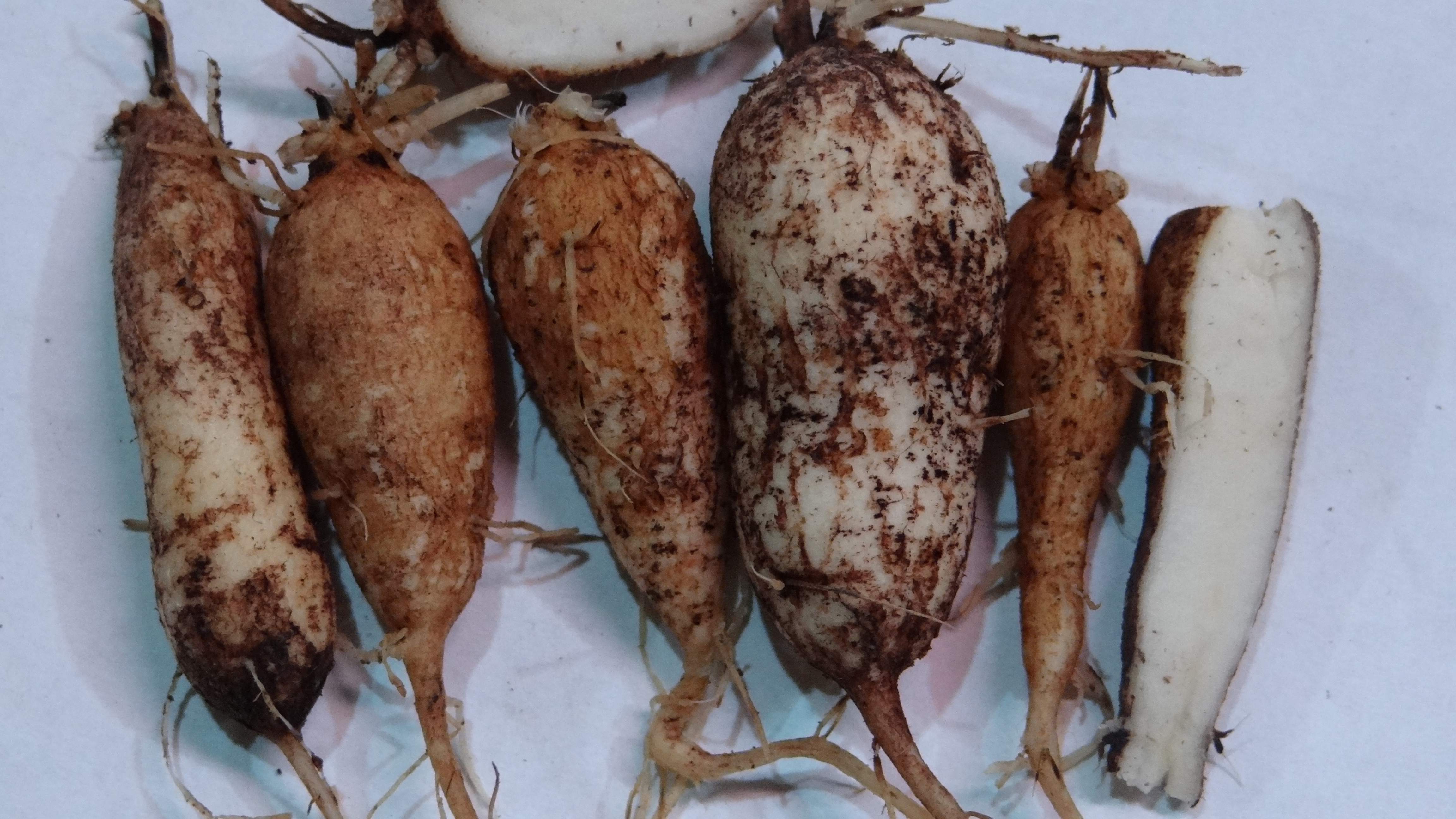
The heat tends to diminish the earth pea’s growth and by August and September it pretty much goes dormant here in southwestern Michigan. This is probably related to its alpine genetics and adaptation to cooler locations. It produces a few seed pods every year with very small peas about the size of a BB. I can easily see the earth pea being used in orchards and permaculture plantings. The tuberous pea is long lived, delicious raw and easily digestible. There is a question still that some want to know more on the compounds within the tubers to be sure the selection process makes it safe to eat in large quantities. There is no evidence of toxins found in its chemistry but it should be looked at if you plan to feed it to everybody and not just anecdotal evidence. Another aspect that is being considered is increasing its yields. There is at least one company breeding it hoping to release a new patented selection of it. I purchased my seeds from J.L.Hudson, Seedsman. This particular species is not easy to get seeds like normal peas. There is some genetic variation in the progeny. Ideally you would like a thousand seedlings to see its range of diversity. A thousand plants paints a picture with lots of details. However, my guess is even a few seedlings are uniform enough to cultivate without selection. It would be ideal if you could buy a fifty pound sack of seeds and field plant them just like…….PEAS! Yes. Hard to believe I know. The image of my tubers above show the largest ones I have found. In the meantime, I will snack from time to time on my crispy tuberous peas and wonder if I am the only one tasting this delicacy and how I can share this crop. One seed at a time would be ideal.

Safety First On Wild Foods and Plants That Look Similar

Many years ago a neighbor farmer of mine who raised beef cattle and was a strong vegetarian and Seventh Day Adventist told me a story of his family reunion and the highway peas. He and his ‘Uncle Bob’ were checking out his garden and near the fence line he had a nice planting of highway pea. His uncle started snacking on them in great abundance. He consumed a few but told Bob that it was probably not a good idea to eat them at all as he had heard they were poisonous. In the meantime, his uncle ignored his warning and told him how could anything taste so good be bad and likely many animals consume them too with no apparent effect. This of course was a huge problem filled with deep potholes of ignorance. After calling the ambulance and having his stomach pumped he did bounce back from his poisoning. It was fortunate he didn’t decide to tough it out and got treatment. I used to jog by his garden and perennial hedgerow of peas and every time I thought of their beauty and fragrance. I was never tempted to snack on a few. I am sure on future family reunions someone brought up the “Uncle Bob Moment” of the past. Maybe someone with a sense of humor layered a whole bunch of shucked peas on top of the salad as a reminder. Well I guess that is just me thinking aloud.

Great Lakes Beach Sand

Enjoy. Kenneth Asmus

Great Lakes Beach Pea
Posted in Diversity Found, Ecology-Biodiversity-Integration | Tagged , , , , | Comments Off on The Earth Pea

The Shape of Oaks To Come

“Plentifull” Oak An extremely productive oak tree with large acorns which drop free of the cap. This seedling was found in one of my seed beds with clean foliage and vigorous growth.

I’ve always like the description of the oak genus as young as evolving. When horticulturists make selections from oak trees they are strictly ornamental in nature and usually columnar in shape. It is old and devolving in terms of our use of the oak tree as a crop tree. No one is considering creating an orchard of oaks for acorn production. I am sure there are a few brave individuals out there doing that. Meanwhile, the use of the acorn has taken on a new life as people begin to discover its use from wild trees. This has proven to be beneficial in terms of acorn awareness for human food. The selections I have ‘bred’ and selected over the last forty years are very good in terms of yields and improvements for the edible acorn. Yet on applying them on a broad scale in some way has not come to fruition. Why is that? The whole thing really revolves around experimentation and not implementation. I mean what are you going to do with an acorn? This is a bigger question than you might think. The acorn is widely available as wild trees and there is a whole market available in terms of woody plant seeds. But there is no market for orchard grown acorns because there are no orchards. I had developed very good cultivars for orchard production. What was needed next was specific processing techniques for larger volumes of acorns from specific varieties. As time went on I began to see a light into this production scenario. To explain it to others was equally frustrating. There was the native only philosophy and then there were the feed and hunt the deer philosophy and finally the feed the hog philosophy. Each of these ideas on their own are weak and to me are a waste of time. I am focused on feed the human philosophy with acorns as a source of healthy food directly to Homo sapiens. Yes. Acorn pancakes. To me this is the future of the acorn with no intermediate steps.

For many years, I grafted some of my selections and was excited to offer them in my nursery. They were expensive and difficult to produce so I contacted another nursery on the west coast who had the resources and expertise to do the grafted oak trees. My rate of success was low rarely exceeding 30 percent takes. It turned out that all Quercus scions or trees are prohibited to export out of Michigan to the west coast due to oak wilt disease. I had the thought that I could have my nursery and land inspected for the disease. I asked the state and they told me I would need to have the whole county inspected. It was very expensive and time consuming and no guarantee that it would be allowed by other state officials in other states. One told me that oak firewood is likely the main vector from mature trees not little twigs like my scionwood but because it is live wood it too is banned. Between the condescending attitude of the other nursery owner and the state officials I bailed. I have hopes, I have dreams.

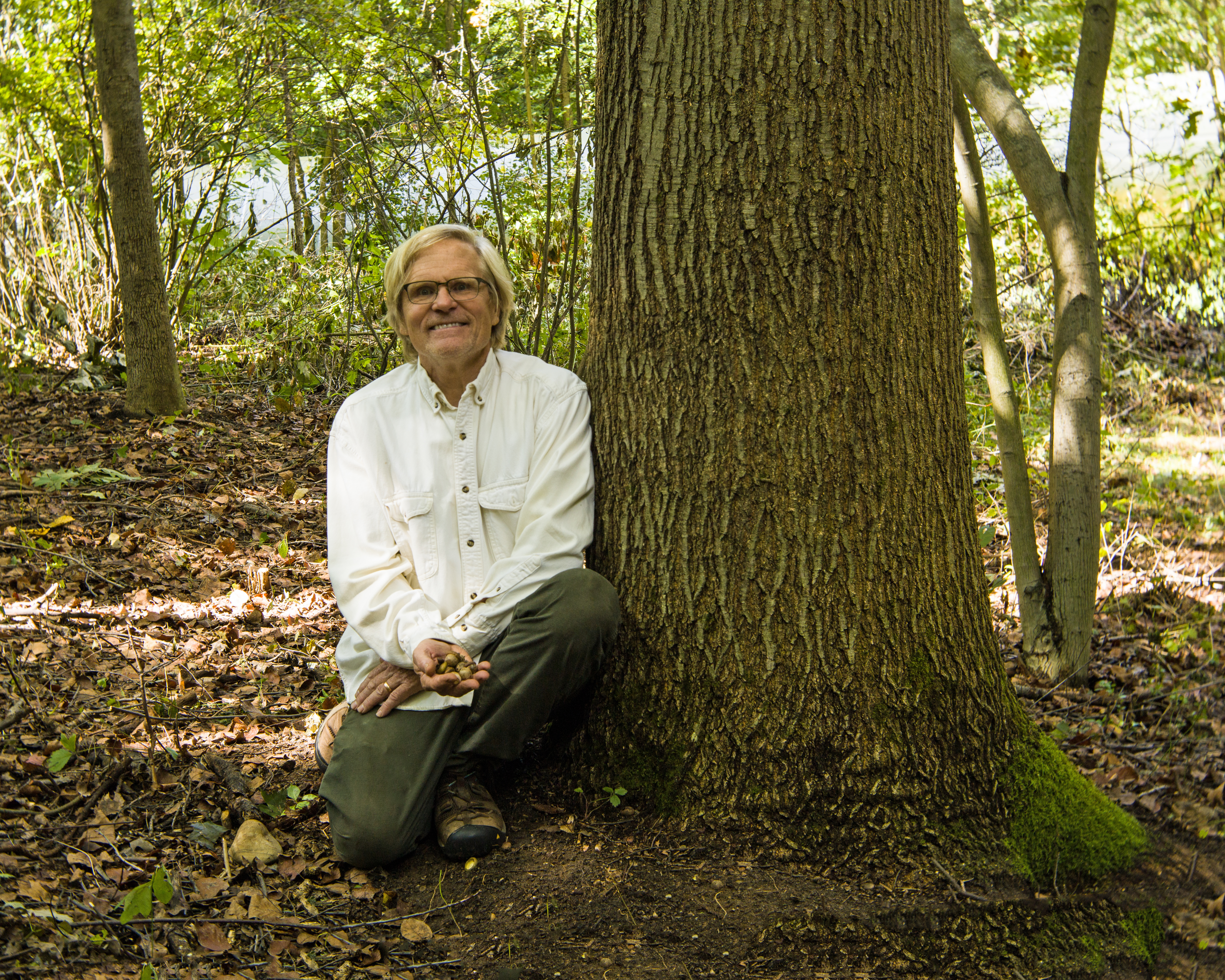
For me this image of my empty wheelbarrow reminds me of hauling the sawdust up to the top of the hill and spreading it under this wonderful English and white oak tree. It brings back memories of hard work along with how much there was to gain and learn from the world of oak trees. This image tells a story of an oak as a crop tree. The wheelbarrow is empty. The tree is full. I am going to harvest the acorns now and place them in my empty bucket. The harvest can only bring benefits of which go directly to you and hopefully future generations yet to come.

Plentifull Oak acorns developing.

Posted in Ecology-Biodiversity-Integration | Tagged , , , | Comments Off on The Shape of Oaks To Come

The Brassica Forest Comes Alive

Tree collards are naturally a perennial brassica. Its perennial nature can be harnessed as both a seed and foliage crop even in cold climates.
Tree collards for seed production were always low yielding seed producers until recently. It takes a bit of cultivation to find the right plants from the right selection to produce seeds. In this case, it was the last seed I had of the ‘MIchigan’ collard. This seed production will aid in producing a full zone 4-5 tree collard that is both winter hardy and tastes delicious as a perennial plant.

About a decade ago, I began growing tree collards from cuttings and seeds from The Tree Collard Project in California. I also purchased seeds of other types of brassica from Chris Homanics, Joseph Lofthouse and Southern Seed as well as J.L. Hudson, Seedsman. I found one company to ship me tree collard cuttings to and rooted those in my garden at home. These seed sources allowed me to peek into the window of what is called land races or grex. I was not aware of this type of breeding at all. It was very similar to my means of selecting woody plants and creating populations. The tree collard group has an interesting history only because it is normally clonally propagated and came from the slave ships from Africa. As time went on, the plants continued to flourish in the African American communities and spread from there. I had very little knowledge of collard but I had a great way to test for hardiness. I would grow the plants in pots in one of my polyhouses and then leave the end open for wind to penetrate it. This would reduce populations of many tender plants very quickly. Michigan is a good testing ground. I would still water the plants in December and again as early as possible in March. I did not sell collard plants for very long but eventually after a particularly brutal winter, sorted out the remaining plants after three years. There were not many left. One plant from the Tree Collard Project looked spectacular. I decided to keep one individual that had grown two leads over six feet long and was not bothered by the minus 27F that winter. As I cut it up using my hand pruners, I was surprised how hard the stems were. I put the cuttings into a large 30 gallon grow bag and moved it to a permanent polyhouse. When it would flower, I would move it outside in the open to get the pollination it needed. This was ideal and the plant did produce some seeds but not many. I took a few other plants and moved them outdoors under a chicken wire mesh to protect against deer and groundhogs from foraging. Those plants also produced some seeds, but they too were low producing. It appeared the perennial nature of the plant that I was selecting for was reducing the seed yield. I know that is some instances after flowering with kale, the plants will die. They are biennial in nature. This is an issue of selecting the right balance of vigorous growth as well as heavy seed production. Seed production for most vegetable crops is a must for diversity sake. But for the tree collard, it is not necessary as it can be easily rooted by sticking the plant in a jar of water or even directly into the soil. So why is this important?

Now instead of one in five hundred, you may find all of the seeds produce winter hardy plants. Certainly there would be variations of flavor and texture but now you have a robust population to choose from. Whether the seeds are used for sprouting, an oil crop, or an organic form of a ‘green’ drink , the perennial genetic diversity is off the charts in terms of its nutritional composition. It is not a cultivar. Praise the brassicas for that. You can harness the full range of benefits. This is the age of the tree collard. A brassica forest is now a reality. Only new seed can create that and nothing else.

Posted in Diversity Found, Ecology-Biodiversity-Integration | Tagged , , | Comments Off on The Brassica Forest Comes Alive

Too Little Too Late

The crinkly gene sweet kernel is inherent within the Ashworth sweet corn. Small but early.

Extreme environmental changes will require a major shift on how and where we grow certain human edible crop plants. Although human edible corn makes up less than five percent of all corn, it is still important to think of it as an ally of nutrition, healthy and even a solution to climate change all wrapped up in one. The Ashworth sweet corn pictured above highlights this idea of a short season crop that requires less resources to grow while ripening its crop around 60 days. Despite its smaller size, it is a selection that could be used as a secondary crop for many applications. I purchased it on Ebay. All power to Ebay, the home of things you can’t find elsewhere. I heard about this corn from reading about the late Fred Ashworth, the founder of St. Lawrence Nursery. When I grew it out, I reselected it for both pure yellow and bicolor kernels while keeping the short season part of its heritage. It was very stunted when I first did it in the polyhouse years ago filling up one 30 gallon grow bag of soil and then moving it outdoors for a while and then back to the polyhouse to ripen free of racoons. I called it my traveling sweet corn.

Sweet corn could be used in beginning tree crop plantings as multiple use scenarios before the crops begin bearing. I view it as a nutrient collector able to create healthy food in a short season area. This is a type of integration of a well known annual crop able to meet these demands in the rough and tumble world of heat, drought and fluctuating temperatures. Although the yields of Ashworth sweet corn are very low compared to Peaches and Cream, it can be used as a green manure too building up precious organic matter at the same time. The philosophy, “Its not broken, why fix it” pertains to annual crops being implemented in mixed plantings. But certainly it could play a role in our re-creation of our tree crop and orchard systems. A few have ventured into the pollinator friendly native plants. But commercially that idea interferes in many ways with current orchard practices and it costs too much to implement with “no crop sold” in the end other than the environmental benefits which is good but not good enough. It would be better to combine the ideas to make a secondary crop even if it is just a seed crop of some type. The farmer needs to be paid for his ability to role out new ideas right away from the crops he is tending both perennial crops and annual crops.

This was the reason for my fascination for short season crops. At the same time, the annual crops seed production could be developed as seed production saving time and resources. So in some ways you end up with a population of plants being selected for this localized ecological conditions.

I once met a plant breeder who worked in short season crops in northern Canada. The goal of his work was to develop short season crops including sunflower, soybean and corn. He was to create other crops outside of the major canola industry for use as oil or animal feed crops all ripening in under 60 days. In fact some of them were 30 day crops. What happened to his crops? They were shelved and never used. This highlights the importance of developing connections to the farming industry with your new crop and joining forces with others who want to make changes on a broader scale. Just because you breed something, doesn’t mean it will be used. I got a feeling there are a lot of shelved crops. To solve a crisis we need all ideas on deck otherwise it will be too little too late.

Ashworth bicolor sweet corn
Ashworth mixed colors sweet corn
Developing sweet corn selections means looking at corn that may not be perfect when you first start out. Believe it or not, this was a vast improvement compared to the first time I did this. If sweet corn looked like this people would likely not eat it. But it was delicious despite its size and formation. What you going to do? Refuse sweet corn? Never.
Posted in Diversity Found, Ecology-Biodiversity-Integration | Tagged , , , , , , , , , | Comments Off on Too Little Too Late