The Laws of Nature Are Flexible But Not in Mattawan

I do not have a personal connection of any magnitude to what goes on in the making of laws or an influencer in any way in my chosen profession or in my normal life. I am a follower. I am the guy who refuses to park in no parking zones even in off hours. I am not sure if it was my Lutheran upbringing that made me this way. Once while visiting my girlfriend (now my wife) who lived about twenty miles away, I would drive through the town of Mattawan, Michigan. It was a very small town in the late 70’s. There were no stop lights and you could drive straight through to the highway. Mattawan has a steep hill on it and it was quite a speed trap going north. I was heading south which was straight uphill. It was just after midnight and someone was going extremely slow in front of me. I needed to pass. It was late. I put my left blinker on and gunned it which put me at thirty miles an hour. As I glanced to my right, I noticed it was a police car. Whoopsie. Well no turning back now. Then I realized another car was in front of him and there was no room to squeeze between the two of them. I continued with my pass. Once again I glanced to my right only to realize it too was a police car. It was too late now. As the lights went off behind me, I immediately tried to figure out what I did wrong. I used my turn signals. One of the officers was very upset for some reason. He wanted to know what sort of shenanigans I was up to. He asked to look into my trunk. Why not? I’m Lutheran. When he opened the trunk, you could see his eyes light up with anger. I had firewood in my trunk. It was a Chevy Nova so not a surprise and thanks to my dad, a huge stack of Scientific Americans and National Geographics. It was like a granola mixture of wood and knowledge back there. Hey, everyone uses their car in Michigan to haul firewood and pertinent scientific literature. Right? The whole thing was going south after the trunk incident. Finally, after some time, they let me go home without a ticket. As time went on the hill in Mattawan became a legend. My customers, my parents, my employees all got pulled over and issued speeding tickets. We would warn people about this on a map we would send people in the mail when they picking up plants from my farm. The laws were not very flexible there and seemed a bit unfair. So it was in Mattawan.
Nature on the other hand has a whole different level of employment of laws. You can violate them all and appear completely immune to violations. You can speed down that hill at a hundred miles an hour and nothing will happen. You may not notice your errors until much later if at all. You can do things that can bring down a whole nation like build an atom bomb or damage the food system in an irreversible way for generations to come like GMO foods. Such is the case for trying to use fragments of scientific knowledge to live more in accord with the laws of nature. It is not like gravity or some other obvious effect. It is much more subtle and beyond our comprehension because it is so complex. Even if we knew all of the laws, we would likely just sit in our house afraid to go outside and violate any law. Yes. We would become super Lutherans. Just poking fun at myself.

In the beginning of my nursery, I used a popular weed killer. I was told it was safe. I was not happy with that answer so I contacted a soil expert who was very familiar with soil remediation and how to reverse bad things that happen to good soil. He suggested a tank mix of humates when I sprayed. The humates are a naturally occurring form of humic acid which is said to increase biological activity in the soil as well as aid in breakdown of materials both organic and non-organic in the soil. It was like a concentrated form of compost tea. I used his form of humates because they were better than the ionized versions. They actually dissolved in water. I was not sure this was true either, but I accepted it as a means to solve a problem I was creating by using this toxic well known weed killer. Even today, I am not sure it worked. But for sure there were other negative consequences of my actions including amphibian deaths, micro nutrient effects and shared toxicity of non-target plants in my plantings. I also became more conscious of my own health too. I finally quit this and found other ways to do the same with less effort and cost. The plants grew even more vigorously with support of these new laws of nature which focused on soil and plant health. Everything benefited and thrived including me.

Every now and then I have the thought, how could I be so stupid not to see this? Well I didn’t see it. That was the issue, ignorance. But then is ignorance an excuse for violating the law? No. But then I am not going to buy a red Ferrarri and head north at hundred miles an hour through the town of Mattawan flipping the bird to the police officers at the bottom of the hill hoping I don’t get pulled over just to see what happens. I know those laws.

Enjoy. Kenneth Asmus

Posted in Ecology-Biodiversity-Integration | Tagged , , , , | Comments Off on The Laws of Nature Are Flexible But Not in Mattawan

It is A Good Beech On A Shore of A Great Lake

When I started my business, I really made use of a Pentax camera my parents bought me when I graduated from college in 1979. It was a perfect gift for me. As a recommendation of a high school friend of mine who was a fabulous photographer, I began using the Kodachrome 64 slide film. It was such a joy for me to capture nature in a way that I experienced first hand. It worked. Like taking a hike on the Lake Michigan shoreline, you never know what you will find. On another level using the images for my business, I had no idea that people would critique them related to botany and taxonomy. Not F-stop, shutter speed or focus critique. The American beech image above was taken on a bluff overlooking Lake Michigan. I used it for a catalog cover in the 80’s which was sent out to my mailing list of a few thousand people. It was one of my first full color catalog covers. There was one person who seemed desperate to tell me that this was not beech because beech has a smooth bark. I tried to tell him that the wind coming off the lake and the location created this effect and that some beech trees have very unique bark patterns. There is variation. Because he only saw beeches a certain way, there was no way to convince him otherwise no matter what I said. I was kind of shocked he had that much disbelief and really was convinced I was wrong. Little did I know this type of belief system related to plants became more pronounced as time went on and images were more freely available on line far greater than botanical books and literature could provide. You would think it would be less. Today each plant has its own Wikipedia page and is highlighted by numerous botanical institutions. Frankly, I like that. It is amazing we have come so far identifying and enjoying nature in all its infinite glory. But maybe that is the problem. The operative word here is “infinite”. People like nice tidy categories not broad expanses of the universe of plants.

Yet, I’m here to say the botanical critics are alive and well today. Almost always they are wrong and misleading with some more than others. But you cannot say that. The terminology used to label invasive plants is off the charts wrong. But you cannot speak up and expect someone to listen. I am not talking about mislabeling of a plant in the greenhouses or customer service issue. Starting in the 90’s I started to use the luke warm and nice response,”I will acknowledge but not confirm or deny your view” philosophy. It was really a huge waste of time to try to change someone’s mind. Sometimes the emails were long winded and highly detailed. Sometimes it was a letter in the mail box written in pencil. Either way I was happy they reached out to me and responded in some way. Personally, I thought it was always better to assume I was wrong and willing to check it out. Nature is infinite and you never know what you will find. It’s a good thing to know how people feel on an emotional level. But I would never respond in a way that said “you are completely wrong (or nuts) and here is why”. Never that. But sometimes it was tempting. I remember thinking on one of the letters that the individual writing this was using information from her peers. This was her confirmation of sorts of her knowledge of plants. Could she abandon that easily? I don’t think so.

It taught me a valuable lesson that our understanding of nature is shaped by what we read, what we understand and more importantly what we believe.

And please don’t etch that into the beautiful smooth beech bark.

Enjoy. Kenneth Asmus

Posted in Ecology-Biodiversity-Integration | Tagged , , , | Comments Off on It is A Good Beech On A Shore of A Great Lake

Who Art Thou Number 909?

When I first starting growing oaks in bulk for the conservation and mail order trade I was always on the look out for acorns. It was by luck that I took a wrong turn on a road I had never been down before and found a strip of English and pin oaks along a quiet neighborhood road near a middle school. For some reason someone decided to alternate the two trees in the curb lawn. I used this as a source of acorns for a while and told another nursery person about it. It turned out that this seed source like all of the English oaks including the columnar ones were not the most adapted tree for the Michigan climate. It did have massive acorn production but it was very susceptible to mildew which reduced its life to under 25 years of age. For an oak tree, this was not good. Except for the pin oaks, these school curb lawn trees are now long gone, but it did start me on a path to find resistant and healthy trees in its population. Here is how that went down.

At my farm, I would plant in slightly raised seed beds and fill them with acorns. With a level flat headed rake and an aluminum landscape rake, I would create six rows in a four foot wide bed and then after tamping cover them in sawdust. Prior to planting I would super till the soil so it was extremely soft. I would then hand toss the sawdust over the beds covering them smoothly. Like powdered sugar on a cookie, I got pretty good at evenly tossing sawdust using a scoop shovel. As the trees grew for a few years, the mildew would eventually get worse and encase the leaves to the point they were completely white. This reduced the growth dramatically and weakened them to the point they would stop growing and die. This particular seed source was very bad plus it did not produce hybrids to any extent. Keep in mind the Red Group pin oaks would not cross with White Group English oaks despite them being next to each other. The distance is considered too far apart genetically. Or so I was told.

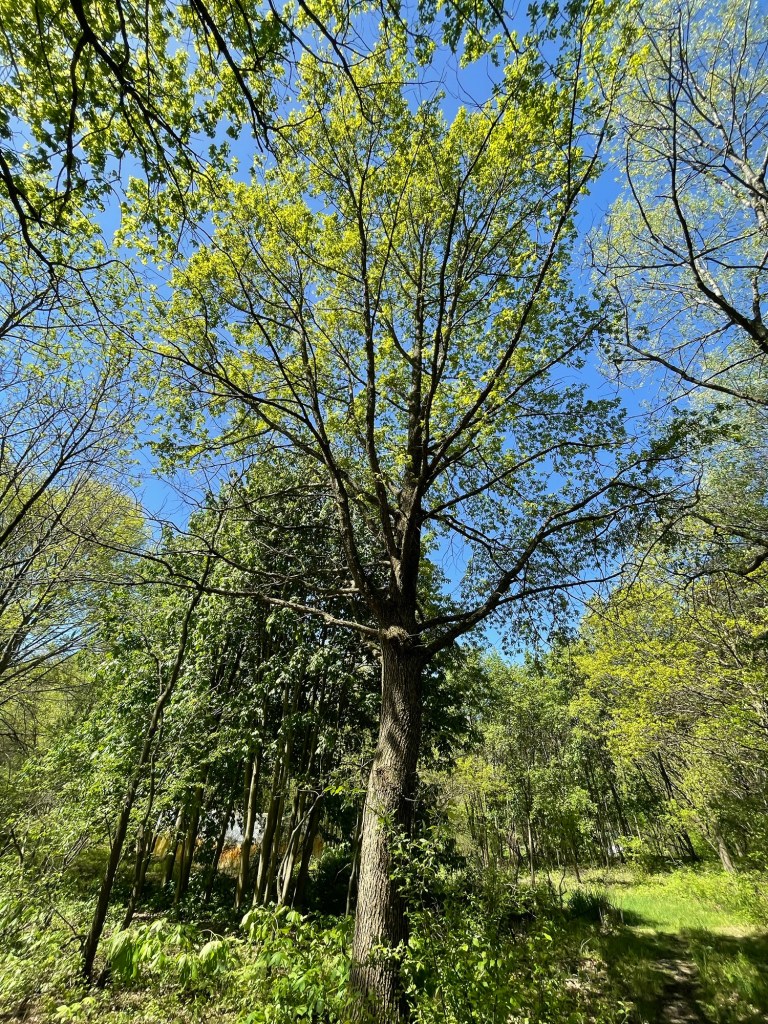
As time went on there was one seedling that stood out. It was less than one in two thousand in this particular bed. It was completely immune to mildew so its bright green foliage, fast growth and unique wide branching pattern made this tree jump out of the seed bed. I moved it about 100 feet away straight up a hillside in almost pure sand. It was from this location along with its Procera oak (robur x bicolor) cousin to continue its life uninterrupted. This was the beginning of the 909 oak with its forestry tag numerical identification.

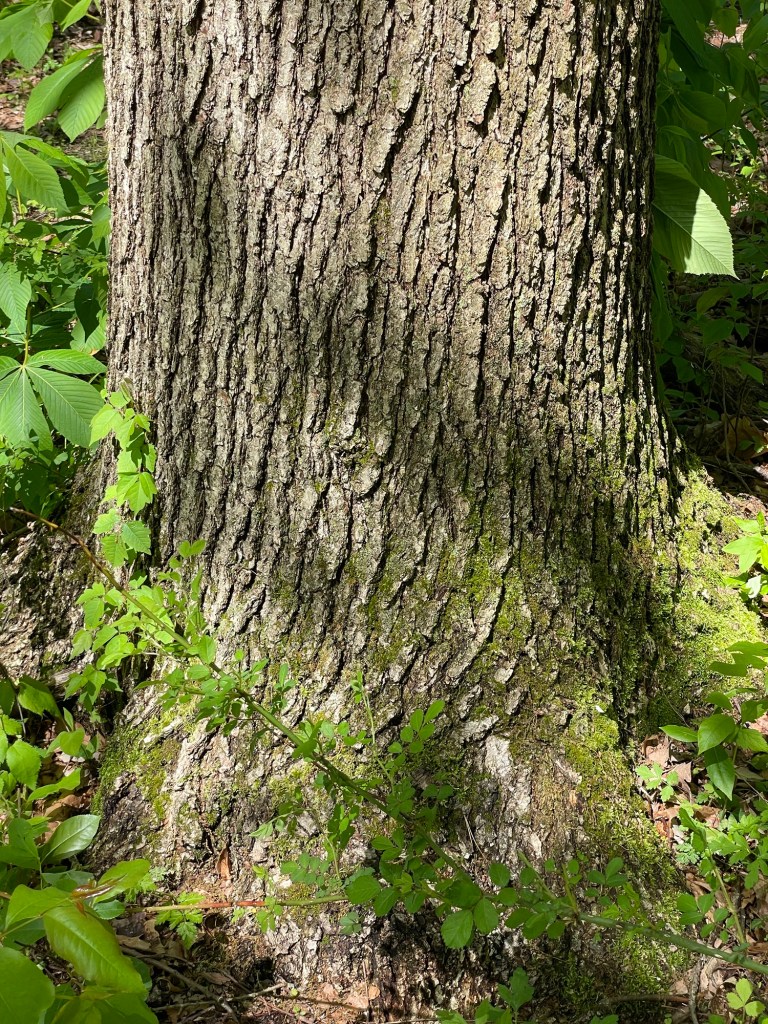
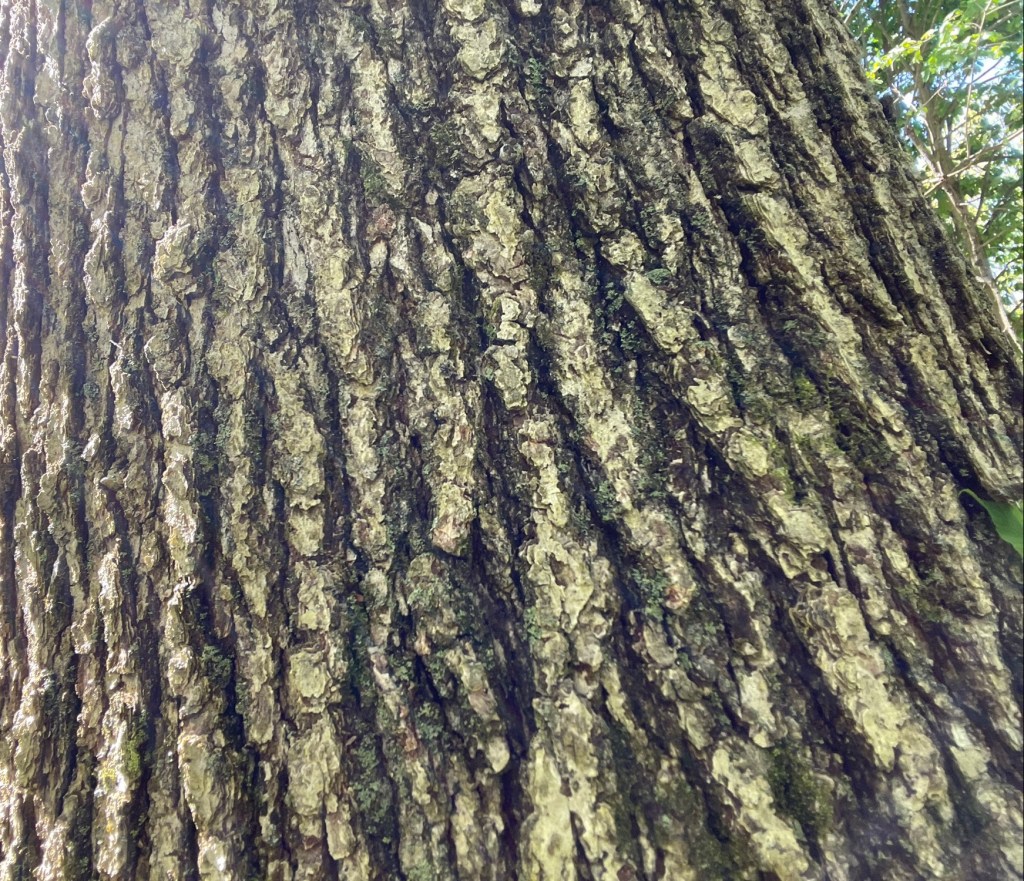
909 Trunk

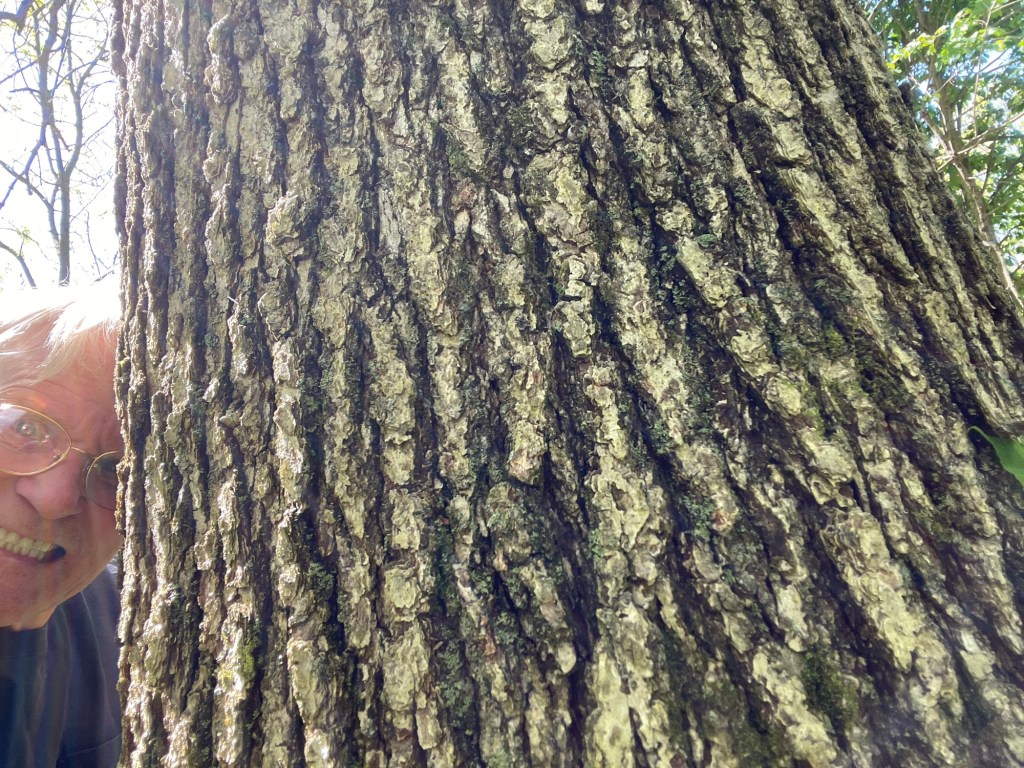
As time went on, I began pruning the tree and realized that the branch pattern matched a little of the pin oak. The branches went to a 45 degree lateral from the trunk and secondary branches hung down. The leaves were more elongated than the other hybrids I had. It did not produce acorns which was odd. Finally after twenty plus years a few acorns dropped and I grew those to see what the progeny was like. 909 did not disappoint as the seedlings were also immune to mildew and quite vigorous. They had pointy tips on the leaves like some of the red oaks too. I have yet to see acorns produced since then despite the possible crosses with nearby oaks of many species and hybrids.

909 Bark
909

I don’t think there is anything more I can do. I’m throwing in the towel. I pruned around it and will remove some of the dead lateral branches that are now too shaded. The tree continues its strong growth upwards and outward. Today I measured its girth and found it to have a two foot diameter trunk. The lack of acorns is likely beneficial in terms of its growth. There are many nearby oaks that could pollinate it but apparently don’t as I have not seen acorns again in twenty years. The off the chart trunk size and the growth habit make it an ideal oak from a clonal standpoint. It would be good if it was rooted. I would love to try that. It would good if it was named and propagated. 909 is not a particularly enticing name for any tree. What about “Bob”? It would be good as a shade or street tree existing in the curb lawn where few things flourish. Bob could make it happen. It would be good if I just enjoyed the tree and stop questioning its hybridity or anything related to its taxonomy. Classification is not joyful to begin with. It is not like ancestry.com and finding a long lost cousin. The mystery of not knowing is exciting and uplifting for me. It would be best if I did nothing. I would just enjoy the tree. That is what I will do then. I will explain it to others if they visit and show them the marvels of nine-oh-nine. That is it.

I would start the conversation with, “Hello 909. Meet……….”

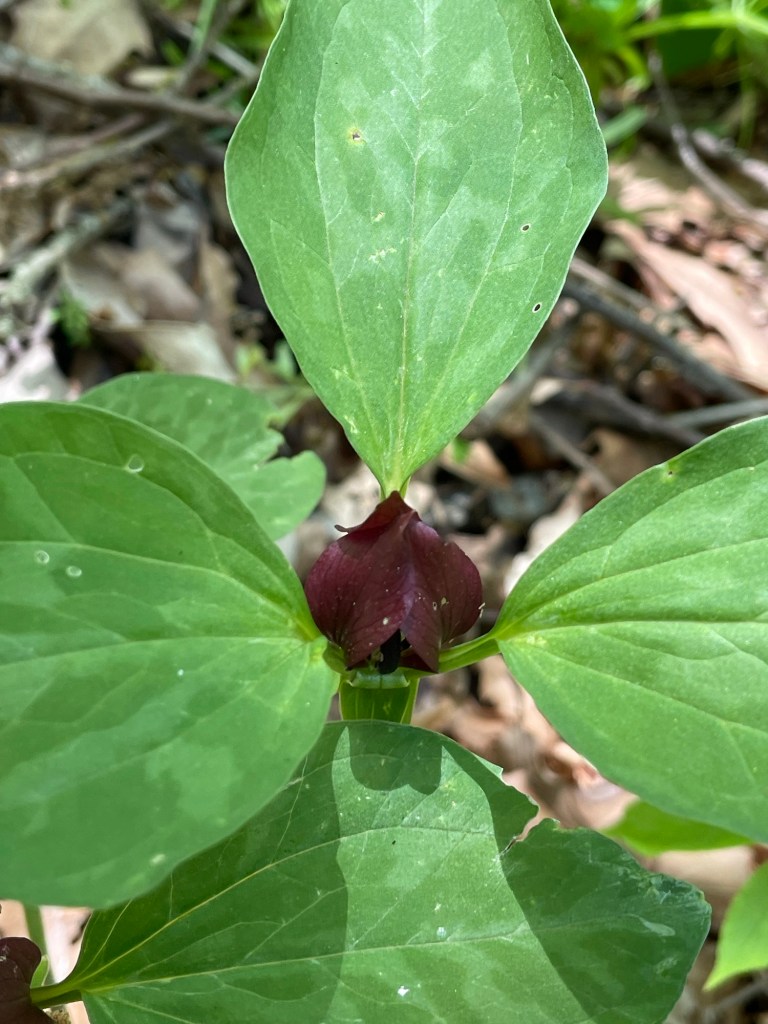
Trillium near Bob.
Posted in Ecology-Biodiversity-Integration | Tagged , , | Comments Off on Who Art Thou Number 909?

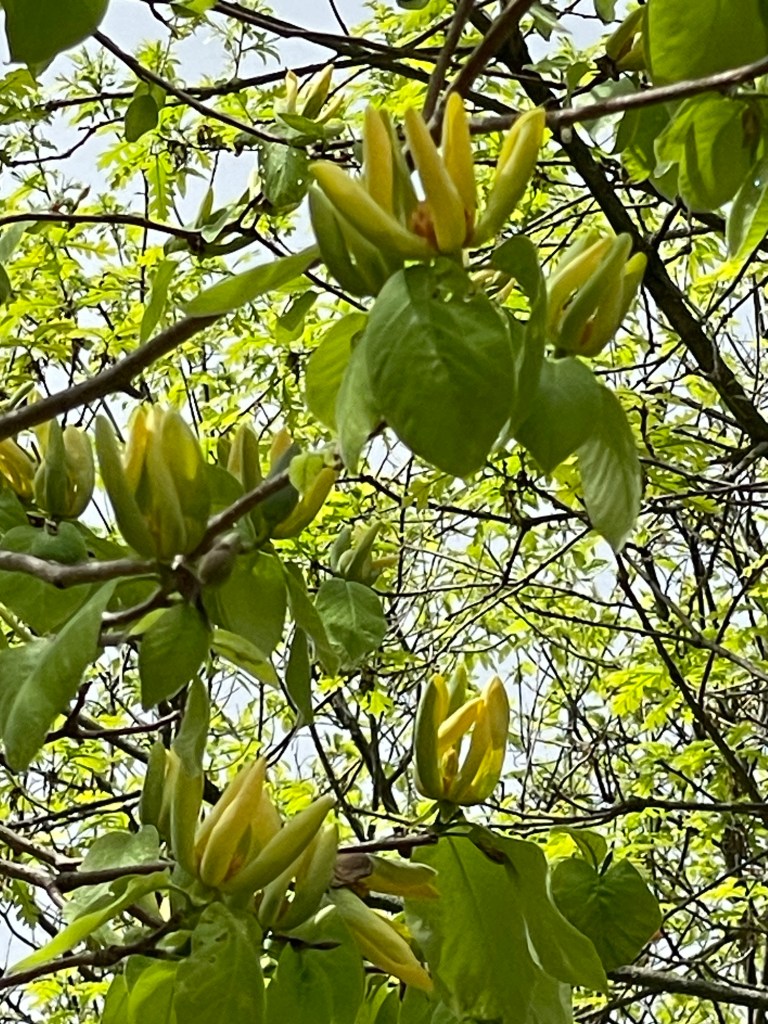
Lessons Learned from the Cucumber Magnolia

Trying to get seed of certain species of trees can be very time consuming. The Cucumber magnolia, Magnolia acuminata was one of them. It was very perishable. All the commercial seed companies treated them like lentils. You can’t soak them overnight and expect them to come alive. From harvest to shelf stable is possible but no short cuts are allowed. The seed needs to be cleaned immediately after harvest. The fruit pulp surrounding the seed is a fragrant and sticky latex like juice. For me I used a lot of Dr. Bronners soap as well as several rubs on a hardware screen with just the right pressure without cracking the thin seed coat. It was a joy to see the black shiny coats after washing in my stainless steel wash pan. It was like gold because it could not be attained any other way.
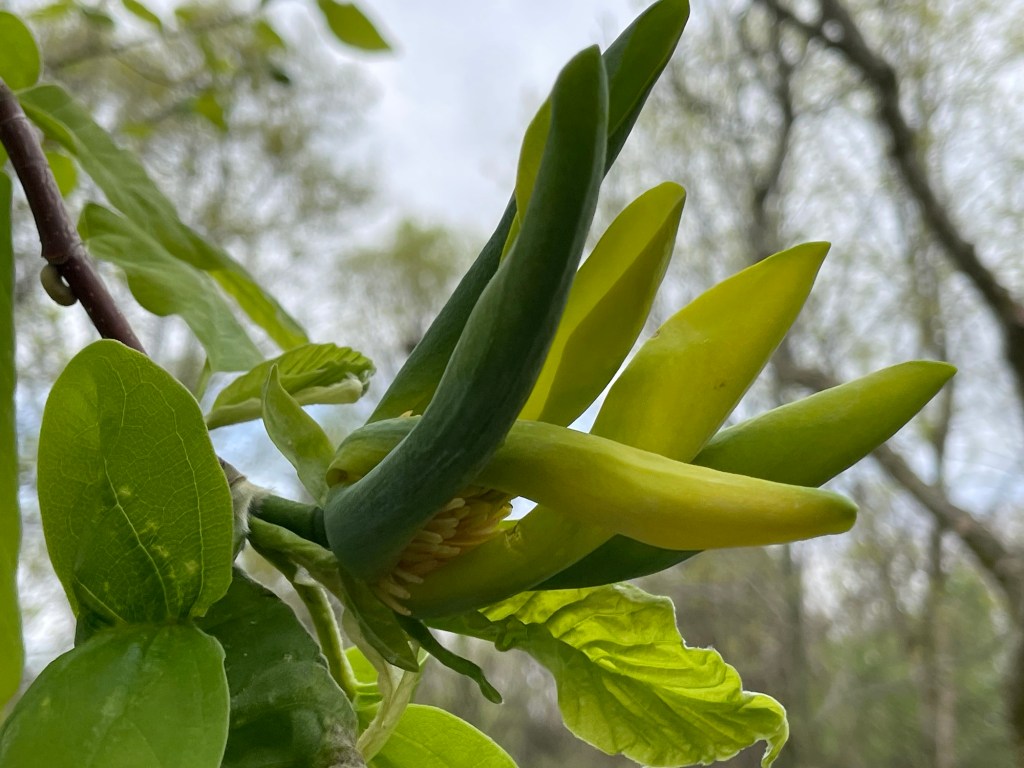
Each individual produces unique flowers.

To add to the value of it was that the trees are not common in southern Michigan. Only cultivated trees are found and they are few and far between. It is not an ornamental tree produced by the nursery industry. Just by luck I spotted a monster of a tree in a yard near Pawpaw, Michigan on a lake front home. When I would drive by I would always think “so it is possible”. I kept this image in my mind as I looked for other sources of seeds. I really wanted to get it established at my farm and use the trees as a seed source for my nursery. This was what I called my ‘wind swept’ period. I would plant trees in my open field and hills and wait for the results after wind and drought reduced most to dried sticks. Some would survive. This was the case for the cucumber magnolia. It was drought sensitive and needed a rich dark black organic loam not the sand rock combo that I had. Even tree tubes and mulch were not much of an advantage.

The flowers usually miss frosts.

It was fortunate there was a small tree in an arboretum near me that someone had stuck out in a field. This arboretum was not managed other than mowing once in a while. It turned out that someone on the board had a landscape company and would from time to time plant trees. The specimen was about 30 feet tall but weak growing with dead limbs. It produced the cucumber shaped cones with a few seeds in each cone. It was rarely fertile but enough to get me started. Eventually I was led to the Michigan champion tree near the Indiana border. I was able to collect seeds one by one off the lawn. The owner smiled as two of us sat down and spent several hours picking seeds. There was no way to climb it. They were very nice to let us do that. I sent them trees back hoping they would plant them.
Ashe magnolia seeds from my farm.

Now I had a robust population all from one three foot diameter tree hardy in Michigan. In the meantime, I could sell the trees and begin a more robust collection. I joined the Magnolia Society and found that several other individuals had located trees of this forest giant and its cousin subspecies subcordata. Subcordata or Yellow Cucumber magnolia was considered smaller and more compact in shape. I grew them all. As my forest took shape so did the Cucumber magnolia. Now there was a wind reduction aspect to my oaks, walnuts and hickories. Each tree was surviving and growing nicely. The roots of the trees were going deeper and some of the trees began to fruit. This process took twenty five years to fully realize. This was one of the longest tree crops in terms of years to fruiting. The juvenile age to maturity is long passing even hickory. Even today after thirty years, I still have a few very healthy trees that flower but do not set seeds. They are waiting for the right time. Any time, it will happen.

The gold in the pan is now cucumber magnolia seed. With its bright orange seeds looking back at me, it represents a wonderful forest giant that holds a place in my mind as a tree to sit in its shade and quietly think, ‘so it is possible’.

Posted in Ecology-Biodiversity-Integration | Tagged , | Comments Off on Lessons Learned from the Cucumber Magnolia

When Trees Move

I created a small garden that was once a parking lot for a motor home. The previous owner pushed out the soil to the side and filled in gravel as a base. When I moved into the home, I decided to create a garden in this opening which was wedged between the black oak and sugar maple forest. Rather than move the gravel, I hired an excavating company to move all the soil back to cover the gravel. Most of it was sand. I then planted a thick stand of rye grass. This was the beginning of my secret garden. It was here I began filling it in with some of the odds and ends of my nursery. This location created an area where sunlight was limited. Many trees like the pawpaws and Tripetela magnolias adapted and grew to the light. I had one tree left of the Ansu apricot and it was planted in the most sunlight laden area. For many years it grew straight as a rocket but then suddenly stopped. For one year there was little new growth. What happened?

One day while taking my daily walk in the garden I noticed the tree had moved. It went from straight and upright to a 45 degree angle moving the crown 20 feet away to a new location directly west INTO the prevailing winds. There was no wind or rain the day or night before. It just moved. It leaned all at once to a new location. Upon closer inspection you could see it loosened its roots on the east side of the trunk. This would make it possible for the lean to occur. It was not much. There was no exposed roots or a soil ball like you see when wind blows over a healthy tree like you see under high winds. The tree had moved to a new neighborhood. This one had much more light. The light is obviously a benefit but this angle is also more conducive to fruit production. As any peach grower would tell you these wide angle crotches are the most productive trees where you will have the greatest flower production and fruit set. In the case of the Ansu, it had been loosing flower production with smaller and smaller amounts every year. Last year there was only a few flowers and no fruit set. I did see one fruit two years ago, but that was the total for its life. Now that the tree is in a new location, many new events are taking place within the tree.

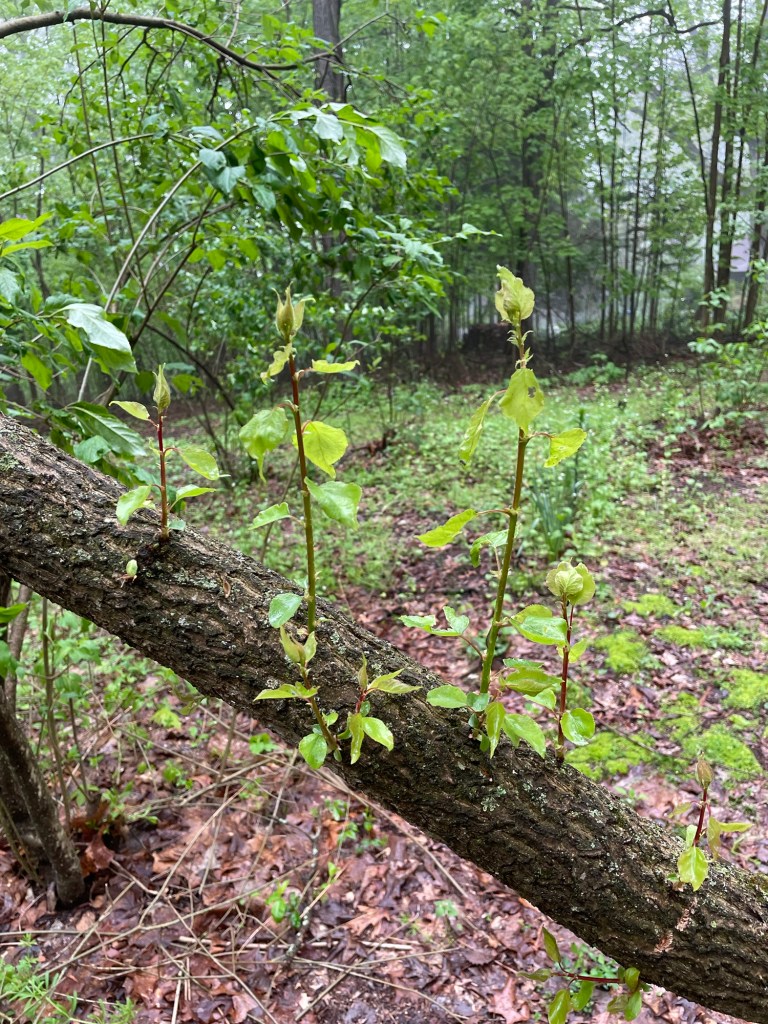
Epicormic sprouting on the trunk

The tree is now putting on a lot of new grow both in the older crown and the trunk. The crown is currently doing a sort of cluster effect of the older branches. The leaves are larger and healthier. The sprouts are occurring on the trunk where a small bend is. It then skips for another eight foot and then more sprouts form on the trunk again. It is growing more than ever all because of its move to the light. As the tree continues to grow, you can see the value of this epicormic sprouting as a means for rejuvenating the trunk and flooding the tree with nutrients which is perfect for fruiting. I will know more about this move and its quantitative effects next year when it flowers. In the meantime, I will witness this miracle of sorts and marvel at the creative order within this plant.

Clusters of growth on the old crown in more light.
Trunk aiming crown in new neighborhood
Hope sprouts and turns into reality

The Japanese Apricot-Ansu Apricot Prunus armeniaca var. ansu

This subspecies of apricot is known as a pink flowering apricot in Japan. I am not too familiar with it other than my cultivation of it from seeds I purchased from a commercial seed company. I don’t see it available today probably due to the Prunus seed ban. One tree I kept at my farm reached five feet tall was packed with lightly pink flowers. It was hammered on by deer two years ago which brought it back to ground level. Last year I mulched it and put a tree mesh net over it to prevent rubbing. I am going to use a rooting method on one of the sprouts to see if I can get two trees near each other to increase fruiting. Hope springs eternal in the world of apricots.

Posted in Ecology-Biodiversity-Integration | Tagged , , | Comments Off on When Trees Move

Relax. It’s a Lilac.

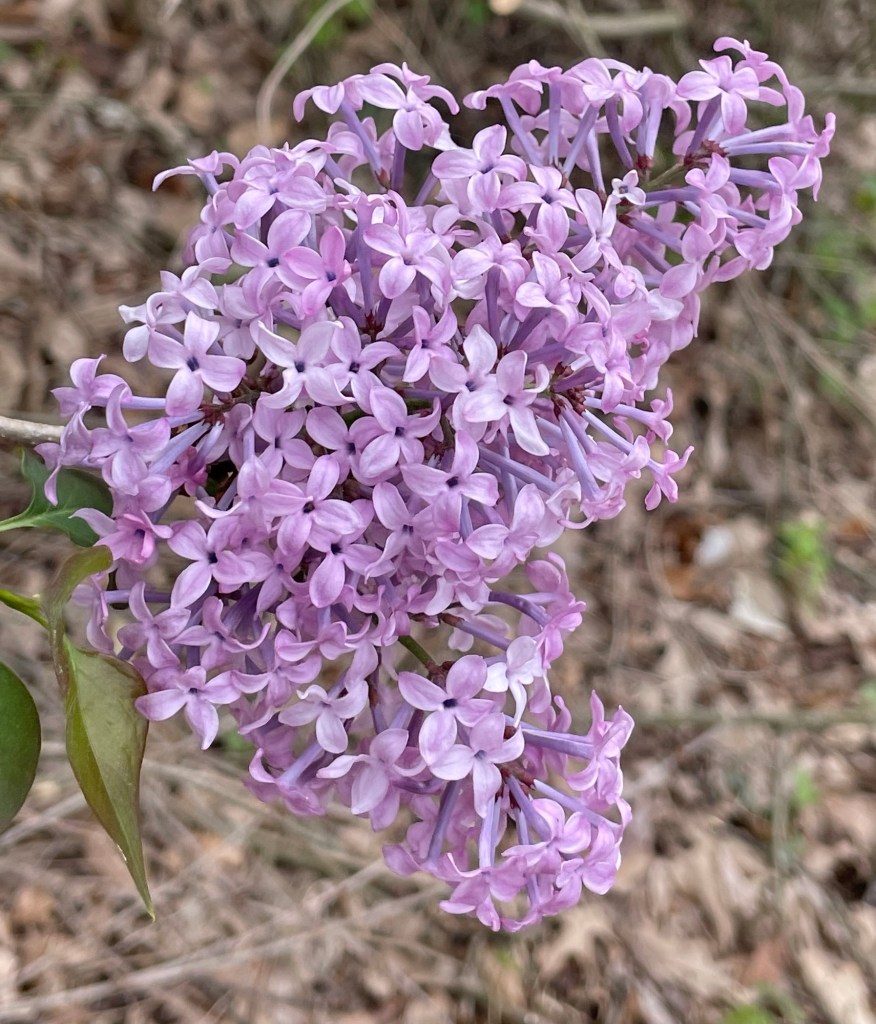
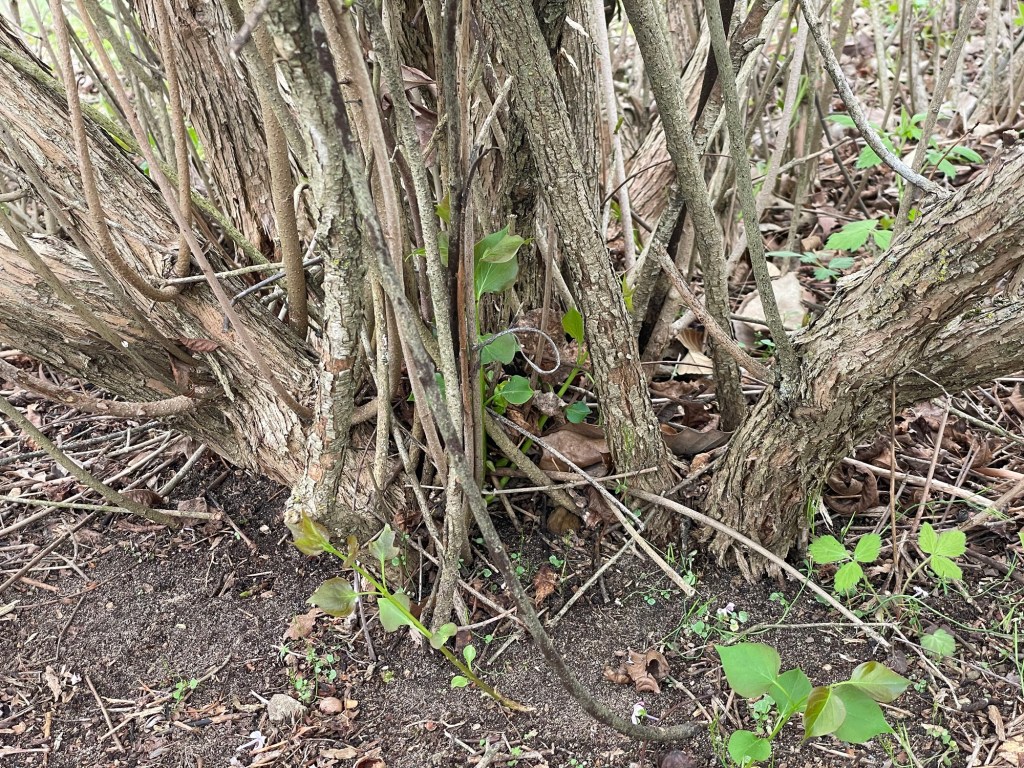
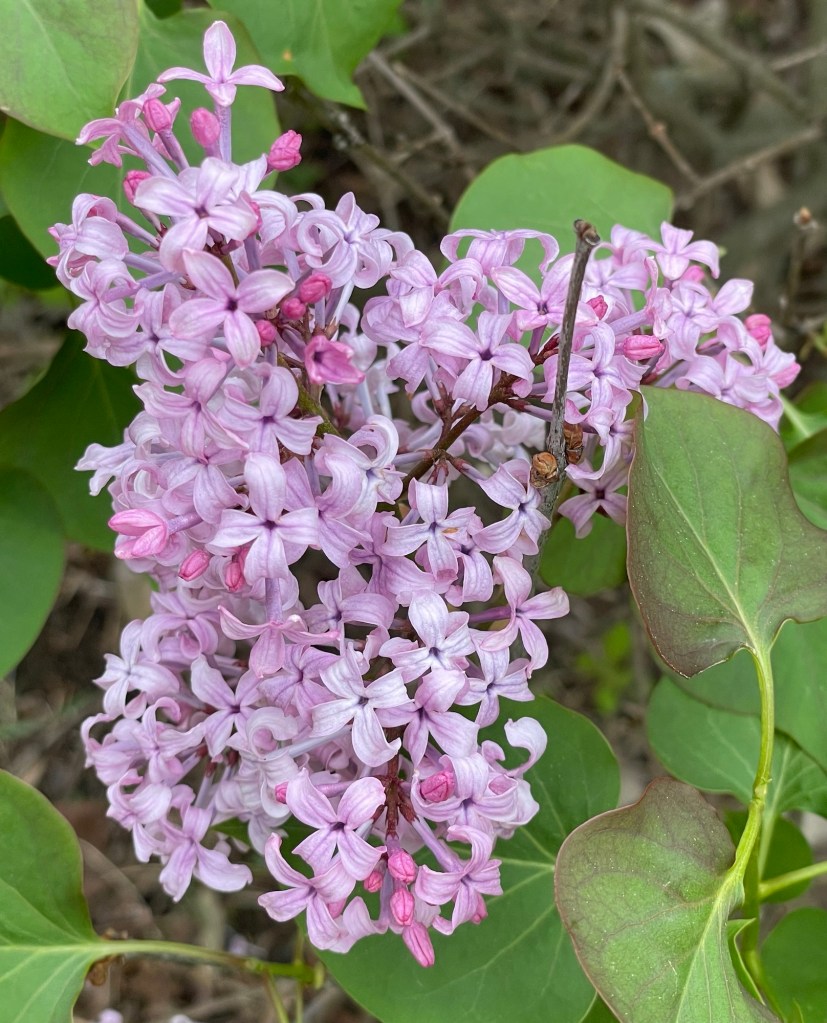
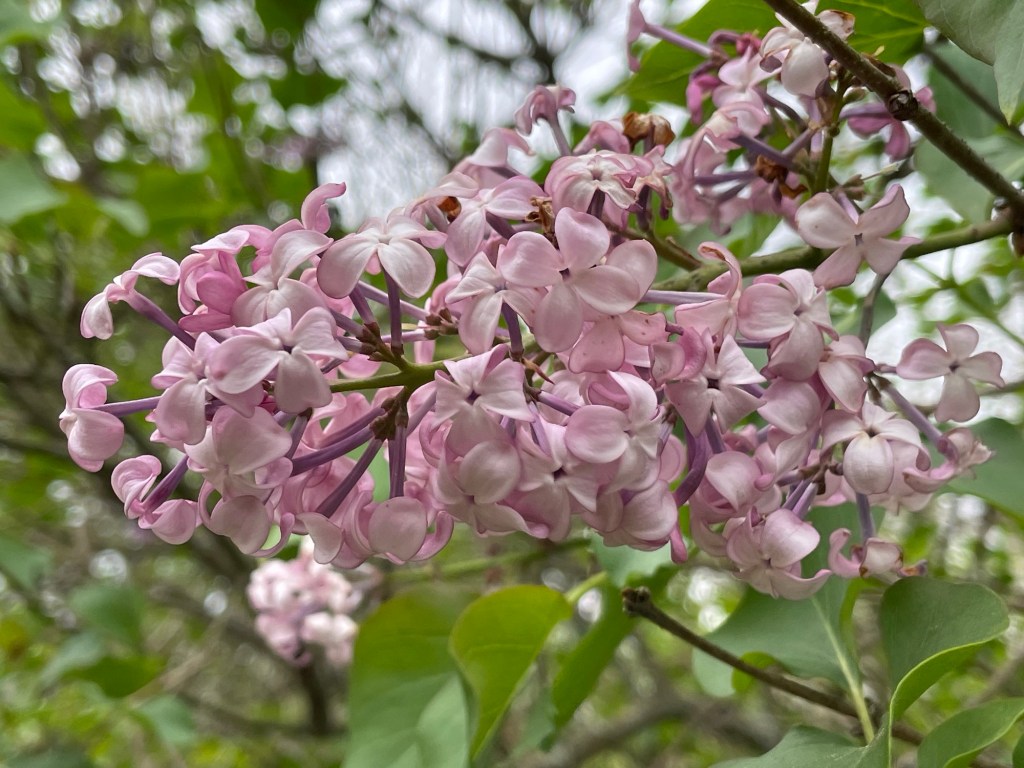
Syringa oblata -Early Lilac selection that flowered at a young age and since has been consistently floriferous.

It’s a perfect plant. Calming, soft to the touch, durable and forgiving is the lilac. You can’t say no to the lilac. Like a ballerina dancing through your home, the fragrance of the flowers relax and still your mind. You can’t argue in front of lilacs. If I could think of any one plant I wish I planted more of at my farm I would say the lilac. The conservation industry despite its current state of mind loves the lilac too and for many years it was a staple in their tree and shrub line up. Why? People like em? Yes. But it is also one of those rare genus that can grow pretty much anywhere in any soil and makes fantastic dense root masses along with vole and deer proof stems and foliage. To some extent it was used as a hedgerow plant. I noticed a long hedgerow near the tall electrical towers on a river plain yesterday. The hedgerow was still there but broken up in pieces possibly lost due to herbicide use under the towers wires.

For many years I grew lilacs from seeds. Lilac seeds are hard to find. Many are propagated from cuttings. Through seed exchanges I found many species and hybrids. Eventually you could buy commercial seed of some species and I began selling and propagating them on a larger scale when I had my nursery going. The lilac market was a fickle one and to sell the plant in a fully saturated product heavy line up was difficult. Eventually, I closed it out entirely but kept many of the selections alive at my farm running up to the top of the hills around the nursery to ‘stick in’ plants that I thought were kind of cool in some way.

Syringa wolfii Manchurian Lilac-Tall species to 20-30 ft. Fragrant.
Durable and immune to browse and voles. Extremely hard wood. Syringa wolfii stolons a little bit. Most lilacs do not stolon which are usually Syringa vulgaris varieties.
Syringa oblata seedling with full flowers and heavy yields. Fragrant.
Early lilac in Northern pecan-hickory planting. Two story agriculture works.
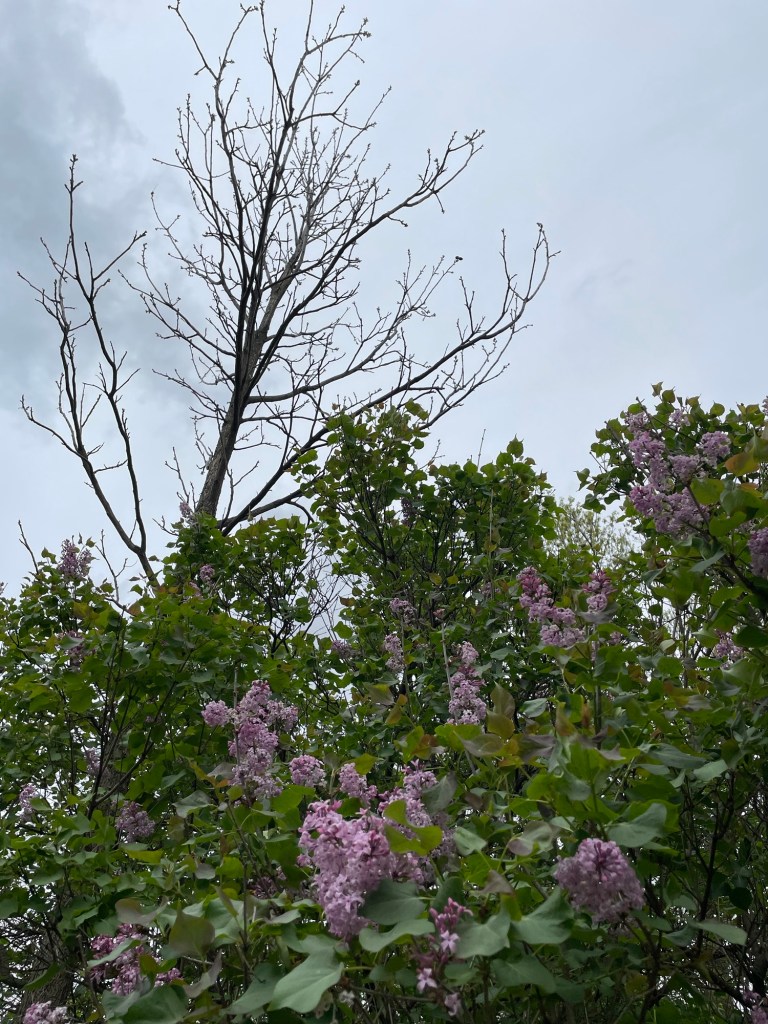
Northern pecan – Early Lilac-Top of a hill with very thin soil which is dune like in structure.
Early Lilac selection grown from seed. Full flower head. These selections were found in my seed beds and showed vigor and strong growth including dense flower clusters. Normally they are loose panicles. This could be a hybrid of some type.
Excellent soil holding ability with lilac. The roots are dense. This is at the top of a hill with very thin topsoil. A small strawberry has established here and pretty much nothing else. The dense root mat seems to prevent even roses from establishing.
Hybrid hickory on the right, pecan on the left. Middle shrubs are Syringa oblata selections left and right grown from seed found in a grow out at my farm in the nursery and then transplanted out. Behind this is Bebbs oak-hybrid white oak and Ashworth bebbs oak selection surrounded by Quercus x asmusiana Garryana x turbinella hybrids seed selections.

What is it about ecology and agroforestry that even something as lovely as the lilac is looked on in suspicion? I cannot think of one genus that so good at capturing the soil resources while at the same time allowing for trees to thrive as it sits patiently in the shade. The lilac is sweet. Ecology is bitter. Ecology needs the lilac as a means of embracing the power of global and exotic plants. Plants that can act as a sort of moderator between heaven and hell favoring heaven each time. Growth and abundance is the lilac’s MO. No herbicide is needed. At my farm the lilac is holding the soil for the oaks and for the pecans.

You may not find that it fits in with the jargon shizzle of ecosystem services, native plants and pollinator friendly plants. It is not a plant people will think will solve the climate crisis. I don’t care and frankly neither does the lilac. It will continue to perfume the air with its heaven. It will continue to hold the soil and it will quietly still those who come into its presence. In the meantime, I will look for seed set. I will share my seeds with other lovers of the lilac and think that somehow we are making a difference in the world via our Lilacian philosophy. Because unlike most ecological thinking and philosophies, ours is all inclusive. We learned that from the lilac.

Posted in Ecology-Biodiversity-Integration | Tagged , , , , | Comments Off on Relax. It’s a Lilac.

Seeds Make It Happen

One of my first connections I made with my business after graduating from college was supplying seeds to other nurseries. I was surprised at how much time that took. At the time, my little nursery was using seeds I collected from parks in town. The city parks contained massive oaks and every few years you would find me there on the ground picking up acorns one by one. When I began producing the same acorns from seedling trees I cultivated at my farm, I began to understand the value of the seeds along with the actual cost of production. It wasn’t something I planned. I was totally clueless of the seed market. To understand it better, I had many conversations with other woody plant seed collectors as well as some of the owners of these seed companies. What surprised me was that you had essentially a whole industry of seedling production from seeds collected by retired and ‘out-of-work’ people across the nation. Some people had minimum wage jobs and then used the seed collection as secondary income. They may sell to a particular nursery and then they started making calls if they found a particularly good seed tree. All of the state government run and wholesale nurseries purchased seeds. A few nurseries sold seeds if they had excess. I visited one such nursery where a room was filled with quarts of white dogwood berries all stacked on trays on movable shelving units. You were looking at thousands of hours of collection and who knows how many people. Seeing that many dogwood berries lined up like strawberries was amazing to me.

Seedling Magnolia on a campus
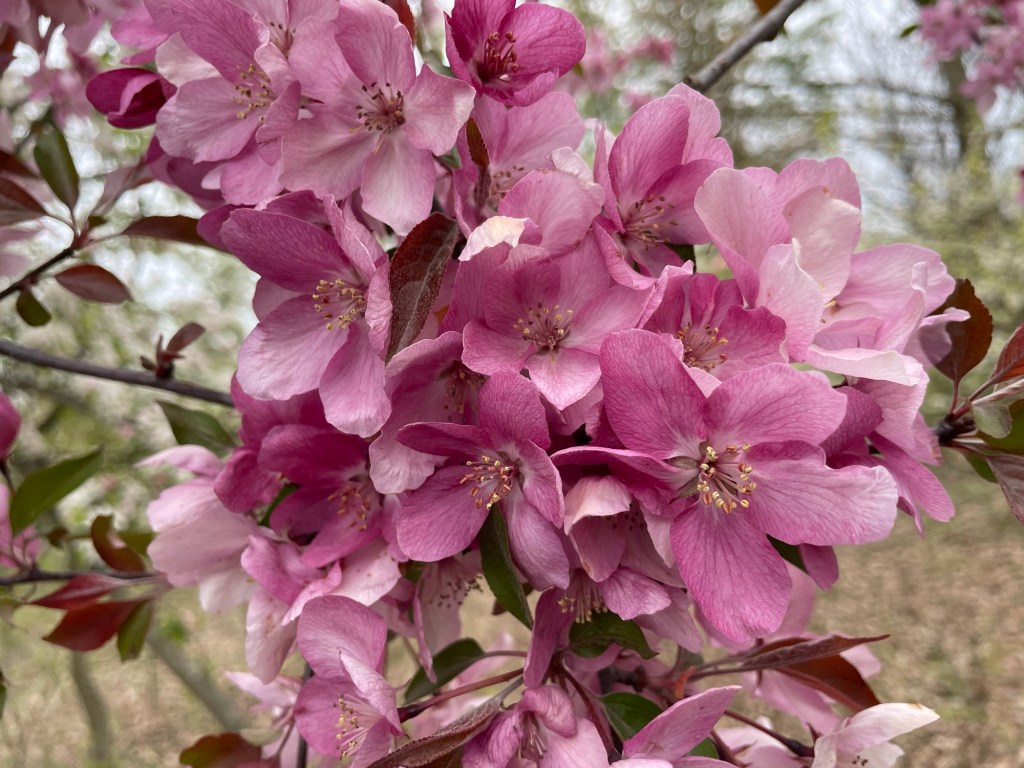
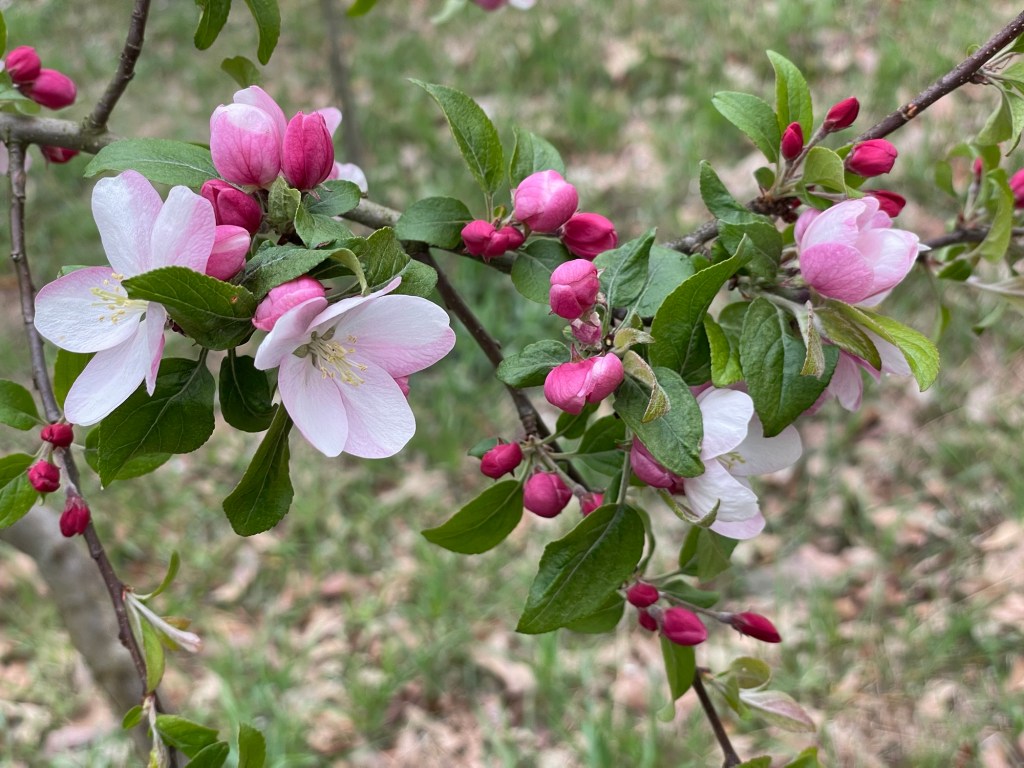
Seedling Crabapple from parent Hewes apple with purple foliage and dark red fruit.

As time went on and my seed orchards began producing in great abundance past what I could produce as plants, I had the task of attaching a value or price to the seed. What is the value of a seed? So much power in such a small package. I loved exchanging seed. It was very fulfilling to exchange seed. To sell seed might not be as much fun. Its commerce not entertainment. We started getting requests for seeds and created a seed packet at a local printer and started a seed list. I was not sure of this so I made a ball park estimate. Not too accurate. The seed packet idea lasted a decade before it flopped entirely. As time went on, the seed demand rose dramatically then stayed the same and then diminished over time before I deep sixed it. One of my buddies from high school worked in the commodity markets of some type in Chicago in the eighties. He told me the stress of selling was so high that it was not sustainable for more than a few years. People broke down. For me selling seeds was natural and easy and not stressful. The idea of producing something that has a very low cost nationally or a product that is widely available in other forms makes it less likely to succeed. Should I harvest the full crop of medlars this year or have I fulfilled the medlar seed market? The whole thing was very dinky and part of a very tiny specialized market with a small audience attached to it. Trying to sell woody seeds is not like garden seeds. Today I focus on the most useful plants with the greatest potential for change in the seed and plant market. I collect them in large enough quantities that makes it more efficient processing them one by one in the Dybvig macerator and cleaner. Having the seeds safely and snugly stored away is a good feeling knowing that they could provide a whole new avenue of fruit or nursery production for someone.

Seedling apple from hybrid cross of native apple Sweet Crabapple —-Heterophylla

To explain this scenario to other people in the nursery or seed industry was fruitless in many ways. The information would land on closed minds. It is this value of a seed that makes me think about the importance of seeds and how they can change life so quickly. There are so many fantastic discoveries that people have uncovered yet few are recognized related to their personal research into trees.

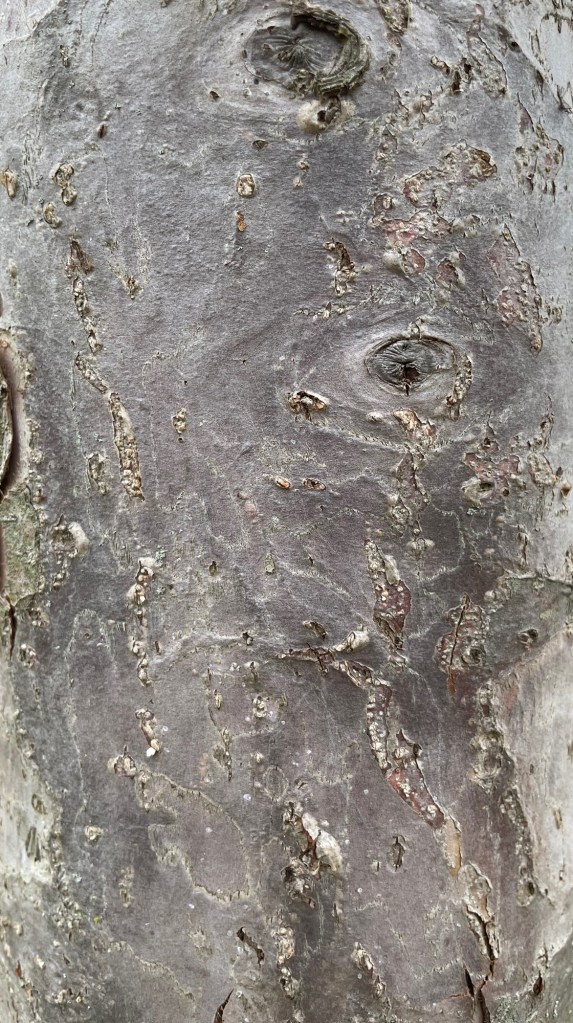
Seedling apple bark patterns. Similar in many ways to the bark on the Red Delicious apple.

I will let the seed speak. I will find health and well-being in my relationships in the farming and tree growing community. I will find ways to make my seeds available to those who will listen and employ small but powerful steps to create a means to help others into this new age. I will plant a seed. It won’t take much as the ground has been cultivated, it’s warm out and it just rained. It’s time to plant and I have ideas.

Enjoy. Kenneth Asmus

Posted in Ecology-Biodiversity-Integration | Tagged | Comments Off on Seeds Make It Happen

Mackinaw Peach

There is something very satisfying growing a tree from seed. Every now and then I will save the pits of plums and peaches from the store and squeak out a few plants. Since all of the fruit comes from California and is patented, to do so is illegal is some way. I am not sure how illegal is illegal. Was it a 70 in a 55 zone or worst? For many years, I told no one. I was afraid of the pit police aka patent owners. Winter in Michigan was a great equalizer and plants did not survive making my experiment short lived and where my crime spree ended. It was this peaches from pits scenario that kept me looking for peaches that were used in some way from seedlings and were not named varieties. That is not as common as you would think. That was the inspiration. Over twenty years several kinds arrived at my doorstep and I began producing them for sale and for my own plantings. Some had names already, others were species and a few were colonies of sorts with great winter hardiness found in someone’s back yard.

The Mackinaw peach was found as two chance seedling groups from northern Michigan and Wisconsin. It was Steve from Wisconsin who exclaimed in great wonder, “Look what I found!” This image was the first full fruit year on four trees that were the most vigorous and healthy in terms of few fungal issues and insect damage.

At the time of doing all these grow outs of various commercial fruits, the peach was an elusive being. To ask for seed from China was also illegal. To import it became a quantum entanglement of immense proportion to the point I secretly labeled them in the greenhouses as peach one,two,etc. and made a paper only list just in case. In my mind, I thought I was doing 95 in a 55 zone. Looking back, it was not that. It was just that commercial fruit farming was dictating what is good and what is bad to the point it began influencing my thinking which in turn created fear. As it turns out, peaches from pits are used for rootstocks, ornamental peaches and of course for breeding better peaches. Peaches from pits do not carry virus or any disease or insects. Its the perfect package for creating a new peach seedling free of any health issues. People use the peach like the wild apple in a way that is more personal and a connection to their culture. This is true in Latvia, Germany, Iowa, Navaho and in its homeland of China. These small satellite peaches revolve around people who love the peach and do something few do. They save the pits. Look what they found!

Latvian Purple Peach from a homestead here in Michigan
Wild Texas Peach-Ripens in October. Completely free of bugs and disease. Delicious small white peach. Southwestern U.S. wild sown selection.
The Mackinaw peach was named after the famous episode on Seinfeld. The show aired at the same time I was knee deep in peach pits and experimenting with ‘landraces’ of peaches from seeds. When I found out that the Mackinaw peach only existed on paper, it was natural for me to name it after the town and the island of which my family has visited many times to vacation. The Mackinaw peach combined two land races of peaches to create a population adapted to colder zones without the use of clonal propagation. oh yeah, it’s not a sub par fruit and is only available for two weeks a year.
Posted in Ecology-Biodiversity-Integration | Tagged , | Comments Off on Mackinaw Peach

It’s Just a Seedling

Here nestled into the leaf litter of a farm road I drive over, a small apple tree has sprouted and taken root. This apple tree might be considered an accidental visitor or a plant out of place for some but for me it’s a revelation filled with latent possibilities. I started saving these so called “out of place trees almost all of which came from parent trees at my farm. I saved seedlings from my neighbors landscaping too. Being in the middle of the road has its disadvantages so I will likely move it to the side. I like plants not in rows. It’s a forest with precision planting skills of birds, squirrels and other small mammals. Even the deer play a role with their perfectly designed hoofs.

Yellow Leaf Barberry
Seedling Plums under a Hickory hybrid I planted.
Seedling apple preserved under a seedling hybrid American chestnut

As I discover more and more seedlings I soon realize the tree farm is planting itself into the future. As I carefully prune back other trees, limb them upwards and cut back to the ground other plants I soon have my three story agriculture. I am guiding it to a more edible future by giving light to these seedling plants and getting them outside of the browse line of deer. It is never native versus exotic. There are no invasive plant species. That is entirely a fabrication to begin with. One plant helps the other while I quietly participate in this ever widening and diverse world we live in today. The plants are truly a reflection of all cultures. The values become:

  • Restorative
  • Regenerative
  • Integrative
Sour cherry type species- Prunus jacquemonti-under a hybrid chestnut English oak hybrid
It’s just a seedling apple under the pecans. An apparently random act of kindness of which I had nothing to do with.
Posted in Ecology-Biodiversity-Integration | Comments Off on It’s Just a Seedling

The Real Estate With the Best View of the Forest

Look up. The canopy is filled with fruits and nuts. Look down. Do you see anything? This was my beginning of finding and developing shade loving fruit crops. There are many plants that will tolerate shade but few that will relish it and produce lots of delicious fruits. Shade is a great equalizer. Some species will produce a light sprinkling of fruit and others are prolific. Even the raspberry will sneak in but robust in the open does not mean robust in shade. Shade itself is subjective depending on the canopy too.

Flower of Red Tart gooseberry. Bumblebees are the pollinators.

The image above shows my attempt to capture the gooseberry in the shade of my forest plantings. Here the canopy is shellbark hickory, pecan, heartnut and a few American persimmons. In this same spot existed over twenty types of cultivar gooseberries and currants. They are all gone. One seedling of ‘Red Jacket or Welcome ‘did flourish and eventually I named it Red Tart and began to root it and grow it from seed. It had the advantage of rooting as it grew plus produce lots of fruit. The caveat was the fruit itself is the opposite of all gooseberry cultivars. Prickly with spikes, the delicious fruit is covered in them. It is not a smooth gooseberry. To top it off the stems are super armed with thorns. This is not your grandmother’s gooseberry. Yet the insane yield, the immunity to all foliar diseases and the fact that the animals love this fruit makes me take notice. People were on board with this plant, and I sold out when I grew it. This reinforced my gooseberry belief system of good fruit and high nutrition all in the shade. But here the real estate market is tough to get into, so it was accepted as a possibility in my forest. Now the possibility is a reality. Every homeowner wants to live there.
Green and lush should be the foliage of the gooseberry filled with flowers prior to the forest going into full leaf.

There are lots of shade loving native gooseberries, but their yields are generally low. Missouri gooseberry is the most productive in the species realm, but it too languishes in deep shade often losing its leaves to mildew. This is normal and desirable for the gooseberry. Is it possible to find a more fruitful gooseberry? You do this the same way nature does it. You grow and wait. Unfortunately, the cultivated gooseberry is so far off the beaten track of its wild counterpart and it is exceedingly rare to find and maintain healthy plants for long. Red Tart taught me how turkeys, songbirds and chipmunks love this fruit. It was difficult to collect on time. This pointed me to its value for me to eat as well. The Ribes genus is filled with possibilities for health. It is the North American equivalent of the amla fruit and likely has the same health-giving properties. When I went shopping for gooseberries years ago, I found the most confusing information about the plant as well as the legislation governing distribution. The cultivars available were weak. I had over 30 cultivars at one time. I have several spots around my farm devoted to their breeding and selection but it was very difficult to select as individual plants and small populations of species and/or hybrids. I never told anyone because I could never tell if I was making progress or not. Red Tart begins this process of finding and producing a population of Ribes that contain health giving properties that combine the long history of the gooseberry in today’s modern world of agriculture. It fuses native and exotic. It is more than the sum of its parts. You need to find the selections that bring the greatest adaptability to the climate we live in today first. Ribes rises above.

Ribes cynobasti Green gooseberry
Flower of American black currant
Missouri black gooseberry
Posted in Ecology-Biodiversity-Integration | Tagged , , , , | Comments Off on The Real Estate With the Best View of the Forest